
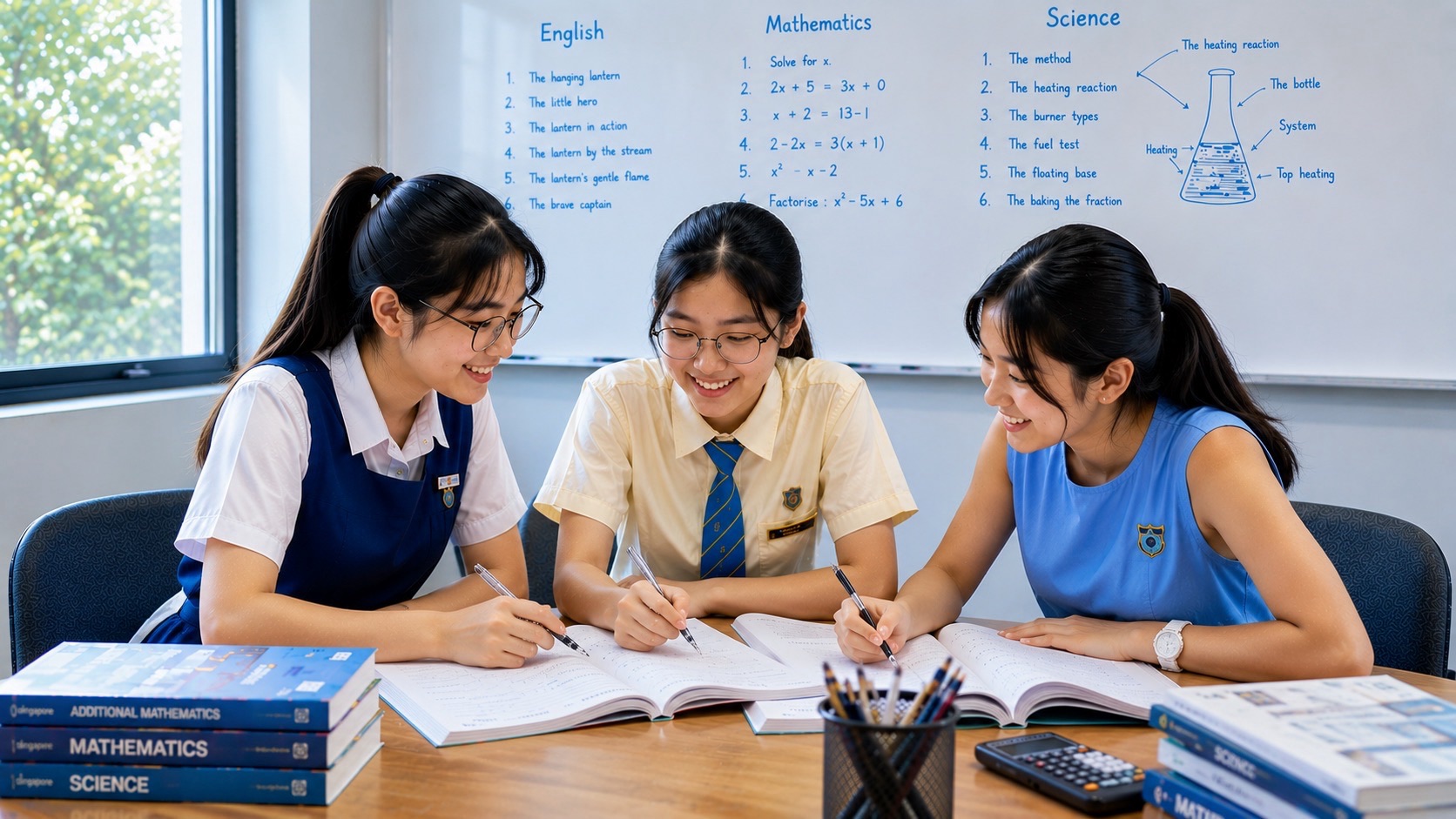
MATHCIV-002 | Mathematics + Civilisation
Quick Read
Mathematics is much more than a subject taught in school.
At civilisation scale, mathematics helps human beings:
- measure what is happening;
- represent complicated realities in usable forms;
- reason from evidence and assumptions;
- coordinate people through shared units, standards and systems;
- design and control infrastructure, machines and processes;
- verify whether claims and calculations survive inspection;
- transmit methods so that capability can survive beyond one person or generation.
That does not mean that mathematics alone creates wealthy cities, technological societies or successful civilisations.
A civilisation also requires institutions, knowledge, energy, materials, trust, governance, health, education, culture, labour, infrastructure and many other capabilities.
The stronger claim is therefore narrower:
Mathematics is one of civilisation’s major capability layers because it allows people and institutions to represent reality, coordinate action, reason about change and verify whether their actions make sense.
And its value becomes much greater when mathematical capability is not confined to a small technical elite, but can be understood, used and regenerated by the people who need it.
The civilisation question
Why should a student learning fractions, algebra, graphs or calculus have anything to do with civilisation?
The connection is easy to miss because school mathematics usually arrives already packaged.
There is a chapter.
There is a worksheet.
There is an examination.
There is an answer.
But civilisation does not encounter mathematics as a worksheet.
A city encounters questions such as:
How much water is available?
How quickly is demand changing?
How strong must a bridge be?
How much material is required?
How far apart are two places?
How much uncertainty remains in a forecast?
Which intervention produces the greatest useful effect under limited resources?
How do we know whether a result is correct?
How can a method discovered by one person be inspected and used by another?
These are not all purely mathematical questions. They involve politics, engineering, judgement, ethics, science, institutions and local knowledge.
But they repeatedly contain a mathematical layer.
That is the distinction this article is making.
Mathematics is not civilisation itself. It is a capability system that allows civilisation to see, represent, coordinate, design and verify parts of itself.
The master architecture defines seven linked functions: observe and measure; represent and compress; infer and explain; coordinate and standardise; design and control; verify and audit; and transmit and regenerate.
1. Mathematics allows civilisation to measure
Before a system can respond intelligently to many problems, it first needs some way of distinguishing states.
How many?
How far?
How fast?
How heavy?
How frequent?
How much has changed?
What is the uncertainty?
Measurement converts selected features of reality into comparable quantities.
This sounds simple, but it is enormously powerful.
Without shared measurement, two people may have observations but no reliable way to compare them.
With measurement, they may begin to establish:
State A → State B → Difference → Trend → Possible action
Measurement therefore becomes one component of Sense.
But measurement comes with a warning.
What we measure is not automatically the whole reality.
A school mark measures performance under an assessment design.
GDP measures particular forms of economic activity.
A city’s average travel time measures an aggregate.
A probability represents uncertainty under assumptions.
A dashboard is therefore a sensor, not reality itself.
Mathematics improves our ability to observe a system, but it does not remove the need to decide what deserves observation.
That distinction becomes crucial in education, economics and government.
2. Mathematics allows civilisation to represent and compress
Reality contains too much information for a human being to manipulate all at once.
Mathematics solves part of this problem through representation.
A map compresses geography.
A graph compresses a pattern of change.
An equation compresses a relationship.
Coordinates compress position.
A probability distribution compresses information about uncertainty.
A function can compress an entire family of input-output relationships into a compact symbolic structure.
This gives civilisation something extraordinary:
the ability to work on a representation of reality before acting directly on reality.
Suppose a reservoir is changing.
Instead of waiting for the reservoir to become empty, people can represent inflow, consumption and storage.
Suppose traffic is increasing.
Instead of constructing infrastructure blindly, planners can model demand under different assumptions.
Suppose a machine component experiences changing forces.
Instead of repeatedly building and breaking the real object, engineers can represent dimensions, loads and tolerances mathematically.
The representation is not the thing itself.
But a sufficiently good representation permits thought, comparison and simulation at far lower cost than repeatedly intervening in reality.
This is one reason mathematics becomes so important as systems increase in scale.
3. Mathematics allows civilisation to coordinate
Civilisation requires strangers to cooperate.
That creates a difficult problem.
Two people may understand “large”, “soon”, “expensive” or “far” differently.
Shared mathematical representations reduce some of that ambiguity.
Units, quantities, prices, coordinates, dates, tolerances, accounts, ratios and standards allow different receivers to work from compatible representations.
This coordinating function is ancient.
In the ancient Near East, administrative systems used clay tablets, writing and other tools to record transactions. Metropolitan Museum materials describe cuneiform writing, clay tablets and cylinder seals as part of the administrative equipment used to record transactions.
The point is not that accounting “created Mesopotamian civilisation.”
That would reverse a complex historical relationship into an implausible single cause.
The important point is that once societies contain agriculture, stores, institutions, exchange, labour and obligations across many people, recording and quantitative coordination become increasingly useful capabilities.
Mathematics helps answer:
Who owes what?
How much is available?
How much has been distributed?
How much remains?
When must something occur?
Are two quantities actually equivalent?
Once information travels beyond immediate memory and face-to-face relationships, external representation becomes increasingly valuable.
4. Mathematics allows knowledge to leave one person’s head
One of civilisation’s largest problems is regeneration.
A highly capable person eventually disappears.
What happens to the capability?
If a technique exists only inside one person’s memory, the system is fragile.
Written mathematical representation can help turn an individual method into an inspectable object.
A surviving example comes from ancient Egypt.
The Rhind Mathematical Papyrus, copied by the scribe Ahmose, contains more than 80 mathematical problems. The British Museum describes it as probably functioning as a mathematics textbook through which scribes learned to solve particular problems using worked examples.
Again, this does not establish that Egyptian civilisation arose because of mathematics.
It reveals something more specific.
A mathematical procedure could be:
represented → stored → inspected → copied → practised → transmitted
That is a civilisation capability.
It converts part of human know-how into external memory.
And if later receivers can reconstruct and adapt the method rather than merely copy symbols, that memory can become regenerated capability.
This distinction matters today just as much as it did historically.
A formula stored in a textbook is memory.
A student who can use the formula correctly in a new problem demonstrates capability.
A future student who can learn, modify and transmit that mathematical idea demonstrates regeneration.
These are not the same thing.
5. Mathematics expands the distance over which humans can act
Consider navigation.
A traveller moving through a familiar landscape may use remembered landmarks.
But action becomes more difficult when distance expands, visibility changes, or the route crosses an environment without obvious reference points.
Charts, position, angles, time and astronomical observation create another layer of capability.
The Smithsonian’s Time and Navigation collection describes how European sea charts developed from relatively simple coastal outlines into more accurate navigation aids drawing on astronomy and mathematics.
The larger principle extends beyond navigation.
Mathematics helps civilisation coordinate across distance and time.
A plan can describe something that does not yet exist.
A coordinate can identify somewhere the receiver has never visited.
An engineering drawing can transmit dimensions to another workshop.
A schedule can coordinate future actions.
A mathematical model can examine possible states before the system enters them.
Civilisation becomes increasingly capable when information does not have to travel only through direct physical experience.
6. Mathematics helps civilisation reason about change
Static quantities matter.
But many of civilisation’s hardest problems concern motion.
Population changes.
Prices move.
Disease spreads.
Structures deform.
Water flows.
Vehicles accelerate.
Temperatures vary.
Resources accumulate or deplete.
Demand rises and falls.
Mathematics provides ways of describing these changes.
This becomes especially visible in functions, rates, probability, statistics, differential equations, optimisation and calculus.
Instead of asking merely:
What is the value?
we can ask:
How is the value changing?
Then:
How quickly is the rate itself changing?
And eventually:
Under which conditions might the system behave differently?
This is why mathematics becomes increasingly important when systems become dynamic.
It turns change into something that can, at least partially, be represented and reasoned about.
But mathematical control must remain subordinate to reality.
An optimum inside a mathematical model is not automatically:
- physically achievable;
- economically affordable;
- institutionally executable;
- socially acceptable;
- ethically legitimate;
- resilient under uncertainty.
The model may say what works inside the model.
Civilisation still has to determine whether the intervention works in the world.
7. Mathematics is also a verification technology
This may become one of mathematics’ most important roles in the twenty-first century.
Mathematics does not merely generate answers.
It gives us methods for attacking answers.
Can the result be reproduced?
Are the dimensions consistent?
Does substitution recover the original relationship?
Does the probability obey its bounds?
Does the graph behave as expected?
Does another method produce the same result?
Were assumptions violated?
Could an apparent pattern have arisen through chance?
Does an optimisation hide an unacceptable cost somewhere else?
Verification allows one person’s reasoning to become inspectable by another.
That makes mathematics more than a production technology.
It is also an audit technology.
This matters enormously in an AI-rich environment.
Producing plausible statements, calculations and models is becoming cheaper.
The scarce capability increasingly becomes:
Can the receiver determine whether the output deserves trust?
The master therefore treats verification as one of mathematics’ deepest civilisation functions rather than merely the final step after calculation.
8. Civilisation does not become capable merely by possessing mathematics
There is an important failure mode here.
A civilisation can possess extremely sophisticated mathematics while large parts of its population cannot use basic quantitative information independently.
Those are different states.
The OECD’s Survey of Adult Skills assesses numeracy alongside literacy and adaptive problem solving because these capabilities are used across everyday and working life. Its 2023 cycle assessed adults aged 16–65 across participating economies, including Singapore.
This matters for the CivilisationOS interpretation.
A mathematical theorem existing somewhere in the civilisation is one thing.
A specialist being capable of using it is another.
An institution being capable of deploying it is another.
And a population having enough distributed numeracy to make informed everyday decisions is another again.
We therefore need several levels:
Mathematical knowledge exists
↓
Someone can understand it
↓
Someone can use it
↓
An institution can route it to a real problem
↓
The receiver can absorb the result
↓
The effect can be checked
↓
The capability can be regenerated
Civilisation capability appears at the end of that chain, not the beginning.
9. Mathematics works as part of a capability stack
Modern economic-complexity research offers a useful parallel.
Hidalgo and Hausmann’s foundational work modelled economies as possessing combinations of capabilities that become visible indirectly through the products countries are able to produce. Later work has examined how capabilities accumulate across economic, innovation and knowledge-production activities.
This should not be read as evidence that “mathematics causes economic complexity.”
It supports a more modest systems principle:
Sophisticated outputs usually require combinations of capabilities rather than one magic input.
A semiconductor industry is not created by mathematics alone.
Neither is a hospital.
Neither is an airport.
Neither is a financial system.
Neither is a functioning school.
Each requires combinations of:
- people;
- specialised knowledge;
- institutions;
- materials;
- infrastructure;
- energy;
- capital;
- communication;
- organisational capability;
- trust;
- regulation;
- and many forms of practical experience.
Mathematics operates across many of these combinations because it helps describe quantities, dependencies, change, tolerances and uncertainty.
It is therefore enabling and compositional, not sufficient.
10. The city itself demonstrates why averages are dangerous
Cities provide another useful mathematical lesson.
Urban-scaling research has identified systematic average relationships between population size and a range of urban quantities. Foundational work showed nonlinear relationships between city population and some infrastructure and socioeconomic measures, while later work examined how individual cities move relative to scaling expectations over time.
A 2025 global study using remotely sensed data across 11,581 cities in 61 countries found considerable consistency in some scaling relationships while also finding disparities among countries and indicators.
The lesson for CivilisationOS is not:
“We have discovered one equation that explains cities.”
The lesson is almost the opposite.
Mathematics can expose a baseline pattern.
Then investigation begins.
Why is this city above the expected relationship?
Why is another below?
Who receives the advantage?
Where is the lower tail?
What mechanism produced the deviation?
Is the pattern stable?
What is hidden by the average?
Mathematics gives us a sensor.
It does not relieve us from understanding the receiver.
11. The receiver is where civilisation capability becomes real
This creates an important change in how we think about mathematics education.
The objective cannot simply be:
deliver more mathematics.
Delivery does not guarantee capability.
The learner must receive the representation.
Then retain it.
Then transfer it.
Then use it independently.
Then execute it accurately under realistic conditions.
The Mathematics/Civilisation master therefore proposes a value architecture of:
Useful Capability
× Transfer
× Verification
× Independent Use
× Distributional Reach
× Regeneration
× Safety
This is deliberately not an empirically fitted universal equation. It is an architecture for asking whether mathematical knowledge has actually become useful capability.
The multiplication metaphor matters.
Imagine a civilisation with superb mathematical research but almost no ability to distribute usable numeracy.
Or excellent mathematical education but poor institutional capacity to convert knowledge into infrastructure and services.
Or powerful models with weak verification.
Or advanced automation that gradually removes people’s ability to check what the automation is doing.
The system may look mathematically sophisticated while remaining operationally fragile.
12. Mathematics can also create exclusion
Any serious civilisation account must include mathematics’ failure modes.
Quantification can clarify reality.
It can also hide reality.
An average can conceal the lower tail.
A ranking can transform a partial measurement into an identity.
A model can exclude variables that are difficult to quantify.
A standard can improve coordination while making local variation invisible.
An optimisation can minimise a visible cost while exporting stress, risk or inconvenience to another receiver.
A forecast can acquire undeserved authority because it contains equations.
A student can conclude that being slower at one mathematical task means being “bad at maths.”
None of these errors is caused simply by mathematics.
They arise when mathematical representations are mistaken for the reality they represent.
The corrective principle is simple:
Model ≠ Reality.
And:
Measurement ≠ Value.
Good civilisation mathematics therefore requires not only calculation, but boundary awareness.
13. This changes the meaning of mathematics education
If mathematics is a civilisation capability, education should not abandon calculation.
It should make calculation more meaningful.
A learner still needs accurate arithmetic.
A learner still needs algebra.
A learner still needs mathematical facts, procedures and fluency.
But these should increasingly support larger capabilities:
Measure → Represent → Relate → Infer → Select → Solve → Verify → Transfer
That means a strong mathematics student should progressively learn to ask:
What does this quantity represent?
What assumptions am I using?
Why does this transformation preserve equivalence?
Which representation makes the structure easier to see?
Which method applies here?
How do I know the answer is plausible?
Can I solve the same structure when the wording changes?
Can I explain it clearly enough for another person to inspect?
Can I still do it after a delay?
Can I do it without an answer generator?
Those questions connect school mathematics to the deeper mathematical operations used by civilisation.
14. And this explains why Additional Mathematics matters
Additional Mathematics should not be described as a universal test of intelligence.
It is not.
Nor does taking Additional Mathematics automatically make someone more valuable, more employable or more capable in every domain.
Its importance is more specific.
Additional Mathematics creates a concentrated environment in which students encounter:
- symbolic relationships;
- functions;
- graphs;
- equivalence-preserving transformations;
- trigonometric relationships;
- rates of change;
- accumulation;
- multi-stage mathematical dependencies;
- verification across representations.
The master therefore treats Additional Mathematics as a concentrated symbolic-transition layer, not as “civilisation in a school subject.”
That distinction protects both the importance of the subject and the dignity of students whose capabilities lie elsewhere.
15. Mathematics becomes more valuable when civilisation can regenerate it
The final function may be the most important.
A civilisation is not sustainable merely because one generation becomes capable.
It must be able to reproduce capability in the next receiver.
That requires:
Knowledge → Teaching → Understanding → Practice → Independent use → Adaptation → Transmission
A civilisation that can operate a system but cannot train anyone to understand it has a regeneration problem.
A school system that produces examination success but poor long-term retention has a regeneration problem.
An organisation that uses models no employee can inspect has a regeneration problem.
A society that becomes dependent on automated mathematical systems it can no longer verify may eventually develop a regeneration problem.
The final measure of mathematical capability is therefore not merely:
Can the system calculate?
It is:
Can the system continue producing people and institutions capable of understanding, using, checking and extending the mathematics on which it depends?
That is a much higher standard.
What this article does not claim
This argument does not establish that:
- mathematics alone causes civilisation;
- societies with more mathematics are morally superior;
- examination grades measure civilisation capability;
- mathematical ability is equivalent to intelligence;
- city averages describe every resident;
- mathematical models automatically produce good policy;
- technology should replace human judgement;
- every human decision should be quantified;
- every useful capability can be expressed mathematically.
Those would be substantially stronger claims than the evidence supports.
Instead, this article makes an architectural synthesis:
Mathematics becomes civilisation capability when mathematical representations help real receivers understand, coordinate, design, verify or regenerate useful action.
That interpretation follows the master runtime’s explicit instruction to separate scientific evidence from the CivilisationOS architectural synthesis.
The deeper idea
A civilisation becomes more capable when it can see further than an individual can see.
Remember longer than an individual can remember.
Coordinate more people than an individual can personally know.
Investigate possibilities before acting.
Represent systems too large to hold intuitively.
Detect errors before they propagate.
Transmit methods beyond the lifetime of their creators.
Mathematics helps make each of these possible.
Not alone.
Not automatically.
And not perfectly.
But repeatedly.
That is why mathematics should not be understood only as something students study in order to pass examinations.
At its deepest level, mathematics is one of the mechanisms through which human beings make relations visible, change intelligible, decisions inspectable and knowledge transferable.
The school subject is therefore one local interface into something much larger.
It is an attempt to regenerate, inside another human being, part of a capability that civilisation itself depends upon.
And that gives us a better reason to teach mathematics well.
Not because everyone must become a mathematician.
But because a civilisation that can measure, reason, verify and regenerate capability can understand and control more of what it is doing—and can detect more quickly when its representation of reality is wrong.