
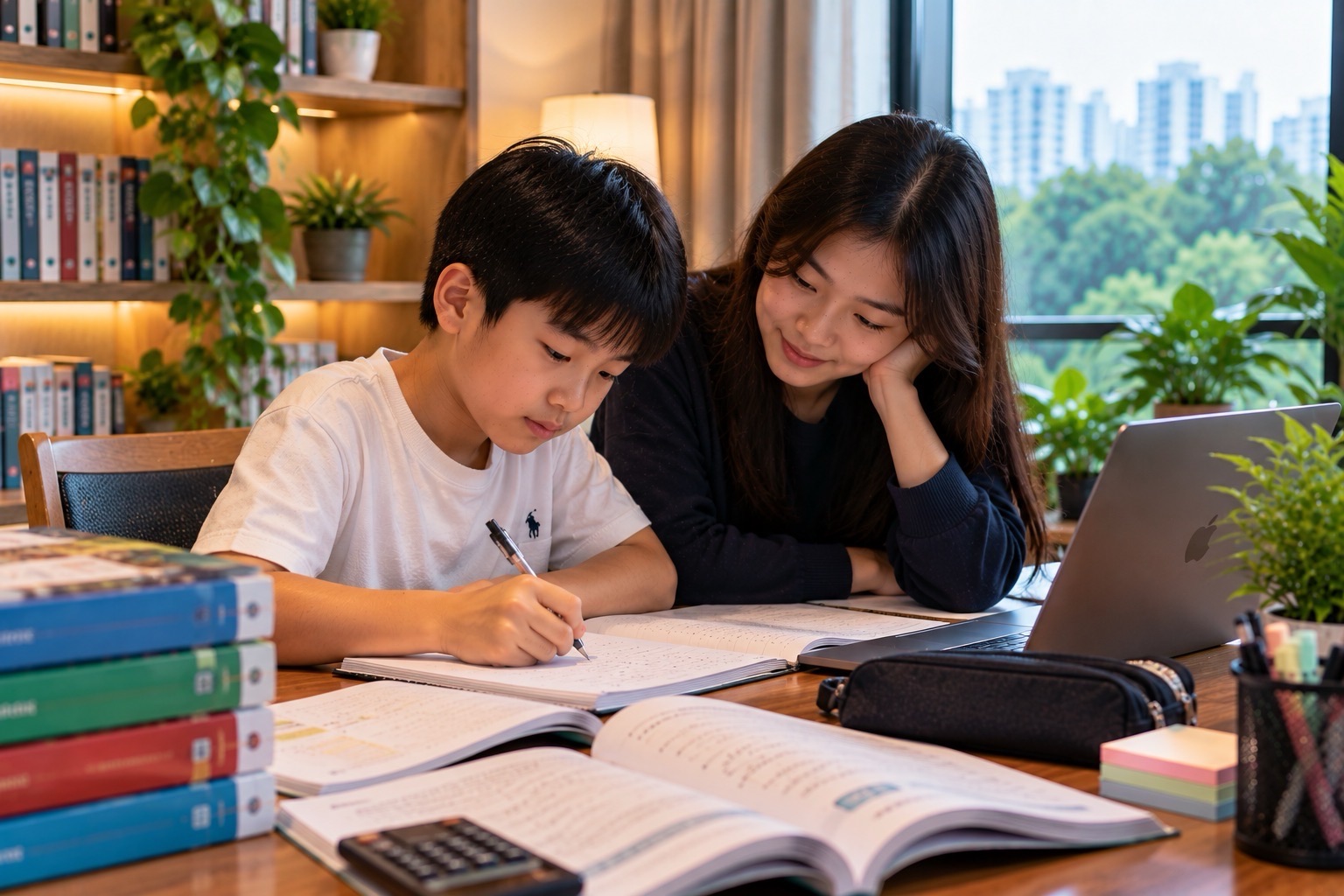
A Secondary 3 student has been paired with a former pupil who is now studying in a polytechnic. The student is keen to learn about course pathways, and the alumnus wants to help. After the first meeting, however, the mentor offers private tutoring over an unapproved messaging app, asks to see confidential report-book details and implies that following their advice will guarantee admission. A promising connection has drifted beyond the role the school intended.
School alumni programmes can give current learners access to lived experience, practical encouragement, career exploration and a sense of belonging beyond graduation. They can also support CCA coaching, leadership camps, subject mentoring and school heritage. Nan Chiau High School’s Nan Chiau Youth Mentors describes online experience-sharing, leadership support, Olympiad coaching and tertiary pathway sharing. National Junior College describes NJGradNet, launched in 2018 to engage current students on tertiary and post-tertiary goals. These programmes demonstrate possibilities—not identical national mentoring rules.
Quick answer: identify what pupils should gain; invite and verify appropriate alumni through the school’s authorised process; distinguish mentoring from paid tutoring, counselling and admissions advice; provide fair access and clear session parameters; define child-protection and personal-messaging boundaries; use accurate, current course information; preserve confidential school records; give each meeting a specific learning question; provide a trusted staff escalation route; and check whether students can make more informed decisions afterward.
This independent eduKateSG Ministry of Education V2.0 reference focuses on sustained alumni-to-student relationships. It complements Reference 175 on academic peer tutoring, Reference 166 on career guest talks and Reference 215 on workplace attachments. Woodlands Ring Secondary and Shuqun Primary describe alumni mentoring and tutoring; Yishun Primary’s August 2026 page describes mentoring, events and CCA support while explicitly noting that its particular alumni programme is not a registered alumni association for a primary-admission advantage.
The verified alumni-to-student mentoring chain
- Clear pupil learning purpose and equitable access to mentors
- Verified alumni membership, competence and age-appropriate school authority
- Supervised, confidential sessions with appropriate messaging and referral boundaries
- Current education or career sources, not admission guarantees or sales pitches
- Meaningful pupil action, independent decision evidence and programme closure
1. Define why the school needs alumni mentors
A programme may help younger students understand subject challenges, post-secondary pathways, school values or possible occupations. Select a manageable purpose instead of treating any alumni visit as equivalent to mentoring.
A one-hour speech can inspire interest, but an ongoing programme needs a different plan for availability, supervision and feedback.
2. Distinguish an alumni event from mentoring
A Teachers’ Day visit or homecoming event connects former and current students socially. Mentoring requires a purposeful exchange and an opportunity to act on advice.
Celebrate reunions without inflating them into evidence of academic support. Identify which encounters have a defined student-learning objective.
3. Keep school identity verification appropriate
Alumni may have graduated recently or decades ago. School teams should use their authorised membership, identity and access arrangements before offering pupil-facing roles.
An alumni social-media profile or personal claim is not sufficient authorisation to access current students in restricted settings.
4. Check the scope of school alumni programmes
Yishun Primary’s alumni programme invites graduates to mentor or volunteer, while noting it is not a registered alumni association for a particular primary-admission benefit.
Avoid using alumni membership to promise P1 admission privileges or institutional status not established by the receiving school’s current policy.
5. Identify the adult who owns mentoring
A school mentor coordinator should approve placement, sessions, content, student support, safeguarding and closure.
An alumni executive committee can help recruit volunteers, but should not unilaterally gain access to minors or confidential student records.
6. Distinguish a youth mentor from an adult mentor
A recently graduated alumnus may still be a minor or have limited experience. That can make their practical insights valuable without granting adult authority.
Ensure the school’s age-appropriate supervision and student leader boundaries. One recent graduate should not be left responsible for younger children’s custody simply by receiving a mentor title.
7. Recruit for listening and reliability
Academic results, professional prominence and social popularity are not enough. A mentor should be respectful, available within the agreed programme and willing to communicate accurately.
The school can provide a brief orientation and review feedback. A capable mentor knows when a pupil’s need exceeds the mentoring role.
8. Make participation fair
Students who lack family professional connections may benefit especially from structured access. Schools should explain who can join and how mentors are allocated.
A selection system based solely on personal introductions can unfairly concentrate opportunities. Use accessible invitation and match criteria.
9. Match expertise to the actual question
An alumnus in a polytechnic course can describe their own experience, while a graduate working in an engineering field can discuss their current professional context.
Do not assume one mentor can accurately advise on every subject, examination pathway or industry. Complement first-person insight with current official sources.
10. Publish programme boundaries before contact
Define the intended meeting format, permitted communication channel, supervision, scheduling, records and who handles concerns.
A student should know how to ask for help or withdraw without embarrassment. The mentor should never have to invent access rules while talking to a child.
11. Keep direct private messaging within approved controls
Mentors and students can benefit from follow-up, but unsupervised personal chat groups or late-night conversations may create privacy and safeguarding problems.
Use the school’s authorised communications. A friendly alumnus does not automatically receive permission to collect every pupil’s personal number.
12. Avoid mentoring inside personal homes without approval
An invitation to meet privately can feel normal when the mentor was once a pupil at the same school. That familiarity does not remove child-protection responsibilities.
Use supervised, school-approved settings or appropriate authorised online arrangements. Any off-site event needs its own practical risk and consent review.
13. Protect academic and family information
Pupils should not be expected to disclose income, diagnoses, full report-book histories or private family circumstances to obtain encouragement.
Give mentors only information legitimately necessary for the approved activity. A general pathway conversation rarely needs access to confidential assessment records.
14. Set realistic mentor confidentiality boundaries
Mentors can treat ordinary student conversations discreetly, but must know when a safety concern belongs with a responsible teacher or qualified professional.
No programme should encourage a volunteer to promise absolute secrecy about threats, abuse or serious distress.
15. Refer clinical and safeguarding needs to competent adults
A pupil may describe anxiety, bullying or another personal issue during a mentoring conversation. Listening respectfully is useful, but professional assessment belongs elsewhere.
Mentors should know the school’s trusted adult or safeguarding route. They are not a replacement for counsellors, healthcare practitioners or formal discipline officers.
16. Distinguish academic guidance from paid tutoring
An alumnus may explain study habits or help with a supervised subject question. Formal academic tutoring, especially if paid, has separate expectations and potential conflicts.
Do not let an official school mentoring scheme become a sales channel for a mentor’s private lessons. Schools should set commercial boundaries explicitly.
17. Make study advice specific and testable
General advice such as ‘work harder’ has limited value. Students benefit from examples of planning, error correction, resource use and seeking teacher feedback.
A mentor can ask the pupil to choose one realistic method to test during the next fortnight and explain what evidence would show improvement.
18. Worked learning case: a Mathematics misconception
A fictional student repeatedly distributes 3(x+4) as 3x+4. A recent alumnus models why both terms must be multiplied, giving 3x+12.
A new item, 5(y+2), should produce 5y+10. Independent reasoning matters more than copying the alumnus’s corrected example.
19. Teach career pathways as multiple possibilities
NJC Alumni’s NJGradNet supports tertiary and post-tertiary mentoring. Nan Chiau High’s youth mentors describe JC and polytechnic experience sharing.
These first-person accounts are valuable evidence of individual journeys, but the official admitting institution determines current entry requirements.
20. Prevent admission guarantees
A pupil may hear that a former student entered a particular course with specific results. The account is one historical pathway, not a guarantee that the same process applies now.
Mentors should refer applicants to current MOE, polytechnic, ITE, JC and university criteria as applicable. Personal optimism is not a substitute for verified eligibility.
21. Worked pathway comparison
A fictional student hears that one alumnus attended a JC and another a polytechnic before pursuing a related career.
The student should compare course structure, interest, qualifications, timing and current entry rules, not conclude that only one route can lead to professional success.
22. Separate career talks from work placements
A lunchtime discussion with a graduate is not employment or an approved job-shadowing placement. The latter requires workplace and student-safety arrangements.
Label activities correctly in student records. Avoid describing a school-hosted conversation as an internship on a pupil’s portfolio.
23. Introduce professional ethics
Mentors can show how honesty, teamwork, confidentiality and responsible communication matter in study and work.
They should not share proprietary employer data or clients’ private information merely to make examples more compelling.
24. Help pupils formulate useful questions
A practical mentoring session can explore what surprised the alumnus after graduation, how they addressed a difficult transition and which skills helped most.
Open questions encourage nuance. Avoid forcing volunteers to disclose salaries, mental-health histories or personal family matters.
25. Make an agenda without suppressing conversation
A session may begin with a learning question, discuss two examples and end with one action for the student.
It should remain flexible enough for pupils to ask genuine questions while preserving appropriate boundaries and supervision.
26. Give mentors a concise school briefing
A short guide can cover pupil age, programme purpose, official communication, consent, prohibited data collection and referral contacts.
An overly large handbook can become unreadable. The key is whether volunteers understand the actual decisions they are allowed to make.
27. Train students to evaluate advice
A respected alumnus may offer advice that worked personally but is not universally effective. Pupils should ask which circumstances made the experience relevant.
Teach the distinction between experience, evidence and policy. Conflicting mentor advice can be an opportunity for careful reasoning.
28. Provide appropriate language and access support
A learner may need accessible materials, simpler terminology, additional processing time or an appropriate interpreter in a session.
Do not confuse weaker spoken confidence with lack of potential. The school should offer meaningful participation without disclosing private needs publicly.
29. Do not turn the programme into networking pressure
Some pupils enjoy social interaction quickly, while others need time before meeting unfamiliar older students.
Allow suitable supported choice. Education should not require a child to seek favours or share personal contact details to prove ambition.
30. Use school alumni examples precisely
Shuqun Primary’s youth alumni describes a Homework Clinic and mentoring among former and current pupils; Woodlands Ring Secondary describes alumni contributions to tutoring and events.
Those are school-specific activities. A programme at another institution must verify actual volunteers, staffing and whether the proposed service is appropriate.
31. Protect teacher workload
Matching mentors, arranging venues and reviewing feedback requires staff capacity. A school should not promise weekly programmes that its team cannot supervise.
Start with a manageable pilot and a reliable escalation route before scaling large numbers of mentor-student pairs.
32. Worked session-capacity case
Suppose a fictional programme has 12 authorised mentors, each available for one small group of four pupils during a session. Maximum planned group reach is 12 × 4 = 48 pupils.
That arithmetic does not prove 48 pupils can safely fit into the available rooms or that the mix of learner needs is appropriate. Staff and venue limits still apply.
33. Worked retention measurement
If 40 pupils begin a fictional four-session programme and 32 complete all four, the programme completion share is 32 ÷ 40 = 80%.
Completion does not prove stronger academic results, nor does it establish why eight did not finish. The school should review student circumstances and actual learning evidence.
34. Avoid fundraising conflicts
Alumni networks may support bursaries or fundraising, while mentoring sessions focus on pupil development. Financial contributions must follow school-approved governance.
Do not make student access conditional on a donation or allow mentors to solicit families informally for personal projects.
35. Keep student photographs and publicity separate
A homecoming picture or mentoring group photograph may have legitimate publicity value with appropriate permission.
The desire to showcase alumni achievements must not override student-image rights, confidentiality or the young person’s choice not to appear in marketing.
36. Provide a fair ending for each match
Some mentoring relationships finish after a stated project or term; others may continue under approved programme conditions.
Students should know when formal contact stops, where to seek future school guidance and how to return any loaned resources. A clear closeout prevents confusing private expectations.
37. Review mismatches without stigma
A pupil and mentor may have different communication styles or needs. An arrangement can be changed without declaring either person inadequate.
Provide a competent school reassignment or alternative support route. Protect sensitive feedback from unnecessary circulation.
38. Evaluate student understanding independently
After mentoring, ask pupils to compare two legitimate pathways, correct a misconception or prepare an action plan with verified next steps.
A motivational quote or mentor endorsement is not evidence that the student can make an informed decision independently.
39. Check the quality of mentor information
A school can periodically review commonly shared pathways and update links to current programmes, admissions and qualifications.
Retired information should be corrected. A mentor’s graduation year may make their story useful historically but not current for policy.
40. Maintain programme succession
Alumni committee volunteers graduate, move and change jobs. Keep authorised contacts, session models, review processes and handoff records owned by the institution.
Do not store the entire mentor network only in one pupil leader’s or volunteer’s personal account. Sustainable mentoring needs institutional continuity.
41. Audit an actual mentoring journey
Select a sample programme, trace verified alumni status, student selection, matching, session safeguards, advice sources, feedback and independent learner outcomes.
If the school cannot identify who supervised the meeting or whether the pupil received accurate application information, repair that specific gap before advertising success.
42. Preserve the school community across generations
An alumni mentor can convey genuine encouragement: former students once faced uncertainty and found their own ways forward.
Ministry of Education V2.0 succeeds when those stories are shared safely and truthfully, helping current pupils build confidence without making them dependent on one person’s advice.
43. Prevent conflicts between mentorship and recruitment
An alumnus may also work as a private tutor, education agent or employer. Their professional background can help students, but creates a need for clear school boundaries.
The school’s mentoring programme should not become an undisclosed sales funnel for paid courses, application services or employment opportunities. Refer commercial offers to competent staff.
44. Give students a safe way to decline advice
A mentor may strongly favour one academic pathway or believe a particular study schedule is ideal. A pupil should be free to question or reject that advice respectfully.
A good mentor invites independent comparison and current source checks. Personal success stories are examples, not orders or guarantees.
45. Offer a specific closure task after mentoring
The student might produce a one-page comparison of two official course pathways, explain a newly learned concept or set a realistic question for an ECG counsellor.
Teachers can assess the clarity, evidence and feasibility of the next action without requiring a personal statement that the mentor changed the pupil’s life.
46. Protect the mentor’s time and wellbeing
Volunteer alumni may be balancing studies, shift work or family duties. Sessions should have realistic duration, an authorised school contact and an approved cancellation method.
An education programme should not demand unlimited unpaid availability or pressure students to contact mentors at every hour. Sustainable boundaries protect both parties.
47. Separate an alumni event from an alumni database
A school may maintain an authorised list of willing graduates for future opportunities. That list must have purpose, appropriate access and current contact information.
A Student Council spreadsheet of graduate phone numbers is not automatically a legitimate lifelong contact database. Programme continuity depends on safe institutional record management.
48. Check feedback from both sides
At a suitable interval, ask the student whether the session met their learning need and the alumnus whether the expectations were manageable.
Negative feedback may reflect poor matching or unclear instructions rather than personal fault. The responsible coordinator can revise the programme without exposing private disclosures.
Alumni mentoring operating checkpoints
| Stage | Question | Evidence |
|---|---|---|
| Recruit | Is the mentor verified and suitable? | School alumni and duty authorisation |
| Match | Does this student have fair and useful access? | Approved allocation and stated purpose |
| Meet | Are supervision, privacy and communication boundaries maintained? | Session record and responsible school staff |
| Advise | Are pathway facts current and properly qualified? | Official source check and specific next step |
| Close | Can the pupil act independently? | Learning response and programme handoff |
Parent FAQ
Can any former student become a school mentor?
Not automatically. The school’s current authorised alumni and student-safeguarding processes determine suitable roles.
Does alumni mentoring guarantee course admission?
No. First-person advice can help, while current entry requirements belong to the actual admitting institution.
Can mentors contact pupils through personal WhatsApp accounts?
Only where the school’s current approved programme and child-protection arrangements permit it.
Is alumni mentoring the same as paid private tuition?
No. A school mentoring role has specific educational and safeguarding boundaries; commercial tutoring must be distinguished.
Do alumni association memberships give P1 registration priority?
Not universally. Yishun Primary explicitly states its particular alumni programme is not registered for the specified Phase 2A1 benefit.
Are recently graduated youth mentors professional counsellors?
No. Serious health, wellbeing and safeguarding concerns require trusted school and qualified professional support.
How should students use conflicting advice?
Compare the experiences and check current official education and career information rather than blindly following one person.
How can the school assess success?
Through fair access, safe relationships, verified advice and new independent academic or career decisions—not merely mentor counts.
The institutional standard
Alumni mentoring is most valuable when former students share lived experience with care, humility and responsibility. A good mentor can help a younger learner discover options and recover confidence without promising privileged access, guaranteed grades or secret professional advantages.
Ministry of Education V2.0 links school-community memory, trustworthy role boundaries, accurate education guidance, child protection and independent learner agency. The success measure is a capable young person and a safe continuing relationship between school generations.
Sources and connected reading
MOE V2.0 — Main Reference Library
Reference 175 — Peer Tutoring and Academic Learning Evidence
Reference 215 — Work Attachments and Employer Safeguarding
Reference 201 — Verified Career and Post-Secondary Pathways
Reference 214 — Separate Parent Volunteer Procedures
Nan Chiau High — Nan Chiau Youth Mentors (updated June 2026)
National Junior College — NJGradNet and Alumni Bursaries (August 2026)
Shuqun Primary — Youth Alumni Homework Clinic and Mentoring
Woodlands Ring Secondary — Alumni Mentoring and Tutoring
Yishun Primary — School Alumni Programme and Registration Distinction
Northbrooks Secondary — Alumni Support and Enrichment
Yuan Ching Secondary — Alumni Engagement and School Activities
Singapore MOE — Official Post-Secondary Education Pathways
Editorial scope: independent school alumni-mentoring operating model. The actual school’s child-safeguarding, volunteer verification, personal communications, academic support, course selection, data privacy and fundraising policies govern each arrangement. Worked cases and counts are fictional; educational pathways and admissions requirements may change.