
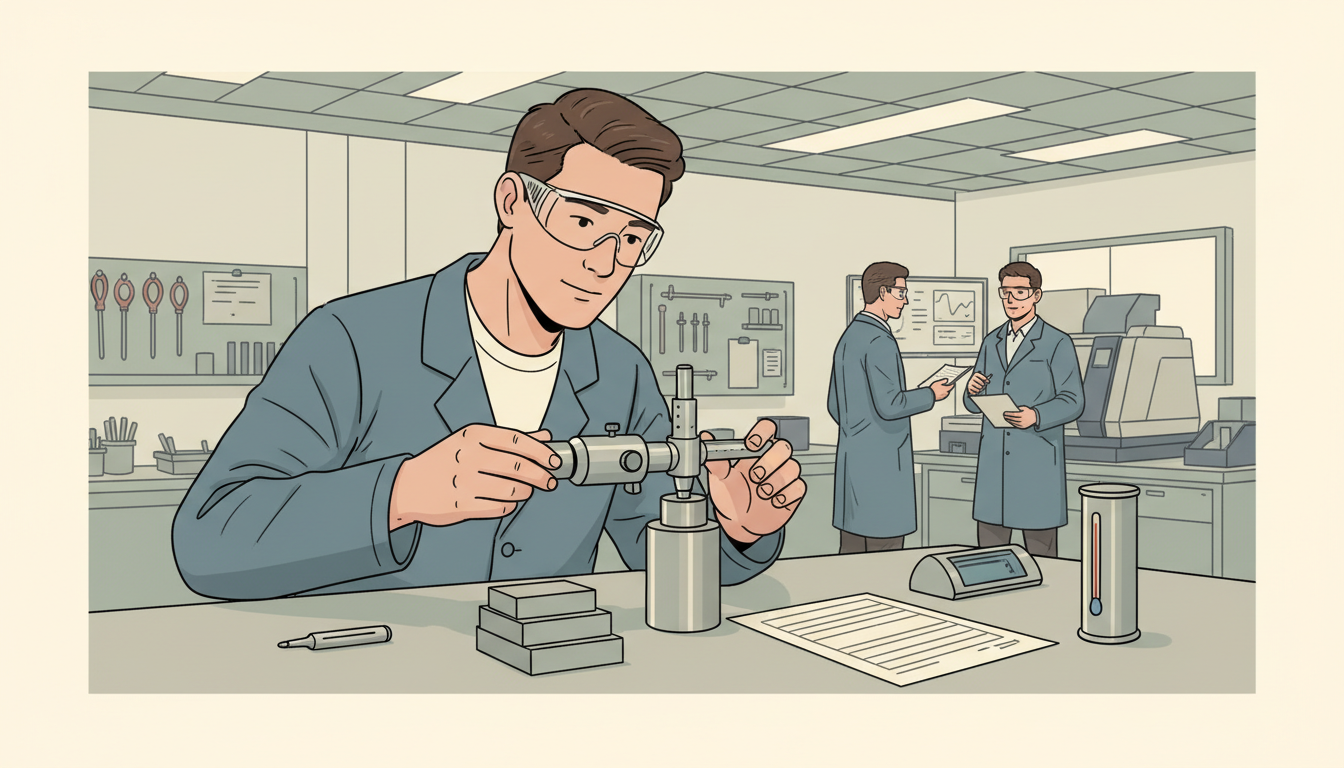
Did you know that finding defects at the end of a production line and preventing defects from arising are different business strategies? A manufacturer may inspect a finished product and reject faulty units. Another may standardise materials, train workers and monitor processes to prevent those faults in the first place. Both approaches seek reliable quality, but they have different costs, timing and strengths. Then a second question arises: can that quality system operate as well at a new factory or service location?
Ministry of Education V3.0 Reference 334 follows Sections 4.5 Quality of Goods and Services and 4.6 Location Decisions in the 2027 Singapore–Cambridge SEC G3 Business K344 syllabus. It compares quality control and quality assurance, product reliability, customer satisfaction, inspection, prevention, training and business risk. It also explains why manufacturing and service businesses choose particular sites and countries, weighing labour, transport, suppliers, markets, infrastructure, legal requirements and costs. A fictional quality-and-location audit gives parents and tutors original practice.
This is independent eduKateSG educational material, not an official MOE/SEAB guide or an assessment of an actual manufacturer’s quality system. All case firms, defects, locations, costs and survey results below are invented classroom data. A real safety-critical product requires professional testing, applicable standards, regulatory approval and independently verified quality measures; a school worksheet cannot certify medical, electrical or food safety.
1. Quality means satisfying relevant needs and expectations
A quality product or service meets its intended purpose and relevant customer expectations, including consistency, suitability, reliability and appropriate safety. Quality is not the same as the highest possible price or the greatest number of luxury features.
A low-cost notebook can be good quality if pages are suitable, binding is durable and printing is legible. An expensive product with repeated faults can be poor quality even if its packaging looks prestigious.
2. Read the 2027 K344 assessment boundaries
Section 4.5.1 asks what quality means and why it matters, the concepts of quality control and quality assurance, advantages and disadvantages of both, and a justified recommendation. Section 4.6.1 asks for the factors affecting manufacturing, service and international location choices, with a recommendation for a given situation.
The goal is applied business judgement. Advanced statistical process-control formulae or complete ISO certification procedures are not listed as separate examined requirements for these subsections.
3. Customer satisfaction depends on consistency
A product that works well one day but fails unexpectedly the next can damage customer confidence. Consistent quality may lead to repeat purchases, positive recommendations and fewer complaints.
High quality can support revenue and reputation, but it is not a guarantee of increased demand. Price, availability, competitors and changing preferences also influence decisions.
4. Failures create costs beyond the item itself
A defective product may need rework, replacement, refunds, transport, complaint handling or other corrective action. More serious failures can damage trust and create legal or safety exposure.
Businesses should not quantify every cost from a simple defect count. The severity of each fault and number of customers affected matter.
5. Quality control checks output for problems
Quality control (QC) involves checking or testing products or services to identify those that do not meet specified quality requirements. It often occurs during or after stages of production, with inspection or testing used to catch problems.
QC does not automatically fix the process that produced the fault. Detecting a mistake and understanding why it happened are separate tasks.
6. Inspecting every item is not always practical
A manufacturer may inspect every finished product when failure is serious or checks are quick and nondestructive. In other situations, checking all items may be expensive, slow or itself damage the product.
The choice depends on risk, cost and product nature. Do not assume a ten-per-cent sample is universally sufficient or that inspection alone guarantees zero defects.
7. QC can prevent faulty items reaching customers
When a fault is detected before dispatch, the business can reject, repair or segregate affected goods. This can help protect customer satisfaction and identify batches requiring investigation.
But uninspected items may still contain defects, and inspection can produce false negatives. Quality control reduces risk rather than mathematically eliminating every failure.
8. QC can also create waste and delay
Discovering a fault only after most production work is complete may mean substantial materials and labour have already been used. Rework slows delivery, and scrapping damaged goods can raise cost and waste.
A quality-system comparison should include when the defect is detected, not only whether someone notices it.
9. Quality assurance focuses on preventing faults
Quality assurance (QA) concerns designing and managing processes so consistent requirements are met. It may involve staff training, clear procedures, supplier checks, process reviews, documentation and continuous improvement.
QA is not simply writing a certificate or checking finished items. Its distinctive focus is making the process reliable before problems multiply.
10. QA can improve consistency across teams
When workers follow a well-designed process with clear responsibilities and feedback, variations and avoidable mistakes may decline. Customers can experience more consistent service even when different staff are on duty.
A standard process needs to be updated when evidence shows it is ineffective. Blind compliance with a poor procedure does not create quality.
11. QA requires initial planning and staff commitment
Documented methods, training, reviews and process improvements can require investment and management time. Some employees may see new procedures as burdensome when they are poorly designed.
A business should communicate the purpose and involve people performing the actual work. Quality assurance is not meaningful if no one can use the procedures correctly.
12. QC and QA are not mutually exclusive
A company can use QA to prevent errors and QC to detect remaining defects. The former reduces the likelihood of problems, while the latter supplies evidence about product outcomes and can reveal issues requiring process improvement.
In an examination, where asked to choose one for a specific business, explain the main priority and why. But do not claim a firm is prohibited from combining the two in practice.
13. A simple apparel example separates the methods
QC might inspect finished seams, sizes and zips before garments are packed. QA might require staff training, approved fabric specifications, equipment maintenance and checks during production.
The contrast becomes clear when the learner identifies the timing of each measure and the type of evidence used.
14. A service example also needs quality
A tutoring service may check student feedback or review lessons after they occur as a QC-like activity. It may also train tutors, prepare lesson standards, assess needs and review planning as QA-like activities.
A service is not exempt from quality merely because nothing comes off a factory line. Reliability, communication and consistency still matter.
15. Health and safety make some defects unacceptable
Where failure could injure people, a business may require rigorous prevention, documented checks, independent tests and compliance with applicable rules. The consequence of failure matters more than the cosmetic appearance of the product.
A school recommendation should not promise that one simple sampling plan meets every safety standard. Professionals determine the correct controls.
16. Sample defect rates provide useful but limited information
If inspectors check 200 products and find 12 defective, the observed defect rate in the sample is 12/200 = 6%. That is a descriptive result, not proof that exactly 6% of every item the factory makes is defective.
The sample must be representative, detection reliable and fault definition clear. Small, biased samples can mislead.
17. The defect count needs a denominator
Saying ‘ten defects’ is incomplete if we do not know whether ten were found among twenty units or ten thousand. Comparing proportions allows a fairer view of performance.
Defect severity also matters. One dangerous electrical fault could be more serious than many minor scratches, even if the number is lower.
18. Rework and scrap are different outcomes
A defective unit may be repairable through additional work, or unsuitable for sale and discarded. Rework has labour and material costs, while scrap wastes previous production inputs.
The decision also depends on safety and regulation. An unsafe product cannot be declared acceptable just because repair would be costly.
19. A complaint record can help uncover a process problem
If customers repeatedly report the same defect, a company should inspect the product and seek the underlying process cause. This might involve material quality, machine calibration or ambiguous instructions.
One angry online review is not proof of a systematic fault, but repeated, verified evidence deserves investigation.
20. Supplier quality matters before assembly
A factory relying on poor-quality components may face repeated failures even if its own assembly workers are careful. Reviewing supplier specifications and incoming materials can be part of prevention.
A low purchase price can carry higher total costs if replacements, delays or reliability problems increase.
21. Preventing defects can save more than correcting them
Imagine a process improvement costs $500 and prevents many hours of rework and customer returns. It might be commercially attractive if the expected savings and customer benefits exceed its cost.
The outcome requires credible forecasts, not a slogan that prevention is always free or always cheaper for every business.
22. Customer expectations can differ between markets
Customers purchasing a premium device may demand higher durability and service than buyers of a basic temporary item. Yet minimum safety and legal requirements apply regardless of price segment.
Quality planning should consider intended use, but never treat safety as optional simply because customers pay less.
23. Quality costs can be visible or hidden
Visible costs include inspection staff, training and returned items. Hidden costs may include lost customer confidence, delayed production or extra management time.
When recommending QC or QA, explain both benefits and their implementation expense. One-sided answers are rarely convincing.
24. Businesses need feedback loops
QC findings can inform QA improvements. For example, repeated seam defects may lead to revised machine settings, staff instruction and clearer quality specifications.
The feedback loop transforms inspection results into prevention. Without it, the factory may keep catching the same mistake repeatedly.
25. The first decision question is where the fault arises
If defects result from inconsistent materials, incoming-material checks and supplier improvements may be central. If faults arise from assembly technique, training and process design become more relevant. If problems are random and rare, appropriate final inspection may be useful.
The chosen response should match the diagnosed cause rather than a generic recommendation to inspect more.
26. Location decisions affect future operating cost
Once a factory or service outlet is established, its site affects rent, transport, access to staff and customers, delivery time and future expansion. Moving later can be expensive.
A business should choose a location for the intended activity rather than assuming the cheapest advertised rent will produce the lowest overall cost.
27. Manufacturing and service businesses weigh locations differently
A manufacturing operation often focuses on raw materials, energy, land, skilled labour, transport and suppliers. A customer-facing café may place greater weight on footfall, convenience, proximity to customers and local competition.
These are tendencies, not rigid categories. A highly specialised service firm may prioritise skilled labour more than passing pedestrians.
28. Access to raw materials matters in production
If production requires bulky or perishable inputs, locating near reliable suppliers can reduce transport delays and spoilage. For small, high-value components, distance may matter less than logistics reliability.
Supply risk depends on route and alternatives, not only the straight-line distance on a map.
29. Transport affects both inbound and outbound movement
Factories receive inputs and ship goods; service businesses may need deliveries and customer travel. Port, road, rail or airport access can influence operating costs and service speed.
A site beside a highway can still suffer congestion or poor loading access. Evaluate the actual logistics route.
30. Labour availability matters beyond wages
A site with lower hourly wages may lack workers with the needed skills, making training, turnover or production errors more expensive. Productivity and reliability must be considered alongside labour cost.
Choosing the lowest nominal wage does not automatically minimise total unit production cost.
31. Infrastructure reliability is a quality issue too
Power, water, communications and waste-management infrastructure affect production and service continuity. A cheap site with repeated utility interruptions can damage output quality and delivery promises.
A location recommendation should name which infrastructure is required and why a particular deficiency matters.
32. Proximity to customers can support responsiveness
For restaurants, retail or personal services, accessible sites may attract customers and reduce their travel burden. Proximity can also allow feedback and faster response to changing demand.
A central site may have high rent or intense competition. Customer access must be evaluated against additional costs.
33. Competing firms may attract or deter customers
Being near many similar businesses can mean stronger price competition, but it may also attract customers who prefer a recognised shopping district with multiple choices.
The same clustering can be beneficial for some firms and disadvantageous for others. Market research is required.
34. Business size influences site choice
A small startup may prioritise manageable rent and flexibility, while a larger manufacturer may need space for specialist machinery and future capacity. A temporary site can help test demand before long-term commitment.
The right site changes with business development. A large facility purchased too early can burden cash flow.
35. Location costs are more than rent
An inexpensive building may require substantial renovation, long transport routes, additional security or frequent equipment maintenance. The total relevant cost should include these factors.
An exam answer that compares only two rental figures can be incomplete when labour or transport data are provided.
36. Government policy can influence international location
Tax rules, business regulations, infrastructure investment, incentives, environmental standards and trade arrangements can affect where a company locates facilities. The implications depend on the company’s products and markets.
Do not invent current incentives or claim all foreign regulations are weak. Refer to the specific country facts supplied in the case.
37. Political stability and legal certainty influence risk
A company investing in long-lived facilities may consider reliability of contracts, law, public services and institutional stability. Sudden policy shifts can affect costs and supply chains.
One media headline is insufficient to judge an entire country’s future stability. Businesses need dependable information and scenario analysis.
38. Exchange rates affect overseas costs and revenues
A company producing abroad may pay wages and buy materials in one currency while selling in another. Exchange-rate changes can alter the home-currency value of profits and inputs.
This is why country choice and international financial risk are connected. Location advantages can shift over time.
39. Market access can influence country choice
A company may establish operations near major customer markets to reduce delivery time or meet particular local needs. Trade barriers and logistics costs can also influence this decision.
Foreign production is not always cheaper after all shipping, tax, quality and management costs are included.
40. Environmental effects are part of the choice
Industrial location can affect emissions, noise, land use and waste systems. Firms should consider legal requirements and surrounding communities rather than assume the site with lowest immediate cost is best.
A poor environmental decision can create long-run harm, community opposition or remediation costs.
41. Staff wellbeing and travel accessibility matter
A location difficult for employees to reach may affect recruitment, punctuality or staff retention. A well-connected workplace can support stable operations and a larger talent pool.
Different workers have different transport and caring responsibilities, so a one-size-fits-all commute assumption may be misleading.
42. A scored location table must explain its weights
A fictional business might score candidate sites on cost, transport, labour, customer access and expansion space. Giving each factor a weight can help make priorities visible, but those weights are management choices, not universal truths.
The final recommendation should explain why the highest-scoring site fits the case and where the table may omit material considerations.
43. Quality and location decisions can interact
A factory near skilled workers, reliable suppliers and transport routes may find it easier to sustain a strong quality system. A cheaper site with frequent input shortages can undermine consistent production even if it uses excellent inspection forms.
This is why choosing quality strategy and location as entirely separate topics may hide an important operational connection.
44. Twelve-stage quality and location decision audit
- 1 — Name the product or service and the customer requirement.
- 2 — Define what counts as an actual defect or unacceptable service.
- 3 — Identify where and why faults are likely to arise.
- 4 — Decide what final-product inspection or testing can reveal.
- 5 — Decide what process design and training could prevent.
- 6 — Compare QC and QA benefits, timing, expense and limitations.
- 7 — Identify the firm’s size, operating stage and quality risk.
- 8 — For location, classify business as manufacturing or service and identify priorities.
- 9 — Compare land, labour, supply, transport, infrastructure and customer access.
- 10 — Include national policy, environment or currency factors when considering another country.
- 11 — Test whether the cheapest or highest-scoring location is genuinely feasible.
- 12 — Recommend a strategy and site with evidence, trade-offs and a measurable success test.
45. Meridian Quality and Location Laboratory: sixteen original cases
Meridian Goods and Services is entirely fictional. All sites, defect results, rents, transport costs and customer feedback numbers exist only for education.
A — Observed defects
Original fictional business case: An invented factory checks 200 products and finds 12 defective.
Decision reasoning: Observed sample defect rate=12/200=6%.
Supported conclusion: A descriptive measure can be used for internal review.
Evidence limitation: A sample may not represent all production and severity is unknown.
Transfer prompt: What data establish the lot-wide defect rate?
B — Inspection after assembly
Original fictional business case: A firm inspects every completed bottle cap and discards those that fail a fit test.
Decision reasoning: This is mainly QC because it checks output.
Supported conclusion: It may prevent faulty items from reaching customers.
Evidence limitation: It does not by itself eliminate the process cause.
Transfer prompt: What upstream change could reduce defects?
C — Standardising the process
Original fictional business case: Workers are trained to use documented machine settings and incoming materials are verified.
Decision reasoning: This is QA because the process is designed to produce consistency.
Supported conclusion: Faults may be prevented before final inspection.
Evidence limitation: Training alone does not prove each output is correct.
Transfer prompt: What final QC might still be useful?
D — Safety-critical component
Original fictional business case: An imaginary supplier manufactures a component whose failure could injure a user.
Decision reasoning: Risk-based prevention, rigorous testing and appropriate professional standards are needed.
Supported conclusion: Relying only on occasional superficial inspection is not justified.
Evidence limitation: No classroom exercise can certify the component.
Transfer prompt: Which professionals and testing evidence are needed?
E — Rework calculation
Original fictional business case: A hypothetical plant repairs 25 rejected items at $8 rework cost each.
Decision reasoning: Rework costs 25×$8=$200.
Supported conclusion: Preventing recurring faults might save repeated expenses.
Evidence limitation: This excludes delays and reputational effects.
Transfer prompt: How would prevention spending be evaluated?
F — A customer complaint pattern
Original fictional business case: Customers repeatedly report that lids leak after washing.
Decision reasoning: Investigate material selection and manufacturing process, then test corrected output.
Supported conclusion: Quality feedback can link QC evidence to QA improvements.
Evidence limitation: The complaint alone does not identify the precise root cause.
Transfer prompt: Which controlled product test would help?
G — QC sampling limitation
Original fictional business case: A fictional auditor inspects 80 out of 1,000 units.
Decision reasoning: The sample fraction is 8%.
Supported conclusion: The sample provides information about inspected goods.
Evidence limitation: The uninspected 92% is not directly observed.
Transfer prompt: Why does representative sampling matter?
H — Service waiting times
Original fictional business case: A clinic-style fictional service records frequent unexplained delays.
Decision reasoning: Measure actual waiting time, examine booking processes and update scheduling.
Supported conclusion: QA can improve system design while QC-style monitoring checks outcomes.
Evidence limitation: This is not advice about clinical patient safety.
Transfer prompt: What measure would show improvement?
I — Low-rent manufacturing site
Original fictional business case: Site A costs $2,000 per month but has $1,500 transport expense; site B costs $2,700 with $500 transport.
Decision reasoning: Relevant listed monthly totals are $3,500 at A and $3,200 at B.
Supported conclusion: B is cheaper on the two supplied categories despite higher rent.
Evidence limitation: Labour and infrastructure are not yet compared.
Transfer prompt: What else might reverse the choice?
J — Skilled labour near a plant
Original fictional business case: An invented factory has only a few trained technicians available at an isolated site.
Decision reasoning: Hiring and training limitations may slow output and affect quality.
Supported conclusion: Labour availability can outweigh nominally cheaper land.
Evidence limitation: Wages and turnover are not measured.
Transfer prompt: What workforce data should be requested?
K — Customer-facing café
Original fictional business case: One site has lower rent but little passing customer traffic; another is close to a transit route.
Decision reasoning: The second site may serve customers more easily.
Supported conclusion: Convenience can influence sales for a walk-in service.
Evidence limitation: Actual demand and competition are not known.
Transfer prompt: What local market research would test the choice?
L — Imported component dependency
Original fictional business case: A manufacturer chooses a site distant from its sole component supplier.
Decision reasoning: Delivery delays and inventory buffering may increase.
Supported conclusion: Reliable supply routes support quality and continuity.
Evidence limitation: There might be alternative suppliers not stated.
Transfer prompt: Should procurement diversification be considered?
M — Country choice
Original fictional business case: A fictional company compares stable infrastructure, wages, customs costs and market access in two countries.
Decision reasoning: Total landed cost and supply reliability matter more than one wage figure.
Supported conclusion: The preferred country depends on business priorities and risks.
Evidence limitation: No real national comparison is made.
Transfer prompt: How could currency exposure alter the ranking?
N — Environmental compliance
Original fictional business case: An invented plant could cut upfront cost by selecting a site with inadequate waste handling.
Decision reasoning: Unpriced environmental damage and legal obligations must be considered.
Supported conclusion: The superficially cheapest site is not justified as safe or compliant.
Evidence limitation: The case provides no engineering assessment.
Transfer prompt: What independent evidence should management seek?
O — Weighted score check
Original fictional business case: A fictional team gives cost weight 40%, labour 30%, transport 30%; Site A receives ratings 8,5,6.
Decision reasoning: Weighted score A=8×0.4+5×0.3+6×0.3=6.5 out of 10.
Supported conclusion: The arithmetic makes priorities explicit.
Evidence limitation: The ratings and weights are subjective inputs, not independent facts.
Transfer prompt: Would customer access deserve its own factor?
P — QA and QC together
Original fictional business case: A manufacturer trains staff, standardises procedures, then inspects final items.
Decision reasoning: Prevention and output inspection work together.
Supported conclusion: A combined system may reduce defects and detect residual faults.
Evidence limitation: Costs and actual effectiveness require verification.
Transfer prompt: What evidence would show the approach is worthwhile?
46. A strong quality recommendation has a problem–mechanism link
If a company loses customers because finished goods are frequently faulty and it can identify defects by a reliable final test, QC has an immediate protective role. If defects result from inconsistent assembly, QA may better prevent recurrence. Most real systems need an appropriate combination.
An examination decision may ask students to choose one approach. State the priority, explain the particular mechanism and acknowledge the material drawback.
47. A strong location recommendation weighs more than one dimension
You might recommend a higher-rent site close to customers when increased sales and convenience plausibly justify the cost. Conversely, a bulky manufacturing operation may value affordable space, logistics access and reliable power more than central shopping-area footfall.
A numerical comparison helps, but only when it includes relevant costs and credible assumptions.
48. Quality control cannot be inferred from a polished brochure
A marketing image or certificate graphic does not demonstrate how many products were tested, what tests were used or whether defects were found and addressed. Evidence should include a clearly described quality process and verified results.
Students should not present a fictional case’s defect rates as statistics from a real business.
49. The Fencing Method for applied Business
Fence one: define product quality. Fence two: detect defects versus prevent faults. Fence three: connect fault types to QC or QA. Fence four: distinguish manufacturing and service location requirements. Fence five: compare total costs and operational constraints.
Only after these concepts are stable should a tutor ask the pupil to justify a combined quality-and-location recommendation under incomplete information.
50. Depth–Load–Transfer diagnosis
Depth: can a learner explain what QA prevents that QC detects, and why a firm’s ideal location depends on its production model? Load: can the learner track sample defect rates, inspection cost, land expense, labour availability and logistics simultaneously? Transfer: can the learner evaluate an unfamiliar business case with a changing customer market or new supplier risk?
A pupil who recites ‘QC checks quality’ without a mechanism needs practical examples. One who always chooses the lowest rent needs total-location-cost reasoning.
Extended case: quality decision matrix
Imagine a fictional business choosing between end-of-line checks and improvements in its assembly process. The current defect sample has 12 failures among 200 inspected goods, or 6%. A proposed new training and setup programme costs $600 and the staff expect fewer recurring faults. The management decision should ask how much each defect costs to repair, how representative the inspection sample is, which fault causes are actually preventable and whether the benefits continue over enough production cycles to justify the expense.
For example, if verified rework savings were $150 each month for six months, total savings would be $900. After the $600 programme cost, the arithmetic difference is $300 before other effects. This is a fictional scenario, not evidence that all quality-assurance investments pay for themselves. Quality and safety cannot be reduced to monetary returns alone.
Extended case: manufacturing versus service location
Consider a manufacturer and a tutoring service assessing the same two sites. The manufacturer’s main concerns might be loading-bay access, dependable electricity, trained technicians and movement of goods. The tutoring service may place greater emphasis on accessibility for learners, quiet rooms, safeguarding, transport links and whether families can attend reliably. Even if one site is cheaper on rent, it need not be the stronger choice for both businesses.
The right comparison should begin with the firm’s process and user, identify operational constraints, and then calculate total relevant costs. A recommendation that simply reads the lowest rental figure without considering customer and supplier access is not sufficiently justified.
Extended case: country selection and robustness
A company planning a long-term overseas factory could compare two countries using currency exposures, proximity to buyers, legal predictability, workforce skills and environmental compliance. An apparently favourable exchange rate can change, while weak infrastructure may create continuing delays or quality failures. One-time incentives should therefore be weighed against long-term operating resilience and the ability to meet standards.
A pupil can conclude conditionally: choose the site with stronger logistics and skills if those factors are essential to the product’s quality and outweigh the higher rent, but reconsider if verified demand or cost forecasts change. This is what an applied K344 judgement should sound like.
51. Common misconceptions and corrections
- “Quality only means charging a high price.” Repair: assess fitness for purpose and consistency.
- “Quality control prevents every defect from occurring.” Repair: inspection principally detects defects.
- “Quality assurance is just a final inspection.” Repair: it manages processes to prevent faults.
- “QA means no testing is needed.” Repair: QC can remain a useful complement.
- “A defect count alone proves a whole factory is poor.” Repair: identify the denominator, severity and sample.
- “Scrapping faulty goods has no cost.” Repair: recognise wasted materials, labour and time.
- “The lowest rent is automatically the lowest-cost factory site.” Repair: include logistics, labour and infrastructure.
- “Every service firm must choose the city centre.” Repair: target customers and delivery model matter.
- “A port-side site always helps every business.” Repair: assess what inputs and customers require.
- “Low wages prove low unit labour cost.” Repair: examine productivity and training.
- “An international location decision depends only on taxes.” Repair: examine law, market, transport, people and risk.
- “A weighted score is objective merely because it has decimals.” Repair: weights and inputs need justification.
- “An attractive advertisement is evidence of high quality.” Repair: demand independent quality data.
52. Twelve-question student revision test
- 1 — Define product or service quality in business terms.
- 2 — Explain the main purpose of QC.
- 3 — Explain the main purpose of QA.
- 4 — Give an example of each from the same factory.
- 5 — State one advantage and one disadvantage of QC.
- 6 — State one advantage and one disadvantage of QA.
- 7 — Calculate the observed defect rate when 12 of 200 inspected goods fail.
- 8 — Why might a sample fail to represent the whole production run?
- 9 — Name four location factors important for a manufacturer.
- 10 — Name two factors particularly relevant to a walk-in service.
- 11 — Compare Site A with $2,000 rent and $1,500 delivery cost against Site B with $2,700 rent and $500 delivery cost.
- 12 — Explain why one best location cannot be chosen without the business context.
Model answers: (1) consistently meets intended requirements. (2) detect faulty output. (3) prevent faults through systems. (4) final inspection versus process training. (5) catches defects but can be costly or late. (6) reduces recurrence but needs preparation and training. (7) 6%. (8) selection bias or untested items. (9) labour, suppliers, transport, land, utilities, laws. (10) customers, accessibility or competition. (11) B has $3,200 versus A $3,500 on stated costs. (12) different firms have different priorities and constraints.
53. Frequently asked questions
Does quality assurance replace quality control entirely?
Not necessarily. Prevention and inspection can reinforce one another.
Can a service business use quality control?
Yes. Monitoring waiting times, error rates or service outcomes can identify problems after or during delivery.
Why isn’t the cheapest location always best?
Low rent can be offset by high transport expense, weak infrastructure, labour problems or poor customer access.
Does K344 require professional ISO certification procedures?
It requires understanding QC and QA concepts and decisions; detailed certification procedures are not specified as separate examined learning outcomes.
How should a student handle incomplete location data?
Compare the supplied factors, state a conditional choice and identify which missing information could change it.
What is the best evaluation structure?
State the business objective, explain the mechanism of the choice, weigh an alternative and finish with a supported conditional judgement.
54. Official 2027 syllabus and related articles
The examination reference is SEAB 2027 SEC G3 Business K344, Sections 4.5 and 4.6, which lists quality control, quality assurance and manufacturing/service/international location factors. The 2027 G3 SEAB syllabus directory remains the examination-year index.
Previous: Reference 333 — Maintaining Air Quality. Next: Reference 335 — Design and Technology Prototyping. Business foundations: Reference 328 — Marketing, Reference 331 — Break-even and Reference 332 — Cash Flow. Browse the MOE V3.0 Library and the immutable Clementi learning reference.
Editorial verification: 25 October 2026, Singapore. All Meridian business cases and defect calculations are fictional. The lasting lesson is to identify what must work, distinguish detecting a failure from preventing it and choose a location that makes the required quality and service feasible.