
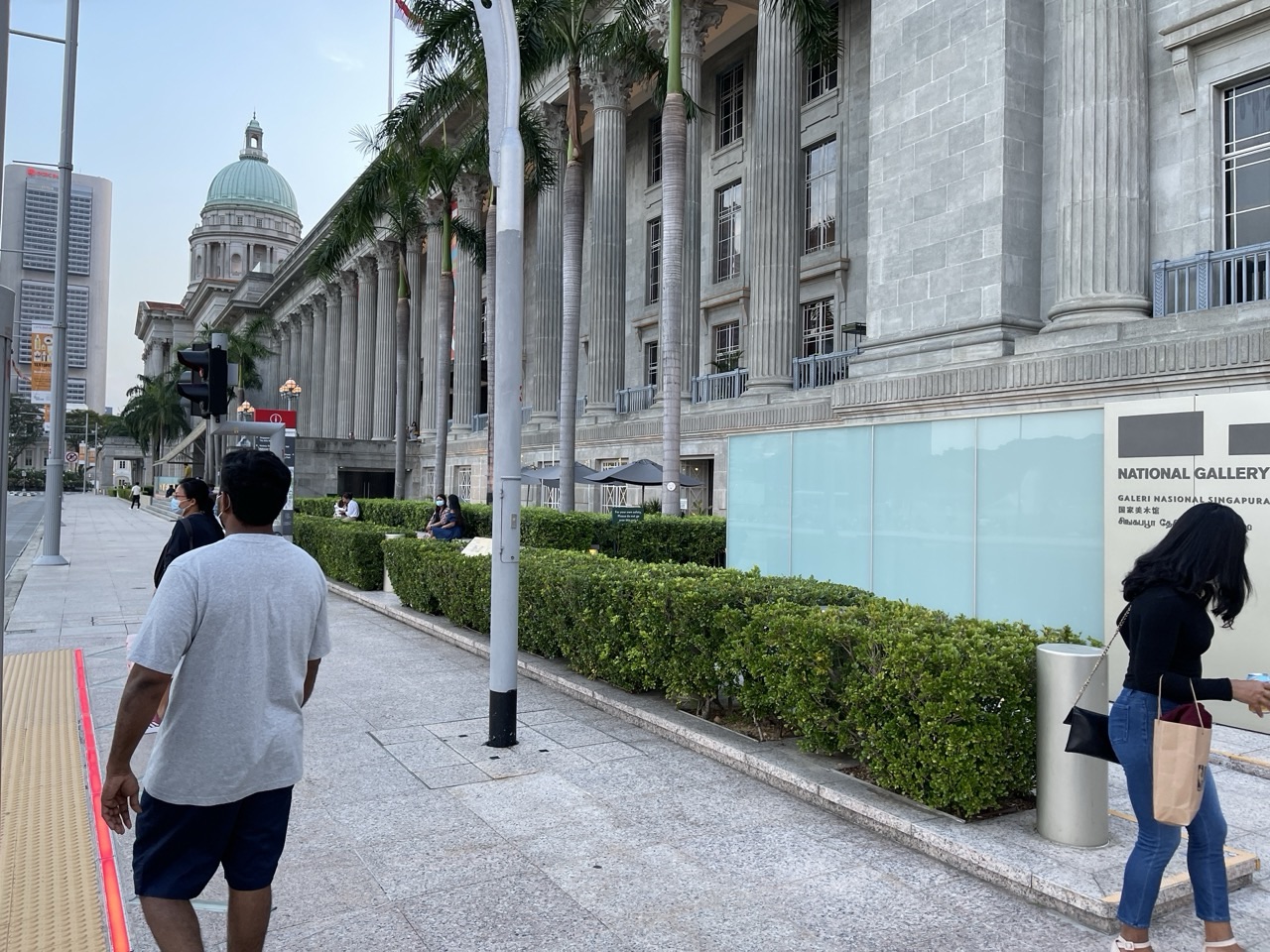
What should PG1, PG2 and PG3 parents and students expect from secondary-school learning journeys, Geography fieldwork and history visits in 2027? Treat each outing as a structured opportunity to connect a classroom question with real evidence. Before the journey, read the school’s learning objective, consent and safety instructions. During it, observe carefully, record the information the teacher asks for and respect people and places. Afterwards, use the evidence to explain what was learned and what remains uncertain.
A learning journey is not automatically a field trip for marks or a sightseeing tour. Singapore schools use learning journeys, historical investigations, geographical inquiry and student development experiences for different purposes. A museum visit may deepen understanding of history and citizenship; a neighbourhood observation can illustrate land use; a fieldwork activity may require a testable question and systematic data collection.
Under Full Subject-Based Banding, students can share form classes and school experiences despite studying other subjects at different G1, G2 and G3 levels. An activity may be part of common learning, a school programme, or work connected to an examined Humanities subject. Ask which it is. The child’s original Posting Group does not automatically identify the purpose or assessment weight of an outing.
Independent eduKateSG guide reviewed 19 October 2026 using MOE Full SBB, published Singapore secondary-school Humanities programmes and the 2027 SEC syllabuses. Named school projects below are verified examples, not promises that another school will conduct the same trip in 2027. All reporting times, parental consent, venue access, supervision, safety and assessment instructions must be confirmed with the school.
At a glance: what kind of learning experience is this?
| Activity | Main learning purpose | What the student should produce or understand |
|---|---|---|
| History learning journey | Connect historical evidence and place | Specific observations tied to the historical question |
| Geographical investigation | Examine an issue using data and spatial ideas | Research question, method, evidence and limitations |
| CCE or cohort learning journey | Explore community, identity or social understanding | Thoughtful reflection and respectful participation |
| Science educational visit | Observe scientific applications and concepts | Clear distinctions between observation and explanation |
| A practical assessed component | Follow the actual registered subject’s rules | Prescribed evidence, authenticity and school supervision |
The school may combine several purposes in one event. The distinction matters because a worksheet from an ordinary museum visit is not automatically the same thing as 2027 SEC coursework.
1. A learning journey should start with a question
The strongest learning journeys make a question more concrete. A class studying urban environments might ask how public spaces serve different users. A History class might ask how an artefact supports a claim about a particular period. A Science group might ask what a display demonstrates about energy, materials or living systems.
Without a question, students may return with many photographs and little understanding. The child can prepare by writing what they already know, one thing they expect to observe and one question they hope the visit will answer.
The teacher’s stated objective always takes priority over the family’s invented assignment. Parents can encourage curiosity without adding a complicated project that the school did not request.
2. Learning journeys are part of holistic development
MOE’s Character and Citizenship Education framework recognises cohort learning journeys and other student development experiences as opportunities to connect classroom learning with the world. Schools can organise activities reflecting student needs, local context and relevant learning outcomes.
Such experiences develop more than factual recall. Students may learn to observe another person’s perspective, make responsible decisions, interpret evidence, ask respectful questions and explain how a place connects with community life.
The important measure is not how far the bus travels or how expensive the ticket is. A carefully designed school-based inquiry can be educationally rigorous when the question, method and reflection are sound.
3. Full SBB creates shared learning outside the classroom
Under Full SBB, students from different Posting Groups may belong to a mixed form class. They share common lower-secondary learning experiences while individual academic subjects can be taught at different G-levels. A cohort journey can therefore provide a shared context for students whose Mathematics or English classes differ.
That does not erase differences in subject assessment. A G2 Geography task may ask for a particular fieldwork method, while a common CCE activity may focus on empathy and citizenship. The child should know which teacher’s assignment and instructions apply.
Our mixed form classes and subject-level timetable guide explains the underlying arrangement.
4. Real Singapore example: geographical inquiry
Commonwealth Secondary School’s Humanities page, updated in September 2026 describes inquiry-based learning, historical investigations, geographical fieldwork and learning journeys that connect classroom concepts to local issues. The programme aims to develop students’ ability to examine perspectives, interpret information and communicate responsibly.
The useful lesson for parents is not that every school must reproduce Commonwealth’s programme. It is that school fieldwork is intended to make a concept observable and testable. Ask the child what question they investigated and how the evidence was collected.
A good answer names a place or condition only when it is relevant to the investigation. The location is context, not a substitute for reasoning.
5. Another example: learning from water quality
Geylang Methodist School (Secondary)’s 2026 Geography programme describes a Secondary 1 geographical investigation involving water quality, and a Secondary 2 investigation involving geographical questions and methods. These show how a school can connect environmental ideas with authorised field observations.
Students should not copy a water-test result from another school’s page into their own report as if they measured it. Nor should they independently collect hazardous samples or enter restricted areas. The method, safety controls and equipment remain under the teacher’s supervision.
What the child can learn at home is the logic of evidence: what was measured, why that measurement relates to the question and what limitations the method has.
6. History learning journeys are not just taking photographs
A historical visit often presents artefacts, buildings, interpretations and the memory of people who lived through events. The student should examine who produced each object or explanation, what it reveals, what it cannot establish and how it fits the historical question.
An exhibition label is a useful source, but it is not a reason to treat every claim as context-free. Ask whose perspective is represented, which dates matter and whether the class is comparing several types of evidence.
A meaningful reflection might explain how an object changed the student’s earlier interpretation. A collection of attractive images without analysis is less informative.
7. A local educational example from Clementi Town
Clementi Town Secondary School’s Humanities programme describes historical investigations involving Fort Siloso, geographical inquiry connected to a school rain garden and experiential learning through Earth-science displays. Some of these examples are historical, including earlier school-year activities, and should not be presented as the school’s confirmed 2027 itinerary.
They are useful because each has a learning purpose: examining historical events, asking a fieldwork question or using real and modelled phenomena to understand Geography. The educational value comes from the investigation and discussion, not the name of a destination alone.
A parent can use the examples to ask whether their child is expected to collect data, compare sources or reflect on an observed process.
8. A fieldwork question should be narrow and answerable
A weak question is ‘Why is the city bad for the environment?’ It is broad, value-laden and unlikely to be answered by a short school visit. A stronger illustrative question is ‘How does measured air temperature differ between two teacher-approved observation points during our supervised sampling period?’
The second question names a variable, a comparison and an observation period. It does not guarantee a scientific result. Students can then ask how to measure fairly, what else might affect readings and whether the observations support a limited conclusion.
Teachers decide which questions, sites and methods are appropriate. A student should not independently run a field experiment because an online guide made it sound simple.
9. Worked example: comparing two observation points
Consider a fictional classroom data set collected for a supervised exercise. Three readings at a shaded point are 29°C, 30°C and 29°C. At a sunnier point, the corresponding readings are 31°C, 32°C and 30°C. The mean shaded reading is 88 ÷ 3 ≈ 29.3°C, while the other mean is 93 ÷ 3 = 31°C.
The average difference between these small sets is about 1.7°C. That arithmetic is valid for the displayed numbers, but three observations from each location do not establish that shade alone caused the difference or that the same relationship holds all day. Timing, equipment, surface materials, airflow and sample size could also matter.
An appropriate conclusion is limited: ‘In this illustrative set, the second point had a higher mean temperature during the measured observations.’ The next step is to design better evidence, not inflate the claim.
10. Sampling and the danger of overconfidence
A single observation may be real without representing an entire neighbourhood. Students should ask when and where data were gathered, how many readings were taken and whether the selection favoured one kind of location.
A class recording pedestrian movement for a few minutes cannot automatically infer the average traffic of a full day. A survey of friends cannot necessarily represent every resident. Those limitations do not make the exercise worthless; identifying them is part of learning sound geographical investigation.
The 2027 G2 Geography syllabus includes geographical methods and data-collection considerations. Families should still open the actual registered subject syllabus and follow the teacher’s assessment requirements.
11. Observe, record and explain in that order
Students sometimes write an explanation they expect to be true before they have collected the information. This can lead them to ignore inconvenient observations. A more reliable sequence is to document what occurred, note measurement conditions and then ask which explanations fit the evidence.
For a museum object, describe the visible features and source information before speculating about how it was used. For a microclimate observation, record the instrument and conditions before concluding why a difference occurred.
Honesty about unexpected results is a strength. A fieldwork exercise is intended to teach inquiry, not reward students for making the data conform to a preferred answer.
12. What students can carry on an approved outing
| Category | Possible item | Final decision belongs to |
|---|---|---|
| Administrative | School notice or required permission confirmation | School’s authorised process |
| Learning | Teacher-issued worksheet, notebook or approved device | Subject teacher and activity instructions |
| Weather preparation | Permitted water bottle, suitable attire and protection | School and safety briefing |
| Equipment | School-supplied measuring or recording tools | Trained supervising staff |
| Travel | Necessary concession card or approved travel items | School transport and parent arrangements |
| Personal data | Only what the school genuinely requires | Privacy and safeguarding rules |
Do not buy specialised meters, drones, chemicals or other equipment merely because a different school’s activity uses them. The school chooses safe methods, provides or specifies authorised materials and manages supervision.
13. Parent consent is a separate responsibility
Parents may receive a learning-journey notice through Parents Gateway or another official school channel. Read the activity’s purpose, date, venue, transport plan, reporting instructions, costs where applicable and required response. A parent’s general agreement that trips are beneficial does not replace an explicit consent form when one is requested.
The school may also need to know relevant information for safe participation through approved confidential processes. Avoid posting a child’s private details or medical records in group chats.
For the administrative workflow, see Parents Gateway School Notices and Consent Forms.
14. How to read the reporting and dismissal instructions
A school outing may have a different reporting time, meeting place, attire requirement or dismissal location from an ordinary Tuesday. Families should check the current notice rather than automatically use the morning assembly timetable.
The child should know who the supervising teacher is, where the group will meet and what to do if the transport or schedule changes. Parents should clarify collection arrangements in advance rather than expect a personal-phone reply during a restricted school activity.
MOE’s smartphone restrictions, enhanced from January 2026, and the school’s local rules can remain relevant during school-managed programmes. Ask what device use is authorised.
15. Safety comes before a perfect photograph
Outdoor learning can involve hot or wet weather, changing terrain, traffic, bodies of water and other site-specific hazards. The teacher’s safety briefing and approved route take priority over completing a photograph or collecting one more reading.
Students should not cross barriers, climb restricted structures, handle unknown substances or enter unsafe areas to obtain dramatic evidence. If weather conditions change or the group becomes separated, follow staff instructions rather than improvising a personal route.
Good fieldwork develops careful observation and responsible decisions. Risk-taking for an impressive project image is not a learning objective.
16. Responsible photography and privacy
A photograph can support a geographical or historical observation when the image’s date, viewpoint and context are clear. It can also capture strangers, schoolmates or private information that the project does not need. Students should follow venue rules, school consent requirements and any restriction on recording.
Use approved devices only. Do not publish another person’s image or identify a minor without the necessary permission. Where a sketch or anonymous count can answer the question, it may be a more appropriate method.
The presence of a camera does not guarantee stronger evidence. A careful field sketch showing relevant features can sometimes reveal more thoughtful observation.
17. Field sketches are not simply less accurate photographs
A sketch can highlight relationships that matter to the research question. In an urban study it might show paths, shelter, seating and how people navigate a space. The student should label the observable features and distinguish them from inferred effects.
A neat drawing is useful when its information is accurate and relevant. Decorative colour does not compensate for missing orientation, measurement, categories or explanatory labels.
Where exact quantities matter, the school may require measurements or another data source; a field sketch should not pretend to supply precise numbers it does not contain.
18. Interviews require care and appropriate permission
A school investigation may include asking people about their experiences. The student should use the teacher’s approved procedure, avoid leading questions and respect whether someone wishes to participate. Personal identifiers or sensitive questions should not be collected casually.
For example, ‘Which part of this public space is easiest to use?’ invites a more open response than ‘Isn’t this walkway poorly designed?’ The latter pushes the participant towards a predetermined answer.
A small set of convenience interviews may be helpful qualitative evidence, but students should avoid presenting it as statistically representative of a whole town.
19. How group roles can support fair learning
A fieldwork group might assign a recorder, observer, map reader and data checker, but members should all understand the central question and participate meaningfully. A student’s Posting Group should not be used as the basis for choosing who may reason and who must only carry materials.
Rotate roles where suitable and permitted so students develop more than one skill. If a role involves special equipment, the supervising teacher decides who is trained and authorised to use it.
For a more complete cooperation framework, see Fair Teamwork in Mixed Full SBB Group Projects.
20. When the class returns, the learning is not over
Students should organise notes and evidence while the activity is still fresh. Record the main question, which observations were obtained, what was surprising and what could not be determined. The teacher may ask for a discussion, report, source response or reflective activity.
Avoid simply writing ‘It was fun’ and submitting a large photo gallery. A useful reflection identifies what the learner understands better and which piece of evidence changed their thinking.
The report should be the student’s own authentic work under the school’s collaboration rules. Any relevant external information should be credited appropriately.
21. Geography and History ask different questions of the same location
A public space can be investigated through several disciplines. Geography may examine physical features, use and accessibility; History may ask how the place changed over time and what sources reveal about that change; CCE may explore whose needs the design serves and what responsible citizenship requires.
The fact that different disciplines study the same place does not make their methods interchangeable. A photograph taken today cannot alone establish how the place looked decades earlier; a historical account does not automatically measure current traffic.
This is where field experiences become rich. Students learn that a sound answer requires a question matched to the right type of evidence.
22. A learning journey can help English too
Observations from an educational visit can supply meaningful content for descriptive writing, discussions and factual explanation. A student who noticed how an exhibit communicated an idea can practise describing it clearly, distinguishing fact from opinion.
For an English exercise, ask the child to choose one concrete detail and explain why it mattered. A precise account of what changed their understanding is stronger than a long paragraph packed with unrelated adjectives.
The educational gain is transferable communication, not necessarily an additional nationally examined fieldwork mark.
23. Science observations should be explained safely
A visit to a science display may introduce an unfamiliar phenomenon. Encourage the child to describe what the exhibit demonstrated and which physical or biological principle might explain it. If the explanation is uncertain, identify the question for a teacher rather than invent a confident mechanism.
An interactive display is different from a controlled laboratory experiment. Students should recognise which variables were shown, what was measured and which claims require more evidence.
School laboratory safety and formal SEC practical assessment use their own procedures. See Science Laboratory Safety 2027 for this related distinction.
24. What if a student misses the journey?
A child may be absent for illness, an approved reason or a genuine access issue. Notify the school through its required process and ask whether a suitable alternative learning activity or follow-up is available. Do not assume an automatic resit, refund or exemption.
An alternative might involve approved reading, a virtual resource or teacher-supported review, but the school decides what is appropriate. A student should not pretend to have personally observed something that they did not see.
The wider Missed School Lessons and Catch-up guide helps families distinguish administrative absence from rebuilding learning.
25. Is a fieldwork report an SEC component?
Not automatically. School learning journeys and lower-secondary investigations may be assessed within the school curriculum without being national examined coursework. Some 2027 SEC subjects have their own requirements, including relevant Geographical methods or other subject-specific practical work.
The family should ask for the actual syllabus name, G-level, code and assessment scheme. For 2027, standalone G2 Geography is K226, while G2 Humanities (Social Studies, Geography) is K229; those are different national examination subjects. G3 Geography and G3 combined Humanities also have distinct codes.
Do not assume the same national scheme merely because two courses include the word Geography. Refer to the 2027 SEC subject-code guide and the teacher’s instructions.
26. The first four questions after a learning journey
- What was the main question the teacher wanted students to investigate?
- What did you actually observe, read or measure?
- What conclusion can reasonably be drawn, and what would be an overstatement?
- What would you check next if you had more time or better evidence?
These four questions work across many activity types without turning a family conversation into a second formal assessment. The learner can discuss the experience in ordinary language before preparing the school-required reflection.
27. How parents can support without doing the investigation
Parents can help children prepare the correct materials, understand school notices and reflect afterwards. They should not write the entire fieldwork report, invent survey responses or fabricate measurements that the class did not collect.
If the child’s evidence is incomplete, the useful next step is to ask the teacher what can legitimately be concluded or how to note the limitation. Honesty about missing information is better than a polished fictional data table.
A student who learns to distinguish observed evidence from attractive assumptions is developing a skill relevant to school and future work.
28. Learning journeys and future pathways
Geographical inquiry can introduce interests in environmental science, planning, data analysis and geospatial work. Historical investigation can develop archival curiosity, communication and interpretation. CCE activities may lead to public service or community interests. These are possibilities to explore, not guaranteed admissions or occupations.
A student can enjoy a field trip regardless of whether the subject eventually becomes an examined SEC elective. The learning may help them make better-informed school and career choices later.
The 2027 SEC subjects and 2028 pathway overview can help connect present interests to official future requirements without promising a fixed route.
Frequently asked parent questions
Do all PG1, PG2 and PG3 students attend the same learning journeys?
Mixed form classes can share cohort experiences, but programmes and subject-based fieldwork vary by school, year and class. Check the actual notice.
Does fieldwork mean every student must buy measuring equipment?
No. The school specifies authorised tools and safety arrangements. Do not purchase instruments or attempt unsupervised sampling simply because an example uses them.
Are learning journeys always graded?
No universal grading rule applies. Ask whether the particular school activity is experiential, a school assessment or linked to a prescribed national component.
Can parents photograph or join an event without invitation?
Follow the school’s participation, safeguarding and venue instructions. An outing is not an open invitation for unauthorised photography or extra adults.
What if weather or transport changes the plan?
Follow supervising staff and official school communications. Safety and proper reporting matter more than completing every planned observation.
Can a student use AI to write a fieldwork conclusion?
Only within the assignment’s permitted rules. Actual measurements and original reasoning must not be fabricated or replaced by generated text.
Should a student collect names in a questionnaire?
Only when the school-approved research purpose and consent process genuinely require personal information. Avoid unnecessary identification.
Does G2 Geography K226 use the same syllabus as G2 combined Humanities K229?
No. The national subject names and codes differ; open the relevant 2027 syllabus for the registered subject.
Continue this school-skills series
Connected eduKate reading
- School Research Projects: sources, citations and originality
- Group Projects and Fair Teamwork
- Parents Gateway Consent and School Notices
- Secondary School Science Laboratory Safety
- Note-Taking Across Mathematics, Science and Humanities
- 2027 SEC Geography and Humanities Subject Codes
- School Learning vs National SEC Examination Subjects
Official sources and Singapore school examples
- MOE: Full Subject-Based Banding
- MOE: Secondary school experience under Full SBB
- Commonwealth Secondary: inquiry and learning journeys, September 2026
- Geylang Methodist Secondary: Geographical Investigation, June 2026
- Clementi Town Secondary: Humanities and Rain Garden inquiry
- Evergreen Secondary: geographical investigations, May 2026
- SEAB: 2027 G2 school-candidate Geography and Humanities syllabuses
- SEAB: 2027 G3 school-candidate Geography and Humanities syllabuses
A journey becomes education when the learner can explain the evidence
The important achievement after a field visit is not the number of photographs or the distance travelled. It is the child’s ability to ask a sensible question, make an accurate observation, explain what follows and respect the limits of the evidence.
For learners in PG1, PG2 and PG3, such habits can make the classroom and the wider world easier to understand. The goal is curious, responsible and increasingly independent learning—before, during and after the journey.