
What should a parent do when a Punggol primary school sends home a learning journey, excursion or outdoor-activity notice? Read the official school message first, confirm the purpose and itinerary, check whether consent or additional details are required, and note the departure time, return time, approved clothing and what the child should bring. If there is a relevant health, access, dietary or support need, communicate it privately through the procedure given by the school. The aim is to send a child who knows where they are going, what they are learning and whom to approach for help.
Learning journeys are part of Singapore’s broader education experience, not simply a day without textbooks. Punggol View Primary School describes cohort learning journeys linked to Singaporean identity, the arts, culture and heritage, alongside outdoor experiential learning that helps pupils connect concepts to real settings. Punggol Primary School’s applied learning programme also describes green learning journeys within its environmental education work. Those are examples of published educational intent, not proof of any specific school’s next outing.
The best learning journey has three connected parts: an idea or question before leaving, careful observation during the experience, and a conversation or piece of work that makes sense of it afterwards. This guide helps Punggol parents prepare for trips to museums, environmental sites, parks and other venues without confusing illustrative destinations with a confirmed itinerary. It also shows how one enjoyable outing can support English, Mathematics, Science, Social Studies and growing independence.
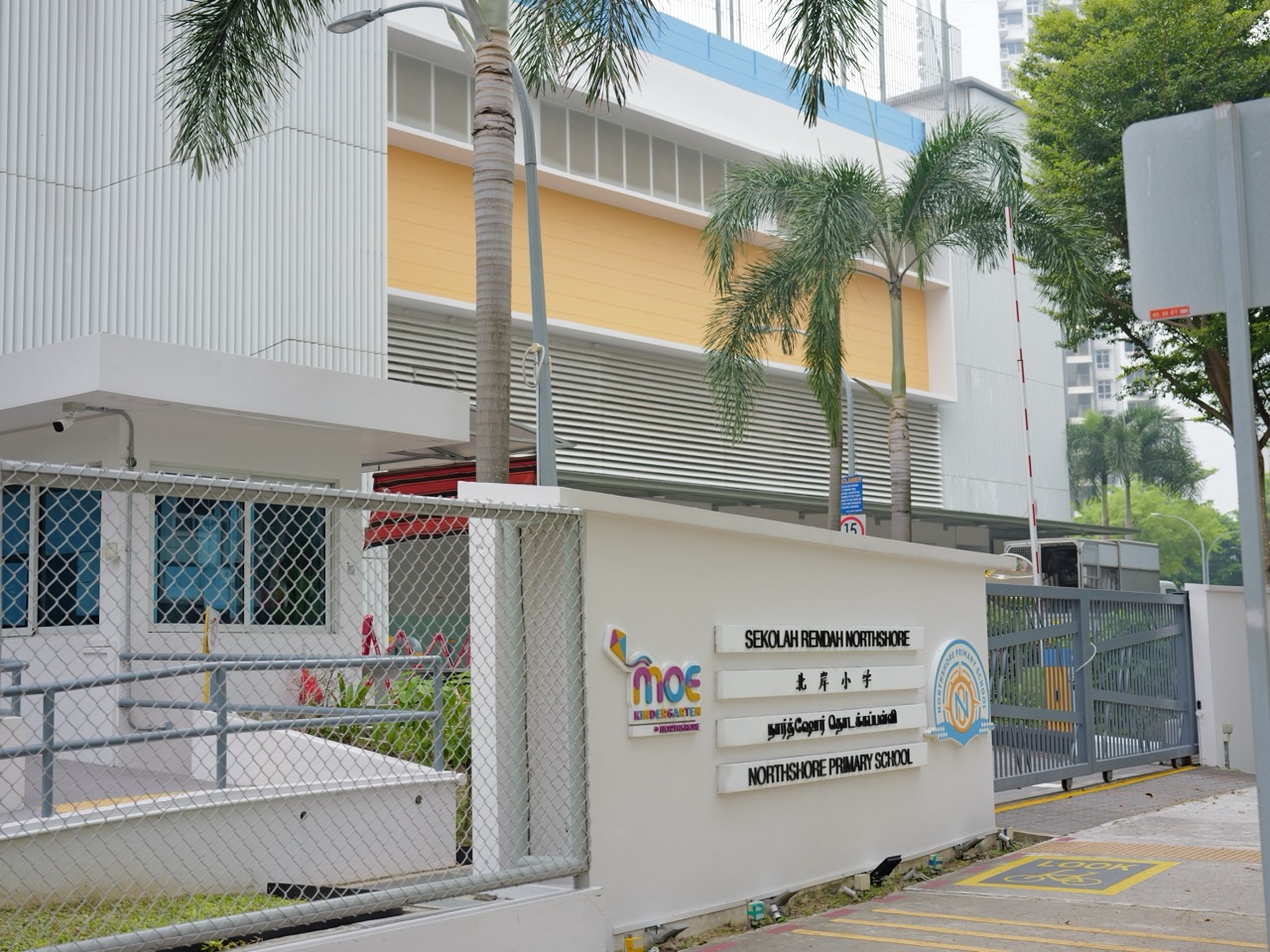
Local photograph: Northshore Primary School entrance. The image illustrates a Punggol school location; it does not document a current school trip or its safety arrangements.
Choose your reading route
Article contents
Sections 1–6
1. Read the actual trip notice before planning anything
2. Consent and personal needs should be handled privately
3. A good learning journey begins with one good question
4. On the day: safety, attention and respectful participation
5. After the trip, turn an experience into something the child remembers
6. Connect Punggol school outings to larger learning and growth
Not every school activity has the same form, transport arrangement or reporting requirement. A museum visit may involve a coach journey, a supervised station-to-station trip or another method chosen by the school. An outdoor programme can include different clothing, footwear, sun protection, water and equipment needs. A historical programme mentioned in a newsletter may not be repeated this year.
Find the official notice through the school’s published parent communication channel. Identify the programme name, date, assembly point, return arrangement, items to bring, stated learning purpose and any forms requiring action. Do not interpret a classmate’s screenshot as the final version when a school has since issued a revised instruction.
For parents supporting children who have just started school, it helps to practise reading a short checklist together. Rather than handing over a heavy bag packed with everything possible, say what each item is for. A refillable water bottle, required medication under school instructions, suitable clothing or a worksheet can each belong to a particular part of the day. The child’s job is to recognise the plan; the adult’s is to follow the official directions.
A simple home reminder card may be useful for the morning, but it is not a replacement for the school’s risk management or safety briefing.
- Date, reporting time and expected return time.
- Location, programme purpose and school-approved transport arrangements.
- Consent or response deadline, if required.
- Required attire, equipment, food and water.
- How parents will be informed about changes to the schedule.
An excursion form is not merely an obstacle to completing the school calendar. It may be the route through which parents provide information the organisers need. Read the questions carefully, answer truthfully and follow any request for acknowledgements or additional documents. If a form is unclear, ask the school rather than assuming an older sibling’s previous form applies.
Some children have access needs or require specific practical arrangements. Those are best discussed with the relevant school staff before the activity rather than improvised at the departure point. The same principle applies to medication, allergies and any school-approved support plan. This article cannot determine a child’s fitness for a particular activity or provide individual medical advice; the parent and school should agree on appropriate procedures, with healthcare guidance when necessary.
Do not upload a child’s medical or identification information to an unofficial site. A permission form should come through the school’s authorised channel. Families using Parents Gateway and school communication can check the difference between verified official notices and social forwarding.
A calm conversation with the child can close the loop: Who is supervising? What should you do if you feel unwell or get separated? Where should you wait if you do not know what to do? The exact instructions must come from the responsible school adults.
- Respond to required consent forms by the published deadline.
- Share necessary access or health information only through official channels.
- Confirm whom to contact about special arrangements.
- Teach the child to seek help from the accompanying teacher or appointed staff.
- Never promise the child that an unannounced change is approved.
If the class is visiting a museum, ask what the students are exploring. Is it a period in Singapore history, an art form or the daily lives of people who lived differently? If the destination is an environmental site, ask what the pupils might observe about water, plants, transport, recycling or urban design. The question does not need to be grand; it needs to point the child’s attention towards something meaningful.
Punggol View Primary’s CCE page explicitly links cohort learning journeys with culture, heritage and social understanding, and its outdoor experiential learning with inquiry and real-world connections. Punggol Primary’s GreeNovation programme connects environmental themes to interdisciplinary study. These examples show why schools may value an observation that cannot be completed by reading another worksheet.
For a Primary 1 child, the question might be as simple as, ‘What surprised you?’ For a Primary 4 pupil, it could be, ‘What did you observe that supported the guide’s explanation?’ A Secondary 2 student might consider how a design balances two competing needs. The cognitive demand should grow with the learner. The trip becomes a lesson when the child can link what they saw to an idea they already knew or an idea they are now ready to learn.
You do not have to send an elaborate pre-trip assignment from home. One curious question is often enough to make the experience more memorable.
- Ask what the learning objective is, using the school’s own wording.
- Help the child think of one thing to notice.
- Connect the topic to a recent school lesson or everyday experience.
- Keep expectations playful for younger children and more analytical for older students.
Parents can reinforce a few universal principles, while recognising that the school is responsible for its own operational instructions. Stay with the assigned group, follow the accompanying adults, respect the venue, and report concerns promptly. If the child becomes separated or unsure, they should follow the school’s designated help procedure rather than wander off to search independently.
Outdoor conditions can change quickly. Heat, rain, traffic, wet surfaces and crowded areas should be considered by the organisers and explained to participants as appropriate. At home, reinforce the habit of listening to the teacher’s safety briefing. Do not infer from a photograph, online map or old programme summary that a particular site is safe on the activity date.
A visit to a public place is also a lesson in citizenship. Children can practise taking turns, keeping walkways clear, listening to guides and protecting shared spaces. If an activity is designed to prompt questions, students should feel able to ask respectfully rather than remain silent because they fear being wrong.
Punggol’s own neighbourhood can support similar observational habits outside school. The neighbourhood science observation article shows how to notice, record and explain without pretending that an informal family walk replaces teacher-supervised fieldwork.
- Listen to the supervising staff and any safety briefing.
- Stay with the appointed group and follow venue rules.
- Ask a responsible adult for help if lost or unwell.
- Treat other visitors, exhibits and shared spaces respectfully.
- Notice one thing that connects directly to the lesson.
SECTION 5 OF 6
After the trip, turn an experience into something the child remembers
A child may return bubbling with excitement and tell a story about the bus ride rather than the exhibit. Let them enjoy the memory. Then gently return to the purpose: What was new? What did you see that changed your mind? Can you describe one feature, explain one cause or compare two things? A good follow-up invites thought; it does not make the outing feel like an examination.
For younger pupils, draw one observation or tell a three-part story. For middle primary, write a few sentences distinguishing what was seen from what was inferred. For older students, connect observations to a Science explanation, historical source, geographical pattern or English discussion. The National Education and school-learning aims become real when the learner can explain why the experience mattered.
Parents can encourage accurate records: label a drawing clearly, use only approved photographs, respect image permissions and distinguish fact from personal impression. This is another kind of learning continuity. A trip should be retrievable in the student’s mind weeks later when a related topic appears in class.
If the school assigns reflective work, follow those instructions rather than substitute a family-created project. The best additional home support is usually a short conversation and a clear opportunity for the child to recall their own observations.
- Retell the journey in a simple sequence.
- Name one thing learned and one question that remains.
- Separate what was observed from what was guessed.
- Link the observation to a curriculum topic.
- Keep any photo sharing within school and venue permissions.
It is easy to treat field trips as colourful interruptions to real school. In fact, they can reveal why knowledge is useful. Mathematics helps students reason about scale, distance and patterns. Science offers ways to investigate plants, ecosystems and materials. English helps students listen to a guide, ask a precise question and describe evidence. Social Studies gives historical and civic context to what a museum displays.
Punggol offers a changing landscape in which the same connections can be explored through official school programmes and independent family observation. Waterfront paths, community spaces, transport networks and environmental initiatives are not just places to pass through; they are potential examples of the systems children learn about. The waterfront student-life guide and Punggol Digital District and career pathways guide take those connections further.
A useful learning-support approach asks whether the child can carry the meaning of an outing into a new context. Can they explain a related question without the exhibit in front of them? Can they compare the school trip with something observed near home? If so, the experience has become usable knowledge.
Families considering extra teaching should still begin with diagnosis. A delightful outing does not prove that a pupil has mastered the related academic content, and a weak test score does not mean the outing was wasted. Good three-student tuition, where needed, can help connect the practical experience to the underlying English, Mathematics or Science concepts without removing the child’s joy of discovery.
Frequently asked questions
Do I have to sign a consent form for every school learning journey?
Follow the current official notice for the particular activity. The school will state whether consent, acknowledgement or additional information is required and how to submit it.
What should I pack for a Punggol primary school excursion?
Pack the items specified by the school. Common considerations include permitted attire, suitable footwear, water and relevant approved items, but requirements differ by destination and programme.
Does a school’s old newsletter confirm this year’s learning journey?
No. Past newsletters show previous programmes and educational interests, not the current timetable or itinerary. Check the latest school communications.
Continue exploring Punggol education
Read school journeys and rainy-day travel, neighbourhood Science observation, ALP and LLP programmes, and the school-holiday photo journal. For broader programme details, consult your child’s official school notices.
Sources and accuracy notes
- Punggol View Primary School: Character and Citizenship Education, describing cohort learning journeys and outdoor experiential learning.
- Punggol Primary School: GreeNovation Applied Learning Programme (updated 12 August 2026), including green learning journeys.
- MOE: Key Changes Under CCE 2021—student development experiences, official historical context for cohort learning journeys.
- Punggol View Primary School: Values-in-Action and Outdoor Experiential Learning, for published educational aims; current itineraries must be checked directly.
This independent eduKateSG guide provides general parent information, not instructions from any particular school. Confirm current procedures, facilities, schedules and eligibility with your child’s school and the relevant authorities. School exterior photographs illustrate the neighbourhood; they are not evidence of individual school practices.