
What should a Punggol parent do when a child consistently struggles with reading, Mathematics, attention, communication or settling into school? Start by describing the actual difficulty to the child’s teacher and asking what support or assessment the school recommends. Look for examples across lessons and daily routines rather than diagnosing the child from a test result. A learning gap, a language difficulty, a temporary adjustment issue and a special educational need are not the same thing, even if they can look similar in homework.
Singapore mainstream schools have teachers and school-based support systems for students with different learning needs, including Special Educational Needs Officers (SEN Officers) and targeted programmes where appropriate. For a verified Punggol example, Punggol Cove Primary School’s official parent page lists student well-being personnel, including SEN Officers, and describes a P3/P4 school-based dyslexia remediation programme in its after-school information. Details of eligibility, referral and provision must be confirmed with the school; these names and programmes cannot be assumed to be identical everywhere.
The practical aim is simple: understand the child first, select the right support next, and keep teaching connected from one day to the next. A child deserves help suited to their needs—not a label picked by guesswork and not an endless stack of tuition worksheets.
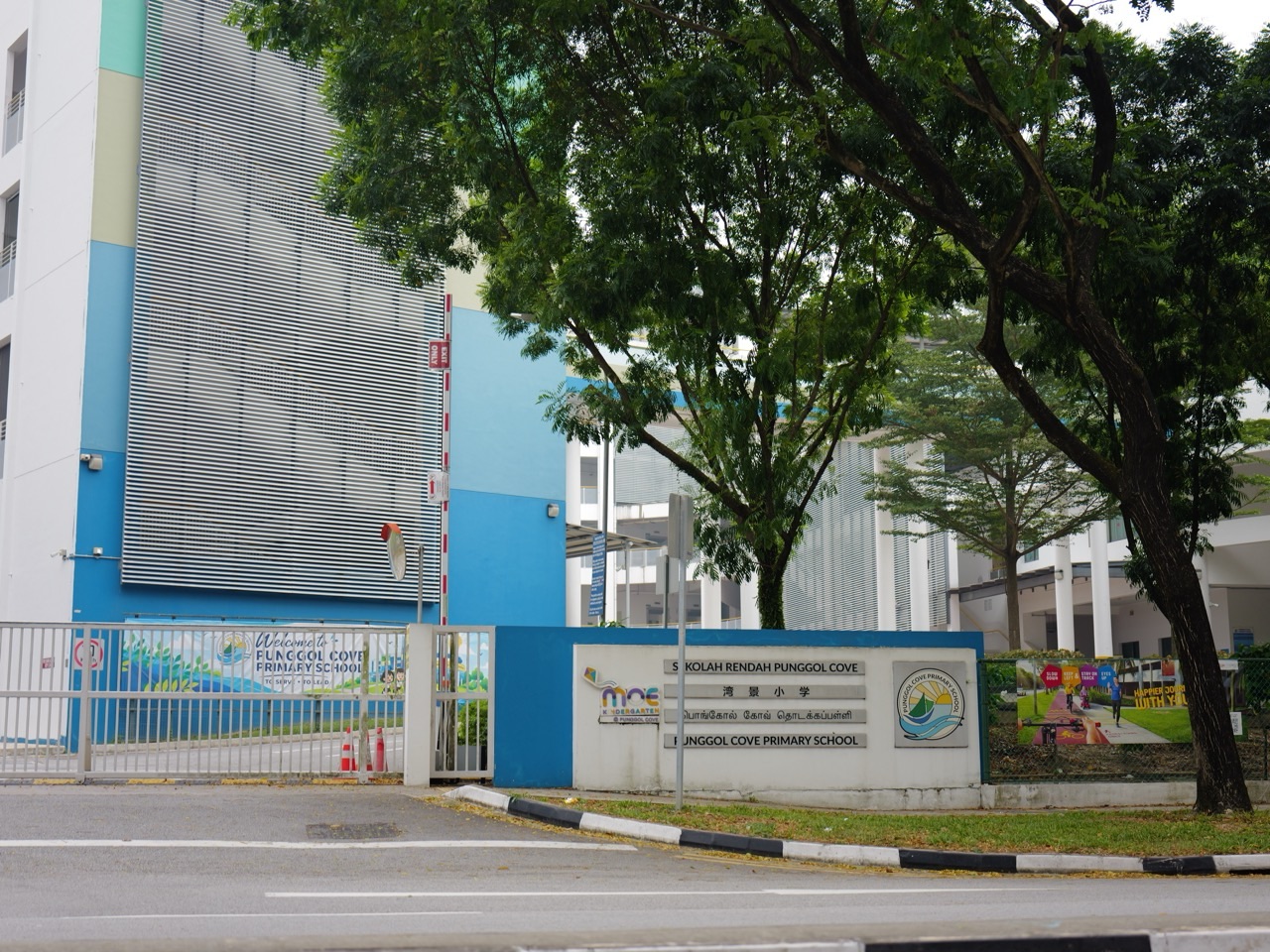
Local photograph: Punggol Cove Primary School exterior and entrance. The photograph is not evidence of any student’s disability, educational needs or programme participation.
Choose your reading route
Understand first · Local school support · Appropriate tuition
Article contents
Explore the six sections
1. A school difficulty is a clue, not a diagnosis
2. Understand the difference between classroom support, LSP and SEN
3. What the official Punggol Cove Primary parent page actually tells us
4. When to speak to a teacher, SEN Officer or qualified professional
5. How learning support can preserve confidence and friendship
Consider three children who refuse to start an English worksheet. The first cannot decode many of the words. The second can read the passage aloud but cannot work out what the question asks. The third understands both yet finds starting and staying with a task very difficult. They have produced the same visible outcome—a blank page—but the underlying learning problems are different.
Parents can begin by observing what the child does independently, what happens after a clear explanation and whether the problem repeats in multiple settings. Is the difficulty specific to one topic? Does it persist after structured practice? Is the student otherwise comfortable and engaged? These questions organise the story without turning parents into clinicians.
A difficulty with reading, attention, behaviour, communication or motor skills may have many explanations. Qualified professionals and the school’s relevant support team can help determine what further assessment is appropriate. Neither a website article nor a tuition centre can diagnose dyslexia, ADHD, autism or other conditions from a handful of examples.
- Record concrete examples rather than conclusions
- Note whether the difficulty occurs across subjects or settings
- Ask the child what they find hard about the task
- Share observations privately with the class or form teacher
- Seek qualified advice when a more specialised assessment is recommended
Schools support different learning needs in different ways. Everyday classroom teaching may involve clearer explanations, differentiated materials and teacher feedback. Some pupils benefit from targeted academic intervention. Others have identified special educational needs and may require specific support arrangements. Families should not assume that a student must have a diagnosis to ask a teacher about learning difficulty, or that every student who receives extra literacy practice has a disability.
MOE describes the support available in primary schools. Its learning support provisions include early literacy and numeracy help, while school-based support for some identified needs can involve specialised staff and interventions. The details depend on the student’s needs, level, school and current MOE programmes.
A useful first meeting asks ‘Which skill is not yet secure, which support is already being provided, and what evidence would tell us that it is helping?’ That keeps the discussion centred on learning progress rather than comparing children with a generic picture of a ‘normal’ student.
- Distinguish a missing taught skill from a broader support need
- Ask what the school has observed and already tried
- Clarify whether a programme is appropriate or even available for the child
- Agree what the family should do at home
- Avoid making a medical or developmental inference from school marks alone
SECTION 3 OF 6
What the official Punggol Cove Primary parent page actually tells us
Parents searching ‘special educational needs support Punggol’ often want an immediate local answer. The Punggol Cove Primary School For Parents page, updated in September 2026, lists School Counsellor, Student Welfare Officer and Special Educational Needs Officer roles in its student well-being information. It also includes parent communication channels and school-based dyslexia remediation among its after-school programme details.
That establishes where parents can begin looking; it does not promise a specific intervention to a particular child. Eligibility, staff assignments, the referral path and timetables can change. Families should contact the school through the current official channel, not send sensitive reports to unverified emails or informal parent groups.
Punggol families considering other local schools—including Oasis Primary, Greendale Primary, Northshore Primary or Edgefield Primary—should check those schools’ official pages and current student-support contacts individually. Our school open-house question guide helps parents ask how student support actually works without treating any single staff list as a universal ranking.
- Use official school pages to identify the correct point of contact
- Ask how a parent raises a learning or support concern
- Check what information the school needs and how it is kept confidential
- Confirm current programme availability and selection process
- Discuss the student’s strengths as well as challenges
For an emerging learning difficulty, the form or class teacher is often a practical first contact. The teacher can explain classroom observations and existing school approaches and guide parents toward relevant school personnel. A SEN Officer, school counsellor, welfare officer or other professional may then become involved as appropriate to the concern. Their roles are not interchangeable: emotional well-being, attendance and specialised learning support can require different kinds of expertise.
Write a short record that includes what the child can do, what they find difficult, how long the difficulty has been observed and what has already been tried. If a qualified professional has produced an assessment or recommendations, ask the school how to submit relevant information through an approved secure channel. Avoid forwarding such material into public or group chats.
For more complex needs, the question may include which school setting and arrangements are appropriate. MOE’s special educational needs information and primary-school support information provide official starting points. School staff and qualified professionals are the appropriate people to interpret those options for an individual child.
- Request a conversation based on specific examples
- Ask which school professional is best placed to help
- Share necessary reports only via approved private channels
- Discuss both classroom access and day-to-day independence
- Set a follow-up point and observe progress without pressuring the child
A child who regularly hears ‘You are slow’ may begin to believe that learning itself is closed to them. That is one reason thoughtful support should protect dignity. A child may be an excellent storyteller yet struggle with decoding written words; another may reason brilliantly with models but become overwhelmed by lengthy oral instructions. Strengths and needs can coexist.
Make instructions comprehensible and manageable. Some learners benefit from a visual timetable, an agreed reminder cue, shorter sequences of instructions or extra opportunities to check comprehension. Specific strategies should be selected in consultation with the school and, when appropriate, professionals rather than assumed to help everyone.
Belonging matters too. Support should help a student participate in school life where possible, not only complete worksheets. The Punggol friendships and getting-help guide explores trusted adults and peer relationships. Student support can involve academic, behavioural, social and emotional needs, but each concern requires its own thoughtful response.
- Recognise interests and areas of competence
- Choose strategies that the child can actually use
- Avoid public labels and comparisons
- Keep friendships, CCAs and appropriate participation in view
- Notice whether the child is becoming more independent and confident
Focused tuition may help when the problem is a clearly identified subject gap: fractions that never made sense, a weak vocabulary base, uncertainty about how to construct Science explanations or insufficient practice transferring a method to unfamiliar questions. Such problems may coexist with additional needs, but they are not automatically caused by the same thing.
A tuition lesson is not an educational psychologist’s assessment, speech and language therapy, occupational therapy or school-authorised SEN intervention. Parents should not replace recommended professional or school support with generic tuition. Before enrolling, check whether the setting and tutor’s capabilities genuinely fit the student’s learning and accessibility needs, and whether school guidance needs to be considered.
eduKate’s premium three-student tutorial model is built around small-group explanation and correction, with the parent’s starting question kept clear: what learning ability needs to be strengthened? When a student requires specialised support, that need must be addressed by appropriately qualified people. The healthiest outcome is a connected team around the child rather than parallel programmes that never speak to one another.
Frequently asked questions
Does struggling with reading mean my child has dyslexia?
No. Reading difficulties can have different causes. Record the specific difficulty, speak with the school and seek a qualified assessment if one is recommended.
Can a Punggol primary school provide support for a child with SEN?
Mainstream schools have relevant support structures, but arrangements depend on individual needs. Punggol Cove Primary School’s September 2026 parent page lists SEN Officers and student well-being contacts; speak with the child’s own school about appropriate support.
Should I arrange tuition or ask the school for learning support first?
Start by finding out what the difficulty is. School support or a qualified specialist may be essential where there are additional needs; focused tuition can complement, but should not replace, those arrangements.
Related Punggol school guides
Explore Punggol Cove Primary School, questions to ask at a school open house, friendships and trusted adults, report books and parent-teacher feedback, and eduKate Punggol for subject-level learning support where suitable.
Sources and checking the facts
- MOE: Understand Special Educational Needs — official information and education support guidance.
- MOE: School Support in Primary Schools — general support options and school resources.
- Punggol Cove Primary School: For Parents — verified September 2026 local school contact and well-being information and after-school programme listings.
- Anchor Green Primary: Structured Tiered Support System — published May 2026 example of a differentiated school support framework; not a statement about how every Punggol school operates.
- Singapore Government Directory: MOE Special Educational Needs Division — official description of national SEN oversight.
This independently authored eduKateSG guide is not an official communication from any individual school. School-specific policies and programme availability can change; check the school’s current official notices and, where appropriate, seek professional advice. The school photo is an exterior illustration, not evidence of any individual child’s performance or needs.