
Moving to Punggol and hoping your child can transfer to a nearby primary school? For Singapore Citizen and Singapore Permanent Resident pupils currently in Primary 1 to Primary 5 who have moved home, MOE’s Primary School Transfer Service offers a central route for applying to a nearer school, subject to eligibility and available vacancies. The service does not let parents choose a preferred school through that process, and a closer new address is not an automatic school place.
Before completing a school transfer application, check the MOE Primary School Transfer Service and its official frequently asked questions. A separate school waitlist may have its own conditions: for example, Punggol View Primary School currently publishes a waitlist application for families enquiring about enrolment or transfer, with offers dependent on vacancies. Those are not promises that every application succeeds.
The family’s next task is to think beyond the transfer form. A new route, new classroom, new classmates, timetable differences and unfinished topics can all arrive together. This guide helps Punggol parents separate the administrative process from the equally important human work of making a school change safe, orderly and encouraging.
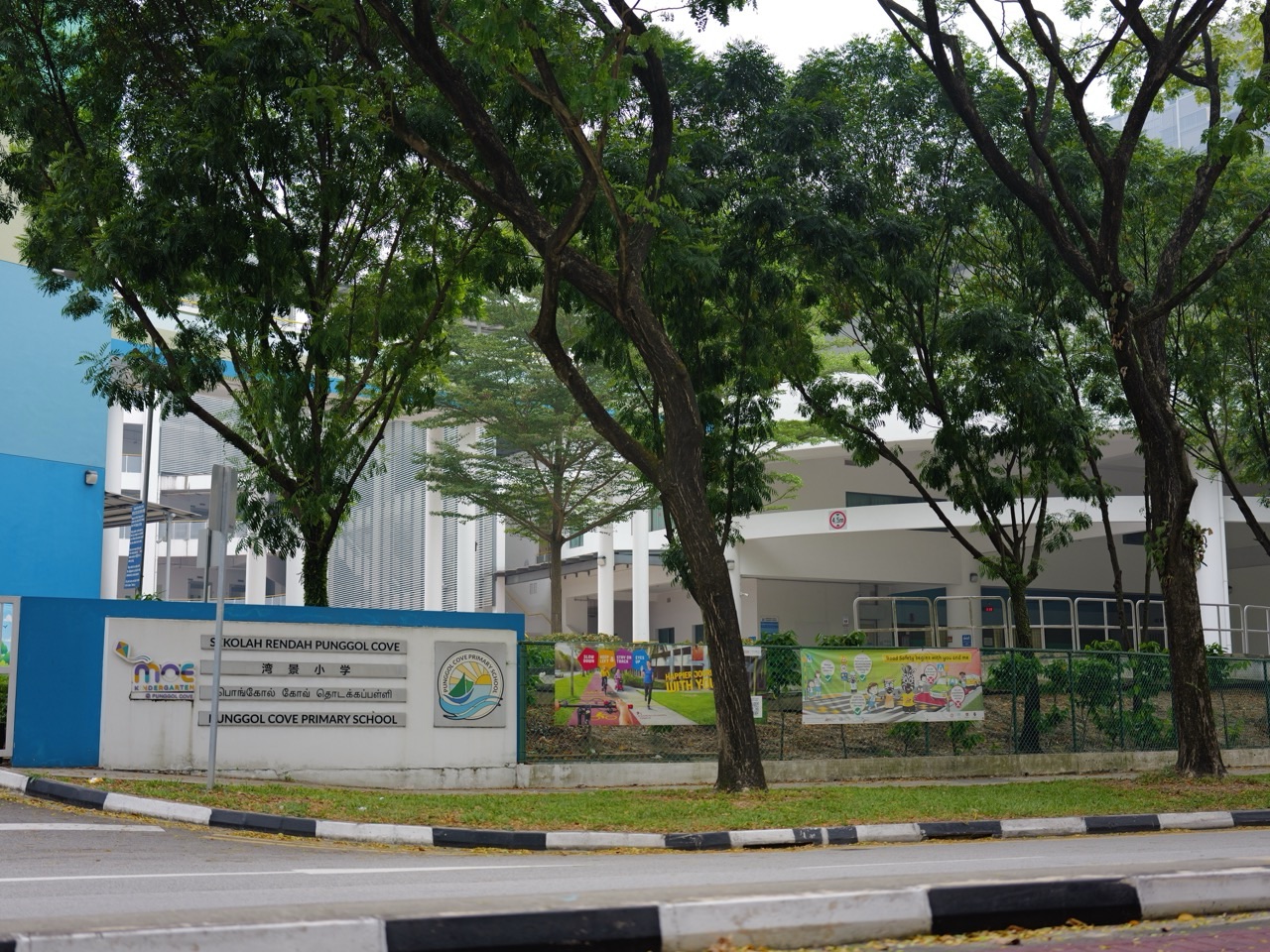
Local photograph: Punggol Cove Primary School exterior. The image identifies a local school setting; it does not establish vacancies or transfer eligibility.
Choose your reading route
Transfer eligibility · Plan the journey · Decide with clarity
Article contents
Sections 1–6
1. Who can use the MOE primary school transfer service?
2. Why a Punggol address does not guarantee the school you want
3. Compare the whole school day after moving home
4. How to help a child make a new beginning
MOE’s published transfer service guidance explains that the central scheme is for Singapore Citizen or Permanent Resident children currently attending Primary 1 to Primary 5 who have moved residential address. Its purpose is to support a transfer to an available school nearer to the new home address. It is not a general mechanism for selecting a school because its programme, friends or reputation seem preferable.
Parents who expect to relocate should read the current application window, address verification requirements and detailed instructions before submitting anything. MOE’s official frequently asked questions discuss updates to NRIC address details by reporting time and the information needed for the central process. The precise rules and timing should be confirmed from the live service rather than from an old screenshot.
What about a Primary 6 child, secondary-school student or an international student? Do not assume the same online service applies. Those situations require school-specific or MOE guidance. For prospective Primary 1 entrants who are not yet enrolled, the annual P1 registration process is a different system again.
- Confirm your child’s citizenship or PR status and current Primary level.
- Read the current address-change and eligibility requirements.
- Check the transfer application timeline through MOE.
- Do not assume a P1 registration application is the same as an existing pupil’s transfer.
- Ask MOE or your child’s school about cases outside the service’s scope.
A family might love a particular school entrance near its HDB block. That is understandable: shorter walking time can make mornings easier, especially for younger children. But the central MOE transfer service matches eligible requests with available school places. In the official guidance, parents are told that they cannot choose a school through that central process.
It is also unwise to interpret historic P1 balloting numbers as current mid-year vacancies. P1 admission and transfer availability are not identical. Vacancies can change as pupils join, move or progress to the next year. A website describing a school as popular does not tell a parent whether an eligible transfer will be successful.
For school-specific enquiries, a page such as our Punggol View Primary School guide can introduce the campus, while the school’s official forms page provides its current waitlist route. Use current official information, not speculative admissions odds.
- Distinguish central transfer eligibility from a school’s waitlist procedure.
- Ask whether the published contact route is meant for the child’s level and situation.
- Never treat historical vacancy or ballot data as a live offer.
- Keep the current school informed according to its official process.
For a family changing homes within or into Punggol, school location matters because it affects every weekday. Map the journey door-to-gate, including walking sections, crossings, bus or LRT waiting time, transfers, sheltered areas and the adult collection plan. A school that looks close on a map may still require an awkward route.
Consider what happens after dismissal. Some children go straight home; others attend student care, an approved after-school activity, or family-arranged care. Check those arrangements independently instead of assuming they move with the child when the school changes. Even the timing of meals and homework may feel unfamiliar in a new routine.
Our transport and rainy-day journeys guide offers a way to test the whole journey, while student care and primary school afternoons helps families ask about the afternoon. The goal is a route the child can actually manage, not a theoretical travel-time saving.
- Travel the route at a suitable time before the first school day.
- Confirm current school gate and dismissal arrangements.
- Check the after-school and collection plan.
- Revisit transport allowances and any existing financial assistance.
- Make a clear backup plan for disrupted journeys.
A child transferring schools may be excited about a shorter trip and still feel sad about leaving friends. Both feelings can be true. Allow the child to say what they are looking forward to and what they will miss. Adults can help with practical questions—where the classroom is, whom to ask for help, what lunchtime looks like—without requiring immediate enthusiasm.
Familiarity builds confidence. If the school provides an orientation or first-day instructions, follow them. A child can practise introducing themselves, asking for a classmate’s name and understanding that friendships often develop through repeated ordinary interactions. Nobody has to become best friends on the first day.
Keep an appropriate connection with old friends where possible, but help the student build a life in the new school too. Our friendships and independence guide discusses similar social transitions at secondary level. If a child remains distressed or unsafe, involve school staff rather than interpreting every reluctance as mere shyness.
- Ask what the child wants to know about the new class.
- Explain whom they can approach at school for help.
- Give friendships time to develop.
- Maintain familiar rest, food and home routines.
- Tell the school about significant support needs through appropriate channels.
Moving schools does not mean the child starts Mathematics, English, Science or Mother Tongue again from the first chapter. But schools may sequence topics, homework assignments and class tests differently within the curriculum. A student can arrive in a new class while it is midway through a topic they have not encountered in the same order.
Ask the new school what materials are needed and whether the teacher recommends catching up on particular content. Keep samples of recent work, assessment feedback and any learning-support information that can be shared through appropriate official procedures. Do not send sensitive student records in casual chat groups.
The useful question is not ‘Is my child behind?’ but ‘Which exact topic or classroom routine is unfamiliar now?’ If fractions, paragraph development or Science explanations need bridging, a small targeted plan can restore continuity faster than a large, indiscriminate stack of work. The school bags and booklists guide adds a practical starting point for getting organised.
- Confirm differences in chapter sequence or topic coverage.
- Check books, online systems and class assignment instructions.
- Ask how the teacher wants missing concepts reviewed.
- Create one manageable catch-up task at a time.
- Monitor confidence as well as marks.
School changes can tempt families to compare everything at once: academic reputation, distance, CCAs, subject strengths, facilities and old friendships. Those are meaningful factors, but the immediate administrative question is narrower. Which official transfer route applies, what can it actually offer, and what happens if no suitable place is available?
From there, build the human plan. A manageable commute, clear materials, a trusted adult contact and a small learning bridge often matter more in the first few weeks than choosing the supposedly perfect supplementary workbook. The family can review progress once the child has had enough ordinary days to settle.
Our school open-house questions guide, school communication guide and parent–teacher meeting questions form a useful next reading path. A new address changes the route; a careful plan keeps the child’s learning connected.
Frequently asked questions
Can I choose a particular Punggol primary school through MOE’s transfer service?
The official Primary School Transfer Service guidance says parents cannot choose a school through that central route. Placement is subject to criteria including vacancies and proximity to the new address.
Can a Primary 6 pupil use the same transfer service?
The published central service criteria cover eligible Primary 1 to Primary 5 students. Families with a Primary 6 pupil should seek current, case-specific advice from MOE and the school.
Does joining a school waitlist mean a transfer is confirmed?
No. A waitlist is an enquiry or application route, not an offer of placement. Follow the school’s official instructions and do not make irreversible plans based on an unconfirmed vacancy.
Explore the connected Punggol guides
Use school open-house questions, school transport and rain, student care planning, and school communications to keep decisions grounded.
Sources and accuracy notes
- Ministry of Education: School Transfer Due to Change of Address (official service page; check current application dates).
- MOE Primary School Transfer Service: Frequently Asked Questions (eligibility, vacancy-based allocation and restrictions on school choice).
- MOE: Primary School Transfer Service application guide (process guidance; confirm interface remains current).
- Punggol View Primary School: Forms (official school-specific waitlist and enrolment enquiries).
- MOE: P1 Registration (separate route for first-time Primary 1 admission).
Independent eduKateSG guide for parents and students. Check the latest official MOE instructions and your child’s school’s current notices before making financial, enrolment or learning decisions. Exterior school photographs illustrate the locality; they do not establish the school’s current policies.