
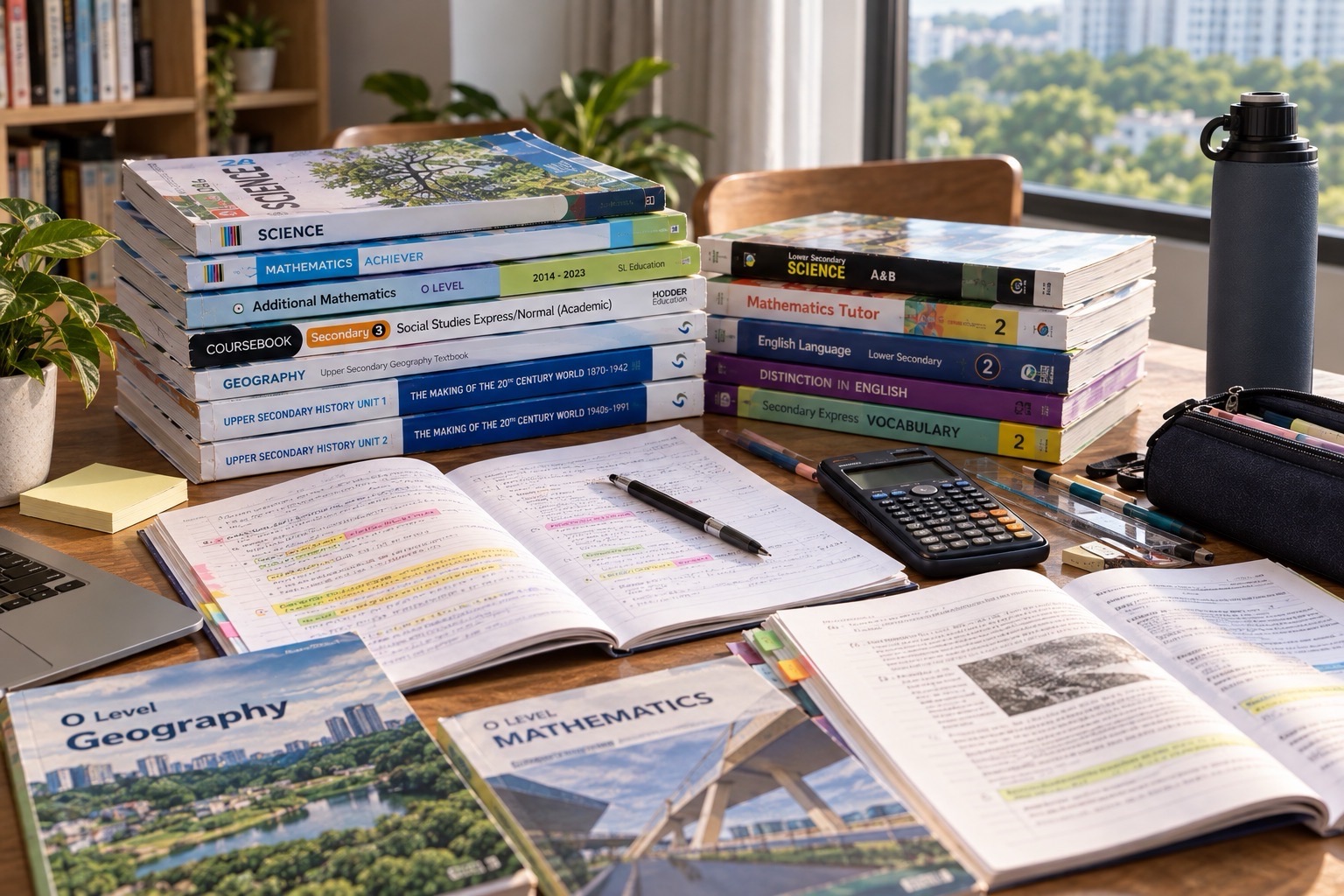
Secondary 1 G1 Mathematics Tutor Bukit Timah. A simple G1 Secondary 1 Maths guide to percentage increases, decreases and why reversing a discount needs a different calculation. This quick-read guide gives parents and students a clear worked example, one common mistake to watch for, and a short home check.
Start with the idea. Then see if your child can explain the method without looking at an answer key. A useful lesson is one that leaves the learner more independent than before.
Did you know? A 20% rise is not always cancelled by a 20% fall
Did you know? If a quantity increases by 20% and then decreases by 20%, it does not necessarily return to the starting value. The two percentages are calculated using different amounts as their bases. That is one of the most useful things a Secondary 1 G1 Mathematics student can learn about percentage change.
Imagine an invented price of $100. A 20% increase makes it $120. A 20% decrease from $120 removes $24, leaving $96. The starting and ending values differ by $4. Understanding which amount represents 100% is more powerful than memorising a sentence about multiplying by 1.2 or 0.8.
First find out what represents 100%
Suppose a fictitious school-club item originally costs $80 and its price increases by 25%. The original $80 is 100%. The increase is 25% of 80, which equals $20. The new price is therefore $100.
A learner who writes 25 × 80 may recognise the digits but misunderstand the percent sign. Explain that 25% means 25 out of every 100, or a quarter. One quarter of 80 is 20. By building the meaning first, you give the calculation a check.
Calculate a percentage decrease
Now suppose a fictional bundle is priced at $60, then marked down by 15%. The discount is 15/100 × 60 = $9. The new price is $51. Another method is to calculate the remaining 85% directly: 0.85 × 60 = $51.
The two methods should agree. If they do not, compare the intermediate steps. A percentage reduction must produce a lower amount when the original quantity is positive and the decrease is between 0% and 100%. That simple expectation catches surprisingly many misplaced-decimal errors.
Increase by 25% or increase to 125%?
These phrases sound different but can describe the same final value. Increase by 25% means add a quarter of the original amount. Increase to 125% means the new amount is one and a quarter times the original.
If the starting amount is 40, both give 50: 40 + 0.25 × 40 = 50, or 1.25 × 40 = 50. The wording has to be read carefully, because “125% increase” would instead mean adding 125% of the starting value and producing 225% of it.
Why percentage change depends on direction
Suppose a score rises from 40 to 50. The increase is 10, and the starting base was 40. The percentage increase is 10/40 × 100% = 25%. If the score later falls from 50 to 40, the decrease is still 10, but the starting base for that new change was 50. The percentage decrease is 10/50 × 100% = 20%.
The same difference of ten leads to two different percentages. A good tutor asks the student to write change divided by the original amount and then to identify the original for that particular comparison.
A tidy method for percentage word problems
Step one: underline the amount at the start of the change. Step two: circle “increase”, “decrease”, “remaining” or “original”. Step three: identify the percentage of that starting amount. Step four: add or subtract it, then write the correct unit.
For example, an imaginary event has 200 participants and its attendance increases by 10%. Ten per cent of 200 is 20, so the new attendance is 220. If attendance later decreases by ten people, that is a subtraction of an amount, not automatically a decrease of 10%.
What small-group feedback can reveal
A pupil may correctly calculate 20% of 120 but apply it to the wrong base. Another may take the discount as the final price. A third may confuse “by 25%” with “to 25%”. Their arithmetic could be sound while the interpretation is wrong.
eduKateSG’s published Secondary 1 Mathematics tutorials near Sixth Avenue MRT use premium 3-pax groups with 1.5-hour weekly lessons, guided corrections and topic-specific practice. A tutor can ask each learner to label 100% and then solve a changed question, helping parents understand where the first error occurs.
Five-minute percentage change check
A. Increase 80 by 25%. Answer: 100. B. Decrease 60 by 15%. Answer: 51. C. A value rises from 40 to 50. What is the percentage increase? Answer: 25%.
The best follow-up question is “What was 100% in this problem?” When your child can identify that amount in each case, they are learning a method that works beyond familiar discount worksheets.
Frequently asked questions
Does Secondary 1 G1 include percentage increase and decrease? Yes. The MOE syllabus includes increasing and decreasing quantities by a given percentage and finding percentage increase or decrease.
Why doesn’t a 20% decrease undo a 20% increase? The second percentage is calculated from a new base.
Must the answer always be a percentage? No. The question may ask for the new quantity, the amount of change or the percentage change. Read the requested unit.
More Secondary 1 G1 Mathematics guides
- Number Patterns: Finding the Nth Term
- Fraction and Decimal Ratios in Simplest Form
- Turning Word Problems into Algebraic Expressions
- Percentages: Finding the Missing Whole
Read the original eduKateSG Secondary 1 Mathematics small-group tutorial guide for details of the existing teaching model. The source guide is unchanged. The published programme describes three-student tutorials near Sixth Avenue MRT, using 1.5-hour weekly lessons and focused, guided correction.
For Singapore’s official topic boundaries, refer to the Ministry of Education G1 Mathematics syllabus. G1 is a subject level under Full Subject-Based Banding and is not a permanent label for a child’s ability. Schools may arrange topics and assessments in different sequences.
For parents in Bukit Timah: bring a recent marked question when exploring tuition. Ask which first decision needs correcting and whether the weekly three-pupil Mathematics format would suit your child’s current G1 work. Enquire with eduKate Singapore about current classes and availability.