
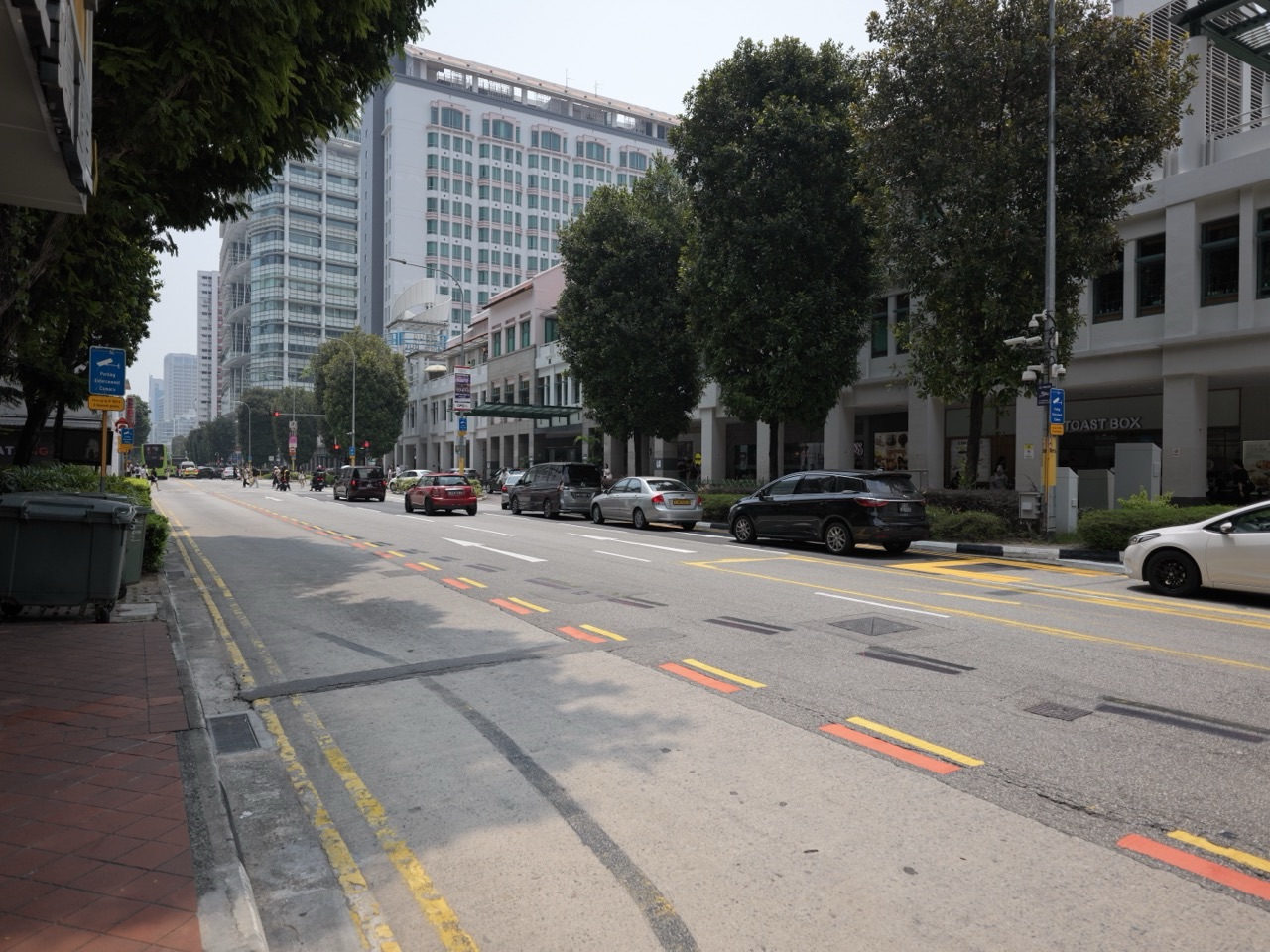
Did you know a street name can survive while the street itself changes? Bugis traders were recorded in early nineteenth-century Singapore, an 1829 map showed a Jalan Bugus farther east, and modern Bugis Junction opened only in 1995. Understanding the differences is an excellent Secondary 1 G3 History source challenge.
eduKateSG offers premium three-student History tutorials for Bugis families near Sixth Avenue MRT, not at Bugis MRT. Each weekly 1.5-hour lesson uses a child’s genuine school-marked work to strengthen chronology, inference, source purpose and historical explanation. Local heritage gives the learner an accessible example; the actual school syllabus remains the assessed curriculum.
The learning model follows the immutable Clementi small-group tutorial reference. For factual local history see National Library’s Bugis Street research and National Heritage Board’s Kampong Glam Heritage Trail.
What happens during a Secondary 1 G3 History tutorial?
The tutor begins with a real marked source response and asks where the student’s thinking first went wrong. A child may correctly identify Bugis on a modern map but assume an 1829 road named Jalan Bugus occupied the same location. Another may describe Sultan Mosque’s present dome and then assign it to a building constructed a century earlier. They need different corrections. Each pupil in the three-student class writes an answer, receives specific feedback and demonstrates the repaired skill on a fresh school-topic source rather than copying one common model.
Why G3 is not a label for the whole child
Under Full Subject-Based Banding, G3 identifies the subject’s level of demand. It is not a permanent label for a person’s abilities and does not turn a Secondary 1 History learner into a final-year examination candidate. Lower-secondary History should strengthen chronology, historical enquiry, source inference, significance, change and continuity. The student’s own school chapter and teacher-marked work come first. When future national examinations become relevant, families check the appropriate examination-year syllabus instead of importing the 2027 standalone K330 paper into every foundation lesson.
Bugis is a regional maritime history, not just a mall name
The Bugis are associated with Sulawesi, formerly called Celebes, and developed maritime connections around the Malay Archipelago. Bugis Street’s name preserves part of that regional story even as the district has changed repeatedly. A place name, however, cannot establish that all later shopkeepers, residents and visitors came from Sulawesi. Historians need dated demographic and trading records for those claims. The tutor helps pupils separate a plausible connection suggested by a name from a documented claim about a particular community at a particular time.
The early settlement occupied an earlier shoreline
Historical mapping from 1819–1820 recorded Bugis settlement near the eastern part of the developing colonial port and what would become Kampong Glam. The precise shoreline, waterways and road alignments differed from today’s urban environment. A modern Bugis MRT plan is valuable for contemporary directions but cannot substitute for a nineteenth-century survey. When the pupil places a historical community on a present-day map, they should label uncertainty and explain which landmarks or waterways allow the comparison rather than invent the positions of long-vanished houses.
February 1820: displacement and commercial decisions
The National Library recounts an arrival of approximately five hundred Riau-Bugis migrants in February 1820 after conflict with Dutch forces. Resident William Farquhar welcomed the migrants in part because of their established trading connections. This is a useful early causal chain: conflict can prompt movement, officials may see trade opportunities and settlement patterns may change. Yet a decision to welcome merchants cannot by itself prove every person prospered. A stronger answer identifies the evidence for the intention and seeks other sources about later outcomes.
The 1822 town plan shows intentions as well as limitations
The 1822 Raffles Town Plan proposed different areas for communities and functions, including an Arab village, royal compound and a Bugis settlement farther east. The National Library notes that the full plan was not realised exactly as originally imagined. Students should therefore use the words ‘planned’ and ‘proposed’ when the source only establishes an intended arrangement. To say that a specific road was completed or a household moved, they need later surveys, deeds or eyewitness accounts. A map with confident lines does not make a proposal an accomplished fact.
The 1829 Jalan Bugus was not today’s retail street
An 1829 survey recorded ‘Jalan Bugus’, but the National Library places the route farther east near the Rochor River rather than the exact modern Bugis Street corridor. A present-day road sign and an older name may have a historical relationship without being geographically identical. This makes a good school exercise: draw the two features separately and state what is known, what is inferred and which additional survey would be needed to establish precise overlap. Correctly spelling the names does not solve the location problem.
Hylam Street reveals another community’s history
Hylam Street near the original Bugis Street was associated with the Hainanese community; ‘Hylam’ reflects an older spelling of Hainan. The existence of this name complicates any simplistic claim that one ethnic group occupied the entire district. Names can preserve traces of particular migrations while streets remain socially mixed and change over generations. A pupil must identify the creator and date of a map or directory before treating it as a description of every household. A later business list might reveal a different distribution from an earlier map.
Historic nicknames show viewpoints, not guaranteed etymologies
The National Library documents Hokkien and Cantonese nicknames for the former Bugis Street, including names translated as ‘white wash’ and ‘black street’. Suggested explanations relate to whitewashed buildings, coastal sand or poor street lighting, but some origins remain uncertain. An investigation should preserve words such as ‘possibly’ and ‘according to’ when sources do. A colourful story may sound more memorable with an exact origin, yet invented precision damages historical reliability. The tutor asks what first recorded the name and what competing explanations exist.
Kampong Glam was more than a single royal residence
The nearby Kampong Glam district had a royal connection and diverse communities of Malay, Arab, Javanese, Sumatran, Baweanese, Banjarese, Chinese and Indian residents and traders. The National Heritage Board’s walking trail records how occupations and local names reflected this mixture. It would be misleading to call every lane a purely royal quarter or pretend every trader belonged to one ethnicity. A focused source enquiry asks which road, period and activity the account actually describes. These boundaries matter when comparing maps and later heritage interpretations.
The first Sultan Mosque belongs to 1824–1826
The National Museum describes the earliest Sultan Mosque as built between 1824 and 1826 near Sultan Hussein Shah’s palace at Kampong Glam. That is a date for the first mosque, not necessarily the familiar structure represented in modern photographs. The institution’s community role and the architecture of its buildings must be traced separately. The student should not use a picture of today’s dome as direct visual evidence of what an 1825 worshipper saw. A plan or illustration from the earlier period would answer that question more appropriately.
The present mosque was built in another construction phase
The earlier Sultan Mosque was replaced after it fell into disrepair. Construction of the new mosque started in 1925, and the National Museum records completion at the end of 1928. Architect Denis Santry designed the building. Two dates that seem incompatible become understandable once a pupil identifies what each source means by ‘first built’ and ‘rebuilt’. We practise a timeline with separate entries for institution, former structure and replacement structure. This is a transferable method for schools, theatres and government offices with long institutional histories.
1975 monument protection is not a founding date
Sultan Mosque was gazetted as a National Monument on 14 March 1975. This date concerns legal protection of a historically important structure, not its first founding or the completion of the present building. A heritage sign may prominently display the gazette date, so a pupil has to read the surrounding words carefully. ‘Established’, ‘completed’, ‘renovated’ and ‘gazetted’ describe different actions. The same kind of distinction matters when a museum label gives an excavation year alongside the much older age of an object.
Bussorah Street preserves memories of pilgrims and trades
Parts of Bussorah Street were historically associated with Kampong Kaji, or Pilgrim Village, while other stretches had names connected with copper-related trades. The National Heritage Board’s Kampong Glam Heritage Trail supplies these examples as clues to past social life. A street name does not prove that every resident made a pilgrimage or worked with copper. We ask the child what an old directory, a commercial advertisement or an oral history could reveal about who used the area. Evidence should answer the actual question, not a stereotype.
Arab Street could have several vernacular names
Different communities used names for Arab Street that the heritage trail records, including Chinese-language references to Java and a Tamil-language name associated with flowers. Those names may highlight what particular people noticed or how they used the street. They need not contradict the current official name. When two sources seem to assign different names to a place, the pupil first asks who was speaking, when and in what context. An everyday nickname is not automatically an official designation, and an official name is not the only historical one.
A historic shophouse photograph has a limited viewpoint
A picture of conserved shophouses can reveal architectural features, shopfronts and visible uses at the moment of capture. It cannot independently establish the ethnicity, income or beliefs of every person in the district. A carefully dated image from the 1960s is also not a picture of the 1820s settlement. Students practise stating the visible clue, offering a reasonable inference and identifying what a different source would be needed to show. This is more rigorous than describing a photograph as ‘proof of Bugis culture’ without specifying any claim.
The famous post-war nightlife came much later
The original Bugis Street grew as an open-air entertainment and dining destination through the 1950s to early 1980s. It attracted tourists, local diners, street vendors and performers, including people whose identities were often described judgementally in contemporary accounts. This is a different era from Bugis trading networks in the 1820s. A student should avoid projecting later entertainment onto the first settlement or treating a traveller’s opinion as a neutral survey of everyone’s experience. Period language is evidence of viewpoints and should be attributed sensitively.
An old tourist’s description is a particular viewpoint
A 1960 traveller could praise Bugis Street’s vibrancy or criticise its nightlife. Either response would tell a historian something about the writer’s values and what they chose to observe. Neither would automatically establish how all residents viewed the district or how every person earned a living there. Source usefulness depends on the enquiry: a tourist account can be strong for tourism perceptions and limited for citywide economic figures. Pupils learn to identify whose voice is present rather than accept one vivid story as a complete social history.
1985 redevelopment is distinct from a later mall opening
The National Library describes redevelopment that displaced the old Bugis Street environment in 1985. The familiar name continued in retail and market branding, but the original physical setting changed. The 1985 intervention should not be confused with the 1995 opening of the Bugis Junction shopping complex. A policy decision, physical redevelopment and opening of a replacement facility are different stages. Students practise writing each as its own dated event, then ask what evidence would connect the stages causally.
Bugis Junction opened in 1995, not in the nineteenth century
The National Library reproduces a photograph of Bugis Junction when it first opened in 1995, showing a very different covered shopping environment. A present-day visitor may see both this mall and a ‘Bugis Street’ bazaar, but cannot assume all venues occupy the original nineteenth-century street layout. For historical comparison, students should identify physical sites and source dates rather than rely only on names. The same district can keep a recognisable commercial identity while its buildings and street spaces change.
Historical significance needs a stated criterion
Which mattered more: the Bugis trading networks, Sultan Mosque’s reconstruction or the street’s late-twentieth-century redevelopment? The answer depends on whether one investigates regional commerce, religious and community institutions, or urban planning. ‘Most famous today’ is not a complete historical criterion. A strong paragraph names the group affected, nature of consequences, scale and duration of change. It then cites evidence relevant to that judgement. Historians can reach different defensible conclusions when they pose different historical questions.
An achievable Historical Investigation about Bugis
Try the question ‘How did the public use of the Bugis Street area change between 1960 and 1995?’ Compare a dated National Museum bazaar photograph, a National Library retrospective and an appropriate 1995 Bugis Junction image. Mark the type and date of each source before making inferences. The exercise should acknowledge what these documents cannot show about every vendor or visitor. A weaker question such as ‘Why was Bugis always the best place?’ assumes the conclusion and lacks a meaningful evidence test.
Modern language should not repeat historical stigma as fact
Historical writing about Bugis Street sometimes used derogatory or sensational descriptions of nightlife, sexuality and gender expression. The word choices of a 1950s newspaper can help reveal the attitudes of a specific author or audience, but the pupil should not quietly adopt them as a factual description of every person. Good History separates an attributed period viewpoint from the writer’s own evidence-based account. It also recognises the human dignity of people whose livelihoods and identities have been reduced to dramatic stereotypes.
Local examples are useful only when they transfer to the school topic
A student can describe Bugis Street’s history beautifully but still struggle with an unfamiliar document from the actual Secondary 1 History syllabus. We therefore end each local exercise by changing to another period, location or source type. The child must still identify provenance, chronology, the relevant clue and the boundary of a claim. That independent transfer is what distinguishes focused tuition from a pleasant heritage lecture. The child’s next school task remains the test.
An illustrative 90-minute three-student History lesson
- 10 minutes: retrieve a correctly dated fact and source clue from school work.
- 15 minutes: identify the earliest problem in each pupil’s genuine marked answer.
- 20 minutes: model one missing inference, chronology or source-context skill.
- 20 minutes: pupils independently answer a new school-relevant source.
- 15 minutes: compare interpretations and correct unsupported overstatements.
- 10 minutes: complete a changed unseen question and record one repair rule.
This timetable is illustrative rather than a fixed promise. A student with inaccurate source dates requires a different correction from one who misinterprets audience or historical significance. Individual written work must remain visible in a three-student group.
An eight-week foundation progression, adjusted to the pupil
- Week 1: school syllabus and actual script diagnosis.
- Week 2: direct observation versus evidence-based inference.
- Week 3: source maker, date, audience and purpose.
- Week 4: distinguish planned, constructed, rebuilt and protected dates.
- Week 5: identify change and continuity in a named feature.
- Week 6: write a short actor–decision–consequence explanation.
- Week 7: complete a question-led investigation using several sources.
- Week 8: answer unfamiliar school-topic evidence independently.
There is no responsible guarantee of a grade after eight weeks. Successful learning is visible when the pupil can apply the same correction to a new question without seeing the old worked answer.
Twelve original fictional source and enquiry drills
The passages below are original fictional classroom exercises, not real archival documents, museum records or examination questions. Each isolates one reasoning move before the pupil uses genuine historical sources.
Practice 1: Early settlement map
Fictional source: Fictional 1820 map marks Bugis traders near an older shoreline.
Question: Can it prove every resident came from Sulawesi? Reasoning: No. A map label does not provide a complete census.
Independent task: Name a different household record.
Practice 2: A proposed town district
Fictional source: Fictional 1822 plan marks a proposed settlement.
Question: Was every line completed? Reasoning: A proposal requires later implementation evidence.
Independent task: Find an 1830s survey.
Practice 3: The older street name
Fictional source: Fictional 1829 plan names Jalan Bugus near a river.
Question: Is it identical to today’s mall street? Reasoning: Not necessarily: names and historical geography differ.
Independent task: Compare dated maps.
Practice 4: An early mosque invitation
Fictional source: Fictional 1825 letter mentions prayer near the palace.
Question: Does it date the current dome? Reasoning: No. The original institution and later structure differ.
Independent task: Write a two-stage timeline.
Practice 5: A new mosque blueprint
Fictional source: Fictional 1925 architectural plan shows a grand dome.
Question: Does design prove completion that year? Reasoning: A later construction record is needed.
Independent task: Name the proof of completion.
Practice 6: A pilgrim diary
Fictional source: Fictional early diary reports lodging on Bussorah Street.
Question: Does it represent all travellers? Reasoning: One account gives a particular perspective.
Independent task: Seek an independent record.
Practice 7: A shop advertisement
Fictional source: Fictional 1930s Arab Street notice promotes textiles.
Question: Can it establish all customers’ incomes? Reasoning: No. A sales message reveals commercial aims.
Independent task: Identify the audience.
Practice 8: A night market photograph
Fictional source: Fictional 1960 photograph shows crowded tables and vendors.
Question: Does it establish annual attendance? Reasoning: A single moment is not a census.
Independent task: Find a series of dated sources.
Practice 9: A tourist memoir
Fictional source: Fictional 1975 visitor describes lively entertainment.
Question: Is this everybody’s opinion? Reasoning: No. It reflects the writer’s values and experience.
Independent task: Find a resident’s account.
Practice 10: Redevelopment document
Fictional source: Fictional 1984 plan proposes new facilities.
Question: Were they already delivered? Reasoning: A plan shows intention, not completion.
Independent task: Find a construction record.
Practice 11: Mall opening advertisement
Fictional source: Fictional 1995 leaflet claims every trader benefited.
Question: Does promotion prove the outcome? Reasoning: No. Independent accounts would be needed.
Independent task: State the limitation.
Practice 12: Unfamiliar school source
Fictional source: Fictional early maritime ledger lists goods arriving at port.
Question: Which thinking moves transfer? Reasoning: Read date, maker, evidence and uncertainty—not Bugis trivia.
Independent task: Give a supported inference.
Common mistakes and their first repairs
- Treating old Jalan Bugus as the precise modern shopping-street location: compare historical maps.
- Dating the present mosque dome to the first mosque’s 1820s construction: separate the replacement building.
- Confusing 1975 monument protection with the first mosque’s foundation: label the type of event.
- Assuming a 1960 nightlife photograph shows the early 1820s trading settlement: distinguish eras.
- Saying a 1985 redevelopment plan guarantees every future business outcome: seek later records.
- Treating a tourist’s opinion as a survey of all residents: identify the source’s viewpoint.
Frequently asked questions about Secondary 1 G3 History Bugis
Is the Bugis neighbourhood itself a national examination topic? We use it to teach source methods. The school’s actual subject syllabus and examined chapter take priority.
Should Secondary 1 pupils begin final-year SEC History papers? Not by default. Foundational source understanding should be taught at the appropriate school stage and the later subject route confirmed when relevant.
Where does the class meet? In the reference programme near Sixth Avenue MRT, not at Bugis Junction. Parents should consider the journey and school workload.
What shows improvement? The child can identify the correct date, make a supported inference and state an evidence limit when answering a different school source.
Official sources and further learning
Read National Library’s Bugis Street history, the National Museum’s Bugis Street Bazaar record, NHB’s Kampong Glam Heritage Trail, Sultan Mosque monument history and the museum’s first-and-second-mosque account. For the school-stage learning framework use the MOE lower-secondary G2/G3 History syllabus, and for later national subject selection use the SEAB G3 directory.
The immutable Clementi three-student tuition reference defines the model. Families can share an authentic marked response with eduKate Singapore when discussing suitability.
Continue the Secondary 1–4 G3 History learning sequence in Bugis
Secondary 2 G3 History tuition Bugis, Secondary 3 G3 History tuition Bugis, Secondary 4 G3 History tuition Bugis. Later years develop wartime and post-war source comparison, upper-secondary historical causation and exam-year-specific paper strategy.