
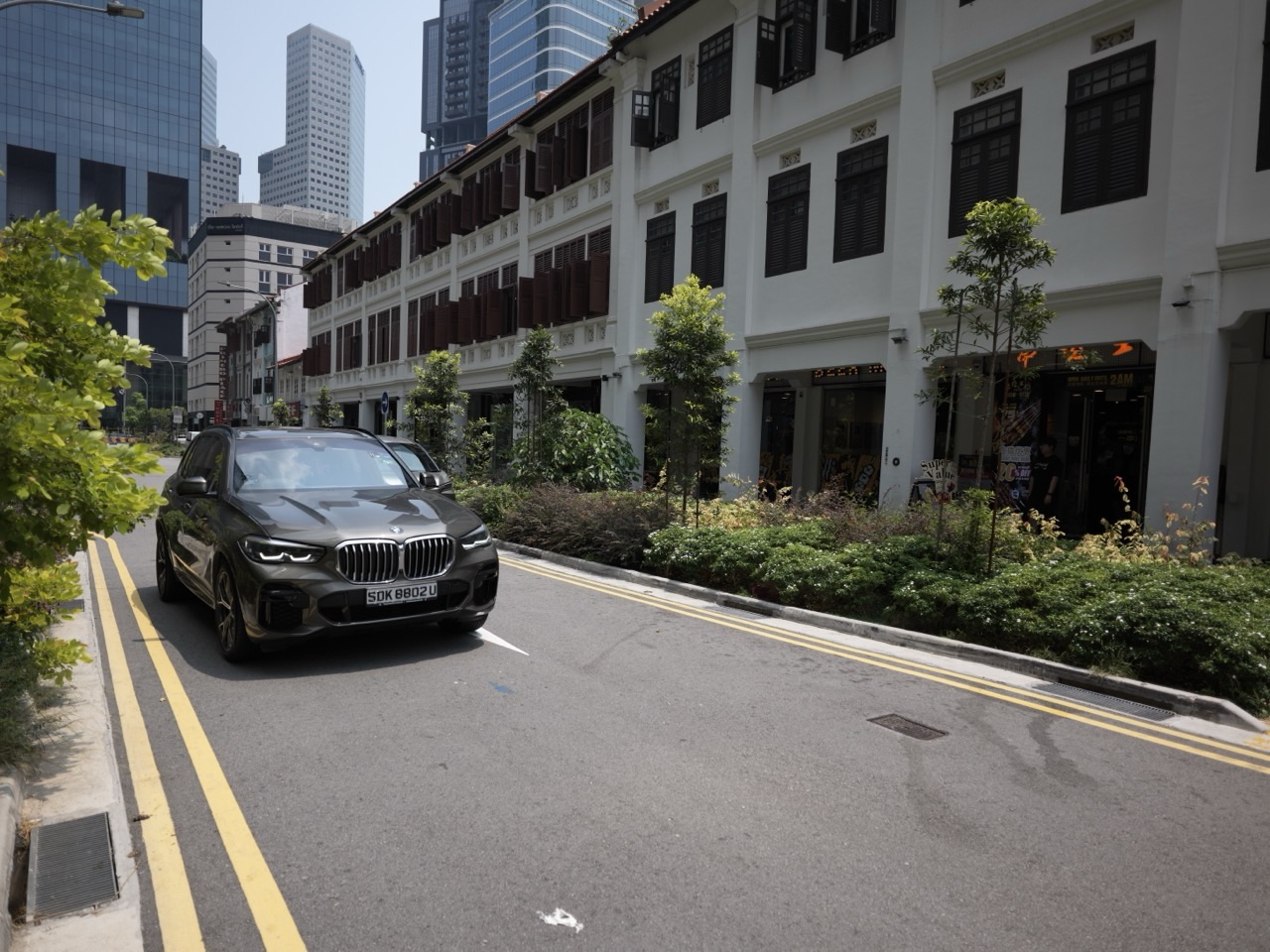
Did you know the open-air Bugis Street night scene familiar in 1960s photographs largely disappeared during redevelopment in 1985, while Bugis Junction opened only in 1995? For Secondary 2 G3 History, those different dates offer a powerful source lesson: changing the street’s physical setting does not mean every person’s experience changed in the same way.
eduKateSG’s premium three-student History tutorials help Bugis-area students distinguish wartime and post-war history, evaluate sources and write cause-and-consequence explanations. The weekly 1.5-hour class is near Sixth Avenue MRT, not at Bugis MRT. Pupils bring genuinely marked school work; Bugis examples illustrate a method and never replace the assessed chapters.
Our teaching model follows the immutable Clementi small-group reference. Historical local accounts are drawn from the National Library’s Bugis Street study, National Museum’s Bugis Street Bazaar record and NHB World War II Heritage Trail.
What happens inside a Secondary 2 G3 History tutorial?
The tutor begins with an actual marked school answer. A child may know that Singapore was occupied from 1942 to 1945 yet read an image of Bugis Street from the 1970s as though it showed wartime conditions. Another may call an official Japanese order proof that everyone obeyed, while a third compares two sources solely by saying one is a photograph and one is a diary. Each student needs a precise correction.
In eduKateSG’s premium three-student weekly 1.5-hour tutorial near Sixth Avenue MRT, pupils work independently and then receive feedback. A new school-related source tests whether the corrected skill transfers beyond Bugis. The class is not held at Bugis MRT.
Lower-secondary History develops source evaluation, not just recall
Secondary 2 G3 History can require students to study wartime and post-war Singapore, depending on the school’s syllabus sequence. Chronology matters, but merely memorising 1942, 1945, 1959, 1963 and 1965 will not automatically produce a strong explanation. The pupil must read why a source was made, whose viewpoint is represented and how its claims relate to other evidence.
The tutor checks the child’s current assessment chapters and teacher comments before introducing more complex tasks. The national SEC begins in 2027, but the final-year K330/K336 paper structures should not be imposed automatically on a lower-secondary pupil’s current work.
Bugis Street existed long before the Japanese Occupation
The earliest Bugis settlement and street names reach back to the early nineteenth century. By the late colonial period, the surrounding district included commercial streets and different migrant communities. The Japanese Occupation did not create Bugis Street or its trading history from nothing.
This helps students distinguish continuity of a location from changes in its political context. An accurate sentence might say that an existing district passed through wartime rule; it should not infer that everything associated with the later night market had already appeared in the 1820s.
The wartime timeline begins before February 1942
The Japanese campaign in Malaya began in December 1941. Singapore fell to Japanese forces on 15 February 1942. The Occupation continued until 1945. A photograph of a street scene must be assigned to the correct phase before the student can explain whether it shows pre-war civilian commerce, wartime rule or post-war recovery.
A 1940 shop advertisement cannot directly show how wartime regulations later affected customers. A 1943 official instruction may show what the administration required but not prove universal compliance. We place documents on a timeline before debating what they mean.
Pre-war ‘Little Japan’ is a historic district label, not a population census
The National Library describes a pre-war area sometimes called Little Japan, extending through parts of the broader Bugis vicinity and nearby streets. Its historical community and commercial activities are a separate subject from the military and political authority imposed after 1942.
Students should not say all Japanese residents were military officials or make collective accusations about a nationality. A historic district name may identify a concentration of businesses without representing every person. The tutor distinguishes demographic descriptions, individual actions and later wartime institutions carefully.
1942–1945: an order and its actual implementation are different
A wartime administration could issue regulations governing trade, movement or everyday conduct. A source showing an official instruction helps historians investigate the regime’s policies and intentions. It cannot alone demonstrate whether every shopkeeper obeyed or every civilian approved.
To evaluate outcomes, a learner may compare the order with a contemporary diary, enforcement record or supply report. Each source answers a different question. The aim is to trace the relationship between policy, lived experience and the limits of the available evidence.
A wartime civilian diary is valuable without representing everybody
One family might describe rationing, anxiety or disrupted work during the Occupation. Its account can provide a powerful personal perspective, yet the family’s specific situation should not be extended to every household without corroboration.
A diary can also contain uncertainties about broader policy decisions that its writer did not witness. We ask what the person personally knew, whether the passage was written at the time or remembered later, and which claims need other evidence. The student learns historical empathy alongside careful interpretation.
15 February 1942 and 12 September 1945 concern different surrenders
In February 1942 British-led forces surrendered Singapore to Japan. On 12 September 1945 Japanese military representatives formally surrendered in Singapore to Allied command. These are different events with different actors and political consequences.
An answer that simply says ‘Singapore surrendered in 1945’ risks obscuring who surrendered and to whom. The tutor uses an actor–date–event grid, then asks pupils to explain how the changing political situation influenced later civilian conditions.
The end of war did not mean instant economic recovery
After the Japanese Occupation ended in 1945, people faced problems of reconstruction, shortages and changes in employment and governance. A public ceremony marking the end of wartime rule does not prove all households had already recovered.
The Bugis commercial district provides a familiar place for asking what sources would demonstrate recovery. A shop reopening notice, a later business directory and a family’s recollection each contribute different evidence. We avoid inventing exact incomes or claims of universal prosperity without records.
Bugis Street’s famous night-time scene belongs mainly to the post-war years
The National Library places the internationally famous open-air dining and entertainment life of the original Bugis Street principally between the 1950s and early 1980s. Tourists, workers, street vendors and performers used the area for different reasons.
It would be inaccurate to describe the particular 1960s street scene as a direct consequence of one isolated wartime decision without evidence connecting them. Historical explanation requires intervening factors, regulations, businesses and people. Shared geography is not by itself proof of causation.
1957: a newspaper could market a street’s reputation
A 1957 Singapore newspaper described Bugis Street through comparison with an artistic district overseas. That account is evidence of how one publication chose to frame the nightlife scene, not an objective measurement of every visitor’s experience.
The tutor asks who wrote the description, who was expected to read it and which features of the street were highlighted or ignored. A flattering, sensational or disapproving portrayal can all reveal the author’s viewpoint. Students should not adopt period labels as facts about every person mentioned.
1960: one traveller’s enthusiasm is not a survey
In 1960 a Dutch travel writer praised Bugis Street’s vitality. The passage is useful for studying a visitor’s impressions and the reputation of the place at that time. It is much less suitable for determining what every resident earned or whether all businesses welcomed tourists.
A student’s source judgement should state the exact enquiry: useful for learning how a visitor saw the street, limited for measuring citywide social attitudes. Instead of writing ‘biased, useless’, the pupil explains the source’s actual evidential contribution.
The famous nightlife also included gender-diverse performers
Historic Bugis Street is remembered in accounts of transgender people and performers, alongside the broader night-time economy. Some older press and tourism descriptions used sensational or stigmatising labels. Those word choices reflect historical attitudes of authors and their audiences.
A careful student distinguishes that reported language from a respectful modern account. A newspaper’s description may be evidence of social perceptions, not proof that everyone in the district behaved alike. Human dignity and accurate attribution are both essential in source analysis.
What an archival photograph of c.1970s Bugis Street can establish
The National Museum has a Bugis Street Bazaar photograph dated broadly to the 1970s. It helps visualise the original street’s trading environment at a particular time. The photograph’s caption may include a later historical interpretation of the market.
A pupil should separate the original image from the catalogue writer’s explanation. Neither automatically records the entire decade or provides a census of all vendors. When the source is dated ‘circa 1970s’, we should not invent the exact night, month or weather conditions.
A photograph of a crowd does not prove everybody enjoyed the street
A photograph showing tourists at tables can support claims about visible visitors, social activity and the arrangement of stalls. It cannot directly establish whether people felt safe, what every diner purchased or the attitudes of residents who stayed home.
The tutor teaches observation, inference and limitation as different steps. A visually engaging source can still be weak for a question about average incomes or the effects of policy. The child learns not to confuse a memorable image with comprehensive evidence.
Different cultural accounts can describe the same place differently
A street vendor’s memoir might focus on income, a traveller’s book on entertainment, and a planning document on congestion or sanitation. Those are different perspectives on Bugis Street, not necessarily mutually exclusive falsehoods.
To compare two accounts, students identify a common issue before deciding whether they agree or differ. Merely stating that one source is official and another personal does not answer how they portray conditions. A historically grounded comparison cites relevant claims and their context.
A planning argument is evidence of what the authorities wanted
Urban redevelopment arguments can refer to sanitation, transport, safety or the efficient use of land. A government statement about a proposed intervention may genuinely document its declared aims, but it is not proof that all intended benefits were later delivered.
The tutor asks which measurable results would show success and which groups might have experienced different consequences. This actor–decision–effect reasoning applies not only to urban history but also to the wartime and post-war policies covered by the school.
1985: redevelopment ends the old Bugis Street environment
The National Library describes the original street’s redevelopment in 1985, bringing an end to the former nightlife setting. This date matters as a change in physical space and community use. It is not the construction date of every current shopping building nearby.
Students should distinguish demolition, redevelopment, the establishment of a relocated bazaar and the later opening of Bugis Junction. When these stages are merged into one vague event, an essay can sound confident but remain historically inaccurate.
The relocated Bugis Street is not the original site
The National Museum’s Bugis Street Bazaar account distinguishes the original street between North Bridge Road and Victoria Street from the later market environment around Victoria and Queen Streets. Keeping the name does not mean that the exact place, vendors or activities remained unchanged.
A present-day image of the new shopping bazaar is useful for studying current commerce, not directly for determining the physical setting of a 1960s nightspot. The student must establish which Bugis Street each document describes.
1995: Bugis Junction opens in another commercial phase
The National Library identifies Bugis Junction’s 1995 opening and its covered retail environment. A photograph of the newly opened mall can help evaluate the built environment then, while a 1962 street photograph depicts a different kind of place.
An argument about change should specify land use, architecture or trading arrangements. It should not claim all traders benefited or suffered identically unless independent evidence supports such a conclusion. Urban transformations affect different people and activities in different ways.
A historian should keep memory and later storytelling distinct
Plays, novels and films continued to represent the lost Bugis Street after the old street environment disappeared. Such works may preserve cultural memories or reinterpret them for particular audiences. They are not automatically direct accounts of events exactly as they occurred.
A 1990s work depicting an earlier decade can be useful evidence of how a society remembered that past. For exact events in 1960, contemporaneous records might be better suited. The tutor teaches what makes a later interpretation valuable without treating it as a literal eyewitness.
1959, 1963 and 1965 are distinct post-war political milestones
Full internal self-government in 1959, Singapore’s merger with Malaysia in 1963 and the separation of August 1965 should not be compressed into one event. The city’s commercial changes happened within these broader political transitions, but shared dates do not automatically establish direct causes.
Students must identify a political actor, decision and consequence before arguing that an event influenced society. A nightlife article alone does not explain why a government adopted a constitutional arrangement. We compare parallel timelines without inventing connections.
Source reliability is relative to a precise question
An official document may reliably establish that a policy was announced while offering an incomplete picture of how residents experienced it. A visitor’s memoir might illuminate a lively evening but provide little evidence of average household welfare.
The tutor makes students complete two statements: ‘useful for investigating …’ and ‘limited for establishing …’. A source is not simply good or bad in every possible enquiry. Its provenance, date, purpose and corroboration determine what can reasonably be claimed.
Corroboration must come from an independent evidence trail
Two modern websites repeating a single old newspaper report do not necessarily provide two independent witnesses. A second source strengthens a claim when it has relevant, preferably separate access to the event being studied.
A source may independently verify a building’s opening date while disagreeing about the value of redevelopment. The pupil states which point has been corroborated and what remains contested. Counting references is not the same as analysing evidence.
An achievable investigation of post-war Bugis Street
One manageable question is: ‘How did different people portray Bugis Street’s night economy between 1957 and 1985?’ The student could compare a dated newspaper description, a National Museum photograph and a later interview with an identified participant.
The child should identify each source’s perspective, era and evidential limits. A sweeping question about whether all of Singapore loved the street is less answerable. A strong Historical Investigation allows complexity and uncertainty rather than beginning with an assumed verdict.
The real test is a new source on the school topic
A student may interpret a Bugis Street 1970s photo correctly but still struggle when a school paper asks about rationing, the Japanese Occupation or post-war political change. Therefore the tutor finishes with an unfamiliar source from the actual taught syllabus.
The pupil must still identify author, chronology, purpose, relevant evidence and limitations. If they cannot do so without the local model, the skill is not yet transferable and requires another carefully chosen exercise.
Inside a 90-minute premium three-student tutorial
- First 10 minutes: reconstruct the relevant dated wartime or post-war event.
- Next 15 minutes: diagnose the earliest error in a genuine marked source answer.
- Next 20 minutes: model purpose, comparison or reliability in a bounded example.
- Next 20 minutes: pupils write their own unfamiliar school-topic responses.
- Next 15 minutes: check claims against source evidence and correct overgeneralisation.
- Final 10 minutes: independent transfer question and one specific home exercise.
The allocation varies with the learner. A student confusing 1942 and 1945 needs historical facts before evaluation, while another with accurate recall may need more work comparing sources on a shared issue. Three pupils should not all copy the same completed response.
An illustrative ten-week Secondary 2 History sequence
- Week 1: align school chapters and marked scripts.
- Week 2: secure the pre-war, occupation and post-war chronology.
- Week 3: make supported inference rather than paraphrase.
- Week 4: identify author, audience and purpose.
- Week 5: compare two sources about one historical issue.
- Week 6: evaluate reliability for a specified proposition.
- Week 7: assess usefulness and limitations.
- Week 8: write an actor–decision–consequence paragraph.
- Week 9: complete a small source-led enquiry.
- Week 10: transfer skills to unfamiliar assessed material.
The ten-week route is not a mark guarantee. The pupil’s teacher feedback and performance on new sources decide whether foundational or more advanced work comes next.
Twelve original fictional source-comparison exercises
All the miniature documents below are original fictional classroom prompts, not genuine wartime orders, historical quotations, survivor testimony or SEAB past-paper questions. They teach specific reasoning moves before the student uses authentic evidence.
Practice 1: A pre-war shop notice
Fictional source: Fictional 1939 advertisement announces goods in Bugis.
Question: Can it prove those goods remained available during occupation? Reasoning: No; later wartime conditions need evidence.
Independent transfer: Find a dated supply record.
Practice 2: Occupation order
Fictional source: Fictional 1943 directive restricts evening trade.
Question: Does issue of a rule prove all complied? Reasoning: No. Orders and lived implementation differ.
Independent transfer: Name an enforcement or civilian record.
Practice 3: A civilian diary
Fictional source: Fictional 1944 writer describes finding a cheaper household item.
Question: Can it describe everyone’s purchasing habits? Reasoning: One experience is not a population survey.
Independent transfer: Suggest corroboration.
Practice 4: A surrender report
Fictional source: Fictional 1945 document names Japanese officers surrendering.
Question: Was the British surrender in 1942 the same event? Reasoning: No; actor and date are different.
Independent transfer: Write both events precisely.
Practice 5: A nightlife newspaper
Fictional source: Fictional 1957 article calls Bugis Street unusually lively.
Question: What is its viewpoint? Reasoning: It is one publication’s representation.
Independent transfer: Identify intended readership.
Practice 6: A visitor memoir
Fictional source: Fictional 1960 writer praises open-air dining.
Question: Can it show every resident’s opinion? Reasoning: No. A tourist’s experience is bounded.
Independent transfer: Compare a local vendor source.
Practice 7: A 1970s bazaar photo
Fictional source: Fictional dated photo captures tables and performers.
Question: Can it prove annual turnover? Reasoning: No. One image cannot measure a year.
Independent transfer: Find business records.
Practice 8: An official improvement plan
Fictional source: Fictional 1984 report promises cleaner market facilities.
Question: Does it demonstrate completion? Reasoning: Plans need later implementation evidence.
Independent transfer: Name a completion source.
Practice 9: A displaced vendor
Fictional source: Fictional 1986 interview expresses concern about relocation.
Question: Does this represent all vendors? Reasoning: A person’s experience is valuable but limited.
Independent transfer: Seek another independent voice.
Practice 10: A 1995 mall promotion
Fictional source: Fictional shopping-centre leaflet promises universal benefit.
Question: Is the promise already measured? Reasoning: No, separate promotion and outcomes.
Independent transfer: Specify a measurable question.
Practice 11: A later cultural play
Fictional source: Fictional 1996 drama recreates the 1960s nightlife.
Question: Is it a 1960s eyewitness document? Reasoning: No; it is later artistic interpretation.
Independent transfer: Trace the playwright’s sources.
Practice 12: An unfamiliar History paper source
Fictional source: Fictional 1959 political leaflet argues for a constitutional change.
Question: Which method transfers? Reasoning: Read date, audience, intended action and evidence limits.
Independent transfer: Answer without inserting Bugis trivia.
The five errors that waste the most History marks
- Treating the 1970s Bugis nightlife photograph as one made during the 1942–1945 Occupation: date the source.
- Assuming an official wartime order shows universal compliance: separate policy and outcome.
- Calling a 1960 visitor account a survey of every resident: identify the author’s viewpoint.
- Writing that Bugis Junction opened in 1985: distinguish redevelopment of the old street from the mall’s 1995 opening.
- Rejecting all promotional or partisan sources as useless: define the exact enquiry and a relevant strength.
What parents can practise at home
Ask the learner to explain three separate timelines: wartime Singapore from 1942 to 1945; Bugis nightlife through the 1950s to early 1980s; and redevelopment beginning in 1985 with a new shopping phase in 1995. Then ask which source establishes each step. The purpose is not to turn the family into historians, but to make a fact’s context visible.
A second useful prompt is ‘What in this source shows that?’ The child should select a clue and explain its relevance. A ten-minute targeted conversation may expose more about the weak skill than a stack of uncategorised notes.
Frequently asked questions about Secondary 2 G3 History Bugis
Is Bugis nightlife the whole Secondary 2 History syllabus? No. It is an accessible local example for source comparison; the MOE and school chapters are the required learning content.
Are post-war stories useful for wartime History? They may illuminate longer-term changes, but should not be substituted for correctly dated evidence about the Occupation.
Does a source with a clear political purpose have no historical value? It may be especially valuable for studying the message its maker wanted an audience to hear.
Where does the three-student lesson meet? Near Sixth Avenue MRT rather than Bugis. Parents should consider travel and school commitments.
Official history and syllabus sources
Read the National Library’s Bugis Street retrospective, National Museum’s Bugis Street Bazaar collection, NHB’s World War II Heritage Trail and Kampong Glam Heritage Trail. These sources help distinguish dates, views and local social history. The MOE lower-secondary History syllabus governs what school-stage students need to master; the SEAB G3 directory is a later subject-selection reference.
For three-student tuition standards see the immutable Clementi reference. A genuine marked script can be discussed with eduKate Singapore.
Continue the Secondary 1–4 G3 History learning sequence in Bugis
Secondary 1 G3 History tuition Bugis, Secondary 3 G3 History tuition Bugis, Secondary 4 G3 History tuition Bugis. The earlier guide teaches chronology and enquiry; later guides address historical causal writing, SEC registration and exam-specific source synthesis.