
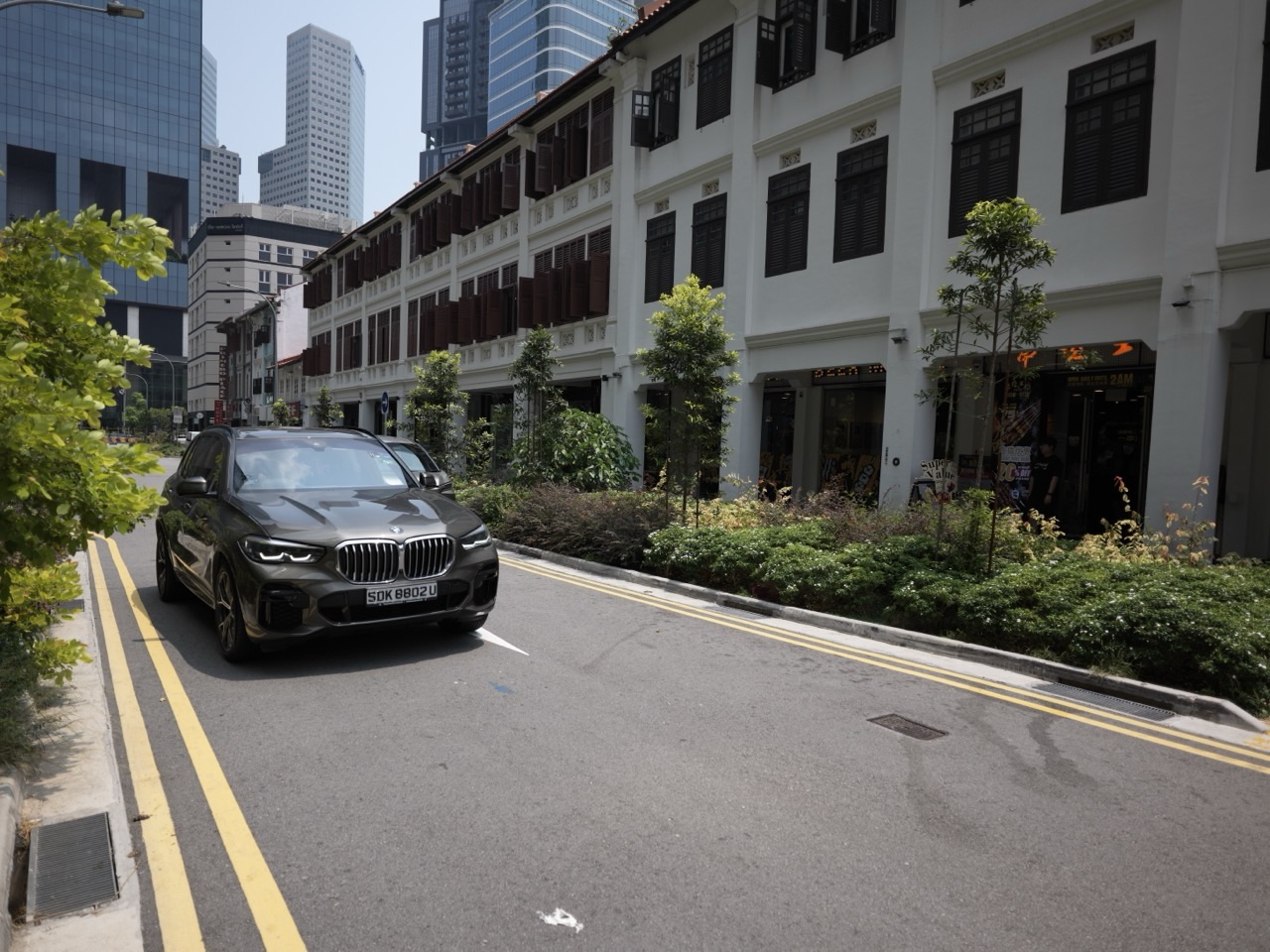
Did you know Lavender Street was named in 1858 as an ironic joke about the bad smell of gardens fertilised with night soil? It was not named for fields of fragrant lavender flowers. That unexpected fact provides an ideal Secondary 1 G3 History lesson: a familiar modern name can only be explained properly by checking historical evidence.
eduKateSG offers premium three-student 1.5-hour weekly History tutorials for Lavender families, held near Sixth Avenue MRT, not at Lavender MRT. Lessons teach chronology, historical source inference, change and continuity and precise explanation using the child’s genuine school-marked work. Local heritage illustrates these skills; the actual school History chapters take priority.
The teaching structure follows the immutable Clementi small-group tutorial reference. For local evidence, read NHB’s street-name research, Jalan Besar Heritage Trail and NHB’s Kallang Gasworks account.
How a Secondary 1 G3 History tutorial works
We begin by reading a pupil’s actual school-marked response. Perhaps the child correctly spots the word Lavender on a map and concludes that nineteenth-century residents grew flowers there. Another may describe an old photograph of the gasworks but confuse the date the plant started with the year the photograph was taken. Both children require historical thinking, not a longer word list. The tutor teaches how to test a place-name story against a dated source, identify evidence and explain what remains uncertain.
Each learner writes independently during our premium three-student tutorials, receives focused correction and tries a different unseen school source. Sessions are 1.5 hours near Sixth Avenue MRT. The class is not physically in Lavender. The school’s actual lower-secondary History chapters determine what needs to be assessed; familiar neighbourhood examples are used to show methods.
G3 describes subject level, not everything about the child
In Full Subject-Based Banding, G3 refers to a subject level. A Secondary 1 student studies historical inquiry, chronology, significance, evidence and change appropriate to lower secondary, not automatically the full national examination. Source questions become easier once a pupil can distinguish what a picture directly depicts from what someone has inferred about its purpose.
The Singapore-Cambridge SEC starts in 2027, but younger students will normally belong to later examination cohorts. Parents should follow the current school’s actual History syllabus and only select upper-secondary revision when the subject choices and examination year are known. A child who needs practice interpreting images does not benefit from being rushed into a full final-year essay.
Why Lavender Street was named Lavender in 1858
The National Heritage Board records a surprising origin: Lavender Street was named in 1858 as a joke about its very unpleasant smell. Vegetable gardeners used night soil—human waste employed as fertiliser—and the odour made an aromatic name ironic rather than botanical. A reader should not assume the street was named because fields of lavender flowers flourished nearby.
The tutor asks what source supports the explanation and how certain the heritage author is. A name can preserve public humour or criticism from one era, but it does not establish exactly which gardener introduced the practice or how every resident reacted. A well-written inference retains the source’s scope.
Night soil is part of urban history, not merely an unusual word
Night soil was a traditional way to recover nutrients for crops before modern sanitation and chemical fertilisers became common. It could make vegetable cultivation possible near a growing town while producing severe smells and public-health concerns. The source-based question is not whether the name sounds pleasant today, but what the use of waste tells us about land use and everyday services at that period.
Students can separate an economic purpose from a social consequence. A gardener might want fertiliser and a nearby neighbour might dislike the smell. The same practice may have different effects on different people. We should not invent a diary entry or wage figure when the historical article does not supply one.
An old photograph can show streets but not their smells
The National Museum’s historic Lavender Street photograph shows a streetscape from the late nineteenth to early twentieth century. A photograph can record buildings, carts, vegetation or other visible features, but it cannot reproduce a smell or tell us exactly what every worker thought. The heritage description supplies an interpretation drawn from other evidence.
This is a useful lesson about media. A child should label separately what the image directly shows and what the accompanying historian explains. When answering a source question, the image’s visible clues should support the pupil’s claims; the caption can add context without becoming something that the camera itself recorded.
Jalan Besar’s original path crossed former swampland
NHB’s current heritage-business account traces Jalan Besar from a rural track through betel-nut plantations and swampland during the 1830s. Over the nineteenth century, the district became more closely connected to town commerce, shophouses and light industry. Lavender sits within this broader central-east corridor, but Jalan Besar and Lavender Street are not one identical road.
Historical geography can change while names continue. A school answer should state precisely which street or district a photograph shows and what period the source concerns. One old map does not automatically establish present-day street widths, building plots or drainage.
The two former swamps matter to the wider area
The Jalan Besar Heritage Trail describes a former floodplain by the north bank of the Rochor River and tidal land near the Kallang Basin. These low-lying areas influenced early settlement, industrial activity and transport. Land reclamation and later construction altered the physical setting, so a modern residential district cannot be treated as an untouched nineteenth-century landscape.
A pupil can reasonably connect wet land to the need for drainage or the appeal of riverside transport, but a specific historical claim needs a source. The presence of a river alone does not prove which factory chose which site or how much it paid for shipping.
The route’s name does not date every shop
Jalan Besar means ‘big road’ in Malay. A familiar road name survives through several phases, from rural track to shophouses, industrial premises, entertainment venues and contemporary retail. The old shops and the 1929 stadium did not necessarily appear at the moment the track was first used.
For source comparison, distinguish the name of a place from the age of its buildings. Students make two timelines: one for the development of a road, another for the institution built beside it. Different dates can be accurate without being contradictory.
Gasworks existed in the wider Rochor-Kallang corridor
The National Heritage Board places Kallang Gasworks by the Rochor River, a short distance from the broader Lavender-Jalan Besar corridor. Its site was selected to facilitate coal deliveries by boat. The official heritage account records gas production from 1861 and the development of piped gas street lighting in the 1860s.
It would be inaccurate to say the industrial plant occupied Lavender MRT station itself. The tutor teaches the child to identify whether a source describes Lavender Street, Jalan Besar or another nearby industrial site. A nearby landmark can illuminate a regional process without becoming the same location.
1861 and 1862 tell different parts of gaslighting history
NHB identifies the introduction of piped gas and Kallang Gasworks in 1861, while National Library research describes the plant providing gas street lighting in 1862. One date refers to beginnings and the other to the service’s early operation. A student must read what each author actually dates instead of choosing a random year and declaring the other source wrong.
We practise a short evidence chart: infrastructure created, first supply to streets and later expansion to other uses. This is transferable to later historical questions about an organisation being founded before its first public service or a policy being announced before implementation.
What a gas holder photograph can establish
A historic photograph of a gasworks can show tanks, pipes, chimneys and surrounding streets at a particular moment. It can provide visual evidence about industrial design, but cannot independently establish how clean the gas was, which homes bought it or how the factory’s workforce felt about the job.
A pupil should match the source to the question. If the enquiry concerns the design of the plant, the photograph may be very useful. If it concerns gas consumption in homes, a customer account or municipal record would be more relevant. Useful does not mean equally useful for every claim.
1901: control of gas production changed
National Library research records that the Municipal Commission took over gas production in 1901, with services later expanded for domestic use. The change of operator is distinct from the factory’s original establishment decades earlier. A later government role does not make the first plant a twentieth-century invention.
The tutor asks what actually changed: ownership, public administration, customer base or production technology. A source describing the takeover may give the legal act but not prove that every household immediately received gas. A separate service record would be needed for that.
1906 electric streetlights did not erase gas in one night
National Library’s account identifies Raffles Place, North Bridge Road and Boat Quay as the first streets lit by electricity in 1906. This marked a change in urban infrastructure, but gas remained in use in various applications. Introducing a new technology and retiring an old one are different historical stages.
Pupils should avoid the exaggerated statement that all gas lighting ended in 1906. A nuanced answer specifies which streets were affected and what later data could show. Historical change can be gradual, with two systems operating alongside one another.
1923: New World Amusement Park brought entertainment nearby
NHB records that Ong Boon Tat and Ong Peng Hock established New World Amusement Park in 1923 on land bounded by Jalan Besar, Kitchener Road, Serangoon Road and Petain Road. It offered live shows, boxing, local opera, food and shops in the era before television became widespread.
The site was in the wider Lavender-Jalan Besar area, not on Lavender Street itself. A pupil should distinguish this nearby entertainment ground from the old gasworks and the later stadium. A single district can contain different institutions with different founders and dates.
The 1923 founders and later Shaw ownership are separate episodes
The two Ong brothers began New World. In the 1930s, the Shaw Brothers acquired the amusement park, which subsequently developed in its own commercial and cultural direction. The original opening and later acquisition should not be collapsed into one event.
A source advertising an attraction after the takeover might reveal a new owner’s commercial purpose, but cannot by itself establish why the founders sold their interests. Those questions require appropriate financial or historical evidence. A business can preserve a name while changing control.
A show poster can reveal aims but not every audience reaction
A New World entertainment poster may show which performances were promoted and the kind of customers the organiser hoped to attract. It does not prove how many people attended, whether all performances took place as planned or what every visitor thought. A photo of one crowd also cannot measure total annual ticket sales.
The tutor trains pupils to separate advertisement, event report and audience testimony. When asked about popularity, they can use a series of dated sources or financial records if available. A colourful poster alone supports a narrower conclusion.
1929: Jalan Besar Stadium opened after New World
The nearby Jalan Besar Stadium opened in December 1929. According to NHB, its first match on Boxing Day involved the Malayan Chinese and Malayan Asiatics teams, with the former winning 3–2 before about 7,000 spectators. New World and the stadium were distinct venues opened six years apart.
A candidate should not call a 1923 cabaret scene evidence that the stadium was already open, or treat a football photograph as a record of an amusement-park concert. A place label may cover a broad neighbourhood but not every individual site.
One football result is evidence of one match
The 3–2 result can be established by a historical sports record for the opening match. It cannot tell us whether every match that season had the same crowd, or whether the winning team remained dominant for the next decade. A historian needs more data to explain a long-term trend.
The same principle applies to social history. A particular event may be important but it should not be turned into proof about every subsequent experience. We practise a narrow factual claim followed by the larger unanswered question.
After 1945, institutions resumed under changed circumstances
The Japanese Occupation ended in 1945, and the city continued to face reconstruction and material difficulties. Entertainment and sporting sites in the wider Lavender-Jalan Besar district resumed or evolved. It is not safe to assume that every venue, worker or customer immediately returned to its pre-war life.
The tutor distinguishes the end of military rule from an institution’s individual reopening date. Official political milestones need not coincide with economic recovery. Sources written for an opening ceremony and sources about household conditions would address different enquiries.
1948–1966: Malaya Cup matches form a longer football chapter
NHB’s stadium history records Jalan Besar hosting Malaya Cup matches from 1948 to 1966. The later Malaysia Cup period ran from 1967 to 1973, before the National Stadium at Kallang changed the main venue’s role. These are specific competition stages, not generic evidence that all matches happened at one location forever.
A pupil should check what competition, period and venue a source refers to. A photo labelled ‘Malaysia Cup 1968’ is not a photograph from the stadium’s 1929 opening simply because the sport is the same. Continuity of football does not mean continuity of every tournament arrangement.
New World closed in 1987, not when it opened
NHB’s history dates New World Amusement Park’s closure to 1987 after decades of changing entertainment habits and competition from television and malls. The old park’s name and reputation continued in memory, while the site was later redeveloped for other uses.
A proposal to sell land and the actual closing of a public entertainment venue need separate evidence. Students can ask what changed about attractions, audiences and urban planning before asserting any single cause. The first and final years do not explain every business decision between them.
1998: Kallang Gasworks’ closure was a different industrial milestone
Kallang Gasworks supplied Singapore for more than a century until closure in 1998, when gas production had shifted toward facilities elsewhere. This was an industrial transition rather than a change to Lavender Street’s name. Its origins, technological development and final decommissioning span several distinct chapters.
A source about the plant’s final year cannot be used to claim that domestic gas first reached Singapore in 1998. Equally, a photograph of the 1990s plant cannot document precisely how coal-fired equipment looked in 1862. We require dated evidence for each phase.
Modern heritage can preserve a landmark without recreating a whole past
The modern Jalan Besar corridor contains parks, shops, housing and places with historic associations. Only certain visible remnants of old entertainment or industry remain. A heritage plaque can explain a site that has been physically redeveloped, but the plaque’s modern date is not the origin date of the institution it describes.
The pupil should distinguish an old building, a surviving gate, a historical photograph and a later interpretation. Each has a legitimate evidential function. None should be described as a direct eyewitness account of the entire nineteenth century without corroboration.
A focused Historical Investigation about Lavender
An achievable question is: ‘How did livelihoods and public services in the Lavender-Jalan Besar corridor change from 1858 to 1929?’ A learner could compare NHB’s street-name research, a dated gasworks record, an entertainment-park account and an early stadium report. These sources illuminate different industries and public activities.
The question is meaningful because it defines place, period and issues. A weak question such as ‘Was Lavender always Singapore’s best place?’ has no defensible standard. A good investigation can acknowledge missing evidence while making bounded claims supported by dates and appropriate sources.
What makes historical significance more than fame
Lavender’s ironic name may be significant to the history of everyday sanitation, Kallang Gasworks to the provision of lighting, New World to popular entertainment, and Jalan Besar Stadium to football. Their significance varies according to whose lives and which historical processes are examined.
Students practise naming a criterion such as scale of change, duration of effects or groups affected, then use evidence to support the judgement. The most recognisable attraction on a current map is not automatically the most historically important event for every community.
A parent can ask one source question without knowing the answer
Take the pupil’s actual marked school source and ask ‘Which detail proves that?’ If the answer assumes everyone acted alike, ask whether the document really represents the entire group. The child should identify the clue, explain the inference and state one useful limitation.
A ten-minute exercise can reveal the next correction much more clearly than copying pages of notes. The tutor then tests whether that reasoning move survives when the document and topic change.
A possible 90-minute three-student History lesson
- 10 minutes: recall one correct date, historical actor and evidence clue from the current chapter.
- 15 minutes: inspect each student’s actual teacher-marked response and diagnose the first error.
- 20 minutes: model how an inference or chronological claim should be supported.
- 20 minutes: each pupil independently answers a new school-relevant source.
- 15 minutes: check whether conclusions exceed what the evidence can establish.
- 10 minutes: attempt an unseen transfer question and record one next-step target.
The sequence is illustrative. A pupil confused by multiple dates for gaslighting needs different teaching from a pupil who describes an advertisement as proof of audience satisfaction. The small-group advantage depends on individual writing, not three pupils copying one answer.
An illustrative eight-week foundation programme
- Week 1: inspect the school’s assigned History chapters and marked work.
- Week 2: separate direct description from historical inference.
- Week 3: identify a source’s date, maker, purpose and audience.
- Week 4: distinguish planning, founding, first use and later expansion.
- Week 5: identify change and continuity in a clearly defined local institution.
- Week 6: explain an actor, decision, mechanism and consequence.
- Week 7: conduct a modest evidence-led investigation with several sources.
- Week 8: demonstrate transfer to unfamiliar school-topic evidence.
This is a teaching framework, not a promise that a fixed grade will be achieved after eight weeks. The next task should be chosen from the child’s independent errors.
Twelve original fictional source-reading drills
Every miniature document below is original fictional classroom material. These are not archived nineteenth-century letters, genuine railway photographs, National Heritage Board sources or past SEAB examination questions. Each drill teaches one reasoning move before students work with real sources.
Practice 1: The ironic street name
Fictional source: A fictional 1860 letter says the neighbourhood’s gardens smelled unpleasant.
Question: Can the word Lavender prove flowers grew there? Reasoning: No; look for contemporaneous naming records.
Independent task: State a cautious inference.
Practice 2: A vegetable plot
Fictional source: A fictional 1858 sketch depicts gardeners carrying fertiliser.
Question: Does this show every household’s sanitation practices? Reasoning: One image cannot survey every resident.
Independent task: Suggest municipal records.
Practice 3: A riverside plan
Fictional source: A fictional 1861 map marks a proposed gas storage site.
Question: Does a plan prove a plant operated that year? Reasoning: Proposal, construction and output differ.
Independent task: Seek an operating report.
Practice 4: Gaslighting starts
Fictional source: A fictional 1862 street journal describes newly lit lamps.
Question: Does that mean all homes had gas? Reasoning: Street lighting and household connections differ.
Independent task: Find domestic customer records.
Practice 5: Municipal takeover
Fictional source: A fictional 1901 report announces public control of gas production.
Question: Was this the plant’s founding year? Reasoning: No. Operator change and origin differ.
Independent task: Make two date labels.
Practice 6: An electric lamp
Fictional source: A fictional 1906 image shows electric lighting on one road.
Question: Did all gas lighting end in 1906? Reasoning: No. A new service can coexist with older systems.
Independent task: Identify later evidence.
Practice 7: An amusement-park poster
Fictional source: A fictional 1923 advertisement promises concerts and boxing.
Question: Can it prove every show occurred? Reasoning: Promotion differs from verified events.
Independent task: Find a later programme.
Practice 8: A stadium match
Fictional source: A fictional 1929 score report records a 3–2 result.
Question: Does it describe every match that year? Reasoning: It records one particular event.
Independent task: Seek a season record.
Practice 9: A 1950 entertainment memoir
Fictional source: A fictional performer recalls working at New World after the war.
Question: Was the memoir written during its 1923 founding? Reasoning: The person’s later recollection concerns a different era.
Independent task: Label both dates.
Practice 10: A football programme
Fictional source: A fictional 1969 tournament poster advertises a Malaysia Cup match.
Question: Was the tournament called the same thing in 1948? Reasoning: Competition names and periods differ.
Independent task: Check official histories.
Practice 11: Park closure
Fictional source: A fictional 1987 notice announces New World’s last season.
Question: Does it prove immediate completion of later shops? Reasoning: Closure and redevelopment differ.
Independent task: Find an opening record.
Practice 12: A modern MRT photograph
Fictional source: A fictional 2026 image shows Lavender MRT exits.
Question: Does this depict the 1858 garden? Reasoning: It documents present transport, not earlier land use.
Independent task: Name a period-appropriate source.
The six recurring mistakes to repair
- Saying the name Lavender proves fragrant flowers grew along the road → consult the historical street-name account.
- Calling the 1861 plant foundation and 1862 gaslighting service contradictory → identify what each source dates.
- Writing the first electric lights in 1906 immediately ended every gas service → recognise gradual technological transitions.
- Confusing New World Amusement Park in 1923 with the stadium’s opening in 1929 → label the venue.
- Saying the 1987 park closure ended all local public entertainment immediately → distinguish institutions and periods.
- Treating today’s shophouses or MRT exits as pictures of the nineteenth-century swamp → match each image to its date.
Frequently asked questions: Secondary 1 G3 History Lavender
Is Lavender’s naming story the whole school History syllabus? No. It is used as an evidence-and-chronology example. The school’s relevant MOE syllabus guides examined content.
Do children in Secondary 1 need full K330 national papers? Not by default. Lower-secondary enquiry skills should develop before later examination choices.
How do I know the tutoring helps? Ask for a fresh answer where the pupil uses a decisive source clue and a correct date without reproducing the worked model.
Where is the class held? In the reference premium small group near Sixth Avenue MRT, not within Lavender. Families should consider travelling time.
Official histories and further reading
Read NHB’s Lavender Street-name explanation, Jalan Besar Heritage Trail, Kallang Gasworks heritage record, NHB’s history of gas and industry, National Library’s account of gas and electric homes, New World Amusement Park history and Jalan Besar Stadium’s original 1929 match. These sources concern neighbouring but distinct sites and eras.
The child’s course is governed by the MOE lower-secondary G2/G3 History syllabus, while later subject entries appear in the SEAB G3 directory. The immutable Clementi reference explains the three-student model. Families may enquire via eduKate Singapore with a genuine marked script.
Continue the Secondary 1–4 G3 History learning sequence in Lavender
Secondary 2 G3 History tuition Lavender, Secondary 3 G3 History tuition Lavender, Secondary 4 G3 History tuition Lavender. The next years develop wartime and post-war source comparison, upper-secondary historical causation and actual SEC examination-specific preparation.