
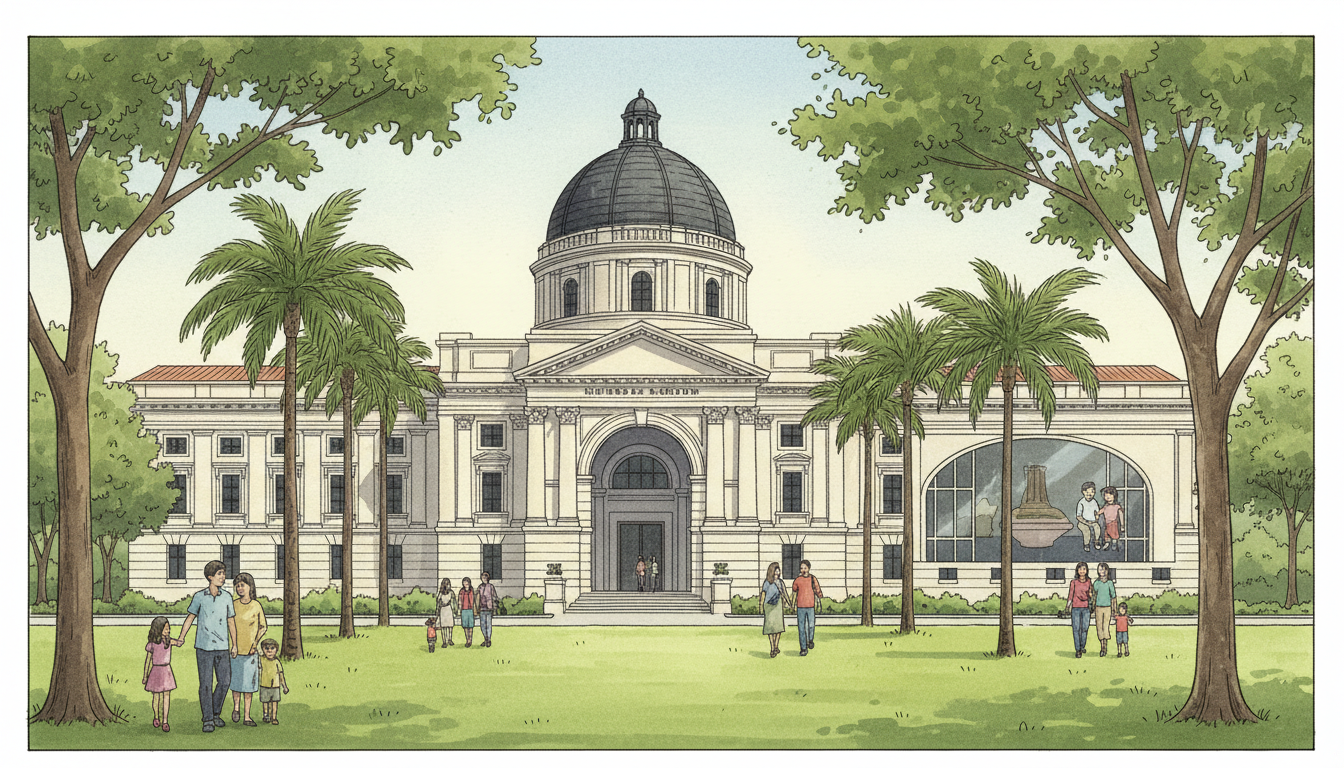
Did you know Jalan Besar Stadium became a Sook Ching screening site and Japanese-language teaching venue during the Japanese Occupation—even though it had opened as a football stadium in 1929? These sharply different uses show why Secondary 2 G3 History students must read every source with its correct date, institution and human context.
eduKateSG’s premium three-student 1.5-hour History tutorials for Lavender families are held near Sixth Avenue MRT, not in Lavender. Lessons develop source inference, comparison, provenance, usefulness and historical causation based on the pupil’s actual school-marked work. Local histories make abstract skills concrete, but the child’s school syllabus controls the assessed topics.
The teaching format follows the immutable Clementi three-student reference. Wartime details are grounded in NHB’s Jalan Besar Stadium record, National Library’s amusement-park research and BiblioAsia’s Singapore streetlighting history.
What happens during a Secondary 2 G3 History tutorial?
We begin with the student’s actual school-marked source answer. A pupil may know Singapore surrendered to Japan in February 1942 but assume the Jalan Besar Stadium’s football games continued there unchanged throughout the Occupation. Another might know New World Amusement Park was open and therefore conclude that every family was prosperous. A third may mistake a retrospective account published decades later for an eyewitness statement written during the war.
The tutor fixes these separate errors rather than assigning identical answers to three pupils. After a specific explanation about chronology, scope and provenance, each learner must answer a fresh school-topic source independently. The premium 1.5-hour weekly tuition is held near Sixth Avenue MRT, not at Lavender MRT.
Secondary 2 source thinking precedes final-year examination drills
Lower-secondary G3 History asks pupils to understand evidence, context, chronological change, different viewpoints and relationships between causes and consequences. The school’s current chapters may include Singapore under Japanese occupation and its post-war development; the exact sequence and assessment demands are school-specific.
An official 2027 SEC History syllabus cannot simply replace a Secondary 2 student’s learning plan. A child may eventually sit a later examination-year syllabus, and the skill needed today is accurate historical reading. Familiar sites in the Lavender-Jalan Besar corridor help demonstrate it, but the actual school-topic sources remain the assessed material.
The original stadium opened before the war
Jalan Besar Stadium opened in December 1929 and hosted a Boxing Day opening match attended by thousands of spectators. That pre-war sporting role is clearly documented by the National Heritage Board. A football stadium’s founding date is not the same as the date it was used for another purpose during occupation.
A pupil should keep the phases separate: pre-war sport, wartime coercive use, post-war return to competitions and later rebuilding. A 1929 sports photograph cannot directly reveal what officials did on the field in 1942; the source dates and people involved differ.
1942: the stadium’s Sook Ching screening role
NHB states that during the Japanese Occupation Jalan Besar Stadium was a major Sook Ching screening site. The screening campaign involved the persecution of Chinese civilians under Japanese military authority. This is a serious history of fear and violence, not an entertaining aside about a football venue.
A historical response should identify the group affected, the policy and the site with careful attribution. A sports-source caption cannot substitute for testimony or records about wartime screening. The tutor teaches respectful source handling and avoids unfounded claims about the actions or feelings of every individual involved.
The stadium was also used to teach Japanese
The same NHB heritage account records that Japanese was taught to civilians at Jalan Besar Stadium during the Occupation. This is a distinct role from screening and from football. The site changed its function according to the occupying authority’s goals.
A learner should not assume the two activities happened to every participant at the same moment or affected all residents identically. Different functions and audiences require different period evidence. The tutor asks who controlled the setting, what instruction was offered and what a source could genuinely establish about participation.
A wartime order is not proof of universal obedience
An official instruction to attend a language class or obey a screening directive would be evidence that an authority issued a rule. It does not automatically show that everybody complied, what they believed or how evenly the instruction was enforced.
For implementation, historians look at attendance records, official reports, diaries or other material. The pupil should state what the directive directly establishes, then specify what remains unproved. The same distinction is useful for later political and economic source questions.
A prisoner’s account is valuable and limited in a specific way
A diary or testimony from someone who experienced detention or screening may be vital evidence of that person’s circumstances, observations and feelings. It does not by itself supply a census of everyone detained at Jalan Besar or explain every official decision.
Strong source evaluation does not dismiss a witness because their account is personal. It identifies which part they experienced, when the story was recorded and what claims need corroboration. The tutor combines historical empathy with evidence-based reasoning, avoiding sensational language.
The original New World Park was a different nearby institution
New World Amusement Park opened on 1 August 1923, in the area bounded by Jalan Besar, Kitchener, Serangoon and Petain Roads. It was separate from Jalan Besar Stadium, despite both being part of the broad Lavender-Jalan Besar corridor.
An answer should not assign a stadium’s wartime screening use to the amusement park merely because they were nearby. The first step in evidence-based History is identifying exactly which building or institution a source concerns. Similar neighbourhood labels do not make two places interchangeable.
New World stayed open during the Japanese Occupation
The National Library’s BiblioAsia amusement-park timeline records that New World remained open in 1942 during the Japanese Occupation. This fact complicates a simplistic claim that every public entertainment site closed for the entire war. However, continued operation does not mean all businesses and families enjoyed comfortable conditions.
The pupil must distinguish a venue’s legal or practical operation from the economic welfare of its individual visitors or workers. An open gate cannot establish how every resident obtained food, paid admission or felt about military rule. Different sources serve those different enquiries.
Getai performances developed in a wartime setting
BiblioAsia’s research traces an early getai troupe at New World during the Japanese Occupation, known as Da Ye Hui. The group used singers and musicians, offering performances that attracted audiences while the city lived under wartime conditions.
A cultural performance can offer evidence of entertainment and coping, but does not prove that the political regime was benign or that the performances reflected everyone’s preferred culture. The tutor asks whose perspective is visible, what audience was intended and what a source cannot establish about the broader population.
A performance ticket does not show how an audience felt
A fictional or authentic ticket could establish that a performance was advertised and a particular admission arrangement applied. It would be weaker evidence of whether spectators approved of the wartime authorities or felt safe. One person’s recollection might explain a specific experience rather than all audience responses.
Students practise sorting an enquiry by source type. A programme is useful for planned acts, an attendance register for numbers, and a diary for one visitor’s impression. No single document automatically answers every historical question.
Great World was not New World
BiblioAsia’s research distinguishes New World in the Jalan Besar area from Great World near Kim Seng Road and Happy/Gay World in the Mountbatten-Geylang area. Their ownership, opening years and occupation histories differed.
An especially damaging error is to assign a wartime detail about Great World’s use to New World without checking. The tutor teaches pupils to label the venue, its address and source date first. That geographic precision is central to historical analysis, particularly when the same generic word World appears in several names.
The gasworks and streetlighting followed a separate wartime story
Kallang Gasworks was an industrial plant by the Rochor River, not part of New World or the stadium. It had produced gas for Singapore since the nineteenth century. National Library research explains that electric streetlighting had already appeared in some districts before the war.
A description of gas production does not by itself establish the lighting condition at every road junction in 1942. The tutor asks pupils to identify whether a source reports energy generation, a municipal lighting decision or a household’s access to power.
Japanese officials also worked on streetlighting
The National Library’s ‘Let There Be Light’ reports that at the beginning of the Occupation, Japanese military administrators replaced damaged streetlighting at 43 major junctions with electric lamps. This is one specific administrative activity in a wider wartime period.
A pupil should not infer from such a repair programme that the entire city was brightly lit, free of danger or unaffected by shortages. A documented intervention is not a citywide outcome measure. To evaluate its consequences, historians would need further records of coverage and performance.
The 43 junctions do not describe every street in Singapore
A report counting 43 major junctions is precise about its own category. It does not say all lanes, rural roads or homes received new lights, and it cannot alone establish that the lamps worked continuously. A student must preserve what a figure actually measures.
This habit transfers to interpreting statistics in many History questions. Ask what was counted, by whom, where and when. A careful limitation is stronger than a confident but unsupported generalisation.
A factory could remain in production despite war
The National Library’s history of the National Aerated Water Company records a plant on Hamilton Road established in 1929. The company continued making drinks during the Japanese Occupation using existing supplies of flavourings and sugar rations.
This industrial case helps prevent another absolute claim: wartime disruption did not mean every single local enterprise stopped operating. Nevertheless, a factory producing drinks is not proof that all consumers could afford or obtain them. The broader Lavender-Jalan Besar area contained varied livelihoods and unequal circumstances.
The 1929 beverage factory was not the stadium
The National Aerated Water Company plant, built on Hamilton Road, and Jalan Besar Stadium opened in the same year but were different institutions. One was a manufacturing enterprise, the other a sporting venue. Shared years do not make one a cause of the other.
When comparing sources, a pupil should identify the institution and historical issue before declaring agreement or contradiction. A manufacturing output figure and a football attendance record answer different questions even though they share a neighbourhood and year.
A promotional drink advert has a business purpose
An advertisement might claim that a fizzy drink is refreshing, fashionable or affordable. That reveals what the seller wanted customers to believe, but does not measure the preferences of every household or confirm how many drinks were sold.
The tutor trains a source-purpose paragraph: maker, audience, intended response, wording and context. Reliability and usefulness are considered separately. Even a persuasive commercial source can be very useful for understanding a company’s marketing strategy.
1945 marks political change, not immediate recovery
The Japanese Occupation ended in 1945, but families and businesses faced the consequences of war, disrupted supplies and changes in public administration. A ceremony celebrating the end of military rule cannot by itself tell us how long individual households required to recover.
A pupil should avoid writing that every venue instantly reopened at pre-war capacity. The city had different timelines for official authority, sport, transport, production and personal wellbeing. Historical enquiry follows the group and question rather than declaring a universal recovery date.
New World’s post-war entertainment evolved
National Heritage Board records that New World developed its entertainment offerings after the war, including acts that reflected changing social norms and tastes. Such cultural changes must be studied in context and with respect for performers and the terms used to describe them.
A later poster can reveal what an organiser offered, but not necessarily how all customers responded. An interview with one performer may illuminate lived experience without becoming a statistical account of everyone who worked at the park. Context and attribution matter.
1946: electrical streetlighting became a municipal priority
BiblioAsia notes that the Municipal Commission approved a budget in December 1946 for 72 electric lamps at strategic city locations, including Victoria Street and Bras Basah Road. These were not claimed to be all of Singapore’s roadways.
Students should distinguish a budget decision from installed lamps and measured benefits. An official report may be reliable evidence that funds were approved, while a later operations report would better show what was installed and maintained. The same principle is useful when analysing government policy.
1947: a longer lighting programme followed
A five-year plan began in 1947 to add thousands of electric streetlights. This demonstrates a planned multi-year transition, not an instantaneous event affecting every location on one night.
The tutor trains a policy–implementation–outcome sequence. A plan can show intentions and scope; actual changes require subsequent evidence. A factually correct number can still be misused when the pupil does not label the dates or what was being measured.
1948–1966: Jalan Besar Stadium returns to a major football role
After the war, Jalan Besar Stadium hosted Malaya Cup football from 1948 to 1966, according to NHB. This sporting role had a different social setting from the earlier Occupation use, and it continued for years as Singapore’s football scene evolved.
A match report is evidence of a particular game, teams and result. It cannot automatically establish a whole generation’s political beliefs or mean every post-war event took place at the stadium. Historical significance depends on the enquiry, not simply fame.
The 1967–1973 Malaysia Cup period is a different competition phase
NHB distinguishes Malaya Cup matches through 1966 from later Malaysia Cup competition at the stadium until 1973. The stadium remained important, but competition names and administrative contexts changed. The later National Stadium at Kallang eventually altered its main role.
The child should not call a 1968 programme a 1958 tournament merely because the venue appears in both sources. Accurate labels improve comparison, and a changed tournament name does not prove that all other sporting arrangements changed simultaneously.
1959, 1963 and 1965 are different post-war political dates
Singapore achieved full internal self-government in 1959, merged into Malaysia in 1963 and became independent after separation in August 1965. These political transitions occurred while local sport and commerce had their own histories.
Two events happening in the same decade do not automatically establish a direct causal link. If a History response claims a political decision caused a stadium development, the pupil needs evidence showing an actor, choice and mechanism rather than relying on chronology alone.
1987: New World finally closed
BiblioAsia records New World’s closure in 1987, decades after its 1923 opening. The site later underwent commercial redevelopment, eventually becoming part of the City Square Mall area. A closing year is not the date a replacement shopping complex first opened.
An article describing closure might reveal a change in patronage or competition from television and modern malls. It cannot establish how every performer or small trader adapted afterwards. The tutor asks for additional testimony and business records where the question calls for people’s experiences.
2009: City Square Mall is a different later chapter
The National Library dates the launch of City Square Mall on New World’s former grounds to 2009. The present shopping centre is not the original 1923 amusement park, even though both occupy historically connected land.
A modern mall photograph can show today’s architecture and shops, not the wartime getai stage. We ask students to separate institution, physical location, date and source type. Those distinctions prevent false historical continuity.
1999–2003: the stadium underwent another transformation
Jalan Besar Stadium closed for rebuilding in December 1999 and reopened in June 2003 as part of the sports and recreation complex, retaining the original playing pitch. A modern photograph thus shows a later stadium design with links to an earlier site.
The current structure should not be presented as unchanged since 1929. A student could compare a historic plan and a post-2003 image for continuity and change, but would need more evidence before making claims about every spectator’s experiences.
An individual memory can still be historically useful
A person remembering watching a Malaya Cup match or attending a New World show may describe the atmosphere, performers and personal feelings. This is valuable testimony about one participant, but it does not automatically prove average attendance or the experiences of every person in the district.
The tutor identifies the date of the remembered event, the date the testimony was recorded and possible limitations. A later interview may remain useful, while exact factual claims can be corroborated where independent sources exist.
What source comparison actually requires
A wartime policy order and a civilian diary may both concern the stadium, but one might describe official instructions while the other reports lived experience. They do not necessarily contradict unless they address a shared historical proposition.
Students begin comparison by identifying that common issue, quoting or paraphrasing relevant claims and then explaining alignment or difference. Saying one source is official and another personal is an observation about provenance, not a completed comparison.
A manageable investigation for a Secondary 2 pupil
A useful enquiry is: ‘How did the public role of Jalan Besar Stadium change between 1929 and the end of the 1940s?’ The pupil could use the NHB site record, a dated pre-war match report, evidence about the wartime screening site and post-war competition materials.
The investigation should identify the serious significance of wartime coercion without sensationalising victims. A source of one function cannot establish every aspect of another. The pupil makes a chronology, names evidence limits and presents a cautious conclusion.
The final skill is transfer to the actual school topic
After learning source comparison through local sites, the pupil answers another unseen History document from the school’s prescribed unit. The task may concern a different wartime policy, post-war political change or another historical setting.
The child’s response should still identify maker, event date, claim, purpose and limitations without irrelevant details about Lavender. A corrected unfamiliar answer is stronger evidence of tuition effectiveness than a well-rehearsed local history narrative.
An illustrative ninety-minute History lesson
- 10 minutes: locate the actor, date and actual school chapter for one source.
- 15 minutes: diagnose a teacher-marked source response for its earliest important error.
- 20 minutes: model one inference, purpose, comparison or causal reasoning move.
- 20 minutes: each pupil answers a different unseen school-topic source independently.
- 15 minutes: correct chronological mistakes, unsupported universal claims and mismatched venues.
- 10 minutes: retest on changed evidence and record an individual error-log target.
This is a flexible teaching illustration. One learner may need chronology repair, while another may understand dates but have a weak reliability judgement. The premium three-student setting allows specific feedback and independent writing.
An illustrative ten-week Secondary 2 History pathway
- Week 1: check actual school syllabus and marked errors.
- Week 2: build an accurate 1941–1945 chronology with affected actors.
- Week 3: separate a wartime official order from compliance and experience.
- Week 4: infer source purpose using audience and historical context.
- Week 5: compare two sources on one shared issue.
- Week 6: evaluate reliability for a narrow factual proposition.
- Week 7: explain usefulness and source limitations.
- Week 8: write a specific actor–decision–consequence paragraph.
- Week 9: complete a respectful, bounded historical investigation.
- Week 10: transfer the repaired skills to unfamiliar school material.
The ten-week progression is not a grade guarantee. The child’s current knowledge and performance on unseen questions determine how quickly the teaching moves.
Twelve original fictional source-laboratory exercises
Every miniature document here is original fictional teaching material. These are not authentic wartime orders, prisoner testimony, theatre programmes or SEAB past-paper questions. Authentic facts in the article are grounded in separately identified historical sources.
Practice 1: A 1929 football programme
Fictional source: Fictional ticket advertises the first stadium match.
Question: Does it prove every later game had 7,000 spectators? Reasoning: It concerns one advertised event.
Independent task: Find additional attendance records.
Practice 2: A 1942 screening order
Fictional source: Fictional order directs civilians to a stadium.
Question: Does it establish every detainee’s experience? Reasoning: An order and personal consequences differ.
Independent task: Seek attributed testimony.
Practice 3: A language notice
Fictional source: Fictional Occupation-era announcement orders Japanese lessons.
Question: Does it show all citizens learned Japanese? Reasoning: No. Instruction and compliance differ.
Independent task: Identify an attendance record.
Practice 4: New World during war
Fictional source: Fictional 1943 poster promotes a getai show.
Question: Does the show mean everyone was prosperous? Reasoning: A cultural event is not population-wide welfare.
Independent task: Look for civilian economic evidence.
Practice 5: A wartime lamp directive
Fictional source: Fictional 1943 plan lists 43 junctions for repair.
Question: Does it show every Singapore road was illuminated? Reasoning: The count concerns specified junctions.
Independent task: Seek a lighting survey.
Practice 6: A bottle factory report
Fictional source: Fictional 1944 note describes limited production using sugar rations.
Question: Can this describe every factory in Singapore? Reasoning: One company’s operation is a narrow case.
Independent task: Seek other industrial records.
Practice 7: A prisoner memoir
Fictional source: Fictional 1975 participant recalls a 1942 detention.
Question: What dates matter? Reasoning: Experience and publication dates are distinct.
Independent task: Corroborate a specific detail.
Practice 8: A 1946 lighting budget
Fictional source: Fictional record approves new electric lamps.
Question: Are the lamps already installed? Reasoning: A budget decision is not completion.
Independent task: Find a later maintenance report.
Practice 9: A 1948 match
Fictional source: Fictional report records a post-war cup fixture.
Question: Was the venue doing the same thing in 1942? Reasoning: The historical contexts differ.
Independent task: Create a venue-use timeline.
Practice 10: A 1968 tournament poster
Fictional source: Fictional flyer advertises Malaysia Cup football.
Question: Is it correctly labelled a 1958 Malaya Cup event? Reasoning: Competition and date are mismatched.
Independent task: Check the records.
Practice 11: A 1987 closure notice
Fictional source: Fictional park statement announces the last season.
Question: Did the mall open then? Reasoning: No. Closure and 2009 mall launch differ.
Independent task: Find redevelopment evidence.
Practice 12: A 2003 stadium photo
Fictional source: Fictional image shows rebuilt stands around an old pitch.
Question: Is the entire structure original to 1929? Reasoning: Rebuilding created a different architectural phase.
Independent task: Find a pre-1999 plan.
Six important mistakes to repair
- Confusing the 1929 football venue with New World Amusement Park’s 1923 opening: label each institution.
- Ignoring Jalan Besar Stadium’s serious wartime screening history: preserve its separate 1942–1945 use.
- Assuming New World’s continued operation proved all families were comfortable during war: distinguish one venue from population welfare.
- Attributing the Great World POW story to New World: confirm which park each source concerns.
- Treating a 1946 budget as proof lamps were already installed: separate approval and implementation.
- Calling the rebuilt 2003 stadium identical in every physical detail to its 1929 form: consider continuity and reconstruction.
Frequently asked questions about Secondary 2 G3 History Lavender
Was Jalan Besar Stadium only used for football? No. NHB records its serious wartime screening and language-teaching functions as well as post-war sporting events.
Was New World closed for the entire Japanese Occupation? BiblioAsia documents that it remained open during the Occupation; that does not establish every resident’s living conditions.
Does knowing these local events replace the school syllabus? No. They illustrate historical methods that the learner must transfer to actual assessed chapters.
Where is tuition held? In the reference premium small-group setting near Sixth Avenue MRT, not Lavender MRT.
Official historical and curriculum references
Read NHB’s Jalan Besar Stadium history, the NHB theme-parks account, National Library’s Old-World Amusement Parks research, the streetlighting history, the Hamilton Road beverage-factory history, Kallang Gasworks and the Jalan Besar Heritage Trail. These sources refer to different sites and are not interchangeable eyewitness accounts.
The school-stage framework is the MOE lower-secondary History syllabus, with later subject entries listed by SEAB. The immutable Clementi three-student reference describes the learning model. Families can enquire through eduKate Singapore with a marked source response.
Continue the Secondary 1–4 G3 History learning sequence in Lavender
Secondary 1 G3 History tuition Lavender, Secondary 3 G3 History tuition Lavender, Secondary 4 G3 History tuition Lavender. The earlier guide develops enquiry and chronology; later guides cover upper-secondary international cases and precise SEC exam-year source and essay preparation.