
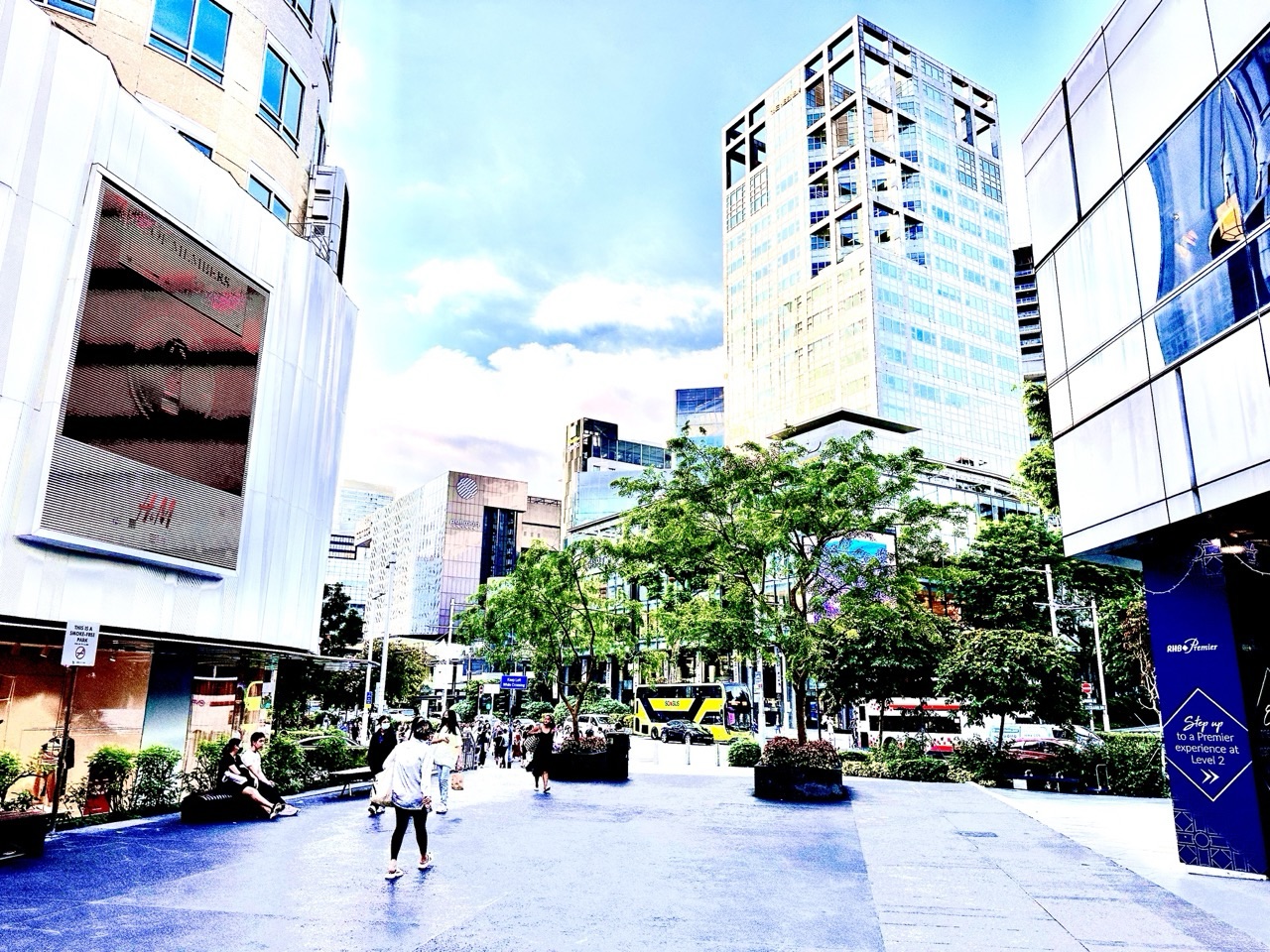
Did you know the Somerset area once had a municipal market between Koek Road and Cuppage Road and a food retailer established decades before the Centrepoint mall opened? That is a miniature lesson in Historical thinking: an institution’s origin, a building’s construction and a neighbourhood’s commercial transformation may fall in three different periods.
Secondary 1 G3 History students around Somerset, Killiney Road and Cuppage Road need to learn how to use evidence, dates, maps and purposeful questions. eduKateSG’s premium three-student, 1.5-hour weekly tutorials are near Sixth Avenue MRT, not at Somerset. The pupil’s actual school History syllabus determines assessed content; local heritage is a practice setting rather than an invented national chapter.
The teaching model is explained in the immutable eduKateSG Clementi three-student tutorial reference. The examples here use National Heritage Board and National Museum records to demonstrate careful historical enquiry, without claiming that neighbourhood trivia replaces school work.
What happens inside a Secondary 1 G3 History tutorial?
The teacher first reads a genuine marked school response. Can the student distinguish what an image actually shows from what it merely suggests? Do they recognise a source’s author, date and intended audience? Could they put three events into a defensible order? The answer determines the next ten-minute teaching move, not the volume of new worksheets. Each child writes an individual response, receives feedback and tries a different unfamiliar question.
Understanding G3 in Secondary 1
Under Full Subject-Based Banding, G3 describes a subject’s level of learning demand. It does not mean that a Secondary 1 learner is sitting the final-year Singapore-Cambridge SEC examination. Lower-secondary History develops historical enquiry, chronology, interpretation and evidence reasoning. A sensible tutor uses the school’s actual History teaching scheme and marked work rather than copying a 2027 upper-secondary K330 examination paper.
Why Somerset has a history older than its malls
Today’s 313@somerset, Centrepoint and nearby retail buildings are one stage of a much longer urban story. The National Heritage Board’s Orchard Heritage Trail also records early plantations, a municipal market, shophouses and religious institutions along the Somerset-Cuppage corridor. A photo from today shows current layout, but it cannot tell us exactly how a trader walked to market in 1890. We need the correct earlier sources.
From gambier to nutmeg plantations
The wider Orchard corridor contained gambier estates in the early nineteenth century and later nutmeg orchards. NHB explains that the decline of nutmeg growing after the 1857 disease led some owners to change crops or dispose of their estates. The link between disease and later land-use change needs an intermediate explanation: losses could alter a planter’s choices and leave land available for other purposes. Merely writing ‘trees died so malls appeared’ skips over more than a century.
1880: the market between Koek and Cuppage
Lawyer and Municipal Commissioner Edwin Koek established a market between Koek Road and Cuppage Road in 1880, according to NHB. That is a specific beginning for an organised market, not the first moment people ever exchanged goods in the area. A pupil should learn the distinction between the creation of an institution and the origin of a broader human activity. The history question is who acted, why, and how the market served a growing community.
A government takeover is not a new founding date
About ten years after the original market was established, it was taken over by the colonial government and rebuilt as Orchard Road Municipal Market. These developments belong on separate lines of a timeline: original private initiative, later municipal management and eventual redevelopment. Students who merge them into one ‘market opening’ lose historical continuity. The tutor asks how a change in administrative control could affect the site’s role, then seeks appropriate contemporary documents.
The fountain and the problem of object provenance
A historic cast-iron fountain stood outside Orchard Road Municipal Market from 1902, but it had previously been located at Telok Ayer Market. NHB recounts later movements to Katong and, following rediscovery, to Raffles Hotel. The object survived while its location changed. An old photograph of the fountain outside a market can show where it was when photographed, not that the fountain was first built for that market. That is a practical lesson in source context.
1904: Sian Teck Tng offers a different history
NHB’s community trail records that the Sian Teck Tng temple at Cuppage Road was established in 1904 as a vegetarian convent for female devotees. This story concerns religious and social institutions rather than the commercial market nearby. A photograph can reveal external architectural features but not the experiences of every devotee. To understand lived experience, historians might examine appropriate records or oral accounts, paying attention to whose voice is actually represented.
1905–1907: the Cuppage Terrace homes
Cuppage Terrace is a row of seventeen Malacca-style terrace houses built between 1905 and 1907 by Boey Lian Chin, according to NHB. A modern photograph may show food outlets occupying the buildings, yet that does not prove those same businesses operated there a century ago. The pupil learns to distinguish construction year, original function, later adaptation and conservation. One building can have several stories without there being a contradiction.
Cold Storage and the difference between a business and a building
The heritage trail dates Cold Storage’s beginning around the present-day Centrepoint site to 1905, initially as a small deli before it developed into a significant supermarket. The Centrepoint mall opened much later, in November 1983, according to a National Museum collection entry. Students must avoid describing the modern mall as if it already existed in 1905. A business can persist or change while its building is replaced.
An advertisement has a target audience
An early grocery advertisement might tell us which goods a retailer wished to promote and whom it hoped to reach. It cannot automatically establish that every household purchased those goods or that customers were uniformly satisfied. NHB describes early Cold Storage as serving mainly European residents of the wider Orchard area. The word ‘mainly’ matters: it is not the same as ‘only’. Historical inference should preserve the scope of the evidence.
A neighbouring row of homes can preserve different eras
Winsland House II includes Edwardian-era semi-detached houses dating from the 1910s alongside a more modern office development. That contrast reveals a built environment layered through time. Students practise saying what changed—function, density or architectural setting—while naming what persisted. The mere survival of a façade does not establish that its occupants or services remained the same. Change and continuity must be measured separately.
The old railway at Cuppage and the modern MRT
NHB’s Orchard Heritage Trail features a heritage animation about railway infrastructure once seen near Cold Storage and Cuppage. This introduces an important caution: a historic railway feature near Somerset is not evidence that today’s MRT station served travellers at that date. Maps need production dates, legends and transport-system context. When a child calls every train image ‘the MRT’, the tutor returns to the original source before explaining a historical development.
1972: Specialists’ Centre changes the local skyline
The Orchard heritage account dates the opening of the twenty-storey Specialists’ Centre at Somerset to 1972. It housed medical specialists’ clinics and belonged to a later high-rise stage of development. A newspaper opening report can provide evidence of an announced facility; it cannot measure the long-term healthcare experience of every patient. A tutor asks which new source would test the actual use and consequences of the building after opening.
The municipal market is demolished by 1979
NHB records that the market near Koek and Cuppage Roads had been demolished by 1979 as the site moved into a new commercial phase. The statement is not proof that trading on the road ended everywhere at once. The market’s replacement illustrates one land parcel’s change, but an accurate answer would also acknowledge the older community and practices that existed before the redevelopment.
Orchard Plaza, Orchard Point and Centrepoint need separate dates
A National Museum photograph record identifies Orchard Plaza as completed in 1981, Orchard Point as opening in June 1983 and Centrepoint as opening in November 1983. They are nearby but distinct sites and projects. Saying ‘all the Somerset malls opened in 1983’ would be inaccurate. The tutor trains children to attach dates to the right buildings and then ask which broader commercial changes these projects collectively reflect.
A photograph cannot prove everything about a shopper
A photograph of the Somerset retail area in 2026 might document a mall façade, people crossing, or a visible business. It cannot prove what the same street looked like in 1905, what every shopper thought, or how profitable individual traders were. The lesson is not to dismiss photographs, but to use them for appropriate questions. ‘Visible in this image’ and ‘true for every resident’ are different strengths of claim.
When two sources mention the same market
One source might give 1880 as the market’s initial establishment while another records a later municipal rebuild. Before describing the sources as contradictory, identify the actual event that each date refers to. Source dates can represent founding, change in ownership, renovation, closure or retrospective writing. The pupil practises a table listing the precise claim, event year, document year and type of evidence, so that apparent disagreement does not mislead them.
Historical significance asks who was affected
Was the market more important than a temple, the row of terrace houses or a new medical building? There is no defensible ranking without a criterion. For daily food access the market may stand out; for community religious life the temple may matter more. The pupil learns to choose a relevant affected group, a time frame and evidence of consequences before explaining significance. Popularity with present-day tourists alone is insufficient.
A small Historical Investigation about Somerset
A manageable inquiry is: ‘How did the land around Koek Road and Cuppage Road change between 1880 and the early 1980s?’ A student could compare NHB’s heritage history with a dated market photograph and the National Museum’s later shopping-centre image. They should identify what each source can establish and where another document is needed. An investigation need not pretend to have an answer before the evidence is read.
The leap from Somerset to a school History question
Local familiarity is a teaching advantage but it is not the school syllabus. After practising provenance and chronology around Cuppage, the tutor provides a new source from the student’s actual prescribed chapter. Does the pupil still distinguish claims from clues? Can they identify an actor and date without importing irrelevant Orchard facts? Independent transfer, not memorisation of Somerset landmarks, is the evidence of learning.
What happens in the weekly 1.5-hour tutorial
- First 10 minutes: recall a dated fact and an evidence clue from school learning.
- Next 15 minutes: inspect the pupil’s marked source response and find the first error.
- Next 20 minutes: model one inference or chronology skill with an appropriately bounded source.
- Next 20 minutes: every student attempts an unfamiliar source from the current school chapter.
- Next 15 minutes: explain evidence choices and repair overstatements or missing links.
- Final 10 minutes: answer a changed question independently and record a correction target.
This allocation is illustrative, not a rigid promise. A struggling reader may need more support recognising the source’s claim, while another student can move sooner into evaluation and historical explanation. Individual written transfer is central to a small group.
An illustrative eight-week foundation route
- Week 1: school syllabus and actual marked-script diagnosis.
- Week 2: inference from a precise word or photograph clue.
- Week 3: provenance, audience and original document dates.
- Week 4: event chronology versus source publication chronology.
- Week 5: change and continuity across two time periods.
- Week 6: cause, human decision and concrete consequence.
- Week 7: a question-led Historical Investigation with several sources.
- Week 8: a fresh source set and an individual feedback review.
The child’s pace and school calendar override the example. There is no responsible guarantee of a grade in eight weeks; progress is what the child can demonstrate alone.
Original fictional source laboratory: twelve short exercises
Every short passage below is original fictional classroom material. It is not an archival document, historical witness quotation, MOE source or past SEAB examination question. Each gives a bounded exercise before pupils use authentic documents.
Practice 1: Market invitation
Fictional source: Fictional 1880 leaflet invites residents to a new produce market.
Question: Does it prove every family used it? Tutor’s reasoning: It expresses an invitation and possible aim, not universal attendance.
Try independently: Find another source type.
Practice 2: Municipal takeover
Fictional source: Fictional 1890 memo promises improvements to stalls.
Question: Is a proposed improvement a completed outcome? Tutor’s reasoning: No; seek a later inspection or construction report.
Try independently: Write the claim in the conditional.
Practice 3: Moving fountain
Fictional source: Fictional photograph shows a fountain beside a market.
Question: Was it first built for that site? Tutor’s reasoning: The photograph shows position at one date, not original provenance.
Try independently: Find a prior record.
Practice 4: Temple invitation
Fictional source: Fictional 1904 notice announces a gathering.
Question: What is the safe inference? Tutor’s reasoning: A group planned a gathering, not that every neighbour attended.
Try independently: Name the intended audience.
Practice 5: Terrace house advert
Fictional source: Fictional 1906 poster markets modern homes.
Question: What is its purpose? Tutor’s reasoning: It tries to attract occupants; the appeal is not a resident satisfaction survey.
Try independently: Identify the promotional clue.
Practice 6: Grocery receipt
Fictional source: Fictional 1905 receipt lists imported food.
Question: Does it describe every family’s diet? Tutor’s reasoning: No. It documents a purchase by one customer.
Try independently: Suggest an alternative market source.
Practice 7: Railway map
Fictional source: Fictional 1920 plan marks tracks near a shopping road.
Question: Can it establish today’s MRT opening? Tutor’s reasoning: No. Map date and transport systems must be separated.
Try independently: Find a modern dated map.
Practice 8: Clinic brochure
Fictional source: Fictional 1972 publicity sheet praises a new specialist centre.
Question: Does it count every patient? Tutor’s reasoning: No. It advertises amenities but lacks patient records.
Try independently: Name a follow-up source.
Practice 9: Market closure diary
Fictional source: Fictional 1979 diary records sadness at losing familiar stalls.
Question: Does one memory represent every trader? Tutor’s reasoning: It provides one perspective, not a census.
Try independently: Seek another voice.
Practice 10: 1981 plaza photograph
Fictional source: Fictional photo shows a newly built mall.
Question: Can it date all Somerset complexes? Tutor’s reasoning: No. Check each site independently.
Try independently: Write a three-row chronology.
Practice 11: 1983 mall advertisement
Fictional source: Fictional ad claims the first quality food retailer has opened.
Question: What might be omitted? Tutor’s reasoning: The district had markets and earlier grocery traders.
Try independently: Explain why ‘first’ needs definition.
Practice 12: Unfamiliar school source
Fictional source: Fictional early Singapore port ledger lists goods and dates.
Question: What transfers from Somerset? Tutor’s reasoning: Source provenance, evidence, date and bounded inference.
Try independently: Give one safe inference.
Common mistakes and the first practical repair
- ‘The mall was here in 1905’ → distinguish the Cold Storage business from the later Centrepoint building.
- ‘A photograph of the fountain proves where it was made’ → look for provenance and earlier locations.
- ‘Every neighbour visited the market’ → replace a universal assertion with a source-bounded one.
- ‘Two sources give different market years, so one is false’ → establish which historical event each date describes.
- ‘A temple tells us every resident’s belief’ → identify the particular institution and available voices.
- ‘All the shopping centres were built together’ → attach each opening date to its correct site.
Home study for Somerset families
Ask your child to show one marked History answer and point to the exact clue supporting their inference. Then ask what the source does not establish. A five- to ten-minute conversation about evidence can be more revealing than copying an entire set of notes without knowing why an answer was wrong.
If the child struggles with an unfamiliar topic, bring that example to the next lesson. The tutor can determine whether the problem is historical knowledge, reading vocabulary or reasoning from evidence, and adjust accordingly.
Frequently asked questions: Secondary 1 G3 History Somerset
Is the Somerset market an examinable SEC History case? No such claim is made. It illustrates historical method; the school syllabus and the learner’s stage determine assessed content.
Does G3 mean the child must begin final-year K330 practice immediately? No. Secondary 1 is a foundation stage within Full Subject-Based Banding. The correct later subject registration must be checked.
Where do lessons take place? Near Sixth Avenue MRT, not at Somerset. Parents should assess the journey and school-day commitments.
How can a parent recognise improvement? The pupil gives an inference, selects the right evidence and handles a different unseen school source without copying a worked answer.
Official historical sources and syllabus references
For the neighbourhood timeline consult NHB’s Orchard Heritage Trail, its Communities and Cemeteries route and the National Museum of Singapore’s 1980s Orchard commercial-building record. The MOE lower-secondary History syllabus defines school-stage learning; the SEAB G3 directory clarifies later exam codes. Each source is used for its appropriate purpose.
For the small-group approach see the immutable Clementi reference. Parents can enquire via eduKate Singapore with a school-marked script rather than generic exam claims.
Continue the Secondary 1–4 G3 History learning sequence in Somerset
Secondary 2 G3 History tuition Somerset, Secondary 3 G3 History tuition Somerset, Secondary 4 G3 History tuition Somerset. The later guides build source comparison, causal explanation, multi-source synthesis and accurate examination-year preparation.