
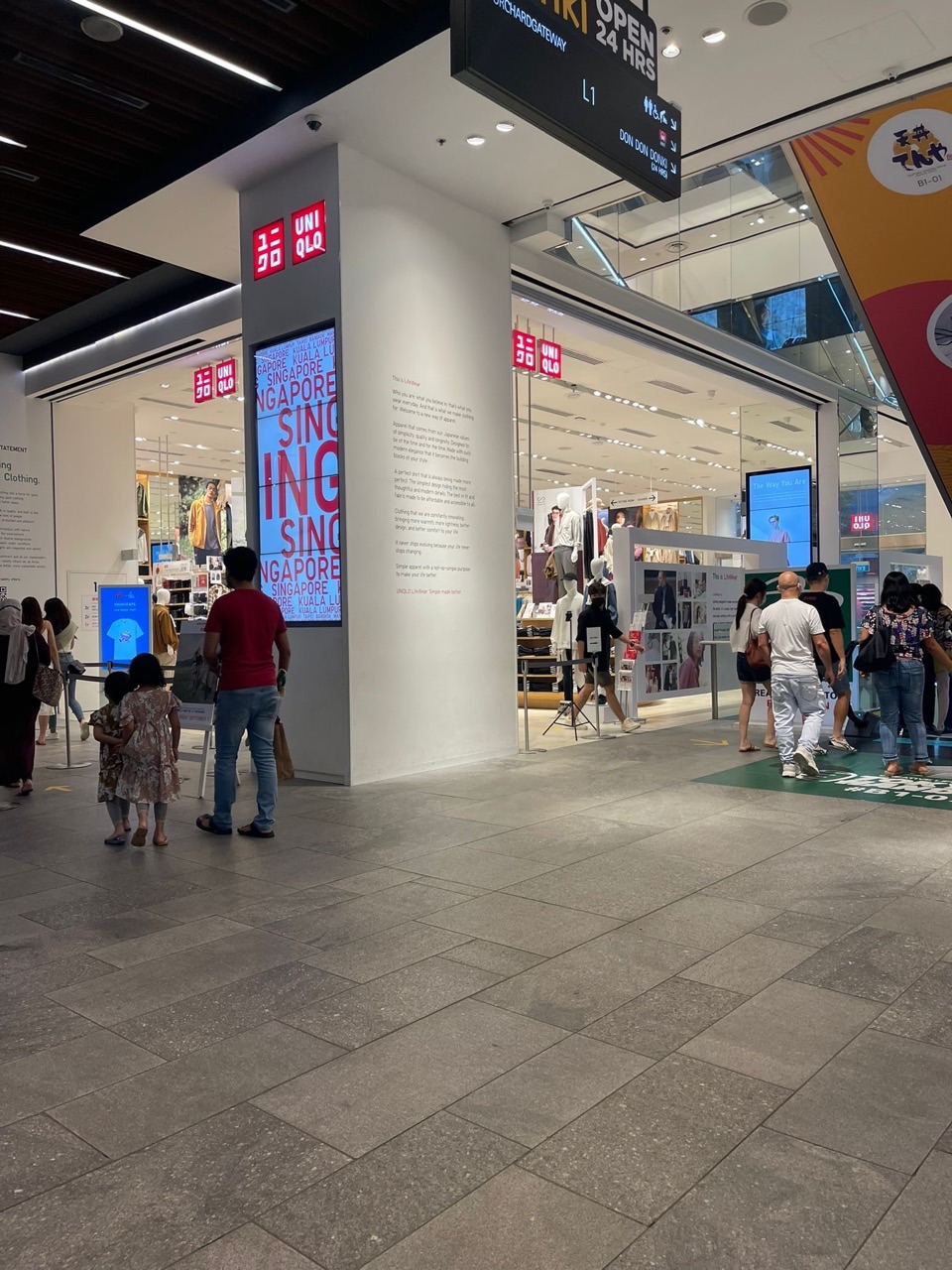
Did you know Somerset’s Orchard Road Municipal Market disappeared before the shopping centres familiar to today’s commuters opened? The market, a grocery business, a medical block and 1980s malls belong to different chapters. Reading their histories side by side teaches an important Secondary 2 skill: two sources can describe the same district accurately while presenting very different experiences and priorities.
Secondary 2 G3 History tuition in Somerset should equip students to evaluate wartime and post-war sources, explain Singapore’s changing political context and compare evidence without inventing consensus. eduKateSG runs premium three-student, 1.5-hour weekly tutorials near Sixth Avenue MRT, not at Somerset MRT. Local examples are only practice material; MOE and the school’s assessed chapters govern the subject.
The lesson format follows the immutable Clementi small-group teaching reference. We begin with an authentic marked source response and build a skill that transfers to the actual school History topic.
Inside a Secondary 2 G3 History tutorial
The tutor opens the learner’s actual written response, not a fresh pile of identical exercises. Did the child confuse the creator’s intention with an event that actually occurred? Did they dismiss a wartime propaganda source without asking what it reveals about official messaging? Did they compare a civilian and government source only by document type? A correction is demonstrated on one example and tested on another unfamiliar source. In the premium three-student class, each pupil writes independently and receives feedback based on what their own evidence and reasoning reveal.
Secondary 2 is a transition from description toward comparison
The lower-secondary G3 History course develops enquiry about Singapore’s past, including wartime and post-war experiences according to MOE and each school’s teaching sequence. A pupil who can identify the content of a source must increasingly explain what the content suggests, why a source was produced, whether its statements can be trusted for a particular claim and how it relates to other accounts. This is not yet identical to the workload or paper structure of a final-year SEC K330 or K336 student. The teacher should distinguish school weighted assessments from later national examination preparation.
Why Somerset supplies useful source questions
Somerset’s commercial area provides vivid examples of changes in use: an older market, shops serving different residents, post-war retail, medical facilities and later shopping centres. The question is not whether the district is an official national-examination case study. It is how pupils learn to read provenance, compare motives and distinguish plans from observed outcomes. The historical facts come from the National Heritage Board’s Orchard Heritage Trail and the National Museum’s collection, which must be identified as later institutional syntheses rather than contemporary diaries from the original period.
Wartime history needs its own chronology
The Japanese Occupation in Singapore ran from 1942 to 1945. Students must not explain an event in that period by pointing to a 1972 Somerset medical centre or an early-1980s shopping complex as though those later facilities already existed. When revising the Battle of Singapore, occupation policies, living conditions or people’s responses, school chapter and source dates need to be correct. We sometimes use Somerset’s long timeline as a deliberate trap: which events occurred before, during or after the war, and which cannot have influenced an earlier decision?
A wartime rule is not proof that everyone obeyed
An occupation-era order can tell a historian what an authority directed residents to do. It does not independently prove full compliance, widespread support or consistent enforcement. A rationing register, an individual’s diary and a later recollection may provide other views, each with its own limitations. Students practise answering ‘what can this source establish?’ before giving a sweeping verdict about life under Japanese rule. An official rule can be useful evidence about government policy even when it cannot answer every question about lived experience.
Propaganda is useful for studying its maker
A leaflet designed to win public support may selectively present achievements and downplay hardship. That possibility invites source criticism, but ‘this is biased, therefore useless’ is a poor answer. It may be excellent evidence of the message an authority wanted to promote. A student must relate usefulness to the enquiry: official messaging, civilian opinion, actual economic conditions or political decisions? Each requires different proof. The nearby Cathay heritage site offers one local illustration of wartime propaganda use, but the correct historical source in the child’s school topic takes precedence.
Somerset’s pre-war Cold Storage is a different kind of evidence
Cold Storage began operations along the Orchard corridor in 1905, serving local needs well before the large shopping malls. NHB describes its origins as a small deli catering mainly to European residents and its later expansion. A company advertisement would reveal product positioning and a likely target market; it would not establish the experiences of all people living in the district. In a History tutorial, a commercial source provides an analogy for audience and purpose. It is not a replacement for a Japanese Occupation administrative order.
The market and supermarket reveal different shopping experiences
The Orchard Road Municipal Market near Koek and Cuppage Roads and the nearby Cold Storage business operated alongside one another during parts of the twentieth century. The heritage booklet recounts later residents’ recollections of purchasing everyday staples at the wet market and different products at Cold Storage. These memories may illuminate individual practice, but they do not amount to a complete consumer survey. The correct comparison asks what was bought, by whom, in which period and based on which evidence. A pupil must not turn one recollection into a rule applying to every household.
A memoir’s date is not always the date of the memory
Someone interviewed years later about visiting Somerset in the 1960s can provide valuable testimony of remembered routines. However, the date of an interview is not the date of the event. Memories may also compress several visits or misremember exact prices and dates. Students annotate two lines: ‘experience being described’ and ‘time this account was recorded’. This strengthens reliability judgements while avoiding the equally wrong assumption that every later memory must be discarded. Corroboration with period photographs or business records can improve an enquiry.
1945 to 1959: rebuilding and political change were not one event
After the Second World War ended, Singapore faced reconstruction alongside increasing political mobilisation. Internal self-government in 1959 was one landmark; it should not be confused with the 1945 surrender or with later 1963 merger. Students working on post-war Singapore must identify the actual political institution and issue in the source. A document promoting a new business is not, by itself, evidence of why a constitutional reform was adopted. Two developments may coexist in time without a proven cause-and-effect relationship.
1947 and post-war commercial enterprise
The National Heritage Board’s Orchard history records that Fitzpatrick’s supermarket was founded in 1947 by two former Cold Storage butchers. A business founding is one sign of commercial initiative after the war, but it cannot by itself stand for the economic experience of every Singapore resident. Its significance depends on the enquiry: retail competition, consumer change, employment or urban development. In school History, relevant economic and political claims require the correct source rather than an attractive local anecdote.
1959, 1963 and 1965 must be taught separately
In 1959 Singapore obtained internal self-government. In 1963 it joined Malaysia. On 9 August 1965 Singapore separated from Malaysia to become an independent republic. A pupil who writes these as a single seamless ‘independence process’ may erase the changing political conditions and distinct causes. We use an actor-and-institution timeline: who made which decision, what constitutional status applied at the time and which pressures mattered. Only then does the tutor ask for a paragraph explaining significance rather than simply reproducing the three dates.
Why nearby retail history cannot automatically explain politics
Specialists’ Centre opened at Somerset in 1972; Orchard Plaza was completed in 1981 and nearby Centrepoint opened in November 1983. These buildings reflect later commercial and urban changes. They do not establish why political leaders made choices during merger or separation. The tutor deliberately puts a political timeline and a Somerset land-use timeline side by side. Where the timelines overlap, we still need proof of a causal connection rather than saying that events with nearby dates must influence each other.
The municipal market’s closure shows change and continuity
NHB records that Orchard Road Municipal Market was demolished by 1979. The disappearance of that site is a clear change in the physical city, but commercial exchange and neighbourhood food buying did not begin or end solely with one market building. Students use this to examine continuity in activity despite changes in location, ownership or facilities. ‘Everything changed’ and ‘nothing changed’ are both poor conclusions when the question asks about specific dimensions. A strong response names what persisted and what did not.
1983: museum photographs require source criticism too
The National Museum’s photograph collection identifies Orchard Point’s June 1983 opening and Centrepoint’s November 1983 opening. The photo itself may show the buildings from a particular viewpoint in the mid-to-late 1980s; the accompanying museum description supplies historical facts about their development. These are different evidential layers: image content and later institutional annotation. Students must be able to say what they can observe and what they know only from the caption or background account.
Centrepoint youth culture is not the entire generation
The heritage trail describes the ‘Centrepoint Kids’ of 1985 and 1986—young people noted in public accounts for spending time around the mall with distinctive styles. These reports can raise questions about youth identity, leisure and public perceptions. They cannot establish that every teenager in Singapore behaved the same way. A complaint from one shopper is valuable evidence of that person’s viewpoint, but a careful historian asks who else was heard and what additional accounts are needed for a balanced explanation.
A source comparison needs one common claim
One source might describe the municipal market as a cherished meeting place, while a later business promotion praises the efficiency of a mall. The two do not necessarily contradict each other: they may assess different periods or features. To compare them, the tutor defines a shared question, such as changing opportunities for local trading. The pupil then selects relevant evidence from both sources and explains whether their claims align, diverge or address different aspects. Merely writing ‘Source A is old and Source B is recent’ is not sufficient.
Reliability is different from usefulness
A promotional notice may be less reliable for measuring how well a project worked than an independent inspection. Yet it may be very useful for identifying the project’s advertised goals. A later memoir may be useful for understanding an individual viewpoint but unreliable for precise numbers. Pupils should make these judgements separately and state the question they are answering. ‘Unreliable’ is not a permanent label attached to every claim made by a source.
Purpose needs a maker, audience and context
An opening ceremony speech may hope to attract investment, thank participants or build public confidence. A private diary may have no public audience at all. A historical answer should identify the likely audience and the specific response the creator wanted, using textual clues and the contemporary setting. At Somerset, a mall opening leaflet helps explain the distinction. In the examinable wartime school topic, the pupil must make the same inference using the actual source provided.
Corroboration is not copying two summaries
Two websites might both repeat the same historical description written by one institution. They are not automatically independent witnesses. Students should trace what each account relies on, its production date and whether it provides a separate evidence path. The skill also matters within a structured source-based question: a second source may confirm that a decision was announced without confirming its successful implementation. Strong corroboration is specific about the proposition supported.
Historical significance is contextual, not popularity
A business opening, political milestone and closure of a local market can matter to different people in different ways. A significance paragraph should state a criterion, such as number of people affected, duration of consequences or changes to institutions. The student must supply evidence linking the event to that criterion. A photograph showing a crowded mall does not prove the mall was more important to every resident than a previous market, nor can a violent event be evaluated solely by how widely its image circulated.
The child must transfer methods to genuine school sources
After learning how to distinguish a 1905 business from a 1983 building, the student receives an unfamiliar source from the actual Secondary 2 History chapter, perhaps concerning an occupation policy, a political speech or a post-war perspective. The tutor looks for the same habits: correct date, source audience, bounded inference, comparison and recognition of what remains unproved. A polished local-history essay is not the aim. Transfer to the assessed historical content is.
The weekly 1.5-hour three-student tutorial
- Opening 10 minutes: each pupil retrieves a source fact and relevant historical date.
- Next 15 minutes: inspect an individual marked answer and identify the first unsupported inference.
- Next 20 minutes: model a purpose, comparison or usefulness judgement.
- Next 20 minutes: each learner writes on a fresh source from the current school chapter.
- Next 15 minutes: compare interpretations and challenge missing evidence.
- Final 10 minutes: independent unseen transfer, specific error log and home exercise.
This allocation changes with the student’s needs. A learner who mixes 1959 and 1965 requires a secure timeline, while another who has the right facts but weak source comparison needs targeted writing practice. Individual progress matters more than collective polished notes.
An illustrative ten-week Secondary 2 improvement sequence
- Week 1: check the real school chapters, marked scripts and reading demands.
- Week 2: rebuild dated wartime and post-war chronology.
- Week 3: distinguish official orders from evidence of civilian behaviour.
- Week 4: infer the purpose of a historical source using author and audience.
- Week 5: compare two documents on the same historical issue.
- Week 6: judge reliability for a specific factual proposition.
- Week 7: assess usefulness and limitations without dismissing the source.
- Week 8: explain an actor, decision and consequence in a paragraph.
- Week 9: complete a source-guided Historical Investigation.
- Week 10: answer unfamiliar exam-style school tasks independently.
Ten weeks is a teaching illustration, not a guarantee of a particular mark. The student’s actual written results guide the next cycle.
Original fictional source laboratory: twelve exercises
Every miniature source below is original fictional classroom practice. It is not a real wartime order, resident testimony, museum quotation or SEAB past-paper material. The exercise develops one carefully bounded reasoning move, then a tutor introduces an authentic source.
Practice 1: Occupation notice
Fictional source: Fictional 1943 order tells civilians to comply with a new restriction.
Question: Does the source prove compliance? Tutor’s reasoning: No. It states a directive; behaviour needs separate evidence.
Independent transfer: Suggest an independent civilian record.
Practice 2: Propaganda film description
Fictional source: Fictional wartime film programme praises an occupying administration.
Question: What is its value? Tutor’s reasoning: It reveals official messaging and a hoped-for response, not public agreement.
Independent transfer: Identify target audience.
Practice 3: Civilian ration diary
Fictional source: Fictional diary records a family’s struggle to obtain food.
Question: Can it represent all households? Tutor’s reasoning: It is an individual experience; compare other groups.
Independent transfer: Find a public supply record.
Practice 4: Post-war return letter
Fictional source: Fictional 1945 letter says the writer hopes markets reopen.
Question: Does hope establish reopening? Tutor’s reasoning: No. Differentiate personal expectation from a later event.
Independent transfer: Name evidence of actual trading.
Practice 5: 1947 retail advertisement
Fictional source: Fictional grocer offers imported products to returning customers.
Question: What can be inferred? Tutor’s reasoning: An attempt to attract a market, not measured universal demand.
Independent transfer: Ask who might be excluded.
Practice 6: 1959 political leaflet
Fictional source: Fictional speaker demands more local political participation.
Question: What political stage matters? Tutor’s reasoning: Locate 1959 internal self-government, not 1963 merger.
Independent transfer: Name the speaker and audience.
Practice 7: 1963 campaign statement
Fictional source: Fictional pamphlet argues that merger will create opportunities.
Question: What kind of claim is this? Tutor’s reasoning: It expresses political expectations; later outcomes need evidence.
Independent transfer: Suggest a competing viewpoint.
Practice 8: 1965 personal recollection
Fictional source: Fictional memoir describes anxiety during separation.
Question: Whose experience is present? Tutor’s reasoning: One writer’s recollection, not everyone in Singapore.
Independent transfer: Find a contemporary statement.
Practice 9: 1972 specialist-centre brochure
Fictional source: Fictional developer praises a newly opened clinic building.
Question: Can this show how patients felt? Tutor’s reasoning: It documents promotional aims, not patient experiences.
Independent transfer: Identify a later user account.
Practice 10: Market demolition interview
Fictional source: Fictional former shopper laments losing a local market.
Question: Does nostalgia prove all residents opposed redevelopment? Tutor’s reasoning: No. It records one perspective.
Independent transfer: Look for a vendor’s account.
Practice 11: 1983 shopping-centre image
Fictional source: Fictional photograph shows a building near Somerset.
Question: Does it prove every mall opened that year? Tutor’s reasoning: No. Verify the particular building and date.
Independent transfer: Compile a site-specific chronology.
Practice 12: Two youth reports
Fictional source: Fictional 1986 sources differ over teenagers gathering in a mall.
Question: How do they compare? Tutor’s reasoning: Define the shared issue and cite each stated viewpoint.
Independent transfer: Explain why audience may affect tone.
Five recurrent mistakes and the most useful repairs
- ‘The wartime notice proves everyone agreed’ → distinguish stated policy from actual response.
- ‘A memoir is useless because it was written later’ → ask which recollection it can inform and what needs corroboration.
- ‘1959, 1963 and 1965 all mean independence’ → name each constitutional change precisely.
- ‘The photo has a shopping centre, so the market never existed’ → investigate successive land uses.
- ‘These sources both mention Somerset, so they agree’ → compare actual claims on one issue.
What Somerset parents can practise without teaching the whole syllabus
Ask the child to select one source clue supporting their latest written claim, then name something that the source cannot establish. For a political-history paragraph, ask what the actor decided, how it changed the situation, and which fact supports the explanation. This ten-minute conversation helps expose a reasoning gap without requiring the parent to memorise a whole chapter.
Good tuition should preserve historical accuracy and the child’s independent reasoning. More worksheets without feedback can repeat the same error; a short unseen source after correction provides clearer evidence of improvement.
Frequently asked questions: Secondary 2 G3 History Somerset
Are Somerset’s malls and markets part of the national History syllabus? They are local examples of enquiry and comparison. Students must still study the actual MOE and school topics.
What if my child knows dates but still loses source marks? Check inference, purpose, usefulness, reliability and whether comparisons address a shared issue.
Does an official wartime document automatically prove its own claims? No. It may be excellent evidence of official aims while requiring other sources to test actual outcomes.
Where is the class? Near Sixth Avenue MRT, not Somerset. Parents should consider the real journey and school timetable.
Official history sources and school learning requirements
NHB’s Orchard Heritage Trail and Communities and Cemeteries route explain Somerset’s local commercial and social past. The National Museum’s mid-to-late-1980s Orchard collection gives site-specific building dates. For a wider wartime analogy, see the Former Cathay Building record. The MOE lower-secondary History syllabus controls curricular learning and SEAB’s 2027 G3 directory distinguishes later examination pathways.
For three-student tutorial details, see the immutable Clementi reference. Families may enquire through eduKate Singapore using their child’s actual school source work.
Continue the Secondary 1–4 G3 History learning sequence in Somerset
Secondary 1 G3 History tuition Somerset, Secondary 3 G3 History tuition Somerset, Secondary 4 G3 History tuition Somerset. The next stages strengthen evidence-based causal explanation, SEC subject selection, multi-source synthesis and structured essays.