
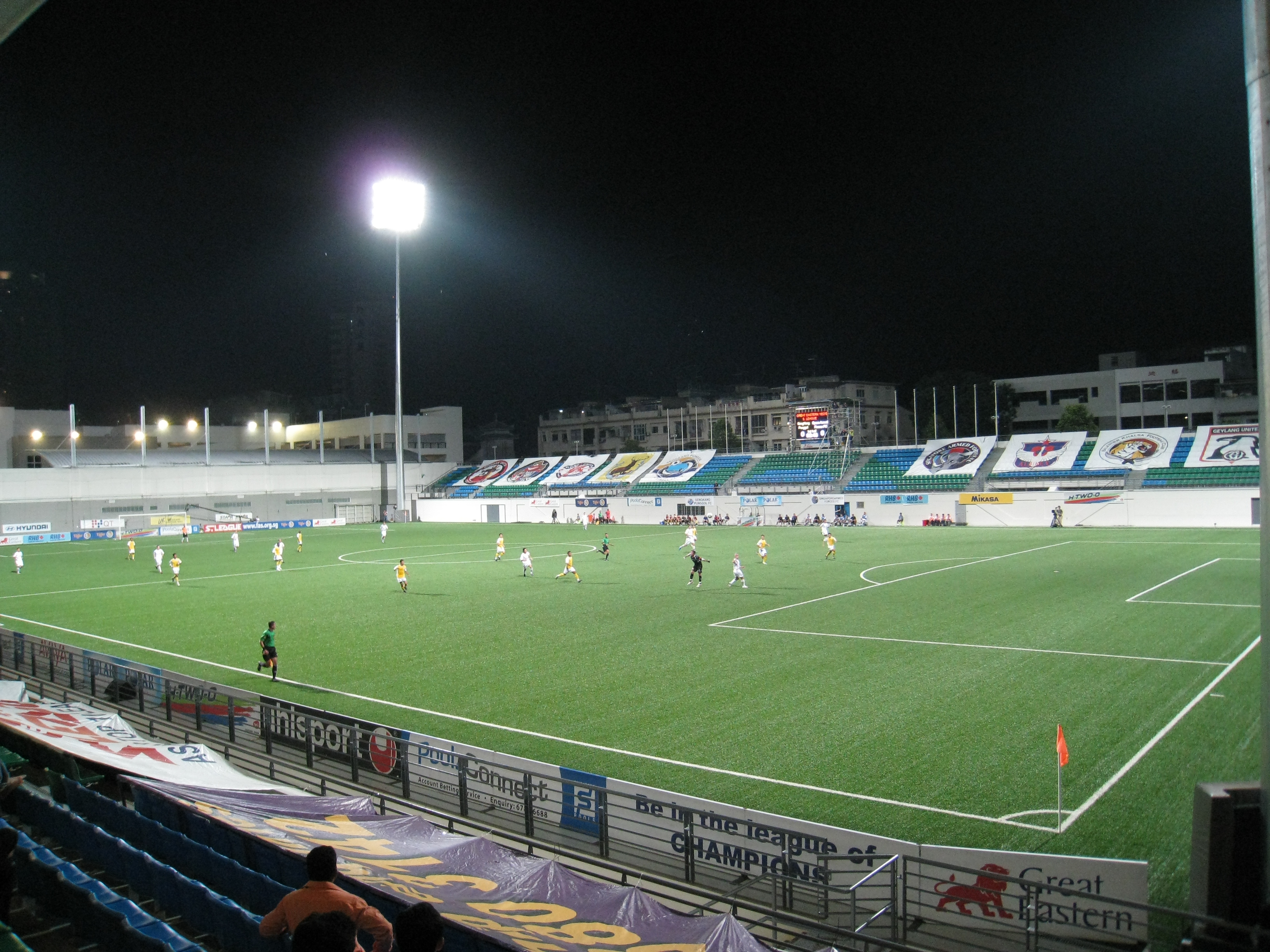
Did you know Jalan Besar Stadium opened for football in 1929 but was later used as a Sook Ching screening site and a Japanese-language teaching venue during the 1942–1945 Japanese Occupation? A Secondary 2 G3 History student must be able to distinguish those functions, their sources and the experiences of people involved without merging them into one story.
eduKateSG’s premium three-student, weekly 1.5-hour History tutorials for Jalan Besar families are held near Sixth Avenue MRT, not at Jalan Besar MRT. We examine genuine school-marked sources, repair wartime and postwar chronology, and strengthen inference, comparison and historical causation. Local examples support the method; the school’s actual topics remain the examination content.
- Check the date and actual activity described before using a historical source.
- Separate official instructions from how individual people experienced the policy.
- Treat sources about wartime suffering with careful attribution and respect.
- Show improvement on a fresh source, not only on a rehearsed local example.
Our teaching model follows the immutable Clementi three-student tutorial reference. The local history draws primarily on NHB’s Jalan Besar Stadium account, NHB’s New World history and the World War II Heritage Trail.
What happens in a Secondary 2 G3 History tutorial?
The tutor opens the child’s school-marked source response, checks its chronology and asks which precise claim the evidence supports. A pupil may know Jalan Besar Stadium opened in 1929 but wrongly assume that every photograph of its football stands shows a wartime event. Another may read a Japanese Occupation directive and say it proves that everyone obeyed. A third could describe a New World entertainment poster as if it gives reliable data about every family’s economic wellbeing.
We diagnose these as distinct errors. A lesson that merely retells interesting local history is not enough: every child must try an unfamiliar school-topic source independently after a targeted correction. The premium three-student class is weekly for 1.5 hours near Sixth Avenue MRT, not at Jalan Besar.
The lower-secondary syllabus comes before the final-year paper
Secondary 2 G3 History develops interpretation of sources, historical causes, change and continuity, and appreciation of different experiences. A school may be teaching Japanese Occupation and post-war Singapore or another prescribed stage. The child’s actual chapter and teacher feedback determine what the tutor does next.
The 2027 SEC is the first of the new examination system, but a Secondary 2 learner usually belongs to a later cohort and may not yet have a registered upper-secondary History subject. It would be misleading to treat final-year K330 paper timing as the child’s present national assessment.
1929: the stadium’s sporting purpose came first
NHB records Jalan Besar Stadium opening in December 1929, with a Boxing Day match between the Malayan Chinese and Malayan Asiatics attended by about 7,000. This provides evidence for a particular opening event, not a complete picture of the neighbourhood’s occupations or beliefs.
When the pupil reads a football photograph, they should identify its source date and visible details. An image of players in 1930 is not direct eyewitness evidence of the Japanese Occupation in 1942. A site name that stays the same does not guarantee the source’s historical purpose stays the same.
The swamp and incinerator story belongs to the stadium’s foundations
The heritage record describes how the pitch was made on land filled with municipal refuse, ashes and other material to raise it above wet ground. This local engineering history explains why the original playing surface needed particular attention.
A student must not treat that early construction record as a description of the modern stadium’s surface or every later renovation. An institutional site can persist while infrastructure and use change. Source date and the question being asked determine relevance.
1941: the war in Malaya began before Singapore surrendered
The Japanese campaign in Malaya started in December 1941. British-led forces subsequently retreated south. The formal surrender of Singapore came on 15 February 1942. Between these dates, military events and civilian anxieties developed through a changing situation.
A strong timeline names actor and event, not just four numbers. A pupil who writes the surrender occurred on the night the campaign began has merged two distinct acts. The tutor reconstructs a short chain from campaign to military decision before attempting an inference about wartime policies.
The surrender of 15 February 1942 changed authority
After the British-led surrender, Japan occupied Singapore and governed under a new military regime. That constitutional-military shift affected institutions, public spaces and people’s daily lives, but did not instantly produce identical outcomes for every civilian.
An official surrender record establishes the event; it does not by itself document food rations or each family’s feelings. A good historical answer specifies the question and selects a source with access to the subject. The historian should not ask one military declaration to prove every personal consequence.
Jalan Besar Stadium’s use during the Sook Ching operation
NHB identifies Jalan Besar Stadium as a major Sook Ching screening site during the Japanese Occupation. The screening and killing of Chinese civilians constitute serious human suffering and must be discussed accurately and respectfully, without theatrical embellishment.
An administrative order may document a policy or location. It cannot represent the private experience of every person screened or detained. Contemporary records and carefully attributed survivor testimony illuminate different aspects. We teach students to avoid anonymous invented quotes presented as historical evidence.
A stadium does not become the same institution as a detention system
One physical field can be used by different authorities for different reasons. Before the Occupation it hosted football; during the Occupation it was used for screening and instruction; after the war it hosted public sporting and civic events again.
A pupil must explain what changed: control, purpose, participants and historical context. Merely writing the same site was important does not demonstrate continuity or causation. The source must show which particular event occurred there, at which date, and for whom.
Japanese-language teaching was another distinct wartime use
The NHB stadium history notes that the site also functioned as a Japanese-language teaching centre for civilians under occupation. This purpose was different from sports and from coercive screening, even though the physical venue was the same.
An official class notice could reveal the authority’s aim and the intended audience. It does not prove everyone attended, learned Japanese successfully or approved of the policy. We require separate evidence about implementation and people’s different experiences.
A source about a policy is not proof of its success
A wartime directive can establish what military administrators announced or ordered. For an enquiry about obedience or lasting effects, the historian should examine enforcement logs, individual recollections and other records where available.
The tutor asks the pupil to finish two sentences: ‘This source is useful for investigating the policy because …’ and ‘It cannot establish the outcome because …’. This is much more precise than calling an official document completely reliable or completely useless.
The distinction between witness account and later heritage account
A person who was present at Jalan Besar in 1942 could report experiences within their observation. An NHB heritage account written much later can synthesize archival evidence, explain chronology and compare earlier records. Neither type answers every historical question.
We teach learners to identify the source maker, production date and reason for the text. A later source does not become a wartime eyewitness simply because it describes the event. A firsthand account does not become a statistical survey merely because its author’s experience was important.
Historical empathy requires accurate attribution
Students may be moved by the suffering associated with Sook Ching. The tutor helps them discuss the people involved with dignity, without inserting invented dialogue or making unsupported claims about entire ethnic groups.
A careful answer says which recorded policy or reported experience the source documents. Where evidence is missing, it is better to state the limitation than to fill the gap with imagined personal details. Ethical historical communication and factual discipline reinforce one another.
New World Amusement Park was a different nearby site
New World opened in 1923 on land around Jalan Besar, Serangoon, Kitchener and Petain Roads. Although close to Jalan Besar Stadium, it was not the same institution and its wartime activities should not be automatically assigned to the stadium.
A pupil reading a New World programme must name the park correctly before interpreting it. The fact two entertainment or sporting sites were located in one broad district is not evidence that they shared owners, audiences or wartime roles.
New World’s reported wartime operation does not erase suffering
Historical studies document that entertainment continued at New World during aspects of the Japanese Occupation. This reminds us that societies can contain cultural activity even during periods of intense fear, scarcity and violence.
An advertisement for a live performance is evidence of what organisers promoted, not that every scheduled show occurred, that all performers were safe or that the whole population had enough food. We should not treat one surviving commercial source as a complete picture of wartime Singapore.
Getai and the history of public entertainment
Early getai performances developed in amusement parks, including New World, where singers, musicians and audiences gathered. Histories of cultural change reveal different social responses to difficult circumstances and changing entertainment tastes.
A performer memoir may give a rich individual account, while a park programme shows planned acts. Those sources can complement each other without describing the same person’s experience. The tutor teaches students to define the shared issue before trying to compare them.
Great World and New World are separate parks
Historic Singapore included New World in the Jalan Besar area, Great World near Kim Seng Road and Gay World in the Mountbatten/Geylang area. Their different locations and histories matter, especially when a wartime account names only one.
A candidate can lose an otherwise strong source answer by attributing the experience of one site’s occupants to another venue. We create a site–date–activity table before discussing larger themes. Place identity is as important as chronology.
The purpose of wartime entertainment sources must be interpreted
A promotion that promised lively performances might have sought ticket sales and reassurance. That is a reasonable starting hypothesis if the wording and historical setting support it, but the advertisement cannot prove the audience was persuaded or the business was consistently profitable.
A source-purpose answer requires a particular maker, audience and desired response. The tutor rejects a generic formula such as ‘to persuade people’ without saying what view or action was encouraged. Purpose is not identical to reliability.
1945: ending occupation did not restore everything at once
Japan’s surrender in September 1945 ended the occupation. Singapore then had the practical challenge of rebuilding infrastructure, institutions and disrupted everyday life. The political date is precise, while the timing of individual families’ recovery varied.
A celebratory public photograph can document a ceremony or crowd, but not each resident’s economic security or personal losses. Pupils should compare the official record with other appropriate sources when investigating social consequences.
The 1948–1966 Malaya Cup period was a new phase
NHB records Malaya Cup matches at Jalan Besar Stadium from 1948 to 1966. The venue’s postwar sporting role does not erase its troubling occupation history, nor does the match calendar explain every other political development in Singapore.
A programme can show the teams, date and advertised event, while a match report records the outcome. Neither is evidence that all residents attended or that every season drew equal crowds. These are separate historical propositions requiring separate records.
1967–1973: the Malaysia Cup name refers to a later era
NHB distinguishes the later Malaysia Cup years at Jalan Besar Stadium before the National Stadium at Kallang assumed greater importance. An answer discussing a 1968 football programme should use its proper competition and political era.
This is another example where a site and activity continue while institutional names and contexts change. The pupil should not call all postwar fixtures the same competition without checking chronology. Good History carefully defines the term being used.
1955, 1959, 1963 and 1965 belong to distinct political stages
Singapore’s growing self-government in 1955, full internal self-government in 1959, merger with Malaysia in 1963 and separation in August 1965 are separate political developments. A speech promoting one arrangement should not be interpreted as if later outcomes had already happened.
The tutor asks what a source maker could have known and hoped at the time. A later historian can interpret outcomes, but an earlier political pamphlet cannot literally record a future event that had not occurred. Avoiding hindsight helps explain change.
One stadium cannot explain all national political changes
Jalan Besar Stadium was a place for public events and sport, and therefore sometimes connected with civic culture. Yet shared location is not a causal argument that football or the stadium’s construction produced each constitutional milestone.
To explain an event, a student needs the political actors, decisions and mechanisms relevant to that question. The tutor makes a clear distinction between background context and evidence for a causal conclusion.
1967 youth events and 1969 Armed Forces Day are separate milestones
The NHB stadium record names the opening of the Singapore Youth Festival in 1967 and the first Singapore Armed Forces Day parade in 1969 among its postwar civic roles. A site may be reused for education, national institutions and public celebration.
A photograph of one parade cannot be a visual record of all the other ceremonies simply because the venue is recognisable. Students learn to read the event caption, source date and participants before interpreting a crowd.
1987 closure of New World was not the end of all local enterprise
New World Amusement Park ceased operating in 1987 after decades of changes in entertainment. Other shops, businesses and public facilities continued to operate throughout the wider district. The physical decline of one institution does not prove every neighbouring activity disappeared.
The pupil should say which institution closed, when and under what known circumstances. Claims about livelihoods require independent accounts rather than a generic statement that the entire area became empty overnight.
1991 conservation brought a different policy question
Jalan Besar first gained conservation status in October 1991. This came after generations of physical and commercial change. A conservation notice can show the authorities’ aims and protected buildings, but not the private experiences of every shopkeeper.
The tutor asks how to investigate the policy’s actual effects: compare conservation records with dated streetscape images and relevant interviews. The distinction between decision and consequence is transferable to many school History topics.
The 1999 closure and 2003 reopening of the stadium
Jalan Besar Stadium closed for major rebuilding in December 1999, and a new venue with the original playing pitch retained reopened in June 2003. Thus a photograph from 2009 cannot show the exact structure spectators used in 1929.
The pupil learns to distinguish institutional continuity from unchanged physical fabric. A site name can remain familiar even when the infrastructure has been rebuilt. That matters when using modern photographs as evidence of earlier periods.
2009 City Square Mall belonged to another redevelopment phase
Later development of New World’s former land included a shopping mall that opened in 2009. The closing date of the amusement park in 1987 is not the mall’s opening date. The wider land’s role shifted from live amusement to modern retail and associated public use.
An economic-history question should separate operators, legal decisions, physical construction and consumer experiences. One modern mall photograph cannot prove what every vendor from the old amusement park did after closure.
A focused Historical Investigation on wartime Jalan Besar
One question is ‘How did Jalan Besar Stadium’s public function change between 1929 and 1948?’ NHB’s opening history, reliable wartime records and postwar sporting reports could provide the main chronological spine. The enquiry should recognise that some wartime experiences were traumatic and do not belong in sensational anecdotes.
The student identifies which sources document official action and which describe individual experiences. An answer that claims everyone welcomed the same change would be unjustified. Historical significance is connected to groups affected, consequences and evidence.
Source comparison needs a common question
A 1942 screening-related source and a 1948 football programme both refer to the stadium, but they do not necessarily address the same issue. Comparing their event functions can illuminate change, yet comparing them on wartime civilian conditions would require content that actually speaks to those conditions.
The tutor makes learners specify the shared proposition before stating whether sources agree or differ. Identical place names are not enough to establish a contradiction. Source relevance comes first.
The transfer test uses another school-topic source
After the local example, the child should read a fresh historical source from the actual school chapter. They must identify author, timing, claim, purpose, evidence and limitations without inserting unrelated details about New World or Jalan Besar Stadium.
The learning is secure only when a corrected method works on the new material. A child who simply remembers the teacher’s local story may still need more support interpreting unfamiliar sources.
What a practical ninety-minute History tutorial can look like
- 10 minutes: retrieve the relevant wartime event and dated historical actor.
- 15 minutes: analyse a genuine marked source paragraph for its first error.
- 20 minutes: teach one inference, purpose or comparison move with bounded evidence.
- 20 minutes: each student writes on a different unfamiliar school-topic source.
- 15 minutes: review the source’s limits, chronology and any unsupported broad claims.
- 10 minutes: test the correction independently on changed evidence and note a next step.
These allocations are illustrative. A student who mistakes 1941 for 1942 needs factual repair before evaluating a difficult source. Another who knows the timeline but calls an order proof of universal compliance needs a targeted evidence exercise.
Illustrative ten-week Secondary 2 historical-thinking route
- Week 1: verify the school History chapters and examine marked scripts.
- Week 2: reconstruct the 1941–1945 military and civilian chronology.
- Week 3: separate a policy announcement from implementation and individual experience.
- Week 4: identify source maker, audience, purpose and event date.
- Week 5: compare two sources discussing the same historical issue.
- Week 6: evaluate reliability for a specific claim.
- Week 7: explain source usefulness and a meaningful limitation.
- Week 8: construct an actor–decision–consequence paragraph.
- Week 9: complete a respectful, source-led Historical Investigation.
- Week 10: attempt unfamiliar assessed work and update the correction cycle.
The ten weeks are a possible plan, not a guaranteed grade. The student’s independent school-topic responses should determine whether to revisit a skill or increase difficulty.
Twelve original fictional wartime and postwar source drills
All miniature documents below are original fictional teaching prompts, not authentic victim testimony, government directives or SEAB examination extracts. They demonstrate source-reading reasoning; genuine history claims are attributed to identified heritage resources.
Practice 1: A 1929 ticket
Fictional source: Fictional programme advertises a football fixture at Jalan Besar.
Question: Does this prove the same match was played in 1942? Reasoning: No. The source is dated before the war.
Independent task: Find the appropriate event record.
Practice 2: A 1941 war report
Fictional source: Fictional newspaper describes military advances southward.
Question: Is this the formal surrender? Reasoning: Not without evidence of the separate 1942 decision.
Independent task: Make an accurate event timeline.
Practice 3: A 1942 directive
Fictional source: Fictional notice assigns a sporting venue to an occupation function.
Question: Does this describe every person’s experience? Reasoning: No. It records an administrative action.
Independent task: Seek attributed testimony.
Practice 4: A civilian diary
Fictional source: Fictional 1943 person remembers a frightening screening.
Question: Can one account measure all cases? Reasoning: It describes a particular experience.
Independent task: Name a different source.
Practice 5: A language notice
Fictional source: Fictional 1943 announcement says language classes are compulsory.
Question: Did all residents attend? Reasoning: Instructions and compliance differ.
Independent task: Suggest attendance records.
Practice 6: A music poster
Fictional source: Fictional 1944 entertainment programme advertises live singers.
Question: Does it prove universal wartime prosperity? Reasoning: No. One park’s operation cannot measure everyone’s wellbeing.
Independent task: Seek independent records.
Practice 7: A business diary
Fictional source: Fictional 1944 stallholder describes a shortage of ingredients.
Question: Is this every business’s experience? Reasoning: It is one participant’s account.
Independent task: Find a contrasting report.
Practice 8: A 1945 celebration
Fictional source: Fictional photograph shows people gathering after surrender.
Question: Did every family immediately recover? Reasoning: A political ceremony does not prove welfare outcomes.
Independent task: Seek postwar evidence.
Practice 9: A 1948 match report
Fictional source: Fictional newspaper reports a Malaya Cup result.
Question: Does it show wartime stadium uses? Reasoning: It belongs to a later sporting phase.
Independent task: Label both periods.
Practice 10: A 1969 parade
Fictional source: Fictional image shows armed-forces personnel on the field.
Question: Was the same event held in 1929? Reasoning: No. Events must be dated individually.
Independent task: Write a caption.
Practice 11: A 1987 closure notice
Fictional source: Fictional park announcement ends public operations.
Question: Did every nearby business close that year? Reasoning: One institution’s closure is limited in scope.
Independent task: Find a business directory.
Practice 12: A 2003 stadium photograph
Fictional source: Fictional picture shows rebuilt seating above the retained pitch.
Question: Is the whole structure from 1929? Reasoning: Rebuilding and retained features differ.
Independent task: Compare original architectural plans.
Six common mistakes in Secondary 2 G3 History
- Assuming the 1929 opening photo shows Sook Ching in 1942: verify the source date.
- Calling New World Amusement Park and Jalan Besar Stadium the same venue: identify distinct sites.
- Treating wartime entertainment as proof that all residents enjoyed comfortable conditions: examine source scope.
- Assuming a wartime policy order was universally followed: seek evidence of implementation.
- Calling a 1948 Malaya Cup game a 1968 Malaysia Cup event: label each competition period.
- Using a 2009 stadium photo as a record of the original building’s 1929 condition: consider rebuilding.
Frequently asked questions: Secondary 2 G3 History Jalan Besar
Was the stadium used only for football? No. NHB records both wartime screening and Japanese-language instruction alongside its sporting history.
Does one eyewitness represent every civilian? No. A testimony can be valuable for the witness’s experience without being a population-wide account.
Should Secondary 2 students sit complete final-year SEC History papers now? Not automatically. School stage, individual readiness and the eventual examination entry should guide preparation.
Where are tutorials? Near Sixth Avenue MRT, not at Jalan Besar. Practical travel time matters.
Historical sources and syllabus references
Consult NHB’s stadium history, the New World account, NHB’s World War II trail, the Jalan Besar heritage trail, National Library’s Old World amusement history and URA’s conservation-area history. Our featured photograph is a 2009 image by WAKA77, CC0; it is not an image of the 1929 stands.

The MOE lower-secondary G2/G3 History syllabus guides school learning. SEAB’s G3 directory covers later national entries. For three-student lessons consult the immutable Clementi tutorial reference and enquire through eduKate Singapore with a genuine marked script.
Continue the Secondary 1–4 G3 History learning sequence in Jalan Besar
Secondary 1 G3 History tuition Jalan Besar, Secondary 3 G3 History tuition Jalan Besar, Secondary 4 G3 History tuition Jalan Besar. The earlier guide explains historical enquiry; the upper-secondary guides develop international causation, source synthesis and cohort-specific examination preparation.