
Secondary 4 Additional Mathematics tuition in Bukit Timah becomes a family decision surprisingly early in the examination year. January arrives, school gets busy and the first weighted assessment may already be on the calendar. Parents ask whether to start Sec 4 A-Math tuition immediately, revise all of Secondary 3 or wait until WA1 shows where the weaknesses lie. The useful answer depends on what the learner can actually do independently and whether there is time to practise between lessons.
Additional Mathematics rewards students who recognise structure. A quadratic can be an equation, a graph or a hidden pattern in a longer problem. Trigonometric identities transform expressions, differentiation describes changing gradient and integration can connect symbolic operations to area. A child may remember the rules and still struggle to select them in an unfamiliar question. The first six weeks of Secondary 4 should rebuild the links among these ideas, rather than simply create a taller stack of worksheets.

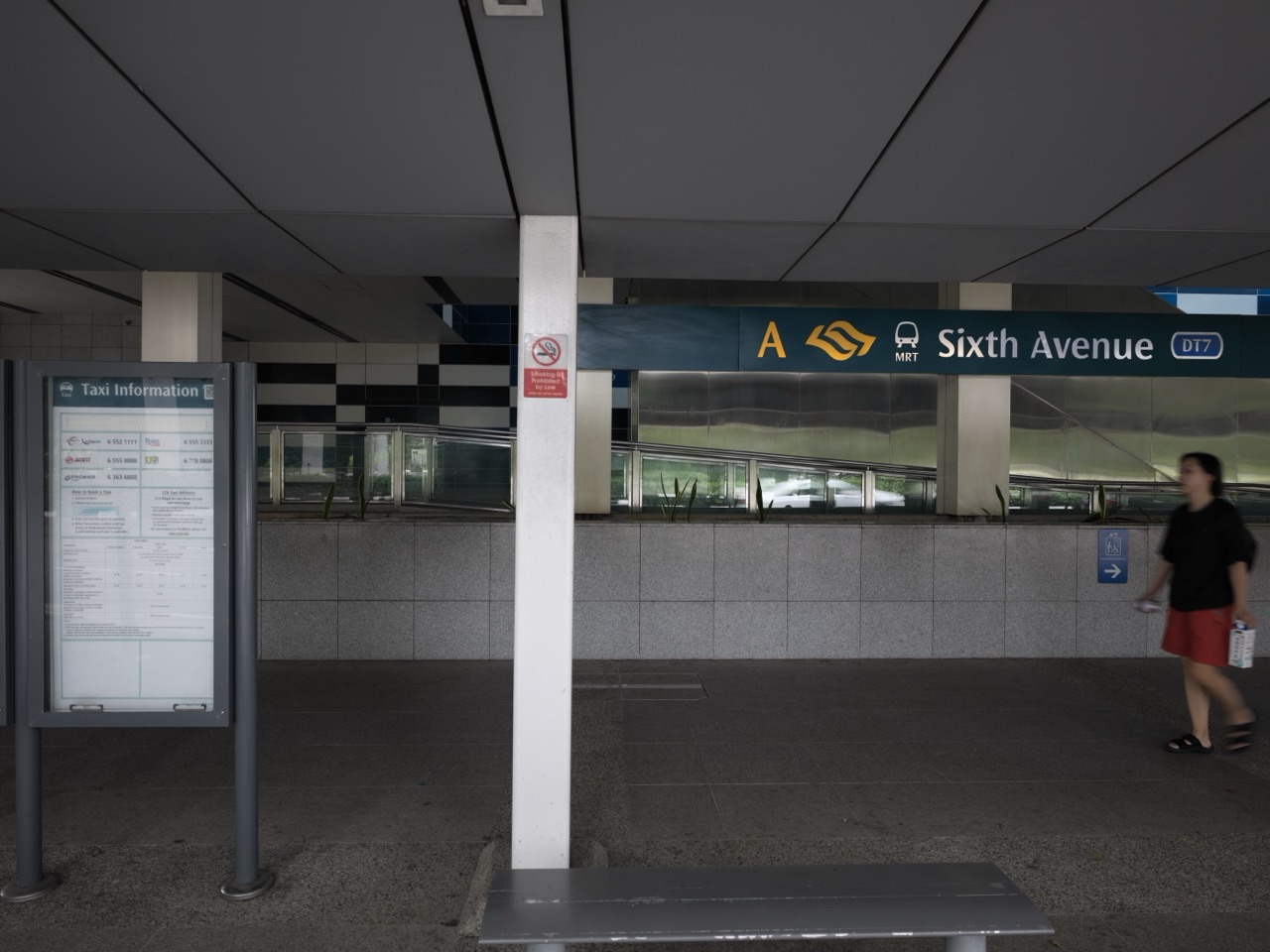
At eduKateSG Bukit Timah, our small-group tutorials accommodate up to three students, generally for 1.5 hours weekly at 8 Fourth Avenue, Singapore 268674, near Sixth Avenue MRT. Suitable group placement depends on actual subject level, school topics, current learning needs and available times. This parent guide explains how to diagnose A-Math difficulties, arrange six purposeful weeks of study and prepare for the first school assessments and, where appropriate, the 2027 Singapore-Cambridge Secondary Education Certificate.
The answer: begin early only when the evidence calls for it
If the child repeatedly cannot factorise a familiar quadratic, interpret a function graph or apply a previously taught differentiation rule, the family already has a reason to consider targeted support. Waiting for a low WA1 mark may add little information.
If the student can handle unfamiliar questions, self-correct errors and follow school teaching independently, weekly tuition may not be necessary immediately. An occasional diagnostic and a sustainable revision routine can be enough.
Do not use the calendar alone to decide. Look for the first incorrect step in current schoolwork and ask whether the student has sufficient explanation and feedback to repair it.
The right teaching programme has a specific objective, an independent practice opportunity and a way to measure whether understanding has improved.
January is not the time for examination-year panic
It is natural for parents to see Secondary 4 as a countdown to the final assessment. But a timetable built around continuous full papers can remove the time needed to repair misunderstandings.
Concept teaching, topical practice, mixed questions and timed papers are not interchangeable. Each has a job. A clear lesson introduces or repairs an idea; a short independent question tests it; mixed work trains method selection; timed work develops pacing when fundamentals are secure.
A family should adjust the balance rather than require all four forms of practice every evening. No lesson format is superior for every learner at every stage.
The first six weeks create the routine that later revision can build on. They should also protect the child’s attention for other school subjects and rest.
Three pieces of work that reveal more than a single grade
Bring a Secondary 3 year-end assessment, one recent school assignment attempted independently and a question the student still cannot explain.
The tutor examines the actual working. Can the child identify which quantities or relationships matter? Are the algebraic transformations valid? Does the learner choose a method independently or only after seeing an example?
A second student with the same test score may have entirely different difficulties. One understands a concept but makes sign mistakes; another calculates fluently but cannot recognise the correct method.
If marked scripts are unavailable, a short independent diagnostic can provide a starting point. The critical element is to see how the student thinks, not merely hear that ‘A-Math is difficult’.
Four categories of A-Math mistakes
A prerequisite gap may involve signed numbers, fractions, factorisation or equation rearrangement. These operations appear repeatedly inside functions, trigonometry and calculus.
A conceptual gap occurs when the student has not understood what a function’s turning point, a derivative or an identity represents. More mechanical practice may not fix it.
A method-recognition gap arises when procedures are known separately but the learner cannot decide which applies to an unlabelled question. Contrast exercises can make the differences visible.
An execution issue may involve notation, copying, careless arithmetic, checking or time. The tutor should distinguish this from a missing principle before prescribing speed drills.
These categories help turn a vague weakness into a teachable action.
Why Secondary 3 algebra appears inside Secondary 4 calculus
A child may differentiate correctly and then lose marks when solving the resulting quadratic equation. The underlying calculus rule was understood, but an earlier factorisation error disrupted the solution.
Another learner may know the quadratic formula yet fail to interpret the resulting roots on a graph. That is a conceptual link rather than a procedural calculation.
Good tutoring isolates the first unsupported operation. A brief repair may unlock several question types without forcing the child to redo years of unrelated Mathematics.
The student should understand why the old skill is being revisited: it enables a current A-Math application.
For the preceding stage, read Secondary 3 A-Math Bukit Timah: after year-end exams and the Sec 4 bridge.
Worked example: one quadratic in three different forms
Consider f(x) = x² − 6x + 8. The factorised form, (x − 2)(x − 4), shows that the roots are x = 2 and x = 4.
Completing the square produces f(x) = (x − 3)² − 1. This reveals the turning point (3, −1), the symmetry axis x = 3 and the minimum value −1.
The expanded form displays coefficients, the factorised form helps locate roots and the completed-square form reveals graph geometry. They describe the same mathematical object.
The tutor should ask which form is most useful for a particular question. A new quadratic with different numbers then tests whether the student understands the transformation rather than remembering the original example.
A simple factorisation check can save several marks
Students sometimes choose factors that appear plausible but contain an incorrect sign. Expanding the proposed factors can verify whether they reproduce the original expression.
When solving an equation, substituting a proposed root into the original expression can also help confirm the solution.
These are not substitutes for understanding. They are practical habits that catch recurring slips and force the learner to connect the final answer to the starting problem.
A tutor should ask which check is efficient for the particular question, rather than demand that every problem be checked in the same way.
A correctly checked unfamiliar question is stronger evidence than a page of copied model answers.
Worked example: finding stationary points
Let y = x³ − 6x² + 9x. The derivative is dy/dx = 3x² − 12x + 9.
Set dy/dx = 0 for stationary points. This gives 3(x − 1)(x − 3) = 0, so x = 1 or 3. Substituting into the original function gives the points (1, 4) and (3, 0).
A student should explain why the derivative is set to zero: the tangent gradient is zero at a stationary point under the relevant smooth-curve conditions.
If the derivative was correct but the resulting quadratic was solved incorrectly, the next lesson may require algebra repair.
If the learner cannot say why differentiation is relevant, the tutor should connect symbolic work to graph meaning.
Integration: a correct operation can still answer the wrong question
A child may be fluent in applying an antiderivative rule yet confuse a signed definite integral with total geometric area when a graph crosses the x-axis.
A tutor can draw a simple curve, identify intervals above and below the axis and discuss what the integral represents before calculating.
This reveals whether the student understands the interpretation rather than only the procedure.
Later, introduce a changed graph and ask the learner to decide whether the region must be divided. The child should make the decision without a hint.
Conceptual interpretation deserves attention early so that later timed-paper practice does not repeatedly reproduce the same mistake.
Trigonometry is about choosing a transformation
Knowing identities is important, but recognising when to use them is a different skill. Students may memorise a list and apply the same favourite identity to every expression.
A strong tutor presents two similar-looking questions and asks why different transformations might be appropriate.
The learner should respect the conditions and mathematical validity of each step, not simply manipulate symbols until an expected answer appears.
After a guided example, a new expression should be attempted without chapter headings or model answers.
The Bukit Timah A-Math trigonometric identities and equations article offers additional topic-focused reading.
A short diagnostic before the first lesson
Use one basic algebra question, one quadratic graph interpretation, a relevant trigonometric exercise, a calculus item where already taught and one mixed question without a chapter label.
Ask the student to explain each first step, even when the calculation cannot be completed. The decision can reveal an underlying misunderstanding.
Do not interpret a blank answer as proof of laziness. The child may not recognise the mathematical structure or may be missing a prerequisite.
The tutor then chooses a narrow intervention and a fresh question that will measure the repair.
A repeat diagnostic after several lessons should change the examples but test the same underlying skills.
Week one: establish a credible baseline
The family should share the school subject level, recent assessments and topic order. The tutor can then identify two high-impact weaknesses rather than announce a generic catch-up programme.
Each selected target needs a clear description of successful independent performance. For example, ‘Explain a quadratic’s turning point and identify it from a new function’.
The student should also know what already works. A child may have strong algebra yet struggle with method choice, and that distinction protects confidence.
Parents should identify a realistic weekly practice window. Learning cannot be tested properly if the learner never attempts a fresh question outside tuition.
Week two: repair the earliest missing link
Select the prerequisite causing the most important errors. Teach it through a simple example with a clear explanation of why the operation is valid.
The learner then attempts a near variation, without copying the original solution. A second question connects the skill to the current school topic.
A short independent task several days later checks retention. If the same error returns, the tutor may need another representation or explanation.
This is more efficient than repeating an entire old chapter when only one operation is insecure.
The goal is for the student to see why the earlier mathematics matters today.
Week three: reconnect with school teaching
The tutor reviews a recent school task and asks where the newly repaired skill fits. If school is teaching functions, use it in an unfamiliar graph application. If school is revisiting calculus, apply it within a derivative problem.
The child should describe the connection in their own words. This makes upper-secondary work feel more coherent.
If the student is already comfortable, an appropriate extension question can strengthen flexible reasoning. If not, do not rush ahead merely to claim another chapter completed.
Good tuition follows the learner’s actual school course rather than forcing every child into the same January sequence.
A successful third week should make current homework more understandable and independent.
Week four: practise without the chapter heading
Topical worksheets tell students which skill to use. A mixed school assessment may not. The learner must recognise the correct mathematical structure.
Choose a short set from appropriately taught topics, with no labels announcing factorisation, trigonometry or calculus.
Ask for a proposed first step and a reason. Discuss unsuitable methods and, where helpful, alternative valid routes.
A child who can choose correctly in a new context is demonstrating stronger understanding than one who only reproduces procedures immediately after a worked example.
This skill becomes increasingly important as the examination year progresses.
Week five: introduce appropriate timing
If the student can solve representative mixed questions independently, a short timed set may reveal pacing or checking problems.
Do not time every learning exercise. New concepts need space for discussion and careful thought.
Observe whether the child spends excessive time on one question, leaves easier marks incomplete or rushes without checking important transformations.
After marking, distinguish errors caused by time pressure from errors caused by a method that was never understood.
Timed practice is useful only when the tutor uses the result to improve the next learning cycle.
Week six: evaluate the evidence, then adjust
Present new questions targeting the same underlying skills as the opening diagnostic. Compare first steps, explanations, accuracy and the amount of prompting required.
If the learner now solves a type of problem independently, the repair is becoming stable. If the original misconception returns, the teaching plan should change.
The family can also consider the child’s energy. An academically useful class that leaves no room for homework, meals or sleep may need a better slot.
A six-week review is a checkpoint, not a guarantee of grade improvement within a fixed period.
Progress is more credible when it can be shown in fresh independent work rather than inferred only from a pleasant lesson.
Keep an error log that is small enough to use
Record the first invalid step, the corrected rule and the next question that will test it. Avoid filling a notebook with complete copied model solutions.
An entry might say ‘Factorisation: incorrect sign. Expand proposed factors to verify.’ Another could say ‘Stationary points: remembered differentiation but forgot to use the zero-gradient condition.’
A later unfamiliar question should check whether the correction transfers. If it does not, another explanation may be needed.
The log should help the student decide what to practise, not become a record of every mistake ever made.
A few precise entries can be more useful than pages of vague comments such as ‘be careful’.
Why copying worked solutions can create false confidence
When a model answer is open, someone else has already chosen each method. The student can follow the steps and feel that the question was obvious all along.
The true test is a fresh variation with the answer key closed. The learner must identify the mathematical structure and generate a valid first step.
A tutor can provide a complete example for a new idea, then progressively reduce support across related problems.
If the child becomes stuck, use the smallest useful hint, and later test the same principle without the hint.
Read Secondary 4 A-Math Bukit Timah: should my child stop copying worked solutions? for more on this issue.
When January tuition is not needed
A student who has strong Secondary 3 foundations, handles unfamiliar questions and uses school feedback well may not require extra weekly classes immediately.
Parents can monitor the first new school topics and occasionally use a suitable unseen question to check that understanding remains independent.
A targeted consultation may become helpful later if a recurring gap appears. Some advanced students also benefit from extension, but that is a different purpose from remedial support.
A responsible programme should allow the possibility that the most suitable present decision is continued self-study.
Educational independence, not permanent tuition attendance, is the long-term goal.
When the child has a poor Secondary 3 grade
A low result should prompt a review of actual workings rather than an automatic programme of multiple lessons every week.
One student may need broad foundational repair. Another may have lost most marks through a narrow set of recurring mistakes.
Tutoring should target the relevant problem and provide room for independent attempts. A timetable so full that the student only listens to explanations can increase dependence.
Parents should expect clear learning objectives and periodic review, not promises of an exact grade increase.
The child needs enough confidence to try unfamiliar questions without fearing every error.
A ninety-minute small-group A-Math tutorial
A useful session begins with a short retrieval task from an earlier topic. Each learner attempts it independently.
The tutor then examines a relevant school question and identifies the earliest incorrect decision. A focused explanation teaches the missing principle, supported by a guided example.
Next, each student attempts a fresh variation. The teacher checks why the chosen method applies, not merely whether the final number matches.
A short mixed question may follow when the student is ready. The lesson concludes with a manageable follow-up target.
In a group of three or fewer, individual feedback is possible, but class compatibility in course level and pace remains essential.
Weekday or weekend before WA1?
Weekday tuition can provide prompt correction while a school topic is fresh. Weekend tuition may suit a child who is exhausted after CCA or a long commute.
Neither is automatically better. Parents should consider actual school release times, travel to Sixth Avenue, dinner, homework and sleep.
A class can be effective only when the student is alert enough to think. The timetable should also allow a short independent question on another day.
Our Secondary 3 A-Math Bukit Timah weekday-versus-weekend guide discusses that decision at the earlier stage.
The same scheduling principle becomes more important as Secondary 4 school assessments accumulate.
What to do after WA1
Review the marked script against the initial learning goals. Did a previous algebra error improve? Is method selection more secure? Did a new topic reveal another gap?
The total score is important but not a complete diagnosis. Questions vary in difficulty and coverage.
A learner may have improved a previously weak concept even while the overall mark remains uneven. Identify the next high-impact repair from the actual working.
If the child can self-correct most errors, mixed application and pacing may be the next priority. If a concept is still missing, return to clear teaching.
WA1 should refine an evidence-based plan rather than serve as the only reason to begin one.
The Secondary 1–4 A-Math timeline
Secondary 1: algebra becomes a language
Signed numbers, expressions and equation balance prepare the student to reason symbolically. See Secondary 1 Mathematics: PSLE to algebra.
Secondary 2: relationships become more complex
Graphs, equations and multistep reasoning create a bridge to the upper-secondary course. Read Secondary 2 Mathematics: the algebra bridge.
Secondary 3: A-Math methods must be understood
Students taking Additional Mathematics develop new techniques and abstractions. Our Secondary 3 A-Math first-test recovery guide explains how to repair early setbacks.
Secondary 4: independently combine the methods
The learner needs reliable algebra, interpretation, method choice and checking across topics. Continue with Secondary 4 A-Math Bukit Timah: past-year papers or topical revision?.
The curriculum progresses, but earlier skills remain important. A tutor should revisit them when they explain a present error, not as unrelated busywork.
SEC 2027: confirm the correct subject level
The Singapore-Cambridge Secondary Education Certificate begins in 2027. SEAB lists Additional Mathematics at G3 as K341 and G2 as K232 for school candidates.
These are distinct subject levels. A family should check the school subject record and official syllabus before buying assessment books or assuming a worksheet suits both routes.
Official references include the 2027 G3 syllabus directory and G2 syllabus directory.
The SEC combines the previous N(T), N(A) and O-Level qualifications for the relevant cohort without changing the overall examination standards. A student taking the national examination in 2026 still follows the applicable 2026 arrangements.
Relevant older GCE questions can support learning when checked against the current syllabus; they should not be described as historical SEC papers from before 2027.
How parents can measure progress
Look for the ability to begin unfamiliar questions correctly without prompting. Ask whether the child can explain why the selected method fits.
Check recurring errors in signs, factorisation, graph interpretation or calculus. A fresh independent question is a better test of repair than rereading the original corrected answer.
Observe whether the student can self-correct and retrieve a method after several days.
School marks can provide additional evidence, but one score should not replace the picture created by several independent attempts.
Finally, make sure the weekly routine remains sustainable. A learner who improves through deliberate practice while protecting sleep is building a stronger foundation for the entire examination year.
Frequently asked questions about Secondary 4 A-Math before WA1
Should my child begin A-Math tuition in January?
It may help when a recurring gap is already visible. A student learning independently through school may not need an additional class immediately.
Is it better to wait for WA1?
Not always. Existing schoolwork may already show a problem that can be addressed before another assessment.
What if Secondary 3 A-Math was strong?
Continue monitoring unfamiliar independent questions and current school progress. A good earlier result is encouraging but does not guarantee every new concept will be easy.
What if my child failed the Secondary 3 year-end examination?
Diagnose the actual work, identify high-impact prerequisites and set realistic learning goals. One grade does not explain every difficulty.
Should we redo the entire Secondary 3 syllabus?
Not automatically. Focus first on the earlier skills that are blocking current questions, then test transfer through mixed work.
Should the student do full timed papers in January?
Use timed practice when content and method understanding are sufficiently secure. A short targeted set can be more useful for a student with important conceptual gaps.
Why can my child follow worked examples but not solve unseen questions?
Recognising a method after it is shown is easier than choosing it independently. Use unfamiliar variations with hints gradually withdrawn.
Can three-pax tuition provide individual feedback?
Yes, when the tutor inspects each student’s working and the group is compatible in subject level, pace and needs.
Is private tuition better for weak A-Math students?
It can suit students needing highly individual pacing, while a compatible small group can offer productive feedback and discussion. Choose from actual needs.
Weekday or weekend tuition?
Choose the time that protects attention, travel feasibility, schoolwork, sleep and independent follow-up.
Do G2 and G3 learners use identical A-Math materials?
Not automatically. Resources need to match the actual subject level and official syllabus requirements.
Are older O-Level questions still useful for SEC?
Relevant questions can support practice after syllabus checking. They are not historical SEC papers from before 2027.
How do we know the first six weeks worked?
Compare fresh independent questions with the starting diagnostic, especially method recognition, repeated errors, explanations and reliance on hints.
Where is eduKateSG Bukit Timah located?
At 8 Fourth Avenue, Singapore 268674, near Sixth Avenue MRT. Confirm a suitable available group before travelling.
Build the year on confident first steps
The best start to Secondary 4 Additional Mathematics is not a race to finish assessment books. It is a learning cycle in which the student understands an idea, applies it alone, checks the result and retrieves it again after a delay.
If parents and tutors use the first six weeks to identify genuine gaps and maintain a realistic school timetable, WA1 can become a valuable checkpoint rather than an anxious verdict on the entire year.
For continued revision planning, see Secondary 4 A-Math Bukit Timah: before or after prelims for weak calculus? and Secondary 4 A-Math Bukit Timah: should my child stop copying worked solutions?.
To discuss a Secondary 4 Additional Mathematics tuition placement in Bukit Timah, contact eduKate Singapore or send us a WhatsApp message. Bring the student’s subject level, recent schoolwork, current topics and CCA timetable.
eduKateSG Bukit Timah: 8 Fourth Avenue, Singapore 268674, near Sixth Avenue MRT. Up to three students per group; timetable and placement subject to suitability and availability.