
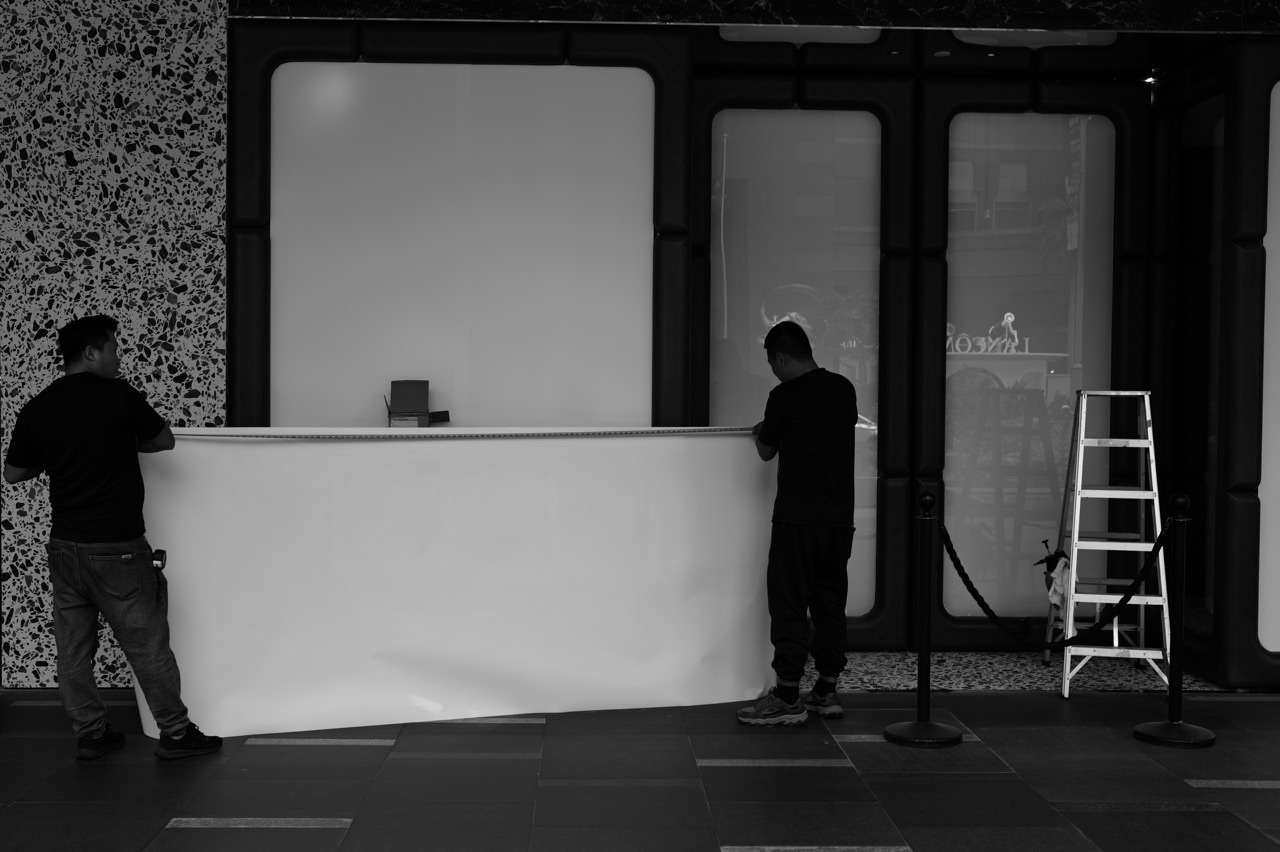
Should you continue painting, drilling or renovating an HDB flat when Singapore is hazy? Do not assume all renovation must stop automatically, but do not combine smoke from outside with unmanaged dust, chemical emissions or inadequate ventilation indoors. Check the NEA one-hour PM2.5 reading, review the actual task and the people who will be exposed, and discuss dust control, ventilation and scheduling with your properly engaged renovation contractor. If painting, flooring adhesives or new carpentry produce strong indoor fumes while outdoor air is also poor, the safest answer may be to change the work sequence or temporarily postpone a chemical-intensive task until ventilation can be managed properly. Do not seal a room containing strong fumes and declare it safe because an air conditioner is running.
This Singapore haze and home-renovation guide is for HDB homeowners, tenants, condominium residents, contractors, neighbours and families with children or seniors. It explains local smoke particles versus renovation dust, what HEPA can remove, what formaldehyde and volatile organic compounds (VOCs) require, why opening windows during haze is a genuine trade-off, how to plan painting and carpentry work, how to protect the rest of the home and what HDB’s 2026 contractor and renovation rules say. It is separate from our Singapore Haze at Home: HEPA, Windows and CADR, which focuses on everyday home-air cleaning. Renovation creates its own sources of pollutants, noise and dust that a normal haze plan may not address.
The practical problem in October 2026 is that two air-quality challenges may overlap. The region can experience transboundary PM2.5 from peatland and forest fires, while one HDB flat generates particles from tile cutting and gases from some finishes. A purifier intended to remove fine particles is not automatically the correct solution for formaldehyde, and opening every window to clear paint fumes may admit outdoor haze. Singapore’s NEA formaldehyde guidance explains that ventilation is central to reducing formaldehyde concentrations, while NEA’s updated indoor-air guidance recognises that outdoor air can itself be polluted during haze. A qualified work plan must deal with both facts.
The immediate homeowner decision: which kind of renovation?
Renovation is not one task. Replacing a cupboard handle, drilling concrete, hacking tiles, applying solvent-based coatings, installing new cabinets and cleaning an occupied room involve different exposures. A small quiet job may proceed with ordinary safe practices while a major dusty or chemical-intensive activity needs additional controls and potentially different timing.
Begin by making a list of today’s work, not a vague judgement about “reno during haze.” Identify whether the task creates fine dust, gases or vapours, noise, moisture or other hazards. Note who lives in the property and whether parts of the flat remain occupied. A baby with respiratory symptoms, someone with asthma and a healthy contractor do not have identical needs.
Ask the contractor how emissions will be contained and removed. Where will cutting occur? How will the work area be isolated? How will filters, vacuum tools and ventilation be managed? Where will waste go? Will strong chemicals be introduced? A plan that answers those questions is more useful than buying an untested “haze-safe” gadget.
The work may be able to continue in a controlled area while occupants stay elsewhere temporarily; it may also be more sensible to reschedule. The correct answer depends on real conditions, professional assessment and the contract.
Regional haze versus renovation dust: the basic science
PM2.5 refers to particles small enough to have an aerodynamic diameter of 2.5 micrometres or less. Regional haze can include fine particulate pollution transported over long distances. Drilling, grinding and tile cutting produce their own dust, potentially with a broad range of particle sizes and compositions. Indoor air may contain both sources at once.
A room can therefore feel dusty when the outdoor reading is relatively low, or appear visually clean while the outdoor smoke infiltrates through gaps. Human vision cannot quantify the fine-particle concentration reliably. The NEA haze portal reports regional environmental conditions, not a live measurement in every flat or renovation enclosure.
Some renovation materials release VOCs or formaldehyde as gases, which are not the same thing as PM2.5. A particle-focused HEPA filter can capture particles but should not be advertised as a universal solution for all gases. Certain air cleaners may include adsorbent media for some gases, but performance varies with design, loading and the specific compound.
The first principle is source control. Reducing or containing the pollution where it is produced can be more effective than allowing it to spread throughout the home and hoping a small tabletop appliance removes everything.
Before the contractor starts: HDB rules still apply
Singapore’s HDB renovation requirements say flat owners must engage contractors from the Directory of Renovation Contractors (DRC) for renovation works, including certain work that does not require HDB approval. Hacking or demolition of walls requires prior written approval. Haze does not change the structural safety rules.
Some building, sanitary, electrical, window and gas works involve additional permits or appropriately licensed specialists. The HDB renovation permit page explains which professionals are needed. Do not treat a temporary environmental event as permission to bypass a permit or structural assessment.
HDB’s published rules also require notice to affected neighbours: owners should inform neighbours within a radius of two units at least five days before works commence, with a notice displayed. This matters during haze because nearby households may already be managing their indoor air and need to plan for additional dust or noise.
A good contractor protects the structure, residents and neighbours. A claim that “everyone is staying indoors anyway” is not justification for noisy unauthorised works or uncontrolled dust discharge.
Renovation working hours: distinguish noisy and other works
Under current HDB renovation terms, noisy works such as hacking, tile cutting and heavy drilling are restricted to 9am–5pm on weekdays and are generally not allowed on Saturdays, Sundays, public holidays or specified major holiday eves. The same terms specify that noisy works must be completed within the stipulated consecutive-day limit where applicable.
Other renovation work is generally allowed from 9am–6pm on weekdays and Saturdays, with no renovation on Sundays or public holidays. Owners and contractors must confirm their actual permit conditions and any estate-specific rules rather than quoting the general timetable as a universal exception-free guarantee.
These timing rules have nothing to do with the one-hour PM2.5 band. A contractor cannot simply shift heavy drilling to midnight because the haze improves after sunset. Likewise, a haze episode does not automatically make a legally permitted weekday schedule medically appropriate for vulnerable occupants.
When rescheduling, balance three systems: lawful work hours, actual air-quality conditions and the household’s ability to manage dust, fumes and safe occupancy.
Painting during haze: particles are not the only issue
Interior paint may release VOCs depending on its formulation, application and curing. Low-VOC products can reduce certain emissions but are not proof that a freshly painted room is ready for immediate occupation by a vulnerable person. Follow the product’s own handling, drying and ventilation instructions and obtain professional advice for a particular project.
NEA’s indoor air-quality FAQ recommends formaldehyde-free and low-VOC materials where possible, managing chemical sources and providing adequate ventilation. It also distinguishes gaseous pollutants from PM2.5, which may require different controls.
During heavy outdoor haze, opening windows continuously may introduce smoke particles. On the other hand, closing the room entirely while applying a strong-smelling coating can trap indoor chemical emissions. The answer is not simply “open everything” or “seal everything.” A qualified contractor should choose the work sequence and appropriate ventilation, and some tasks may be postponed when safe exhaust or supply cannot be arranged.
Do not mask paint odours with fragrances, incense or ozone-generating products. Covering the smell does not necessarily remove the underlying pollutant or make the room healthy.
Formaldehyde after new cabinets or flooring
Formaldehyde can be released by some composite-wood products, adhesives and interior building materials. The amount depends on the actual material and conditions. New cabinetry or flooring does not automatically mean an unsafe level is present, and an absence of smell does not prove a particular level is safe.
NEA’s formaldehyde guidance advises ventilation in affected rooms and encourages working with contractors when strong chemical odours persist. It explains that fans and cross-ventilation can help disperse emissions where outside-air conditions are suitable.
That is the complication during regional haze: outdoor smoke may make wide-open windows less desirable, while new materials still require indoor gas management. A professional may need to adjust the project schedule or arrange appropriate controlled ventilation rather than telling the family to live for weeks in a tightly shut newly painted flat.
An ordinary HEPA purifier is designed chiefly for particles, not gaseous formaldehyde. Do not assume that adding another HEPA unit cures an off-gassing problem. Seek reliable technical assessment where elevated indoor chemical exposure is suspected.
Tile cutting, drilling and concrete dust
Some renovation activities generate large quantities of dust. Tile cutting, sanding, drilling and demolition can expose contractors and nearby occupants to particles. Professional dust extraction and containment are preferable to sweeping everything through common corridors. The exact respiratory protection and work controls should follow the task’s hazards and occupational safety requirements.
Dust containment should begin before cutting. Separate the work area from occupied rooms where feasible and safe. Keep doors and barriers suitable, protect ventilation pathways appropriately and prevent loose waste entering common spaces. Do not block fire exits, essential vents or authorised access points with ad hoc plastic sheeting.
Wet methods and properly equipped extraction tools may be used for certain materials when appropriate, but selection must be made by competent contractors. A homeowner should not direct dangerous methods from a blog, especially where electrical tools, silica-containing materials or structural work are involved.
The NEA indoor air-quality FAQ recommends isolating renovation areas from occupied spaces and exhausting contaminants outdoors, with professional attention to how such exhaust interacts with surrounding conditions.
Why a household purifier cannot replace site dust control
A portable particle air cleaner can lower some indoor particulate concentrations when properly sized and positioned, but it cannot be expected to capture every particle from uncontrolled tile grinding next door. Dust generation can overwhelm a device, rapidly load filters and spread through gaps before the cleaner can recirculate enough air.
The first controls are safe work practices, containment and extraction at the source. A purifier may support cleaner conditions in an occupied area, but should not become the sole dust-management plan. Review filter condition after dusty work and replace it according to the manufacturer’s recommendations.
A familiar mistake is placing a small HEPA appliance beside an actively open cutting area and assuming the rest of the flat is safe. Room size, flow, leakage and dust generation matter. The room that is being worked on may also require different industrial controls from the nursery where a baby is resting.
Our Singapore Haze HDB HEPA and CADR Guide explains how smoke CADR compares with room volume. That calculation is useful for household particle cleaning, not a full industrial dust-control design.
Cleaning up dust: avoid spreading it again
After dusty work, it may be tempting to dry-sweep aggressively with a broom, which can resuspend particles into the air. A suitable vacuum with credible high-efficiency filtration and properly designed dust containment, followed by appropriate damp wiping where materials permit, may reduce re-entrainment compared with indiscriminate dry sweeping.
The correct cleaning method depends on the dust and surface. Certain renovation residues require specialist cleanup, and some materials should not simply be vacuumed with a household appliance. Ask the contractor for the appropriate procedure rather than guessing. Never mix household chemicals indiscriminately; some combinations produce dangerous gases.
Protect furnishings and ventilation openings during the approved work process as recommended by the contractor, without obstructing essential building systems. Replace or service filters if necessary after dusty work, and dispose of contaminated materials safely.
A room that looks clean is not proof that its indoor air has returned to a particular PM2.5 or formaldehyde concentration. If vulnerable occupants will move in immediately, consider whether a professional air-quality assessment is warranted.
Workers and occupational respiratory protection
Contractors are workers as well as service providers. A haze episode can increase their exposure outdoors while their renovation task creates its own hazards indoors. Employers must assess the job rather than rely on one generic “N95 for everyone” sentence. Different materials, dust types and chemical products may require different controls, respirators and fit-testing arrangements.
The MOM workplace haze guidance is relevant for outdoor haze exposure, and ordinary workplace safety requirements continue to apply for task-generated hazards. A particulate respirator is not automatically suitable protection against organic vapours from some paints and adhesives.
Residents should not pressure workers to finish faster by skipping containment or proper protective equipment. Likewise, workers should avoid leaving dust in lift lobbies and staircases or disposing of waste in ways that affect neighbours. Professional practice protects everyone in the building.
For prolonged outdoor construction exposure, see Singapore Haze Outdoor Workers: MOM, PSI and Construction.
Babies, pregnancy, asthma and older household members
A renovation may be especially inconvenient for families with babies, pregnant people, older relatives or people with heart or lung disease. MOH’s haze advisory already recommends additional outdoor precautions for these groups. Added indoor dust or chemical emissions can make the planning more complicated.
The most useful response may be to postpone a discretionary task or arrange a suitable alternative place for the vulnerable person while work and subsequent air management are completed. Do not assume a baby can safely sleep beside a newly painted wall because the air conditioner is set to a low temperature.
People with asthma should follow prescribed plans and seek medical advice for worsening symptoms. A homeowner should not offer another person’s inhaler or assume the smell of paint is harmless because the outdoor PSI is Moderate. Serious breathing difficulty requires urgent medical help.
The Singapore Haze and Babies, Pregnancy and Seniors guides provide their respective family considerations.
Neighbours and the shared HDB corridor
A flat under renovation affects nearby homes. Dust can escape when doors are left open and materials are carried through corridors. Neighbours may also have windows closed during haze, making additional indoor smells or dust especially unwelcome. Communication and containment matter as much as finishing the job quickly.
HDB requires appropriate renovation notice and compliance with the permitted work hours. A neighbour who has been warned in advance can plan when to study, care for an infant or work remotely. A brief notice describing expected high-dust days may be more helpful than an unexplained week of drilling sounds.
Do not obstruct common access routes with construction materials or allow debris to collect in shared spaces. Emergency egress and accessibility remain important. Dispose of renovation waste through authorised arrangements rather than leaving sacks of dust next to the lift.
When conflict arises, begin with factual communication and the proper building or HDB channels. An angry group-chat rumour about illegal work is less useful than identifying the actual problem, timing and relevant rule.
Can you stay in the flat while it is being renovated?
The answer depends on the work area, pollutants, occupants, protective controls and actual conditions. A small contained maintenance task may differ from extensive demolition, flooring replacement or painting across multiple bedrooms. Nobody should assume that remaining in an active renovation environment is always suitable for children or vulnerable people.
Ask for a work sequence that separates occupied spaces from active renovation where feasible. Consider essential ventilation and emergency exits. If the project creates widespread dust or fumes, temporary accommodation may be prudent, particularly for medically vulnerable people, but the choice should be based on circumstances and professional advice.
Do not make a new lease or hotel booking solely from a generic article if the contractor has not explained the real scope. Conversely, do not let sunk renovation costs persuade the family to occupy a room with serious symptoms or uncontrolled emissions.
A measured, practical plan preserves both the family’s health and the project’s progress, rather than pretending one must be sacrificed completely.
Indoor PM2.5 testing and formaldehyde testing are not the same
A home-air meter marketed for PM2.5 may help show changes in particles if it is reliable and correctly used, but it does not necessarily measure formaldehyde, VOCs or other gases accurately. The ability to display a number does not make a consumer gadget equivalent to a professional indoor-air-quality assessment.
NEA’s indoor-air FAQ discusses separate parameters such as formaldehyde, total VOCs, PM2.5 and respirable suspended particles in post-renovation audits. Each needs appropriate measurement methods and interpretation. A result should be evaluated in the context of the room, duration, ventilation, materials and applicable standards.
Be cautious of contractors who promise a completely chemical-free room merely because a one-time gadget reading was low. Also avoid panic based on an inexpensive sensor that has not been validated. If there are persistent strong odours, symptoms or disputes over air quality, qualified assessment can clarify what is actually present.
The Gold Standard of Indoor Air Quality Testing Services in the eduKate library explains why representative sampling and verified action matter, rather than dramatic marketing claims.
Renovation near kitchens, toilets and exhaust systems
Kitchens and bathrooms often contain exhaust fans, ducts, plumbing and other building services. Altering or obstructing these can create problems with moisture, odours or ventilation. A haze episode does not make it acceptable to tape over every opening or disable essential building equipment.
Some renovation works involving sanitary plumbing, gas or electrical installations require appropriately licensed specialists under HDB’s permit and contractor requirements. Never improvise changes to shared infrastructure because a room seems smoky.
If a kitchen is undergoing renovation, the family may also need a safe alternative for meals rather than repeatedly cooking in a dusty workspace. Avoid charcoal cooking indoors and do not treat a strong fragrance as proof that a chemical odour has been eliminated.
A practical sequence keeps necessary family life functioning while ensuring no one has to cook or sleep in an uncontrolled construction area.
What happens after outdoor haze improves?
When the outside air becomes more suitable, the household may be able to improve ventilation as advised, subject to the room’s actual needs and building guidance. That does not automatically mean all indoor renovation emissions have disappeared. New cabinetry, adhesives and flooring may continue to off-gas after outdoor smoke levels fall.
Likewise, cleaning renovation dust and replacing a loaded filter may still be necessary. A sunny day is not a guarantee that the room is ready for a person with asthma. Check the contractor’s completion and cleaning process, persistent odours and any relevant assessment before normal use resumes.
The distinction is important: outside smoke and interior material emissions follow different timelines. Reducing one source does not automatically resolve the other.
A post-renovation checklist should therefore be separate from the daily NEA haze update. It may include ventilation, contractor handover, cleaning, safe fixtures, inspections and appropriate air-quality checks.
Budget and scheduling: avoid paying twice for rushed work
A haze episode can create uncertainty in renovation schedules. A homeowner may feel pressure to pay extra for rapid completion, especially when a move-in date is approaching. But rushing a chemical-intensive or dusty task without suitable controls may lead to costly rework, unresolved smells or conflict with neighbours.
Read the actual renovation contract, permit period and payment milestones. Ask the contractor what tasks can be safely resequenced. Non-dusty planning or installation work may proceed while a particular painting or drilling step is delayed, but the professional must decide based on safety and practical requirements.
A delay may have accommodation or financial consequences, yet there is no universal government rule that automatically refunds renovation contracts whenever PSI is Unhealthy. Document actual changes and negotiate clearly. HDB states that private agreements between flat owners and renovation contractors are generally matters for the contracting parties, with relevant consumer dispute channels available.
The aim is not endless postponement. It is a realistic project that accounts for the actual air environment and avoids creating new health risks.
Three real Singapore HDB situations
Clementi new flat. A family is installing new cupboards and painting while the outdoor PM2.5 is elevated. They ask the contractor about low-emission materials, safe ventilation and when the baby’s room can be occupied. They do not rely on a small HEPA purifier to clear formaldehyde from a poorly ventilated freshly painted room.
Punggol occupied flat. An older resident remains at home while tiles are being cut in another room. The contractor uses appropriate containment and controls, and the family reviews whether the resident should be elsewhere during the dusty task. The work is not carried out outside HDB’s lawful hours merely because the haze forecast improves at night.
Queenstown neighbour. Someone hears heavy drilling and notices dust near a common corridor. They check the HDB renovation notice and communicate specific concerns to the owner or relevant channels. The neighbour does not open every window and spread more smoke into their own home because renovation dust is present.
These examples show practical questions, not a diagnosis of any named address or legal judgement on a specific contractor.
Home-renovation haze decision table
| Work or concern | Main pollutant or issue | Better first action | Avoid |
|---|---|---|---|
| Interior painting | VOCs, possible odours | Low-emission materials and suitable ventilation | Seal strong fumes in an occupied room |
| New carpentry | Potential formaldehyde and VOCs | Review material and professional ventilation | Assume HEPA removes all gases |
| Drilling and tile cutting | Dust, possible respirable particles | Contractor containment and extraction | Dry-sweep dust through whole flat |
| Existing haze outdoors | Infiltrating PM2.5 | NEA readings, reasonable smoke-entry controls | Treat a fan as a particle filter |
| Baby or senior at home | Individual vulnerability | Plan occupancy and clinical needs | Force long exposure because of schedule |
| HDB structural work | Permit and safety compliance | DRC contractor and HDB approvals | Unapproved hacking or unsafe alteration |
| Post-renovation handover | Residual dust or emissions | Cleaning and suitable assessment | Judge the air only by its smell |
Frequently asked questions about HDB renovation during haze
Must HDB renovations stop whenever PSI is Unhealthy?
There is no universal rule that every renovation automatically stops at one PSI number. Actual work hazards, indoor air, outdoor conditions, occupants and HDB permit requirements matter. Discuss task controls and scheduling with the contractor and use the current government advice for exposure decisions.
Should I keep the windows closed while painting?
Not as a universal instruction. Painting can release gases requiring ventilation, while outdoor haze may make wide-open windows undesirable. A qualified contractor should select suitable materials, work sequencing and ventilation. Sealing strong fumes in an occupied room is not a safe shortcut.
Can a HEPA purifier remove formaldehyde?
HEPA is primarily a particulate filtration technology. Formaldehyde is a gas and requires source management and appropriate ventilation or other effective controls. Do not assume a device that captures PM2.5 is a comprehensive VOC or formaldehyde solution.
Is renovating an HDB flat different from renovating a condominium?
HDB flats are subject to specific renovation rules, contractors and permit requirements. Condominiums may also have building management and legal requirements. The underlying air-quality science applies to both, but the administrative rules should be verified for the actual property.
Can I use an ordinary household vacuum for tile dust?
Not every vacuum is suitable for every renovation dust. Contractors should select proper dust-extraction and cleanup methods for the material and task. Using unsuitable equipment can spread particles or create hazards. Ask the professional for the safe method.
Should I dry-sweep the room after drilling?
Dry sweeping can stir dust back into the air. Appropriate containment, high-efficiency vacuum equipment and safe damp-cleaning techniques may reduce re-entrainment, depending on the material. Follow professional guidance rather than simply brushing fine debris through the home.
Are low-VOC paints completely harmless?
Not automatically. Lower-emission formulations can be preferable for some indoor-air concerns, but product handling, curing, ventilation and individual sensitivity still matter. Follow credible manufacturer and contractor instructions and seek advice for persistent symptoms.
Can I sleep beside freshly installed cabinets during haze?
Do not assume the room is suitable solely because it is cool or the outdoor PSI is improving. Consider material emissions, ventilation and individual vulnerability. A baby or person with significant respiratory disease may require extra precautions and qualified advice.
What time can noisy HDB renovation works take place?
HDB’s current terms generally restrict noisy work to 9am–5pm on weekdays and prohibit such work on weekends and public holidays, with permit-specific conditions. Other work follows separate hours. Verify the actual current HDB rules and any property-specific restrictions.
Must my contractor be HDB-registered?
HDB states that flat owners should engage contractors from its Directory of Renovation Contractors for renovation works. Some specialised activities also require licensed professionals. Check the actual work and approval requirements before starting.
Does the haze permit night drilling?
No. Haze conditions do not suspend ordinary HDB renovation timing restrictions or permit requirements. A contractor should not move prohibited noisy works to an unauthorised hour.
What should neighbours do if renovation dust enters their homes?
Document the specific issue, review the published renovation notice and raise concerns through the owner, contractor or appropriate estate/HDB channels. Do not obstruct safety systems or create further indoor pollution in response.
Do air purifiers eliminate all dust from an ongoing renovation?
No. Appropriate dust containment, extraction and source controls are necessary. A portable cleaner may help some occupied-room particulate conditions, but cannot replace professional worksite practices.
How do I know when post-renovation air is suitable?
Consider task completion, professional cleaning, ventilation, materials and any persistent odours or health symptoms. Where concerns remain, a qualified indoor-air assessment may help. A single inexpensive PM2.5 sensor does not measure every gas or hazard.
Should I postpone a baby’s nursery painting during haze?
It may be reasonable to reschedule or adjust the work, especially where suitable ventilation cannot be provided while outside air is poor. Discuss low-emission products, the infant’s occupancy and curing requirements with the contractor and relevant healthcare professional as appropriate.
Can workers simply wear N95s for all renovation chemicals?
No. A particulate respirator may protect against certain particle hazards when properly selected and fitted, but it is not automatically suitable for organic vapours and all chemical exposures. Employers should use the task-specific occupational safety controls and appropriate equipment.
Continue through eduKate’s connected Singapore haze guides
Start with How Haze Works | SEA 2026 for the regional cause. For home air see Singapore Haze HDB Windows, HEPA and CADR, Singapore Haze Laundry and Cleaning and Singapore Haze at the Office: Ventilation and Filters.
For family members affected by emissions, use Singapore Haze and Babies, Singapore Haze and Asthma, Singapore Haze and Pregnancy and Singapore Haze and Seniors. The occupational link is Singapore Haze Outdoor Workers.
For understanding measured concentrations and source attribution, see MOE Reference 86: Haze Monitoring Literacy and Why Science? Air Quality and Environmental Data.
Official sources and editorial scope
Primary references: HDB Important Information on Renovations, HDB Renovation Permit Rules, HDB Renovation Terms and Conditions, NEA Formaldehyde in Interior Building Products, NEA Indoor Air Quality FAQ, NEA Updated Indoor Ventilation Guidance, NEA Haze Portal and MOM Workplace Haze Guidelines.
Prepared in October 2026 as a home improvement and indoor-air literacy guide, not a structural permit approval, chemical exposure assessment or professional safety certification. A good renovation keeps the project’s purpose intact while respecting the home’s occupants, neighbours, workers and actual air-quality conditions.