
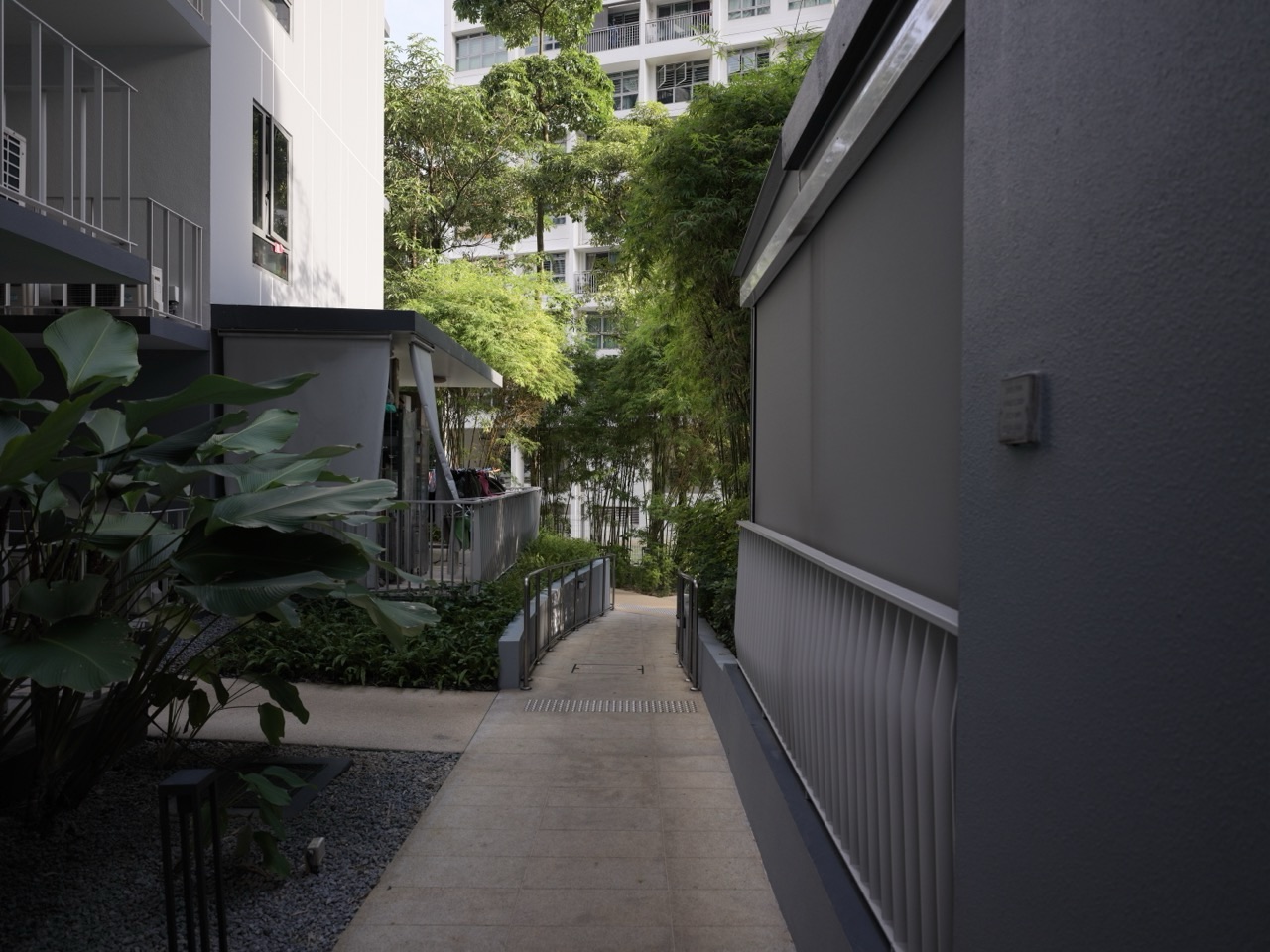
In a Singapore condominium, MCST means Management Corporation Strata Title — the legal organisation of unit owners responsible for the estate’s common property. Owners are called subsidiary proprietors (SPs). They contribute to routine maintenance through the management fund and to major future repairs through the sinking fund. Their management fees are not the same as IRAS property tax or HDB Service and Conservancy Charges.
If you searched for MCST Singapore meaning, condo maintenance fees, sinking fund, share value, condo by-laws, strata titles board, AGM condo or who pays for condo repairs, the central question is what belongs to the individual unit and what belongs to the collective estate. The strata title plan, legal by-laws and the Building (Strata Management) Act (BMSMA) help determine that. An estate manager’s verbal statement is not a substitute for these documents.
Quick summary: Check your unit’s share value and contribution notice, separate management-fund and sinking-fund amounts, read AGM papers and audited accounts, and understand the current by-laws. If a corridor is blocked, a common lift is unreliable or a renovation affects an external wall, raise it with the MCST or managing agent and keep a written record. Relevant disputes can sometimes go to the Strata Titles Boards (STB); not every disagreement is an STB claim.
MCST, council, managing agent and owner: the difference
| Name | What it means | What it does |
|---|---|---|
| MCST | Legal collective body of strata proprietors | Owns duties to manage and maintain common property |
| Subsidiary proprietor (SP) | Owner of one unit | Pays contributions, obeys by-laws and participates in decisions |
| Management council | Elected representatives of owners | Makes and implements appropriate estate decisions |
| Managing agent | Hired professional service provider | Handles specified day-to-day management under contract |
| Developer | Original developer before handover | Has separate contract and handover responsibilities |
| Strata Titles Boards | Tribunal for certain strata disputes | Makes orders within its statutory jurisdiction |
66 Singapore condo, MCST and strata vocabulary terms explained
Words such as ‘common property’ and ‘share value’ have legal consequences. The third column describes the decision each controls — for example, whether the repair is an owner’s cost, whether a contribution is overdue, or what kind of meeting approval is required.
| Term | Plain-English meaning | Practical significance |
|---|---|---|
| MCST | Management Corporation Strata Title | Legal body responsible for managing common property in a strata estate |
| Strata title | Ownership of a defined unit within a larger development | Owner also holds a share in common property |
| Strata lot | Individual unit shown on strata title plan | Boundaries decide owner/MCST responsibility |
| Subsidiary proprietor (SP) | Legal owner of a strata lot | Member of MCST and payer of common contributions |
| Management corporation (MC) | Collective legal body of owners | Not identical to developer or one property agent |
| Share value | Assigned value for allocating voting and contributions | Not necessarily equivalent to exact square metres |
| Strata title plan (STP) | Registered plan showing units and common property | Helps decide who owns and maintains features |
| Common property | Areas not part of individual lots | Includes certain lobbies, gardens, lifts and exterior surfaces |
| Limited common property | Shared facility designated for certain owners | May need a subsidiary management corporation |
| Subsidiary MC | Separate managing body for defined limited common property | Exists only in qualifying estates |
| Condo council | Owners elected to manage between general meetings | Exercises MCST functions within legal scope |
| Council member | Elected representative of owners | Must comply with duties and conflict rules |
| Chairperson | Person presiding over relevant council/meeting | Role has procedural responsibilities |
| Secretary | Officer assisting records and correspondence | Not the same as paid managing agent |
| Treasurer | Officer monitoring financial records | Must ensure transparent accounting |
| Managing agent (MA) | Professional hired to manage daily operations | Acts for MCST under contract; not owner of common property |
| Developer | Original party building and selling units | May manage before handover and have defect responsibilities |
| Developer handover | Transfer of records and duties after first AGM | Different from a buyer receiving unit keys |
| AGM | Annual General Meeting | Forum for budgets, council elections and motions |
| EGM | Extraordinary General Meeting | Meeting to decide business between annual meetings |
| General meeting | Formal gathering of proprietors | Only eligible votes and proper notices count |
| Council meeting | Elected council’s separate meeting | Not automatically the same as AGM |
| Agenda | List of business for a meeting | Motions should follow required advance process |
| Meeting notice | Official information on date and decisions | Notice period affects validity |
| Quorum | Minimum participation required for meeting | Different meeting types can have different rules |
| Proxy | Person authorised to vote for absent owner | Must satisfy legal appointment conditions |
| Voting entitlement | Owner’s eligibility to vote on a question | Can depend on resolution category and arrears |
| Ordinary resolution | Decision meeting ordinary legal majority requirement | Not enough for every building change |
| Special resolution | Decision requiring stronger approval under Act | Some by-law amendments may require it |
| 90% resolution | High approval threshold for specified major improvement works | Not required for routine cleaning decisions |
| By-law | Binding estate rule validly made under strata law | Applies even to owners who missed the meeting |
| Prescribed by-law | General by-law given legal effect by regulations | Different from an informal poster |
| Additional by-law | Estate-specific rule lawfully adopted | Must comply with the Act |
| House rule | Operational instruction circulated by estate manager | Legal status may differ from properly enacted by-law |
| Maintenance contribution | Money unit owner pays for estate expenses | Commonly based on share value and approved budget |
| Management fund | Fund for recurring operational estate costs | Cleaning, routine services, administration |
| Sinking fund | Fund for longer-term major repairs and replacements | Supports lifts, facades and other capital works |
| Special levy | Extra contribution in a defined situation | Must follow proper lawful approval |
| Budget | Planned spending and contributions | Read management and sinking separately |
| Financial statements | Records showing assets, spending and liabilities | Review at general meetings |
| Audit | Independent check where required | Important for accountability |
| Arrears | Maintenance contributions overdue | Can attract recovery and interest |
| Late interest | Amount charged on overdue permitted contributions | Subject to lawful rates and processes |
| Service charge | General term for periodic estate payments | Not equal to HDB S&CC |
| S&CC | HDB Service and Conservancy Charges | Different public housing estate mechanism |
| Property tax | IRAS annual tax based on property Annual Value | Separate from MCST contributions |
| Common corridor | Shared circulation area outside units | Obstruction may pose fire safety risk |
| Façade | External face of building | May count as common property requiring shared management |
| External window | Opening unit element needing upkeep | BCA says owner can be responsible for maintenance |
| Pipe or service duct | Water/drainage service feature | Ownership and repair duty depend on title and relevant rules |
| Defects Liability Period (DLP) | Defined contractual period for reporting certain new-building defects | Developer obligations depend on sale and purchase agreement |
| Structural element | Beam, slab, column or wall carrying loads | Requires competent approval before alterations |
| MCST permission | Approval under lawful estate process | May be needed for works affecting common property |
| BCA | Building and Construction Authority | Publishes strata management guidance, not each estate’s manager |
| BMSMA | Building (Strata Management) Act | Main law for condo strata management |
| Strata Titles Boards (STB) | Statutory dispute resolution forum for certain strata matters | Can hear eligible by-law, records and maintenance disputes |
| Mediation | Assisted negotiation with a neutral facilitator | May resolve disagreement without tribunal |
| Court order | Binding judicial direction | Distinct from a council circular |
| Managing agent contract | Agreement giving estate manager specific tasks | Owners should assess scope and performance |
| Insurance | Cover for relevant common-property risk | Different from private contents or personal mortgage cover |
| Renovation notice | Notice of proposed unit works | Can be required under estate rules |
| Renovation deposit | Money held against damage to common property | Separate from monthly maintenance contribution |
| Facilities booking | Reservation of gym, pool, clubhouse or courts | Subject to valid by-laws and operating arrangements |
| Tenant | Resident renting a unit | May be bound by estate rules even without voting rights |
| Complaint log | Documented maintenance or conduct issue | Useful evidence for follow-up |
| Conflict of interest | Private interest affecting representative’s decision | Council should apply governance safeguards |
What is common property?
Common property includes parts of the development not forming a privately owned strata lot. BCA’s current guide lists examples such as estate gardens, playgrounds, corridors and external walls of units. Lifts, shared mechanical systems and other common features are generally maintained for the collective benefit of proprietors, subject to the strata plan and the legislation. A shared hallway outside an apartment does not become private storage simply because only two families use it.
The boundary can surprise a homeowner. An owner may be responsible for keeping their own external opening windows and certain pipes safe, while modifications affecting the external building façade or other common property may need MCST and relevant authority approval. The correct answer depends on the strata title plan and legal responsibilities rather than who first bought the item.
Management fund versus sinking fund
| Fund | What it normally pays for | What to watch |
|---|---|---|
| Management fund | Routine cleaning, security, landscape work, utilities, maintenance contracts and administration | Can the current approved contributions sustain services? |
| Sinking fund | Long-term major repair, replacement and capital works | Is there enough reserved for large future expenditure? |
| Special levy | Extra lawful contribution for exceptional need | Was it properly approved and notified? |
| Private repair inside unit | Owner’s own cost unless covered otherwise | Does the work affect common property or developer’s defect duty? |
A condominium can look attractive for years while quietly under-saving for major lift replacements or façade works. This is why an owner evaluating a unit should ask for both the routine management fund and the sinking fund, not simply the current monthly maintenance charge. A low fee today is not always a lower lifetime cost if the estate later needs extraordinary contributions.
Example: what a fee per share value means
Imagine a fictional estate has lawfully approved total management and sinking contributions equivalent to S$8 per share-value unit for a particular billing period. An apartment assigned fifty share-value units would face a hypothetical S$400 contribution for that period. This is only an arithmetic example; it is not a market quote or the statutory rate for any condominium. Real estates approve their own contributions under the legal framework and may bill monthly or quarterly.
Share value is not always the same as physical floor area. BCA says share value is relevant to contributions and voting; owners should verify the official unit schedule. Two apartments that look similar in floor area may not necessarily have identical contribution assessments. Do not calculate an actual payment by measuring a living room or estimating sale price.
Who makes condo decisions at the AGM?
The Annual General Meeting is a formal venue where eligible owners examine accounts and budgets, consider motions, elect council members and exercise voting rights. An Extraordinary General Meeting is used for additional formal decisions between annual meetings when the rules require it. The management council may make day-to-day decisions within its powers, but not every change or expense can be approved simply by a managing agent sending an email.
A valid meeting relies on its notice, agenda, quorum, voting procedure and minutes. A person who cannot attend may be able to appoint a proxy in accordance with the legal requirements. There are different resolution types, so owners should read the precise proposal and applicable majority before assuming an informal show of hands is sufficient for major work.
Can the condo invent any by-law it wants?
Condominium by-laws must have a proper basis and comply with the BMSMA. They can regulate many issues related to the use of common facilities and harmonious estate living. A validly adopted by-law can bind owners and relevant occupants, even if they were not present at the meeting when it was approved. But a casual ‘house rules’ email may not have the same status as a by-law validly made under legislation.
BCA’s condo-owner page explains that owners may challenge the validity or appropriateness of by-laws at the next general meeting or, for appropriate matters, through the Strata Titles Boards. The purpose is lawful estate governance, not simply allowing one outspoken owner or council member to invent punishments.
| Document | Where it comes from | Why it matters |
|---|---|---|
| Prescribed by-law | Statutory regime | Relevant binding standard |
| Additional by-law | Proper MCST decision under law | Estate-specific binding rule |
| House rule / facility instruction | Estate operations | Needs to be consistent with legal authority |
| Council circular | Management communication | Informs owners but is not automatically a legal amendment |
| Meeting minutes | Recorded formal decision | Evidence of what was approved |
Who can use, rent or renovate a condo unit?
An owner can generally enjoy their privately owned unit subject to law and estate by-laws. A tenant may have use rights under the tenancy but does not become the subsidiary proprietor merely by paying rent. A tenant who stores bicycles in a common corridor can still breach binding estate rules. The landlord should give the tenant applicable house and by-law information when the tenancy starts.
Renovations can be constrained by structural safety, the Sale and Purchase Agreement, the MCST by-laws and government requirements. BCA specifically notes that altering structural beams, slabs, columns or walls requires professional assessment and the appropriate building control approval. Works affecting common property, external windows, building appearance or gross floor area may require further MCST/agency permission; certain major improvements can require a 90% resolution.
Developer defect versus owner maintenance
A newly completed condominium usually has a Defects Liability Period (DLP) defined by its Sale and Purchase Agreement. During that period, certain defects caused by defective workmanship or materials must be reported and dealt with according to the agreement. The DLP is not an unlimited lifetime warranty for every broken item, and a problem discovered later may be an owner’s maintenance responsibility or a common-property issue.
Suppose a newly completed unit has a leak. The first task is not to demand ‘MCST pay everything’. Determine the source: a defective internal fixture, a common riser pipe, a neighbouring unit or a façade feature. Review the title plan, DLP status, survey or professional evidence and the appropriate responsible party. The legal cause matters as much as where the water became visible.
A straightforward repair-responsibility checklist
- Record the exact defect, its location and when it started.
- Check whether it is inside your lot or on designated common property under the strata title plan.
- Report urgent safety risks promptly to the managing agent/MCST while preventing avoidable damage.
- Ask what inspection or professional evidence is needed to identify the source.
- Check the relevant by-laws, contractor obligations and any developer Defects Liability Period.
- Agree in writing on access, repair scope and responsibility where possible.
- Keep photographs, inspection notes, correspondence and receipts.
- Escalate unresolved statutory strata issues through the appropriate meeting, mediation or STB/court channel rather than refusing all contributions.
Maintenance fee disputes and arrears
Unit owners have an obligation to contribute to lawful common-property costs. Unpaid fees can affect the estate’s ability to maintain essential services and may lead to interest or recovery processes subject to the law. A dispute about a fee does not automatically remove the obligation to pay. Ask for the approved budget, contribution schedule and relevant accounts, and distinguish a billing error from disagreement with the estate’s spending priorities.
BCA’s current strata guidance emphasises keeping records and promoting transparent financial decisions. Useful documents can include financial statements, contribution notices, contracts for major works and the minutes of relevant meetings. A suspicion of overcharging is best tested against actual audited numbers, rather than a comparison of advertised maintenance fees at another condominium with different facilities.
A pool, garden or corridor is shared property with rules
Shared facilities need cleaning, equipment repair, insurance, scheduling and safe operating arrangements. Residents can be bound by valid booking and use rules. A booking for a condominium function room does not mean ownership of its surrounding corridor or a legal right to obstruct a fire exit. Common-property misuse can become both an estate issue and a safety issue involving other laws.
When a corridor is obstructed by bicycles, boxes or shoe cabinets, BCA’s dispute guide suggests first raising the matter with the neighbour and then with the MCST, which can send reminders or pursue authorised enforcement. Obstruction that breaches fire-safety requirements may also need referral to SCDF. The responsible action is to identify the exact shared area and applicable rule without making hostile personal allegations.
When should a dispute go to the Strata Titles Boards?
The STB has jurisdiction over certain disputes under the BMSMA, including appropriate issues concerning MCST powers, meeting decisions, by-laws, common-property repairs, contributions and access to records. It is not a universal consumer complaint forum for every argument between neighbours. Different applicants and facts qualify under different statutory provisions, and tribunal proceedings require proper evidence and procedure.
BCA’s 2026 strata guides recommend attempting responsible communication and appropriate resolution before a formal application where practicable. For a complex or high-value dispute, independent legal advice can be useful. Do not confuse the BCA’s role as sector regulator and guidance publisher with the managing agent’s role in the individual estate.
A practical condo-owner document checklist
| Document | What to read | Why it matters |
|---|---|---|
| Strata title plan | Lot boundaries, common property and accessory lots | Repair and ownership responsibility |
| Share value schedule | Unit’s allocated share value | Contribution and voting calculations |
| Management and sinking budgets | Operating costs and major reserves | Long-term affordability |
| AGM agenda and minutes | Approved resolutions and council elections | Formal decisions |
| By-laws | Use, renovations, pets, facilities and conduct | Binding estate obligations |
| Financial statements | Income, expenditure, liabilities and reserves | Transparency |
| Managing agent contract | Services and fee paid to management firm | Accountability |
| Insurance summary | Master-policy coverage and exclusions | Potential risks and separate unit needs |
| Developer S&P and DLP terms | Defect responsibilities and period | Claiming correct defects |
| Complaint/repair records | Dated reports and inspections | Follow-up and evidence |
Three hypothetical condominium situations
Scenario 1: a lift keeps breaking down
A resident reports repeated lift faults. Because lifts are usually common property, the MCST is generally responsible for arranging proper maintenance under the framework. The resident can ask for safe temporary arrangements, fault history and whether the management fund or sinking fund is being used for the proposed solution. It is not sufficient to conclude that the nearest apartment owner must pay merely because their unit is beside the lift.
Scenario 2: a resident wants to install an external awning
An owner thinks an awning above their balcony affects only their unit. However, the structure can alter the appearance or common property of the building. BCA’s guidance says MCST permission and possibly authority approvals may be required. A private contractor’s quotation does not replace the permissions. The owner should check the actual estate by-law and applicable building controls.
Scenario 3: the management fee rises suddenly
An owner sees an increase and assumes the council is stealing money. A better first step is to request the approved budget and meeting records: perhaps routine service costs increased or the sinking fund was under-reserved for an upcoming major repair. If the levy was improperly approved, a relevant challenge may exist. The difference between suspicion and evidence is an important part of responsible condo living.
Common MCST misunderstandings corrected
| Misleading claim | More accurate statement |
|---|---|
| MCST is the management agent’s company. | MCST is the body of subsidiary proprietors; the agent may be hired by it. |
| Maintenance charges are the same as property tax. | MCST contributions fund shared estate services; IRAS property tax is separate. |
| Sinking funds pay only this month’s cleaner. | Sinking funds support longer-term major works, distinct from routine management. |
| If I own a unit, I own the corridor outside it. | Common property is collectively managed under the strata title plan. |
| I missed the meeting, so estate by-laws don’t apply. | Properly enacted by-laws can bind owners who did not attend. |
| Any email from council changes the law automatically. | A valid by-law/resolution must follow legal procedures. |
| All condo alterations need only my personal agreement. | Structural and common-property works can need approvals. |
| Every condo dispute must go straight to police. | Many are estate governance, civil or STB issues, not crime. |
| I can stop paying maintenance whenever I disagree. | Lawful contribution obligations and dispute procedures are separate. |
Frequently searched condo and MCST questions
What does MCST stand for in Singapore?
Management Corporation Strata Title, the legal collective body responsible for the common property and relevant strata estate administration.
What is a subsidiary proprietor?
The legal owner of a strata lot, such as a condominium unit, and a member of the MCST.
What is the difference between management fund and sinking fund?
The management fund generally covers ongoing estate services, while the sinking fund supports larger future repairs and replacements.
Why do condo owners pay maintenance fees?
To contribute to shared services, safety, repairs and longer-term upkeep; amounts follow the lawful budget and share-value arrangements.
Are condo maintenance fees the same as HDB S&CC?
No. HDB S&CC and private condo MCST contributions are governed by different estate systems.
What is share value used for?
It helps determine each unit’s share in common obligations and certain voting arrangements, under the strata system.
Can the condo management ban anything through a notice?
Not automatically. Binding by-laws and enforceable restrictions require the proper statutory basis and procedure.
Do tenants have to follow condo by-laws?
Relevant by-laws can apply to tenants and occupiers even though they are not subsidiary proprietors.
Who is responsible for common corridor obstructions?
Residents should comply with common-property rules; issues may be raised with the managing agent or MCST and safety authorities as appropriate.
What does the Strata Titles Boards do?
It hears certain qualifying disputes under the Building (Strata Management) Act; the specific matter and applicant must fall within its jurisdiction.
Four exercises to learn condo vocabulary
| Exercise | Task | What the reader learns |
|---|---|---|
| 1 | Sort an owner’s unit, corridor, lift and exterior façade | Private lot versus common property |
| 2 | Compare cleaning costs with a major lift replacement | Management versus sinking fund |
| 3 | Read a hypothetical AGM agenda and council email | Formal decision versus informal instruction |
| 4 | Follow a leaking pipe complaint to correct responsible party | Evidence and strata boundary |
Connected eduKateSG articles
- Singapore Vocabulary | IRAS Property Tax and Annual Value — tax is separate from estate charges.
- Singapore Vocabulary | Tenancy and Rental Deposits — landlord and tenant contracts.
- Singapore Vocabulary | Pet Licensing — pet rules and separate estate restrictions.
- Singapore Vocabulary | Renovation Permits and Noise Rules — HDB versus private strata procedures.
- Master Vocabulary — other practical Singapore terminology.
Official BCA sources
- BCA: Strata Management Guides (updated 2026) — SP, council, fund, general meetings, by-laws and disputes.
- BCA: What to Know as a Condo Owner — owner responsibilities and common property.
- BCA: MCST / Strata Management — share-value and estate governance.
- Singapore Statutes Online: Building (Strata Management) Act — governing legislation.
- BCA Guide 9: Strata Dispute Resolution — remedies and STB jurisdiction.
Editorial review: 4 November 2026. This is general strata-management vocabulary, not legal advice on an individual condominium, fee or renovation. Applicable by-laws, title plans, resolutions and BMSMA rules determine the actual rights and obligations. Use BCA’s current guides and obtain appropriate professional advice for a serious dispute.