
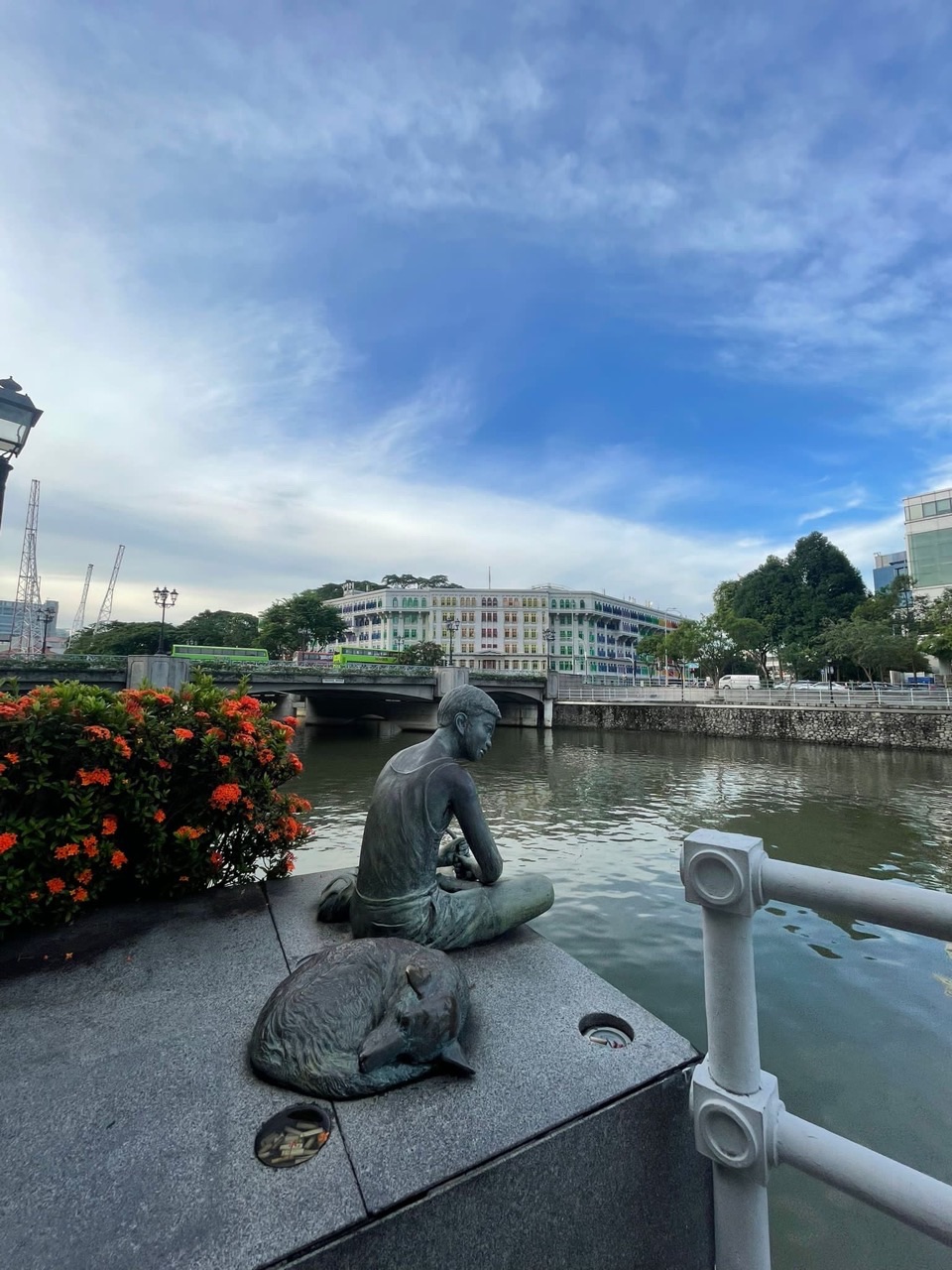
People can encounter a sculpture on the way to work without entering a museum. A child may call it art in English, a grandparent may describe it in another language, and a visitor may wonder what the installation says about the neighbourhood. They stand in the same public space, but they may connect different personal memories and meanings to the work. A strong vocabulary lesson invites observation and source-based interpretation instead of insisting that everyone has one approved response.
Singapore’s National Arts Council describes public art as existing beyond galleries, on walls, in parks and along streets. In September 2026 it updated resources for public art and commissioning, and on 20 October 2026 its public-art trails page listed six self-guided neighbourhood trails. The six areas include Bras Basah–Bugis, Chinatown, Civic District, Kampong Glam, Katong–Joo Chiat and Marina Bay. A trail is an access and interpretation route, not a claim that every installation is newly commissioned or that all visitors share one first language.
This chapter teaches 32 terms about public art, artists, patrons, place, cultural translation, accessibility, credit and community meaning. It is distinct from the earlier museum and street-name vocabulary articles. Students learn to identify what they can see, what an authorised caption actually establishes, how an artist’s perspective differs from a viewer’s interpretation and why images or creative work cannot be reused without considering rights and permissions.
This chapter belongs to eduKateSG’s Master Vocabulary hub, the Vocabulary Article Archive and Vocabulary Learning Hub. It follows the Clementi first-principles instructional model: identify the learner’s question, understand meaning, fence incorrect uses, retrieve without cues and transfer into a different setting. It is supplementary education, not an official live safety, finance, law or institutional service.
The direct answer: Singapore vocabulary and shared civic life
| Reader question | Accurate response |
|---|---|
| What is public art? | Artwork encountered in common spaces outside conventional galleries, including murals, sculptures and installations. |
| NAC role | NAC supports meaningful artwork in shared spaces and provides guidance on public-art commissioning. |
| 2026 public-art trails | Six self-guided trails were listed by NAC in its 20 October 2026 update. |
| Neighbourhood coverage | Bras Basah–Bugis, Chinatown, Civic District, Kampong Glam, Katong–Joo Chiat and Marina Bay. |
| Commissioning guidance | NAC’s guide outlines nine practical steps from brief and proposals to contracts, maintenance and management. |
| Civic question | How can diverse readers share public artworks without demanding identical interpretations or first languages? |

First language, home language and shared public communication
First language is a language learned early in life, sometimes alongside other languages. Home language describes household language use. A working language serves coordination, while a school Mother Tongue Language is also a curriculum category. Under Article 153A of the Constitution, Malay has national-language status and Malay, Mandarin, Tamil and English are official languages. Institutional language roles do not determine a particular person’s ability, citizenship or personal history.
The same resident might read a notice in English, discuss it in a different language with relatives and request another format for clarity. Good public communication does not require identical first languages. It requires appropriate meaning, verified sources, truthful qualification and genuine ways for readers to seek explanation.
| Category | What it describes | An inference to avoid |
|---|---|---|
| First language | Early linguistic development of an individual. | Judging character or risk from the label. |
| Home language | Languages used with household members. | Claiming one sole language is known. |
| School Mother Tongue Language | Designated language of school learning. | Treating it as a complete life biography. |
| Working language | Practical coordination language. | Replacing every person’s home speech. |
| Official languages | Malay, Mandarin, Tamil and English. | Assuming every service has four full versions. |
| National language | Malay by constitutional designation. | Assuming every Singapore resident learned Malay first. |
Dated sources: milestones and their evidence boundaries
| Period | Source-based context | The conclusion it does not support |
|---|---|---|
| Earlier years | Singapore’s civic and public spaces have included murals, sculptures and installations. | One artwork’s origin should not be guessed from a neighbourhood’s age. |
| Pandemic-response period | NAC’s As You Were project explored hope, recovery and transformation through five installations in three parks. | An earlier project description is not a guarantee all installations remain on display today. |
| 26 September 2026 | NAC updated its general public-art page describing the city as a canvas. | A vision statement is not an inventory of every artwork. |
| 26 September 2026 | NAC updated its guide to commissioning public art in nine practical steps. | A commissioning guide does not automatically authorise an individual’s proposal. |
| 20 October 2026 | NAC updated the Public Art Trails page covering six Singapore areas. | Trail information remains subject to present access and changes. |
| 24 October 2026 | This lesson links to the cited 2026 NAC materials. | Artists, installations and nearby facilities still require individual current verification. |
Seven deeper explanations of the nation-building connection
1. Public art is encountered in the everyday city
NAC presents public art as artwork in parks, on walls, by roads and in shared neighbourhood spaces. It may take the form of a mural, sculpture, temporary installation or site-specific work. A reader should recognise that a public artwork is not merely an item seen from outside a gallery; its location and relationship with its surroundings can be part of the work.
The shared site makes art accessible to people with different language histories, but does not guarantee that every person sees it, can use the route or understands its context. Signage, physical access and careful public information influence whether it is meaningfully encountered.
Reader task: Explain this point in a child-friendly statement and then a Secondary-level paragraph using an official source. State one verified observation, one term that needs explanation and a possible conclusion that cannot be justified by the evidence. A precise short sentence is better than a misleading impressive one.
2. Artistic intention and audience interpretation are different forms of knowledge
An artist may have a documented intention. A visitor may understand the work differently because of personal memory, first language, age or experience. The museum-like skill of separating observation from inference applies here too: what is visible, what is recorded in a label and what is interpreted by the viewer are distinct.
Students should not invent an artist’s nationality, language or political views from a photograph. A thoughtful paragraph can offer an interpretation as a possibility while identifying which public sources would confirm the artist’s name and project brief.
Reader task: Explain this point in a child-friendly statement and then a Secondary-level paragraph using an official source. State one verified observation, one term that needs explanation and a possible conclusion that cannot be justified by the evidence. A precise short sentence is better than a misleading impressive one.
3. Place-specific work connects art to neighbourhood memory
NAC’s six public-art trails connect works with areas such as Chinatown, Kampong Glam and the Civic District. Neighbourhood names carry layered histories, and an art trail may invite visitors to learn about those contexts. But a specific mural must not be assigned a heritage story simply because it appears in a famous district.
Place-based learning begins with a real location, date, artwork or author where known. Students should describe its visual features and then check any historical assertion using official trail material. Cultural literacy is built from evidence rather than decorative adjectives.
Reader task: Explain this point in a child-friendly statement and then a Secondary-level paragraph using an official source. State one verified observation, one term that needs explanation and a possible conclusion that cannot be justified by the evidence. A precise short sentence is better than a misleading impressive one.
4. Commissioning is a process with responsibility and rights
NAC’s commissioning guide outlines steps involving a creative brief, proposals, budgets, contracts, licences, maintenance and collection management. Those terms describe real processes that shape how a public artwork is proposed and cared for. A commission is not simply one person requesting an image in an informal conversation.
A student can compare a commissioned mural with a spontaneous classroom drawing without dismissing either as art. Formal public-space projects have permission, ownership, safety, access and upkeep issues that cannot be solved by enthusiasm alone.
Reader task: Explain this point in a child-friendly statement and then a Secondary-level paragraph using an official source. State one verified observation, one term that needs explanation and a possible conclusion that cannot be justified by the evidence. A precise short sentence is better than a misleading impressive one.
5. Multilingual interpretation helps without erasing an artist’s voice
A title in an unfamiliar language may have sound, meaning and cultural references that do not translate exactly into English. A public-art caption can preserve the original title, give an accurate authorised translation and explain the artist’s context. These are not identical operations.
Students should avoid presenting a speculative translation as official or treating their own paraphrase as the artist’s exact statement. When a work includes a language they cannot read, the right response is to acknowledge uncertainty and seek credible interpretation, not to guess from the script.
Reader task: Explain this point in a child-friendly statement and then a Secondary-level paragraph using an official source. State one verified observation, one term that needs explanation and a possible conclusion that cannot be justified by the evidence. A precise short sentence is better than a misleading impressive one.
6. Public space needs access and maintenance over time
A work exposed to weather, heavy foot traffic and urban redevelopment may need conservation, safety inspections or repair. The commissioning guide addresses maintenance, which is different from interpreting symbolism. A physically visible artwork may still be inaccessible to a visitor with certain mobility or visual needs.
To discuss public value, students can ask whether the site offers suitable access, what interpretive information is available and who is responsible for maintaining the work. The answers vary by commission and venue; the existence of a national public-art guide does not settle every case.
Reader task: Explain this point in a child-friendly statement and then a Secondary-level paragraph using an official source. State one verified observation, one term that needs explanation and a possible conclusion that cannot be justified by the evidence. A precise short sentence is better than a misleading impressive one.
7. Creative belonging can include several readings of the same work
Public art can make a neighbourhood more recognisable and provide points of conversation across different communities. An artist’s installation might invite hope or reflection without requiring all residents to feel that response. Participation includes noticing, discussing, questioning and sometimes disagreeing respectfully.
Nation building through art is better expressed as an opportunity for shared cultural experience than as proof of unanimous identity. A serious essay recognises varied audiences, accurate credit and the difference between a programme’s aspiration and observed long-term impact.
Reader task: Explain this point in a child-friendly statement and then a Secondary-level paragraph using an official source. State one verified observation, one term that needs explanation and a possible conclusion that cannot be justified by the evidence. A precise short sentence is better than a misleading impressive one.
32 important vocabulary words at a glance
| No. | Word or phrase | Singapore example |
|---|---|---|
| 1 | public art | NAC describes works in parks and streets. |
| 2 | National Arts Council | NAC maintains public-art information and trails. |
| 3 | sculpture | A riverside work may be a sculpture. |
| 4 | mural | A neighbourhood trail may include a mural. |
| 5 | installation | An outdoor installation interacts with its surroundings. |
| 6 | site-specific | A work may respond to a riverside setting. |
| 7 | artist | An installation has an artist who should be credited. |
| 8 | commission | A public project may commission an artist. |
| 9 | commissioner | An agency or partner can commission public art. |
| 10 | curator | A curator may shape a public-art project. |
| 11 | creative brief | NAC’s guide includes developing a brief. |
| 12 | proposal | An artist submits a proposal. |
| 13 | budget | A commission includes budget considerations. |
| 14 | contract | A public artwork can be commissioned under contract. |
| 15 | licence | A project may need image or site-use licensing. |
| 16 | copyright | Reproducing artwork may require permission. |
| 17 | maintenance | Outdoor art may require maintenance. |
| 18 | conservation | A sculpture may need specialist conservation. |
| 19 | provenance | An art record identifies the maker and commission. |
| 20 | artist statement | A caption may quote the artist’s statement. |
| 21 | interpretation | Visitors offer different readings of the same installation. |
| 22 | visual literacy | A pupil describes form, material and setting. |
| 23 | cultural reference | An artwork may evoke a local story. |
| 24 | first language | Visitors interpret public art through different languages. |
| 25 | translation | A caption explains a title in English. |
| 26 | transliteration | A title can be romanised for readers. |
| 27 | public art trail | NAC lists six neighbourhood trails. |
| 28 | place-based learning | Students discuss art by the Singapore River. |
| 29 | accessibility | Clear captions and suitable paths can help. |
| 30 | community consultation | A proposed artwork may involve local stakeholders. |
| 31 | collective memory | Art can prompt stories about a neighbourhood. |
| 32 | belonging | Residents recognise a familiar streetscape in a work. |
All 32 terms explained with meaning, boundaries and exercises
1. public art
Precise meaning: Artwork encountered in publicly accessible spaces. The learner should be able to identify which actor, process, message, evidence type or social relationship the term names. A word is mastered only when it enables a useful distinction and can be explained without copying.
Singapore application: NAC describes works in parks and streets. The example illustrates the meaning under a specific condition; it cannot be converted into a rule for all people, agencies, websites or artworks. Source-based dates and programme descriptions must be attributed accurately.
Accuracy boundary: Public display does not mean unrestricted copying. Removing this limitation may turn a reasonable sentence into an unverified claim, stereotype, unsupported authorisation or confusion between intention and actual outcome. The correct vocabulary choice respects what remains unknown.
Independent practice: Choose a nearby term that would change the meaning and explain the difference. Use both terms in original sentences. After completing the task, invite a listener with a different first-language background to ask what needs explaining, without asking them to reveal a private identity or to trust unverified content.
2. National Arts Council
Precise meaning: Singapore’s public body supporting arts development. The learner should be able to identify which actor, process, message, evidence type or social relationship the term names. A word is mastered only when it enables a useful distinction and can be explained without copying.
Singapore application: NAC maintains public-art information and trails. The example illustrates the meaning under a specific condition; it cannot be converted into a rule for all people, agencies, websites or artworks. Source-based dates and programme descriptions must be attributed accurately.
Accuracy boundary: It is not the artist of every installation. Removing this limitation may turn a reasonable sentence into an unverified claim, stereotype, unsupported authorisation or confusion between intention and actual outcome. The correct vocabulary choice respects what remains unknown.
Independent practice: Draw an accuracy fence by placing one example inside the definition and one outside it. Name the reason. After completing the task, invite a listener with a different first-language background to ask what needs explaining, without asking them to reveal a private identity or to trust unverified content.
3. sculpture
Precise meaning: A three-dimensional work of art. The learner should be able to identify which actor, process, message, evidence type or social relationship the term names. A word is mastered only when it enables a useful distinction and can be explained without copying.
Singapore application: A riverside work may be a sculpture. The example illustrates the meaning under a specific condition; it cannot be converted into a rule for all people, agencies, websites or artworks. Source-based dates and programme descriptions must be attributed accurately.
Accuracy boundary: Its materials or maker cannot always be inferred from a photograph. Removing this limitation may turn a reasonable sentence into an unverified claim, stereotype, unsupported authorisation or confusion between intention and actual outcome. The correct vocabulary choice respects what remains unknown.
Independent practice: Rewrite the idea for a young learner and for an adult who has not studied this Singapore topic, retaining all source facts. After completing the task, invite a listener with a different first-language background to ask what needs explaining, without asking them to reveal a private identity or to trust unverified content.
4. mural
Precise meaning: Artwork created on a wall or large surface. The learner should be able to identify which actor, process, message, evidence type or social relationship the term names. A word is mastered only when it enables a useful distinction and can be explained without copying.
Singapore application: A neighbourhood trail may include a mural. The example illustrates the meaning under a specific condition; it cannot be converted into a rule for all people, agencies, websites or artworks. Source-based dates and programme descriptions must be attributed accurately.
Accuracy boundary: Not every colourful wall has the same commission history. Removing this limitation may turn a reasonable sentence into an unverified claim, stereotype, unsupported authorisation or confusion between intention and actual outcome. The correct vocabulary choice respects what remains unknown.
Independent practice: Cover the definition and retrieve the word tomorrow, then practise with a new, unfamiliar scenario. After completing the task, invite a listener with a different first-language background to ask what needs explaining, without asking them to reveal a private identity or to trust unverified content.
5. installation
Precise meaning: An artwork arranged within a particular spatial setting. The learner should be able to identify which actor, process, message, evidence type or social relationship the term names. A word is mastered only when it enables a useful distinction and can be explained without copying.
Singapore application: An outdoor installation interacts with its surroundings. The example illustrates the meaning under a specific condition; it cannot be converted into a rule for all people, agencies, websites or artworks. Source-based dates and programme descriptions must be attributed accurately.
Accuracy boundary: A temporary installation may no longer be present. Removing this limitation may turn a reasonable sentence into an unverified claim, stereotype, unsupported authorisation or confusion between intention and actual outcome. The correct vocabulary choice respects what remains unknown.
Independent practice: Choose a nearby term that would change the meaning and explain the difference. Use both terms in original sentences. After completing the task, invite a listener with a different first-language background to ask what needs explaining, without asking them to reveal a private identity or to trust unverified content.
6. site-specific
Precise meaning: Designed with a particular location’s context in mind. The learner should be able to identify which actor, process, message, evidence type or social relationship the term names. A word is mastered only when it enables a useful distinction and can be explained without copying.
Singapore application: A work may respond to a riverside setting. The example illustrates the meaning under a specific condition; it cannot be converted into a rule for all people, agencies, websites or artworks. Source-based dates and programme descriptions must be attributed accurately.
Accuracy boundary: Site association should be sourced, not guessed. Removing this limitation may turn a reasonable sentence into an unverified claim, stereotype, unsupported authorisation or confusion between intention and actual outcome. The correct vocabulary choice respects what remains unknown.
Independent practice: Draw an accuracy fence by placing one example inside the definition and one outside it. Name the reason. After completing the task, invite a listener with a different first-language background to ask what needs explaining, without asking them to reveal a private identity or to trust unverified content.
7. artist
Precise meaning: A person creating an artwork. The learner should be able to identify which actor, process, message, evidence type or social relationship the term names. A word is mastered only when it enables a useful distinction and can be explained without copying.
Singapore application: An installation has an artist who should be credited. The example illustrates the meaning under a specific condition; it cannot be converted into a rule for all people, agencies, websites or artworks. Source-based dates and programme descriptions must be attributed accurately.
Accuracy boundary: An observer should not invent their biography. Removing this limitation may turn a reasonable sentence into an unverified claim, stereotype, unsupported authorisation or confusion between intention and actual outcome. The correct vocabulary choice respects what remains unknown.
Independent practice: Rewrite the idea for a young learner and for an adult who has not studied this Singapore topic, retaining all source facts. After completing the task, invite a listener with a different first-language background to ask what needs explaining, without asking them to reveal a private identity or to trust unverified content.
8. commission
Precise meaning: A formal request or agreement to create a work. The learner should be able to identify which actor, process, message, evidence type or social relationship the term names. A word is mastered only when it enables a useful distinction and can be explained without copying.
Singapore application: A public project may commission an artist. The example illustrates the meaning under a specific condition; it cannot be converted into a rule for all people, agencies, websites or artworks. Source-based dates and programme descriptions must be attributed accurately.
Accuracy boundary: A casual idea is not a formal commission. Removing this limitation may turn a reasonable sentence into an unverified claim, stereotype, unsupported authorisation or confusion between intention and actual outcome. The correct vocabulary choice respects what remains unknown.
Independent practice: Cover the definition and retrieve the word tomorrow, then practise with a new, unfamiliar scenario. After completing the task, invite a listener with a different first-language background to ask what needs explaining, without asking them to reveal a private identity or to trust unverified content.
Words 1–8 checkpoint: Hide the eight entries. Recall four terms by meaning, provide original Singapore examples and repair an inaccurate sentence for each. Repeat the exercise after several days, mixing in vocabulary from older Singapore civic chapters.
9. commissioner
Precise meaning: The person or organisation commissioning artwork. The learner should be able to identify which actor, process, message, evidence type or social relationship the term names. A word is mastered only when it enables a useful distinction and can be explained without copying.
Singapore application: An agency or partner can commission public art. The example illustrates the meaning under a specific condition; it cannot be converted into a rule for all people, agencies, websites or artworks. Source-based dates and programme descriptions must be attributed accurately.
Accuracy boundary: Commissioner is not necessarily the creator. Removing this limitation may turn a reasonable sentence into an unverified claim, stereotype, unsupported authorisation or confusion between intention and actual outcome. The correct vocabulary choice respects what remains unknown.
Independent practice: Choose a nearby term that would change the meaning and explain the difference. Use both terms in original sentences. After completing the task, invite a listener with a different first-language background to ask what needs explaining, without asking them to reveal a private identity or to trust unverified content.
10. curator
Precise meaning: A person selecting and interpreting works. The learner should be able to identify which actor, process, message, evidence type or social relationship the term names. A word is mastered only when it enables a useful distinction and can be explained without copying.
Singapore application: A curator may shape a public-art project. The example illustrates the meaning under a specific condition; it cannot be converted into a rule for all people, agencies, websites or artworks. Source-based dates and programme descriptions must be attributed accurately.
Accuracy boundary: Curating is distinct from creating all works. Removing this limitation may turn a reasonable sentence into an unverified claim, stereotype, unsupported authorisation or confusion between intention and actual outcome. The correct vocabulary choice respects what remains unknown.
Independent practice: Draw an accuracy fence by placing one example inside the definition and one outside it. Name the reason. After completing the task, invite a listener with a different first-language background to ask what needs explaining, without asking them to reveal a private identity or to trust unverified content.
11. creative brief
Precise meaning: A document explaining a project’s aims and needs. The learner should be able to identify which actor, process, message, evidence type or social relationship the term names. A word is mastered only when it enables a useful distinction and can be explained without copying.
Singapore application: NAC’s guide includes developing a brief. The example illustrates the meaning under a specific condition; it cannot be converted into a rule for all people, agencies, websites or artworks. Source-based dates and programme descriptions must be attributed accurately.
Accuracy boundary: A brief is not the finished artwork. Removing this limitation may turn a reasonable sentence into an unverified claim, stereotype, unsupported authorisation or confusion between intention and actual outcome. The correct vocabulary choice respects what remains unknown.
Independent practice: Rewrite the idea for a young learner and for an adult who has not studied this Singapore topic, retaining all source facts. After completing the task, invite a listener with a different first-language background to ask what needs explaining, without asking them to reveal a private identity or to trust unverified content.
12. proposal
Precise meaning: A suggested plan or concept for a future work. The learner should be able to identify which actor, process, message, evidence type or social relationship the term names. A word is mastered only when it enables a useful distinction and can be explained without copying.
Singapore application: An artist submits a proposal. The example illustrates the meaning under a specific condition; it cannot be converted into a rule for all people, agencies, websites or artworks. Source-based dates and programme descriptions must be attributed accurately.
Accuracy boundary: Submission does not mean a project was approved. Removing this limitation may turn a reasonable sentence into an unverified claim, stereotype, unsupported authorisation or confusion between intention and actual outcome. The correct vocabulary choice respects what remains unknown.
Independent practice: Cover the definition and retrieve the word tomorrow, then practise with a new, unfamiliar scenario. After completing the task, invite a listener with a different first-language background to ask what needs explaining, without asking them to reveal a private identity or to trust unverified content.
13. budget
Precise meaning: Planned financial resources for a project. The learner should be able to identify which actor, process, message, evidence type or social relationship the term names. A word is mastered only when it enables a useful distinction and can be explained without copying.
Singapore application: A commission includes budget considerations. The example illustrates the meaning under a specific condition; it cannot be converted into a rule for all people, agencies, websites or artworks. Source-based dates and programme descriptions must be attributed accurately.
Accuracy boundary: A plan is not necessarily actual spending. Removing this limitation may turn a reasonable sentence into an unverified claim, stereotype, unsupported authorisation or confusion between intention and actual outcome. The correct vocabulary choice respects what remains unknown.
Independent practice: Choose a nearby term that would change the meaning and explain the difference. Use both terms in original sentences. After completing the task, invite a listener with a different first-language background to ask what needs explaining, without asking them to reveal a private identity or to trust unverified content.
14. contract
Precise meaning: An agreement specifying obligations. The learner should be able to identify which actor, process, message, evidence type or social relationship the term names. A word is mastered only when it enables a useful distinction and can be explained without copying.
Singapore application: A public artwork can be commissioned under contract. The example illustrates the meaning under a specific condition; it cannot be converted into a rule for all people, agencies, websites or artworks. Source-based dates and programme descriptions must be attributed accurately.
Accuracy boundary: This vocabulary lesson is not legal advice. Removing this limitation may turn a reasonable sentence into an unverified claim, stereotype, unsupported authorisation or confusion between intention and actual outcome. The correct vocabulary choice respects what remains unknown.
Independent practice: Draw an accuracy fence by placing one example inside the definition and one outside it. Name the reason. After completing the task, invite a listener with a different first-language background to ask what needs explaining, without asking them to reveal a private identity or to trust unverified content.
15. licence
Precise meaning: Permission for specified use of protected material. The learner should be able to identify which actor, process, message, evidence type or social relationship the term names. A word is mastered only when it enables a useful distinction and can be explained without copying.
Singapore application: A project may need image or site-use licensing. The example illustrates the meaning under a specific condition; it cannot be converted into a rule for all people, agencies, websites or artworks. Source-based dates and programme descriptions must be attributed accurately.
Accuracy boundary: An image being visible online does not grant blanket rights. Removing this limitation may turn a reasonable sentence into an unverified claim, stereotype, unsupported authorisation or confusion between intention and actual outcome. The correct vocabulary choice respects what remains unknown.
Independent practice: Rewrite the idea for a young learner and for an adult who has not studied this Singapore topic, retaining all source facts. After completing the task, invite a listener with a different first-language background to ask what needs explaining, without asking them to reveal a private identity or to trust unverified content.
16. copyright
Precise meaning: Rights protecting original creative expression. The learner should be able to identify which actor, process, message, evidence type or social relationship the term names. A word is mastered only when it enables a useful distinction and can be explained without copying.
Singapore application: Reproducing artwork may require permission. The example illustrates the meaning under a specific condition; it cannot be converted into a rule for all people, agencies, websites or artworks. Source-based dates and programme descriptions must be attributed accurately.
Accuracy boundary: Public placement does not remove copyright. Removing this limitation may turn a reasonable sentence into an unverified claim, stereotype, unsupported authorisation or confusion between intention and actual outcome. The correct vocabulary choice respects what remains unknown.
Independent practice: Cover the definition and retrieve the word tomorrow, then practise with a new, unfamiliar scenario. After completing the task, invite a listener with a different first-language background to ask what needs explaining, without asking them to reveal a private identity or to trust unverified content.
Words 9–16 checkpoint: Hide the eight entries. Recall four terms by meaning, provide original Singapore examples and repair an inaccurate sentence for each. Repeat the exercise after several days, mixing in vocabulary from older Singapore civic chapters.
17. maintenance
Precise meaning: Work to keep an object or place in usable condition. The learner should be able to identify which actor, process, message, evidence type or social relationship the term names. A word is mastered only when it enables a useful distinction and can be explained without copying.
Singapore application: Outdoor art may require maintenance. The example illustrates the meaning under a specific condition; it cannot be converted into a rule for all people, agencies, websites or artworks. Source-based dates and programme descriptions must be attributed accurately.
Accuracy boundary: Maintenance is not the same as restoration. Removing this limitation may turn a reasonable sentence into an unverified claim, stereotype, unsupported authorisation or confusion between intention and actual outcome. The correct vocabulary choice respects what remains unknown.
Independent practice: Choose a nearby term that would change the meaning and explain the difference. Use both terms in original sentences. After completing the task, invite a listener with a different first-language background to ask what needs explaining, without asking them to reveal a private identity or to trust unverified content.
18. conservation
Precise meaning: Care preserving cultural material over time. The learner should be able to identify which actor, process, message, evidence type or social relationship the term names. A word is mastered only when it enables a useful distinction and can be explained without copying.
Singapore application: A sculpture may need specialist conservation. The example illustrates the meaning under a specific condition; it cannot be converted into a rule for all people, agencies, websites or artworks. Source-based dates and programme descriptions must be attributed accurately.
Accuracy boundary: It is not unrestricted redesign. Removing this limitation may turn a reasonable sentence into an unverified claim, stereotype, unsupported authorisation or confusion between intention and actual outcome. The correct vocabulary choice respects what remains unknown.
Independent practice: Draw an accuracy fence by placing one example inside the definition and one outside it. Name the reason. After completing the task, invite a listener with a different first-language background to ask what needs explaining, without asking them to reveal a private identity or to trust unverified content.
19. provenance
Precise meaning: Documented information about origin and custody. The learner should be able to identify which actor, process, message, evidence type or social relationship the term names. A word is mastered only when it enables a useful distinction and can be explained without copying.
Singapore application: An art record identifies the maker and commission. The example illustrates the meaning under a specific condition; it cannot be converted into a rule for all people, agencies, websites or artworks. Source-based dates and programme descriptions must be attributed accurately.
Accuracy boundary: A good story without records is not provenance. Removing this limitation may turn a reasonable sentence into an unverified claim, stereotype, unsupported authorisation or confusion between intention and actual outcome. The correct vocabulary choice respects what remains unknown.
Independent practice: Rewrite the idea for a young learner and for an adult who has not studied this Singapore topic, retaining all source facts. After completing the task, invite a listener with a different first-language background to ask what needs explaining, without asking them to reveal a private identity or to trust unverified content.
20. artist statement
Precise meaning: An account of an artist’s ideas or approach. The learner should be able to identify which actor, process, message, evidence type or social relationship the term names. A word is mastered only when it enables a useful distinction and can be explained without copying.
Singapore application: A caption may quote the artist’s statement. The example illustrates the meaning under a specific condition; it cannot be converted into a rule for all people, agencies, websites or artworks. Source-based dates and programme descriptions must be attributed accurately.
Accuracy boundary: Viewer opinion should not be passed off as an artist quote. Removing this limitation may turn a reasonable sentence into an unverified claim, stereotype, unsupported authorisation or confusion between intention and actual outcome. The correct vocabulary choice respects what remains unknown.
Independent practice: Cover the definition and retrieve the word tomorrow, then practise with a new, unfamiliar scenario. After completing the task, invite a listener with a different first-language background to ask what needs explaining, without asking them to reveal a private identity or to trust unverified content.
21. interpretation
Precise meaning: An explanation of what a work may mean. The learner should be able to identify which actor, process, message, evidence type or social relationship the term names. A word is mastered only when it enables a useful distinction and can be explained without copying.
Singapore application: Visitors offer different readings of the same installation. The example illustrates the meaning under a specific condition; it cannot be converted into a rule for all people, agencies, websites or artworks. Source-based dates and programme descriptions must be attributed accurately.
Accuracy boundary: Personal interpretation is not historical proof. Removing this limitation may turn a reasonable sentence into an unverified claim, stereotype, unsupported authorisation or confusion between intention and actual outcome. The correct vocabulary choice respects what remains unknown.
Independent practice: Choose a nearby term that would change the meaning and explain the difference. Use both terms in original sentences. After completing the task, invite a listener with a different first-language background to ask what needs explaining, without asking them to reveal a private identity or to trust unverified content.
22. visual literacy
Precise meaning: Ability to examine and understand visual information. The learner should be able to identify which actor, process, message, evidence type or social relationship the term names. A word is mastered only when it enables a useful distinction and can be explained without copying.
Singapore application: A pupil describes form, material and setting. The example illustrates the meaning under a specific condition; it cannot be converted into a rule for all people, agencies, websites or artworks. Source-based dates and programme descriptions must be attributed accurately.
Accuracy boundary: Looking is not automatically knowing the artist’s intention. Removing this limitation may turn a reasonable sentence into an unverified claim, stereotype, unsupported authorisation or confusion between intention and actual outcome. The correct vocabulary choice respects what remains unknown.
Independent practice: Draw an accuracy fence by placing one example inside the definition and one outside it. Name the reason. After completing the task, invite a listener with a different first-language background to ask what needs explaining, without asking them to reveal a private identity or to trust unverified content.
23. cultural reference
Precise meaning: An allusion meaningful in a particular cultural context. The learner should be able to identify which actor, process, message, evidence type or social relationship the term names. A word is mastered only when it enables a useful distinction and can be explained without copying.
Singapore application: An artwork may evoke a local story. The example illustrates the meaning under a specific condition; it cannot be converted into a rule for all people, agencies, websites or artworks. Source-based dates and programme descriptions must be attributed accurately.
Accuracy boundary: Do not generalise one symbol to an entire community. Removing this limitation may turn a reasonable sentence into an unverified claim, stereotype, unsupported authorisation or confusion between intention and actual outcome. The correct vocabulary choice respects what remains unknown.
Independent practice: Rewrite the idea for a young learner and for an adult who has not studied this Singapore topic, retaining all source facts. After completing the task, invite a listener with a different first-language background to ask what needs explaining, without asking them to reveal a private identity or to trust unverified content.
24. first language
Precise meaning: A language acquired early in childhood. The learner should be able to identify which actor, process, message, evidence type or social relationship the term names. A word is mastered only when it enables a useful distinction and can be explained without copying.
Singapore application: Visitors interpret public art through different languages. The example illustrates the meaning under a specific condition; it cannot be converted into a rule for all people, agencies, websites or artworks. Source-based dates and programme descriptions must be attributed accurately.
Accuracy boundary: The artist’s first language cannot be guessed from artwork. Removing this limitation may turn a reasonable sentence into an unverified claim, stereotype, unsupported authorisation or confusion between intention and actual outcome. The correct vocabulary choice respects what remains unknown.
Independent practice: Cover the definition and retrieve the word tomorrow, then practise with a new, unfamiliar scenario. After completing the task, invite a listener with a different first-language background to ask what needs explaining, without asking them to reveal a private identity or to trust unverified content.
Words 17–24 checkpoint: Hide the eight entries. Recall four terms by meaning, provide original Singapore examples and repair an inaccurate sentence for each. Repeat the exercise after several days, mixing in vocabulary from older Singapore civic chapters.
25. translation
Precise meaning: Expressing intended meaning in another language. The learner should be able to identify which actor, process, message, evidence type or social relationship the term names. A word is mastered only when it enables a useful distinction and can be explained without copying.
Singapore application: A caption explains a title in English. The example illustrates the meaning under a specific condition; it cannot be converted into a rule for all people, agencies, websites or artworks. Source-based dates and programme descriptions must be attributed accurately.
Accuracy boundary: A guessed translation must not be labelled official. Removing this limitation may turn a reasonable sentence into an unverified claim, stereotype, unsupported authorisation or confusion between intention and actual outcome. The correct vocabulary choice respects what remains unknown.
Independent practice: Choose a nearby term that would change the meaning and explain the difference. Use both terms in original sentences. After completing the task, invite a listener with a different first-language background to ask what needs explaining, without asking them to reveal a private identity or to trust unverified content.
26. transliteration
Precise meaning: Representing a word’s form in another writing system. The learner should be able to identify which actor, process, message, evidence type or social relationship the term names. A word is mastered only when it enables a useful distinction and can be explained without copying.
Singapore application: A title can be romanised for readers. The example illustrates the meaning under a specific condition; it cannot be converted into a rule for all people, agencies, websites or artworks. Source-based dates and programme descriptions must be attributed accurately.
Accuracy boundary: It does not automatically translate meaning. Removing this limitation may turn a reasonable sentence into an unverified claim, stereotype, unsupported authorisation or confusion between intention and actual outcome. The correct vocabulary choice respects what remains unknown.
Independent practice: Draw an accuracy fence by placing one example inside the definition and one outside it. Name the reason. After completing the task, invite a listener with a different first-language background to ask what needs explaining, without asking them to reveal a private identity or to trust unverified content.
27. public art trail
Precise meaning: A route offering ways to explore public artworks. The learner should be able to identify which actor, process, message, evidence type or social relationship the term names. A word is mastered only when it enables a useful distinction and can be explained without copying.
Singapore application: NAC lists six neighbourhood trails. The example illustrates the meaning under a specific condition; it cannot be converted into a rule for all people, agencies, websites or artworks. Source-based dates and programme descriptions must be attributed accurately.
Accuracy boundary: An archived route does not guarantee present access. Removing this limitation may turn a reasonable sentence into an unverified claim, stereotype, unsupported authorisation or confusion between intention and actual outcome. The correct vocabulary choice respects what remains unknown.
Independent practice: Rewrite the idea for a young learner and for an adult who has not studied this Singapore topic, retaining all source facts. After completing the task, invite a listener with a different first-language background to ask what needs explaining, without asking them to reveal a private identity or to trust unverified content.
28. place-based learning
Precise meaning: Learning through a site’s characteristics and history. The learner should be able to identify which actor, process, message, evidence type or social relationship the term names. A word is mastered only when it enables a useful distinction and can be explained without copying.
Singapore application: Students discuss art by the Singapore River. The example illustrates the meaning under a specific condition; it cannot be converted into a rule for all people, agencies, websites or artworks. Source-based dates and programme descriptions must be attributed accurately.
Accuracy boundary: One location is not the whole national art scene. Removing this limitation may turn a reasonable sentence into an unverified claim, stereotype, unsupported authorisation or confusion between intention and actual outcome. The correct vocabulary choice respects what remains unknown.
Independent practice: Cover the definition and retrieve the word tomorrow, then practise with a new, unfamiliar scenario. After completing the task, invite a listener with a different first-language background to ask what needs explaining, without asking them to reveal a private identity or to trust unverified content.
29. accessibility
Precise meaning: Making an experience usable for diverse visitors. The learner should be able to identify which actor, process, message, evidence type or social relationship the term names. A word is mastered only when it enables a useful distinction and can be explained without copying.
Singapore application: Clear captions and suitable paths can help. The example illustrates the meaning under a specific condition; it cannot be converted into a rule for all people, agencies, websites or artworks. Source-based dates and programme descriptions must be attributed accurately.
Accuracy boundary: Language alone does not address all barriers. Removing this limitation may turn a reasonable sentence into an unverified claim, stereotype, unsupported authorisation or confusion between intention and actual outcome. The correct vocabulary choice respects what remains unknown.
Independent practice: Choose a nearby term that would change the meaning and explain the difference. Use both terms in original sentences. After completing the task, invite a listener with a different first-language background to ask what needs explaining, without asking them to reveal a private identity or to trust unverified content.
30. community consultation
Precise meaning: Gathering public input on a shared-space project. The learner should be able to identify which actor, process, message, evidence type or social relationship the term names. A word is mastered only when it enables a useful distinction and can be explained without copying.
Singapore application: A proposed artwork may involve local stakeholders. The example illustrates the meaning under a specific condition; it cannot be converted into a rule for all people, agencies, websites or artworks. Source-based dates and programme descriptions must be attributed accurately.
Accuracy boundary: Consultation does not guarantee unanimous approval. Removing this limitation may turn a reasonable sentence into an unverified claim, stereotype, unsupported authorisation or confusion between intention and actual outcome. The correct vocabulary choice respects what remains unknown.
Independent practice: Draw an accuracy fence by placing one example inside the definition and one outside it. Name the reason. After completing the task, invite a listener with a different first-language background to ask what needs explaining, without asking them to reveal a private identity or to trust unverified content.
31. collective memory
Precise meaning: Shared ways communities remember and narrate the past. The learner should be able to identify which actor, process, message, evidence type or social relationship the term names. A word is mastered only when it enables a useful distinction and can be explained without copying.
Singapore application: Art can prompt stories about a neighbourhood. The example illustrates the meaning under a specific condition; it cannot be converted into a rule for all people, agencies, websites or artworks. Source-based dates and programme descriptions must be attributed accurately.
Accuracy boundary: Shared memory does not mean identical recollection. Removing this limitation may turn a reasonable sentence into an unverified claim, stereotype, unsupported authorisation or confusion between intention and actual outcome. The correct vocabulary choice respects what remains unknown.
Independent practice: Rewrite the idea for a young learner and for an adult who has not studied this Singapore topic, retaining all source facts. After completing the task, invite a listener with a different first-language background to ask what needs explaining, without asking them to reveal a private identity or to trust unverified content.
32. belonging
Precise meaning: A sense of connection to a place or community. The learner should be able to identify which actor, process, message, evidence type or social relationship the term names. A word is mastered only when it enables a useful distinction and can be explained without copying.
Singapore application: Residents recognise a familiar streetscape in a work. The example illustrates the meaning under a specific condition; it cannot be converted into a rule for all people, agencies, websites or artworks. Source-based dates and programme descriptions must be attributed accurately.
Accuracy boundary: Belonging cannot be assigned by the artwork’s language. Removing this limitation may turn a reasonable sentence into an unverified claim, stereotype, unsupported authorisation or confusion between intention and actual outcome. The correct vocabulary choice respects what remains unknown.
Independent practice: Cover the definition and retrieve the word tomorrow, then practise with a new, unfamiliar scenario. After completing the task, invite a listener with a different first-language background to ask what needs explaining, without asking them to reveal a private identity or to trust unverified content.
Words 25–32 checkpoint: Hide the eight entries. Recall four terms by meaning, provide original Singapore examples and repair an inaccurate sentence for each. Repeat the exercise after several days, mixing in vocabulary from older Singapore civic chapters.
Eight worked situations: diagnose and repair the first wrong claim
All eight situations are fictional exercises rather than evidence about real people. Their purpose is to practise source verification, respectful language and accurate meaning. No exercise substitutes for a current authorised public or financial service, rights clearance or safety instruction.
Scenario 1: A sculpture is given a fabricated artist biography
Initial misunderstanding: A student photographs art near the Singapore River and guesses the artist’s nationality.
More reliable response: Use NAC or a reliable project record to credit the artist correctly.
Why the repair works: Visual features do not establish personal biography. A learner should identify whether the error concerns provenance, meaning, consent, a time-sensitive rule, an unverified personal identity or inappropriate certainty.
Transfer task: Write a short explanation to a reader unfamiliar with the local context. State the trusted source or missing evidence and do not offer a definitive conclusion where the facts remain uncertain.
Scenario 2: An interpreted title becomes an official translation
Initial misunderstanding: A learner invents an English title for an unfamiliar-script artwork.
More reliable response: Label it a personal explanation until an authoritative translation is found.
Why the repair works: Interpretation and translation are different operations. A learner should identify whether the error concerns provenance, meaning, consent, a time-sensitive rule, an unverified personal identity or inappropriate certainty.
Transfer task: Write a short explanation to a reader unfamiliar with the local context. State the trusted source or missing evidence and do not offer a definitive conclusion where the facts remain uncertain.
Scenario 3: All artworks are called permanent
Initial misunderstanding: A trail includes temporary installations and long-term pieces.
More reliable response: Check the individual work’s intended duration and current display.
Why the repair works: A public-art page can include past projects. A learner should identify whether the error concerns provenance, meaning, consent, a time-sensitive rule, an unverified personal identity or inappropriate certainty.
Transfer task: Write a short explanation to a reader unfamiliar with the local context. State the trusted source or missing evidence and do not offer a definitive conclusion where the facts remain uncertain.
Scenario 4: A 2026 trail count is treated as a universal inventory
Initial misunderstanding: A pupil learns that NAC offers six trails.
More reliable response: The report says Singapore has only six public artworks.
Why the repair works: Explain that the count refers to self-guided trails, not the total number of artworks. A learner should identify whether the error concerns provenance, meaning, consent, a time-sensitive rule, an unverified personal identity or inappropriate certainty.
Transfer task: Write a short explanation to a reader unfamiliar with the local context. State the trusted source or missing evidence and do not offer a definitive conclusion where the facts remain uncertain.
Scenario 5: A visible public mural is copied for commercial use
Initial misunderstanding: A business uses an artwork photograph in a product without permission checks.
More reliable response: Review the specific copyright and licensing conditions.
Why the repair works: Public display does not equal unrestricted reproduction. A learner should identify whether the error concerns provenance, meaning, consent, a time-sensitive rule, an unverified personal identity or inappropriate certainty.
Transfer task: Write a short explanation to a reader unfamiliar with the local context. State the trusted source or missing evidence and do not offer a definitive conclusion where the facts remain uncertain.
Scenario 6: An artist’s viewpoint is assumed from ethnicity
Initial misunderstanding: A viewer infers a creator’s belief from name or script.
More reliable response: Refer to the actual artist statement and avoid identity stereotypes.
Why the repair works: Creative expression is not a reliable biography. A learner should identify whether the error concerns provenance, meaning, consent, a time-sensitive rule, an unverified personal identity or inappropriate certainty.
Transfer task: Write a short explanation to a reader unfamiliar with the local context. State the trusted source or missing evidence and do not offer a definitive conclusion where the facts remain uncertain.
Scenario 7: An artwork’s community impact is exaggerated
Initial misunderstanding: A gallery brochure claims one installation permanently united all residents.
More reliable response: Describe the intended effect and seek evidence of audience outcomes.
Why the repair works: Aspiration is distinct from measured impact. A learner should identify whether the error concerns provenance, meaning, consent, a time-sensitive rule, an unverified personal identity or inappropriate certainty.
Transfer task: Write a short explanation to a reader unfamiliar with the local context. State the trusted source or missing evidence and do not offer a definitive conclusion where the facts remain uncertain.
Scenario 8: A site-specific work is removed from its context
Initial misunderstanding: A student copies a sculpture image without explaining its original location.
More reliable response: Record the site and discuss how setting affects interpretation.
Why the repair works: Public art often depends on place. A learner should identify whether the error concerns provenance, meaning, consent, a time-sensitive rule, an unverified personal identity or inappropriate certainty.
Transfer task: Write a short explanation to a reader unfamiliar with the local context. State the trusted source or missing evidence and do not offer a definitive conclusion where the facts remain uncertain.
First-weak-link teaching method: diagnose, rebuild, retrieve and transfer
1. Diagnose the actual obstacle
Begin with a fictional context rather than a word list. Can the learner explain who made the claim, what the term describes, what is known and what remains uncertain? Missing a label and misunderstanding an idea are different problems.
2. Build meaning through a concrete example
Give a clear definition and show why the term is useful. Identify one necessary condition that makes this the correct concept. A longer synonym cannot compensate for the wrong classification.
3. Apply the Fencing Method
Compare an accurate statement, a tempting near miss and a claim needing external verification. Ask precisely which word or evidence condition crosses the boundary.
4. Model respectful communication
Use plain language, accurate source attribution and appropriate register. If a person prefers another language, retain the message’s essential qualifications and do not make assumptions about the person’s fluency or personal history.
5. Retrieve over time
Test the learner the next day and after several days without a word bank. Mix terms with earlier Singapore civic-life chapters so choosing the correct term depends on meaning rather than a memorised sequence.
6. Transfer into another domain
Apply a concept such as provenance, accessibility or civic trust to another institution. The principle may transfer, but the relevant operational and legal boundaries can change substantially.
7. Evaluate real understanding
A strong explanation states what the source proves, the learner’s inference and what evidence is missing. Score factual precision, audience appropriateness, source care and independent transfer rather than vocabulary count.
A four-week vocabulary-learning plan
| Phase | Meaningful practice | Proof of independent learning |
|---|---|---|
| Week 1 | Learn words 1–8, review language categories and make three independent sentences. | Uses essential distinctions without a prompt. |
| Week 2 | Learn words 9–16 and check one primary source and two scenarios. | Separates claim, source and inference. |
| Week 3 | Learn words 17–24 and adapt a short explanation for two audiences. | Keeps original meaning while changing register. |
| Week 4 | Learn words 25–32, retrieve previous items and solve an unfamiliar case. | Chooses and defends six terms without a word bank. |
Primary learners: work with a few words, concrete visual examples and complete short sentences. Secondary learners: write source-supported paragraphs and practise correcting a plausible misleading statement. JC and adults: examine uncertainty, institutional responsibility, intellectual-property boundaries and the effects of false claims. Meaningful progress is the ability to reason independently and responsibly, not memorising a long glossary in one sitting.
Twelve self-check questions and a complete answer key
- 1. What language is nationally designated in Singapore?
- 2. Which are Singapore’s four official languages?
- 3. Does an individual’s first language determine their ability or civic value?
- 4. What does home language measure?
- 5. Why should a quoted official fact include its date?
- 6. What is a vocabulary accuracy boundary?
- 7. What distinguishes a mural and sculpture?
- 8. What is an artistic commission?
- 9. Why does a creative brief matter?
- 10. How many NAC self-guided art trails were listed on 20 October 2026?
- 11. Why should an original-language title be preserved?
- 12. What makes a source-based artwork caption?
Answer guidance
1. Malay. A complete answer should provide one new relevant example and a limit or qualifier. If the claim depends on a live agency service or work of art, consult the appropriate source before acting.
2. Malay, Mandarin, Tamil and English. A complete answer should provide one new relevant example and a limit or qualifier. If the claim depends on a live agency service or work of art, consult the appropriate source before acting.
3. No. A complete answer should provide one new relevant example and a limit or qualifier. If the claim depends on a live agency service or work of art, consult the appropriate source before acting.
4. Language use in a household, not all language skills. A complete answer should provide one new relevant example and a limit or qualifier. If the claim depends on a live agency service or work of art, consult the appropriate source before acting.
5. Programme rules, alerts and documented counts can change. A complete answer should provide one new relevant example and a limit or qualifier. If the claim depends on a live agency service or work of art, consult the appropriate source before acting.
6. A condition preventing use beyond the source or definition. A complete answer should provide one new relevant example and a limit or qualifier. If the claim depends on a live agency service or work of art, consult the appropriate source before acting.
7. A mural is wall or surface artwork; a sculpture is three-dimensional. A complete answer should provide one new relevant example and a limit or qualifier. If the claim depends on a live agency service or work of art, consult the appropriate source before acting.
8. A formal arrangement to create a work under specified conditions. A complete answer should provide one new relevant example and a limit or qualifier. If the claim depends on a live agency service or work of art, consult the appropriate source before acting.
9. It communicates a project’s purpose and requirements before work is made. A complete answer should provide one new relevant example and a limit or qualifier. If the claim depends on a live agency service or work of art, consult the appropriate source before acting.
10. Six. A complete answer should provide one new relevant example and a limit or qualifier. If the claim depends on a live agency service or work of art, consult the appropriate source before acting.
11. It carries source context that a translation or transliteration may not fully convey. A complete answer should provide one new relevant example and a limit or qualifier. If the claim depends on a live agency service or work of art, consult the appropriate source before acting.
12. Correct artwork identification, location, creator if verified, date or context and attributed interpretation. A complete answer should provide one new relevant example and a limit or qualifier. If the claim depends on a live agency service or work of art, consult the appropriate source before acting.
A ten-point rubric can award two points each for meaning accuracy, contextual fit, evidence qualification, audience clarity and independent transfer. Low scores in recognition-to-use require delayed retrieval, while errors in institutional fact require primary-source reading. A larger word list is not automatically a cure for either.
Frequently asked questions
1. What is public art?
Artwork placed or experienced in shared public environments, including murals, sculptures and installations. This short answer is a learning aid. Consult the current official source for decisions involving security, money, intellectual property, public programmes or service availability.
2. How many public-art trails did NAC list in October 2026?
Six self-guided trails. This short answer is a learning aid. Consult the current official source for decisions involving security, money, intellectual property, public programmes or service availability.
3. Which areas do they cover?
Bras Basah–Bugis, Chinatown, Civic District, Kampong Glam, Katong–Joo Chiat and Marina Bay. This short answer is a learning aid. Consult the current official source for decisions involving security, money, intellectual property, public programmes or service availability.
4. What is the purpose of the NAC commissioning guide?
It describes practices for planning, selecting, contracting, maintaining and managing public art. This short answer is a learning aid. Consult the current official source for decisions involving security, money, intellectual property, public programmes or service availability.
5. How many practical steps does the NAC guide outline?
Nine. This short answer is a learning aid. Consult the current official source for decisions involving security, money, intellectual property, public programmes or service availability.
6. Can viewers disagree about an artwork’s meaning?
Yes. Interpretation may vary while factual claims still need evidence. This short answer is a learning aid. Consult the current official source for decisions involving security, money, intellectual property, public programmes or service availability.
7. Does a public artwork belong to everyone for unrestricted copying?
No. Copyright and permissions may apply. This short answer is a learning aid. Consult the current official source for decisions involving security, money, intellectual property, public programmes or service availability.
8. What is a site-specific artwork?
A work created in relation to a particular location. This short answer is a learning aid. Consult the current official source for decisions involving security, money, intellectual property, public programmes or service availability.
9. Can an artwork reveal its artist’s first language?
No. Language history and identity require appropriate evidence. This short answer is a learning aid. Consult the current official source for decisions involving security, money, intellectual property, public programmes or service availability.
10. How does public art support nation building?
It creates shared opportunities to encounter place-based stories and discuss community identity across differences. This short answer is a learning aid. Consult the current official source for decisions involving security, money, intellectual property, public programmes or service availability.
Primary sources and verification
The institutional facts in this chapter are grounded in the Singapore official and public-body sources below. The worked situations and exercises are fictional, and a dated notice is not a timeless or universal statement. Readers should preserve both the original information and its evidence boundary.
- NAC — Public Art in Singapore, September 2026
- NAC — Six Public Art Trails, 20 October 2026
- NAC — Public Art Commissioning Guide
- NAC — Public Art Trust Commissioning Resource
Connected Singapore Vocabulary learning
- Master Vocabulary Hub
- Vocabulary Articles Archive
- Vocabulary Learning Hub
- Museums and Shared Public Memory
- Street Names and Neighbourhood Memory
- Language Festivals and Cultural Exchange
The four new Singapore first-language themes
- Singapore Vocabulary | Water Conservation
- Singapore Vocabulary | Road Safety
- Singapore Vocabulary | Scam Prevention
- Singapore Vocabulary | Public Art
Related national language and community chapters
- English as Common Working Language
- Malay as National Language
- Bilingual School and Home Languages
- Translation and Trust in Public Services
- Volunteering and Shared Civic Care
Editorial accuracy: Prepared 24 October 2026. Source-based historical and current facts are distinguished from illustrative fictional situations. The featured photograph is visual context, not proof of a depicted person’s identity, first language or behaviour. This resource is not a government notice or legal or safety certification.