
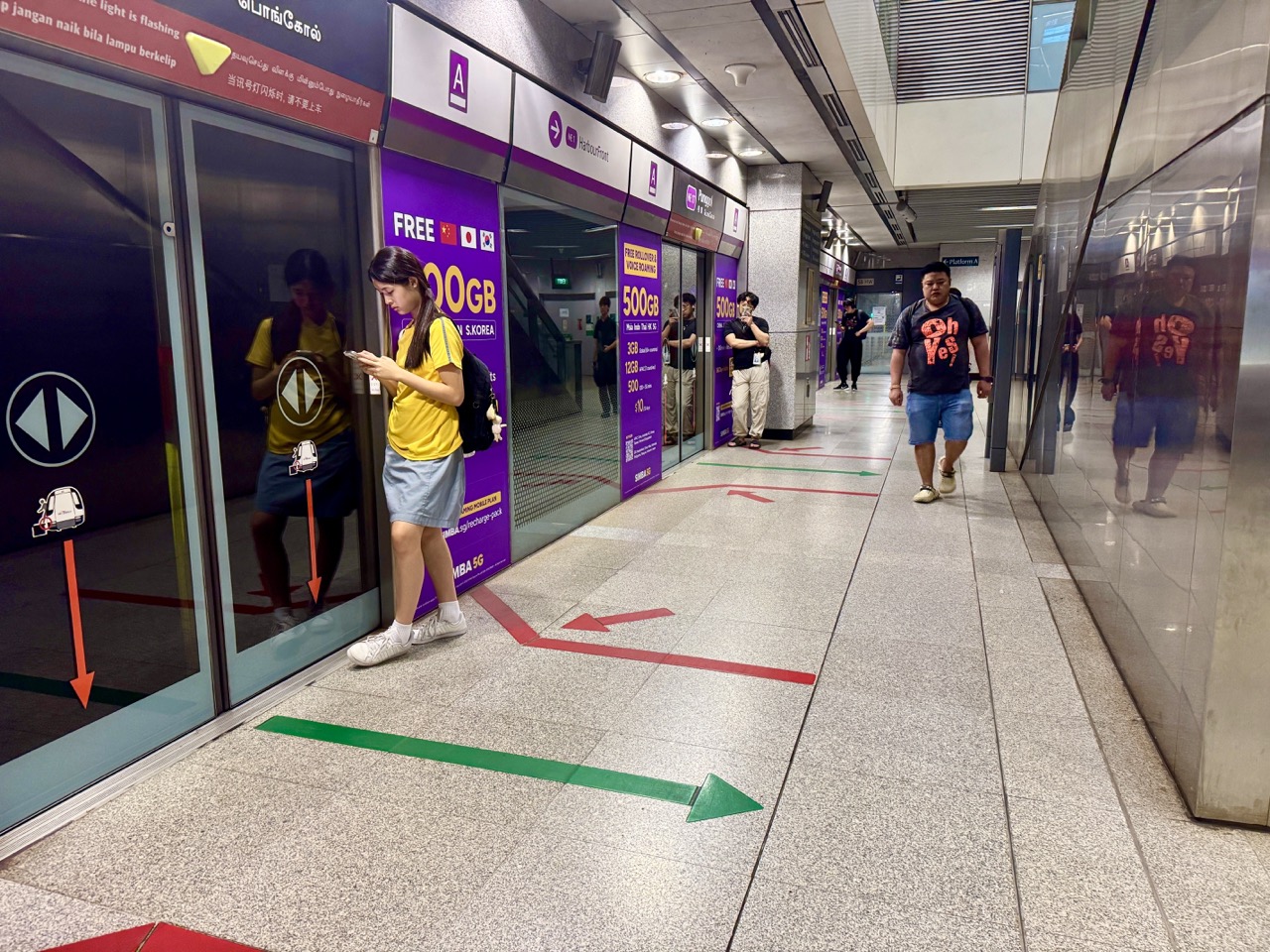
On an MRT train or public bus, strangers share seats, doors, floors, handrails, noise levels and very little personal information. A commuter might speak Malay with family and English at work; another may have learned Tamil first but prefer a simple English request for help. Courteous public transport works when people can understand one another’s needs without demanding a common first language or judging an invisible disability from appearance.
The Land Transport Authority’s Thoughtful Bunch campaign began in 2014 with recognisable reminders to give up seats where needed, move in, allow passengers to alight, lower bags and reduce noise. These are social behaviours. There is also an evolving formal framework: Conditions of Carriage for public buses were introduced in March 2025, and new bus and interchange conduct regulations took effect on 23 September 2026. The duty to be gracious should not be confused with the exact legal definition of an offence.
This Singapore Vocabulary article develops 32 terms on considerate commuting, mutual assistance, invisible needs, etiquette, rules, conflict resolution and public trust. It does not repeat the separate MRT wayfinding article or provide live transport directions. Students and families can use the vocabulary to explain what happened in a shared carriage, ask an appropriate question, keep another person’s dignity intact and identify which claim needs current LTA evidence.
This topic belongs to eduKateSG’s Master Vocabulary library and the Vocabulary Learning Hub. It follows the Clementi first-principles standard: begin with the actual problem, define the distinguishing concept, fence inaccurate uses, retrieve after a delay and transfer learning to a different setting. This is not a live transport or legal enforcement guide.
The direct answer: what courtesy contributes to common life
| Reader’s question | Accurate short answer |
|---|---|
| Main question | How do passengers with different first languages share journeys while respecting one another’s needs and the transport system’s rules? |
| Learning anchor | LTA’s Thoughtful Bunch gracious-commuting campaign was launched in 2014. |
| Policy dates | Public-bus Conditions of Carriage began 10 March 2025; further conduct regulations took effect 23 September 2026. |
| Inclusion example | LTA’s Helping Hand materials recognise that some needs, including temporary and invisible conditions, are not apparent from appearance. |
| Boundary | Encouraging courtesy is different from alleging that every inconsiderate act is a specific legal offence. |
| Learning result | 32 words, eight worked cases, a source-supported timeline, ten FAQs and independent practice. |

First language is not transport etiquette, nationality or ability
A person’s first language describes early acquisition; their home language concerns household use and may change. A language used to ask for a seat is an interaction preference. A school Mother Tongue Language is also a curriculum category. The Singapore Constitution separately recognises Malay as the national language and Malay, Mandarin, Tamil and English as official languages. None of these categories establishes whether a rider needs assistance, knows a route or behaves respectfully.
A traveller may first have learned English, prefer Malay for a conversation with family, and use a few Mandarin or Tamil words in other contexts. The most useful public instruction states the action in understandable terms. It should not turn a question about a seat, a bag or a bus stop into a judgement about another person’s identity.
| Category | Describes | Cannot prove |
|---|---|---|
| First language | Early language development of an individual. | Commuting ability, hidden disability or civic status. |
| Home language | Household communication. | Every language a person can speak. |
| Preferred interaction language | What is clearest for a current request. | First-language history or religion. |
| Working language | A shared practical channel of communication. | That family languages have vanished. |
| Official language | Malay, Mandarin, Tamil or English under law. | Availability of every translated sign. |
| National language | Malay in Singapore’s constitutional arrangement. | That every rider learned Malay first. |
Timeline: educational campaign, carriage rules and regulations
| Year | What official sources say | Important distinction |
|---|---|---|
| 2014 | LTA launched the Thoughtful Bunch as a gracious-commuting campaign. | Campaign characters are educational reminders, not a legal code. |
| December 2024 | LTA and operators progressively introduced further signage discouraging disruptive passenger conduct. | A warning sign does not independently describe all regulations. |
| 10 March 2025 | Conditions of Carriage were introduced on public buses. | Conditions of Carriage and later formal offences are separate regulatory concepts. |
| 5 March 2025 | LTA explained proposed steps towards more consistent enforcement. | A proposed timetable is not the effective date of final regulations. |
| 23 September 2026 | New conduct regulations commenced for public buses and bus interchanges or terminals. | Offences have specific legal elements; not every perceived discourtesy falls under the same provision. |
| 26 September 2026 | An LTA–NYC youth panel shared proposals for more inclusive transport and gracious behaviour. | Recommendations were submitted for consideration, not automatically adopted policy. |
| 2 October 2026 | LTA reported progress on modifying raised seats in electric buses to improve access. | A dated percentage about modifications is not proof of every current bus’s design. |
Seven explanations of considerate shared travel
1. The first courtesy is to recognise that another person may have an unseen need
Someone who appears young may have pain, a temporary condition or a non-visible disability. LTA’s Helping Hand cards and stickers include requests for a seat and help identifying a bus stop. Their existence reminds commuters that the reason a person needs assistance may not be evident to a stranger.
A good offer is simple: ‘Would you like to sit here?’ The person can accept or decline. Demanding a diagnosis before showing consideration is intrusive. Likewise, a passenger who does not display a card may still have a legitimate need; visual appearance alone is not reliable evidence about health.
Practice: Distinguish the factual rule, voluntary courtesy and an individual’s choice in the example above. Explain how your meaning would remain accurate for a commuter with a different first language. If you mention an offence or passenger-rights rule, identify the LTA source rather than inventing the legal result.
2. Gracious commuting is practical action, not a cultural performance
LTA’s Thoughtful Bunch characters demonstrate specific acts: giving way, allowing passengers to alight before boarding, keeping bags from taking unnecessary space, reducing noise and noticing those who need seats. These examples can be explained clearly to people who did not learn the local slang for them.
A commuter need not use Singlish or a particular home language to behave respectfully. A picture or short English sentence may communicate the action, but the effectiveness of a sign should be tested against real users rather than assumed. Courtesy is best judged by the behaviour, not by accent.
Practice: Distinguish the factual rule, voluntary courtesy and an individual’s choice in the example above. Explain how your meaning would remain accurate for a commuter with a different first language. If you mention an offence or passenger-rights rule, identify the LTA source rather than inventing the legal result.
3. A legal conduct rule and a polite request are different things
LTA’s bus Conditions of Carriage began in March 2025. Further regulations commencing on 23 September 2026 made defined nuisance and disruptive conduct on buses and at interchanges or terminals offences. LTA also describes enforcement arrangements, with bus captains focused on safe operation rather than issuing administrative Notifications of Offence.
A pupil who says ‘Every loud conversation is now a criminal offence’ would be making a claim broader than the provided text supports. Precise legal wording requires the specific provision, circumstances and responsible authority. Asking someone politely to reduce volume is not the same as formally deciding that a legal offence has occurred.
Practice: Distinguish the factual rule, voluntary courtesy and an individual’s choice in the example above. Explain how your meaning would remain accurate for a commuter with a different first language. If you mention an offence or passenger-rights rule, identify the LTA source rather than inventing the legal result.
4. Crowding creates decisions about shared space
A train carriage may be crowded and an aisle hard to cross. People need room to board and alight, secure access to handrails and safe movement around doors. Terms such as congestion, considerate boarding and access need to be connected to a real action, not used as vague character judgements.
A class can describe a fictional busy carriage and ask what the passengers can do to make space. The answer should follow the system’s actual instructions and avoid physically moving or grabbing another passenger without permission. Mutual consideration is observable; it cannot be inferred from nationality.
Practice: Distinguish the factual rule, voluntary courtesy and an individual’s choice in the example above. Explain how your meaning would remain accurate for a commuter with a different first language. If you mention an offence or passenger-rights rule, identify the LTA source rather than inventing the legal result.
5. Age and disability require neither pity nor stereotypes
LTA has discussed raised seat-platform heights on electric buses and modifications intended to ease use by seniors and passengers with mobility challenges. The October 2026 response reports that close to 80% of 420 relevant electric buses had been modified at the date of reporting, with more work expected before the end of the year.
This demonstrates that infrastructure can help or hinder access independently of a passenger’s English comprehension. An older commuter may be confident and mobile; a young person may need support. Good vocabulary distinguishes accessible equipment from individual assumptions, and a dated progress figure from an assertion that every bus has already changed.
Practice: Distinguish the factual rule, voluntary courtesy and an individual’s choice in the example above. Explain how your meaning would remain accurate for a commuter with a different first language. If you mention an offence or passenger-rights rule, identify the LTA source rather than inventing the legal result.
6. Community feedback should be taken seriously without overclaiming outcomes
The LTA and National Youth Council’s September 2026 youth panel proposed ways to improve inclusive journeys, including more attention to seniors, transfers and commuters with invisible needs. Proposals are evidence of public engagement and suggestions, not proof of implementation.
The words proposal, consultation, pilot and regulation have different implications. A student should be able to identify which stage is recorded. A reasonable suggestion for a clearer sign can be described as feedback without claiming a new route or facility exists today.
Practice: Distinguish the factual rule, voluntary courtesy and an individual’s choice in the example above. Explain how your meaning would remain accurate for a commuter with a different first language. If you mention an offence or passenger-rights rule, identify the LTA source rather than inventing the legal result.
7. Shared journeys help build a common civic habit
Public transport brings together people with varied language histories in a practical shared system. Riders may disagree about personal space or what level of noise is appropriate, but they need a common route for resolving problems without discrimination or harassment. An accurate request, respectful reply and appropriate staff referral can prevent a minor difficulty from becoming a group accusation.
The nation-building connection is the repeated practice of treating strangers fairly, particularly when their needs or first language differ from one’s own. A campaign alone does not prove harmony; observable conduct, inclusive infrastructure and responsible processes are more meaningful.
Practice: Distinguish the factual rule, voluntary courtesy and an individual’s choice in the example above. Explain how your meaning would remain accurate for a commuter with a different first language. If you mention an offence or passenger-rights rule, identify the LTA source rather than inventing the legal result.
The 32-word courteous commuting vocabulary table
| No. | Term | Singapore transport example |
|---|---|---|
| 1 | gracious commuting | LTA’s Thoughtful Bunch promotes everyday courtesy. |
| 2 | Thoughtful Bunch | Stand-Up Stacey models offering seats. |
| 3 | priority seat | A commuter offers a seat when someone needs it. |
| 4 | invisible disability | LTA encourages consideration for passengers with hidden needs. |
| 5 | Helping Hand card | A commuter may request notice before their bus stop. |
| 6 | first language | A passenger may first learn Tamil and use English on trains. |
| 7 | home language | A family discusses journeys in Malay at home. |
| 8 | courtesy | A rider thanks a person who offered assistance. |
| 9 | consent | A helper asks before touching another person’s wheelchair. |
| 10 | give way | Passengers leave room for alighting travellers. |
| 11 | alight | Riders wait for others to alight before boarding. |
| 12 | board | Passengers queue before boarding. |
| 13 | queue etiquette | Passengers wait to one side of a train door. |
| 14 | carriage | Commuters share standing and seating space. |
| 15 | aisle | A bag left in an aisle can obstruct movement. |
| 16 | congestion | A peak-hour carriage becomes crowded. |
| 17 | bag-down courtesy | Bag-Down Benny models this conduct. |
| 18 | noise consideration | Hush-Hush Hannah encourages quieter journeys. |
| 19 | Conditions of Carriage | LTA introduced bus CoC in March 2025. |
| 20 | conduct regulations | Bus and interchange rules took effect September 2026. |
| 21 | Notification of Offence | LTA describes administrative enforcement powers. |
| 22 | bus captain | Captains may assist with certain passenger needs. |
| 23 | transport operator | LTA and operators coordinate passenger information. |
| 24 | discretion | LTA says enforcement considers relevant passenger conditions. |
| 25 | inclusive mobility | Helping Hand initiatives support passengers requiring assistance. |
| 26 | accessibility | An improved bus seat step can reduce a mobility barrier. |
| 27 | mutual respect | Two passengers discuss space without personal insults. |
| 28 | clarification | A rider asks whether help is wanted. |
| 29 | de-escalation | A commuter seeks staff help instead of arguing loudly. |
| 30 | public consultation | LTA–NYC’s youth panel made transport proposals. |
| 31 | shared space | Buses and MRT carriages are shared public settings. |
| 32 | civic trust | A commuter can ask for help without ridicule. |
Thirty-two detailed vocabulary lessons
1. gracious commuting
Meaning: Considerate behaviour supporting pleasant shared transport journeys. A useful definition tells readers the function of the term and the evidence required to use it responsibly. Do not substitute a general judgement such as ‘rude’ for a more specific description of what happened.
Singapore example: LTA’s Thoughtful Bunch promotes everyday courtesy. This is a bounded setting, not a statement about every passenger. If a sentence refers to a named LTA policy, the meaning should be checked against the dated source rather than inferred from personal experience.
Boundary: It is a social goal, not itself an offence classification. The limit protects people from overgeneralisation and distinguishes an optional courteous act from a particular rule, medical assumption or staff responsibility. A confident sentence is useful only if it remains factually defensible.
Your turn: Explain how the term differs from one neighbouring word and give an original example involving a shared public space. When the audience’s preferred language is not known, explain the necessary action clearly and allow questions without guessing their personal history.
2. Thoughtful Bunch
Meaning: LTA’s set of commuting characters introduced in 2014. A useful definition tells readers the function of the term and the evidence required to use it responsibly. Do not substitute a general judgement such as ‘rude’ for a more specific description of what happened.
Singapore example: Stand-Up Stacey models offering seats. This is a bounded setting, not a statement about every passenger. If a sentence refers to a named LTA policy, the meaning should be checked against the dated source rather than inferred from personal experience.
Boundary: Characters are campaign reminders, not statutory officials. The limit protects people from overgeneralisation and distinguishes an optional courteous act from a particular rule, medical assumption or staff responsibility. A confident sentence is useful only if it remains factually defensible.
Your turn: Write a correct and incorrect sentence, then fix the second by preserving the intended legal or social boundary. When the audience’s preferred language is not known, explain the necessary action clearly and allow questions without guessing their personal history.
3. priority seat
Meaning: Seating intended for people with greater need under relevant transport guidance. A useful definition tells readers the function of the term and the evidence required to use it responsibly. Do not substitute a general judgement such as ‘rude’ for a more specific description of what happened.
Singapore example: A commuter offers a seat when someone needs it. This is a bounded setting, not a statement about every passenger. If a sentence refers to a named LTA policy, the meaning should be checked against the dated source rather than inferred from personal experience.
Boundary: A person’s need cannot always be judged by appearance. The limit protects people from overgeneralisation and distinguishes an optional courteous act from a particular rule, medical assumption or staff responsibility. A confident sentence is useful only if it remains factually defensible.
Your turn: Explain the concept to a Primary learner in plain English, then adapt it into a sourced Secondary-level paragraph. When the audience’s preferred language is not known, explain the necessary action clearly and allow questions without guessing their personal history.
4. invisible disability
Meaning: A condition that is not necessarily obvious to observers. A useful definition tells readers the function of the term and the evidence required to use it responsibly. Do not substitute a general judgement such as ‘rude’ for a more specific description of what happened.
Singapore example: LTA encourages consideration for passengers with hidden needs. This is a bounded setting, not a statement about every passenger. If a sentence refers to a named LTA policy, the meaning should be checked against the dated source rather than inferred from personal experience.
Boundary: No card or diagnosis should be demanded casually. The limit protects people from overgeneralisation and distinguishes an optional courteous act from a particular rule, medical assumption or staff responsibility. A confident sentence is useful only if it remains factually defensible.
Your turn: Close the text and retrieve the term tomorrow from its meaning; test it later with a new situation and listener. When the audience’s preferred language is not known, explain the necessary action clearly and allow questions without guessing their personal history.
5. Helping Hand card
Meaning: An LTA-related assistance aid signalling particular commuting needs. A useful definition tells readers the function of the term and the evidence required to use it responsibly. Do not substitute a general judgement such as ‘rude’ for a more specific description of what happened.
Singapore example: A commuter may request notice before their bus stop. This is a bounded setting, not a statement about every passenger. If a sentence refers to a named LTA policy, the meaning should be checked against the dated source rather than inferred from personal experience.
Boundary: A card indicates a support request, not a public medical record. The limit protects people from overgeneralisation and distinguishes an optional courteous act from a particular rule, medical assumption or staff responsibility. A confident sentence is useful only if it remains factually defensible.
Your turn: Explain how the term differs from one neighbouring word and give an original example involving a shared public space. When the audience’s preferred language is not known, explain the necessary action clearly and allow questions without guessing their personal history.
6. first language
Meaning: A language acquired earliest or among the earliest in childhood. A useful definition tells readers the function of the term and the evidence required to use it responsibly. Do not substitute a general judgement such as ‘rude’ for a more specific description of what happened.
Singapore example: A passenger may first learn Tamil and use English on trains. This is a bounded setting, not a statement about every passenger. If a sentence refers to a named LTA policy, the meaning should be checked against the dated source rather than inferred from personal experience.
Boundary: Accent does not establish citizenship or transport ability. The limit protects people from overgeneralisation and distinguishes an optional courteous act from a particular rule, medical assumption or staff responsibility. A confident sentence is useful only if it remains factually defensible.
Your turn: Write a correct and incorrect sentence, then fix the second by preserving the intended legal or social boundary. When the audience’s preferred language is not known, explain the necessary action clearly and allow questions without guessing their personal history.
7. home language
Meaning: A language used among household members. A useful definition tells readers the function of the term and the evidence required to use it responsibly. Do not substitute a general judgement such as ‘rude’ for a more specific description of what happened.
Singapore example: A family discusses journeys in Malay at home. This is a bounded setting, not a statement about every passenger. If a sentence refers to a named LTA policy, the meaning should be checked against the dated source rather than inferred from personal experience.
Boundary: Household language does not define all communication skills. The limit protects people from overgeneralisation and distinguishes an optional courteous act from a particular rule, medical assumption or staff responsibility. A confident sentence is useful only if it remains factually defensible.
Your turn: Explain the concept to a Primary learner in plain English, then adapt it into a sourced Secondary-level paragraph. When the audience’s preferred language is not known, explain the necessary action clearly and allow questions without guessing their personal history.
8. courtesy
Meaning: Behaviour showing respect and consideration for others. A useful definition tells readers the function of the term and the evidence required to use it responsibly. Do not substitute a general judgement such as ‘rude’ for a more specific description of what happened.
Singapore example: A rider thanks a person who offered assistance. This is a bounded setting, not a statement about every passenger. If a sentence refers to a named LTA policy, the meaning should be checked against the dated source rather than inferred from personal experience.
Boundary: Courtesy does not require accepting unwanted help. The limit protects people from overgeneralisation and distinguishes an optional courteous act from a particular rule, medical assumption or staff responsibility. A confident sentence is useful only if it remains factually defensible.
Your turn: Close the text and retrieve the term tomorrow from its meaning; test it later with a new situation and listener. When the audience’s preferred language is not known, explain the necessary action clearly and allow questions without guessing their personal history.
Checkpoint words 1–8: Hide these eight entries. Retrieve four by meaning, give a respectful fictional commuting example and identify a tempting but invalid inference. Return in a few days with the examples changed.
9. consent
Meaning: Voluntary agreement to an action or interaction. A useful definition tells readers the function of the term and the evidence required to use it responsibly. Do not substitute a general judgement such as ‘rude’ for a more specific description of what happened.
Singapore example: A helper asks before touching another person’s wheelchair. This is a bounded setting, not a statement about every passenger. If a sentence refers to a named LTA policy, the meaning should be checked against the dated source rather than inferred from personal experience.
Boundary: Good intentions are not permission to handle a person’s body or equipment. The limit protects people from overgeneralisation and distinguishes an optional courteous act from a particular rule, medical assumption or staff responsibility. A confident sentence is useful only if it remains factually defensible.
Your turn: Explain how the term differs from one neighbouring word and give an original example involving a shared public space. When the audience’s preferred language is not known, explain the necessary action clearly and allow questions without guessing their personal history.
10. give way
Meaning: Allow another person to move or pass first. A useful definition tells readers the function of the term and the evidence required to use it responsibly. Do not substitute a general judgement such as ‘rude’ for a more specific description of what happened.
Singapore example: Passengers leave room for alighting travellers. This is a bounded setting, not a statement about every passenger. If a sentence refers to a named LTA policy, the meaning should be checked against the dated source rather than inferred from personal experience.
Boundary: Giving way is not the same as abandoning all safety rules. The limit protects people from overgeneralisation and distinguishes an optional courteous act from a particular rule, medical assumption or staff responsibility. A confident sentence is useful only if it remains factually defensible.
Your turn: Write a correct and incorrect sentence, then fix the second by preserving the intended legal or social boundary. When the audience’s preferred language is not known, explain the necessary action clearly and allow questions without guessing their personal history.
11. alight
Meaning: Leave a bus, train or other vehicle. A useful definition tells readers the function of the term and the evidence required to use it responsibly. Do not substitute a general judgement such as ‘rude’ for a more specific description of what happened.
Singapore example: Riders wait for others to alight before boarding. This is a bounded setting, not a statement about every passenger. If a sentence refers to a named LTA policy, the meaning should be checked against the dated source rather than inferred from personal experience.
Boundary: Alighting and entering have opposite directions. The limit protects people from overgeneralisation and distinguishes an optional courteous act from a particular rule, medical assumption or staff responsibility. A confident sentence is useful only if it remains factually defensible.
Your turn: Explain the concept to a Primary learner in plain English, then adapt it into a sourced Secondary-level paragraph. When the audience’s preferred language is not known, explain the necessary action clearly and allow questions without guessing their personal history.
12. board
Meaning: Enter a bus or train to travel. A useful definition tells readers the function of the term and the evidence required to use it responsibly. Do not substitute a general judgement such as ‘rude’ for a more specific description of what happened.
Singapore example: Passengers queue before boarding. This is a bounded setting, not a statement about every passenger. If a sentence refers to a named LTA policy, the meaning should be checked against the dated source rather than inferred from personal experience.
Boundary: A crowded doorway is not permission to push. The limit protects people from overgeneralisation and distinguishes an optional courteous act from a particular rule, medical assumption or staff responsibility. A confident sentence is useful only if it remains factually defensible.
Your turn: Close the text and retrieve the term tomorrow from its meaning; test it later with a new situation and listener. When the audience’s preferred language is not known, explain the necessary action clearly and allow questions without guessing their personal history.
13. queue etiquette
Meaning: Norms for waiting and entering in an orderly manner. A useful definition tells readers the function of the term and the evidence required to use it responsibly. Do not substitute a general judgement such as ‘rude’ for a more specific description of what happened.
Singapore example: Passengers wait to one side of a train door. This is a bounded setting, not a statement about every passenger. If a sentence refers to a named LTA policy, the meaning should be checked against the dated source rather than inferred from personal experience.
Boundary: Rules may be more specific at a given location. The limit protects people from overgeneralisation and distinguishes an optional courteous act from a particular rule, medical assumption or staff responsibility. A confident sentence is useful only if it remains factually defensible.
Your turn: Explain how the term differs from one neighbouring word and give an original example involving a shared public space. When the audience’s preferred language is not known, explain the necessary action clearly and allow questions without guessing their personal history.
14. carriage
Meaning: A passenger compartment of a train. A useful definition tells readers the function of the term and the evidence required to use it responsibly. Do not substitute a general judgement such as ‘rude’ for a more specific description of what happened.
Singapore example: Commuters share standing and seating space. This is a bounded setting, not a statement about every passenger. If a sentence refers to a named LTA policy, the meaning should be checked against the dated source rather than inferred from personal experience.
Boundary: A train carriage is not an individual passenger’s private room. The limit protects people from overgeneralisation and distinguishes an optional courteous act from a particular rule, medical assumption or staff responsibility. A confident sentence is useful only if it remains factually defensible.
Your turn: Write a correct and incorrect sentence, then fix the second by preserving the intended legal or social boundary. When the audience’s preferred language is not known, explain the necessary action clearly and allow questions without guessing their personal history.
15. aisle
Meaning: A passage allowing people to move inside a vehicle. A useful definition tells readers the function of the term and the evidence required to use it responsibly. Do not substitute a general judgement such as ‘rude’ for a more specific description of what happened.
Singapore example: A bag left in an aisle can obstruct movement. This is a bounded setting, not a statement about every passenger. If a sentence refers to a named LTA policy, the meaning should be checked against the dated source rather than inferred from personal experience.
Boundary: Aisle space has a circulation purpose. The limit protects people from overgeneralisation and distinguishes an optional courteous act from a particular rule, medical assumption or staff responsibility. A confident sentence is useful only if it remains factually defensible.
Your turn: Explain the concept to a Primary learner in plain English, then adapt it into a sourced Secondary-level paragraph. When the audience’s preferred language is not known, explain the necessary action clearly and allow questions without guessing their personal history.
16. congestion
Meaning: A condition of too many people or vehicles for easy movement. A useful definition tells readers the function of the term and the evidence required to use it responsibly. Do not substitute a general judgement such as ‘rude’ for a more specific description of what happened.
Singapore example: A peak-hour carriage becomes crowded. This is a bounded setting, not a statement about every passenger. If a sentence refers to a named LTA policy, the meaning should be checked against the dated source rather than inferred from personal experience.
Boundary: Crowding alone does not establish wrongdoing. The limit protects people from overgeneralisation and distinguishes an optional courteous act from a particular rule, medical assumption or staff responsibility. A confident sentence is useful only if it remains factually defensible.
Your turn: Close the text and retrieve the term tomorrow from its meaning; test it later with a new situation and listener. When the audience’s preferred language is not known, explain the necessary action clearly and allow questions without guessing their personal history.
Checkpoint words 9–16: Hide these eight entries. Retrieve four by meaning, give a respectful fictional commuting example and identify a tempting but invalid inference. Return in a few days with the examples changed.
17. bag-down courtesy
Meaning: Holding or repositioning a bag to avoid taking unnecessary space. A useful definition tells readers the function of the term and the evidence required to use it responsibly. Do not substitute a general judgement such as ‘rude’ for a more specific description of what happened.
Singapore example: Bag-Down Benny models this conduct. This is a bounded setting, not a statement about every passenger. If a sentence refers to a named LTA policy, the meaning should be checked against the dated source rather than inferred from personal experience.
Boundary: Passengers must still protect their belongings and safety. The limit protects people from overgeneralisation and distinguishes an optional courteous act from a particular rule, medical assumption or staff responsibility. A confident sentence is useful only if it remains factually defensible.
Your turn: Explain how the term differs from one neighbouring word and give an original example involving a shared public space. When the audience’s preferred language is not known, explain the necessary action clearly and allow questions without guessing their personal history.
18. noise consideration
Meaning: Keeping sound at a level suitable to shared space. A useful definition tells readers the function of the term and the evidence required to use it responsibly. Do not substitute a general judgement such as ‘rude’ for a more specific description of what happened.
Singapore example: Hush-Hush Hannah encourages quieter journeys. This is a bounded setting, not a statement about every passenger. If a sentence refers to a named LTA policy, the meaning should be checked against the dated source rather than inferred from personal experience.
Boundary: Not every audible word is a formal regulatory offence. The limit protects people from overgeneralisation and distinguishes an optional courteous act from a particular rule, medical assumption or staff responsibility. A confident sentence is useful only if it remains factually defensible.
Your turn: Write a correct and incorrect sentence, then fix the second by preserving the intended legal or social boundary. When the audience’s preferred language is not known, explain the necessary action clearly and allow questions without guessing their personal history.
19. Conditions of Carriage
Meaning: Rules or conditions governing public-bus passenger conduct. A useful definition tells readers the function of the term and the evidence required to use it responsibly. Do not substitute a general judgement such as ‘rude’ for a more specific description of what happened.
Singapore example: LTA introduced bus CoC in March 2025. This is a bounded setting, not a statement about every passenger. If a sentence refers to a named LTA policy, the meaning should be checked against the dated source rather than inferred from personal experience.
Boundary: They should not be conflated with every later regulatory offence. The limit protects people from overgeneralisation and distinguishes an optional courteous act from a particular rule, medical assumption or staff responsibility. A confident sentence is useful only if it remains factually defensible.
Your turn: Explain the concept to a Primary learner in plain English, then adapt it into a sourced Secondary-level paragraph. When the audience’s preferred language is not known, explain the necessary action clearly and allow questions without guessing their personal history.
20. conduct regulations
Meaning: Formal provisions addressing defined passenger behaviour. A useful definition tells readers the function of the term and the evidence required to use it responsibly. Do not substitute a general judgement such as ‘rude’ for a more specific description of what happened.
Singapore example: Bus and interchange rules took effect September 2026. This is a bounded setting, not a statement about every passenger. If a sentence refers to a named LTA policy, the meaning should be checked against the dated source rather than inferred from personal experience.
Boundary: The exact legal definition matters. The limit protects people from overgeneralisation and distinguishes an optional courteous act from a particular rule, medical assumption or staff responsibility. A confident sentence is useful only if it remains factually defensible.
Your turn: Close the text and retrieve the term tomorrow from its meaning; test it later with a new situation and listener. When the audience’s preferred language is not known, explain the necessary action clearly and allow questions without guessing their personal history.
21. Notification of Offence
Meaning: A specified enforcement notification under relevant transport arrangements. A useful definition tells readers the function of the term and the evidence required to use it responsibly. Do not substitute a general judgement such as ‘rude’ for a more specific description of what happened.
Singapore example: LTA describes administrative enforcement powers. This is a bounded setting, not a statement about every passenger. If a sentence refers to a named LTA policy, the meaning should be checked against the dated source rather than inferred from personal experience.
Boundary: A bus captain is not thereby authorised to issue every notice. The limit protects people from overgeneralisation and distinguishes an optional courteous act from a particular rule, medical assumption or staff responsibility. A confident sentence is useful only if it remains factually defensible.
Your turn: Explain how the term differs from one neighbouring word and give an original example involving a shared public space. When the audience’s preferred language is not known, explain the necessary action clearly and allow questions without guessing their personal history.
22. bus captain
Meaning: A professional driver responsible for safely operating a bus. A useful definition tells readers the function of the term and the evidence required to use it responsibly. Do not substitute a general judgement such as ‘rude’ for a more specific description of what happened.
Singapore example: Captains may assist with certain passenger needs. This is a bounded setting, not a statement about every passenger. If a sentence refers to a named LTA policy, the meaning should be checked against the dated source rather than inferred from personal experience.
Boundary: Their primary role is safe driving, not adjudicating every dispute. The limit protects people from overgeneralisation and distinguishes an optional courteous act from a particular rule, medical assumption or staff responsibility. A confident sentence is useful only if it remains factually defensible.
Your turn: Write a correct and incorrect sentence, then fix the second by preserving the intended legal or social boundary. When the audience’s preferred language is not known, explain the necessary action clearly and allow questions without guessing their personal history.
23. transport operator
Meaning: An organisation running transport services. A useful definition tells readers the function of the term and the evidence required to use it responsibly. Do not substitute a general judgement such as ‘rude’ for a more specific description of what happened.
Singapore example: LTA and operators coordinate passenger information. This is a bounded setting, not a statement about every passenger. If a sentence refers to a named LTA policy, the meaning should be checked against the dated source rather than inferred from personal experience.
Boundary: Operator rules and regulator powers differ. The limit protects people from overgeneralisation and distinguishes an optional courteous act from a particular rule, medical assumption or staff responsibility. A confident sentence is useful only if it remains factually defensible.
Your turn: Explain the concept to a Primary learner in plain English, then adapt it into a sourced Secondary-level paragraph. When the audience’s preferred language is not known, explain the necessary action clearly and allow questions without guessing their personal history.
24. discretion
Meaning: Judgement used within a person’s lawful authority and circumstances. A useful definition tells readers the function of the term and the evidence required to use it responsibly. Do not substitute a general judgement such as ‘rude’ for a more specific description of what happened.
Singapore example: LTA says enforcement considers relevant passenger conditions. This is a bounded setting, not a statement about every passenger. If a sentence refers to a named LTA policy, the meaning should be checked against the dated source rather than inferred from personal experience.
Boundary: Discretion is not arbitrary personal preference. The limit protects people from overgeneralisation and distinguishes an optional courteous act from a particular rule, medical assumption or staff responsibility. A confident sentence is useful only if it remains factually defensible.
Your turn: Close the text and retrieve the term tomorrow from its meaning; test it later with a new situation and listener. When the audience’s preferred language is not known, explain the necessary action clearly and allow questions without guessing their personal history.
Checkpoint words 17–24: Hide these eight entries. Retrieve four by meaning, give a respectful fictional commuting example and identify a tempting but invalid inference. Return in a few days with the examples changed.
25. inclusive mobility
Meaning: Transport use designed to accommodate differing needs. A useful definition tells readers the function of the term and the evidence required to use it responsibly. Do not substitute a general judgement such as ‘rude’ for a more specific description of what happened.
Singapore example: Helping Hand initiatives support passengers requiring assistance. This is a bounded setting, not a statement about every passenger. If a sentence refers to a named LTA policy, the meaning should be checked against the dated source rather than inferred from personal experience.
Boundary: One sign alone does not solve all access barriers. The limit protects people from overgeneralisation and distinguishes an optional courteous act from a particular rule, medical assumption or staff responsibility. A confident sentence is useful only if it remains factually defensible.
Your turn: Explain how the term differs from one neighbouring word and give an original example involving a shared public space. When the audience’s preferred language is not known, explain the necessary action clearly and allow questions without guessing their personal history.
26. accessibility
Meaning: Practical usability of vehicles, spaces and information. A useful definition tells readers the function of the term and the evidence required to use it responsibly. Do not substitute a general judgement such as ‘rude’ for a more specific description of what happened.
Singapore example: An improved bus seat step can reduce a mobility barrier. This is a bounded setting, not a statement about every passenger. If a sentence refers to a named LTA policy, the meaning should be checked against the dated source rather than inferred from personal experience.
Boundary: Accessibility is broader than multilingual text. The limit protects people from overgeneralisation and distinguishes an optional courteous act from a particular rule, medical assumption or staff responsibility. A confident sentence is useful only if it remains factually defensible.
Your turn: Write a correct and incorrect sentence, then fix the second by preserving the intended legal or social boundary. When the audience’s preferred language is not known, explain the necessary action clearly and allow questions without guessing their personal history.
27. mutual respect
Meaning: Recognition of dignity despite different preferences. A useful definition tells readers the function of the term and the evidence required to use it responsibly. Do not substitute a general judgement such as ‘rude’ for a more specific description of what happened.
Singapore example: Two passengers discuss space without personal insults. This is a bounded setting, not a statement about every passenger. If a sentence refers to a named LTA policy, the meaning should be checked against the dated source rather than inferred from personal experience.
Boundary: Respect does not require silence about a genuine problem. The limit protects people from overgeneralisation and distinguishes an optional courteous act from a particular rule, medical assumption or staff responsibility. A confident sentence is useful only if it remains factually defensible.
Your turn: Explain the concept to a Primary learner in plain English, then adapt it into a sourced Secondary-level paragraph. When the audience’s preferred language is not known, explain the necessary action clearly and allow questions without guessing their personal history.
28. clarification
Meaning: Asking for or providing information that removes confusion. A useful definition tells readers the function of the term and the evidence required to use it responsibly. Do not substitute a general judgement such as ‘rude’ for a more specific description of what happened.
Singapore example: A rider asks whether help is wanted. This is a bounded setting, not a statement about every passenger. If a sentence refers to a named LTA policy, the meaning should be checked against the dated source rather than inferred from personal experience.
Boundary: A question should not demand private health disclosure. The limit protects people from overgeneralisation and distinguishes an optional courteous act from a particular rule, medical assumption or staff responsibility. A confident sentence is useful only if it remains factually defensible.
Your turn: Close the text and retrieve the term tomorrow from its meaning; test it later with a new situation and listener. When the audience’s preferred language is not known, explain the necessary action clearly and allow questions without guessing their personal history.
29. de-escalation
Meaning: Reducing the intensity or likelihood of a conflict. A useful definition tells readers the function of the term and the evidence required to use it responsibly. Do not substitute a general judgement such as ‘rude’ for a more specific description of what happened.
Singapore example: A commuter seeks staff help instead of arguing loudly. This is a bounded setting, not a statement about every passenger. If a sentence refers to a named LTA policy, the meaning should be checked against the dated source rather than inferred from personal experience.
Boundary: De-escalation does not replace necessary safety procedures. The limit protects people from overgeneralisation and distinguishes an optional courteous act from a particular rule, medical assumption or staff responsibility. A confident sentence is useful only if it remains factually defensible.
Your turn: Explain how the term differs from one neighbouring word and give an original example involving a shared public space. When the audience’s preferred language is not known, explain the necessary action clearly and allow questions without guessing their personal history.
30. public consultation
Meaning: Gathering ideas or feedback for institutional decisions. A useful definition tells readers the function of the term and the evidence required to use it responsibly. Do not substitute a general judgement such as ‘rude’ for a more specific description of what happened.
Singapore example: LTA–NYC’s youth panel made transport proposals. This is a bounded setting, not a statement about every passenger. If a sentence refers to a named LTA policy, the meaning should be checked against the dated source rather than inferred from personal experience.
Boundary: A proposal is not a completed policy. The limit protects people from overgeneralisation and distinguishes an optional courteous act from a particular rule, medical assumption or staff responsibility. A confident sentence is useful only if it remains factually defensible.
Your turn: Write a correct and incorrect sentence, then fix the second by preserving the intended legal or social boundary. When the audience’s preferred language is not known, explain the necessary action clearly and allow questions without guessing their personal history.
31. shared space
Meaning: A place or facility used by multiple people. A useful definition tells readers the function of the term and the evidence required to use it responsibly. Do not substitute a general judgement such as ‘rude’ for a more specific description of what happened.
Singapore example: Buses and MRT carriages are shared public settings. This is a bounded setting, not a statement about every passenger. If a sentence refers to a named LTA policy, the meaning should be checked against the dated source rather than inferred from personal experience.
Boundary: Shared access imposes responsibilities, not identical social identities. The limit protects people from overgeneralisation and distinguishes an optional courteous act from a particular rule, medical assumption or staff responsibility. A confident sentence is useful only if it remains factually defensible.
Your turn: Explain the concept to a Primary learner in plain English, then adapt it into a sourced Secondary-level paragraph. When the audience’s preferred language is not known, explain the necessary action clearly and allow questions without guessing their personal history.
32. civic trust
Meaning: Confidence that people and systems act fairly and reliably. A useful definition tells readers the function of the term and the evidence required to use it responsibly. Do not substitute a general judgement such as ‘rude’ for a more specific description of what happened.
Singapore example: A commuter can ask for help without ridicule. This is a bounded setting, not a statement about every passenger. If a sentence refers to a named LTA policy, the meaning should be checked against the dated source rather than inferred from personal experience.
Boundary: One courteous encounter does not prove universal social harmony. The limit protects people from overgeneralisation and distinguishes an optional courteous act from a particular rule, medical assumption or staff responsibility. A confident sentence is useful only if it remains factually defensible.
Your turn: Close the text and retrieve the term tomorrow from its meaning; test it later with a new situation and listener. When the audience’s preferred language is not known, explain the necessary action clearly and allow questions without guessing their personal history.
Checkpoint words 25–32: Hide these eight entries. Retrieve four by meaning, give a respectful fictional commuting example and identify a tempting but invalid inference. Return in a few days with the examples changed.
Eight practical scenarios: language choices and public respect
The following situations are fictional teaching models, not real allegations against photographed commuters, transport staff or operators. They develop careful reasoning; current legal and operational decisions belong to LTA and the relevant operator.
1. A young commuter asks for a priority seat
Starting situation: A young passenger says they need to sit.
First error: Another commuter refuses because the need is not visible.
Better communication: Respond courteously without demanding medical proof; if possible, offer an appropriate seat.
Why: Age or appearance cannot establish the absence of a disability. A reader should be able to locate the wrong concept, explain its effect and keep the speaker’s identity and private circumstances separate from observed conduct.
Independent transfer: Rewrite the explanation for a visitor who does not know Singapore’s campaign characters or local transport terms. State any detail that needs a current LTA source instead of an assumption.
2. A bag blocks movement
Starting situation: A person keeps a large bag across a busy aisle.
First error: A bystander insults their nationality instead of mentioning the actual problem.
Better communication: Ask politely for space and follow operator instructions.
Why: Specific behaviour should not turn into identity stereotyping. A reader should be able to locate the wrong concept, explain its effect and keep the speaker’s identity and private circumstances separate from observed conduct.
Independent transfer: Rewrite the explanation for a visitor who does not know Singapore’s campaign characters or local transport terms. State any detail that needs a current LTA source instead of an assumption.
3. Boarding and alighting are confused
Starting situation: Passengers begin pushing into a train before others leave.
First error: A learner describes everyone as having the same movement priority.
Better communication: Explain alighting and boarding as distinct actions and follow the station’s direction signs.
Why: Clear directional vocabulary prevents confusion. A reader should be able to locate the wrong concept, explain its effect and keep the speaker’s identity and private circumstances separate from observed conduct.
Independent transfer: Rewrite the explanation for a visitor who does not know Singapore’s campaign characters or local transport terms. State any detail that needs a current LTA source instead of an assumption.
4. A loud conversation becomes a legal claim
Starting situation: A student hears a raised voice on a bus.
First error: The student states every loud conversation is automatically a 2026 offence.
Better communication: Use LTA’s exact conduct rules for legal claims and describe courtesy separately.
Why: An etiquette concern is not automatically a proven violation. A reader should be able to locate the wrong concept, explain its effect and keep the speaker’s identity and private circumstances separate from observed conduct.
Independent transfer: Rewrite the explanation for a visitor who does not know Singapore’s campaign characters or local transport terms. State any detail that needs a current LTA source instead of an assumption.
5. The bus captain is asked to fine someone
Starting situation: Two riders disagree about behaviour.
First error: One assumes the driver must issue an administrative offence notice.
Better communication: Explain the bus captain’s transport role and refer formal enforcement to the appropriate authority.
Why: Professional roles and statutory powers have defined boundaries. A reader should be able to locate the wrong concept, explain its effect and keep the speaker’s identity and private circumstances separate from observed conduct.
Independent transfer: Rewrite the explanation for a visitor who does not know Singapore’s campaign characters or local transport terms. State any detail that needs a current LTA source instead of an assumption.
6. An accessibility programme’s card is mocked
Starting situation: A traveller uses a Helping Hand sticker.
First error: Another jokes that a condition must be visible to count.
Better communication: Respect the assistance request and avoid disclosing or speculating about health.
Why: Invisible needs deserve the same consideration as visible ones. A reader should be able to locate the wrong concept, explain its effect and keep the speaker’s identity and private circumstances separate from observed conduct.
Independent transfer: Rewrite the explanation for a visitor who does not know Singapore’s campaign characters or local transport terms. State any detail that needs a current LTA source instead of an assumption.
7. A youth proposal is presented as adopted
Starting situation: A report discusses the 26 September 2026 transport youth panel.
First error: A blogger treats suggestions as operating changes.
Better communication: Label them proposals and verify implementation separately.
Why: Consultation and completed service change are distinct states. A reader should be able to locate the wrong concept, explain its effect and keep the speaker’s identity and private circumstances separate from observed conduct.
Independent transfer: Rewrite the explanation for a visitor who does not know Singapore’s campaign characters or local transport terms. State any detail that needs a current LTA source instead of an assumption.
8. An older commuter rejects unwanted physical help
Starting situation: A passenger reaches to move an older rider without asking.
First error: The person is uncomfortable.
Better communication: Offer help with a short question and respect the person’s decision.
Why: Accessibility includes personal autonomy and consent. A reader should be able to locate the wrong concept, explain its effect and keep the speaker’s identity and private circumstances separate from observed conduct.
Independent transfer: Rewrite the explanation for a visitor who does not know Singapore’s campaign characters or local transport terms. State any detail that needs a current LTA source instead of an assumption.
How to teach from the first weak link
1. Diagnose the exact confusion
A learner may know the word courtesy but not understand invisible need, or may confuse transport rules with social requests. Show a short hypothetical scene and ask which detail they know and which remains unclear.
2. Teach the nearest contrast
Compare give way and alight; courtesy and offence; disability and appearance; priority seat and compulsory diagnosis; proposed regulation and current rule. One carefully explained difference can correct several misused words.
3. Fence meaning and evidence
Ask what can be concluded from an observed bag blocking an aisle, a sticker, or a dated LTA release. Reject statements that infer nationality, competence, diagnosis or a proven criminal offence without the relevant evidence.
4. Practice respectful dialogue
Model a short, neutral request and a courteous refusal or acceptance. A good learner can communicate clearly without demanding personal health information or mocking unfamiliar accents.
5. Retrieve and apply in a new setting
Bring back the same words tomorrow and several days later, mixing them with HDB shared-space vocabulary. Then apply respect, accessibility and permission to a library, classroom or community event, checking that the rules differ.
6. Evaluate change responsibly
A campaign message, an accessible bus modification and a legal regulation each have different indicators. Explain which evidence would show a behavioural improvement rather than claiming one poster solved all problems.
A four-week practice plan for children to adults
| Week | What to practise | What demonstrates understanding |
|---|---|---|
| 1 | Learn words 1–8 and compare social courtesy with unseen access needs. | Defines a term and gives a non-stereotyped example. |
| 2 | Learn words 9–16 and repair two fictional carriage dialogues. | Can distinguish boarding, alighting, space and consent. |
| 3 | Learn words 17–24 and read LTA’s 2025 and 2026 releases. | Identifies effective dates and the limit of formal enforcement. |
| 4 | Learn words 25–32; retrieve older terms and analyse the youth-panel proposals. | Uses at least six words accurately without a word bank. |
Primary students can practise a few terms with pictures and short questions about helping without forcing consent. Secondary students can add the source-based distinction between a campaign, Conditions of Carriage and 2026 regulation. Adult readers can study invisible access needs, appropriate conduct and accurate communication across languages. Any actual dispute should use the relevant staff or official route.
Self-check: twelve questions and answer guidance
- 1. When was the Thoughtful Bunch introduced?
- 2. What does Stand-Up Stacey encourage?
- 3. What does Move-In Martin encourage?
- 4. What is an invisible disability?
- 5. Do all passengers requiring a seat have to disclose a diagnosis?
- 6. What date did bus Conditions of Carriage begin?
- 7. When did the newer bus conduct regulations take effect?
- 8. Are courtesy campaign characters actual legal enforcement officers?
- 9. Do bus captains issue every administrative Notification of Offence?
- 10. Did the 2026 youth panel directly change all transport policies?
- 11. Is a person’s first language a measure of their need or competence?
- 12. What makes shared transport more inclusive?
Model answers
1. 2014. To demonstrate mastery, add an original scenario and identify a nearby wrong assumption. For a legal or current operational point, use the precise official source.
2. Offering a seat when another person needs it more. To demonstrate mastery, add an original scenario and identify a nearby wrong assumption. For a legal or current operational point, use the precise official source.
3. Moving into the carriage to create boarding space where safe. To demonstrate mastery, add an original scenario and identify a nearby wrong assumption. For a legal or current operational point, use the precise official source.
4. A condition or impairment not necessarily apparent from appearance. To demonstrate mastery, add an original scenario and identify a nearby wrong assumption. For a legal or current operational point, use the precise official source.
5. No such assumption should be made in everyday interactions. To demonstrate mastery, add an original scenario and identify a nearby wrong assumption. For a legal or current operational point, use the precise official source.
6. 10 March 2025. To demonstrate mastery, add an original scenario and identify a nearby wrong assumption. For a legal or current operational point, use the precise official source.
7. 23 September 2026. To demonstrate mastery, add an original scenario and identify a nearby wrong assumption. For a legal or current operational point, use the precise official source.
8. No. To demonstrate mastery, add an original scenario and identify a nearby wrong assumption. For a legal or current operational point, use the precise official source.
9. No; LTA distinguishes their operational responsibilities. To demonstrate mastery, add an original scenario and identify a nearby wrong assumption. For a legal or current operational point, use the precise official source.
10. No; its proposals were submitted for consideration. To demonstrate mastery, add an original scenario and identify a nearby wrong assumption. For a legal or current operational point, use the precise official source.
11. No. To demonstrate mastery, add an original scenario and identify a nearby wrong assumption. For a legal or current operational point, use the precise official source.
12. Respectful actions, appropriate assistance, clear communication, accessible facilities and trustworthy rules. To demonstrate mastery, add an original scenario and identify a nearby wrong assumption. For a legal or current operational point, use the precise official source.
Ten frequently asked questions
1. When did LTA launch the Thoughtful Bunch campaign?
In 2014 as part of its gracious-commuting efforts.
2. What does Stand-Up Stacey encourage?
Offering seats to people who need them more.
3. What does Give-Way Glenda demonstrate?
Waiting aside and allowing passengers to alight before boarding.
4. Are all disabilities visible?
No. LTA’s Helping Hand materials explicitly address conditions that may not be obvious.
5. When did public-bus Conditions of Carriage begin?
They were introduced from 10 March 2025.
6. When did the new bus and interchange conduct regulations take effect?
On 23 September 2026.
7. Does an inconsiderate action always meet the definition of a legal offence?
No. The actual rule and circumstances matter; courtesy and law are different categories.
8. Can the bus captain issue every formal offence notice?
No. LTA distinguishes the captain’s operational role from administrative enforcement powers.
9. What did the September 2026 transport youth panel produce?
Recommendations for LTA’s consideration, not automatically implemented service changes.
10. What does courteous commuting contribute to nation building?
It creates repeated opportunities to treat strangers fairly across different languages, ages and visible or invisible needs.
LTA sources and verification
- LTA: Gracious Commuting and Thoughtful Bunch campaign
- LTA: Inclusive Public Transport System and Helping Hand cards
- LTA: 23 September 2026 bus and interchange conduct regulations
- LTA: 2025 Conditions of Carriage and considerate commuting
- LTA and NYC: Youth Panel recommendations, 26 September 2026
- LTA: 2 October 2026 electric bus accessibility update
- Singapore Constitution: Article 153A and languages
Continue through the Singapore Vocabulary network
- Master Vocabulary
- Vocabulary Articles Archive
- Vocabulary Learning Hub
- MRT Wayfinding and an Accessible City
- HDB Shared Spaces and Neighbourly Responsibility
- Public Transport and National Language: Working English
- Volunteering and Shared Civic Care
Four new nation-building vocabulary themes
- Singapore Vocabulary | Interfaith Dialogue
- Singapore Vocabulary | Public Transport Courtesy
- Singapore Vocabulary | Senior Learning
- Singapore Vocabulary | Community Sports
Editorial boundary: Prepared 24 October 2026. The 2014, 2025 and 2026 LTA sources are individually dated. Illustrative scenarios do not diagnose any real person, allege an offence or promise a current service. The Punggol image shows a station context only; no passenger’s age, first language, disability or conduct is inferred from appearance.