
How Singapore connects is not only about whether a transport route exists.
It is also about whether every person can actually use it.
Did you know that a train station can be geographically close and still be functionally far away if the route requires stairs, narrow gates or long unsupported walks?
Accessibility changes the meaning of distance.
A lift can shorten a journey by making a level change possible. A ramp can turn a kerb into a route. A tactile path can turn an unfamiliar station into a legible environment. Priority queues can change waiting from stressful to manageable.
This article follows Singapore’s inclusive-mobility connection layer: wheelchair-accessible buses, barrier-free MRT and LRT stations, ramps, lifts, tactile guidance, priority queues, commuter care rooms, bus-stop access and the small design features that determine whether public transport works for everyone.
The visible transfer network is explored in How Singapore Connects | Bus Interchanges, MRT Stations and Transfer Hubs. The vertical layer is explored in How Singapore Connects | Lifts, Escalators and Vertical Mobility. Here we ask the capability question: who can actually complete the journey?
Did You Know? All Public Buses and Trains Are Wheelchair Accessible
LTA’s current Inclusive Public Transport System page says all public buses and trains are wheelchair accessible and that all train stations and bus interchanges have barrier-free access routes.
That is not one feature.
It is a network standard.
The vehicle, station, interchange and path all need to align.
Accessibility Is a Chain
A wheelchair-accessible train is not enough if the station entrance has stairs.
A step-free station is not enough if the final bus stop is inaccessible.
A barrier-free bus stop is not enough if the footpath to the block is blocked.
The journey only works when every link works.
Did You Know? About 98% of Bus Stops Are Barrier-Free Accessible
LTA currently says about 98% of bus stops are barrier-free accessible, with only a small number constrained by site conditions.
That means accessibility has moved from exception toward network norm.
The remaining few percent still matter to the people who depend on them.
The Ramp Connects Road Level to Bus Floor
A bus may have a low floor.
There can still be a gap or height difference between kerb and vehicle.
A boarding ramp bridges that interface.
LTA says PMA users can ask the bus captain to deploy the ramp at the rear door.
One small hinged surface can determine whether the trip is possible.
The Wheelchair Space Is a Capacity Constraint
A bus can be technically accessible and still be temporarily unavailable to a wheelchair or mobility-scooter user if the designated space is occupied.
LTA explicitly notes that PMA users may need to wait for the next bus when the wheelchair space is already occupied or the bus is very crowded.
Accessibility therefore includes capacity, not only geometry.
Priority Queues Convert Social Courtesy into Infrastructure
LTA provides priority boarding queues at stations and bus interchanges for elderly passengers, less mobile commuters and families with young children.
The markings do more than ask people to be kind.
They formalise who should receive earlier access to limited boarding space.
Did You Know? Priority Queues Can Include Seating
LTA notes that priority queue zones can include seats, reducing the need for vulnerable commuters to stand while waiting.
Waiting is part of the journey.
An inclusive system designs the waiting too.
Tactile Guidance Turns the Floor into Information
Tactile paths help guide commuters with visual impairment through stations and interchanges.
The floor becomes a navigation interface.
Sighted users may barely notice it.
For another commuter, it can be the route itself.
Braille Signs Add Another Information Channel
LTA’s August 2026 bus-interchange enhancement announcement includes Braille signs on handrails among planned inclusive features.
The same message can be visual, tactile or audible.
Inclusive design recognises that people receive information differently.
Station Lifts Are Part of the Route, Not an Amenity
A lift may seem secondary to an escalator.
For a wheelchair user, parent with stroller or traveller with mobility difficulty, it may be the only viable vertical route.
The step-free path must therefore be continuous.
Rubber Gap Fillers Reduce the Platform-Train Gap
LTA says rubber fillers are installed where possible to reduce the gap between train platform and train.
A few centimetres can matter greatly when small front wheels or walking aids are involved.
Accessibility often lives in dimensions most commuters ignore.
Audio and Visual Information Need to Agree
One commuter may rely on signs.
Another on announcements.
Another on hearing loops or visual displays.
A robust transport system communicates the same operational truth through several channels.
Redundancy improves access.
Accessible Toilets Are Part of the Journey
Long trips need more than vehicles and stations.
Toilets, baby-care rooms and rest areas can determine whether someone is willing to travel.
LTA’s 2026 interchange enhancement programme includes wheelchair-accessible toilets and family facilities.
Human needs do not pause between transport modes.
Commuter Care Rooms Add a Quiet Support Space
LTA’s interchange upgrades include commuter care rooms.
A crowded public-transport environment can be difficult for commuters with sensory or medical needs.
A small quiet space can make a large network more usable.
Accessibility Includes Families with Strollers
Open strollers within LTA’s permitted dimensions can be brought onto public transport.
This reduces the friction of moving young children.
The same barrier-free route that helps wheelchair users also helps parents, travellers with luggage and people recovering from injury.
Universal Design Creates Network Spillovers
A ramp built for wheelchairs also helps delivery workers.
A lift helps elderly commuters and parents.
Clear signage helps tourists.
More seating helps anyone who is tired.
Good accessibility is often good usability.
The Bus Stop Is the First Accessibility Test
Before the accessible bus arrives, the commuter has to reach the stop.
Kerbs, crossings, gradients, footpath width and shelter all matter.
This is why transport accessibility connects directly to urban design.
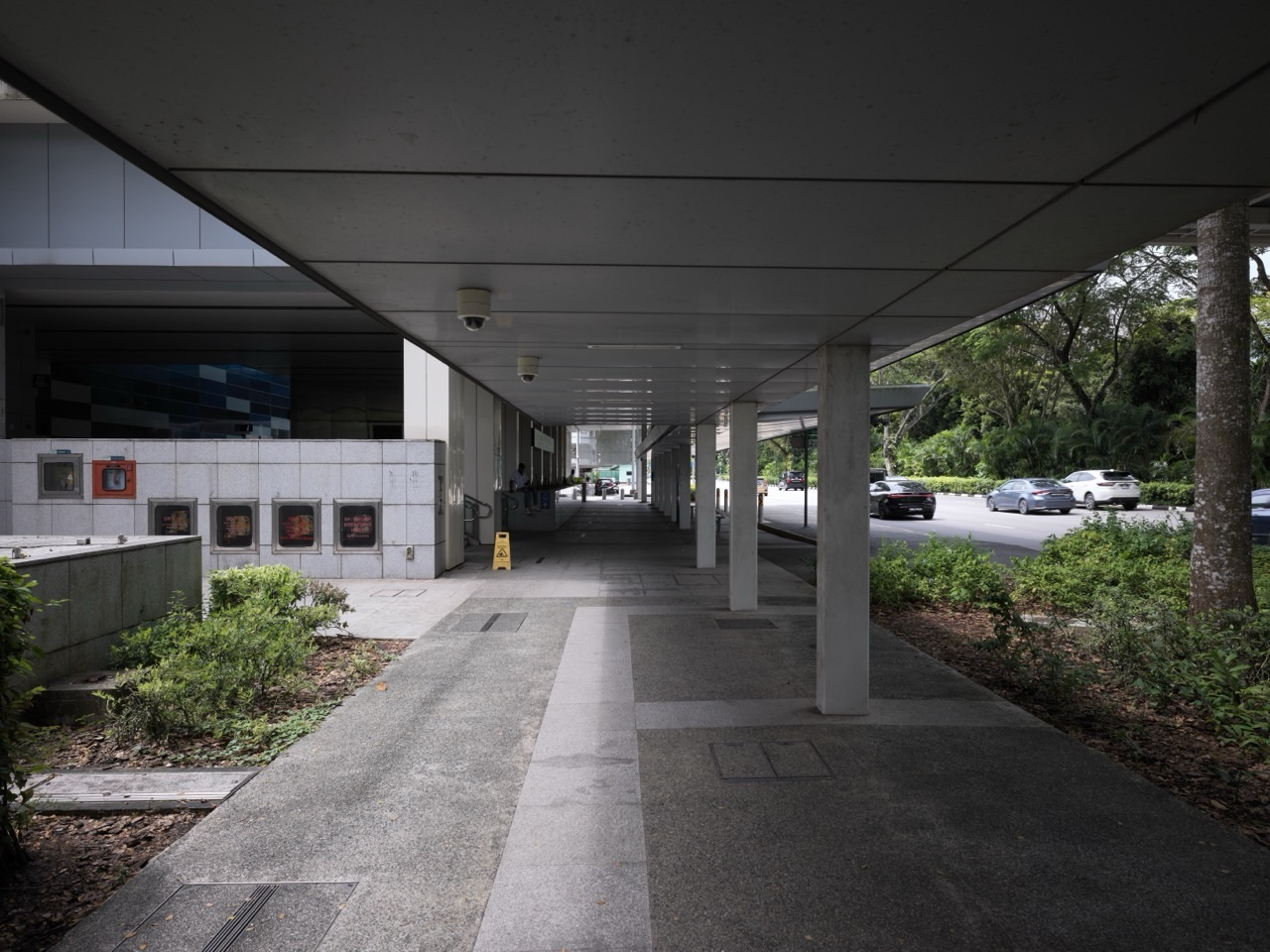
The Walkway Extends the Public Transport Network
The covered-path layer in How Singapore Connects | Covered Walkways, Underpasses and Pedestrian Links matters especially for people who move more slowly or are more affected by weather.
A station can be accessible inside and still difficult to reach outside.
Crossing Time Is an Accessibility Feature
A pedestrian crossing may be physically level but still difficult if the green phase is too short for a slower walker.
Green Man+ from How Singapore Connects | Street Lighting, Traffic Signals and Night-Time Streets shows how more time can be an accessibility intervention.
Accessibility is sometimes measured in seconds rather than metres.
Transport Accessibility Connects to Ageing
The ageing-in-place network in How Singapore Connects | Active Ageing Centres, Home Care and Ageing in Place depends heavily on accessible transport.
A senior can remain socially active only if the neighbourhood and transport network remain usable as mobility changes.
Transport Accessibility Connects to Healthcare
A hospital appointment is useless if a patient cannot reach the clinic.
That links inclusive transport to How Singapore Connects | Hospitals, Clinics and Care Pathways.
Mobility is part of healthcare access.
Transport Accessibility Connects to Work
Employment opportunities are partly geographic.
An accessible commute expands which workplaces are realistically reachable.
Barrier-free transport therefore affects economic participation.
Transport Accessibility Connects to Education
Students with disabilities need routes to schools, polytechnics, ITEs and universities.
Accessible transport turns educational opportunity into physical reachability.
Caring Commuters Add a Human Layer
LTA’s Caring SG Commuters movement encourages commuters to help others appropriately.
Infrastructure can provide priority spaces.
Other passengers still determine whether those spaces are respected.
Did You Know? Accessibility Is Also Behaviour
A lift blocked by people who could use nearby escalators can delay a wheelchair user.
A priority seat ignored by everyone remains technically present but socially ineffective.
Design and etiquette form one system.
A Small Example: Wheelchair User to MRT
Resident leaves home along a barrier-free path.
Reaches an accessible bus stop.
Bus captain deploys ramp.
Wheelchair space is used.
Resident reaches interchange.
Lift provides step-free access to train platform.
Rubber gap filler reduces the platform gap.
One journey succeeds because every link stayed accessible.
A Small Example: Parent with Stroller
Parent uses lift rather than stairs.
Stroller enters bus through the permitted boarding route.
Priority queue reduces boarding stress.
Family washroom supports the longer journey.
Accessibility features have served a different user.
A Small Example: Commuter with Visual Impairment
Tactile path guides movement.
Braille or tactile information assists orientation.
Announcements confirm service information.
Staff assistance fills gaps when needed.
The transport system becomes multisensory.
What Can Break the Accessible Journey?
- lift outage;
- blocked ramp;
- wheelchair space already occupied;
- construction detour without accessible alternative;
- poor tactile continuity;
- unclear signage;
- narrow footpath;
- short crossing time;
- crowded interchange; and
- other commuters not giving way at priority zones.
A journey can fail at the smallest interface.
How to Read Accessibility Like a Systems Thinker
1. Follow the whole route
Home to stop to vehicle to interchange to destination.
2. Remove the stairs
Can the entire route be completed step-free?
3. Check waiting
Is there seating and enough space?
4. Check information
Visual, tactile and audible?
5. Check vehicle capacity
Is the accessible space actually available?
6. Check the final metres
Can the commuter reach the building entrance?
7. Include social behaviour
Do other users respect priority systems?
The eduKate Singapore Graph: Accessibility Defines the Real Network
A transport map shows lines.
Accessibility tells us which lines are usable by whom.
The real network is not the infrastructure that exists.
It is the infrastructure people can actually use.
Frequently Asked Questions
Are all public buses in Singapore wheelchair accessible?
LTA’s current accessibility page says yes.
Are all MRT and LRT stations barrier-free?
LTA says all train stations have barrier-free access routes.
How many bus stops are barrier-free accessible?
LTA currently states about 98%.
Can mobility scooters use public transport?
Permitted PMAs within LTA’s stated size and weight limits can be brought onboard, subject to operating conditions and available space.
Can open strollers be brought on buses?
Yes, within the stated dimensions and subject to bus-captain instructions and crowding conditions.
What are priority queue zones?
They provide priority boarding access for commuters such as elderly passengers, people with mobility needs and families with young children.
Why are tactile paths important?
They give commuters with visual impairment a physical navigation cue through transport spaces.
What inclusive upgrades are planned for more bus interchanges?
LTA’s August 2026 announcement includes additional seating, tactile paths, Braille signs, accessible toilets, family washrooms and commuter care rooms.
Is accessibility only for people with permanent disabilities?
No. Many features also help seniors, parents with strollers, travellers with luggage and people with temporary injuries.
Where can I check current official guidance?
LTA | An Inclusive Public Transport System.
Helpful Reading and Singapore Graph Connections
- LTA | An Inclusive Public Transport System
- LTA | Six Bus Interchanges to be Enhanced
- How Singapore Connects | Bus Interchanges, MRT Stations and Transfer Hubs
- How Singapore Connects | Lifts, Escalators and Vertical Mobility
How Singapore Connects: The Network Is Only Real When Everyone Can Reach It
Did you know that accessibility can change the size of Singapore without moving a single building?
Add a lift.
Add a ramp.
Add tactile guidance.
Add more crossing time.
Add a priority queue.
A destination that was difficult becomes reachable.
That is what inclusive transport really does.
It converts infrastructure into capability.