
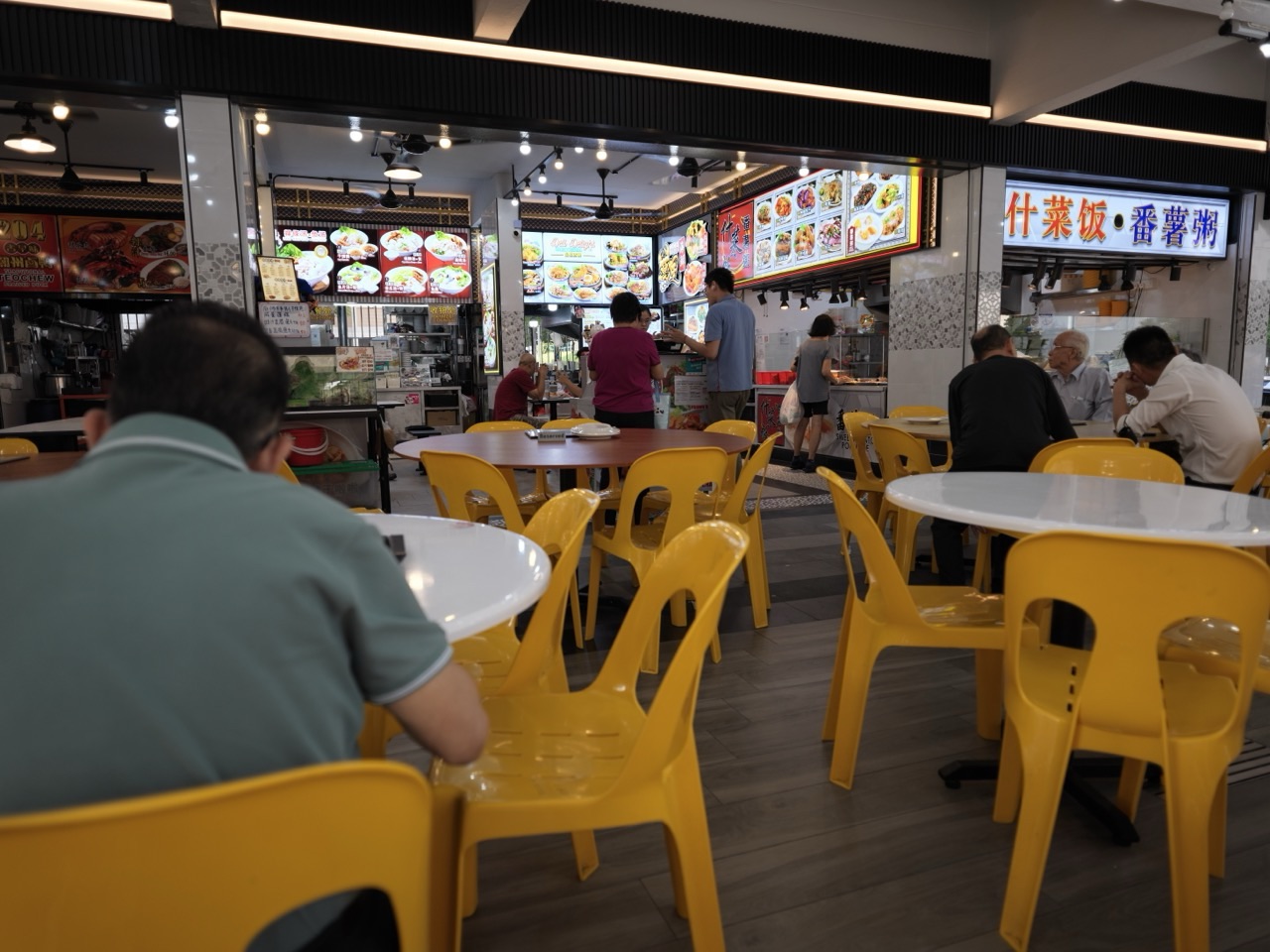
In Singapore, a restaurant, cafe or other qualifying food shop generally needs a Singapore Food Agency (SFA) licence before it opens. As of November 2026, a Food Shop Licence costs S$195 a year and an ordinary Food Stall Licence costs S$32 a year or S$64 for two years. But a small home-based food business generally does not need the same licence, provided it follows strict scale and food safety restrictions. Registration with ACRA alone is not permission to operate a licensed food establishment.
If you searched for SFA food shop licence, GoBusiness food licence Singapore, food hygiene course, WSQ FSC Level 1, SFA SAFE grade A or home-based food business licence, the most important difference is between a business entity, a specific licensed premises, a trained food handler and a current food safety grade. One does not automatically prove the others.
Quick summary: Identify the correct food-business category; check whether SFA licensing is required; secure suitable premises, layout plans and personnel training; apply through GoBusiness; complete any required SFA checks; and do not commence regulated operations until approval and payment conditions have been met. From 19 January 2026, the old A–D snapshot hygiene grading system was replaced by the SAFE food-safety framework. This article explains all these words.
What licence does a food business need?
| Type of operation | Typical SFA route | Published fee |
|---|---|---|
| Restaurant, cafe, bakery or other qualifying Food Shop | Food Shop Licence | S$195 per year |
| Food stall in qualifying food court or canteen | Food Stall Licence | S$32 per year or S$64 for two years |
| Certain hawker/school canteen stalls | Food Stall Licence under reduced fee schedule | S$13 per year |
| Supermarket requiring SFA licence, below 200 m² | Supermarket Licence | S$250 per year |
| Supermarket requiring SFA licence, larger than 200 m² | Supermarket Licence | S$500 per year |
| Temporary fair with qualifying food handling | Fair operator permit plus relevant food stall permissions | S$60 fair permit; no separate extra stall licence fee currently |
| Compliant small-scale home-based food business | Generally no SFA retail licence | Still bound by food safety and home-business conditions |
58 Singapore food shop, hygiene and licence vocabulary words
The third column connects the word to an action. For example, a UEN tells you a business is registered; a Food Shop Licence tells you which licensed activity has been approved; a SAFE grade describes a particular food safety track record.
| Term | Plain-English meaning | How to apply it |
|---|---|---|
| SFA | Singapore Food Agency | Regulates food safety and licensing of relevant premises |
| Food Shop Licence | Permission to operate specified restaurant, cafe or similar business | Current S$195 annually |
| Food Stall Licence | Permission for qualifying stall within eating house, food court or market | Commonly S$32 yearly or S$64 for two years |
| Hawker concession | Reduced licence fee for specified stalls | Some hawker and school canteen stalls pay S$13 a year |
| Supermarket Licence | Licence for qualifying supermarket operations | Fee depends on area and activity |
| Temporary Fair Permit | Permit for qualifying fair operator | Currently S$60 per permit |
| Temporary Fair Food Stall Licence | Separate permission for participating food handling stall | Application processed through operator under applicable rules |
| GoBusiness | Singapore government licensing service | Portal used for SFA food retail applications |
| Singpass | Individual electronic identity | For eligible personal applicant |
| Corppass | Organisation’s authorised digital login | For registered company representatives |
| ACRA | Business registrar | Registration does not replace SFA licence |
| UEN | Unique Entity Number | Entity identifier not proof of food safety approval |
| Licensee | Person/entity named as holder of licence | Licence belongs to specified operator and premises |
| Non-transferable licence | Approval cannot simply move to new owner | Changed licensee/UEN may require a new application |
| Approved premises | Location for which licence is granted | Permission is not universal across multiple shops |
| Layout plan | Scaled drawing showing kitchen and facilities | Needed for many Food Shop Licence applications |
| Metric scale | Measurement notation for layout | Shows dimensions and placement of equipment |
| Pre-licensing inspection | SFA check before certain new approvals | Approval to start may depend on result |
| Photo submission | Approved photograph-based pre-check in some cases | Does not mean every applicant skips inspection |
| Licence fee | Charge payable to issue specified approval | Separate from commercial rent and staff training |
| Licence expiry | Date after which permission must be renewed | Operating after expiry can be offence |
| Renewal | Extension of valid licence | Different from taking over another operator’s licence |
| Licence cancellation | Termination of approval | Previous licensee should cancel when business ends |
| Food handler | Person handling or preparing food and drinks in licensed premises | Must meet applicable approved training requirements |
| WSQ | Workforce Skills Qualifications | System under which approved food safety training is certified |
| FSC Level 1 | Food Safety Course Level 1 | Mandatory qualifying certification for food handlers in SFA-licensed establishments |
| First refresher | Reassessment after initial certificate | Required within five years |
| Subsequent refresher | Following retraining stage | Required every ten years thereafter |
| SOA | Statement of Attainment | Formal proof after approved course assessment |
| Approved training provider | SSG-recognised organisation delivering course | Unverified classes do not automatically qualify |
| Food Hygiene Officer | Trained employee with food safety responsibilities | Requirements depend on establishment type |
| AFHO | Advanced Food Hygiene Officer | Advanced competency relevant to SAFE grade A for certain establishments |
| SAFE framework | Safety Assurance for Food Establishment | 2026 SFA food safety grading regime |
| Category 1 | More substantial processing or preparation establishment category | Additional food safety system expectations for grade A |
| Category 2 | Generally lower-risk food establishment category | Different grading path |
| SAFE Grade A | Good sustained track record or qualifying fast-track | Not identical to a once-yearly appearance inspection |
| SAFE Grade B | Intermediate sustained good track record | Public food safety track-record indicator |
| SAFE Grade C | Major lapse or regulatory sanction | Can prompt more frequent inspection |
| SAFE NEW | New establishment with less than one year of operation | Does not automatically mean unsafe |
| Old A–D grades | Previous inspection snapshot-based food hygiene grade | Replaced from 19 January 2026 |
| FSMS | Food Safety Management System | Formal controls monitoring hazards and procedures |
| Track record | History of safe operation and regulatory outcomes | Important to SAFE grade |
| Demerit points | Points applied for food safety rule breaches | Separate from traffic demerit points |
| Suspension | Temporary loss of licence privileges after breach | Can affect SAFE grade and operations |
| HACCP | Hazard Analysis and Critical Control Points | Approach to identifying and managing food safety hazards |
| Cross-contamination | Transfer of harmful contaminants between foods or surfaces | Avoid mixing raw and ready-to-eat foods |
| Cold chain | Temperature-controlled storage and transport | Helps prevent hazardous food deterioration |
| Hot holding | Maintaining cooked food at safe temperature | Follow SFA guidance |
| Food source | Approved origin of ingredients or prepared food | Licensed businesses cannot source from unlicensed home kitchens |
| Home-based food business | Small-scale food sales prepared in residence | Generally not required to hold SFA licence but still subject to restrictions |
| Catering | Large-scale food service such as buffet lines | Home-based food businesses may not offer catering |
| RTE raw seafood | Ready-to-eat raw seafood | SFA prohibits it for home-based food businesses |
| Food recall | Removal of unsafe food from sale | Can be directed by authority |
| Foodborne illness | Illness associated with contaminated food | Report and respond using suitable health guidance |
| Ready-to-eat food | Food consumed without further cooking | Must be protected against contamination |
| Customer complaint | Report about hygiene, food or safety | May be referred to SFA for relevant investigation |
| Premises inspection | Assessment of licensed outlet | May occur before or after licence issuance |
| Temporary fair operator | Entity organising an event with food stalls | Responsible for relevant permits and stall applications |
The 2026 SAFE framework: what changed?
SFA introduced the Safety Assurance for Food Establishment, or SAFE, framework on 19 January 2026. Previously food establishments displayed hygiene grades A, B, C or D from annual snapshot inspections. The new regime grades eligible licensed establishments by their food safety track records and, in some categories, their implementation of formal food safety systems.
The current SAFE grading includes A, B and C, while newly operating establishments with less than one year of track record may have a NEW grade. A Grade C can follow a major lapse, for example a food safety-related court conviction or suspension under the demerit framework. The grades are therefore not simply a score for how tidy the counter looked during one random visit.
| Current SAFE label | Plain-language interpretation | What not to assume |
|---|---|---|
| A | Qualifying long good food safety record or eligible fast-track | It means zero future risk |
| B | Qualifying intermediate good record | It is an ordinary temporary penalty |
| C | Significant food safety lapse under regulatory criteria | Every meal sold is necessarily unsafe |
| NEW | Less than a year of operating history | New restaurant is automatically a bad restaurant |
| Category 1 or 2 | Type of risk-based establishment | The category itself is a public cleanliness score |
SAFE Phase 1 vs proposed Phase 2
Phase 1 has been effective since January 2026. In Category 1, an establishment with a shorter good record may have a fast-track to Grade A if it appoints an Advanced Food Hygiene Officer and implements a certified food safety management system, subject to requirements. SFA says it will announce more details of Phase 2 by 2027. Do not present the planned future conditions as though every food outlet was already required to follow them on 4 November 2026.
How to apply for a Food Shop Licence
- 1. Determine the activity. A restaurant, canteen, food court stall, supermarket and temporary fair may have different licence categories.
- 2. Check business eligibility. Singapore Citizens, PRs and eligible ACRA-registered entities may apply under relevant licence rules.
- 3. Obtain suitable premises. Check tenancy, zoning and required facilities before spending on major renovation.
- 4. Prepare the layout. Food Shop submissions generally need a scaled plan showing kitchen, sinks, equipment and designated refreshment space.
- 5. Arrange food handler training. Required handlers must have WSQ Food Safety Course Level 1 certification and current registration.
- 6. Apply through GoBusiness. Use your authorised Singpass or Corppass and select the correct SFA licence.
- 7. Complete SFA’s review and any pre-licensing inspection or approved photo checks. Rectify issues if required.
- 8. Pay the licence fee through the authorised method. SFA’s current process says qualifying applicants may start operations only after relevant approval and payment conditions.
- 9. Display and maintain the valid licence, follow SAFE and food safety conditions, and renew appropriately.
Why the food handler course matters
SFA requires food handlers working in SFA-licensed food establishments to obtain WSQ Food Safety Course Level 1 certification from approved providers. The initial course has six hours of training and 1.5 hours of assessment under current guidance. Food handlers must undergo the first retraining within five years, then subsequent retraining every ten years, to keep working in the relevant role.
Some operators misunderstand ‘my chef used to work at another restaurant’ as proof of currently valid food-safety certification. Experience is valuable, but certification and retraining follow a documented framework. A Statement of Attainment, or SOA, may be issued after assessment. The responsible licensee must also update the food handler records under the relevant SFA and GoBusiness procedures.
Food Shop vs Food Stall: the location changes the licence
A standalone eatery with its own seating and food preparation areas may be classified as a Food Shop. An individual stall inside a coffee shop, canteen or food court may be a Food Stall under the relevant conditions. But a stall controlling its own refreshment area can be treated as a mini-restaurant requiring a Food Shop Licence. A licence category is not decided simply by how many square metres the stall’s kitchen occupies.
A food stall also needs proper washing, temperature-controlled storage and food-display facilities. Stalls without the required facilities may be limited to selling qualifying prepacked food from licensed sources. The details depend on the licence category. Before buying equipment or submitting a layout, read SFA’s current specific requirements rather than copy another vendor’s arrangement.
Home-based food business: no licence does not mean no rules
SFA currently does not require an ordinary small-scale home-based food business to hold an SFA licence, but the business remains bound by food safety laws and the HDB/URA home-based business conditions. It cannot undertake catering, provide food to SFA-licensed hawker stalls, restaurants or temporary fairs for resale, or sell ready-to-eat raw seafood under SFA’s restrictions.
| Home-business question | Current guidance | Why |
|---|---|---|
| Can I bake and sell suitable food from home? | Potentially yes under small-scale requirements | Food must be safe and compliant |
| Do I automatically need a Food Shop Licence? | Generally no for qualifying home-based business | Licensing risk category differs |
| Can I provide a large buffet catering service? | No | SFA reserves catering for properly licensed businesses |
| Can a licensed restaurant buy my home-prepared food for its menu? | No under current supply restrictions | Licensed outlets need approved/licensed food sources |
| May I sell home-prepared food at a temporary fair? | No | Different rules apply to fair stalls |
| Can I sell ready-to-eat raw oysters or sashimi? | No for home-based food businesses | Higher-risk food category |
| Do food laws still apply? | Yes | Safety obligations continue regardless of licence exemption |
The label ‘online food business’ also requires care. A purely online intermediary may not need a food retail licence for that activity, but a kitchen actually preparing meals at scale is a different operation. The genuine activity and premises determine regulation, not just whether the food was advertised through an app.
From lease to licence: the document sequence
| Document | Why it matters | Do not confuse with |
|---|---|---|
| ACRA record / UEN | Legal identity of operator | SFA permission to sell prepared food |
| Tenancy agreement | Right to use premises | Proof premises meet food-safety requirements |
| Layout plan | Shows food preparation facilities | Final SFA approval |
| Food handler SOA | Shows a person’s relevant training | Food outlet licence |
| Food Shop or Stall Licence | Authorises relevant operation at specified site | SAFE food safety track record |
| SAFE grade | Indicates relevant regulatory food safety record | A private customer rating |
Clean and safe are not exactly the same thing
A spotless-looking kitchen can still have a cross-contamination problem if raw meat and ready-to-eat foods are handled with the same equipment. Likewise, good food handling includes safe source control, food temperatures, staff training, pest prevention and proper maintenance. The SAFE grade indicates historical compliance performance, not that a particular meal has been tested immediately before a customer receives it.
A customer who observes a hygiene concern should describe what they saw, where and when rather than infer a diagnosis or accuse an identifiable worker without evidence. A food business should document and correct the issue promptly, especially when there is a possible risk to public health.
Four common licensing misunderstandings
| Misleading claim | Better explanation |
|---|---|
| My business has an ACRA UEN, so I can open a restaurant. | Food preparation/sales may need a separate SFA licence. |
| The licence was issued to the previous operator, so I can reuse it. | SFA food licences are not transferable to a new licensee/UEN. |
| All food workers need only take the course once. | Retraining is required within five years and thereafter every ten years. |
| Food hygiene grades still run from A to D in 2026. | SAFE replaced old A–D grading from 19 January 2026. |
| A new restaurant without Grade A must be unsafe. | NEW usually reflects lack of one year’s track record. |
| A small home bakery needs the same licence as a restaurant. | Qualifying small-scale home-based businesses are currently exempt from SFA retail licensing but subject to other rules. |
| A home-based seller may supply any hawker stall. | Licensed food retailers cannot buy food from unlicensed home-based kitchens. |
| Payment of licence fee means food can be sold before approval. | Start operations only after SFA’s required approval and payment conditions are fulfilled. |
Frequently searched SFA food licence questions
How much is a Food Shop Licence in Singapore?
SFA currently lists S$195 per year for the relevant licence.
How much is a Food Stall Licence?
Ordinary SFA Food Stall Licences are S$32 annually or S$64 for two years, with lower fees for certain hawker and school-canteen stalls.
Can I open a cafe once I have ACRA registration?
No. You must check appropriate food retail licensing, premises requirements and all other applicable rules before operating.
What is the SAFE food safety grade?
SFA’s 2026 framework based on track record and, for some categories, food safety management arrangements. The labels are A, B, C and NEW.
What happened to old hygiene grade D?
The old A–D snapshot-based grading system was replaced when SAFE Phase 1 began on 19 January 2026.
What training do food handlers need?
Generally WSQ Food Safety Course Level 1 from an approved provider, with retraining within five years and later every ten years.
Is a licence transferable when buying an existing food shop?
SFA states its food licences are non-transferable; new licensees and relevant changes require appropriate fresh application.
Do home-based food businesses require a licence?
Qualifying small-scale home-based businesses currently do not need the standard SFA food retail licence, but must follow food safety laws and restrictions, including no catering.
Can a home food business supply a restaurant?
Not under SFA’s current rules: licensed retail outlets may not obtain food prepared by unlicensed home-based businesses.
Where should I apply for an SFA licence?
Through the official GoBusiness portal with authorised Singpass or Corppass, following the specific SFA licence instructions.
Four useful vocabulary exercises
| Exercise | What to decide | Skill gained |
|---|---|---|
| 1 | Distinguish food shop from food stall and home kitchen | Choose appropriate regulatory route |
| 2 | Read an SFA Food Shop application sequence | Understand approval versus registration |
| 3 | Compare old A–D grading with 2026 SAFE | Recognise changed terms and dates |
| 4 | Read a supplier invoice from a home kitchen | Spot restrictions on licensed food-retail sourcing |
Related eduKateSG guides
- How Singapore Works | SFA Food Shop Licence and GoBusiness — procedural companion.
- Singapore Vocabulary | ACRA Business Registration — setting up a business entity.
- Singapore Vocabulary | Wet Markets and Neighbourhood Exchange — daily commerce.
- Singapore Vocabulary | SkillsFuture and WSQ — training terminology.
- Master Vocabulary — more practical vocabulary.
Official sources
- SFA: which food retailers need licences — categories and current fees.
- SFA: requirements for Food Shops and Food Stalls — premises and documents.
- SFA: application process and fees — GoBusiness and inspections.
- SFA: Food Safety Course Level 1 — initial and refresher training.
- SFA: SAFE framework — current 2026 grades.
- SFA: home-based food business conditions — limitations and food safety obligations.
Reviewed 4 November 2026. Licence categories and safety controls are activity- and premises-specific. Published fees and future SAFE Phase 2 plans can change; consult the relevant current SFA guidance before business or food-safety decisions.