
Surviving tuition in Anson Road is not about proving that a student can tolerate a heavier academic week.
It is about choosing support that makes schoolwork clearer while keeping travel, homework, meals, sleep and recovery workable.
Anson Road sits beside Tanjong Pagar and the southern edge of the CBD, close to offices, transport links and the new Circle Line Stage 6 corridor. The area can work well for families who need a city-centre handover, but the student’s timetable should remain the main design constraint.
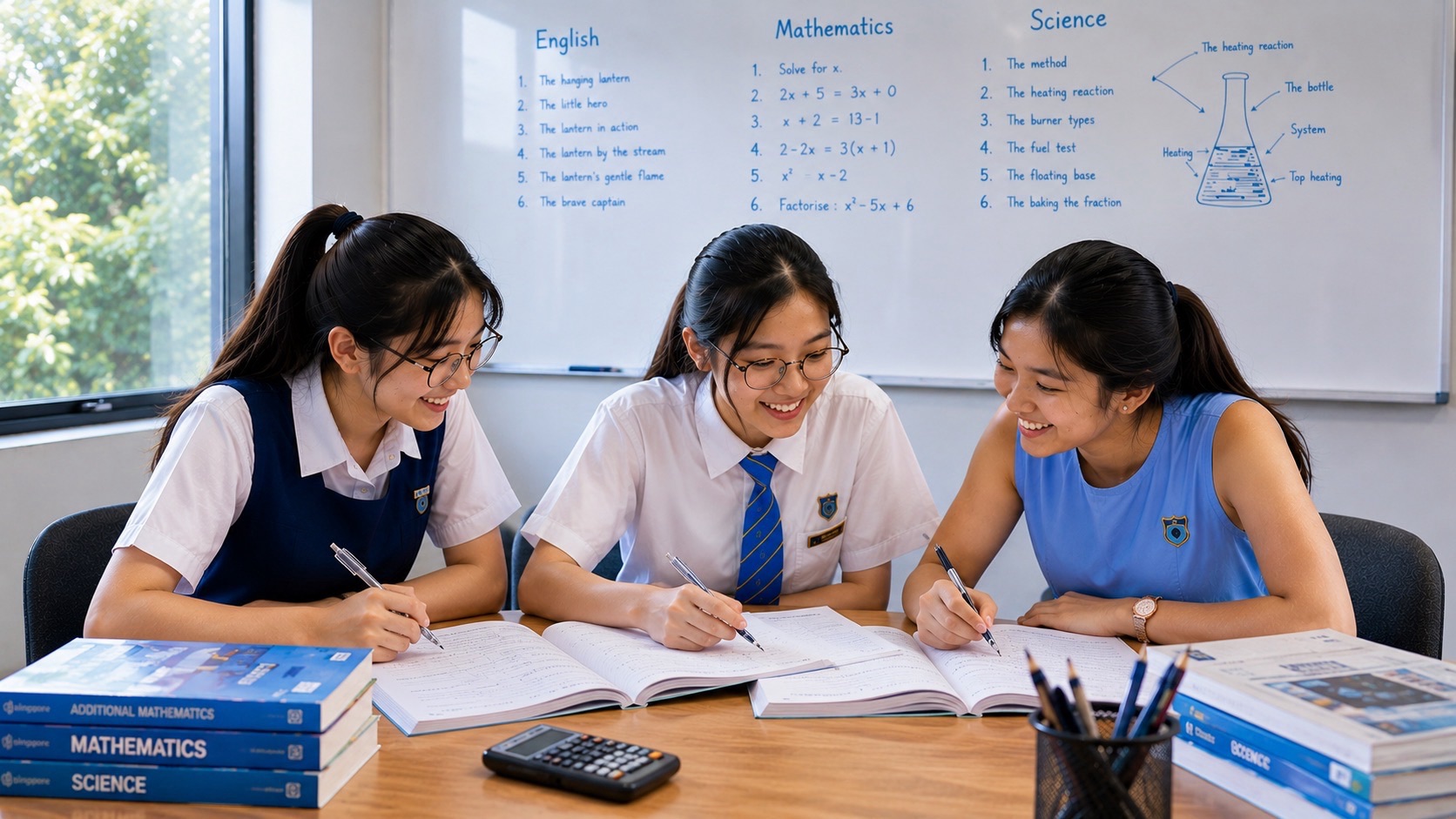
At eduKateSG, our premium 3-pax small-group tutorials are built around close observation, clear explanation, guided practice and focused correction. The point is not to generate the largest possible pile of work. It is to identify the learning problem accurately enough that the student becomes more capable outside tuition.
For Anson Road families, a good tuition arrangement must pass two tests at the same time: the lesson should solve a real academic problem, and the whole journey should still fit a real school week.
Our established 3-pax tutorial format uses about 1.5 hours weekly, with teaching materials, guided corrections and focused continuation work. Confirm the available subject, level, class placement, venue and timetable directly.
Arrange a parent–student consultation with eduKate Singapore
Anson Road Families Need to Avoid Turning Pickup Convenience Into Student Waiting
A parent may finish work later than the student finishes school. If the student waits in the city for a long period, the apparent convenience can become hidden fatigue.
Decide whether the student should meet the parent, travel independently or use a fixed intermediate routine.
The right answer is the one that protects the student’s usable attention and gets the family home at a sensible time.
A workable tuition system is not simply a lesson inserted into a free square on the calendar. It is a repeatable sequence that leaves the student able to learn before, during and after the lesson.
The Lesson Is Only One Part of the Tuition Day
A ninety-minute class sits inside a much larger sequence.
- school dismissal and packing up;
- CCA, consultation or project work where relevant;
- walking, waiting and transfers;
- food and hydration;
- the tuition lesson;
- the return journey;
- school homework and revision; and
- preparation for the next school day.
Judge the arrangement using the whole chain, not only the classroom block.
A longer journey can still be worthwhile when the teaching creates enough improvement to justify it. Better understanding may shorten later homework, reduce repeated correction and make school explanations easier to follow.
The mistake is to count only the lesson and assume the rest of the evening will somehow absorb it.
Tuition Should Have a Specific Job
- repair a weak foundation that is blocking current work;
- help the student keep pace with the school sequence;
- improve recall after teaching;
- reduce repeated careless or procedural errors;
- strengthen English writing or comprehension;
- make Science explanations more precise;
- prepare for a current school assessment;
- build examination timing and checking; or
- extend a student who is already secure.
These are different jobs. They need different teaching choices.
A repair student may need an earlier foundation. A student who understands the content but loses marks under time pressure may need examination execution. A strong student may need unfamiliar applications, transfer and greater precision rather than more repetition.
A student whose largest problem is an overloaded week may need timetable repair before another lesson is added.
Repair, Stabilise or Extend
Repair
Repair begins at the first unstable point affecting current work. A Secondary Mathematics difficulty may begin with fractions, negative numbers or algebraic notation. An English comprehension difficulty may begin with vocabulary or inaccurate reading. A Science answer may fail because the core concept was never secure enough to explain.
Returning to that point is not moving backwards. It is rebuilding the floor beneath the current topic.
Stabilise
Some students understand during lessons but cannot retrieve the method later. Others cope with routine questions but become uncertain when topics are mixed.
Stabilisation uses retrieval, varied application and error review so that understanding remains available after the explanation is no longer visible.
Extend
A strong student may need unfamiliar applications, deeper reasoning, more precise explanation or timed control. Extension should deepen capability rather than turn the syllabus into a race.
Why a 3-Pax Class Can Reduce Wasted Practice
A small group is useful when the tutor uses the extra visibility well.
In Mathematics, the same wrong answer may come from weak arithmetic, poor algebra, misreading, a sign error, wrong method choice or weak checking. In English, a weak response may come from vocabulary, comprehension, organisation, sentence control or insufficient evidence. In Science, the student may know the topic but fail to state the causal relationship the question requires.
Those causes should not receive identical homework.
A useful tutor asks the student to explain decisions, inspects working before it is erased, and reduces prompts deliberately. The objective is not that the tutor speaks more. It is that the tutor obtains better information about what the student can and cannot yet do independently.
With three students, the room is small enough for close observation but large enough for students to hear alternative methods and explanations. That contrast can strengthen thinking when each learner is still required to produce independent work.
What Happens During a 90-Minute Lesson
Warm-up retrieval
Earlier learning is brought back without the model answer immediately visible. This reveals what has survived since the previous lesson.
Diagnosis
Recent schoolwork, marked papers or recurring errors are inspected. The tutor looks for the first point where reasoning becomes unstable.
Concept instruction
The central idea is explained clearly. The student should understand why the method works, not merely what sequence to copy.
Guided practice
The student applies the idea while support is available. Prompts are reduced as control improves.
Independent application
The student attempts selected work without step-by-step direction. This shows whether explanation has become usable knowledge.
Error review and continuation
Mistakes are classified and the next task is chosen for a reason. Continuation work should reinforce the lesson rather than become another uncontrolled syllabus.
Three Original Teaching Examples
The examples below are original illustrations written for this guide. They are not copied from school examination papers and are not reports about particular students.
Mathematics: calculate before deciding
An original problem says a student waits 15 minutes for a parent and then travels 28 minutes to tuition. Another plan has no wait but a 38-minute journey. The totals are 43 and 38 minutes. Ask what else matters besides the 5-minute difference: meal timing, predictability, supervision and whether the first plan regularly becomes longer when work runs late.
The student should learn that a numerical result is evidence, not the entire decision. Context determines what the number means.
English: make the scene observable
Original sentence: “I waited outside the office.” A stronger revision might be: “At 5.40, I stopped checking the lobby doors and opened my book because I knew the message would come when the meeting ended.” The detail shows a routine and the student’s response to it.
Ask which detail carries the situation and which words can be removed. Precise writing is usually stronger than decorative writing.
Science: isolate the factor being tested
An original investigation tests whether a longer wait reduces concentration, but the student sleeps much less on one of the test days. Ask why the evidence is inconclusive. Sleep duration is another variable that can affect concentration.
A follow-up should ask the learner to redesign the investigation so that only the intended variable changes.
Our First-Principles Teaching Method
1. Name the exact weakness
Replace a broad label such as “weak in Maths” with something that can be checked. “The student cannot identify the reference quantity in a percentage problem” gives the lesson a direction.
2. Rebuild only what is missing
When an earlier idea affects current work, return to that idea. Do not repeat every earlier chapter automatically.
3. Use the Fencing Method
EduKate’s Fencing Method begins inside a clear boundary and changes one demand at a time. A Mathematics task may begin with clean numbers before unfamiliar wording is added. A writing task may begin with one paragraph whose purpose is clear before a full composition is attempted.
4. Make the reasoning visible
Ask what the question requires, which information matters and why the first step is reasonable.
5. Close the example and retrieve
A correct answer with the model open is not the same as an independent answer. Remove the immediate example and ask for a related attempt.
6. Change the surface while preserving the idea
Once the method is secure, change the numbers, wording or context. Transfer should be tested rather than assumed.
7. Give continuation work a stopping point
A focused task with a clear end point is easier to begin, easier to review and less likely to expand into the whole evening.
Use an Error Log to Reduce Repeated Mistakes
An error log should be small enough to revisit. Its job is not to record everything the student has ever done wrong.
- name the question type or topic;
- state what went wrong in one sentence;
- write the corrected idea or method;
- attempt one related question later without looking; and
- mark whether the same error returned.
A repeated sign error, unsupported inference or vague Science explanation should eventually become a checking trigger. The student begins to recognise the danger before the same mistake is completed.
Tuition Homework Must Earn Its Place
- retrieve an idea after a delay;
- stabilise one weak method;
- correct a repeated error;
- practise a short timed section;
- prepare for an upcoming school topic;
- rewrite one weak paragraph;
- practise one Science explanation pattern; or
- test whether the student can use the lesson independently.
The amount should be proportionate to the week. Ten carefully selected questions can provide more useful information than fifty generic ones completed mechanically.
When a school week becomes unusually heavy, share the real deadlines. A good tuition plan can distinguish essential work from optional extension.
Continuation work also needs a stopping rule. The student should know when the task is complete rather than watching a small assignment expand into the whole evening.
Anson Road Students Need a Defined Waiting Window
Waiting is not automatically wasted time, but undefined waiting often becomes tiring.
Give the gap a boundary. Eat, read, complete one small school task or simply rest until a fixed departure time.
When the student knows what happens next, the transition into tuition becomes calmer.
Anson Road to Sixth Avenue: Compare Tanjong Pagar and Nearby Downtown-Line Access
Anson Road is close to Tanjong Pagar and other CBD stations, so the practical route depends on the exact address.
One option is to use Tanjong Pagar on the East-West Line and transfer to the Downtown Line at Bugis. Another may involve walking to a nearby Downtown Line station when that is more practical.
Families can use LTA’s Downtown Line information to check the current line connections.
The best route is the one that keeps the whole evening manageable, not merely the one with the fewest theoretical minutes.
Use the Energy–Resources–Time Check Before Adding More
Energy
Can the student still think clearly during the lesson and complete essential schoolwork afterwards? Tiredness is information about the system, not something to ignore.
Resources
Does the student have the correct materials, transport plan, meal arrangement and adult support where needed? Small missing resources create repeated friction.
Time
Is there enough time not only for tuition, but also for school homework, revision, sleep, meals and recovery? A timetable that works only on an unusually light week is not yet a reliable timetable.
When one part fails, adjust the system before assuming the student simply needs more discipline.
Primary Students Need Adults to Protect the Margin
- constant tiredness;
- slow homework;
- irritability;
- careless mistakes;
- frequent forgetting;
- refusal to begin;
- reduced reading for pleasure; or
- growing dependence on adult prompting.
These signs do not automatically mean tuition should stop. They mean the whole system should be inspected.
A child still needs sleep, movement, play, reading and ordinary family life. Tuition should strengthen development rather than occupy every remaining hour.
Parents can protect the margin by removing unnecessary travel, keeping one or two evenings lighter and refusing to turn every free hour into another academic block.
PSLE Preparation Needs Precision, Not Panic
Upper Primary families can become vulnerable to overload because PSLE feels high stakes. More papers, more classes and more revision can seem safer than choosing.
Begin with marked work. Identify whether marks were lost because the idea was unknown, the question was misread, the explanation was incomplete or the execution was inaccurate.
Use short repair tasks when one weakness is clear. Use fuller papers when the purpose is mixed-topic decision-making, timing or paper management.
The closer an assessment becomes, the more important it is to preserve sleep and clear thinking. Exhaustion is not an examination strategy.
Secondary Students Need Greater Ownership
- What is due this week?
- Which assessment is next?
- Which topic is currently weak?
- What should I bring to tuition?
- Which correction remains unfinished?
- Which evening is overloaded?
- What can be moved earlier?
The parent can support the routine without becoming the permanent reminder service. Independence should grow in stages as the student demonstrates control.
A useful weekly habit is to review the next seven days before the week becomes urgent. Put tests, submissions, CCAs and tuition in one view, then move flexible work earlier where possible.
Examination Season Changes the Balance
During examination periods, tuition should become more selective, not automatically heavier.
If a topic is secure, it may need retrieval rather than another full reteaching. If an error is procedural, a short targeted set may be enough. If timing is the problem, use timed sections and checking routines rather than adding more content.
The aim is to improve performance under the real constraints of the paper while protecting enough rest for the student to think clearly.
What Parents Should Ask After a Month
- Can the student explain the main weakness being worked on?
- Are the same mistakes happening less often?
- Is schoolwork beginning with less resistance?
- Can the student attempt more before asking for help?
- Is tuition homework proportionate to the school week?
- Are corrections being completed and revisited?
- Is the travel routine stable enough to protect sleep and meals?
The strongest evidence is not a single unusually good mark. It is a pattern of clearer reasoning, fewer repeated errors and greater independence across several pieces of work.
What Progress Should Look Like
- homework begins with less resistance;
- school explanations are easier to follow;
- questions become more precise;
- the same errors occur less often;
- older material can be retrieved more reliably;
- work is organised more clearly;
- test preparation begins earlier;
- checking becomes more automatic; and
- less adult prompting is required.
Keep comparable examples of work and look separately at accuracy, explanation and independence.
No responsible tuition plan can guarantee a particular grade after a fixed number of lessons.
Class Details
Format: premium 3-pax small-group tutorials.
Typical lesson duration: about 1.5 hours weekly.
Teaching may include first-principles explanation, foundation diagnosis, guided practice, independent application, retrieval, interleaving, error analysis, school-assessment alignment and carefully paced pre-teaching.
Confirm the available subject, level, class placement, venue, fees and timetable directly. This Anson Road guide is an area planning article; it does not claim that eduKateSG operates a classroom at the local station or landmark.
Frequently Asked Questions
Is Anson Road convenient for tuition?
Anson Road can be practical for a city-centre handover, but families should measure actual waiting time and choose the nearest sensible station for the exact address.
Is more tuition always better?
No. More tuition helps only when the additional lesson solves a real learning problem and the student has enough time and attention to use it well.
How do parents know tuition is working?
Look for clearer understanding, fewer repeated errors, more independent attempts, better organisation and more stable school performance.
What should a student bring?
Bring the materials that allow diagnosis: recent marked work, the relevant school file or text, a calculator where required, and any correction the student has not understood. The goal is to work from evidence rather than from a vague feeling that the subject is weak.
Surviving Tuition in Anson Road Should Become Managing Learning
The best outcome is not a student who becomes tougher at enduring pressure.
It is a student who can recognise the problem, make a reasonable first attempt, ask a precise question when help is needed and manage an increasingly complex week with greater independence.
That is the real meaning of surviving tuition in Anson Road: not surviving more work, but building a learning system that can continue.