
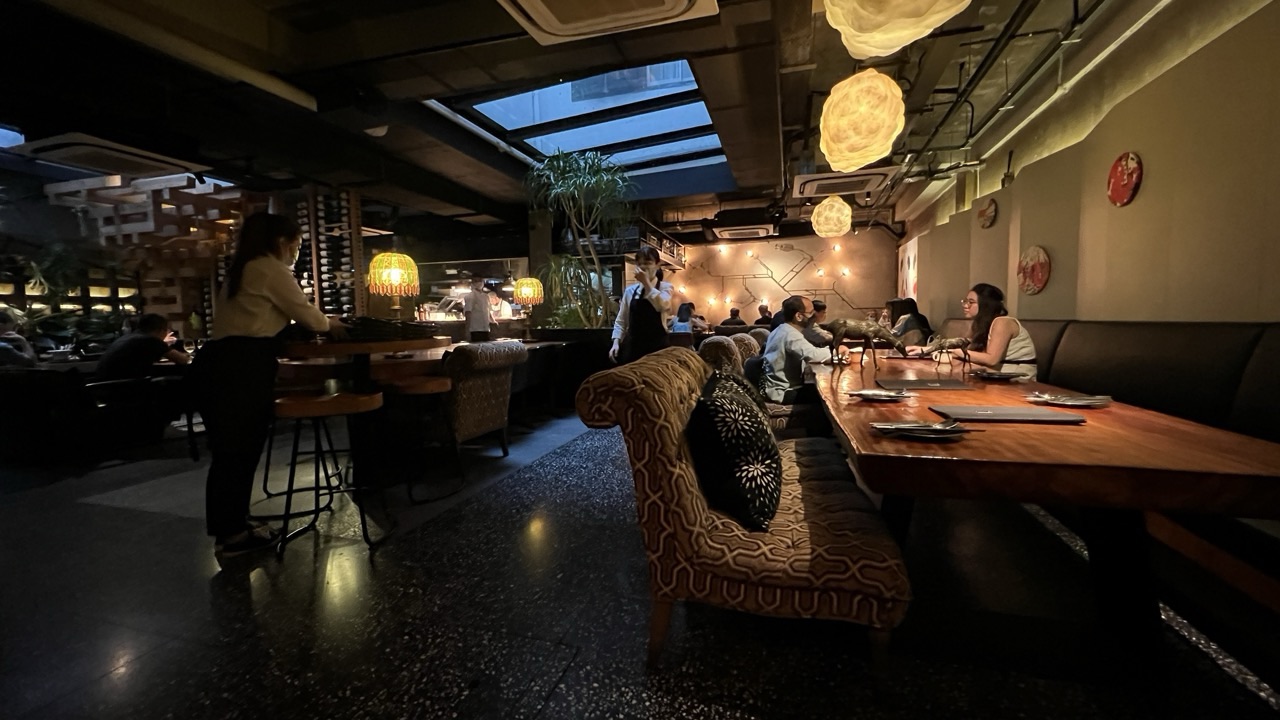
A chef is responsible for far more than a memorable plate. Professional excellence means an entire kitchen can prepare, communicate, finish and serve a dish reliably while protecting diners and staff. This article follows a fictional restaurant from menu design to a busy dinner, showing where judgement, supervision and safer systems change the result.
The eduKate Gold Standard is defined through true management and consistent execution rather than an untestable claim of perfect excellence. The professional chef’s work differs from the baker’s craft, the catering service system, and broader food safety controls; we connect them without reproducing those articles.
The decision at the centre of the chef’s job
The fictional restaurant introduces a popular seafood main course. Taste tests go well, but live service exposes a station bottleneck, missing dietary information and inconsistent ticket timing. Should the chef force the team to move faster or redesign the way the meal moves through the operation? We use that question throughout this guide because a professional kitchen is judged during difficult service, not only during a demonstration.
Navigate the chef’s work
1. A chef owns the meal’s whole journey
A dining room can be delighted by one extraordinary dish and still lose trust when the next table receives something late, incorrect or unsafe. A chef’s profession joins creativity to disciplined service: interpreting a menu, sourcing ingredients, building a team, managing heat and time, protecting diners, adapting to unexpected demand and learning from what returns to the kitchen. The job is not simply the personal performance of the person wearing the tallest hat.
Consider a fictional neighbourhood restaurant with fifty seats and a compact hot line. Its new seafood dish wins praise in a tasting, then struggles on Friday nights. Orders queue while one station waits for another, cooked components lose their intended quality and a dietary request is missed. The gold standard is not to shout for more speed. It is to find the weak handoffs, confirm the limits of equipment and redesign the service so each correct plate can be produced consistently.
Back to chapters · Next chapter
2. Write a menu that the kitchen can genuinely deliver
A menu is a promise made by the whole operation. One item may look simple until its preparation requires a long reduction, a specific pan, a hard-to-source garnish and the attention of the same chef who finishes four other dishes. A professional menu review asks how much preparation belongs before service, what can safely be held, which skills a station needs and what happens when several tables order the same item together.
A chef should map each dish’s ingredient list, cooking sequence, equipment, plating method, allergen information and expected service window. This does not flatten cooking into a factory script; it frees skilled cooks to focus on judgement instead of inventing basic instructions during a rush. A well-designed menu can still be adventurous, but its creative difficulty must be visible to the team planning labour, purchasing and space.
Back to chapters · Next chapter
3. Use mise en place as a reliability system
Mise en place means more than arranging bowls in an attractive photograph. Before service, staff need a deliberate preparation list, clean work zones, identified ingredients, working equipment, current recipes and a shared view of what remains incomplete. A missed sauce or unverified garnish can create improvisation at the worst possible moment. A good chef checks readiness early and flags a shortfall before orders arrive.
The fictional restaurant discovers that its busiest station has enough pans for four orders but sometimes receives seven simultaneous requests. The chef can adjust the menu, prep plan or communication sequence rather than pretend that individual effort removes the equipment constraint. The preparation meeting should identify station bottlenecks, unavailable ingredients, special customer requirements and who has authority to halt or substitute a dish safely.
Back to chapters · Next chapter
4. Specify ingredients by food safety and culinary use
Fresh produce, proteins, grains, herbs, oils and prepared products differ in quality and risk. A chef should know which characteristics are essential to a dish and which variations can be accommodated. Receiving checks consider approved suppliers, packaging integrity, relevant date information, condition and storage requirements. A substitution cannot be accepted simply because two ingredients have a similar colour.
If an approved fish delivery does not arrive, the chef weighs options against food safety, authenticity, allergy declarations and service promises. It may be more honest to remove a dish than quietly switch to a species with different cooking properties or allergen information. Purchasing discipline strengthens hospitality because diners can trust that the food served matches the menu they read.
Back to chapters · Next chapter
5. Separate raw and ready-to-eat work deliberately
One chef may understand cross-contamination perfectly while a crowded kitchen forces raw ingredients and finished plates through the same narrow route. Process design must create appropriate separation, cleaning, utensil control and handling practices. A correct personal habit cannot compensate for an operation that places unsafe materials in the path of food ready for customers.
Singapore’s SFA food-safety tips address storage, thawing and preventing food contamination. The exact controls depend on the premises and food. A chef should ensure workers understand the intended sequence and the reason for it, including during relief shifts. A kitchen that performs correctly only when its most experienced person is present does not yet have a dependable system.
Back to chapters · Next chapter
6. Control time and temperature by product and stage
Temperature is part of both culinary quality and safety, but one universal recipe temperature cannot cover every product or condition. The Singapore Food Agency identifies 5°C–60°C as a temperature danger zone for bacterial growth and describes cold- and hot-holding precautions. A chef must assess the actual cooking, cooling, storage, reheating and delivery processes for the items being sold, using the establishment’s required food-safety controls.
The fictional restaurant prepares a large pot of sauce in advance. It is not enough to say that it was cooked thoroughly and therefore is safe forever afterward. Large quantities can cool unevenly; handling after cooking introduces additional risks. SFA’s temperature-control guidance explains why attention to cooling and holding matters. The chef coordinates appropriate equipment, portions, checks and corrective action rather than treating the chiller door as the end of responsibility.
Back to chapters · Next chapter
7. Understand allergens from the order to the plate
An allergy instruction begins at the point where a guest communicates it. The kitchen may never hear the request if the booking note, waiter’s verbal explanation and point-of-sale ticket do not agree. A responsible chef ensures the team has a clear system for confirming ingredients, identifying cross-contact risks, communicating the order and handling uncertainty. A confident guess at the pass is not an acceptable substitute for verified information.
Imagine a guest asks whether the sauce contains sesame. A chef checks the current recipe, supplier details and handling arrangements instead of relying on yesterday’s memory. If the kitchen cannot establish safe suitability, staff explain the limitation rather than promise the dish is allergen-free. SFA’s allergy and intolerance guidance discusses the risks involved. The true product is the food and the trustworthy information delivered with it.
Back to chapters · Next chapter
8. Train people for the station they actually operate
Kitchen titles can hide different levels of competence. A new cook may be excellent at vegetable preparation yet unfamiliar with shellfish handling, service coordination or closing checks. A chef should define which tasks require demonstrated training and supervision, and should not assign hazardous or high-risk work solely because a shift is short-staffed. Skills grow through explanation, practice and independent verification.
In Singapore, the SFA food handler requirements identify mandatory WSQ Food Safety Course Level 1 training and retraining schedules for relevant food handlers. Training credentials and restaurant-specific competency are complementary. The person who completed a course still needs to learn this kitchen’s processes, equipment, recipes and stop-work escalation paths.
Back to chapters · Next chapter
9. Manage a kitchen brigade through clear responsibility
A kitchen works when prep cooks, station chefs, expediters, dishwashing staff and front-of-house colleagues understand who owns each stage. Authority does not require shouting. It requires reliable priorities and an agreed method for resolving a conflict: what happens when a dish is late, a product is unavailable or a guest has a complex dietary request. The head chef should be able to step back and see the operating system rather than micromanage every plate.
A brief pre-service meeting names likely pressure points, changes and designated decision-makers. During service, the expediting position tracks the whole table, not just one station’s readiness. Afterward, the team can review repeat delays without blaming whichever cook was closest to the problem. A chef who teaches delegation builds a kitchen that can maintain standards across shifts and staff turnover.
Back to chapters · Next chapter
10. Use the pass to verify accuracy, not just appearance
The pass is a final handoff between cooking and dining. A plate may be beautifully garnished and still be wrong for the ticket, miss a side item or belong to a guest with an uncommunicated dietary restriction. Verification should cover correct table and order, completeness, visible quality and relevant service information. Staff need authority to hold a plate when a substantive discrepancy appears.
The restaurant’s fictional seafood dish sometimes arrives before the accompanying vegetables. Rather than rushing a partially complete table, the chef investigates whether tickets and station timings are aligned. A simple sequencing correction may matter more than telling cooks to work harder. The objective is coordinated guest experience without cutting corners on safe handling.
| At the pass | Check | If it fails |
|---|---|---|
| Correct ticket | Table, item, modifications | Hold and confirm order |
| Dietary note | Current recipe and safe handling information | Escalate rather than guess |
| Plate readiness | Appropriate quality and service condition | Correct or remake appropriately |
| Whole-table timing | Courses and stations aligned | Coordinate before sending |
Back to chapters · Next chapter
11. Build quality standards around the dish’s actual purpose
A tasting note such as ‘rich but balanced’ is useful creatively but difficult to train against by itself. Convert the intended sensory result into observable features: texture, portion, preparation method, composition, temperature appropriate to service and consistent presentation. Use photographs as supporting examples, not immutable targets that excuse poor flavour or inappropriate substitutions.
Let cooks taste and compare a prepared dish under supervision, explain what has changed and identify controllable variables. One plate may need more acidity; another may be overreduced because a saucepan stayed on heat too long. The professional conversation distinguishes taste preference from a deviation the menu promises to avoid. The best kitchen documents its standards while leaving room for expert judgement.
Back to chapters · Next chapter
12. Know food cost without allowing savings to conceal risk
Chefs must understand yield, trim, portion size, supplier pricing, spoilage and menu contribution. A dish with expensive ingredients may still be commercially sensible if customers value it and the kitchen can prepare it efficiently. A superficially cheap dish can consume disproportionate labour and oven capacity. Recipe costing is a decision aid, not the entirety of culinary success.
Never turn a safe disposal decision into an individual performance penalty. Workers may otherwise be encouraged to reuse questionable stock or conceal a temperature excursion. Instead separate avoidable production waste from food that must be rejected for safety reasons. Track why ingredients were lost and repair upstream purchasing, storage, forecasting or training issues. Good costs come from reducing avoidable errors rather than taking unacceptable risks.
Back to chapters · Next chapter
13. Handle a customer complaint as operational evidence
A guest reports that food arrived cold, too salty or inconsistent with the stated ingredients. The immediate response should be respectful and appropriate to the concern. Yet the chef’s job does not end with a replacement plate. Record what happened, identify the relevant shift, ticket, recipe or product batch, and determine whether a safety escalation is necessary. Not every complaint proves a defect, but every serious pattern deserves attention.
Suppose one guest reports unexpected nut pieces in a dessert. The chef must not treat it as an ordinary preference. The kitchen should follow its food-safety response processes, preserve relevant information and assess whether affected food needs to be held or other escalation is required. Restoring trust depends on confronting the real risk rather than performing a gracious apology in the dining room.
Back to chapters · Next chapter
14. Protect staff through safe kitchens and realistic pace
Heat, knives, slippery floors, manual handling, machinery and long service periods can create workplace risks. A chef should coordinate with the employer’s risk assessment, maintenance and training arrangements. Appropriate work procedures, functional equipment and clear access are essential. A kitchen in which staff routinely run, bypass safeguards or conceal injuries is not demonstrating admirable toughness.
Consider a repeated slip near the washing station. Telling staff to ‘watch their step’ does not resolve the underlying flow or condition. The management team should investigate the flooring, water source, cleaning frequency, drainage and movement patterns. Similarly, a knife injury deserves a proper response and investigation. Professional kitchen leadership includes creating conditions in which safe actions are practical, not just requested.
Back to chapters · Next chapter
15. Use opening and closing routines to prevent hidden drift
An opening checklist can establish equipment condition, ingredient readiness, cleanliness, correct storage and the status of products prepared in advance. A closing routine confirms remaining stock has been handled appropriately, waste and cleaning tasks are complete, equipment is left in the required safe state and unresolved faults are reported. These routines matter because they connect one shift with the next.
Checklists should not be a performance of ticks without evidence. Inspect a small selection of completed items and ask whether staff understand the reason for each critical control. If the chiller is not performing as expected, the issue must be escalated and food assessed appropriately rather than simply noting ‘checked’. Reliability comes from decisions at exceptions, not a perfect row of check marks.
Back to chapters · Next chapter
16. Use technology where it improves communication
Kitchen display systems, purchasing software, temperature monitoring and recipe tools can make work more visible. They can also spread errors when a recipe changes without updating allergen records or when a ticket printer fails during service. A chef should help design manual contingencies and ensure that digital messages use categories staff understand.
If an ordering tablet sends ‘no sesame’ to one screen while the kitchen uses shorthand that refers to a different ingredient, the digital workflow has not solved the communication problem. Test the whole information route from front-of-house to cooking station and back. Record failures, correct the system and repeat the test. Technology should reduce missed information, not make accountability disappear into another device.
Back to chapters · Next chapter
17. Give apprentices a path from recipe following to judgement
An aspiring chef learns hygiene, knife skills, ingredient identification, basic cooking methods, communication and organisation. Those foundations become valuable when the person can diagnose a dish, sequence tasks and make safe decisions under pressure. A good mentor begins with contained responsibilities and expands them after observing reliable performance, rather than using a busy Friday as a substitute for training.
A useful learning assignment is a single vegetable dish prepared five times. The apprentice records ingredient preparation, relevant timing, taste, texture, waste and service feedback. The chef reviews the differences and asks why they arose. Later the learner might coordinate a small set of orders, subject to supervision. The goal is to develop a professional who understands cause and effect, not merely someone who can replicate an instruction while a supervisor watches.
Back to chapters · Next chapter
18. Plan service recovery before a full restaurant tests it
A missing cook, a failed appliance or an unexpected group can disrupt a restaurant’s entire rhythm. The chef needs predetermined decision rights: which dishes can be temporarily unavailable, who can alter a station assignment, what conditions require a safe hold and how the front-of-house team tells guests about delays. A realistic contingency plan reduces frantic improvisation.
The fictional restaurant loses a key oven halfway through dinner. The wrong response is to move every dish to unsuitable equipment without assessing quality and safety. A better response is to inform the team, reduce the menu where necessary, adjust promised waiting times and prioritise safe, achievable orders. Honesty can preserve goodwill better than accepting orders the team has no credible way to fulfil.
Back to chapters · Next chapter
19. Review what diners experienced, not only what left the kitchen
Kitchen metrics can be deceptive. Average ticket time may improve while certain tables face extreme delays. Food cost may decline while complaints about portion size grow. An apparently successful menu launch may depend on exhausted staff or a particular chef being present. Combine ticket patterns, safety deviations, customer feedback, repeat remakes, waste and staff observations before changing the system.
Start with the seafood dish that was brilliant at tasting but erratic in service. The chef may discover that a garnish is prepared too late, one station receives conflicting tickets and the restaurant advertises more simultaneous choices than its kitchen can support. The gold standard is the willingness to modify the recipe or service sequence so every appropriate diner can receive the promised meal, with flavour and safety intact.
A service-night worked case: the missing allergy note
During Friday service at the fictional restaurant, a diner tells the host that they have a serious sesame allergy. The host notes it in the booking application. A waiter then enters the main-course order into a point-of-sale terminal but does not carry that note across to the kitchen ticket. The chef at the pass sees an ordinary order for the new seafood dish. This is a process failure with potential safety consequences, not a case of the chef needing to cook more carefully.
An effective corrective design identifies exactly how the request moves through booking, seating, order taking, preparation, verification and service. Staff need a way to confirm the relevant ingredients and cross-contact controls; uncertainty requires a suitable alternative or clear disclosure of limitation, not a false assurance. A responsible person should check whether other orders may be affected and treat any actual incident under established safety and reporting procedures.
The learning point is that the final plate is only as trustworthy as the information passing between people. Fixing the immediate order is important; repairing the communication system protects the next diner who may be less able to explain their risk.
Questions to use in a kitchen audit
- Can each chef explain which dish specifications and allergen records are current?
- Does every station know what to do if a safe ingredient or equipment is unavailable?
- Are cooking, cooling and storage practices appropriate for each product and supervised by competent staff?
- Do ticket data, customer requirements and the plate stay connected from order to pass?
- Can staff report a safety concern without pressure to hide waste or delay?
- Are new cooks trained for the specific work they actually perform?
- Are remakes, recurring delays and complaints reviewed as evidence of a system to improve?
Frequently asked questions about chefs
What is the difference between a chef and a cook?
Job titles vary, but chefs often take broader responsibility for menu design, supervision, product quality and kitchen operations while cooks may focus on preparation and execution. Either role can require significant practical expertise.
Do professional chefs need food-safety training?
Yes when they are food handlers in establishments covered by applicable rules. In Singapore SFA states required WSQ Food Safety Course Level 1 certification and retraining timelines; employers must ensure specific handling arrangements and registration conditions are satisfied.
Is an excellent chef necessarily the best creative chef?
Creativity is valuable, but a professional also needs judgement about safe processes, team skills, guest communication, cost and repeatability. A brilliant one-off dish is not the whole service.
How do chefs handle severe dietary restrictions?
They verify product and process information and communicate any limitations. A dish should not be declared free from a particular allergen without evidence and appropriate risk controls.
Can a kitchen guarantee every plate will come out in exactly the same time?
No. Orders, products and incidents vary. The important standard is a reliable process for sequencing, transparent communication, appropriate safety checks and recovery when timing changes.
How can students prepare for culinary careers?
Build foundation skills in safe food handling, measurement, practical cooking, sensory evaluation, organisation and teamwork. Look for supervised training that includes work under actual service conditions.
What would demonstrate improvement after a bad service?
Identify the bottleneck, test a targeted change, compare the next services and confirm that safety and quality have not deteriorated. A promise to ‘be faster’ without changing conditions is not evidence.
Does running a kitchen mean the chef owns every legal duty?
No. A chef’s operational tasks interact with the food business licensee’s obligations and other roles. Assignment of responsibility must reflect the actual establishment, applicable law and professional scope.
Verified official sources and further reading
- Singapore Food Agency: Requirements for food handlers — certification and responsibilities.
- Singapore Food Agency: Temperature control in cooked food — time, temperature and bacterial risks.
- Singapore Food Agency: Food safety tips — storing and handling food.
- Singapore Food Agency: Food allergy and intolerance — avoiding casual assumptions.
- eduKate: Gold Standard of Bakers — bread craft and controlled production.
- eduKate: Career Guidance — evaluating professional pathways.
The gold standard of a chef is a kitchen that delivers worthwhile food through a system people can trust: safe ingredients, clear information, responsible leadership and repeatable care under genuine pressure.