
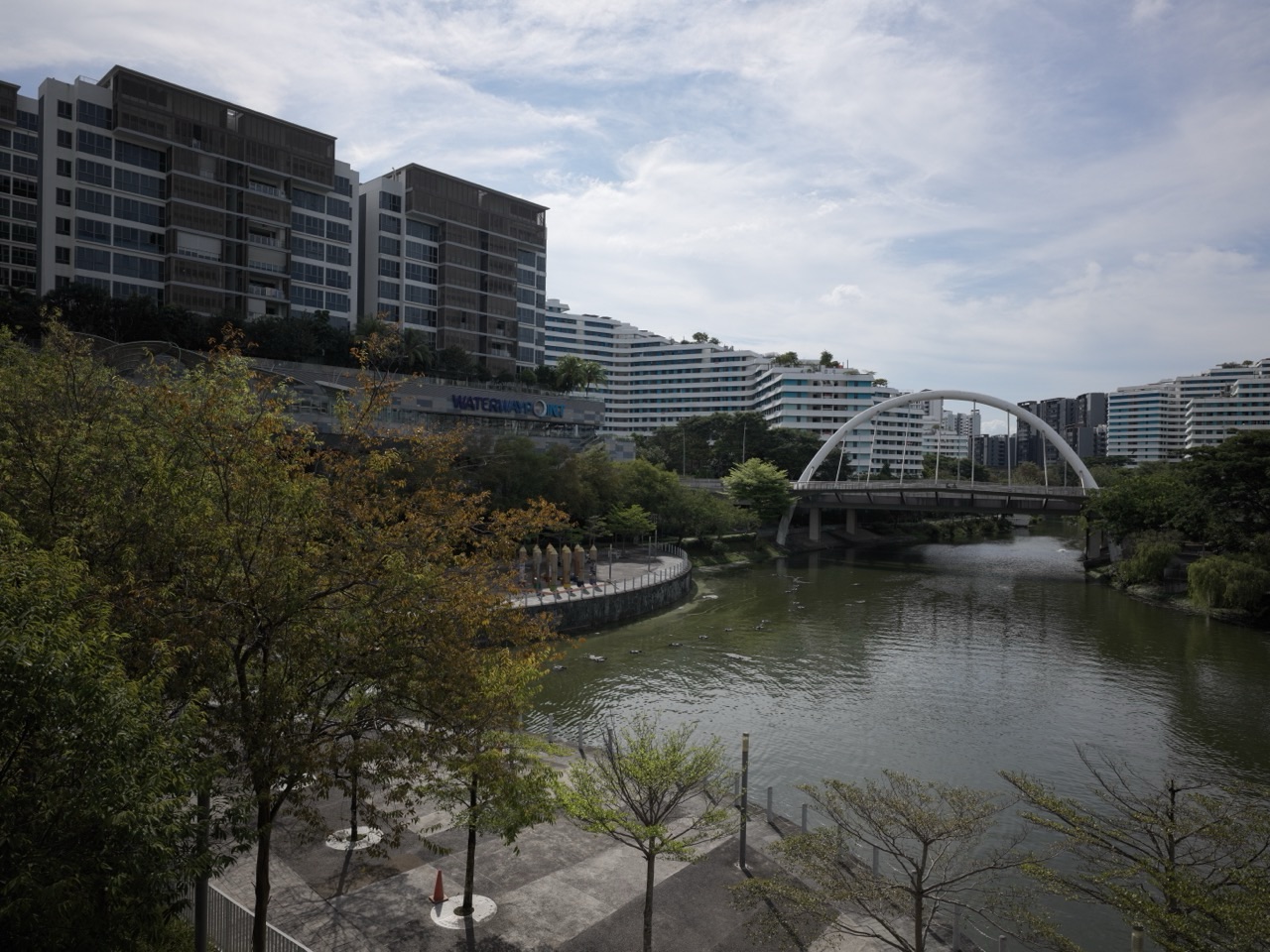
Environmental scientists investigate the quality and functioning of air, water, soil and ecosystems so that people can understand environmental conditions and choose responsible actions. The job is neither simply planting trees nor producing a colourful environmental dashboard. It combines field evidence, appropriate laboratory or modelling work, risk interpretation, legal awareness and honest communication of uncertainty.
This guide follows a fictional assessment of air quality near a planned urban construction site. The first worksheet compares a particle reading collected at one site on a dry morning with another reading from a different location on a rainy afternoon. The numbers look precise, but conditions and measurement methods differ. An environmental scientist must ask whether the readings support the claim being made before anyone calls one location safer.
The eduKate Gold Standard defines excellence through dependable management and consistent execution. This job guide complements Biologists, Civil Engineers and Climate Resilience, while focusing on the environmental scientist’s distinct professional judgement.
Navigate the evidence and professional decisions
Quick answer: what does an environmental scientist do?
Environmental scientists study real conditions and potential changes in air, water, soil, habitats and environmental exposures. They design appropriate investigations, collect or coordinate authorised samples, assess data quality, evaluate impacts, communicate uncertainty and work with responsible regulators, engineers and ecologists. The aim is evidence that improves decisions rather than a report that merely looks technical.
Two readings are not a fair comparison by themselves
Imagine a fictional study reporting 32 micrograms per cubic metre of particulate matter at Location A and 20 micrograms per cubic metre at Location B. Location A was measured on a dry morning while Location B was recorded later during rain. The devices, averaging periods and local conditions may also be different. Saying that one location is always more polluted by exactly 12 micrograms per cubic metre would be unsupported.
These are invented values for teaching, not Singapore readings or advice about personal exposure. Air-quality interpretation depends on the pollutant, reference method, instrument performance, averaging period, background conditions and applicable authority guidance. The scientist’s first achievement is recognising what the numbers do not establish.
1. Start by defining the environmental decision
An assessment may support a development review, pollution investigation, restoration plan, operational improvement or public information exercise. The scientist should know what decision requires evidence and who is authorised to make it. A study intended to characterise construction dust is different from a long-term ambient air-quality trend analysis.
For the fictional construction site, ask what emissions or environmental concerns are relevant, which receptors might be affected and what kind of information the responsible authority requires. The scientist’s role is to frame an answerable question and use suitable methods, not promise that a single round of monitoring can prove every possible effect of development.
2. Distinguish environmental science from environmental engineering
Environmental scientists often assess conditions, processes, exposure pathways and evidence about environmental impacts. Environmental engineers may design and operate systems that control emissions, treat water or manage waste, with distinct professional and statutory responsibilities. The two collaborate closely.
A scientist can identify a potentially significant environmental concern without having the authority to approve a structural or pollution-control design. An engineer should not assume a treatment system works simply because one survey found an acceptable result. Clear boundaries help qualified people contribute their evidence at the right stage.
3. Understand what a baseline actually means
A baseline describes relevant pre-project or reference conditions using appropriate sampling, methods and time coverage. One convenient reading taken on a quiet afternoon is not automatically a complete baseline. Environmental conditions vary with weather, traffic, season and other activities. The study should state which variation it captures and which remains outside its scope.
Singapore’s NEA Development Control resources include environmental baseline study guidance for relevant projects. The scientist should use the actual applicable requirements and professional judgement to decide what constitutes credible reference information rather than label an arbitrary snapshot as the truth.
4. Choose the pollutant or indicator that answers the question
Air particulates, noise, water turbidity, nutrients, soil contamination and biodiversity indicators describe different phenomena. One sensor cannot settle every environmental concern. The measurement must match the pathway through which a project might affect people or nature. A model of dust may not answer a question about disturbance to nearby habitats.
For our fictitious site, airborne particulates might be relevant, but the team must define whether it is studying ambient exposure, specific source emissions or construction-related change. The distinction shapes sampling, interpretation and regulatory consultation. A scientist avoids collecting dozens of unrelated measurements just to make a report appear comprehensive.
5. Specify units, averaging periods and measurement locations
A particle reading without units or averaging duration is easily misinterpreted. Concentrations are commonly represented using mass per volume, but instruments and regulations may specify different procedures. Measurements at roadside height, at a building facade or inside an enclosure cannot automatically be treated as equivalent.
The fictional 32 and 20 microgram-per-cubic-metre values do not become comparable simply because their units match. The scientist also needs sampling duration, instrument, date, weather and placement information. Professional reports put that context near the result rather than hide it behind an unexplained code in a data appendix.
6. Account for weather and background conditions
Rain, wind, humidity and other atmospheric conditions may influence environmental measurements and transport of pollutants. Local emissions and background sources can also change between observations. A scientist should identify which conditions were present and what study design or suitable modelling is needed to distinguish their effects.
A dry morning near road traffic and a rainy afternoon further away represent more than two locations. The readings may reflect a combination of conditions. The report should explain those uncertainties instead of declaring a single location definitively cleaner from this pair of numbers.
7. Separate correlation from attribution to a source
If a construction activity coincides with a rise in measured particulates, the temporal association can be useful evidence. It does not, by itself, prove the site caused all the rise. Other nearby activities or background changes may contribute. Conversely, a lack of a rise in one reading does not necessarily demonstrate that controls always worked.
Source attribution requires evidence and methods appropriate to the actual question. A scientist may coordinate with air-dispersion or engineering specialists and the relevant authority. Claims about causes must match what the study design can distinguish, not the explanation that would be most convenient for a client.
8. Use appropriate environmental monitoring equipment
Sensors can differ in detection limits, measurement principles, calibration needs and susceptibility to interference. A low-cost monitor, regulatory reference instrument and laboratory technique do not necessarily deliver interchangeable numbers. The scientist should understand what each tool measures and whether its performance is suitable for the decision.
If the fictional monitoring stations used different instrument types, the report must examine comparability. A display showing three decimal places cannot establish laboratory-grade accuracy. Reliable environmental practice records the relevant equipment, checks, conditions and known limitations without implying that every sensor has universal precision.
9. Preserve calibration and quality-control evidence
Calibration helps connect measurements with reference standards under the method’s procedures. Quality-control checks, blanks, duplicates or other methods may reveal contamination or instrument drift, depending on the study. Their interpretation belongs to competent personnel familiar with the actual equipment and sample type.
An environmental scientist should know which checks were completed and whether their results permit the intended analysis. A missing calibration record is not cured by making a chart smoother. Conversely, an apparent outlier should be investigated rather than automatically deleted. Quality assurance supports conclusions only when it describes work genuinely performed.
10. Make field notes part of the scientific record
Observation time, location, nearby activity, weather, equipment identification and significant deviations can all help explain a result. Electronic instruments may log numbers reliably while a field notebook captures conditions the instrument does not recognise. A professional should preserve the connection between the two.
A later reviewer investigating an unusual particle peak may need to know whether there was a nearby cleaning activity, traffic queue or sudden rainfall. If those facts were not recorded, the limitation should be acknowledged. Inventing field conditions after the study is more damaging than stating that the information is unavailable.
11. Handle samples with suitable custody controls
Water, soil and other physical samples can be affected by collection methods, container conditions, transport and storage. What is appropriate depends on the substance and the laboratory’s validated method. A sample whose identity or storage history is uncertain may be unsuitable for the original conclusion.
The scientist should plan authorised sample handling and use stable identifiers so results can be linked to the correct site and collection event. This article does not provide chemical or environmental sampling instructions, which require competent procedures and any applicable permits. Traceability protects both scientific accuracy and the people who may act on the result.
12. Treat water-quality data as a separate study problem
A river or coastal study may examine different physical, chemical or biological indicators from an air-quality assessment. Tides, rainfall, flow and site conditions can influence what a single measurement represents. The scientist should choose an appropriate sampling and interpretation plan for the waterbody and the decision.
A result from one location does not necessarily characterise every part of a catchment. Contaminant movement and exposure pathways may require hydrological or engineering expertise. The environmental scientist should explain the evidence and coordinate with relevant specialists rather than transfer an air-monitoring checklist to a water-quality problem without justification.
13. Investigate soil and site history before remediation claims
Environmental site assessment may involve historic land use, potential sources, current exposure pathways and appropriately designed investigations. A former industrial site’s soil conditions cannot be inferred from its present appearance alone. Contamination or remediation decisions require relevant technical and regulatory requirements.
NEA’s Development Control resource centre includes environmental baseline study and site-remediation guidance. A scientist should check which standards, professionals and authorities apply. Announcing that soil is safe because one surface sample looked ordinary would be unreliable and potentially harmful.
14. Recognise when pollution-control studies apply
Not every project requires an identical environmental report, and the applicable approval process depends on the proposed activity, hazards and regulatory framework. NEA maintains guidance for pollution-control studies and related development submissions, including updates as of August 2026. The study’s scope and review authority should be determined before consultants promise a fixed package.
A competent scientist identifies which environmental questions they can answer and which require specific engineering, risk or regulatory inputs. The responsible authority evaluates compliance and approval matters. Producing a long environmental report is not equivalent to obtaining the relevant permission.
15. Explain Environmental Impact Assessments honestly
An Environmental Impact Assessment considers relevant potential environmental effects of a proposed project using an appropriate scoping, assessment and decision process. A project’s need for EIA or specialised technical studies depends on applicable Singapore rules and sensitive-site considerations. The scientist should not tell every client that any small alteration automatically needs a full EIA.
A good assessment describes baseline evidence, likely pathways, significance, mitigation and monitoring in a way that responsible decision-makers can check. It should distinguish proposed measures from those already approved and implemented. Regulatory certainty cannot be created by labelling a document environmental impact assessment.
16. Recognise biodiversity assessment as a specialist component
Singapore’s NParks Biodiversity Impact Assessment guidelines
A generalist environmental scientist should not assume competence to identify every rare animal or evaluate a complex habitat. Appropriate ecologists and permitted fieldworkers need to assess the relevant biological evidence. The professional’s contribution is integrating that work into a wider, honest environmental account.
17. Keep mitigation claims separate from measured outcomes
A project may promise to water exposed areas, install barriers or change work hours. These are proposed controls, not automatically proof that environmental impacts have been reduced. The effectiveness of a measure depends on the actual conditions, competent implementation and suitable evaluation.
If monitoring after a change improves, the scientist should examine whether weather or background emissions also changed. A reduction may be encouraging without being causally established by one comparison. Responsible environmental reporting distinguishes what was planned, installed, observed and verified.
18. Design monitoring that can detect important changes
Environmental Management and Monitoring Plans can connect project risks with assigned actions, measurement schedules, thresholds and reporting roles under appropriate approvals. Monitoring should be proportionate to the actual impacts and decision needs. A dashboard that collects unrelated readings without a clear response route may create an illusion of control.
A scientist should ask what finding would trigger further review, who receives it and what authorised actions are available. The exact technical thresholds and controls belong to applicable standards and site-specific professional decisions. This educational guide intentionally does not prescribe environmental compliance limits.
19. Use models without hiding their assumptions
Air dispersion, water transport, noise and ecological models can help explore scenarios. Their predictions depend on source information, boundary conditions, mathematical choices and validation. A model that produces a colourful risk map is not direct measurement of every place shown.
NEA’s development guidelines
20. Keep exposure and risk distinct
Environmental concentration data may help assess possible exposure, but a measured environmental value is not necessarily the dose any individual received. Real exposure depends on location, duration, behaviour and other factors, with additional health expertise sometimes required. The scientist should not transform one outdoor reading into a diagnosis or personal medical recommendation.
Public communication can state what was measured, the applicable official context and the limitations. Individuals with health concerns should rely on relevant official public-health information and qualified clinicians. Responsible research avoids making environmental science sound like unrestricted clinical authority.
21. Use official Singapore indicators with dates and definitions
NEA publishes official environmental information, while other Singapore agencies maintain related climate, water, land-use and biodiversity records. An environmental scientist should identify the specific indicator, its reporting period, method and revision status before comparing it with project data.
A national or regional monitoring figure cannot always replace a site-specific investigation, and a local sensor result cannot automatically describe national conditions. Readers need to understand which scale each source represents. A good report connects the two without implying that a national average is a measurement at one school gate.
22. Distinguish climate trends from one unusual day
Long-term climate change and short-term weather variability operate at different timescales. An exceptionally hot day can be meaningful for risk planning without independently proving a long-term local trend. A scientist should use appropriate historical data and climate expertise when making statements about change over decades.
For the construction assessment, a rainy afternoon may alter measured conditions, but that observation does not establish future monsoon or climate behaviour. Good environmental analysis chooses a timeframe matched to the question and labels scenarios, forecasts and observed records distinctly.
23. Understand cumulative and neighbouring effects
A project’s effects may add to those of existing roads, industries or other developments. A local mitigation measure could also shift noise, water or pollution toward neighbouring areas. Environmental scientists should examine relevant boundaries and combined exposures rather than judge each site as if it exists alone.
eduKate’s flood-wall market case study
24. Protect data integrity when analysis changes
Environmental reports often pass through field contractors, laboratories, consultants, software specialists and project teams. A data revision can change the interpretation, so original observations, quality flags and major transformations should remain traceable. Removing inconvenient readings without a documented reason can mislead decision-makers.
When a laboratory corrects a result or a sensor is found to have drifted, the report should identify which earlier conclusions are affected. Reconciliation is not an admission of personal failure; it is professional evidence management. A final graph should be reproducible by an authorised reviewer from the appropriate source files.
25. Communicate uncertainty without losing usefulness
A report may contain many caveats, but readers still need to know what the evidence supports and what decision is possible. Lead with the main finding, the measurement context, significant limitations and any need for further qualified review. A highly technical appendix can provide detail without replacing a direct explanation.
For the fictional 32 and 20 microgram-per-cubic-metre readings, a truthful summary states the values and differences in conditions, then explains why an unqualified comparison is invalid. It may recommend an appropriately designed comparable study rather than a confident ranking. Clear caution helps decision-makers avoid acting on weak evidence.
26. Develop the environmental scientist through interdisciplinary skills
Careers may involve environmental consultancies, government agencies, research institutions, laboratories, monitoring companies and industry. Useful skills include chemistry, ecology, physics, statistics, geospatial analysis, field documentation, regulatory understanding and communication. Specialist work may require relevant licences, permits or qualifications, but the general job title is not one universal statutory licence.
A student portfolio can explore a fictional monitoring comparison with correct units, weather metadata, uncertainty and alternative explanations. It should not imitate regulated field sampling without training or approvals. Professional growth comes from supervised experience and knowing when to engage a competent specialist.
27. Judge excellence by decisions that stay defensible
A project may report thousands of environmental measurements and still fail to answer its central question. Good performance considers whether the study’s purpose was clear, baseline and monitoring data fit the decision, methods were appropriate, risks were communicated honestly and unresolved concerns reached their owners.
Return to the fictional construction assessment. The professional result is not a colourful bar chart proving Site A is worse because 32 is greater than 20. It is an assessment that explains the difference in observation conditions and sets out what can be concluded. Environmental science earns trust when people can examine the evidence and understand its limits.
A second worked review: when the sensor changes but the report does not
Imagine a monitoring station was replaced halfway through the study. Both instruments display concentrations in micrograms per cubic metre, but their performance characteristics or calibration histories differ. The project dashboard joins the readings into one continuous trend and shows a sudden improvement. A scientist should investigate whether the apparent change could reflect the instrument transition instead of environmental progress.
The team should preserve the instrument identities, maintenance dates, relevant quality checks and data versions. If an authorised specialist determines that an adjustment is appropriate, its rationale needs to be documented. If comparability cannot be established, the report must identify that limitation rather than draw an uninterrupted line that suggests more certainty than the observations warrant.
This is why a professional environmental report is both a scientific product and an information-management record. Reliable measurements must travel through collection, laboratory or sensor systems, analysis, review and public explanation without losing their meaning.
Environmental scientist quality checklist
- Is the scientific question matched to the actual regulatory or operational decision?
- Are sampling location, time, method, units and reference conditions clearly documented?
- Have instrument suitability, calibration and relevant quality checks been examined?
- Are laboratory samples traceable through appropriate custody and handling arrangements?
- Do EIA, pollution-control and biodiversity study requirements match the particular project?
- Are model assumptions, baseline limits and possible neighbouring effects visible?
- Does a reported improvement distinguish monitoring evidence from untested mitigation claims?
- Can responsible reviewers reproduce the analysis and understand unresolved uncertainties?
Frequently asked questions
What do environmental scientists study?
Environmental conditions and processes involving air, water, soil, ecosystems and impacts, using appropriate measurement, research and assessment methods.
Are environmental scientists the same as environmental engineers?
No. Scientists commonly investigate conditions and effects, while engineers design or operate technical control systems within their own professional scopes. They collaborate.
Do all Singapore projects require an Environmental Impact Assessment?
No. Requirements depend on project circumstances and the applicable authority, environmental sensitivity and technical scope. The specific current requirements must be checked.
Can two air-quality readings be compared directly?
Only when their pollutant, averaging periods, instruments, locations, relevant conditions and study purpose make the comparison meaningful. Matching units alone is insufficient.
Does a higher pollution reading diagnose a person’s health condition?
No. Environmental concentration is different from personal exposure or a clinical diagnosis. Relevant official health guidance and qualified clinicians are appropriate for personal medical questions.
What is an environmental baseline?
A documented characterisation of relevant pre-project or reference conditions under an appropriate study design, not automatically one convenient observation.
What is the role of biodiversity specialists?
Ecologists and other specialists assess relevant habitats and organisms using appropriate methods and permissions, while environmental scientists can help integrate that evidence with broader project questions.
How does someone begin this career?
Develop environmental science, quantitative, field documentation, laboratory or geospatial skills and seek appropriate supervised experience, with required permissions for specific work.
Official Singapore sources and related eduKate articles
- NEA: Development Control — environmental baseline, pollution-control study and air dispersion guidance
- NEA: Environmental guidelines — topic-specific technical references
- NParks: Biodiversity Impact Assessment guidelines, May 2024 — ecological assessment methods and EMMP
- NParks: Long-Term Socio-Ecological Research — studying change over time
- eduKate: Biologists — research design and biological evidence
- eduKate: Civil Engineers — technical delivery and infrastructure interfaces
- eduKate: Climate Resilience — the wider environmental management system
- eduKate: How Haze Works | SEA 2026 — atmospheric context and wider Southeast Asia
The gold standard of environmental scientists is evidence that accurately describes what was measured, distinguishes plausible causes and gives decision-makers an honest basis for protecting people and nature.