
Flower arranging is the art of putting living materials into a design that suits a real person and a real place. A few healthy stems in a stable container can work better than a dramatic arrangement that tips or obstructs the table. The outcome includes how the flowers are maintained, not just their opening photograph.
This Singapore-focused guide teaches composition, cut-flower handling, safe tools, a five-stem beginner project, pet-aware selection and dengue prevention. Its short answer is to plan for use first: choose a suitable clean vase, arrange within the space, keep leaves out of water, and change and scrub vase water every other day as NEA advises.
Part of The Gold Standard | eduKate Singapore, this activity connects with Gardening, Painting and Photography. Flower arranging has its own specific challenge: short-lived plant materials requiring safe daily care.
Quick checklist for a beginner flower arrangement
- Name the actual place and recipient
- Choose legal healthy stems
- Pick a stable washable vessel
- Consider sight lines, visual balance and intended height
- Remove leaves below the waterline
- Follow NEA’s alternate-day vase-water hygiene
- Check household pets, fragrance needs and allergies
Find the flower arranging chapter you need
1. Start from the person and setting, not a bouquet photograph
A flower arrangement has a job. It may welcome a guest, decorate a table, celebrate a graduation or bring colour to a small room. The strongest design considers where it will stand, who will encounter it and how it can remain attractive without causing a practical problem. A large and impressive display is not automatically better than a low and useful composition.
Imagine a fictional household preparing flowers for a dinner with four people. The maker chooses a tall, narrow bouquet that looks beautiful in a close-up photograph. During the meal, the flowers block conversation and the light vase tips when touched. The lesson is not that flowers are unsuitable for dining tables; it is that design begins with the setting.
The gold standard combines aesthetic intention with real-world care. Selection, vessel stability, appropriate materials, hydration, mosquito prevention, personal safety and honest communication must work together. A floral project has not succeeded simply because it looked attractive for the first ten seconds.
2. Write a useful design brief
Before shopping, name the purpose in one sentence: ‘A compact arrangement for the centre of a family table, short enough for everyone to see across it.’ That sentence guides the vessel and number of stems. A reception display meant to be seen from a distance requires a different visual approach; a gift bouquet has to survive carrying.
Ask about the intended recipient’s preferences, access needs and any concerns involving pets, young children or fragrance. If the flowers will be delivered, confirm who receives them and when. A surprise that places an unsafe plant in an animal owner’s home is not thoughtful merely because it is colourful.
The design brief need not be complicated. Write the place, purpose, approximate size, care responsibility and any restrictions. This small decision turns a pile of possible stems into a project another person can actually understand.
3. Choose cut flowers for condition and intended use
Inspect whether flowers and foliage appear healthy enough for the intended display. Bruised petals, collapsing stems and badly damaged leaves may limit how the result looks and lasts. Some flowers are sold partly open and change after purchase; others are already at their most developed stage. A named variety does not guarantee the same vase life in every environment.
The University of Minnesota Extension’s flower-care guidance recommends choosing sound blooms, using sharp clean cutters, placing stems into water promptly and selecting an appropriate container. These are practical principles rather than a guarantee that every arrangement will remain fresh for a fixed number of days.
A beginner should avoid purchasing a huge quantity before testing how the flowers behave in the actual room. An arrangement of fewer healthy stems can be more useful than a mass of fading material assembled only to look impressive.
4. Obtain material lawfully and avoid unnecessary harm
Cut flowers and foliage should come from sources where collection is permitted. A public garden or landscaped estate is not a free cutting ground. Do not collect branches from a nature reserve because a leaf shape might improve the bouquet. A responsible hobby can be creative without damaging the place that inspired it.
Choose appropriate lawful market, florist or permitted home-grown material. Consider whether stems have been treated with products that make them unsuitable for close contact with food or pets. Avoid using unidentified plants when the arrangement will be accessible to children or animals.
Environmental claims deserve care. Locally grown flowers are not automatically lower impact in every circumstance, and imported flowers are not necessarily all comparable. Material waste, transport, handling and the expected use of the design should inform decisions without inventing precise carbon claims.
5. Use a vase whose stability supports the composition
The container determines how stems stand, how water is stored and whether the arrangement tips. Test a vase on the intended surface while it is empty, then consider how the added flowers could change its centre of gravity. A tall lightweight vessel may be unsuitable near an edge or within reach of small children.
A clear glass vase makes water level and cloudiness visible. An opaque vessel can also work if it is clean and accessible for maintenance. Check for cracks, sharp edges or an opening so narrow that stems must be forced in. A design should not sacrifice practical cleaning merely for unusual container shape.
Place the vase where water spills will not threaten electrical equipment or create slippery floors. These checks are part of attractive design because recipients should be able to enjoy the flowers without fearing that ordinary movement will overturn them.
6. Understand focal flowers, support and negative space
A composition may feature a prominent flower, several supporting forms and foliage establishing its outline. Negative space allows the eye to rest and makes the dominant shape clearer. Not every tradition favours a central focal bloom, however, and a learner should understand the purpose of a convention before applying it.
Lay several stems beside an empty vase and compare possible heights and directions. Which plant naturally defines the line of the arrangement? Would removing one flower reveal a clearer relationship among the rest? If stems compete for the same position, more material is not always the solution.
A beginner can learn valuable visual principles with a few stems. There is no requirement to use an odd number in every bouquet or to obey a universal triangle. The method should serve the intended visual and practical effect.
7. Build colour relationships rather than buying every hue
Colour affects mood, contrast and how viewers notice individual flowers. A bouquet with a limited palette can communicate quietness, while a contrasting accent may guide attention. Neither is automatically superior. The chosen room’s lighting and background may alter how colours appear.
Try placing a pale flower next to a similarly pale wall, then against a darker background. Notice which makes its shape clearer. A change of surrounding value can sometimes do more than purchasing additional blooms. The eduKate painting guide develops colour and value in more depth.
A recipient may attach personal or cultural meanings to colour and species. Ask when appropriate rather than declaring every colour combination universally romantic, celebratory or solemn. Good design listens to the person receiving it.
8. Prepare the stems and tools safely
A clean suitable cutter helps make a fresh stem end. Blunt or incorrect equipment can crush a stem or cause the maker to use unnecessary force. Choose a stable work surface, use appropriate supervision for children, and control thorns, sap and sharp tools during preparation.
Penn State Extension’s cut-flower guidance advises recutting stems with clean sharp tools and removing all foliage that will sit below the waterline. Those submerged leaves can decay, reduce water quality and shorten the useful life of the display.
Put stems into prepared clean water promptly. Do not assume every plant benefits from the same trimming or conditioning technique; use suitable flower-specific information where needed. Wash hands after handling plant material, particularly before preparing food.
9. Clean water and vase hygiene are part of craft
Before arranging, wash the vase appropriately and fill it with fresh water. A packet of commercial floral preservative may be useful when mixed according to its stated directions. Penn State Extension explains why the correct mixture and clean water matter; adding random amounts of household chemicals is not a reliable substitute.
Remove submerged plant material and check for debris or cloudy water while the flowers are on display. Do not merely top up an increasingly dirty vase indefinitely. The maker’s responsibility continues after arranging the visible stems.
Singapore adds a public-health requirement. NEA’s mosquito prevention guidance recommends changing vase water every other day and scrubbing the container’s interior, because even clean-looking standing water can become a breeding source. Build that into the actual care plan.
10. Change vase water every other day in Singapore
Singapore’s National Environment Agency specifically advises changing flower-vase water on alternate days, scrubbing the vase’s inner sides and washing flower or plant roots where applicable. Mosquito breeding is a risk even when the water initially appears clean and the blooms still look attractive.
A florist might recommend different watering routines for particular materials, but a local household cannot simply ignore the relevant mosquito prevention guidance. Use a manageable schedule and empty, scrub and refill as advised. A recipient should know this requirement before accepting a water-filled floral gift.
Think of the maintenance as part of the design brief. If the bouquet is placed in a venue where nobody will care for it after the event, plan responsible removal rather than leaving stagnant water in a vase.
11. Keep cats and other pets safe
Flowers are not uniformly harmless to animals. The ASPCA’s plant toxicity information identifies true lilies of the genus Lilium as toxic to cats and warns of serious kidney damage. A flower with a similar common name may belong to a different botanical group, so use accurate plant identification.
Ask about household animals before choosing a gift. Avoid placing known toxic or unknown plant material where a pet can reach it. Pollen, fallen petals or vase water may also require care depending on the species, so the advice should be tailored to the actual plant rather than its decorative category.
If ingestion or exposure is suspected, contact an appropriate veterinarian promptly. Do not attempt home remedies based on a general craft article. The most thoughtful gift is one that can safely share its setting with the recipient’s family.
12. Consider pollen, scent and individual comfort
Some people enjoy fragrant flowers; others experience irritation or allergy-related symptoms around strongly scented or pollen-shedding material. Ask about preferences and relevant sensitivities before filling a small indoor room or arranging flowers near a meal.
Consider guests who use mobility aids, children whose faces may be close to an arrangement and people who cannot easily move around a table display. The question is not whether flowers are inherently good or bad, but whether the proposed form works in the actual environment.
A well-designed bouquet should be easy to enjoy without obliging someone to tolerate discomfort. An alternative plant choice, lower height or more distant placement may solve the problem more effectively than a complicated design.
13. Treat floral foam and wire as conscious choices
Floral foam, frogs, grids, tape and wire can help position stems, but each has a purpose and a material cost. A foam block may be convenient for a particular display while creating waste that needs suitable handling. A reusable support may fit a repeated activity better, but it too must be clean and appropriate to the container.
A beginner does not need to use every commercial product. A sturdy clean vase with a few carefully placed stems often provides enough support. If sharp wires or pins are involved, control cut ends and keep them away from children and pets.
Do not describe a flower arrangement as environmentally sustainable without considering the actual supports, packaging, water and disposal process. Beauty and waste reduction can be compatible when the choices are examined honestly.
14. A five-stem project: one focal, two supporting, two foliage
For a simple fictional family dining-table arrangement, choose one suitable focal flower, two supporting flowers and two foliage stems. This five-stem constraint helps a beginner practise proportion and visual hierarchy; it is not a universal rule that every floral tradition must use the same numbers.
Place the clean stable vase on the actual table and view it from a seated position. Insert the foliage first to suggest the outer line, position the focal bloom where it can be seen comfortably, and use the two supporting flowers to create a balanced but not overcrowded composition.
Step back, check stability and look from another seat. If the arrangement blocks faces or leans, adjust the stems or select a different vessel. A well-managed design works from the position of the people who will actually encounter it.
15. Use a measured height limit without inventing a formula
Suppose the vessel is twelve centimetres tall and the project brief limits total height above the table to thirty centimetres. The visible stem-and-flower section above the rim has an approximate eighteen-centimetre height budget: 30 − 12 = 18. This is a planning calculation, not a floral rule that every arrangement must follow.
The portion of each stem inside the vase must be counted separately when cutting. A visible eighteen-centimetre section requires additional stem length to reach the water and remain stable, and the needed length depends on the actual arrangement.
Use proportion to answer a real question: will the arrangement fit the intended table and sight lines? If not, choosing fewer or shorter stems may be a better design decision than trying to achieve a textbook proportion.
16. Understand tradition without borrowing cultural authority
Traditional floral arts, including Japanese ikebana, have histories, schools and aesthetic principles that deserve study on their own terms. A minimalist personal arrangement is not automatically an authentic school-specific ikebana composition because it leaves empty space.
A learner interested in a particular tradition should look for knowledgeable instructors and trustworthy source material. Ask about the meaning of forms, materials and the relationship between movement and placement. This respects culture without implying only people of one background can learn the art.
Describe an original experiment as such, and credit specific design influences where appropriate. Cultural understanding can enrich creativity without turning meaningful traditions into generic marketing vocabulary.
17. Carry and display the arrangement responsibly
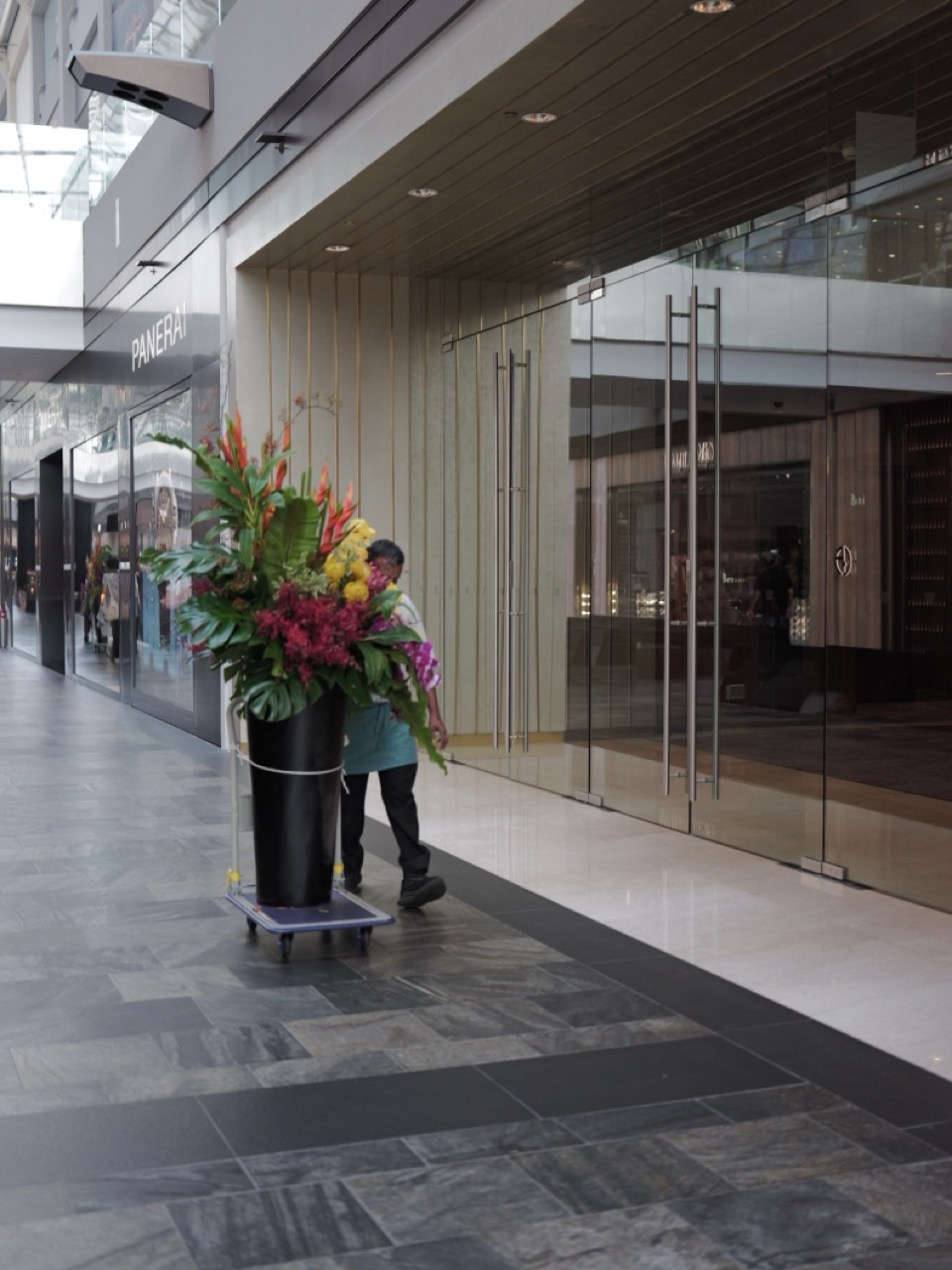
A tall display can become unstable during transport. Support the container appropriately, manage spill risk and ensure no stems or sharp supports extend into people’s paths. For a gift wrapped without a vase, plan how it will be hydrated and transferred to a suitable container after delivery.
At an event, check the movement of guests, visibility of exits and access routes. An arrangement should not hide important signs or create a slipping hazard with fallen water and petals. A public display requires a named person responsible for its upkeep and removal.
Check the design after it has been installed. A bouquet that looked balanced on the workbench may appear very different from the viewing distance or next to a reflective wall.
18. Review freshness and usefulness rather than one photograph
A photograph captures only one moment. A useful review examines whether the vessel remained stable, how clean the water stayed, whether stems wilted prematurely and whether the recipient could maintain the design comfortably. Ask whether the project met its own brief.
Keep simple notes: stem types where accurately known, approximate purchase and display times, the care instructions used and one change for the next arrangement. Avoid claiming an exact species or vase life when that information is not known.
If an arrangement fails, look for a specific variable. Did too much foliage remain underwater? Was the container difficult to clean? Was the design too high? A practical correction creates more learning than declaring the whole attempt unattractive.
19. The gold standard is thoughtful beauty with dependable care
Flower arranging connects colour, form, ceremony and hospitality. It also involves living material that needs water, safe handling and maintenance. Excellent practice therefore includes both aesthetic intention and the recipient’s practical experience.
A five-stem dining-table piece may be a better success than an enormous bouquet if it remains stable, stays within the sight line, respects pets and receives responsible water care. Complexity is not the measure of consideration.
The Gold Standard of Flower Arranging is a clear purpose, healthy material, proportionate design and accountable care. The result is beauty people can actually enjoy rather than a photograph that hides the conditions needed to sustain it.
A five-stem dining-table arrangement: worked decisions
The following is an illustrative design rather than a guaranteed recipe for every flower variety.
| Decision | Illustrative choice | What to inspect |
|---|---|---|
| Container | One stable clean 12-cm vase | No leaks, sharp edges or tipping |
| Main form | One focal flower | Clear visual emphasis without blocking guests |
| Secondary colour | Two supporting blooms | Suitable contrast and balance |
| Line and greenery | Two foliage stems | No leaves submerged in vase water |
| Overall height limit | 30 cm including vase, leaving approx. 18 cm visible above rim | Additional stem length reaches water inside the vase |
| Care | Change water and scrub every other day | NEA dengue prevention guidance followed |
Frequently asked questions
What makes an arrangement suitable for a dining table?
It should be stable, fit the available space and preserve comfortable sight lines. Check from seated viewpoints before declaring it complete.
How often does NEA say Singapore flower vase water should be changed?
NEA advises changing vase water every other day, scrubbing the inner sides and cleaning roots when applicable to prevent mosquito breeding.
Should leaves sit below the waterline?
Penn State Extension advises removing foliage that would remain submerged because it can decay and worsen vase water quality.
Are lilies safe to send to someone with a cat?
True lilies of the genus Lilium are toxic to cats and can cause serious kidney damage. Confirm the exact plant and choose a pet-appropriate alternative.
Do I need floral foam for a small design?
No. A clean stable vase and carefully placed few stems can be sufficient. Supports should be used for a specific structural purpose.
May I cut flowers from public landscaping?
Do not assume so. Obtain relevant owner or land-manager permission and respect protected or managed gardens.
Official and extension references
- NEA: Household Mosquito Breeding Prevention
- University of Minnesota Extension: Fresh Flower Selection and Handling
- Penn State Extension: Clean Vases and Cut-Flower Care
- ASPCA: Lily Toxicity to Cats
- eduKate: Gardening
- eduKate: Gold Standard Master Hub
The featured photograph shows a floral display being moved at Marina Bay Sands; it is not the five-stem hypothetical exercise. This is a craft and household safety guide, not veterinary advice or permission to collect public plants.