
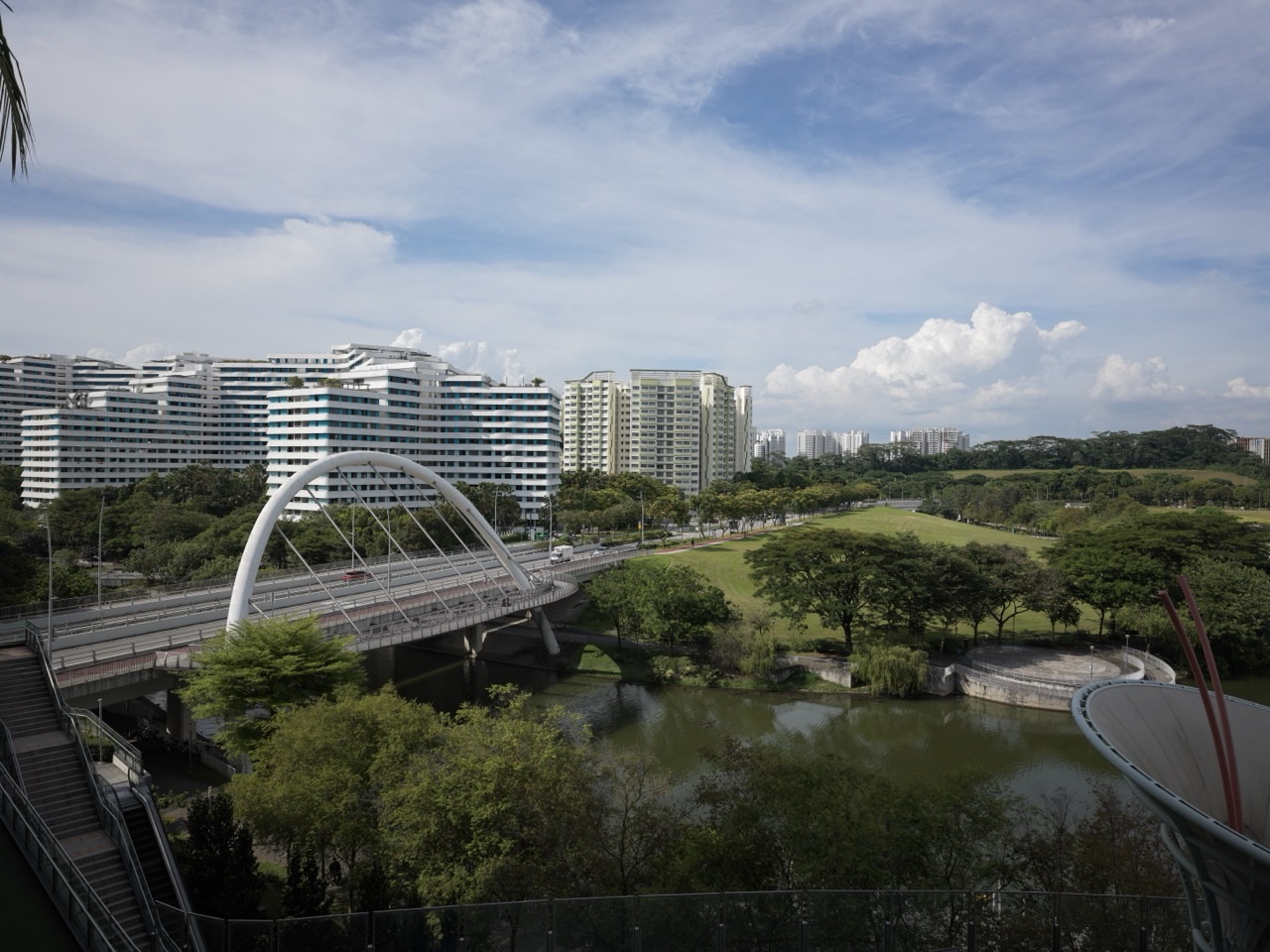
Read the infrastructure chapters in order or choose a specialist sub-article. The ecosystem directory connects engineering, construction, water, transport, power and public-service quality without pretending that one technical discipline covers all of them.
Chapter navigation
- Chapter 1
- Chapter 2
- Chapter 3
- Chapter 4
- Chapter 5
- Chapter 6
- Chapter 7
- Chapter 8
- Chapter 9
- Chapter 10
- Chapter 11
- Chapter 12
- Chapter 13
- Chapter 14
- Chapter 15
- Chapter 16
- Chapter 17
The Gold Standard of Infrastructure is a practical guide to planning, building, maintaining and renewing the systems that allow everyday life to function: water, electricity, transport, drainage, communications, public buildings, waste services and safe public spaces. The ultimate measure of infrastructure is not how impressive an asset looks at opening. It is whether people can depend on its essential service under ordinary and difficult conditions.
A station may look complete yet be difficult to navigate. A pumping station may have powerful equipment but fail when its controller loses a signal. A road may carry today’s traffic while gradually accumulating hidden drainage and maintenance problems. Infrastructure quality therefore extends beyond a single engineering calculation: human need, accessibility, safe design, interfaces, operations, finance and responsible renewal must be connected.
This is a world-facing educational overview, not a technical design standard or a certification of any project. Examples are fictional teaching illustrations. Engineering codes, legal obligations, licensing and safety rules depend on the jurisdiction and type of asset; real technical decisions require qualified people and governing requirements.
1. A bridge is an asset; safe passage is the service
Infrastructure is easy to describe through physical objects: tracks, pipes, cables, roads, reservoirs, substations and buildings. People experience something different: reaching work, drinking safe water, visiting a clinic, communicating with family and crossing a street without unnecessary danger. The objects matter because of the journeys and services they enable.
This distinction changes project evaluation. A utility may report that a new piece of equipment was installed and tested while customers still suffer interruptions because connections, staff training or maintenance resources were overlooked. The gold standard measures both the asset and the service received by actual users.
A network can meet an annual performance target while a small community experiences repeated outages. Average travel times may improve even as people dependent on a particular transfer face longer journeys. The right questions include which users benefit, where service remains fragile and whether people with disabilities or limited resources can access the infrastructure.
2. Start with needs, demand and the wider system
A useful project begins with a service problem, not a preferred structure. Is the issue insufficient capacity, recurring failure, safety, changing demand, poor access, environmental stress or age? A bigger machine may be the wrong response if the bottleneck is an uncoordinated interface or a missed maintenance task.
Define the people served, the existing service level, foreseeable demand, critical constraints and owners of neighbouring systems. Identify who controls roads, power, communications, water, land and approvals. The diagram may show the network, but the practical question is whether an accountable person exists for each handoff.
A good options appraisal compares lifetime cost, maintenance, operational energy, environmental harm, adaptability, construction disruption, resilience and inclusion. A scheme that appears inexpensive at handover may leave high costs to the people who operate it for decades. The evaluation should say which assumptions could change the recommendation.
3. Translate a public need into testable requirements
Requirements convert an intended service into statements that can be checked. A pedestrian crossing may need a safe location, adequate crossing time, clear signals, accessible routes, suitable drainage and understandable information. A treatment facility needs to achieve quality and reliability requirements while monitoring and handling deviations.
Each critical requirement needs a verification method and a responsible party. That does not mean every worthwhile value reduces to a single number. Dignity, comfort and perceived safety can need careful engagement and qualitative evidence. The gold standard is to explain how a judgement is made, what evidence supports it and whether the result is fair to different users.
Requirements must remain connected through design, procurement, construction, commissioning and operation. If a feature disappears during a late value-engineering change, the project should expose which original user need is now affected instead of silently redefining success.
4. Engineering networks fail through dependencies
A pump may depend on power, sensors, a controller, communications and a downstream pipe with available capacity. A railway may depend on signals, substations, drainage, tunnels and trained controllers. Assets that appear healthy in isolation may nevertheless fail collectively when an interface is missing or a common hazard affects several systems.
A dependency map asks what each asset needs, what other services depend on it and what happens when it becomes unavailable. Where consequences warrant it, engineers and operators can examine alternatives, safe isolation, warning systems, backup capacity, manual recovery and coordination with responders.
Redundancy is not automatically resilience. Two identical pumps sharing a vulnerable electrical panel may stop together. Two access roads can both flood during the same event. A good plan looks for common-cause failure and checks recovery under realistic, approved conditions.
5. Ground, structures and the uncertainty of real sites
Physical infrastructure responds to its environment. Soil conditions, groundwater, corrosion, nearby structures, buried utilities, slope movement and access restrictions can change what is safe and practical. Geotechnical investigation, surveying, modelling and monitoring reduce uncertainty, but no single survey proves that every hidden condition is known.
Structural calculations need dependable load paths, realistic boundary conditions and credible materials. Public buildings also need working mechanical and electrical systems, drainage, fire protection, ventilation, lighting and maintainable access. Disciplines cannot simply finish their own drawings and hope the interfaces align.
A field change should be checked against design intent and the installed state. A contractor may move a service route for easier installation without noticing that the new location blocks future inspection access or conflicts with another safety system. Configuration control preserves the connection between the drawing and what people actually use.
6. End-to-end transport matters more than an isolated link
Roads, rail systems, ports and airports provide useful capacity only as parts of journeys and supply chains. A convenient station platform can still be difficult to reach if the accessible route is long or unreliable. A wider road can move congestion into the next junction. A new port berth without dependable landside connections may deliver little improvement.
Assess a whole journey: waiting, walking, transfer time, clear wayfinding, step-free access, safe crossings, peak congestion, disruption management and recovery. For freight, include terminals, customs processes, storage, communications and the delivery chain. Human experience reveals failure modes that an isolated engineering metric may overlook.
7. Water, wastewater and drainage connect city life
Water systems include sources, storage, treatment, distribution, consumption, collection, wastewater treatment and return or reuse. Each stage faces different hazards. Treatment must achieve required quality; distribution must preserve that quality; monitoring and operators must detect problems and act. Reliable service is the performance of the chain, not one piece of equipment.
Stormwater flows through streets, inlets, pipes, channels, ponds and receiving waters. Even a correctly sized drain can lose capacity when debris blocks the inlet, a culvert is inaccessible or new construction changes the catchment. Inspection and upkeep are integral to hydraulic performance.
Green and blue infrastructure can contribute to cooling, flood management, habitat and amenity, but the design must account for soils, plant health, maintenance, hydraulic limits and local context. Describing a feature as nature-based does not establish that it can replace every conventional safeguard.
8. Energy and communications support every other sector
Hospitals, water treatment, railways, traffic controls and digital services rely on electricity and communications. These enabling networks need appropriate protection, monitoring, redundancy, cyber resilience, maintenance and coordination with the organisations they support.
A backup generator starting successfully does not prove essential loads received power. The complete transfer path, switchgear, protection settings, circuits and safe return to normal supply must be checked. Equally, a communications antenna can be operational while the dependent control system fails to receive the data it needs.
A resilient plan distinguishes essential and non-essential loads, required restoration priorities and the people who must coordinate a disruption. It also asks what happens if several shared resources are unavailable at once.
9. Quality evidence must be created while work is visible
Many construction defects are difficult to investigate after reinforcement is covered, cables enclosed or foundations buried. Appropriate hold points, tests, material records and as-built measurements should be captured during the work. The objective is not simply to collect photographs: evidence must correspond to a requirement, location, date and accepted version of the design.
Changes are inevitable in complex projects. New materials, altered routes and faster sequences may affect durability, safe access, testing or other trades. A quality process records the change, obtains appropriate approval, verifies its consequences and updates the documents that future operators will use.
A project is not truly handed over merely because its main structure is standing. People need safe access, integrated tests, operating instructions, maintainable components, current records and a clear account of unresolved issues.
10. Commissioning tests operating sequences, not just components
A pump can work, a sensor can read correctly and an alarm panel can pass a self-test while the complete system fails because a valve never opens. Commissioning follows the intended function across connections, realistic operating conditions, alarms, degradation and recovery.
A suitable process checks installation completion, instrument accuracy, controls logic, equipment behaviour, cross-system interfaces and training. Failed tests should remain traceable, corrective work should be recorded and affected tests should be repeated rather than merely relabelled.
The final acceptance decision should distinguish what has been verified, what remains untested and who owns follow-up actions. Operators must receive accurate information about how to keep the performance dependable.
11. Operation and maintenance are part of design
Traffic patterns change, equipment wears, vegetation grows, climate conditions shift and software receives updates. Good asset management maintains an accurate inventory, monitors condition, prioritises work by consequence and coordinates spare parts, access and trained personnel.
Not every asset requires the same maintenance approach. Some components can be run to failure with limited impact, while critical functions need scheduled tests or condition monitoring. The choice should reflect credible failure mechanisms, detectability, service impact and technical constraints, not an arbitrary checklist.
The public deserves useful communication during disruptions: what is affected, how to stay safe, what alternatives exist and when further information will be provided. Accurate communication is not separate from infrastructure service quality.
12. Resilience requires the ability to recover
Resilience is broader than reliability during normal operation. Operators consider credible storms, floods, heat, power losses, cyber incidents, supply-chain problems and changing demand, as relevant. They define essential service levels, realistic response arrangements and a process for restoring capability.
System resilience needs cooperation. A water treatment plant can be robust yet depend on electrical supply, treatment materials, skilled operators and a distribution network. The United Nations Office for Disaster Risk Reduction therefore addresses infrastructure resilience as an interconnected service problem, rather than a collection of isolated strong assets.
Future conditions remain uncertain. Flexible designs, review triggers, monitoring and adaptation plans are often more trustworthy than pretending that a single forecast is guaranteed.
13. Worked case: a flooded urban underpass
In this fictional example, a road underpass collects water after heavy afternoon rain. A bus route is diverted and residents ask why a recently upgraded drainage scheme did not prevent flooding. This is a teaching scenario, not a report about an actual road or a recommended engineering specification.
The first priority is safety: restrict unsafe access and coordinate authorised road and emergency response. The technical team preserves rain data, pump status records, maintenance logs, inlet conditions and design assumptions. It separates the observed flooding from proposed causes such as excess inflow, clogged drains or electrical failure.
Suppose the pump worked correctly but a temporary construction site caused debris to accumulate at an upstream inlet. The original pump acceptance test would not have detected the problem. The investigation checks catchment conditions, debris management, inspection access, warning arrangements and the interface between construction works and the drainage operator.
Possible actions may include cleaning access improvements, an adjusted inspection programme, debris control, monitoring and a deeper capacity assessment. Installing a larger pump alone would not resolve a blocked inlet. Each response needs a responsible owner, evidence of completion and a plan to assess performance in future events.
The lesson is that engineering, operations, public communication and changing urban conditions are one practical system. A gold-standard decision follows the causal chain rather than selecting the most visible piece of equipment to blame.
14. Worked case: backup power at a community clinic
A fictional clinic has a generator tested every month. During a supply interruption, the generator starts correctly, yet one essential treatment room remains without electricity. The manager initially believes the generator failed, but the available facts do not support that explanation.
A competent team would examine the transfer sequence, distribution, circuit assignments, protective devices, load assumptions and evidence from integrated testing, while following electrical safety requirements. The actual defect might be a disconnected critical load or outdated switchgear configuration.
The example shows why a continuity promise must be verified from the backup source all the way to the required function. A machine is not the same as the service people were relying upon.
15. Public value, accessibility and honest choices
Public infrastructure should serve people with different abilities, ages and resources. Consultation is most useful before design decisions become costly to reverse, and accessibility should be checked in real routes rather than only on drawings. A design may be legally compliant yet still reveal opportunities to make daily travel and use meaningfully easier.
Project choices involve unavoidable trade-offs: price, disruption, speed, land use, environmental effect, security and future adaptability. The goal is not a claim that every interest is perfectly satisfied. It is to make the reasons, evidence, alternatives, impacts and decision owners understandable.
People should also be able to learn how a problem is reported, when action may be taken and what temporary protection is available. A transparent repair process can strengthen trust even where a system cannot offer uninterrupted perfection.
16. Choose the route that fits your responsibility
For policymakers and asset owners, begin with services, critical dependencies and lifecycle funding before commissioning an expensive new structure. For engineers, connect requirements to real performance, identify interfaces and keep the important assumptions visible for future review.
For operators, identify safety limits, failure signs, emergency arrangements, maintenance priorities and the records that need updating after change. For residents and students, take a familiar bus ride, electricity outlet or tap and trace the hidden network that makes the service possible. Ask what happens when one component stops and who is responsible for restoring it.
17. Infrastructure performance scorecard
A useful scorecard asks whether the human need is clear; different users can access the service; critical interfaces are mapped; requirements remain testable; construction matches approved plans; operators have reliable records; maintenance is funded; hazards and degraded states are understood; environmental effects are considered over the lifecycle; and unresolved risks have accountable owners.
A scorecard cannot replace technical evidence. Its purpose is to reveal the next question and the next responsibility before the project is described as complete.
18. Infrastructure specialist article directory
The following companion articles are published within the eduKateSG Gold Standard ecosystem. Each explains a specialised field or service; links are grouped by practical dependencies rather than publication date.
Networks and public service
- The Gold Standard of Digital Infrastructure
- The Gold Standard of School Infrastructure
- The Gold Standard of Public Infrastructure Inspection
- The Gold Standard of Airport Management
- The Gold Standard of Port Management
- The Gold Standard of Urban Planning
- The Gold Standard of Public Service Delivery
Civil structures, ground and transportation
- The Gold Standard of Civil Engineering
- The Gold Standard of Structural Engineering
- The Gold Standard of Geotechnical Engineering
- The Gold Standard of Railway Engineering
- The Gold Standard of Railway Signalling Engineering
- The Gold Standard of Railway Electrification Engineering
- The Gold Standard of Railway Maintenance
- The Gold Standard of Pavement Engineering
- The Gold Standard of Urban Cycling Infrastructure
- The Gold Standard of Urban Walkability
Water, wastewater and drainage
- The Gold Standard of Water Management
- The Gold Standard of Water Treatment Reliability
- The Gold Standard of Water Treatment Plants
- The Gold Standard of Water Treatment Engineering
- The Gold Standard of Wastewater Treatment Plants
- The Gold Standard of Urban Wastewater Management
- The Gold Standard of Urban Drainage
- The Gold Standard of Urban Drainage Inspection Records
- The Gold Standard of Urban Stormwater Design
- The Gold Standard of Stormwater Harvesting
- The Gold Standard of Flood Early Warning
- The Gold Standard of Urban Flood Resilience
Energy, climate and ecological infrastructure
- The Gold Standard of Electric Grid Resilience
- The Gold Standard of Energy Management
- The Gold Standard of Renewable Energy Engineering
- The Gold Standard of Coastal Protection
- The Gold Standard of Coastal Engineering
- The Gold Standard of Urban Heat Management
- The Gold Standard of Urban Green Infrastructure
- The Gold Standard of Urban Blue Green Infrastructure
- The Gold Standard of Urban Permeable Pavements
- The Gold Standard of Climate Resilience
Infrastructure is a network. A transport project may depend on drainage, electricity, ground conditions and accessible design at the same time. Follow the route most closely related to your question, then examine its adjacent domains.
19. Frequently asked questions
What is the gold standard of infrastructure?
Dependable, safe, inclusive and adaptable service throughout the asset’s life, supported by engineering evidence, competent operation, honest limitations and accountable maintenance.
How is resilience different from reliability?
Reliability asks whether a system works as intended under defined conditions over time. Resilience also examines preparation for disruption, limited harm, recovery and adaptation when conditions change.
Why does new infrastructure need a maintenance plan?
Because assets wear, environments change and operators need access, supplies, records, training and funding. A perfectly commissioned project may deliver short-lived benefit if it cannot be maintained.
Can an AI maintenance tool replace a physical inspection?
AI and sensors can identify candidate issues, but their readings, models and boundaries require validation. Safety-critical field work remains subject to relevant professional and regulatory requirements.
Why measure services as well as assets?
People need water, movement and energy, not isolated pump scores. A collection of correctly functioning components may still deliver an unreliable service when the connections are weak.
Primary sources and ecosystem routes
- UNDRR — Principles for Resilient Infrastructure
- UNDRR — Handbook for Implementing the Principles
- UNOPS — Infrastructure
- UNOPS — SustainABLE Infrastructure Tool
- The Gold Standard of Engineering
- The Gold Standard of Engineering Services
- The Gold Standard master hub
The gold standard begins with an essential human service, connects every system responsible for it, proves performance under real conditions, keeps assets useful after handover and makes limitations visible. Good infrastructure earns trust across time, not only on opening day.