
A haulage company wants to register a new heavy lorry but cannot find a long-term lot in a traditional licensed heavy-vehicle park. It has written permission to use a suitable industrial depot at night. Since September 2026, LTA offers a new free online lodgement of that approved overnight location, but only for specified vehicles and non-residential premises. A saved private letter alone is not an LTA acknowledgement, and public roadside parking remains prohibited.
The Gold Standard of LTA Heavy Vehicle Overnight Parking Lodgement Services is an accurate and verifiable pathway from the correct heavy-vehicle identity and genuine site consent to an official parking record, valid dates, a lawful vehicle registration or road-tax handover and responsible real-world overnight parking. It gives industry more flexibility without transferring truck parking hazards to neighbourhoods.
The Land Transport Authority’s 14 September 2026 announcement introduced the service on 15 September 2026. It is free, permits periods from one day to two years, excludes trailers and requires the premises owner’s or lawful occupier’s written consent. A valid acknowledgement can replace the ordinary Vehicle Parking Certificate evidence for eligible registration, transfer and road-tax transactions.
The new 2026 parking compliance pathway
The chapters distinguish the traditional Vehicle Parking Certificate, the free private-premises lodgement, trailers under a separate trial, permitted parking sites, official consent, acknowledgement and actual safe overnight use.
1. Start with the overnight parking obligation
Singapore’s heavy-vehicle parking controls are intended to prevent lorries, buses and specialised heavy vehicles from being left indiscriminately on roads or near homes during the night. A business that registers a vehicle must show an eligible place where that vehicle can lawfully stay.
The longstanding Vehicle Parking Certificate scheme ordinarily requires designated overnight parking between midnight and 6am. From 15 September 2026, a properly acknowledged lodgement at qualifying private premises became an alternative for eligible heavy vehicles. That is not an exemption from safe parking requirements.
Back to vehicle parking chapters · Next chapter
2. Separate the older VPC route from the new lodgement
A heavy-vehicle owner may rent a designated licensed heavy vehicle park lot or obtain a private-premises arrangement with written consent under the new 2026 route. These are alternatives for specified regulatory purposes, not identical parking products.
LTA introduced the lodgement route on 15 September 2026 to give vehicle owners more operational flexibility. A valid lodgement can satisfy parking evidence needed for registration, ownership transfer and road-tax renewal without the usual VPC. If the lodgement is absent, invalid or lapsed, the ordinary VPC requirement still applies.
Back to vehicle parking chapters · Next chapter
3. Identify vehicles by legal category, not appearance
A large-looking van does not automatically satisfy the maximum laden-weight threshold, while a bus with many seats can fall within the scheme even if its physical dimensions appear modest.
Under LTA’s eligible vehicle table, the lodgement covers heavy goods vehicles and concrete mixers with maximum laden weight above 5,000 kg, buses with more than 15 passenger seats excluding the driver, and mobile cranes or recovery vehicles with unladen weight above 2,500 kg. The official registered classification governs.
Back to vehicle parking chapters · Next chapter
4. Keep trailers out of the new lodgement
A fleet may include powered heavy vehicles and multiple trailers. An operations manager might lodge a trailer under the powered truck’s number and assume one acknowledgement covers all equipment.
The 15 September 2026 lodgement service excludes trailers, container trailers, low loaders and flat-bed trailers. These equipment categories have a separate temporary VPC policy for a two-year trial. The service should verify the actual registration class and avoid implying that a vehicle’s physically attached trailer inherits the prime mover’s lodgement.
Back to vehicle parking chapters · Next chapter
5. Understand the February 2026 trailer trial
An older guide may say every trailer needs a VPC to register or renew road tax, but a policy change temporarily suspended that requirement while other traffic and parking laws remain in force.
LTA’s 5 February 2026 announcement suspends the trailer VPC requirement for a trial from 6 February 2026 to 5 February 2028. It does not permit parking trailers on unauthorised roads or within residential estates. A licence checker needs the equipment type and exact effective dates.
Back to vehicle parking chapters · Next chapter
6. Parking hours matter, not just a daytime lease
A contractor could rent a worksite during business hours but have no right to keep heavy vehicles there overnight. Submitting the daytime site address as the overnight location could misrepresent the actual permission.
The new framework is directed at heavy-vehicle parking between midnight and 6am. A Gold Standard application asks whether the premises owner or lawful occupier genuinely consents to overnight presence during the entire lodged period. A lease for equipment storage during office hours is not conclusive evidence of nighttime permission.
Back to vehicle parking chapters · Next chapter
7. Require genuinely private non-residential premises
A truck may have enough physical space to park in a private condominium driveway, but residential locations are outside the stated lodgement eligibility.
LTA permits selected private non-residential places, such as industrial facilities, authorised worksites and commercial premises. Public roads, residential areas and private residential estates are not eligible. The official portal should help users assess land use and setting early rather than accept every private property simply because it has a gate.
Back to vehicle parking chapters · Next chapter
8. Recognise selected school premises only for school buses
A school can have hardstand areas suitable for parked vehicles, but that does not make every Ministry of Education campus available for general contractor trucks under the lodgement scheme.
LTA allows selected MOE schools for school buses only, subject to approval of the respective school. A valid school-bus arrangement therefore needs both the correct vehicle category and the site’s permitted use. It is not a way for an unrelated logistics firm to lodge a heavy lorry at a school car park.
Back to vehicle parking chapters · Next chapter
9. Consent must come from the actual site owner or occupier
A truck owner might obtain a text message from a worker at the site who has no legal authority to grant parking rights. That is not the written consent specified by LTA.
The OneMotoring procedure requires consent from the premises owner or occupier. The completed consent letter should be on the owner/occupier’s company letterhead, with the company seal and a witness signature, using the prescribed form. A service should verify the signatory and premises details rather than treat any logo-bearing PDF as enough.
Back to vehicle parking chapters · Next chapter
10. Use the official declaration and indemnity template
A property manager may agree verbally that the trucks can park but have no written record of permitted dates, responsible fleet or liability arrangements. That can produce disputes after an incident or termination.
LTA publishes a Consent for Heavy Vehicle Parking, Declaration and Indemnity Letter template. The registered vehicle owner should prepare the prescribed evidence before lodging, with the correct legal name, site and actual authorised party. A Gold Standard checklist makes each signature and supporting fact visible before sending the request.
Back to vehicle parking chapters · Next chapter
11. Obtain a real address, not only a company registration number
A fleet operator might enter the site owner’s head-office address rather than the depot where trucks are actually parked. That makes the record useless for compliance checks.
The 2026 Lodgement Rules require the specific eligible parking-place address and the premises owner/occupier’s business address, together with the vehicle identifier. The portal should capture site-specific information and offer an authorised correction route if a genuine address mistake is found.
Back to vehicle parking chapters · Next chapter
12. Match every lodgement to a specific vehicle
A transport company may have twenty similar delivery trucks. One consent letter or parking arrangement can support an application only to the extent that it accurately covers the relevant registered vehicles and space.
The lodgement requires the heavy vehicle’s registration number or, where relevant for a new vehicle, its chassis number. A Gold Standard fleet dashboard lists the exact vehicle tied to each acknowledged location and period; it should not display one generic warehouse address as proof of parking compliance for an unlimited fleet.
Back to vehicle parking chapters · Next chapter
13. Respect real site capacity and safe circulation
A vacant industrial plot may accommodate a small number of heavy vehicles, but the operator should not multiply that number without considering access, loading and emergency routes.
The owner remains responsible for compliance with all applicable parking, land-use and public-safety requirements. The public service should encourage a realistic site plan and clear vehicle list, not use the lodgement as a substitute for safety planning or permission to block a fire appliance route.
Back to vehicle parking chapters · Next chapter
14. Choose a minimum one-day and maximum two-year duration
Some fleet owners need parking at a temporary construction site for only several weeks; others have a longer tenancy of a logistics depot. The system supports differing periods, but no single lodgement is indefinite.
From September 2026, LTA permits a minimum of one day and maximum of two years per lodgement. The date range must reflect the actual consent and site rights. A Gold Standard portal should prevent applications extending beyond supported premises permission and warn owners before the approved end date.
Back to vehicle parking chapters · Next chapter
15. File through authenticated OneMotoring
A vehicle owner may email a parking consent document to a private car park operator and assume the Government has been notified. A consent letter is an input, not an LTA acknowledgement.
The new process uses OneMotoring. The registered owner or eligible prospective buyer authenticates and enters vehicle, site, period and supporting consent. A saved upload or third-party email is not a completed lodgement. The public record should identify the actual applicant and associated vehicle.
Back to vehicle parking chapters · Next chapter
16. Recognise a prospective heavy-vehicle purchaser
A business intending to buy a new heavy vehicle can need parking evidence before the vehicle’s final registration number exists. It should not be forced to invent a plate number to use the new scheme.
The official rules allow a registered owner or someone who has purchased or intends to purchase a heavy vehicle to make a lodgement, with the registered number or relevant chassis number. The service should preserve the relationship between pre-registration identifier and final vehicle registration record.
Back to vehicle parking chapters · Next chapter
17. Wait for the LTA acknowledgement eLetter
A company may submit a valid consent and immediately tell its dealer to register the new truck before LTA has acknowledged the parking arrangement. That can cause processing failure.
LTA issues a OneMotoring inbox acknowledgement eLetter including a Lodgement Number. Owners must retain it and quote it for later enquiries. A submission screenshot does not replace the current valid acknowledgement, and a rejected or lapsed lodgement cannot be used for a road-tax transaction.
Back to vehicle parking chapters · Next chapter
18. The new lodgement is free
Some fleet operators may assume they must pay the old VPC charge or a new government parking tax to enter the alternative arrangement.
LTA’s 14 September 2026 notice says the new lodgement is made at no fee. Private parking rentals and commercial site costs can still be payable to the actual land owner or manager. The service should distinguish a zero-dollar LTA lodgement from a negotiated monthly space charge.
Back to vehicle parking chapters · Next chapter
19. Do not confuse the ordinary S$6 VPC with the free lodgement
A conventional VPC from a licensed heavy vehicle parking operator costs S$6 payable to LTA under the old scheme, separate from the parking lot rental.
The LTA parking page still describes a S$6 non-transferable VPC valid for the relevant road-tax period. A vehicle with a valid acknowledged private-premises lodgement does not additionally need that VPC for the specified registration, road-tax or transfer checks. A case system should show which compliance route was used.
Back to vehicle parking chapters · Next chapter
20. Keep registration, road-tax renewal and ownership transfer aligned
A transport company may change vehicle ownership or renew road tax while the current parking acknowledgement expires next week. The relevant vehicle process may then be blocked.
The new lodgement may satisfy parking prerequisites for new vehicle registration, vehicle ownership transfer and road-tax renewal while valid. A Gold Standard dashboard should display the overlap of lodgement period and relevant LTA transaction, and flag a lapsed or unmatched record before the owner pays other fees.
Back to vehicle parking chapters · Next chapter
21. A parking record is not road tax or insurance
A vehicle with an authorised overnight place still must meet the applicable vehicle road-tax, inspection, insurance and traffic requirements before use.
The Road Tax Renewal and Vehicle Inspection Gold Standards explain these separate obligations. The lodgement evidence is not a certificate of mechanical roadworthiness, a motor insurance policy or permission to park during the day wherever convenient.
Back to vehicle parking chapters · Next chapter
22. A lapsed acknowledgement restores the VPC need
A company may believe an LTA acknowledgement permanently excuses it from the overnight parking rules. A valid permit can lapse when its period expires or when the underlying eligibility fails.
Under the 2026 Rules and Exemption Order, the alternative VPC exemption lasts only while the relevant lodgement is valid. The actual period and proper location remain material. An owner without a valid lodgement must have the appropriate VPC or other lawful exemption; the historic eLetter alone does not create indefinite compliance.
Back to vehicle parking chapters · Next chapter
23. Explain when a lodgement can be revoked
A site owner may withdraw consent or a fleet may move vehicles to a different, ineligible location. Continuing to rely on the original document would undermine the scheme’s safety purpose.
LTA can revoke or treat the lodgement as lapsed under the applicable 2026 rules where conditions are no longer satisfied. The business should update its parking compliance through the authorised route and stop describing the former location as approved. A Gold Standard system retains the reason, effective date and next action.
Back to vehicle parking chapters · Next chapter
24. Do not use the lodgement for residential roadside parking
A vehicle may have an LTA-acknowledged industrial parking site but be left every night beside the driver’s HDB block because that is more convenient. The paper would not make the actual residential parking lawful.
LTA has reiterated that heavy vehicles cannot park indiscriminately along roads or in residential estates under the parking rules. The heavy vehicle must be at the relevant lawful overnight location. The service should distinguish paper compliance from verified actual use and provide an appropriate enforcement and safety-feedback route.
Back to vehicle parking chapters · Next chapter
25. Apply the ordinary road parking restrictions as well
The overnight scheme does not cancel yellow-line, junction, fire-hydrant or footway restrictions at other times. A lorry can have a valid lodgement and still commit a road parking offence during a delivery.
LTA’s parking guide
Back to vehicle parking chapters · Next chapter
26. Keep a private heavy vehicle park licence separate
An industrial landowner might want to operate a public commercial heavy-vehicle car park with designated lots. The new lodgement for a particular vehicle at eligible private premises is not necessarily a substitute for the separate licensing regime of a heavy vehicle park business.
LTA regulates licensed heavy vehicle parking places, with parking operators issuing appropriate VPCs for real designated spaces. A Gold Standard front door asks whether the business is offering an ordinary premises permission or operating a licensed parking business. The exemption for a qualifying lodged private place depends on the actual law and facts, not just a document titled consent.
Back to vehicle parking chapters · Next chapter
27. Use the law’s temporary exemption as written
The 2026 regime includes rules on eligible places, lodgement and lapsing, as well as a separate legal exemption from licensing in specified circumstances. A company should not infer from the exemption that all private parking sites are permanently outside any parking-place regulation.
The Parking Places (Parking of Heavy Vehicles — Lodgement) Rules 2026 and Exemption Order apply only when statutory conditions are satisfied. A service that uses the correct official framework protects landowners from an overly broad assumption of exemption.
Back to vehicle parking chapters · Next chapter
28. Keep actual vehicle parking and safety evidence
A transport manager can have many site letters but little proof that a particular vehicle is regularly parked at the authorised depot rather than an unsafe public road.
An appropriate internal record shows vehicle identity, driver, overnight location and actual site access, without collecting unnecessary personal movement details. Where the authority investigates, business records should be consistent with the lawful lodgement. Compliance should be measured by use of approved places, not simply eLetters stored in a folder.
Back to vehicle parking chapters · Next chapter
29. Worked case: an industrial depot lodgement for a fleet lorry
Fictional logistics company Harbour Link Transport buys a truck with maximum laden weight 10,000 kg. Its landlord operates a suitable industrial facility and agrees to let the company park the truck there overnight for eighteen months.
Harbour Link obtains the prescribed consent letter on the premises operator’s letterhead with the required seal and witness signature, and lodges the vehicle and site through OneMotoring. LTA issues an eLetter with a lodgement number. The company may use the valid acknowledged arrangement instead of a conventional VPC when registering the truck, while continuing to meet road-tax, insurance and safe parking duties.
Back to vehicle parking chapters · Next chapter
30. Worked case: a trailer incorrectly lodged with the truck
Fictional construction firm Crescent Civil Engineering has a prime mover and a container trailer. Its administrator sees that the prime mover has a valid private-premises lodgement and tries to add the trailer as though it were the same category.
The new lodgement does not include trailers. The separate two-year VPC suspension trial for trailers began 6 February 2026 and has its own conditions and end date. The firm should check each asset’s actual registered type, lawful storage and current LTA rules rather than try to stretch one vehicle acknowledgement to another.
Back to vehicle parking chapters · Next chapter
31. Worked case: a school bus site arrangement
Fictional school-bus company Maple School Transport wants to park an eligible bus at a selected MOE school overnight. The school is willing in principle, but the operator has yet to obtain the specific authorised premises consent and confirm the parking area.
The school-bus-only location category can apply once the relevant site approval and prescribed consent are in place. The owner lodges the actual bus and receives the OneMotoring acknowledgement before relying on it for vehicle compliance. This does not permit a separate contractor’s cement mixer to use the school site under the same arrangement.
Back to vehicle parking chapters · Next chapter
32. Report and investigate discrepancies fairly
A landowner may discover a fleet company lodged the address without valid consent, or residents may complain that trucks are parking at the wrong place. The issue needs an evidence-based official investigation.
A service should allow the premises owner, vehicle owner and regulator to reconcile the lodged documents, actual vehicles and site use while protecting private identity details. An alleged breach is not automatically a proved offence, but false documents or ongoing ineligible parking can justify lawful revocation and enforcement under the relevant legislation.
Back to vehicle parking chapters · Next chapter
33. Measure safe parking, not applications submitted
A new eService can show high take-up even if lorries continue to occupy residential roads overnight or private property consent is not genuine.
The Gold Standard is correct vehicle classification, legally eligible sites, real signed consent, valid LTA acknowledgements, a matching period and observable compliant overnight parking. Measure reduced indiscriminate parking, resolved property disputes and accurate fleet records rather than only the number of lodgement submissions.
Back to vehicle parking chapters
2026 parking compliance options compared
| Regulatory path | Vehicle / place | Time or fee | Critical condition |
|---|---|---|---|
| Traditional Vehicle Parking Certificate | Eligible HV using designated licensed parking space | Ordinary S$6 LTA VPC; separate rental charges | Valid designated lot and VPC matching vehicle |
| New Overnight Parking Lodgement | Eligible non-trailer HV at private non-residential premises | Free; 1 day to 2 years | Written premises consent and LTA acknowledgement |
| Trailer VPC trial exemption | Qualifying trailer categories | 6 Feb 2026 through 5 Feb 2028 trial | Remain lawfully parked; not included in new lodgement |
| Unapproved roadside or residential parking | Ineligible location | Not a lawful option | Subject to traffic/parking enforcement |
Which places and vehicle categories qualify?
| Example | New lodgement? | Why |
|---|---|---|
| 10-tonne heavy goods lorry at approved industrial depot | Potentially yes | Weight, private industrial site and valid consent |
| School bus over 15 passenger seats at selected school | Potentially yes | School-only category subject to school’s approval |
| Container trailer | No | Excluded; separate trailer trial exists |
| Concrete mixer parked along public road | No | Public road never an eligible private premises site |
| Heavy truck at private residential estate | No | Residential estate excluded |
What a valid LTA lodgement means
- Is the new lodgement free? Yes; the private property owner may separately charge rent.
- How long can one lodgement run? At least one day and no more than two years.
- May I park at my HDB block after lodging an industrial address? No. Actual overnight parking must comply with law.
- Can I use the system for trailers? No; trailers have a separate temporary exemption trial.
- Does a signed site letter mean LTA has accepted the arrangement? Not until an actual valid OneMotoring acknowledgement is issued.
- Can the lodgement replace road tax or vehicle insurance? No. It substitutes only the specified VPC parking evidence while valid.
A fleet parking regulation service audit
- Does the service read the vehicle’s actual weight and legal category rather than visual appearance?
- Are trailers handled under their separate 2026–2028 trial rules?
- Does the location meet genuine private non-residential criteria?
- Are premises-owner or occupier consent, letterhead, seal and witness signature verifiable?
- Do owner, vehicle number or chassis ID, site and authorised dates match?
- Does OneMotoring issue a valid eLetter and Lodgement Number before reliance?
- Are the new free lodgement and old S$6 VPC differentiated from private site rental?
- Does the compliance dashboard flag expiry, revocation and changed site access?
- Are drivers directed to actual approved overnight premises, not roadside alternatives?
- Does regulation measure reduced unsafe or indiscriminate parking rather than just filings?
LTA primary sources and related eduKate articles
- LTA: 14 September 2026 launch of free heavy vehicle lodgement
- LTA: Heavy Vehicle Parking and Lodgement OneMotoring instructions
- Singapore Statutes: Parking of Heavy Vehicles Lodgement Rules 2026
- Singapore Statutes: September 2026 lodgement exemption order
- LTA: February 2026 to February 2028 trailer VPC suspension trial
- LTA: Digital services and lodgement eService
- LTA: Heavy Vehicle Park licence and vehicle parking information
- eduKate: LTA Road Tax Renewal Services
- eduKate: Vehicle Inspection Services
- eduKate: Vehicle Registration Services
- eduKate: HDB Season Parking Services
- eduKate: Municipal Services
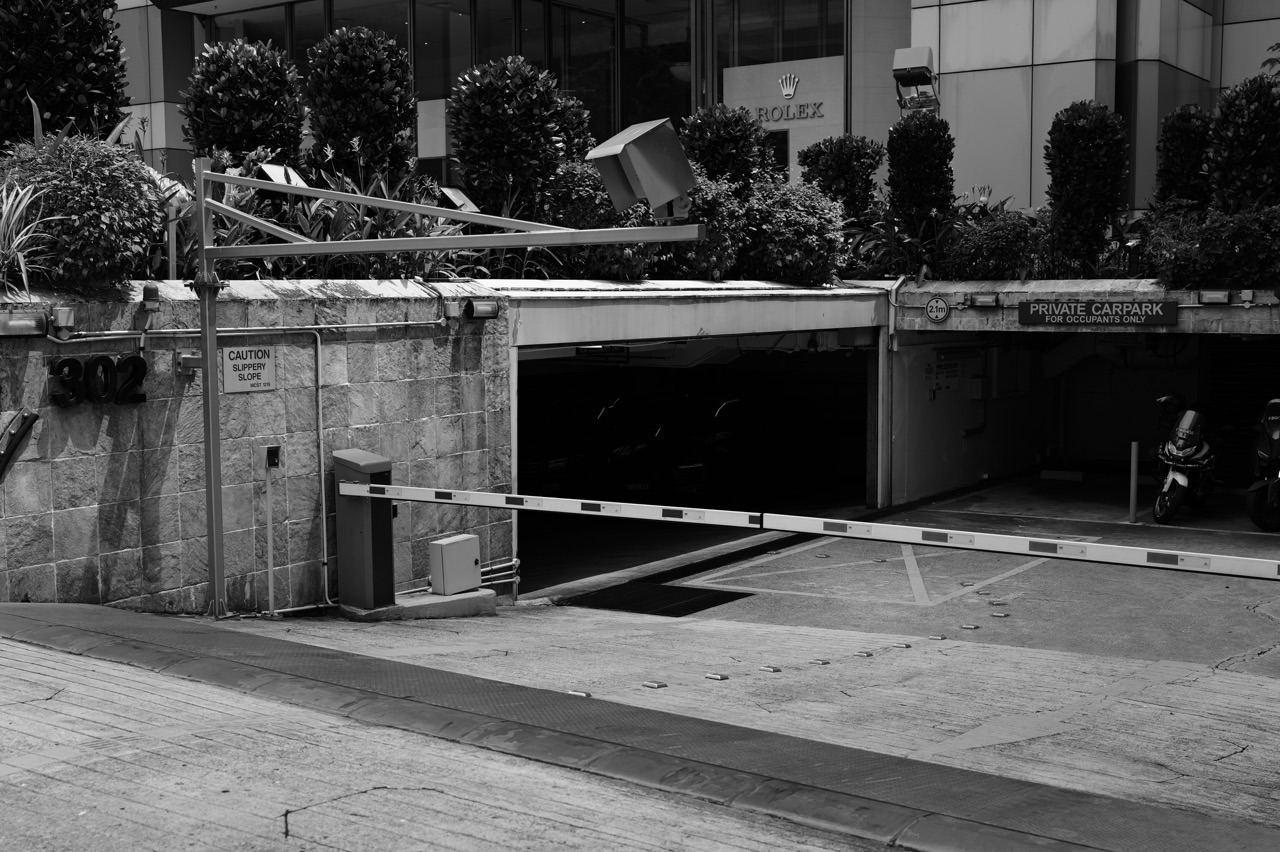
Featured photograph: a private car park in the Orchard Road area, used solely to illustrate the importance of designated parking space. The photographed premises are not identified or represented as an LTA-approved heavy-vehicle lodgement site. Part of The Gold Standard | eduKate Singapore and Sectors and Services Directory. The September 2026 statutory rules, actual OneMotoring acknowledgement and site consent govern real arrangements.