
A homeowner sees a mature tree close to a planned driveway and asks a landscape contractor to cut it. The contractor says that because the tree grows on private property, the owner can remove it without Government involvement. However, the property may be in a Tree Conservation Area, or the tree may be on qualifying vacant land, and Singapore’s Parks and Trees Act protects prescribed mature trees. An ordinary contractor quote is not an NParks approval.
The Gold Standard of NParks Tree-Cutting Approval Services is a reasoned, traceable public process that assesses the actual tree, site status, risk, alternatives and legal responsibilities before removal. It protects mature greenery while enabling necessary safe works and appropriate emergency responses. The goal is not to deny every cutting request or accept every owner’s convenience as a safety emergency; it is to make each decision defensible and each approved site safe.
NParks’ 4 August 2026 guidance describes two Tree Conservation Areas, the Central and Changi, and prior written approval for cutting trees over one metre in girth in the protected circumstances. The Parks and Trees Act separately addresses vacant land, Heritage Road green buffers, parks, nature reserves and immediate danger. A genuine review requires the correct route rather than one generic tree removal form.
The tree-protection decision, from location to lawful action
1. Begin with who owns or manages the tree
A mature tree growing beside a boundary wall may appear to stand in a private garden while its trunk is actually on a public verge or neighbouring land. Ownership and lawful management matter before someone gives a contractor permission to remove it. The service should identify the exact premises, tree location and responsible authority using maps and evidence rather than a casual guess from branches overhead. Landowner consent and regulatory NParks permission are separate things: permission from one does not automatically replace the other. A public tree on a road verge requires contact with the relevant public authority, not a private homeowner’s self-issued felling authorisation.
Back to tree protection chapters · Next chapter
2. Check the Tree Conservation Area boundary first
Singapore protects mature trees in two designated Tree Conservation Areas (TCAs), broadly Central and Changi. The actual legal boundary can pass through a neighbourhood or development lot rather than match its marketing name. NParks’ current development-plan page explains the Central area is around 4,700 hectares and the Changi area around 200 hectares. The applicant should use the TreesSG map with the Tree Conservation Areas layer or other official boundary records, not an agent’s intuition that the property is far from the Botanic Gardens. An accurate GIS check is often the first decisive question before a tree survey or contractor quotation.
Back to tree protection chapters · Next chapter
3. Use the one-metre girth threshold correctly
In a Tree Conservation Area, the Parks and Trees Act generally requires prior Commissioner approval to cut or damage a tree whose girth exceeds one metre, subject to defined exceptions. Girth is trunk circumference, not trunk height or diameter. A tree that is tall and narrow may not trigger that particular threshold, while a short broad-trunked tree may. The current regulations prescribe a measurement point at one metre above ground for section 14, with special technical treatment of unusual trunk forms under relevant guidance. A reliable form records how and where the circumference was measured, not a vague estimate that the tree looks mature.
Back to tree protection chapters · Next chapter
4. Apply the vacant-land protection outside TCAs too
Owners sometimes believe the conservation rule disappears as soon as a site is outside Central or Changi TCA. Section 14 also covers trees of more than one metre girth on qualifying vacant land, whether inside or outside a designated TCA. The law’s definition of vacant land and the actual occupancy and building condition matter. A site awaiting redevelopment cannot simply assume it is exempt because it has never been marketed as a nature area. The regulator should check both the TCA status and vacant-land test rather than offer a single yes or no based only on postal district.
Back to tree protection chapters · Next chapter
5. Do not rely on an obsolete trunk-measurement excerpt
Historical versions of the Parks and Trees Act and archived extracts may describe measuring girth at half a metre above ground. Singapore’s current Parks and Trees Regulations, amended in 2017, prescribe measuring girth one metre above ground for the statutory test. An operator using an old PDF could misclassify a broad-based tree. A Gold Standard public page dates the applicable law and links to current Singapore Statutes Online together with NParks guidance. Where a trunk is multi-stemmed or buttressed, a competent arborist should apply the current measurement guidance and seek official clarification rather than manufacture a convenient reading.
Back to tree protection chapters · Next chapter
6. Treat Heritage Road green buffers as a separate restriction
The protected streetscape beside a gazetted Heritage Road is not identical to the TCA rule for one-metre trees. NParks lists five Heritage Roads: Arcadia, Lim Chu Kang, Mandai, Mount Pleasant and South Buona Vista Roads, with a protected green buffer generally ten metres wide on either side. Removing trees or plants within that buffer is prohibited without the applicable lawful authorisation. The service must ask whether the tree is in a Heritage Road buffer even if it is outside a TCA or relatively small. A developer should not treat the one-metre TCA threshold as universal permission to clear all vegetation elsewhere.
Back to tree protection chapters · Next chapter
7. Distinguish a registered Heritage Tree from any large tree
The Heritage Tree Scheme recognises trees of outstanding botanical, historical, cultural, social or aesthetic value. Many specimens have very large girths, but recognition is a different assessment from whether a particular property is within a statutory TCA. A registered Heritage Tree may require careful engagement with NParks and its owner or site manager regarding maintenance or nearby works. The presence of a tree on the Heritage Tree Register should prompt protection planning, not an assumption that a generic private tree-cutting application is routine. A tree not on the register may still be legally protected by another rule.
Back to tree protection chapters · Next chapter
8. Recognise national parks and nature reserves
A tree growing in a national park or nature reserve is not simply a private garden tree that happens to be close to green space. The Parks and Trees Act has separate restrictions on cutting, damaging or removing vegetation in those areas and special permission routes. An event venue booking or photography permit does not authorise clearing plants. A correct public service determines the legal land designation and competent authority before selecting a form. It should direct legitimate ecological work through authorised NParks channels, while discouraging anyone from testing the boundary by privately cutting a tree and requesting permission afterwards.
Back to tree protection chapters · Next chapter
9. Understand why development plans need early tree surveys
A building project can affect tree roots and crowns before any actual felling occurs. Foundation excavation, heavy vehicles and underground services may undermine a tree even if its trunk remains standing. The 2026 NParks development-plan guidance encourages pre-submission review and conservation planning at design stage. The proper application should identify trees affected by construction and consider avoidance or protection measures. A Gold Standard decision is made while a design can still be adjusted, not after the contractor has cleared roots and claims the tree became unstable as a result.
Back to tree protection chapters · Next chapter
10. Use the Qualified Person route for development works
Where tree cutting is connected to a development project, the appointed Qualified Person can submit the relevant plans and seek approval on the developer’s or homeowner’s behalf. The professional should identify the project, legal site boundaries, protected trees and actual requested activity. NParks provides pre-consultation and appropriate submission through CORENET 2.0 under its development controls. A planning application receipt is not itself a permit to cut; the decision and issued conditions need to be available before physical removal begins. Qualified Person professional duties do not replace the landowner’s obligation to respect applicable tree laws.
Back to tree protection chapters · Next chapter
11. Use OneService or NParks for non-development cutting
A homeowner may want to remove a protected mature tree because it interferes with a private garden, not because a building plan is pending. That situation should not force the owner to invent a development project. NParks’ 2026 guidance directs non-development tree-cutting requests to NPARKS_Registry@nparks.gov.sg or through the OneService app where applicable. The request should identify the exact tree, location and reason, with sufficient evidence for assessment. The applicant must wait for the actual lawful approval, rather than treat an automated acknowledgement as consent to schedule chainsaws the following morning.
Back to tree protection chapters · Next chapter
12. Separate tree maintenance from tree removal
A large canopy casting shade, dropping leaves or affecting a view is not necessarily a tree that must be felled. Depending on assessment, appropriate pruning, monitoring, structural support or design alteration may address a legitimate concern while retaining the mature tree. A Gold Standard government service encourages evidence-based alternatives and competent arborist review. It also warns that careless severe pruning or root cutting can damage protected trees and may itself engage statutory controls. Merely labelling destruction as maintenance is not a lawful shortcut; the real technique and impact determine whether approval is necessary.
Back to tree protection chapters · Next chapter
13. Request qualified arboricultural assessment where appropriate
A resident may notice a hollow, lean or dead branch and fear the entire tree is dangerous. Visual appearance alone is not a full technical assessment of structural stability or biological health. Certified arborists can inspect risks, identify protected features and recommend suitable management or further testing. The NParks development guidance describes their role in evaluating trees, protection measures and alternatives to unnecessary removal. A regulator should require technically proportionate evidence, not demand an expensive report in every trivial case nor approve a serious tree removal solely from an unverified social-media photograph.
Back to tree protection chapters · Next chapter
14. Record the species and location without needless data
Applications are stronger when they identify the specific tree rather than saying large tree near entrance. Species, trunk location, girth, canopy spread, photographs, relation to buildings and reasons for proposed work may be material. A property owner should provide a site plan and the relevant professional report where required, but not an entire unrelated family identity dossier. The authority must preserve the description so the approved tree is the one later removed. A permit for Tree A does not silently authorise a contractor to remove Tree B if it becomes inconvenient during construction.
Back to tree protection chapters · Next chapter
15. Show why the tree is proposed for cutting
An application may arise from genuine failure risk, disease, damage to infrastructure or a proposed building design. These reasons should not be treated as equivalent. A safety risk requires independent evidence; a construction proposal should show relevant site constraints and alternatives. The service should let the applicant explain observations honestly and provide a decision that addresses those facts. Unproven statements that roots must have entered a pipe should not be converted into certified findings. Nor should authorities dismiss a credible imminent danger because the person cannot explain a botanical term.
Back to tree protection chapters · Next chapter
16. Make the immediate-threat exception precise
Section 14 of the Parks and Trees Act includes an exception to the ordinary prior-approval requirement where the condition of a tree constitutes an immediate threat to life or property. That is an emergency safeguard, not a blanket invitation for owners to declare any inconvenient branch an emergency. A responsible person should alert the appropriate authority or emergency responders, keep people out of danger and obtain competent assistance. The service should document the actual immediate risk and lawful action taken. It should not provide speculative chainsaw methods or recommend dangerous do-it-yourself cutting around electrical lines or public roads.
Back to tree protection chapters · Next chapter
17. Distinguish public roadside tree hazards
A resident worried about a tree leaning over a public pavement may not own or maintain that tree. Filing a private property removal request could delay the right municipal response. NParks and the relevant land or estate management agency have responsibilities for trees under their care, while privately managed trees have owners or occupiers with relevant duties. A public reporting service should ask whether the trunk is on a road verge, in an HDB estate, inside private land or in another designated reserve. The case can then reach the actual responsible organisation without forcing the resident to trespass or handle the hazard.
Back to tree protection chapters · Next chapter
18. Do not treat an approval as unrestricted permission
A written NParks approval can identify specified trees, conditions, timing, protection measures or associated reinstatement and planting requirements. The applicant may need professional supervision or separate planning permissions. A permit should not be described as freedom to clear the entire lot or cut adjacent vegetation. A Gold Standard status page exposes the actual approved activity and any outstanding dependencies before a contractor mobilises. If the project plan changes, the applicant should seek an appropriate amendment instead of relying on a permit for a materially different tree or work method.
Back to tree protection chapters · Next chapter
19. Respect root zones during nearby construction
A developer may avoid felling a protected tree but place excavations, heavy materials and equipment near its root system. Roots can be damaged without obvious immediate symptoms, with serious future safety consequences. NParks greenery guidelines discuss tree protection zones, suitable barriers, careful site planning and arborist advice on major roots. The public service should review how protective measures will operate throughout construction, including contractor briefing and inspections where required. It must not equate a tree being physically present at the end of construction with proof its root stability was protected.
Back to tree protection chapters · Next chapter
20. Protect site workers and nearby residents
Tree works involve falling material, equipment, nearby roads and potential overhead services. A person with a valid regulatory approval still needs appropriately competent contractors and a safe operating plan. The licence decision should not promise that a lay homeowner can carry out technical felling unaided. A Gold Standard project has lawful traffic and pedestrian management where applicable, a defined work zone and a responsible supervisor. Public information should remain at the level of permissions and safety responsibilities, not offer step-by-step felling techniques that could encourage unsafe work near occupied buildings.
Back to tree protection chapters · Next chapter
21. Explain reinstatement and replacement conditions
The loss of mature urban greenery can affect shade, drainage, biodiversity and neighbourhood amenity. NParks may require conservation, replacement planting or other mitigation according to the actual site and legal approval. A Gold Standard decision should show what is required and how compliance will be verified. Planting an arbitrary sapling without regard to species or location does not necessarily satisfy an issued condition. A later public inspection should distinguish replanting planned, correctly implemented and successfully established, rather than close the case immediately after a removal receipt is uploaded.
Back to tree protection chapters · Next chapter
22. Know that unauthorised removal can have serious penalties
A landowner might believe paying a landscape contractor absolves them of responsibility for cutting protected trees. Under the Parks and Trees Act, cutting or damaging a protected tree under section 14 without required approval can attract a fine of up to S$50,000 upon conviction, with consideration of financial benefit. Enforcement remains fact-specific under the current law. The public service should state this fairly before any work starts, without assuming that an allegation of improper pruning is itself a proven offence. It should explain the route to provide records or seek lawful review when a finding is disputed.
Back to tree protection chapters · Next chapter
23. Keep the statutory one-metre and broader duties distinct
A tree whose girth does not exceed one metre may fall outside one specified section 14 trigger, but that does not prove unrestricted cutting in every circumstance. Heritage Road buffers, national parks, nature reserves, protective notices, public land management and development conditions can still matter. A correct service should assess all relevant legal layers. It is unsafe to present the measurement result as a universal private-property exemption. Likewise, a mature tree outside the two mapped TCAs can still be protected if it grows on qualifying vacant land or is affected by another designation.
Back to tree protection chapters · Next chapter
24. Recognise the differences between private and public property costs
A resident may ask whether NParks will pay for a contractor to remove a protected tree on private property. A permission to carry out works does not necessarily mean a Government agency undertakes the private owner’s maintenance costs. Conversely, a public verge tree under agency management should not be handled as a private paid service without the correct authority. A good case decision identifies who manages the tree, which approval is necessary, what technical evidence is requested and who arranges any professional works. It avoids both an invented free removal entitlement and demands for unverified payments to private intermediaries.
Back to tree protection chapters · Next chapter
25. Use official Tree Conservation Area mapping accurately
The Central TCA includes complex boundaries around central and southern Singapore, while the Changi TCA covers its own prescribed eastern area. An applicant’s postal district or a screenshot cropped around a road is not authoritative evidence of legal designation. NParks directs the public to TreesSG and its Tree Conservation Areas layer, alongside gazetted maps. A Gold Standard online service allows an owner or QP to check the precise plot and record the result date. It should not simply flag every address on an entire named road as protected without confirming the actual site and tree location.
Back to tree protection chapters · Next chapter
26. Keep heritage conservation different from the 2026 tree nomination process
A person might want to nominate a mature tree for heritage recognition while another seeks approval to cut a hazardous tree. Those are opposite purposes and have different application pathways. NParks’ Heritage Tree Scheme assesses botanical, historic, cultural, aesthetic and other value; in 2026 its nomination cycle closes on 30 June 2027 for the current review. A nomination is not a tree-cutting permit and does not automatically resolve an emergency hazard. A linked Government services directory should guide each user correctly, with no conflation of a heritage register entry and a section 14 decision.
Back to tree protection chapters · Next chapter
27. Address changing development plans before work
A developer could redesign foundations, parking or access after a conservation proposal was assessed. The tree impact might then change. A written decision tied to an earlier site plan should not be treated as automatically covering a new basement excavation or alternate tree removal. NParks pre-consultation and Qualified Person submissions provide the route to discuss changed circumstances. A sound service records the actual version of the plan, protected tree list and any amended conditions, and prevents a contractor from relying on an expired or mismatched earlier approval simply because the site name is unchanged.
Back to tree protection chapters · Next chapter
28. Record inspection and compliance as real stages
Application lodged, NParks requested evidence, arborist report accepted, Commissioner approval issued, conditions implemented and site restored are different milestones. An online case should not collapse them into one green tick. Where a protected tree is retained during construction, inspections may need to verify barriers and root protection. Where approved removal occurred, required compensatory measures may remain open. A Gold Standard system can present case ownership, next action and deadlines without publicly displaying a homeowner’s confidential site records or an officer’s unverified field notes.
Back to tree protection chapters · Next chapter
29. Worked scenario: a mature tree on a Central TCA residential lot
Fictional owner Miriam has an older landed home in the Central Tree Conservation Area. A large tree blocks the proposed vehicle entrance, and a contractor quotes to remove it. Its measured girth under the prevailing rules is 1.35 metres, above the protected threshold. Miriam asks a competent arborist and her Qualified Person to explore redesigning the driveway rather than immediately cutting the tree. If removal remains sought, the QP submits the relevant plans and evidence for the proper NParks decision. A quotation and building design sketch are not authority to fell the tree. Only the actual approved activity and any conditions can govern the work.
Back to tree protection chapters · Next chapter
30. Worked scenario: a dangerous branch beside a public footpath
Fictional resident Jun notices a major branch appears fractured above a public walkway. He cannot tell from the pavement who owns the trunk. Rather than use a saw or declare a personal emergency exemption, he moves away from danger and reports the location, photographs taken from safety and observed condition through the legitimate public service. The responsible tree-management team can inspect urgently and take appropriate action. If the situation constitutes an immediate threat, the statutory emergency rules may be relevant, but their application depends on actual facts. The public service must prioritise safety and accurate ownership while preserving a later record of what was done.
Back to tree protection chapters · Next chapter
31. Worked scenario: development outside TCA on vacant land
Fictional development company Meadow Rise owns a vacant plot outside the Central and Changi TCAs. A survey identifies a mature tree exceeding one metre in girth on the land, which a contractor proposes removing before utility installation. The company should not conclude that being outside TCA ends the inquiry: section 14 can protect qualifying trees on vacant land anywhere in Singapore. Its Qualified Person should establish current legal and site status, explore design avoidance and seek permission where required. The development should retain the approved tree list and relevant protection conditions until works are properly completed.
Back to tree protection chapters · Next chapter
32. Measure protected greenery and resolved safety risks together
A regulator can process tree-cutting applications quickly while unnecessary mature trees disappear, public owners are misidentified or emergency hazards remain unassessed. Conversely, a simple approval count does not show whether a safe, alternative design conserved a valuable tree. The Gold Standard measures correct statutory classification, real arboricultural evidence, safe urgent triage, reasoned decisions, protection during works and successful replanting or retention where required. It keeps Singapore’s greenery and people safe without promising that every tree must remain forever or that every inconvenience justifies removal.
Back to tree protection chapters
Different locations trigger different tree controls
| Location or situation | Relevant check | Who should act |
|---|---|---|
| Central/Changi TCA and tree girth over 1m | Prior approval under Parks and Trees Act section 14 | Owner / QP and Commissioner |
| Qualifying vacant land outside TCA | Section 14 may still apply to girth over 1m | Owner / QP and Commissioner |
| Heritage Road green buffer | Separate protection for trees and plants | Relevant owner and NParks |
| National park or nature reserve | Separate protected-areas restrictions | NParks authorised process |
| Public roadside tree posing danger | Correct tree-management authority and urgent safety response | Report to NParks / appropriate authority |
| Protected tree posing immediate risk to life/property | Specific statutory emergency exception may apply | Immediate qualified safety response and proper record |
A protected tree case has distinct stages
| Stage | Established | Not automatically authorised |
|---|---|---|
| Landowner requests removal | Intent and tree location recorded | Regulatory cutting permission |
| Arborist/QP report completed | Technical evidence available for review | Commissioner approval |
| NParks application lodged | Requested activity submitted | Tree or root cutting can commence |
| NParks grants written approval | Specific work and conditions authorised | Unlisted trees or unrelated site works cleared |
| Conditions and site restoration verified | Work and required mitigation documented | All future alterations exempted from review |
Practical questions before anyone hires a felling contractor
- Is a tree on private land always free to cut? No; TCAs, vacant land and other protections can apply.
- What is the TCA tree-size threshold? Generally more than one metre in girth under section 14, subject to current regulations.
- Do the rules only apply inside Central or Changi TCA? No; qualifying vacant land elsewhere can also trigger protection.
- Does an approved building design automatically allow felling? No. The relevant NParks tree permissions and conditions must be checked.
- Can unsafe trees be addressed urgently? There is a defined immediate-threat exception; obtain qualified help and notify relevant authorities, rather than self-certifying convenience as danger.
- Does a Heritage Tree nomination authorise removal? No. It is a different conservation pathway.
A public tree-conservation and safety audit
- Can applicants identify real land and tree ownership without guesswork?
- Are the TreesSG TCA and Heritage Road buffers checked using current boundaries?
- Is the applicable >1m girth measured using current rules rather than an archived threshold method?
- Does the service also test vacant land and other statutory protections?
- Can a qualified arborist or QP present genuine health and development-impact evidence?
- Are alternatives such as redesign and appropriate maintenance considered fairly?
- Do urgent safety concerns reach the correct authority without an unsafe DIY process?
- Does an issued approval specify actual trees, conditions, separate development permissions and effective dates?
- Are roots, neighbouring protected trees and the public protected during approved work?
- Can the regulator trace mitigation, replanting, amendments and justified enforcement?
Official NParks and Singapore law references
- NParks: Before submitting development plan, TCA map and approval paths, Aug 2026
- Singapore Statutes: Parks and Trees Act current 2026, sections 13–21
- Singapore Statutes: Parks and Trees Act full chapter
- NParks: Tree Conservation Area overview
- NParks: Development plan submission and CORENET2 consultation
- NParks: Heritage Roads and green buffers
- NParks: Heritage Tree Scheme and conservation
- NParks: Registered Heritage Tree directory
- NParks: Nominate a Heritage Tree, 2026–27 cycle
- NParks: Official agency contact
- OneService: Municipal feedback and tree reports
- eduKate: Public Park Event Permit Services
- eduKate: Building Plan Approval Services
- eduKate: Municipal Services
- eduKate: Public Water Supply Interruption Reporting Services
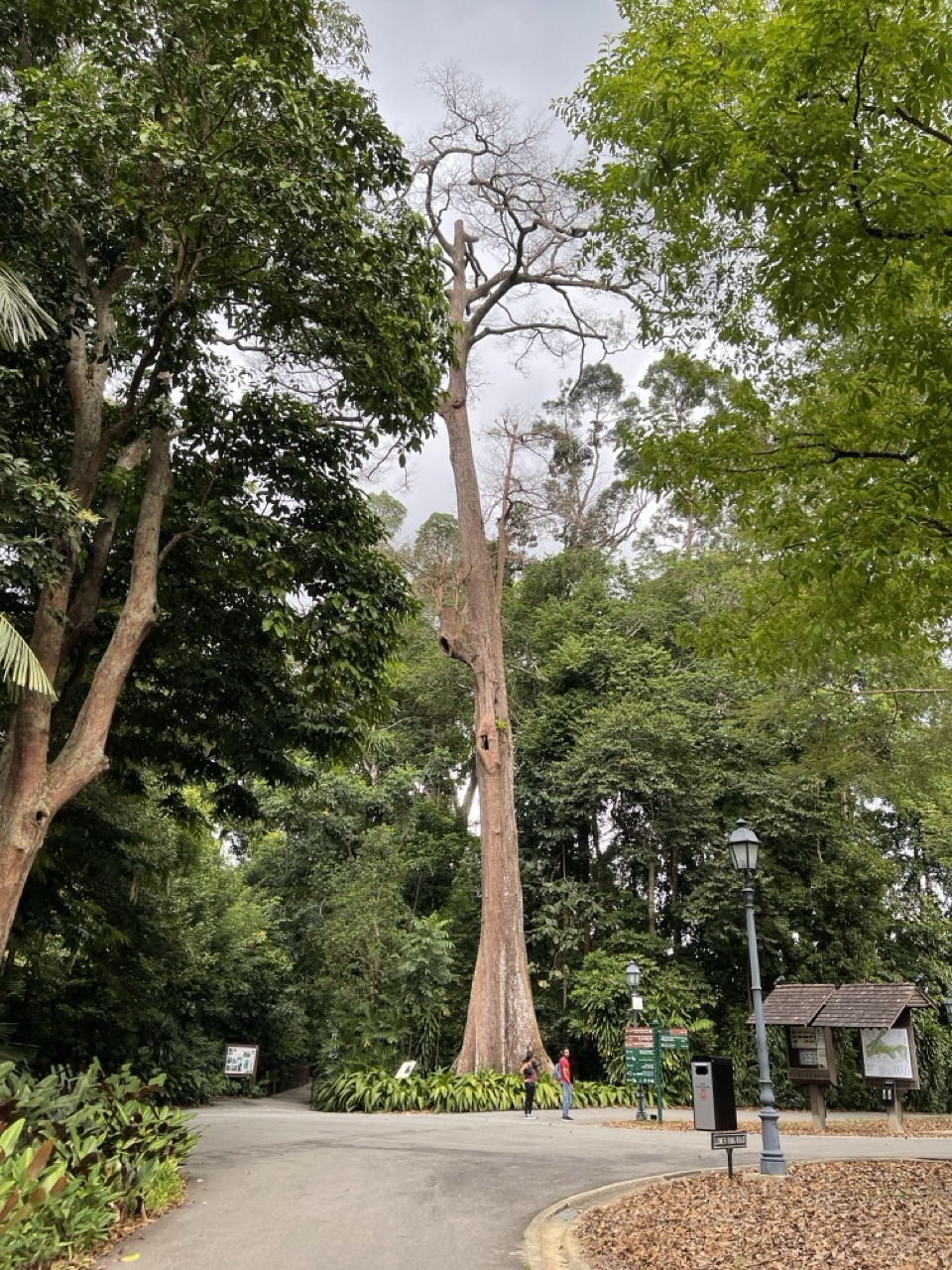
The featured photograph shows a mature tree inside Singapore Botanic Gardens for editorial context. It is not a photograph of a tree for which a cutting application was filed. Part of The Gold Standard | eduKate Singapore and the Sectors and Services Article Directory. Current NParks directions, the Parks and Trees Act and location-specific approvals govern actual works. This article does not provide tree-felling instructions or replace qualified arboricultural assessment.