
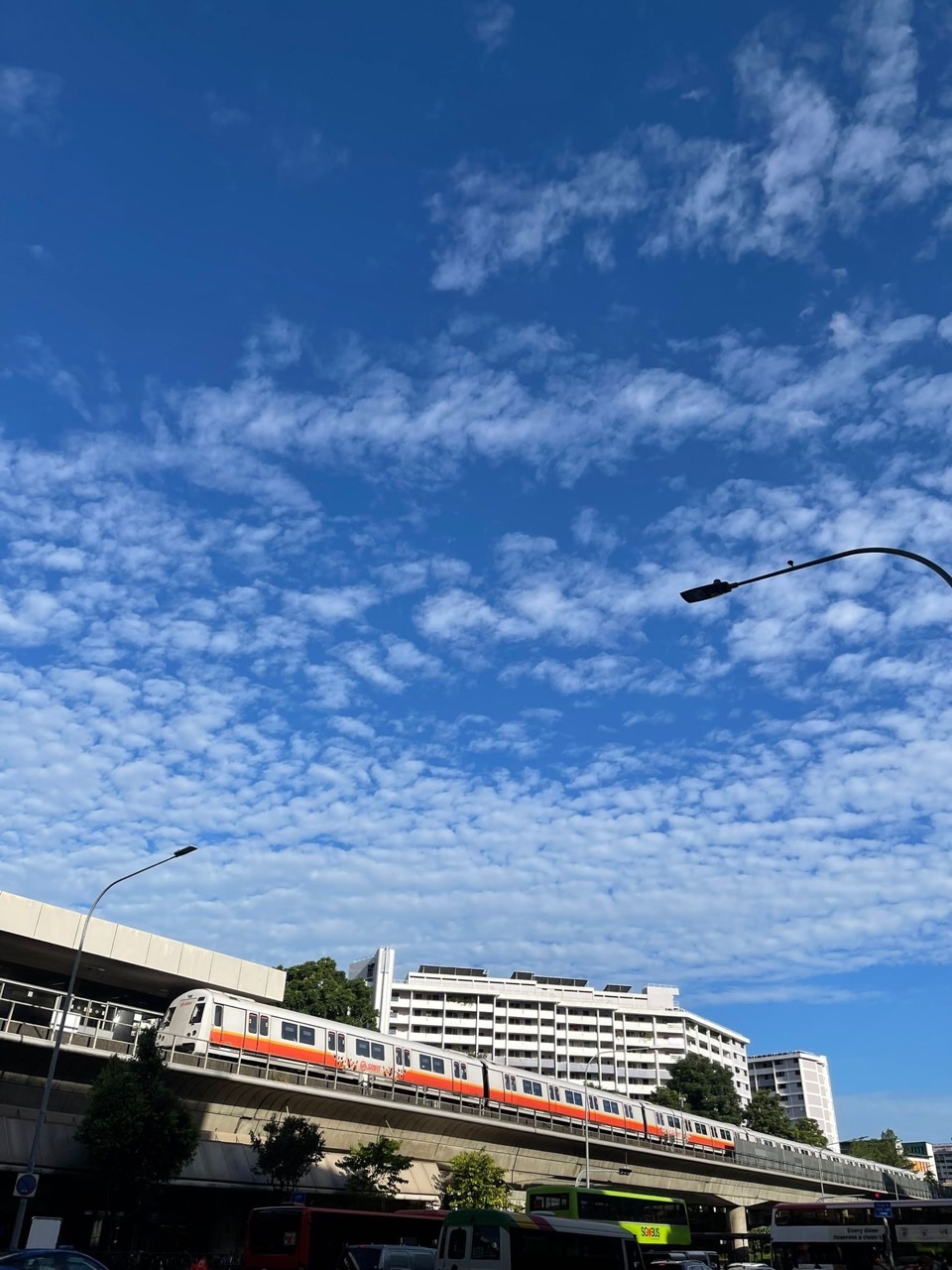
Railway track geometry engineering makes a train’s physical path measurable and maintainable. A route can feel comfortable during one journey while a recording vehicle detects a change in alignment, gauge or level. That observation needs the right reference, current asset data and qualified interpretation before anybody can conclude what it means for service.
This guide covers rail geometry parameters, curves, measurement trains, recording uncertainty, vehicle-track interaction, support conditions, maintenance and the 2026 European track-quality classification standard. It explains why those European standards are not automatically applicable to urban rail systems such as Singapore MRT.
It connects to Railway Engineering, Railway Maintenance, Railway Signalling Engineering and The Gold Standard of Engineering.
What defines dependable track geometry?
- A design path and railway-specific technical requirements are clearly defined.
- Measurements cover the required geometry features with credible references and methods.
- Engineers interpret observations with the train, supporting structure and operating conditions in mind.
- Significant findings reach the appropriate rail authority and technical decision-maker.
- Maintenance and renewal records demonstrate the accepted current state, not just the original design.
Track geometry chapter navigation
1. A train running comfortably yesterday does not prove its track is unchanged
A passenger train traverses a section of rail without any memorable disturbance. The following week, a measurement train detects a change in geometric alignment. Someone asks whether this means the route is unsafe, or whether the measuring device has become more sensitive. Neither answer can be justified solely by the initial graph. Track geometry has to be measured, interpreted and assessed in relation to the physical railway and the requirements that actually govern it.
Railway track geometry engineering studies where rails are positioned relative to their intended path, to one another and to relevant support and reference conditions. It involves alignment, longitudinal level, track gauge, cross-level, twist, curvature and the way irregularities interact with rolling stock. Its work spans initial construction, recurring measurements, maintenance, renewal and post-work acceptance.
The gold standard is not a visually straight line or a ride that feels smooth during one trip. It is a traceable relationship between designed geometry, the real measured track, vehicle behaviour, professional limits and corrective action throughout the railway’s service life.
2. Start from the real railway and the service it must provide
A high-speed intercity route, a mixed freight railway and an urban automated metro can have different vehicle types, operating speeds, alignments and engineering rules. It is a mistake to assume that every track tolerates the same geometry deviations or that a standard for conventional mainline track automatically sets the limits for Singapore MRT or LRT systems.
The brief should identify the railway type, gauge, alignment, relevant track construction, vehicles, permitted service and applicable technical authorities. It should describe whether the assignment is a new design, a construction check, a diagnostic investigation or evaluation of an asset already in service. A label such as ‘track survey’ does not settle these questions.
Comparisons with international standards can be helpful, but the governing operator, local regulations and approved asset standards determine the actual acceptance route. The aim is useful transport service under controlled geometry, not copying a universal number from a different railway.
3. Track gauge is one physical relationship, not a complete alignment verdict
Track gauge describes a specified distance between the rails at a defined measurement reference. It matters to wheel-rail interaction, but gauge alone cannot describe the condition of the track. Two rails could meet an appropriate gauge measurement while their relative elevations or alignment present an issue elsewhere.
Gauge measurements need an agreed definition, instrument method, location and relevant conditions. The receiving engineer should understand whether the reported value is an isolated reading, an average, a feature processed from a measurement vehicle or part of a larger geometry assessment.
Europe’s EN 13848-1:2019 defines principal geometry parameters and measurement principles for its stated railway scope. It explicitly does not apply to urban rail systems. Its definitions are informative here without becoming an automatic Singapore metro approval limit.
4. Alignment, longitudinal level and cross-level describe different motions
Horizontal alignment concerns how the track departs from its relevant lateral geometry. Longitudinal level concerns vertical variation along the route. Cross-level describes the relative elevations of the rails at a section, while twist considers how this relationship changes over distance. Each represents a physical feature with different potential consequences for vehicle response.
A single overall quality indicator may help prioritise review but can conceal the parameter responsible for an observed behaviour. A passenger may feel a lateral movement while another issue influences vertical acceleration or wheel loading. Tracing the evidence back to its measured quantity is more useful than assuming every discomfort has the same cause.
Measurement and interpretation must account for geometry of curves and intended transitions. A deliberate curve is not a defect simply because it is not straight, and an intended cant is not evidence that one rail was accidentally installed higher.
5. Curves and transitions are planned geometry, not imperfections to eliminate
Rail alignments necessarily include curves and transitions where transport routes meet real geography. Their design depends on speed, vehicle behaviour and the applicable railway framework. The engineer needs a clear distinction between intended geometric features and departures from those features.
A dataset that compares every position against a straight line would misclassify legitimate design. Track quality analysis should recognise designed curvature, cant and transitions and use the method appropriate to each. This requires an authoritative design and current as-built record rather than a hand-drawn interpretation of the route.
Good reviews also consider the interaction between adjoining sections. A small local correction that makes one reading look better can change the way forces or geometry are distributed nearby. The success criterion is the controlled section and vehicle response, not one attractive coordinate.
6. A moving measurement vehicle and a hand instrument answer different questions
Track-recording vehicles can collect dense measurements over long routes using appropriate sensing and processing. Manual or lightweight instruments can support focused investigation. Their outputs may differ because they observe at different speeds, positions, loading states or measurement wavelengths. Their strengths are complementary when the methods and limitations are clear.
European EN 13848 includes distinct parts for recording vehicles, construction and maintenance machinery and manual or lightweight devices. The Part 1 overview identifies this family structure. The scope of each test should be preserved rather than treating unlike readings as interchangeable.
An apparently inconsistent observation deserves a comparison of calibration, reference, measurement location, processing, date and current track condition. Averaging two conflicting numbers without understanding why they differ can erase a genuine concern.
7. Geometry depends on where and how the measurement is referenced
A device may report rail positions relative to its own sensor frame or estimate features relative to an engineering alignment. Transformations, vehicle motion and sensor mounting may influence how a raw reading becomes a track-geometry number. The result is only meaningful when the reference and processing are defined.
Geodetic and surveying controls can also matter when a project checks absolute track positions or compares different campaigns. Reference changes should not be mistaken for movement of the physical railway. A dataset that appears precise but lacks a datum or coordinate basis can become difficult to use after handover.
The Surveying Engineering and Geodetic Engineering guides explain why measurement frames need current and consistent definitions.
8. An instrument can pass a calibration check and still miss the user’s target
Calibration provides evidence about an instrument against a reference under stated conditions. It does not mean the operator chose the correct track, that sensors remained correctly mounted or that the processing software used the intended profile. Valid metrology and representative inspection are separate obligations.
Engineers should document equipment identity, verification state, environmental conditions, sensor alignment and important processing versions. Quality flags should make uncertainty visible rather than report a smooth path from every set of raw readings.
An effective quality plan also identifies what happens when an instrument is later found suspect. Previously published results may need review; silently relabelling the affected period as normal conceals the uncertainty from future maintenance decisions.
9. Track geometry needs time and spatial scale
A sharply localised geometry change can have a different relevance from a gradual deviation over a longer section. The measuring and analysis method should have adequate spatial resolution for the feature it aims to detect. Reporting only one route-wide average can conceal isolated conditions important to the railway.
The U.S. Federal Railroad Administration’s technical report DOT/FRA/ORD-23/25 analysed more than 49,000 route miles of U.S. track observations gathered between 2012 and 2019, including amplitudes and wavelengths of irregularities under different conditions. Its findings support informed interpretation but are not a replacement for a specific railway’s acceptance standard.
The correct data product should preserve where a feature occurs, which parameter it concerns, how it was processed and which relevant operating condition it represents. A graph without location and scale is weak evidence for a maintenance team.
10. Vehicle-track interaction is the reason geometric quality matters
The physical purpose of track quality is to support safe and dependable train movement. The way a vehicle responds to rail geometry depends on rolling-stock design, track structure, speed and other operating conditions. An irregularity’s significance cannot always be judged only from its measured amplitude.
Engineers may use appropriate vehicle-track analysis, field observations and approved methods to understand the relationship between geometry and vehicle behaviour. A passenger’s complaint is useful context, but it is not a substitute for quantified investigation. Conversely, a measurement flagged as important should not be dismissed because passengers did not notice it.
Related disciplines include Vibration Engineering and Railway Engineering. They help connect a rail position to the system that rides on it.
11. Support conditions can produce a recurring geometric defect
Ballast, sleepers, fastening systems, slab track and the supporting ground can affect how geometry changes under loading or over time. An irregularity corrected at the rail position may reappear if the underlying physical mechanism was never addressed. The right investigation considers the structure that supports the rails, not just the surface trace.
Maintenance decisions should distinguish a symptom from its potential causes. Water, ground settlement, support degradation or local work may contribute depending on the track type and environment. The applicable engineering review determines which evidence is needed before selecting a durable response.
The Geotechnical Engineering guide shows how ground uncertainty propagates into infrastructure. A robust track geometry programme must learn when recurring measurements indicate a deeper asset issue.
12. Switches and crossings add specific geometry and interface concerns
Junctions use specialised track components to guide vehicles from one route to another. Their geometry, moving parts and interfaces may differ from plain line. The acceptance scope and measurement methods must match those physical arrangements and their approved operational responsibilities.
An inspection result from plain line should not automatically be reused to approve a turnout or crossing component whose governing features were not measured. Similarly, a signal or route-setting system being healthy does not establish that the physical track geometry remains suitable.
Qualified rail infrastructure teams must coordinate track geometry and signalling interfaces. Railway Signalling Engineering describes why a permitted train movement depends on information and physical infrastructure working together.
13. The 2026 geometry classification standard has a defined scope
EN 13848-6:2026, issued in July 2026, describes classification of track-geometry quality using parameters of EN 13848-1. It replaces the earlier 2014 edition with its 2020 amendment in the relevant European standards system. Its existence allows more consistent discussion of geometry quality for railways within its scope.
The published EN 13848-6:2026 expressly excludes lines with nominal gauge below 1,435 mm and does not specify requirements for urban rail systems. It must not be advertised as an automatically applicable Singapore MRT or LRT rule.
An operator can learn from these definitions and classification concepts while using its own approved requirements. For publication, naming the edition and its excluded scope is more useful than presenting one universal geometry grade as a gold standard.
14. Safety-related thresholds need authoritative decisions, not invented values
Track geometry standards and local engineering procedures may identify different classes of deviations or necessary responses. Their thresholds depend on the railway type, parameter, operating conditions and governing framework. It is unsafe to copy a limit from an unrelated system or infer that every amber chart requires the same operational action.
EN 13848-5:2017, published for its scope, addresses geometric quality levels and related actions; the measurement and selection of frequency involve separate requirements. A public article should explain why the distinction matters rather than prescribe operational thresholds to track workers.
Qualified railway duty holders decide restrictions, inspections and the permitted response to actual findings. For users, the useful expectation is that a significant observation receives an accountable review and does not vanish into a reporting queue.
15. Construction acceptance and condition monitoring answer different questions
Construction checks ask whether the installed geometry meets approved design requirements. Periodic maintenance checks ask what has changed in the service condition. A newly accepted alignment may later move or deteriorate; a current maintenance reading may be valid without representing the geometry at initial handover.
Both forms of evidence need clear dates, asset IDs, references, methods, tolerances and responsible people. A later renewal should not simply copy the original completion record to demonstrate new works. The engineer needs evidence about the actual changed configuration.
The goal is a trustworthy timeline linking design, installation, maintenance and renewal. When an observed deviation is investigated, earlier measurements can help determine whether it is new, recurring or associated with a documented asset change.
16. Track renewal can affect adjacent infrastructure and passengers
Renewing one section may change geometry and interfaces at the boundary with older track, signalling, platform edges or the permitted vehicle operating envelope. A supplier can deliver components that pass their specifications while integrated requirements remain unresolved.
Engineers should coordinate intended geometry, temporary stages, construction records, relevant interfaces and acceptance of the complete route. The contract boundary of one maintenance supplier does not limit the physical effects of its work. The next train experiences the connected alignment, not separate invoices.
A good programme includes a clear route from quality finding to qualified decision and an operational handover that informs the people responsible for transport service.
17. Condition trends matter more than isolated green scores
A single measurement shows part of a railway’s condition at one time. Repeated observations using comparable definitions can identify trends or recurring features, but changes in instruments, processing and reference systems complicate comparison. A falling average deviation might reflect a real improvement or a change in what was measured.
Track owners should preserve method and configuration records and examine the highest-consequence features rather than reward a route-wide metric alone. A long route with a good average can still contain an issue deserving immediate qualified attention.
An asset programme should avoid incentives to suppress observations that make dashboards look worse. Reporting integrity enables decisions that improve the real railway rather than the performance statistics of a contractor.
18. The operator needs a usable map of measured findings
Measurements support maintenance only when the correct feature can be located in the field and related to the right asset. Kilometre markers, position systems, track IDs and maintenance records need controlled correspondence. A defect can remain unrepaired because a report describes the wrong track or a location referenced to an obsolete asset register.
A competent team should be able to find the observation, confirm its context and compare it with relevant field condition. Photos or coordinates may support the record, but their value depends on identity and reference. The reports should name any ambiguity before it reaches an operational decision.
The Geospatial Engineering guide explains the need for current data; track geometry applies that to a linear asset through which trains travel at speed.
19. Maintenance must address both geometry and its underlying mechanism
An apparent improvement after an intervention is important but does not by itself demonstrate that the original cause has been removed. If a section experiences repeated deformation or a support condition remains unsuitable, the same geometric issue may reappear. The programme needs a proportionate way to investigate recurrence.
Records should distinguish immediate correction, longer-term repair and any authorised restrictions or monitoring conditions. The work should be assessed against the actual technical requirement and the effect on adjoining track. A ticket marked closed is administrative evidence, not a lifetime guarantee.
The Engineering Failure Analysis Services guide demonstrates the value of investigating physical mechanisms before blaming the last maintenance worker.
20. Rain, heat and environmental change deserve context
Temperature, water, drainage and other environmental conditions can influence railway components and the ground supporting them. Their actual relevance varies with track structure and location. A change in geometry following a particular weather period should prompt evidence-based review rather than immediate assumption that the instrument is wrong or that one element failed.
Long-term assessment may need information about drainage works, nearby construction, settlement or thermal conditions. A measurement alone rarely supplies all such context. Interdisciplinary review can connect track, geotechnical, drainage and structural concerns.
Weather-based explanations should remain hypotheses until supported. Assigning every deviation to unusual rain can conceal recurring asset defects, just as assuming every change is a manufacturing failure ignores how railways age in the real environment.
21. The track geometry gold standard is a safe, maintainable journey
Track geometry engineering succeeds when the rails support the intended train service within an approved physical and operational framework. It requires trustworthy measurements, meaningful quality criteria, competent interpretation and an effective response to real deterioration. The task continues whenever the infrastructure is modified, inspected or renewed.
A strong owner can trace one significant observation to its asset, measuring method, original design, trend, relevant professional threshold, corrective action and verified outcome. It can also tell when a result does not establish enough and further evidence is needed.
The gold standard is not a perfectly flat geometry chart. It is a railway whose measurable condition remains understandable and managed so that trains and passengers can rely on the physical route through changing service and time.
Worked case: a geometry warning that disappears on a second instrument
This hypothetical inspection case does not describe a real railway or provide a work procedure. A recording vehicle detects an alignment deviation in one section. A hand-held measurement made later appears less severe. Neither result can automatically invalidate the other; the techniques may differ in physical reference, time, measurement scale, location or processing. The rail owner needs a qualified comparison to the applicable acceptance basis before deciding the next action.
| Evidence | What is established | What must be resolved |
|---|---|---|
| Recording vehicle flags a feature | Specified method detected a geometry variation | Correct asset, processing, scale and governing threshold |
| Hand measurement differs | Another method produced a different result | Reference, timing and comparability of the methods |
| Passenger ride seems smooth | No obvious discomfort was reported on that trip | Actual measurement and vehicle-track safety implications |
| Track alignment was renewed previously | Historical work took place | Accepted as-built geometry and subsequent deterioration |
| One inspection ticket closed | An administrative task ended | Technical disposition of the physical feature |
| Next survey is scheduled | Future data collection is planned | Whether an authorised action is required before that survey |
The purpose of investigation is to understand the physical railway, not to choose whichever reading is more reassuring. Both measurements and any subsequent decision should remain traceable to methods, current rules, responsible people and the true installed track.
Frequently asked questions
What does railway track geometry include?
It includes relevant rail position relationships such as gauge, horizontal alignment, longitudinal level, cross-level and twist, along with curves and transitions. The required parameters depend on the actual railway.
Is EN 13848-6:2026 the Singapore MRT standard?
No. Its published scope does not specify requirements for urban rail systems and excludes gauges below 1,435 mm. Singapore railway projects must use their applicable approved technical and regulatory framework.
Does a smooth train ride mean the track is safe?
No. Human perception during one journey does not assess every measurement, support condition or vehicle-track interaction.
What is the difference between track alignment and track gauge?
Alignment describes the track’s path or deviations in a relevant reference; gauge describes a defined rail-to-rail distance. One cannot substitute for the other.
Can recording trains replace focused inspections?
They can provide extensive data, but some anomalies need targeted inspection or complementary measurements. The techniques answer different questions.
Does fixing an isolated geometry defect prevent recurrence?
Not always. A recurring irregularity can arise from support, drainage, ground or other conditions requiring technical investigation and a broader remedy.
Current track geometry standards and authoritative sources
- EN 13848-1:2019 — Track Geometry Parameters, Measurement and Scope
- EN 13848-6:2026 — Track Geometry Quality Characterisation (Not for Urban Rail)
- EN 13848-5:2017 — Track Geometry Quality Levels for Covered Railways
- U.S. FRA — Characterisation of Track Geometry for Various Operational Conditions, Report 23/25
- FRA — 2026 Track and Structures Compliance Manual
- eduKate — Structural Health Monitoring Engineering
- eduKate — Geodetic Engineering
- eduKate — Vibration Engineering
- eduKate — Sectors and Services Directory
This article explains engineering measurement and assurance, not a rail maintenance, track adjustment, restricted-speed or track-opening instruction. Real geometry acceptance, safety decisions and operational restrictions belong to the authorised railway duty holder and qualified railway engineers using its applicable codes.
The Gold Standard of Railway Track Geometry Engineering
The value of track geometry is visible in a dependable journey, but its engineering proof lives in physical measurements, qualified judgement and well-maintained assets. A railway earns trust by finding change early, understanding why it matters and acting within the system that protects users.