
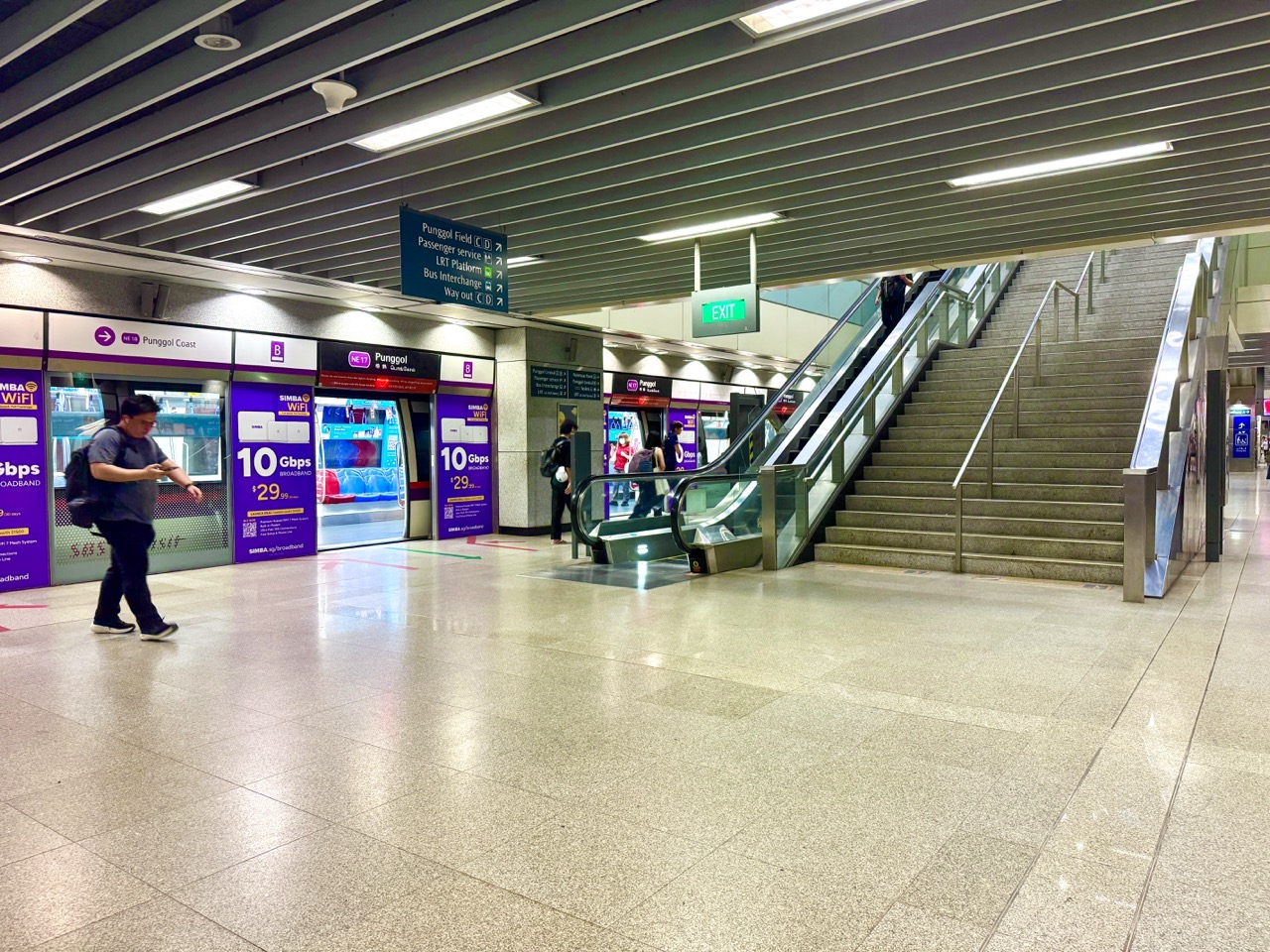
The gold standard of railways is a railway that moves people or goods safely, dependably and accessibly through a coordinated system of infrastructure, vehicles, operations and maintenance. The passenger experiences a journey; the railway must make thousands of technical and human decisions fit together to deliver it.
Rail reliability involves track, rolling stock, traction power, signalling, stations, communications and trained teams. A fast train or an impressive station is valuable only when the wider system supports the service people need. Good railway performance includes ordinary running, planned work, disruption management and a safe return to service.
This root guide connects the railway branches in the eduKate ecosystem. It explains the relationships and decisions first, then directs you to specialist guides for engineering, maintenance, signalling, electrification, trains, track geometry and platform doors. Worked figures are hypothetical teaching examples and are not operating instructions.
Find the part you need
Choose a journey question, inspect the technical system, understand capacity, work through a disruption or follow the specialist library.
Chapter index
Chapters 1–4
Chapters 5–8
Chapters 9–12
Chapters 13–16
A railway begins with movement needs. Who needs to travel, between which places, at what times and with what constraints? Passenger rail, freight rail, an urban metro and a long-distance service have different operating patterns. Their quality should be assessed against their jobs.
For a passenger, the journey includes reaching the station, entering, finding the correct platform, waiting, boarding, travelling, transferring and reaching the destination. A problem at any stage can undermine the benefit of a fast ride between stations.
For freight, the equivalent chain includes terminals, loading, train paths, transfer between modes and delivery arrangements. A train arriving at the line’s endpoint is not the same as goods reaching their intended recipient. Interfaces matter in both cases.
Define the service before selecting the technology. A route with heavy peak demand may need high frequency and efficient boarding. A route serving dispersed destinations may need a different balance of speed, stops and connections. The right solution depends on the pattern of use and the physical setting.
A useful starting exercise is to map one complete journey. Mark time, uncertainty, accessibility needs and handovers. Then ask which part most limits the experience. That question keeps attention on the whole journey instead of treating each attractive component as an independent success.
A train depends on track that supports and guides it, power or fuel that enables movement, control systems that manage authority, and people who operate and maintain the service. Stations and information systems connect that movement to users. Each subsystem has requirements, and the interfaces between them have requirements too.
A new vehicle can meet its own specification and still be unsuitable for a line if it does not fit the platform, signalling or power arrangements. A station modification can alter passenger flow, emergency access or the time trains spend at the platform. Integration checks examine those relationships.
Identify who owns each interface. During a change, the train manufacturer, infrastructure team, operator and system integrator may hold different pieces of evidence. The project needs a coherent account of the assembled railway, not just a stack of individually approved parts.
Keep configuration visible. Software versions, equipment settings, drawings and maintenance records must correspond to the system in use. A test performed on an earlier configuration may no longer establish the same conclusion after a change.
The railway engineering guide develops this technical integration. The root question remains practical: can the full arrangement deliver the intended service under the conditions it will encounter?
Track is a designed path with geometry, support and environmental conditions. Alignment, level, gauge and related characteristics affect how vehicles interact with it. The rail alone is only one part of the structure; sleepers or other supports, fastenings, foundations and drainage contribute to performance.
Measurements need location and context. A geometry finding must be connected to the correct section of track, measurement method and relevant requirements. A defect’s significance depends on its characteristics and the applicable engineering assessment, not simply on whether it is visible to a passenger.
Track changes over time under loads and environmental effects. Maintenance therefore involves inspection, measurement, interpretation and planned intervention. A smooth ride on one journey cannot establish the long-term condition of the entire line.
Switches and crossings add moving or geometrically complex interfaces. They connect routes while also interacting with signalling and maintenance arrangements. A local fault can affect the available paths through a much larger area.
The track geometry engineering guide owns the specialist detail. For a learner, the key connection is that geometry, loading, measurement and maintenance are one continuing story. Track quality is sustained through evidence and care, not established once at construction.
Rolling stock includes the vehicles that run on the railway. A passenger train combines structures, running gear, braking, doors, traction equipment, controls, communications and passenger facilities. Their interactions matter as much as their individual performance.
The operating environment includes route geometry, stopping pattern, weather, loading, platform interfaces and maintenance arrangements. A train designed for one context cannot simply be assumed suitable for another. Compatibility must be demonstrated through the relevant engineering process.
Passenger comfort also has a technical basis. Temperature, ventilation, noise, ride behaviour, information and accessibility affect the journey. Good design considers different users rather than relying on an average passenger who can stand, see, hear and move without difficulty.
Maintainability belongs in design. Teams need access, diagnostic information, approved parts and procedures that support safe work. An elegant component that cannot be inspected or replaced within practical constraints can create future service problems.
The rolling stock manufacturing guide follows the path towards fleet readiness. At root level, ask what evidence connects the delivered vehicle to the railway it will serve and the support it will need throughout its life.
An electric railway requires a coordinated route from the electricity supply to the train’s traction equipment. Substations, distribution, conductors, collection equipment, protection and controls contribute to that route. Different railways use different arrangements.
Power quality involves more than having electricity available somewhere on the network. Equipment must operate within the conditions for which it is designed, and protection must manage faults appropriately. Changes in train service or equipment can alter demands on the system.
A railway also has loads beyond traction. Stations, signalling, communications, ventilation and other functions need suitable supplies and resilience arrangements. The significance of a power failure depends on what loses supply and what alternative arrangements are available.
Redundancy is useful only when its behaviour is understood and tested. Two supplies sharing a vulnerable dependency may not provide the independence a simple diagram suggests. Maintenance and recovery arrangements must account for those dependencies.
Follow the railway electrification guide for the technical branch. Passengers and students should treat railway electrical equipment as operational infrastructure and follow official access restrictions; this guide provides conceptual understanding rather than instructions for working on it.
Signalling helps manage train movements and the conditions under which a route can be used. Its purpose includes preventing conflicting movements and supporting safe separation. The detailed methods vary across railway systems and operating modes.
A movement authority should not be confused with an unlimited permission to proceed. It belongs to a defined control system and operating context. Train detection, route setting, interlocking, communications and protection can all contribute to the railway’s account of where trains may move.
Interlocking coordinates relevant conditions so that incompatible routes are not authorised together. A diagram showing two possible paths does not establish that both can be used simultaneously. Their shared track or conflicting movements may be the important constraint.
Higher capacity does not arise simply by shortening a displayed interval. Braking performance, train position information, system response, operating rules, station dwell and other constraints matter. Changes must be assessed as part of the complete system.
The signalling engineering guide develops these mechanisms. For a general reader, the useful question is how the system knows enough, communicates enough and controls enough to support the intended movement under the relevant conditions.
A line’s capacity concerns how much movement it can support under stated conditions. Train capacity, train frequency, station throughput and junction constraints are related but different. Increasing one can expose a limitation elsewhere.
Consider a simplified teaching model: trains can depart a station every three minutes and each carries 600 passengers at the assumed planning load. Twenty departures per hour multiplied by 600 gives a theoretical 12,000 passengers per hour in one direction.
That arithmetic is not an operating forecast. It assumes the interval can be sustained, trains can be loaded as assumed and other constraints do not bind. Platforms, dwell, turnbacks, junctions and uneven arrivals can change practical performance.
Now suppose boarding takes longer as a platform becomes crowded. A delayed departure can create a larger gap, allowing more passengers to accumulate for the next train. The interaction can worsen the original delay. Passenger flow and train operation cannot always be planned separately.
The diagnostic question is: which interface becomes limiting at the intended demand? A station entrance, staircase, platform, door, signalling constraint or terminal movement may matter. Identify that point before proposing more trains or larger vehicles.
A good capacity explanation states direction, time period, loading assumption and bottleneck. Without those qualifiers, a large number can sound impressive while saying little about the actual journey.
A station is an interchange between a person’s movement and the railway’s movement. Entrances, ticketing, lifts, escalators, stairs, corridors, platforms and information must work together. The shortest geometric path may not be the route every passenger can use.
Accessibility includes the continuity of a journey. A lift at one end is insufficient if the transfer requires an inaccessible step elsewhere. Signs and announcements should help users identify routes, service changes and assistance without assuming identical sight, hearing, language or mobility.
Passenger flows vary by time and event. A quiet off-peak walkthrough may not reveal the same constraints as a peak interchange. Examine crossing movements, queuing, waiting areas and the effects of a delayed train.
Platform screen doors add an important interface between station and rolling stock. Their alignment, operation and control must fit the trains and the service. The platform screen door engineering guide develops that branch.
For the wider town relationship, follow rail stations and HDB town planning. Housing, walking routes, connecting buses and local destinations shape how people reach the railway and what the station must support.
Imagine two hypothetical lines whose average extra journey time is four minutes during a study period. On Line A, every sampled journey is four minutes late. On Line B, most journeys have no extra time, but a smaller group experience much larger delays. The average alone cannot distinguish the experiences.
Suppose Line B has ten sampled journeys: eight have zero extra minutes and two have twenty extra minutes. The total extra time is forty minutes, giving an average of four. A passenger on one of the affected journeys experiences something very different from a four-minute delay.
This example is deliberately small. It illustrates the need to examine distributions and consequences, not a method for ranking real networks. Actual comparison requires consistent definitions, suitable periods and representative data.
Ask further questions. How many users were affected? Were delays concentrated in peak periods? Did an interchange failure add uncertainty? How long did recovery take? Did passengers receive information that helped them choose another route?
Different measures answer different questions. Reliability, punctuality, service delivered, crowding and accessibility each describe part of the service. A single headline metric cannot carry every meaning.
The transferable lesson is mathematical and civic. Before comparing two public-service numbers, inspect the denominator, definition, time period and distribution. Then connect the measure to the experience you are trying to understand.
Maintenance is planned work to preserve or restore required function. It involves inspection, servicing, diagnosis, replacement, testing and records. It is part of railway operation, even when passengers do not see it.
Different approaches suit different assets and failure mechanisms. Time-based tasks, usage-based tasks, condition monitoring and corrective work can all have roles. A condition-monitoring sensor is valuable when its observations support an effective decision and intervention; collecting more data alone does not preserve the asset.
Access time is a real constraint. Teams may need protected work periods, suitable equipment, competent staff and enough time to verify the result before service resumes. A plan that allocates time only for the physical replacement can omit preparation and testing.
Spares also form part of reliability. The right replacement must be identifiable, compatible, available and fit for use. A shelf full of similar parts is not the same as assured support for the installed configuration.
The railway maintenance guide owns the practical branch. At root level, ask how the railway knows an asset’s condition, decides when to act and confirms that the intervention has restored the required function.
A disruption changes the system’s conditions. The response must protect people, establish what is known, coordinate the affected teams and restore useful service where it can be done safely. Speed matters, but the fastest visible action may not be the best overall recovery decision.
Separate fault location from fault consequence. A problem in one place can block a larger area because of route dependencies, power arrangements or safe access requirements. The control team needs a coherent operational picture rather than isolated reports.
Communication should explain the effect on the journey. Passengers need to know which services are affected, what alternatives exist and where to obtain current information. A technical description may be accurate while still leaving a traveller unable to decide.
Restoration requires evidence that relevant conditions have been checked. Resetting a system or replacing a component does not automatically prove that the underlying issue has been resolved. The required checks depend on the fault and the approved procedures.
Singapore’s Rail Reliability Taskforce report, dated 30 December 2025, treats asset management, workforce capability and service recovery as connected areas. That is a useful public example of why the root subject extends beyond equipment alone.
For an actual journey, use the operator’s and LTA’s current service information. This educational guide does not provide live status or operational authority.
Consider a hypothetical overnight replacement of a station component. The team installs the new item within the planned time. A manager asks whether it is ready for the morning service. “Installed” is an important fact, but it is not yet the full answer.
Identify the required completion conditions. Does the installed item match the approved configuration? Have the relevant inspections and functional checks been completed? Have affected interfaces been verified? Are records and handover complete? The actual requirements must come from the railway’s approved process.
Suppose a test record names an earlier software version. The record cannot simply be treated as proof for the new configuration. The team must resolve whether the change affects the result and perform the required verification.
The immediate pressure may be to regard the remaining paperwork as administrative. But the record connects the physical state, test evidence and authority to return equipment to service. If that connection is missing, different teams may hold incompatible assumptions about readiness.
The teaching point is not to prescribe a railway procedure. It is to distinguish activity completion from demonstrated readiness. The same distinction appears when a student finishes writing a solution but has not checked the units or assumptions.
A defensible handover names the actual configuration, completed checks, remaining restrictions and responsible acceptance. The next team should not have to reconstruct those facts from memory.
Railways last through many cycles of equipment, technology and demand. Renewal planning must consider ageing assets, changing support, available access, interfaces with retained systems and the service that must continue during work.
The oldest item is not automatically the highest priority. Condition, failure consequence, obsolescence, supportability and dependency can all affect the decision. A younger component with no viable support path may create a different problem from an older component in good condition.
Changes can create transition risk. Old and new systems may need to coexist temporarily. Teams need clear configurations, testing arrangements, training and fallback plans appropriate to the project. The final intended system is only one part of the delivery challenge.
Lifecycle cost includes more than purchase and installation. Maintenance, energy, spares, access, training, renewal and disposal can affect the long-term choice. A low initial price can shift costs into future service.
A good public explanation makes the trade-off understandable without pretending that every technical decision is simple. Planned closures can impose inconvenience while enabling work that improves future performance. The justification should connect the disruption, work and expected benefit.
The wider transportation root guide places railway choices alongside other modes. The aim is a functioning transport system, with each mode serving the journeys it can support well.
Railways offer rich learning because several subjects meet in one familiar experience. Mathematics describes rates, intervals, distributions and geometry. Physics explains motion, forces, electrical energy and braking. Geography examines routes, land use and connections. English supports clear instructions and evidence-based explanation.
Begin with a safe, observable question. How does transfer walking time affect a journey? Why can two routes with similar distance have different travel times? What information makes a disruption notice useful? Students can investigate these without entering restricted areas or interacting with equipment.
A simple model might add walking, waiting and riding time. State the assumptions. If trains arrive at fixed intervals and passengers arrive independently and uniformly, average waiting time has a particular relationship to the interval. Real arrivals and disruptions can differ, so the model needs a visible boundary.
Ask students to explain the bottleneck, not only calculate a total. A wider entrance may not shorten the journey if the limiting point is elsewhere. This connects arithmetic to systems judgement.
For younger learners, compare a complete journey with a single train ride. For older learners, examine how measurement definitions change a performance comparison. Extend only after the earlier distinction is clear.
The education transfer guide explains the wider method: identify the relationship, practise it and test whether the learner can use it when the context changes.
Is the fastest railway the best railway?
Speed is one characteristic. Service quality also depends on access, frequency, reliability, transfers, accessibility and the journeys served. Compare the complete travel need.
Can more trains always solve crowding?
No. Additional trains require capacity across signalling, stations, power, fleet, junctions and turnbacks. The limiting interface must be identified.
Does a good reliability number mean nobody was delayed?
No. A metric summarises defined events over a period. Read its definition and use complementary evidence to understand passenger consequences.
Why do railways need planned closures?
Some work needs safe access and enough uninterrupted time for preparation, intervention and verification. The specific justification depends on the project.
Is a repaired component automatically ready for service?
Readiness depends on the applicable checks, interfaces, restrictions and authorisation. Physical completion and accepted readiness are different states.
Can passengers diagnose a technical fault from a delay announcement?
Usually an announcement describes the service effect at a useful public level. A detailed cause requires the relevant investigation and evidence.
What should students study first?
Start with the complete journey, then learn how track, trains, power, signalling and stations support it. Use one worked example to connect the parts.
The specialist library below separates the major engineering and operating jobs. Begin with railway engineering for the integrated technical picture. Follow signalling for movement control, electrification for the power chain and rolling stock for vehicle readiness.
Track geometry and platform screen doors examine specific physical interfaces. Maintenance follows the continuing work needed to sustain service. Station-flow and town-planning articles connect the railway to passenger movement and neighbourhoods.
Use one guiding question as you move between branches: what must be true at this interface for the whole journey to work? That question prevents the learning from becoming a list of components.
A railway earns trust through ordinary performance and through the care it shows when conditions change. Dependable infrastructure, competent people, honest information and disciplined recovery belong to the same standard. Understanding their relationship is the most useful starting point for judging the subject.
Continue through the subject
These existing railway articles provide the detailed branches. Follow the one that owns your technical or journey question.
- The Gold Standard of Railway Track Geometry Engineering | Measured Alignment and Reliable Ride
- The Gold Standard of Railway Platform Screen Door Engineering | Safe Boarding and Reliable Interfaces
- The Gold Standard of Railway Electrification Engineering | Dependable Power from Grid to Train
- The Gold Standard of Railway Signalling Engineering | Safe Separation and Proven Interlocking
- The Gold Standard of Railway Rolling Stock Manufacturing | Integrated Systems and Verified Fleet Readiness
- The Gold Standard of Railway Engineering | Safe Journeys Across Track, Power and Signals
- The Gold Standard Of Railway Maintenance
- How Rail Interchanges Manage Passenger Flow
- How Rail Stations and HDB Town Planning Shape Each Other
- Making Singapore Rich — rail engineering, signalling and asset maintenance
Sources and scope
Public system reference: LTA, Rail Reliability Taskforce Report, 30 December 2025. Chapter 11 uses its broad connection between assets, workforce and recovery.
System context: LTA, Rejuvenating the Railway, and LTA and rail operators’ February 2026 implementation update.
Scope: a general educational root guide. Calculations are simplified hypothetical models. It does not replace railway engineering standards, approved operating procedures, access rules or live service information.