
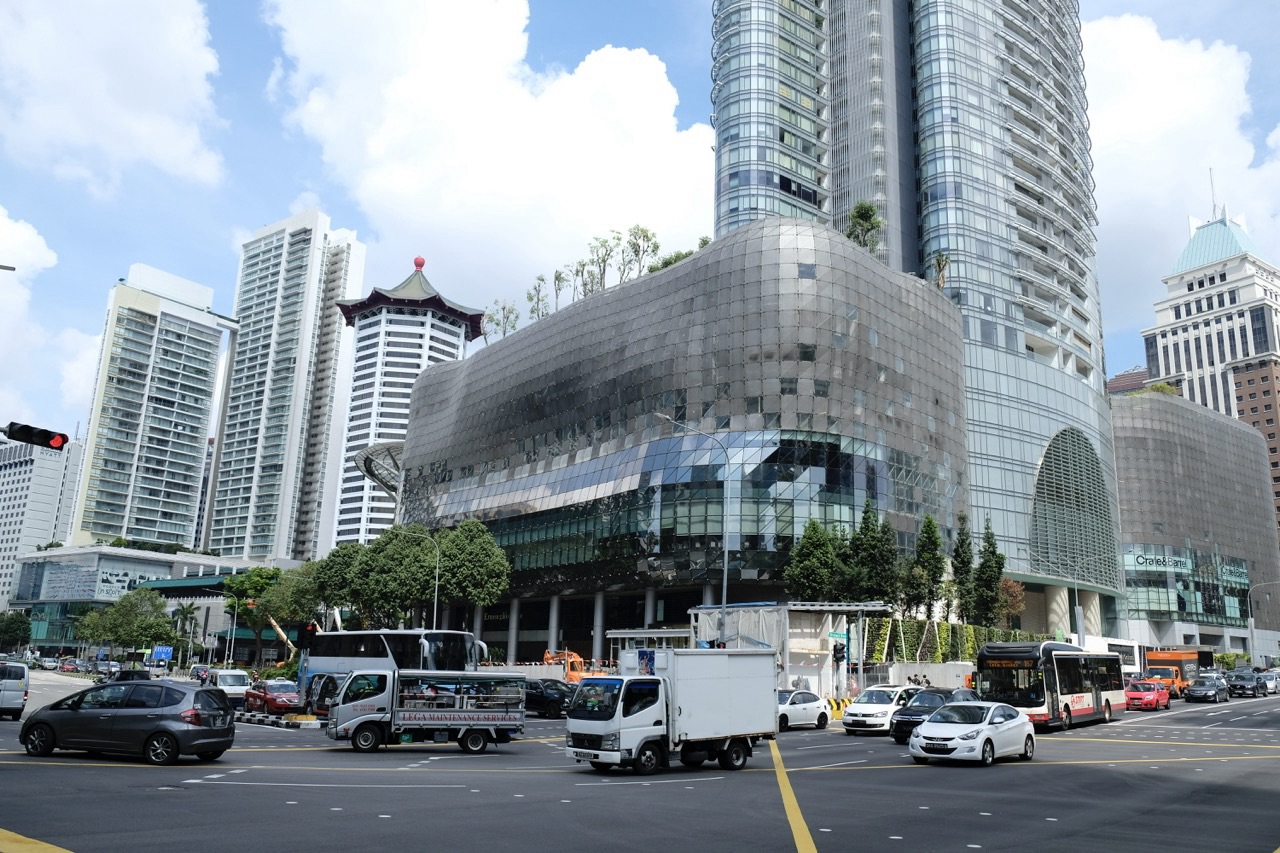
Transportation engineering makes the links between homes, schools, workplaces, freight, walking, cycling, buses, trains and roads work as one system. The goal is not to move the greatest number of cars at any cost. It is to let people and goods reach the places that matter safely and dependably.
A new junction timing can make vehicle statistics look better while crossing becomes harder for students. That single example shows why transport projects must measure complete journeys and their consequences across different modes.
This article expands The Gold Standard of Engineering beyond the specialised Railway Engineering and Automotive Engineering articles, with a multimodal network perspective.
Read transportation as a complete journey
1. Transportation engineering is about the journey, not the road
A road junction becomes faster for cars after a signal change. The transport report celebrates a lower average delay, but nearby students now wait much longer to cross and a bus connection is missed more often. Did transportation improve? That depends on whose journey and whose risk the project was meant to address. Transportation engineering cannot call one vehicle statistic a complete measure of public value.
The discipline connects the movement of people and goods to street geometry, traffic signals, public transport, walking and cycling networks, freight routes, accessibility, safety, land use and operations. Different modes use the same space in different ways. One decision can change travel time, risk and convenience elsewhere in the network.
The gold standard is therefore not the greatest number of vehicles moved per hour. It is a transparent design that accounts for real users and their full trips, considers foreseeable mistakes, applies the relevant engineering rules and measures what changed after implementation. An intersection, footpath or bus stop succeeds only as part of the journeys people actually make.
Back to chapters · Next chapter
2. Define access rather than counting movement for its own sake
People travel to reach schools, workplaces, healthcare, markets, friends and other purposes. Efficient travel matters, but an attractive trip-time figure can hide inconvenient access for someone who must walk a long way to a stop or transfer between services. The engineering objective should identify the users and destinations whose access is being improved.
Different trips have different constraints. A person using a wheelchair may need a continuous usable route; a parent accompanying a young child may value a safe crossing; a freight delivery requires suitable kerb access; an ambulance has time-sensitive operating needs. Designing solely for the most common car trip can omit major parts of the transport system.
Singapore’s Land Transport Master Plan refresh, updated 9 August 2026, revisits the earlier 2040 goals of 20-minute towns and a 45-minute city, transport for all, and healthy lives with safer journeys. These are policy goals rather than automatic compliance tests for any single road project. Engineers need project-specific measures that make such outcomes meaningful.
Back to chapters · Next chapter
3. Collect demand and experience without hiding uncertainty
Traffic counts reveal some movements but do not describe every trip. Engineers may also need pedestrian observations, bus boarding and alighting patterns, freight activity, travel-time variation, accessibility barriers and relevant incident information. The observation period matters: a junction studied only at midday may behave differently near school opening and closing times.
Measurements should be interpreted carefully. A road count can change because of roadworks, seasonal activities or a diversion. Travel time measured through a navigation service may not represent every traveller. A sample of observed crossings should record how and when it was collected. The engineer must distinguish measured conditions from assumptions, particularly when data are sparse.
Consulting users can expose missing routes and unusual operating conditions. Reports of a dangerous crossing are evidence worth investigating, though they are not necessarily proof of a specific physical cause. A gold-standard assessment brings together quantitative data and carefully interpreted experiences instead of dismissing either.
Back to chapters · Next chapter
4. A road has safety and place functions as well as traffic capacity
Roads can carry cars, buses, trucks, cycles and pedestrians crossing or travelling alongside them. They also affect access to shops, housing, public spaces and essential services. A design that maximises uninterrupted vehicle movement may be unsuitable where many people need to cross the road or where vehicles must enter and leave properties.
Engineers should establish the road’s intended role and the applicable design standards. Speed, sight conditions, traffic composition, junction spacing, access points and adjacent land uses interact. A treatment that is appropriate on a high-speed interurban road may be wrong at a school frontage. Copying a typical drawing without interpreting its environment is not sound engineering.
Land Transport Authority’s Road Repurposing initiative describes converting appropriate road space to support walking, cycling and improved public transport access. The programme illustrates why the allocation of finite street space is a real technical and public choice, not a side issue.
Back to chapters · Next chapter
5. Design for human error without pretending to eliminate it
Road users make mistakes, become distracted or misjudge a situation. A transport system should seek to reduce both the chance of serious conflicts and the consequences when errors occur. This applies to people driving, walking, cycling and operating transport services. Blaming the person involved in every incident can conceal repeatable design weaknesses.
The US Department of Transportation’s Safe System Approach recognises that humans are vulnerable and that engineering should help prevent serious injuries and deaths when mistakes occur. It is US policy guidance; the legal design rules for Singapore or another jurisdiction must be established separately. The principle of managing systemic risk is widely useful.
A good safety assessment asks where serious conflicts are plausible, who is exposed, which controls are available and how effectiveness can be checked. Historical crash counts are informative but imperfect: a low count can reflect limited exposure or random variation. Engineering should not wait for many serious injuries before addressing a credible and avoidable conflict.
Back to chapters · Next chapter
6. Junction design must serve more than one waiting queue
Junctions concentrate interacting movements. Vehicles turn, pedestrians cross, cyclists enter and buses may need priority. Engineers must understand the accepted traffic movements, safe visibility, signal operation, access and the physical space available. Reducing one phase’s delay can lengthen another or shift traffic to an adjacent location.
Traffic modelling is useful when its demand, signal timing, driver behaviour and network assumptions reflect the proposed situation. A simulated improvement may depend on unrealistic assumptions about turning flows or perfect compliance. The team should test sensitivity, compare with observed patterns and state the model’s limitations.
Where applicable, pedestrian intervals, crossing visibility, refuge features and other treatments deserve careful assessment. The US Federal Highway Administration’s Proven Safety Countermeasures collection describes evidence-supported strategies under US roadway contexts. Local adoption still requires suitable site assessment and the competent transport authority.
Back to chapters · Next chapter
7. Walking routes are transport infrastructure, not decorative footpaths
Walking is a necessary part of many journeys, including those made mostly by bus or train. A footpath that stops at a narrow crossing or a station route interrupted by steps can determine whether a trip is practical. The important engineering outcome is a continuous, accessible journey rather than the number of metres of new path constructed.
Consider width and movement space, surface condition, crossing opportunities, shade, lighting, drainage and accessible connections under the applicable requirements. Busy retail streets and quieter residential areas need different assessments. A perfect new segment has limited value when one unaddressed obstruction makes the full route unusable.
Under Singapore’s refreshed transport planning, a warmer climate, ageing population and changing travel patterns create reasons to revisit existing assumptions. A route should be tested with the people who must use it, including those with mobility or sensory needs. The system should remove avoidable effort from travel instead of making every traveller learn an improvised workaround.
Back to chapters · Next chapter
8. Cycling needs connected and understandable routes
A cycle path can appear successful on a map while requiring repeated awkward transitions across motor-vehicle traffic or crowded pedestrian areas. Cycling design should account for where journeys begin and end, how users cross roads and how the route meets public transport or destinations. The critical features are often at the interfaces, not the middle of an easy straight segment.
Different users have different speeds, experience and physical needs. The engineer should work within the local rules for path types, permitted devices, junction treatment and safe interactions. A route that works for an experienced cyclist may be intimidating to a beginner if its critical junctions are unclear.
Operational responsibilities also matter. Maintenance, temporary works, parked vehicles, surface defects and changed access can degrade a route. A new network is valuable when its connected journeys remain usable over time, not when an attractive length total is recorded on opening day.
Back to chapters · Next chapter
9. Public transport priority must be judged by passengers
Buses and trains move people through networks with multiple dependencies. A bus lane may improve timetable reliability, but effects depend on junctions, boarding, stop design and service coordination. A rail line may operate reliably while the local walking or bus connection makes the complete trip slow. Engineers should consider person-throughput and end-to-end travel rather than vehicle counts alone.
Timetable, interchange and access arrangements should be evaluated against actual travel patterns. If a crossing delay regularly causes passengers to miss a connecting bus, improving the crossing may deliver more useful benefit than a small change to free-flow car travel time. Engineering can make these trade-offs visible with appropriate data.
The Railway Engineering article examines track, power, signals and rail operations. Transportation engineering addresses how rail interacts with buses, active mobility, roads and the destinations people need to reach.
Back to chapters · Next chapter
10. Freight and servicing keep the city functioning
Food, construction materials, waste collection and other essential goods depend on transport systems. Freight vehicles need suitable routes, access times, safe loading arrangements and connections to logistics facilities. Ignoring these functions can cause unsafe stopping, unnecessary circulation or delays that affect many other users.
Land-use and transport planning should be connected. A busy loading activity beside a pedestrian entrance needs assessment of the interactions at that location. A freight project should not be judged solely by the number of vehicles moved when queues or dangerous manoeuvres are shifted to neighbouring streets.
Freight efficiency can be improved through route planning, appropriate delivery windows, better loading arrangements and coordination with the wider network. These are operational and planning choices that require evidence and consultation, not a universal instruction that every street should favour trucks or prohibit them.
Back to chapters · Next chapter
11. Travel-time averages hide difficult journeys
An average journey time can improve while reliability worsens for certain users. People may face unusually long delays during school peaks, heavy rain or a disruption. Engineers should examine distributions and relevant subgroups, not just one citywide mean. Uncertainty and variation are central to the travel experience, particularly when people need dependable arrival times.
Service measures can include travel-time reliability, safety, accessible journey completion and passenger experience. An infrastructure programme should identify which metric describes the promised benefit. A change that shifts delay from motorists to pedestrians requires a transparent evaluation rather than presentation as a universal improvement.
Measurement needs consistency. If a project changes survey routes, counting rules or observation periods, those differences should be disclosed. A sound before-and-after study compares conditions in a way that allows meaningful conclusions and separates the effect of the intervention from unrelated changes.
Back to chapters · Next chapter
12. Transport technology must support approved decisions
Traffic signals, sensors, travel-information systems and adaptive controls can improve operations, but they depend on reliable inputs, communication and operator judgement. A sensor may fail or misrepresent conditions, while a model may respond in an unintended way to an unusual event. Software should remain subordinate to the approved safety and operational framework.
Data can help identify congestion and safety concerns, but the system needs rules for how those observations lead to action. Information integrity, privacy, maintenance and cybersecurity may be relevant when networks are connected. An attractive dashboard does not make a signal or road layout safe.
Technology evaluations should include people. Can a traffic control operator recognise an important fault? Can users understand an alternative route? Is there an appropriate fallback when the system cannot provide accurate information? Software that optimises one intersection without regard to neighbours may worsen the wider network.
Back to chapters · Next chapter
13. Temporary works and maintenance are part of transport engineering
Road resurfacing, utility works, bridge repairs and new developments can interrupt ordinary movement. A good engineering plan considers how people will travel during the work, not just how the completed asset will look. Pedestrian access, public transport arrangements, emergency routes and information can require special coordination.
Assets need maintenance after handover. Road surfaces, markings, signals, footpaths, crossings and other elements deteriorate or change as nearby land use evolves. Inspection programmes should connect observations to competent assessment and completed repairs. A defect ticket is not an outcome until a relevant risk has been addressed.
The Public Infrastructure Inspection and Construction Management guides cover complementary parts of this work. Transportation engineering keeps the user journey central through planning, construction, disruption and renewal.
Back to chapters · Next chapter
14. Network resilience must include the people stranded by a disruption
A flood, breakdown, accident or power interruption can disrupt routes beyond the original incident location. Alternate paths and modes may become crowded. Transportation engineers need to understand critical dependencies, access to essential destinations and the communication needed to help affected users make reasonable choices.
Resilience is not merely building more road capacity. An alternative route may be inaccessible to some travellers; a replacement bus service may have different capacity or travel time; a closed crossing may isolate a community. The relevant response depends on the situation, available infrastructure and the authority responsible for operations.
Good recovery plans distinguish technical restoration from restored user access. A traffic signal can return to service while displaced pedestrians still face a barrier. Measures of recovery should reflect whether safe and practical journeys are available, not only whether a work order has been closed.
Back to chapters · Next chapter
15. The gold standard is a safe journey that can be understood and repeated
Transportation engineering joins physical design, public needs, operations and lifecycle management. Its decisions affect people who use different modes, live in different places and have different mobility needs. Public value is not measured solely by the speed of the most visible traffic stream.
Review a project against its real promise. Are the crossings safe and understandable? Can buses and trains connect effectively? Do freight and emergency activities have workable arrangements? Are design assumptions supported by observations, and do maintenance and disruptions remain managed? The answers may involve trade-offs, which should be stated rather than buried in the model.
The gold standard is infrastructure and operations that make necessary movement safe, accessible and dependable under realistic conditions. The achievement is not a traffic simulation that turns green; it is the journey that works outside the engineer’s office.
Case study: a faster junction and an inconvenient school crossing
In this fictional example, an urban signal adjustment reduces average delay for cars. A school travel review then finds that parents and students are waiting longer to cross and sometimes miss the connecting bus. The engineering response should reassess the movement of people, the safety exposure, the network context and what the original project promised rather than insisting that the single vehicle-delay statistic defines success.
| Measured outcome | What the number says | Important missing question |
|---|---|---|
| Lower car delay | Selected motor-vehicle movements became faster | What changed for other modes and adjacent streets? |
| Longer pedestrian wait | Crossing convenience may have deteriorated | Who is affected and what safety trade-offs exist? |
| Bus missed more often | End-to-end journey reliability may have changed | Does the crossing connect to the actual timetable? |
| Lower modelled congestion | Selected assumptions produced a favourable result | Do real observations support those assumptions? |
| Project accepted | A technical milestone was completed | Have intended user outcomes been validated? |
Questions for a transport engineering review
- Which people and goods movements are the project meant to improve?
- Do observations cover relevant users, time periods, and exceptions?
- Are safety and accessibility evaluated for all affected modes?
- Do junction and route models represent actual demand and their uncertainty?
- Has the project been assessed for effects on neighbouring streets and transit connections?
- Are construction, maintenance and disruption arrangements practical for users?
- Can measured performance be compared with the original travel and safety objectives?
Transportation sources and related eduKate articles
- LTA — Land Transport Master Plan Refresh (2026)
- LTA — Road Repurposing for Walk–Cycle–Ride
- US DOT — Safe System Approach to Road Safety
- FHWA — Proven Safety Countermeasures
- FHWA — Safe Transportation for Every Pedestrian
- eduKate — Railway Engineering
- eduKate — Urban Drainage
- eduKate — Public Infrastructure Inspection
- eduKate — Sectors and Services Article Directory
This article is a technical-literacy guide, not a road design, signal-setting proposal or traffic-control instruction. Actual road works and transport operations require appropriate professionals, safe assessments and the applicable authority’s approvals and standards. Return to the Gold Standard master hub.