
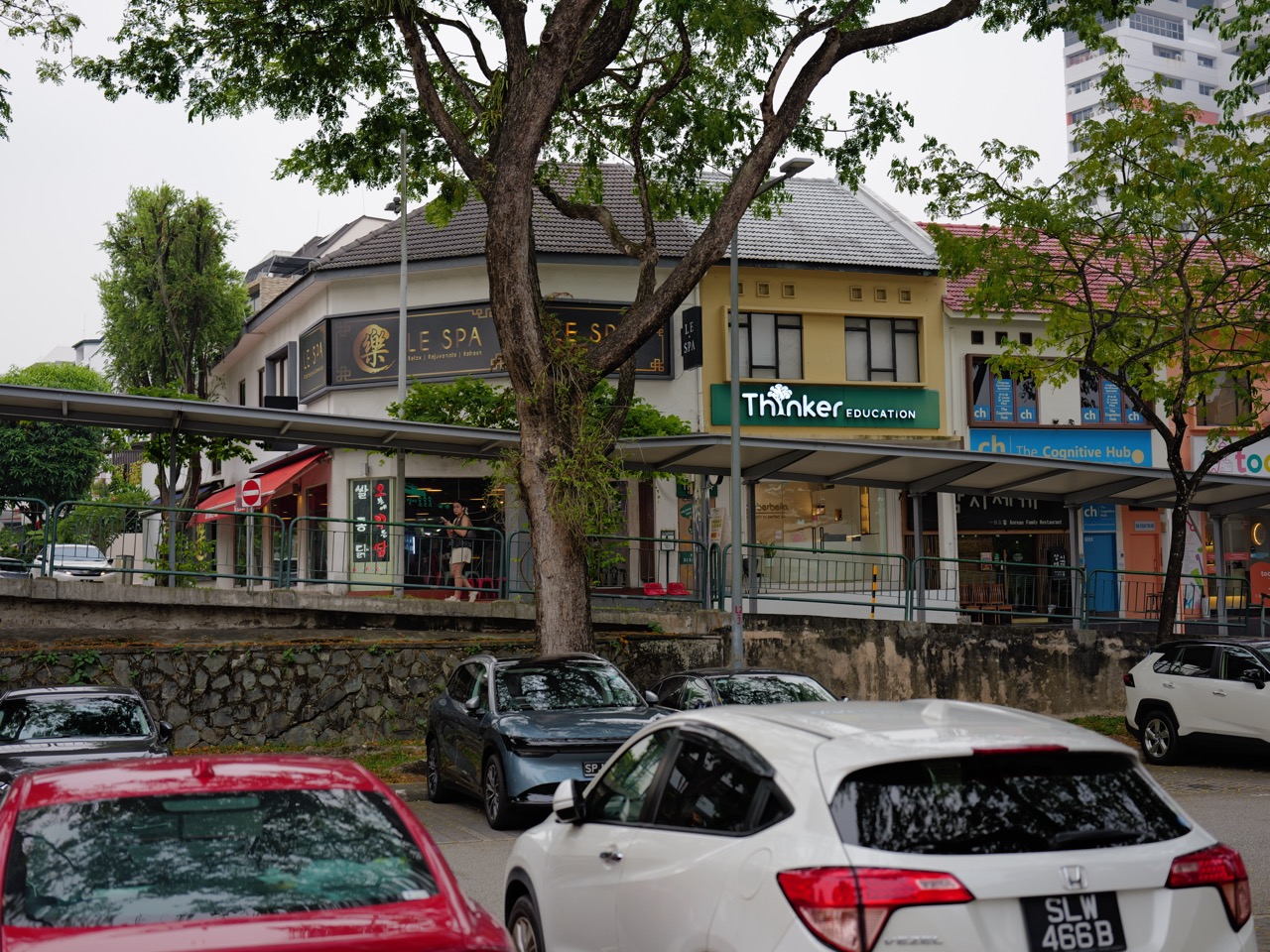
A Singapore business owner leases a shophouse previously approved for retail and plans to open a tuition centre. The landlord agrees, so the owner begins renovation. Only later does the operator discover that a change of use can need URA planning permission before the new activity starts. Approval by a landlord, registration with ACRA and the legal planning use of a property are different decisions.
The Gold Standard of URA Change of Use Application Services is a reliable route from identifying a unit’s existing approved use to selecting the correct lodgment or formal planning application, proving lawful owner consent, understanding fees and regulatory dependencies, and commencing a genuinely permitted business. Clear early decisions matter because an unsuitable premises can consume months of rent and renovation expenditure.
The Urban Redevelopment Authority (URA) updated its guidance in July 2026. Eligible lodgments cost S$150 with instant deemed approval, while formal change-of-use applications cost S$500, are non-refundable and generally take around ten working days when complete. Which route applies depends on the location and intended use, not the applicant’s preference for a cheaper fee.
Choose the correct planning path before signing or renovating
The chapter map follows the existing URA-approved use, lodgment eligibility, formal review, owner consent, other agency clearances and the decision that lets an actual business use the premises lawfully.
1. Start with the current approved use of the unit
A landlord may call a shophouse suitable for retail, food or tuition, but the planning record could approve a different activity. The first step is not a rental negotiation; it is to establish the actual currently approved use and whether the proposed business fits it.
The URA business owners’ guide links to URA SPACE for the last approved use of shophouses and selected commercial and industrial units. An accurate service identifies the specific unit, current use, zoning and proposed activity rather than assume commercial zoning permits every commercial use without assessment.
Back to chapter map · Next chapter
2. Distinguish changing a use from making renovations
A business may repaint and install shelves without fundamentally changing an approved shop use, while another can change the use of an unaltered space into a school or restaurant. Physical works and planning use are different regulatory questions.
URA’s change-of-use process assesses whether the activity is compatible with the surroundings. Building alterations, fire safety approvals and other renovations can separately require BCA, SCDF or landlord consent. A completed renovation agreement does not itself mean the change of use has been approved.
Back to chapter map · Next chapter
3. Check land use before committing to a lease
A founder may sign a three-year lease and pay a substantial non-refundable deposit before discovering that the space cannot legally operate as a childcare centre. The owner’s willingness to let the premises is not regulatory authority.
URA specifically advises applicants not to commit to tenancy or renovation expenditure before obtaining the relevant planning decision. A Gold Standard enquiry should surface likely zoning and compatibility barriers first, with an explicit warning that an enquiry result is not necessarily final approval.
Back to chapter map · Next chapter
4. Use URA SPACE for the correct location
Shophouses and selected properties can have earlier approved uses that differ from the business most recently visible at the premises. A bakery storefront last year does not establish that a classroom today is approved.
URA SPACE provides allowable-use and last-approved-use information for applicable properties, reflecting records at the time of enquiry. A public service should preserve the exact address and enquiry date, and explain when a formal application is required despite a promising preliminary search.
Back to chapter map · Next chapter
5. Distinguish Master Plan zoning from a blank cheque
An owner may see that an area is zoned Commercial and assume any shop, gym, nightclub or commercial school can operate there. Zoning permits categories of activity under planning policies, not unlimited uses without nuisance constraints.
URA evaluates compatibility with the Master Plan, prevailing planning controls, visitor activity, disamenity and effects on neighbouring premises. A useful result explains the actual proposed use and local context rather than return an unqualified ‘commercial = approved’ message.
Back to chapter map · Next chapter
6. Recognise special Activity Generating Use locations
Some streets are designated to encourage active ground-floor uses that enliven a public precinct. Replacing those activities with private classrooms or storage may undermine a specific urban-design requirement.
URA’s 2026 change-of-use guidance refers applicants to Activity Generating Use requirements in development-control guidance and URA SPACE. A Gold Standard form should flag a relevant designation before the application is paid for, without treating every commercial street as subject to the same conditions.
Back to chapter map · Next chapter
7. Decide whether the fast lodgment scheme applies
A business owner may hear that change of use approval is instant and budget only S$150, although that fast route applies only to prescribed locations and specified activities. Another applicant might unnecessarily pay S$500 and wait ten days for a qualifying lodgment.
URA distinguishes the Change of Use Lodgment Scheme from a formal evaluated application. The service should first check site, floor, proposed use and every lodgment condition before offering the fast option.
Back to chapter map · Next chapter
8. Treat lodgment as a conditional planning permission
The simplified route is generally for pre-identified uses within selected commercial buildings, first-storey shophouses and relevant private business-park commercial components in suitable zones. It is not a universal self-declaration method.
Under URA’s current conditions, the unit must be approved commercial space, have no prohibited public walkway or plaza occupation, avoid additional floor area, comply with special planning restrictions and meet other requirements. A submitted S$150 lodgment is deemed approved only when it legitimately satisfies those conditions.
Back to chapter map · Next chapter
9. Check that the proposal has not already commenced
A business may begin lessons or food operations before lodging, then claim the instant-approval route because the activity seems otherwise acceptable. The fast path is not meant to retroactively approve an unauthorised operating history.
URA expressly requires that proposed use has not yet commenced on the ground for the lodgment scheme. It also excludes premises with unauthorised works under the Planning Act. A proper service should ask about the actual start date and route a pre-existing unauthorised use to the appropriate assessed or enforcement process.
Back to chapter map · Next chapter
10. Respect the historic conservation exclusions
A ground-floor shophouse in a historic district can look like an ordinary commercial shop, but urban heritage controls may affect eligible uses and physical changes. The location itself can rule out simplified lodgment.
URA excludes conserved buildings in Historic Conservation Areas such as Kampong Glam, Chinatown, Little India, Boat Quay, Blair Plain, Emerald Hill and Cairnhill from the standard change-of-use lodgment route. Such applications need the appropriate formal assessment and any separate conservation requirements; a standard S$150 fast approval cannot be assumed.
Back to chapter map · Next chapter
11. Exclude unsuitable public circulation spaces
An entrepreneur might propose a pop-up stall or dining area on a covered public walkway because it is accessible and seems commercially valuable. Yet its original public-use purpose can make it ineligible for fast change-of-use lodgment.
URA’s lodgment conditions exclude areas approved for public circulation or use, including car parks, covered walkways, pedestrian links and public plazas. The service should identify the actual legally approved premises boundary instead of accepting a floor plan that quietly incorporates common public space.
Back to chapter map · Next chapter
12. Identify when a formal S$500 application is required
An operator wanting a non-prescribed use, a complex venue or a proposal with amenity impact cannot force it through a fast lodgment merely by choosing a convenient category. The formal route allows context-specific review.
URA’s July 2026 guide sets a non-refundable processing fee of S$500 for formal Change of Use applications and an indicative review period of ten working days once the submission is complete, with longer cases when other authorities must be consulted.
Back to chapter map · Next chapter
13. Show the instant S$150 lodgment separately
A qualifying first-storey commercial unit can follow the simplified process after satisfying all relevant conditions. A trader should understand that no lengthy discretionary review is normally involved in this limited pathway, but it does not exempt other agencies’ approval.
URA lists S$150 for Change of Use Lodgment, non-refundable once approval is issued, with deemed instant approval and the acknowledgement sent to the relevant email on the same day. The system should show lodgment accepted and legally applicable conditions rather than claim every business licence is already granted.
Back to chapter map · Next chapter
14. Get the actual property owner’s written consent
A tenant can be willing to pay URA while a property owner has not consented to the new use. The proposed arrangement may then conflict with the lease and planning application documents.
URA requires written owner consent for change-of-use applications or lodgments by non-owners. Where HDB, SLA or JTC is the actual landowner, its specified consent is required. A responsible form identifies the legal landlord and does not treat a commercial property agent’s email as a substitute for the required owner authority.
Back to chapter map · Next chapter
15. Provide an accurate floor plan
A broad claim that an entire unit becomes a small office can hide a plan containing kitchens, customer seating, classrooms or additional construction. The authority needs to know what activity each part of the space will support.
The formal change-of-use application requests a floor plan showing dimensions, layout and usage. In a shopping centre or multi-unit building, URA also asks for a location plan identifying the exact unit. A quality submission checks that the narrative, floor area and plan agree.
Back to chapter map · Next chapter
16. Make the applicant’s role traceable
The business owner, landlord, consultant or Qualified Person may apply, but they have different responsibilities and access to documents. A paid consultant should not be able to submit a false consent declaration or impersonate the applicant.
URA accepts submissions through GoBusiness. The service should record the real applicant and property owner, authorised representative and business UEN where appropriate. Singpass and Corppass authentication should be used properly without password sharing.
Back to chapter map · Next chapter
17. Identify approvals needed from other agencies
A restaurant may need SFA food retail licensing, an early childhood centre needs ECDA permission, and a nightlife venue may need Police public entertainment approval. The planning decision is not the last regulatory step.
URA expressly says separate approvals can be needed from SCDF, LTA, NEA, PUB, SFA or ECDA depending on use. A Gold Standard decision letter lists material dependencies and describes the planning approval’s scope rather than imply paying the planning fee creates an all-in-one operating licence.
Back to chapter map · Next chapter
18. Treat SCDF fire safety as a serious dependency
Changing a shop into a tuition centre or restaurant can alter occupant loads, escape provisions and building services. A premise formerly approved for retail may not meet the requirements for the new use without works.
The Fire Safety Certificate guide explains that approved fire-safety plans and a completed, inspected installation are separate. The business should obtain relevant SCDF approvals and not open solely because URA’s planning use is acceptable.
Back to chapter map · Next chapter
19. Consider residential amenity and noise
A commercial operation near homes can generate deliveries, visitors, music, cooking odours or late-night crowds. Good planning protects both useful businesses and residents’ ability to live comfortably.
URA considers disamenity and compatibility, including operating arrangements and relevant nuisance risks. The public application should describe realistic activities, hours and patron numbers where material. A future operating licence cannot undo a deliberately misleading planning declaration.
Back to chapter map · Next chapter
20. Recognise Land Betterment Charge as a separate possible cost
The S$150 or S$500 processing fee does not mean the business will have no other land-use-related public charges. A change to a more valuable approved use can lead to land betterment considerations.
URA notes that the Singapore Land Authority may collect Land Betterment Charge for a change of use. The business should seek the appropriate SLA assessment and distinguish this potential liability from the non-refundable URA filing fee and private contractor costs.
Back to chapter map · Next chapter
21. Provide an accurate ten-working-day expectation
An applicant might promise an opening ten working days after filing even if the floor plan is missing and LTA or SCDF must be consulted. That confuses an indicative service target with guaranteed approval.
URA ordinarily takes about ten working days to review a complete formal application, with additional time for incomplete documents and cross-agency consultation. The platform should show file complete, under consultation, more evidence required, approved or refused, rather than a countdown that implies approval is automatic.
Back to chapter map · Next chapter
22. Explain renewal of temporary approved use
Some permissions are time-limited. A business could operate lawfully for a period then continue beyond expiry without checking whether approval must be renewed.
URA’s Renewal of Use guide requires applications within the three months before Temporary Permission expires, with an ordinary S$500 non-refundable processing fee and a ten-working-day review target for complete cases. Renewal can be refused based on current planning circumstances.
Back to chapter map · Next chapter
23. Distinguish plan approval from lawful start date
A retailer can hold an approved change-of-use decision while the intended food, medical or childcare activity still needs a separate operating licence and suitable completed premises. Opening early could breach the other authority’s requirements.
The service should present planning permission, building or fire clearance, final applicable sector licence and business opening as separate milestones. An approved URA letter has clear legal meaning, but it is not proof that food handlers are qualified, medical staff approved or a fire escape tested.
Back to chapter map · Next chapter
24. Handle an unfavourable planning decision with reasons
A proposal can be commercially viable and still conflict with zoning, heritage requirements or surrounding uses. The regulator should explain the actual planning issue rather than imply a refusal shows the applicant is a bad business owner.
URA says formal change-of-use applications are contextually assessed and may be approved or disapproved. The case service should identify the relevant planning consideration and provide the proper clarification or lawful review route, without suggesting a repeated application with identical false facts will obtain approval.
Back to chapter map · Next chapter
25. Do not treat later floor changes as automatically covered
A school may add classrooms or a restaurant may occupy extra neighbouring floor area after planning approval. That can change intensity and public safety obligations from the arrangement the regulator considered.
A Gold Standard compliance process records the approved unit, layout, use and any duration conditions. The operator should check with URA and competent agencies before making material changes, rather than assume one planning approval covers adjoining premises not identified in the original decision.
Back to chapter map · Next chapter
26. Explain enforcement without using it as a licensing shortcut
A business operating without planning permission might receive a notice and ask whether paying a civil penalty simply purchases approval. Enforcement and normal planning evaluation have different legal functions.
URA’s October 2026 civil penalty guidance describes penalties for unauthorised retained uses and works, with actual treatment dependent on facts. Paying a penalty does not mean every previously unlawful use becomes automatically approvable or that deliberate misstatements have no consequence.
Back to chapter map · Next chapter
27. Worked example: a shophouse becomes a tuition centre
Fictional operator Cedar Learning wishes to lease a Bukit Timah shophouse approved as a retail shop and use it as a commercial tutoring school. The operator first checks URA SPACE for last approved use, conservation controls and whether the intended school falls within the particular site’s lodgment conditions.
If formal review is needed, Cedar obtains owner consent, a dimensioned floor plan and any preliminary technical advice, then budgets S$500 and the indicative ten-working-day assessment. It does not pre-sell classes or begin renovations on an assurance that changing a shop to a school always receives approval. It separately addresses SCDF and any other applicable operational requirements before inviting children into the unit.
Back to chapter map · Next chapter
28. Worked example: a qualifying low-impact commercial conversion
Fictional business Riverfront Studio takes a small approved first-storey commercial unit within an eligible location and proposes a pre-identified low-impact use that meets every URA lodgment condition. It has written owner consent, does not occupy common walkways and has not already started operating.
Riverfront uses GoBusiness Change of Use Lodgment, pays the S$150 fee and receives the deemed planning approval if the complete declaration legitimately qualifies. It still obtains other necessary licences and building clearances. This scenario illustrates that fast approval is legally narrow, not a promise that all commercial space can switch use instantly.
Back to chapter map · Next chapter
29. Measure lawful premises and informed business decisions
The agency could report hundreds of fast approvals while businesses fail separate fire-safety tests, lose deposits before checking zoning or operate beyond temporary permission dates. Those would be poor real-world outcomes even if its web form is fast.
The Gold Standard is correct current use, appropriate fast or formal application, valid owner consent, timely evidence-based decision, clear cross-agency handovers and actual lawful operation. The service should reduce preventable sunk costs and improve neighbourhood compatibility, not merely count change-of-use applications.
2026 URA planning application comparison
| Route | Eligibility | Published fee | Published decision timing |
|---|---|---|---|
| Change of Use Lodgment | Pre-identified low-impact uses and eligible premises with all conditions met | S$150 | Instant deemed approval upon valid lodgment |
| Formal Change of Use | Proposals requiring context-specific assessment | S$500, non-refundable | Generally 10 working days when complete |
| Renewal of temporary approved use | Existing temporary permission, filed within 3 months before expiry | S$500 | Generally 10 working days, subject to review |
| Separate SFA, ECDA, SCDF or other licence | Depends on actual business activity | Agency-specific | Separate decision and condition |
URA approval, premises readiness and lawful opening are not identical
| Stage | Established | Not yet established |
|---|---|---|
| Landlord agrees to lease | Commercial consent | Planning use approved |
| URA use enquiry completed | Previous and allowable use information | Final project approval |
| URA lodgment or formal approval granted | Use acceptable under stated planning terms | Other technical and sector licences |
| Relevant other approvals obtained | Prescribed fire, food, childcare or other conditions addressed | Continuing operating compliance |
Common change-of-use questions
- Does commercial zoning permit any commercial use? No. Specific uses and amenity controls apply.
- Can my landlord approve the activity for URA? Landlord consent is needed but does not replace planning approval.
- Does every use qualify for instant S$150 lodgment? No. Strict eligibility and premises conditions apply.
- Is S$500 refundable if formal change of use is refused? No, the processing fee is non-refundable.
- Does URA permission include SFA and SCDF approval? No, other licences and safety decisions may still be required.
- Can a temporary permission run indefinitely? No. Renew through the prescribed route when eligible and before expiry.
The government change-of-use service audit
- Can an applicant verify the unit’s current approved use before tenancy and renovation commitments?
- Does the service explain formal versus conditional lodgment accurately?
- Are zoning, conservation, public walkways and amenity impacts checked?
- Is the real property owner’s written consent on file?
- Do supporting location and floor plans identify the correct premises and intended use?
- Are S$150 versus S$500 payments and non-refundable rules clear?
- Do applicants receive truthful status when other authorities need consultation?
- Does URA approval show separate SCDF, ECDA, SFA and other dependencies?
- Are temporary permissions and lawful renewal dates visible?
- Do resolved cases result in actually lawful premises rather than application receipts?
URA and Singapore agency sources, with connected eduKate articles
- URA: Change of Use formal application, July 2026
- URA: Lodgment Scheme, S$150 and detailed eligibility
- URA: Renew a temporary approved use within 3 months before expiry
- URA: Business use of conservation buildings
- URA: October 2026 unauthorised-use penalties
- URA: Official property-use enquiry
- GoBusiness: Planning and sector licence applications
- SLA: Land Betterment Charge separate from URA fee
- eduKate: Business Registration Services
- eduKate: Fire Safety Certificate Application Services
- eduKate: Food Shop Licence Application Services
- eduKate: ECDA Childcare Centre Licensing Services
- eduKate: Public Entertainment Licence Application Services
Featured photograph: heritage commercial shophouses on Chun Tin Road, Bukit Timah, for contextual illustration; it is not evidence of any specific unit’s approved use or planning status. Part of The Gold Standard | eduKate Singapore and its Sectors and Services Article Directory. The actual URA decision, planning controls and separate licences govern each site. This is educational planning-service guidance, not professional planning or legal advice.