
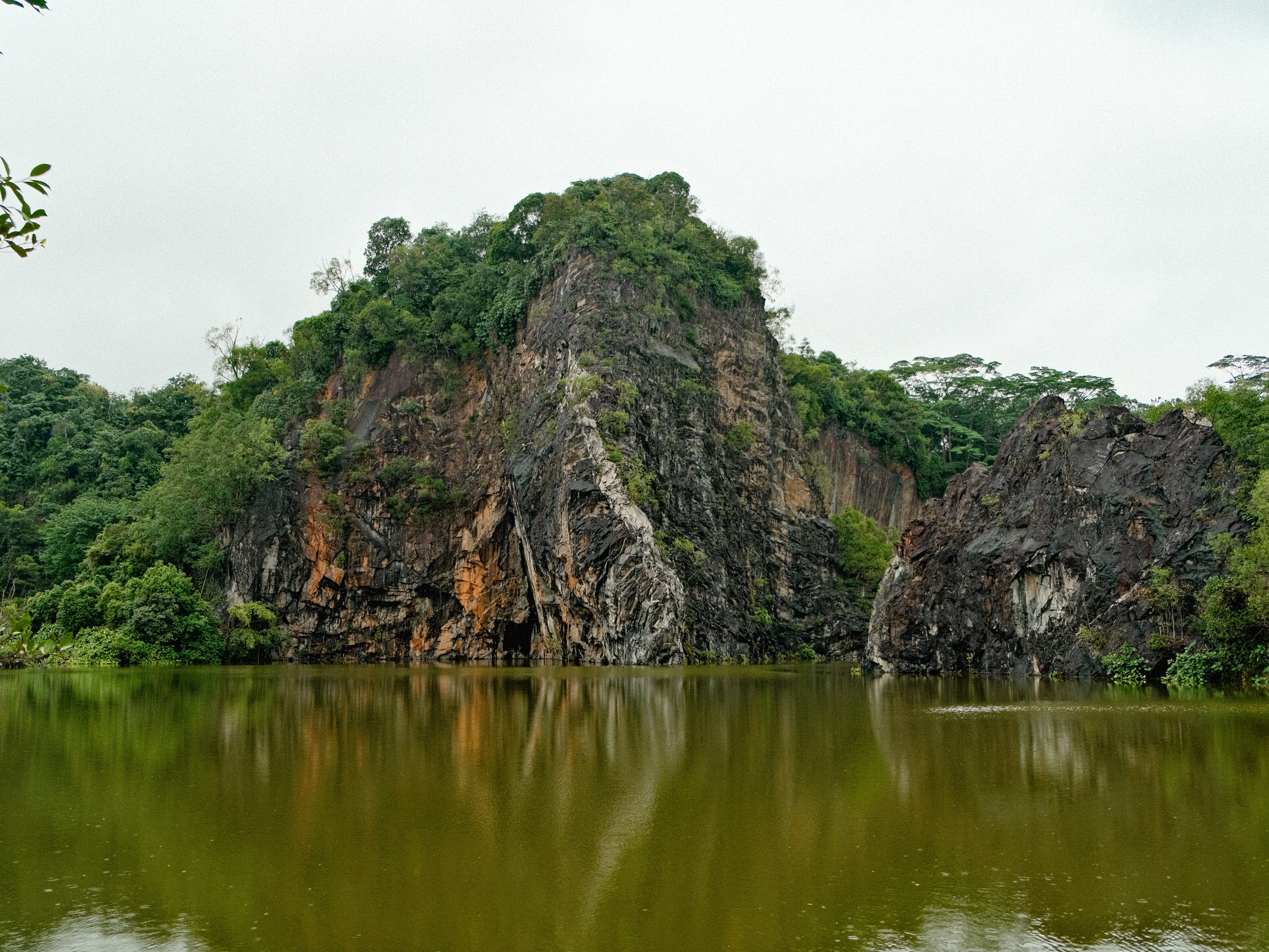
The best free things to do in Bukit Batok include visiting Little Guilin at Bukit Batok Town Park, walking the quarry and World War II history trails of Bukit Batok Nature Park, and watching butterflies or enjoying the playground at Bukit Gombak Park. These are three different green spaces. For a rainy-day alternative, Bukit Batok Public Library reopened at West Mall on 27 March 2026, with larger reading areas and soundscape features. Families do not need to buy an attraction ticket to have a worthwhile day here.
Choose the park to fit the visitor: Little Guilin is best for a relatively easy quarry view; Bukit Batok Nature Park offers an easy-to-moderate trail with slopes and stairs, and Bukit Gombak Park offers a shorter hill trek with 108 steps, a butterfly garden and nature-inspired play. The locations should not be treated as one seamless route just because they all contain the words Bukit Batok or Bukit Gombak. Decide where to start, how to return and what to skip if rain or tiredness changes the plan.
- Best free photograph: Little Guilin quarry lake at Bukit Batok Town Park, near Bukit Gombak MRT.
- Best nature and history walk: Bukit Batok Nature Park, approximately 3.87 km of trails overall, with an estimated 1–2 hours for the NParks nature walk.
- Best butterflies and hilltop: Bukit Gombak Park, with a 400-metre uphill loop and 108 steps.
- Best short playground: Bukit Gombak Park, with a nature-themed slide and swings.
- Best rainy-day library: revamped Bukit Batok Public Library at West Mall, reopened 27 March 2026.
- Important rules: no fishing or pets at Little Guilin; no fishing at Bukit Batok Nature Park, and keep dogs leashed there.
- Check park access, light conditions, weather and the correct MRT or bus stop before departure.
This is a practical companion to Things to do in Singapore | Bukit Batok. It concentrates on what each park offers, who it suits, how to avoid common mistakes, and what makes the landscape and the library worth revisiting.
1. Little Guilin is Bukit Batok Town Park, not Bukit Batok Nature Park
Bukit Batok Town Park is also known as Little Guilin because of the granite cliffs rising out of its quarry lake. NParks lists the park along Bukit Batok East Avenue 5, 42 hectares in area, open 24 hours and wheelchair accessible. The nearby station listed by NParks is Bukit Gombak MRT. A short visit here is suitable for people who mainly want scenic views, quiet conversation or photography.
This is not the same as Bukit Batok Nature Park, where the former quarry, forest trails and historical war memorial plaque form a different experience. A visitor who searches for a generic ‘Bukit Batok quarry’ may see photographs from both parks. Decide which landscape you want before choosing a station or carpark.
At Little Guilin, take a modest lakeside walk, choose an appropriate public viewing point and enjoy the reflections in calm conditions. You do not need to scale rocks, touch the water or reach an informal cliff viewpoint to appreciate the landscape. NParks: Bukit Batok Town Park.
2. Little Guilin: why the granite lake is interesting
The lake occupies a former granite quarry whose steep faces create the dramatic rock formations that distinguish it from an ordinary neighbourhood pond. The water and cliffs tell a story about how industrially used land can become public scenery. A child looking at the rocks may ask why the walls appear so abrupt; that question begins a simple conversation about excavation and geology.
Explain the difference between a quarried rock face and a naturally eroded hill without pretending they are identical. The original activity changed the landscape, and the later park design changed how people use it. A site once associated with extracting material can become a place to observe and rest. That combination of human and physical geography makes the view memorable.
Keep an appropriate distance from the water and do not scramble on rock walls. The park has explicit no-fishing and no-pets rules, which visitors should check rather than guessing from other parks nearby. Public access may be free, but parking and other expenses are separate.
3. A short, low-stress Little Guilin family outing
With young children, let the photograph be the beginning rather than the whole purpose. Stand at a safe public viewpoint, notice the reflection of the cliffs, and ask whether the water looks different in shade and sunshine. The child can draw the outline of a cliff or describe what changes when wind disturbs the surface.
Choose a stopping point that is close enough for the slowest member of the group. For a grandparent who wants a quiet view, there is no value in turning a short visit into a long route through several separate parks. A family that remains together and comfortable will often remember the outing more positively.
If the sun is strong, shorten the visit and find shade. If a thunderstorm approaches, move into a substantial building rather than lingering by the water. A park being open all day does not mean that exposed areas are appropriate under all conditions.
4. Bukit Batok Nature Park: a separate quarry and forest
NParks describes Bukit Batok Nature Park as a 36-hectare site developed in 1988 on an abandoned quarry. It contains secondary forest, quarry viewpoints, wildlife and a World War II memorial plaque. The park is open 24 hours, but a full nature walk includes uneven terrain, steep slopes and steps. It suits visitors who actively want a woodland outing rather than a short, easy photograph.
The official trail guide is about 3.87 kilometres overall, estimated to take one to two hours at an easy-to-moderate level. That is useful information for older children and active adults, but families must be realistic about the steep sections. NParks’ general park accessibility listing does not guarantee that the entire hiking trail can be completed by a wheelchair user.
Choose a route that matches the group. The quarry view from the public plaza is a worthwhile destination by itself, while the war memorial area can be part of a more deliberate historical walk. NParks nature walk and difficulty guide.
5. The quarry viewpoint inside Nature Park
Visitors often want to stand at the quarry pool and watch the rock face reflected in the water. NParks identifies the plaza beyond the playground as a suitable viewing point. It offers a way to observe the old quarry without attempting unsafe edges or climbing. The scene is striking partly because the forest now surrounds an industrial scar.
Explain to children how vegetation can return to a disturbed landscape over time. They may see trees and plants around rocks and water, which can prompt a conversation about succession and conservation. Keep the explanation simple and avoid claiming that the present forest has never been altered by people.
Do not swim, wade or fish at the quarry. Respect all barriers and signs. The most enjoyable view is the one reached safely, with enough time left to return before anybody is tired or weather conditions change.
6. The World War II memorial plaque: history without sensationalism
Bukit Batok Nature Park has a memorial plaque connected to the wartime history of the hill. NParks explains that a Japanese memorial, the Syonan Chureito, once stood in the area and was later destroyed. The present memorial information is not the intact wartime monument, and a visitor should not expect to see its original structures standing as they did during the occupation.
The significance is that the landscape carries the memory of war as well as nature and quarrying. A family can approach this place respectfully by reading the plaque and discussing why societies remember difficult events. Do not turn the memorial into a spooky attraction or treat the subject as a competition over which historical story is more dramatic.
Children can ask how a landscape acquires different meanings across generations: a quarry, a wartime site, then a public park. Encourage them to separate what a plaque states from what they might imagine. Historical accuracy and respect are especially important in places associated with loss of life.
7. Wildlife without disturbing it
NParks lists animals associated with Bukit Batok Nature Park, including Straw-headed Bulbul, Malayan Colugo, Grey-headed Fish-eagle, fruit bats and long-tailed macaques. These are possible observations, not a guaranteed wildlife show. Some species are uncommon or difficult to see, and a family may have a good visit without spotting one.
Walk quietly, use your eyes and ears, and allow animals to move away freely. Do not offer snacks or approach monkeys to take close-up photographs. Keep food secure and follow any safety signs. Wildlife feeding changes animal behaviour and can create risks for both people and animals.
For children, try a simple observation journal with place, time, weather and behaviour. They need not identify every animal confidently; recording what was actually seen is better than guessing. The habit of separating evidence from assumption is useful in science and everyday decision-making.
8. Bukit Gombak Park: butterflies, play and a shorter hill trek
Bukit Gombak Park lies along Bukit Batok West Avenue 5 and covers 4.8 hectares. NParks describes a butterfly garden, a nature-inspired play area and a hill trek leading up to a viewpoint. The park is open 24 hours and generally wheelchair accessible, but its 108-step hill route is a particular challenge that some visitors should choose not to attempt.
The butterfly garden supports more than twenty butterfly species according to NParks, including Plain Tiger, Common Tiger, Leopard and Lime Butterfly. A family hoping to see them should remember that butterflies are wild animals influenced by weather and time of day. Planting can encourage sightings but does not guarantee one on demand.
The park has a dog run, play features and other amenities distinct from the more observation-focused Little Guilin. It is a good candidate for children who need room to move after a period of quieter nature exploration. NParks: Bukit Gombak Park.
9. The 108-step hill: an option, not a requirement
The 400-metre hill trek at Bukit Gombak Park has a flight of 108 steps and rises to a high point around 45 metres above sea level. A confident walker may enjoy the climb and the broader view. However, steps and sloped ground change the outing’s difficulty, especially after rain or for people with balance, knee or mobility concerns.
Before starting, ask whether everyone can comfortably descend as well as climb. Young children sometimes rush towards a lookout, then become tired before returning. Give the group permission to stop or choose a flatter path. The hilltop is a possible reward, but an enjoyable day does not depend on reaching it.
A school-age child might compare the hill’s height with the height of nearby buildings or discuss why some park paths contain stairs. This turns a short physical challenge into a lesson about landforms and accessible design without treating the climb as a compulsory exercise test.
10. The butterfly garden: what to look for
Butterflies can turn an ordinary short walk into an absorbing observation activity. Watch how they approach flowers, move between patches of planting and rest on leaves. You may notice different wing colours and flight patterns. If the child has seen photographs of a Plain Tiger or Lime Butterfly, ask them to describe similarities without insisting on a certain species.
Do not catch or touch the insects. Do not pick leaves or flowers for a closer look. A quiet visit respects the ecological function of the garden as well as its appearance. Children can record observations using a few words, a drawing or a photograph taken without interfering with the animal.
Butterfly habitat also demonstrates how a public park can support biodiversity through deliberate planting. The garden is designed, but the insects are not decorative objects under the owner’s control. That distinction between creating suitable conditions and controlling living things is a useful scientific idea.
11. Playgrounds: separate active play from protected forest
Bukit Gombak Park has a nature-themed playground with a slide embedded in the terrain, balance features and swings. Bukit Batok Nature Park also has facilities for children, but its woodland paths and slopes should not be treated as a free-for-all play area. The presence of a playground in one part of a park does not remove the need for care near quarry water and steep ground.
Choose equipment that suits the child’s age and confidence, check the posted recommendations and supervise climbing or running near changes in level. The objective is active, happy recreation rather than proving the child can conquer the most demanding structure.
When children want to play after a nature walk, consider ending the nature part first. Some families are happiest visiting the playground on another day. Enjoying one thing well often creates a better memory than moving through several different demands without rest.
12. Bukit Batok Public Library reopened in March 2026
Bukit Batok Public Library at West Mall was closed for an extensive revamp after December 2023. An older article may still describe it as closed or refer to a temporary level-two borrowing kiosk. Those descriptions are out of date: NLB and its project partners confirm that the enlarged library reopened on 27 March 2026.
The redesigned branch occupies over 2,700 square metres across parts of multiple mall levels and features soundscapes inspired by Bukit Batok’s landscape, as well as refreshed reading areas and digital discovery features. That makes it a particularly relevant indoor alternative to the quarry parks: visitors can move from observing a real landscape to reading and listening in a space shaped partly by the town’s identity.
Use the NLB library directory for current hours, programme access and seat rules. Do not treat the temporary Browse-n-Borrow kiosk as the main library. The library’s March 2026 reopening announcement explains the design and reopening.
13. A rainy-day West Mall plan
West Mall sits beside Bukit Batok MRT and bus interchange and includes shops, food and the reopened public library. For a rainy day, make the library the main activity and treat eating or shopping as optional. A child might choose a book about geology, wildlife or stories unrelated to the outdoor visit; either choice can be worthwhile.
Some services at a library depend on registration, availability or operational hours. A comfortable reading session is not the same as an organised programme. Check the NLB listing before promising a particular workshop, computer terminal or study seat.
If the family had planned to visit the quarry park, do not attempt an outdoor visit during lightning. A library afternoon is a genuine alternative rather than an inferior consolation prize. Return for the nature walk when paths and weather are safe.
14. The difference between Bukit Gombak MRT and Bukit Batok MRT
These two stations are both on the North-South Line but serve different parts of the wider area. NParks lists Bukit Gombak MRT near Little Guilin and Bukit Gombak Park, while Bukit Batok MRT serves the West Mall town centre. Bukit Batok Nature Park has other possible transport approaches, so its most convenient access depends on the chosen entrance.
Choose the actual destination before selecting the station. A family travelling for a specific quarry photograph may arrive closer by Bukit Gombak, while somebody headed straight to the library should use Bukit Batok. A map with two similarly named stations can be confusing to first-time visitors.
Invite older children to check station names and explain why their route serves the correct park. Travel planning is an everyday reasoning skill. Avoid relying only on the estate name when giving meeting instructions.
15. A free outing that stays affordable
Public park visits at Little Guilin, Nature Park and Bukit Gombak Park do not normally have a general entrance fee. However, travelling, parking, meals and other paid services can create costs. The distinction matters for readers searching for free things to do with children.
A simple low-spend plan might be a short Little Guilin walk, water brought from home and an affordable meal if desired. Another might use Bukit Gombak Park’s playground and return after the children have had enough. Nobody needs to buy an activity ticket to justify time outdoors.
Set spending expectations before the visit. A small child who understands that the plan is a walk, a playground and a snack will usually find it easier to enjoy the day than a child who believes every shop and café is an invitation to make a purchase.
16. A nature-and-history day for teenagers
Teenagers can use Bukit Batok Nature Park to connect geology, land use, ecology and history. Ask them to prepare a short route, check the published trail difficulty and identify the memorial plaque. The task should include a return plan and a weather alternative rather than just a list of things to photograph.
At the quarry, an older student can consider how an excavated landscape later becomes a public ecological space. At the memorial area, they can discuss why societies preserve evidence of war and why signs must be read carefully. These are different questions that together show how a place can accumulate several meanings.
Encourage precise evidence. If a student says the lake is entirely natural, ask what the quarry history suggests. If they assume a memorial is an original wartime monument, ask what the plaque actually records. Thoughtful observation develops stronger communication than repeating a dramatic slogan.
17. For toddlers and grandparents, shorten the route
A young child may be fascinated by the cliffs at Little Guilin for five minutes and then want a playground. A grandparent may prefer a scenic bench and quiet conversation. Choose one destination based on those real preferences instead of a long multi-park circuit designed for energetic adults.
Little Guilin’s accessible public areas can offer a more manageable viewpoint than the steeper trails of Bukit Batok Nature Park. Bukit Gombak Park may have accessible areas, but the 108-step hill is not an appropriate target for everyone. Being clear about those differences prevents an enjoyable day from becoming uncomfortable.
Plan toilets, seating and return transport rather than relying on a general ‘family-friendly’ label. An inclusive outing allows each person to choose what they can enjoy without being pressured to keep up with the fastest walker.
18. Weather, water and forest safety
Singapore’s humidity can make a hillside walk harder than it looks. Carry water, wear shoes suitable for the route and avoid the most demanding sections when conditions are hot or wet. A park’s 24-hour opening hours do not imply that a forest trail is well-lit or safe for unfamiliar visitors after dark.
Thunderstorms require a clear change of plan. Do not remain under isolated trees, beside the quarry pool or on an exposed slope during lightning. Move into substantial shelter, postpone outdoor activity and allow paths to dry where appropriate before restarting.
Respect barriers, park rules and wildlife. Do not release animals into quarry water or remove plants. A short, safe walk is always better than forcing a fixed itinerary when conditions have changed.
19. Learning with one question rather than a worksheet
At Little Guilin, ask how the quarry became a lake. At Nature Park, ask why the memorial plaque matters. At Bukit Gombak, ask which plants butterflies visit. At the library, look for a book that helps answer one question the child genuinely wants to explore.
Younger children can draw a rock outline or describe a colour. Primary pupils can use words such as ‘quarry’, ‘reflection’, ‘habitat’ and ‘heritage’ in meaningful sentences. Secondary students can explain changes in land use with evidence. These different activities have the same principle: knowledge connects to experience.
Parents do not need to turn leisure into formal tuition. A calm five-minute conversation often stimulates more curiosity than a long prepared lecture delivered after everybody is tired.
20. Why returning to Bukit Batok is worthwhile
Bukit Batok has three remarkably different outdoor experiences close within a wider residential district: dramatic granite scenery, a historical forest trail and a modern hill park with butterflies and play. Each deserves its own pace, and no visitor needs to finish them all at once.
Return to the same park under suitable conditions and you may notice a different detail, perhaps a reflection, a new bird call or a tree in flower. The environment is not identical from day to day. Repeated visits teach children that observation develops knowledge over time.
A successful day ends with a safe return, one satisfying memory and something left to discover next time. That is the kind of local guide that makes a place useful long after the first visit.
Four realistic Bukit Batok itineraries
A quick quarry photo and walk
Alight at a convenient point for Little Guilin near Bukit Gombak MRT, enjoy the quarry lake from public paths and turn back comfortably. Do not fish or bring pets to Town Park.
An active nature-and-war-history visit
Choose a suitable portion of the Bukit Batok Nature Park trail, allowing one to two hours if attempting its official 3.87 km route. Expect undulating terrain and stairs; read the war plaque respectfully.
A butterfly-and-play day
Make Bukit Gombak Park the main destination. Observe the butterfly garden and choose age-suitable playground equipment. Attempt the 108-step climb only if everyone can manage the ascent and descent.
A rain-first reading day
Go to the reopened Bukit Batok Public Library at West Mall. Choose an enjoyable book, explore the soundscape features if available and check NLB for programme arrangements. Save the quarry for another visit.
Frequently asked questions about Bukit Batok
Where is Little Guilin?
At Bukit Batok Town Park along Bukit Batok East Avenue 5, near Bukit Gombak MRT.
Is Little Guilin free?
Ordinary public access is free; transport and optional purchases are separate.
Is Little Guilin the same as Bukit Batok Nature Park?
No. They are different parks with separate quarry views, entrances and visitor experiences.
Can I fish at Little Guilin?
No. NParks explicitly prohibits fishing at Bukit Batok Town Park.
Can I bring pets to Little Guilin?
No. NParks lists pets as not allowed at Bukit Batok Town Park.
Can dogs visit Bukit Batok Nature Park?
Dogs must be leashed there under NParks’ rules.
What is the Nature Park trail distance?
The official nature walk is approximately 3.87 km and takes one to two hours.
Is Bukit Batok Nature Park wheelchair accessible?
The park has accessible areas, but its full hiking route includes steep slopes and stairs unsuitable for wheelchairs.
Where is the World War II memorial?
At Bukit Batok Nature Park near Lorong Sesuai, where a plaque explains the earlier wartime memorial.
How many steps at Bukit Gombak Park?
The hill loop includes a flight of 108 steps.
What is at Bukit Gombak Park?
A butterfly garden, nature-themed playground, dog run and optional hill trek.
Is Bukit Gombak Park free?
Ordinary public park entry is free, with parking and food charged separately.
When did Bukit Batok Library reopen?
On 27 March 2026 after the West Mall revamp.
Is the temporary Bukit Batok library kiosk still the main service?
No. The full library reopened in March 2026; use the current NLB directory.
What can children do on a rainy day?
Visit Bukit Batok Public Library at West Mall, rather than taking an exposed quarry walk in lightning.
Are all three parks close enough for a short walk?
Not necessarily. They are separate places; choose a main destination and calculate actual transport and return routes.
What should we bring?
Water, suitable shoes, weather protection, and a short plan that suits the slowest visitor.
Are the parks open 24 hours?
NParks lists the three parks as open 24 hours, but some trails are not suitable after dark or during storms.
Can I photograph wildlife?
Yes from a respectful distance, without feeding, touching or following animals.
Which official source is best?
NParks for each park and NLB for the library’s current operations.
Related guides across eduKateSG
- Things to do in Singapore | Bukit Batok
- Bukit Gombak Park: 108 Steps and Butterfly Garden
- Bukit Batok: Park Safety and Family Routes
- Nearby Bukit Batok Nature Park and War Memorial Guide
Official sources and photo attribution
Checked 6 November 2026. Park restrictions and accessibility are from NParks Town Park, NParks Nature Park and NParks Bukit Gombak Park. The March 2026 library reopening is confirmed by Singapore Land Group and NLB; check NLB’s directory for current hours. Featured photograph of Little Guilin: Brhb25 / Wikimedia Commons, 27 January 2025, original photograph under CC BY-SA 4.0. The photo is shown unchanged. Follow the latest agency and site notices.
