
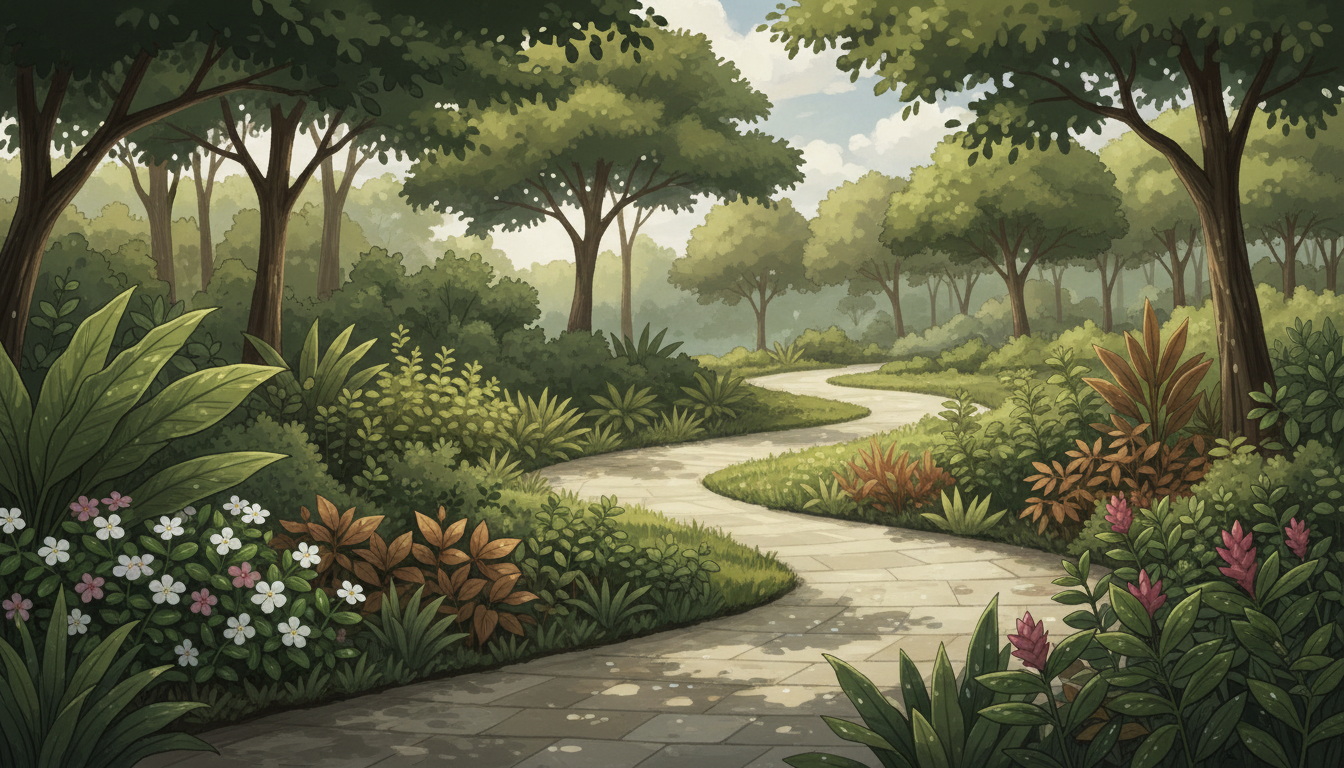
Is the Healing Garden at Singapore Botanic Gardens free, and when is it open? Yes. The Healing Garden in the Bukit Timah Core of Singapore Botanic Gardens is a free botanical attraction devoted to plants traditionally associated with healing practices across Southeast Asia. It opens 7am–7pm every day except Tuesday, when it is closed for maintenance. NParks describes the garden’s specimens as grouped by the body systems they have traditionally been used to treat, such as the head, respiratory system and reproductive health. The garden launched in October 2011 as a 2.5-hectare collection with roughly 500 medicinal-plant species documented at its establishment. These are historical opening figures, not a guarantee that every specimen is visible or labelled today.
This is a helpful destination for searches such as Bukit Timah Healing Garden opening hours, free medicinal plant garden Singapore, Singapore Botanic Gardens Healing Garden Tuesday closed, Madagascar periwinkle, herb garden Southeast Asia, traditional medicine plants Singapore, mindful garden walks and Healing Garden nearest MRT. Visitors should use the official Gardens map because the wider UNESCO World Heritage Site stretches between multiple entrances. Botanic Gardens MRT is the practical rail gateway to the Bukit Timah Core; the Gardens also provide paid visitor parking at several entrances. Do not assume that the Healing Garden itself is open until the entire Gardens’ general midnight closing time.
The best way to enjoy it: choose a quiet weekday morning or daytime slot, read a few plant labels, notice their forms and consider how botanical knowledge changes as science tests the safety and usefulness of plant compounds. The collection is for education and observation, not plant harvesting or self-medication. The familiar Madagascar periwinkle illustrates this distinction perfectly: specific compounds derived from it have important medical uses, but eating or preparing the plant yourself is not a safe cancer treatment. Follow NParks’ path rules and weather notices, and leave the collection before its 7pm closure.
Healing Garden quick facts
| Question | Answer | Practical meaning |
| Entrance fee | Free within public Botanic Gardens grounds | No orchid ticket needed |
| Visitor hours | 7am–7pm | Different from grounds’ 5am–midnight hours |
| Regular closure | Every Tuesday | Avoid scheduling a Tuesday visit |
| Location | Bukit Timah Core, Singapore Botanic Gardens | Use Botanic Gardens MRT or mapped garden entrance |
| Original development | Opened 21 October 2011 | Longstanding botanical education collection |
| Original area | 2.5 hectares | Historic project size from NParks annual report |
| Original collection | About 500 species | Not a guaranteed current count or flowering display |
| Design | Plants arranged by traditional body-area use | Interpretive, not clinical treatment guide |
| Highlight | Madagascar periwinkle | Medicinal compounds require modern regulated use |
| Access advice | Use current Gardens map and visitor notices | Confirm exact accessible route and diversions |
Contents: a visit built around plants, history and safe learning
- Finding the garden and understanding opening hours
- Traditional medicinal plants versus proven treatments
- Madagascar periwinkle and science
- Why plants are arranged by body systems
- A calm 30-minute, one-hour or half-day visit
- Children, older visitors, photography and access
- What to avoid: picking, tasting and self-medicating
- Related garden collections, FAQs and primary sources
1. The Healing Garden is a themed botanical collection
Singapore Botanic Gardens is a scientific institution and public park, not merely an ornamental lawn. The Healing Garden represents a deliberate collection built around how different communities have used plants over time.
That purpose makes the visit different from a garden arranged only by flower colour. Plant labels invite questions about history, botany, chemistry and health, but do not provide prescriptions for visitors.
2. The garden sits in the Bukit Timah Core
NParks’ present-day Gardens history identifies the Healing Garden as one of the thematic spaces introduced to the Bukit Timah Core since 2007, alongside the Ethnobotany Garden and later Seed Bank.
This helps narrow the correct part of the site when planning a visit. Tanglin Gate, Swan Lake and Gallop Extension are different locations within the large Gardens.
3. Botanic Gardens MRT is the starting reference
The Downtown Line and Circle Line meet at Botanic Gardens MRT. The Bukit Timah entrance to the wider Gardens is served by the station, giving public-transport users a sensible start.
It is still necessary to walk to the themed garden. The official map, not a guessed 90-second transfer, should determine the chosen route if someone has mobility limits.
4. The Gardens are free even when individual areas close
The general Singapore Botanic Gardens grounds open from 5am to midnight without ordinary admission. The Healing Garden is a sub-attraction with its own 7am–7pm operating window.
A person strolling through the wider grounds at 8pm cannot assume an entrance to the Healing Garden remains open. Plan the specialised visit during its separate hours.
5. Tuesday is the crucial closing day
The current NParks general visitor page clearly lists Healing Garden — 7am to 7pm, closed every Tuesday. This is not the same monthly closure rule used by some indoor museum galleries.
If the aim is medicinal-plant displays, select another day. Nearby public lawns or other Gardens spaces may remain available on Tuesdays under their own schedules.
6. The original garden launched in October 2011
NParks’ annual report records the garden’s official launch on 21 October 2011 with support from Thong Chai Medical Association and Japan’s Makino Botanical Garden.
A partnership between a medical-cultural institution and a specialist botanical garden reflects the importance of both traditional knowledge and careful plant identification.
7. Historical collection numbers need a date
The 2011–12 NParks report described 2.5 hectares and 500 species from Southeast Asia. Botanical displays change as plants mature, are relocated, are replaced or enter conservation work.
Use those figures to understand the scale at launch, not to promise exactly 500 living labelled plants on the day of a 2026 visit.
8. The design uses body-system themes
NParks explains that traditionally recognised healing plants are arranged by the parts or systems of the body associated with their use: for example, head, respiratory and reproductive health.
This is an educational organisation scheme. A bed titled for respiratory uses is not evidence that every species has been clinically established to treat breathing disorders.
9. Traditional use and scientific evidence are separate
A community may have documented a plant preparation across generations. That is meaningful cultural knowledge, but the safety and effectiveness of a medical treatment require evidence appropriate to the condition and preparation.
A useful visitor habit is to distinguish ‘traditionally used for’ from ‘clinically proven to treat’. Those claims mean different things and deserve different levels of confidence.
10. Madagascar periwinkle is the signature scientific example
The Gardens’ current collection page highlights Madagascar periwinkle for its role in the development of compounds used in cancer treatment. The flowers can be pink or white and may look deceptively ordinary.
Medicines such as vincristine and vinblastine are purified and administered through regulated clinical care. The ornamental plant itself should never be used as a home-made cancer remedy.
11. A medicinal compound is not the same as the whole plant
Medicinal research can identify active molecules within a complex plant mixture. Scientists study potency, toxicity, purification, interactions, manufacturing and clinical response.
Crushing a leaf into tea does not recreate a precisely dosed prescription medicine. Variation in plant parts, concentration and contaminants can create serious danger.
12. Medicinal plants can be poisonous
A species can contain compounds with useful medical applications while also being toxic when eaten, touched improperly or prepared without expertise. The dose and route of administration can matter greatly.
Do not pick leaves, sample berries or let a child taste a plant labelled ‘healing’. Gardens are botanical exhibitions, not public dispensaries.
13. Read the botanical name carefully
Common names may vary between languages or refer to several similar-looking plants. Botanical labels help identify the precise species and, sometimes, cultivar being presented.
A name on a museum label is a starting point for study, not permission to identify an unfamiliar wild plant from a blurry photograph and ingest it.
14. Southeast Asian knowledge includes many communities
The region’s traditional plant practices have been shaped by diverse languages, histories and cultures. A single specimen can have multiple local names and different recorded uses.
When reading a claim about a tradition, ask whose knowledge it represents, the context and the time period rather than assuming every Southeast Asian community used the plant in the same way.
15. Plants have multiple functions
A species historically associated with a remedy might also be used as food, fragrance, dye, fibre or ceremonial material. Distinct plant parts can contain different compounds.
An educational display can show connections to everyday life without treating all plant applications as interchangeable. Edible fruit does not make the bark or leaves safe to swallow.
16. Herbs and spices can spark curiosity
Many families already recognise ginger, herbs and aromatic leaves from cooking. That familiarity can make a medicinal-garden discussion more approachable for children.
The correct botanical identity and food-safe cultivated product remain important. Do not collect samples from exhibition beds to recreate a kitchen recipe.
17. What counts as a calm nature-immersion visit?
NParks describes the Healing Garden as a peaceful space for nature immersion. Visitors can slow down, notice changes in leaf shape and colour, and enjoy quiet walking.
Feeling calmer in a garden is a personal experience. Do not describe the walk as a clinical treatment for anxiety, depression or another medical condition.
18. Mindfulness can be simple observation
Choose one tree or planting bed and notice five details: light, texture, shade, a natural sound and the arrangement of leaves. A short pause may be enough to shift attention from the day’s distractions.
The exercise need not involve chanting, meditation instruction or any medical claim. It simply invites slower engagement with the living surroundings.
19. The garden is not a replacement for medical care
Visitors with health concerns should rely on licensed medical professionals and evidence-based treatment rather than self-diagnosing from a plant label.
The attraction offers a valuable cultural and scientific perspective while remaining clearly outside the purpose of a pharmacy, clinic or therapeutic consultation.
20. Children can learn without memorising names
Ask which plant leaves are narrow or broad, which flowers are bright or subtle, and why a species might have more than one traditional use.
A child can enjoy the colour and shape first. Questions about medical compounds can be introduced at an age-appropriate level without frightening them or implying they should treat themselves.
21. A primary-school science question
A useful investigation is to compare the appearance of two labelled species and record only what is directly observable. That is distinct from reading a plant’s historic medicinal use.
This teaches a fundamental scientific habit: separating observations from inferences and distinguishing evidence from an appealing story.
22. A secondary student’s chemistry connection
Plant compounds can be investigated for structure, pharmacological action and toxicity. A famous natural-product origin does not mean a drug is simply the raw herb itself.
A teenager can ask what is required between discovery of an active substance and safe pharmaceutical use: purification, testing, manufacturing and clinical regulation.
23. A historical question about medicine
Different cultures have developed systems of healing knowledge using the plants available to them. Colonial collecting, trade, migration and botanical research changed how those plants were documented.
The responsible historical approach acknowledges those knowledge holders rather than treating traditional practices as anonymous raw material for modern research.
24. How plant collections contribute to conservation
Living botanical collections provide opportunities to study plants, maintain verified identification and interpret biodiversity for the public. Some species may also support conservation research.
This does not mean every specimen in the Healing Garden is threatened or every planting represents a formal recovery programme. Read the specific collection labels before making stronger claims.
25. Watch for a heritage tree near the garden
The Gardens’ heritage-tree list identifies Pentadesma butyracea, the tallow tree, within the Healing Garden. It provides a separate landscape and botanical point of interest.
Do not assume the tree has clinical healing properties merely because of its location. Its presence is an invitation to learn the tree’s identity and heritage value.
26. A thirty-minute focused walk
With limited time, choose a few interpretive beds, read their labels and enjoy the garden atmosphere before heading back to the main path. Do not try to photograph every specimen.
Thirty minutes is a suggested pace, not an officially measured route. The approach from the MRT and any seating break should be added separately.
27. A one-hour learning visit
Spend a little more time comparing plant families, looking at the Madagascar periwinkle material and discussing the difference between historical claims and modern treatment.
Leave room for natural distractions such as bird sounds and shade. A botanical garden is a living display, not a fixed indoor exhibit with one compulsory route.
28. A half-day around the Bukit Timah Core
Pair the Healing Garden with the Centre for Ethnobotany or Seed Bank if those are open. The combination creates a stronger theme: human uses of plants, scientific evidence and conservation of plant diversity.
Check the Centre for Ethnobotany’s last-Wednesday monthly closure and Seed Bank’s 9am–6pm hours separately. The Healing Garden’s Tuesday closure is different.
29. The nearby Ethnobotany Centre answers a different question
The Centre for Ethnobotany explores plants in culture, consumption, building materials and historical knowledge, whereas the Healing Garden focuses on plants associated with traditional remedies.
Both are about human relationships with plants, but one is not a substitute for the other. A careful visitor can compare how a shared species is interpreted in each context.
30. The Seed Bank provides a conservation complement
The Seed Bank explains how scientists collect and store plant genetic material, including research on tropical seeds that may not survive ordinary drying and freezing.
The Healing Garden’s plants make it easier to appreciate why maintaining species and reliable identifications matters. The research rooms are not open for unrestricted visitor entry.
31. Which Gardens entrance is best?
Botanic Gardens MRT provides a convenient route to Bukit Timah Gate. The Gardens also lists the Centre for Ethnobotany carpark, reached from Evans Road/Kheam Hock Road, as one parking zone.
A family travelling by car should consult the current visitor map to choose the most suitable drop-off and walking path. No on-site carpark beside every themed bed is promised.
32. Parking is charged, even though admission is free
NParks currently lists S$0.02 per minute for its Gardens parking zones, with carparks generally open 5am–midnight and no overnight parking.
Do not advertise a free parking day simply because the garden has free entry. The total depends on how long the car remains in a particular approved zone.
33. Older relatives can enjoy a quieter pace
Some visitors may enjoy a short walk with a few rest stops and no pressure to complete a large circuit. The attraction’s contemplative character can suit this type of outing.
Accessibility is route-specific. If someone needs a wheelchair or cannot handle slopes, contact Gardens Visitor Services about the exact entrance and current paths.
34. Strollers should follow approved paths
A family with a stroller should consult the official Gardens map and be prepared for different surfaces or turns between exhibits. A broad park accessibility statement does not certify every small side path.
Keep children seated or supervised as appropriate, and never park equipment across a narrow walkway used by other visitors.
35. Clothing and weather preparation
Wear stable shoes, bring water and consider sun protection. Parts of the walk may be shaded, but the Gardens are outdoors and Singapore’s heat and humidity can be substantial.
A hat, umbrella and light clothing help with ordinary weather, but thunderstorms require safe shelter rather than continued garden touring.
36. Tuesday closure affects weekend planning less
Because the Healing Garden closes on Tuesdays, ordinary Saturday and Sunday family visits can use its published hours, subject to special maintenance or weather notices.
A regular weekly timetable is useful, but it is still sensible to review live attraction notices before setting out on a long journey.
37. After heavy rain, do not rush
Wet leaves and garden paths may become slippery, especially where shade slows drying. Rain can also alter flower appearance and make a photograph look different from online examples.
Avoid running through planting beds or stepping off a path to find a drier shortcut. If surfaces are unsuitable for the group, choose another open attraction.
38. No picking or foraging
Living specimens are maintained for conservation, science and public learning. Visitors must not collect seeds, roots, bark or flowers, even if a label mentions a traditional remedy.
Removing a specimen can harm the plant and undermine collections used by researchers and visitors. Use photographs and written observations instead.
39. Do not encourage a child to test a plant’s scent by crushing it
Some leaves release aromatic compounds when damaged, but handling unknown plants can trigger irritation or exposure to substances best avoided.
Observe intact plants and consult labels. Only use supervised educational touch opportunities when explicitly permitted by the Gardens.
40. Photography without damage
A wider photograph can show how plants are grouped, while a close-up from the path captures leaf or flower structure. Move around without blocking other visitors.
Avoid moving labels, pulling branches or stepping into a planted bed to improve a composition. The garden’s scientific value matters more than a perfect social-media image.
41. Why the 2011 project still matters
Launching a garden devoted to traditional medicinal plants brought important cultural and botanical knowledge into a public, labelled setting. The project also acknowledged the work of collaborating institutions.
That approach can invite further research while making it easier for visitors to appreciate the limits of what a plant label establishes.
42. Consider the distinction between peace and treatment
A relaxing environment may provide an enjoyable break, but it is different from a professionally delivered medical or psychological intervention. People with serious symptoms should not replace clinical care with a garden walk.
The accurate promise of this attraction is a tranquil and thoughtful visitor experience centred on plants, not a guaranteed health outcome.
43. What to discuss over lunch afterwards
Ask each person to describe one plant, one traditional practice they learned about and one new question about evidence or safety. Then choose a meal around Botanic Gardens MRT or the wider Bukit Timah area.
The reflection can remain light and conversational. It need not become a debate about whether every traditional practice works or fails.
44. How to choose the next plant-based attraction
For botany and food heritage, continue to the Centre for Ethnobotany; for orchid breeding, choose National Orchid Garden; for scientific preservation, the Seed Bank offers a separate topic.
This is a way to build a day that follows your curiosity without duplicating the same experience at every stop.
45. Why the garden rewards return visits
Plant growth, display maintenance and the visitor’s own questions change over time. One day you may notice periwinkle flowers; another visit may be more memorable for shade and bird calls.
The value lies in observation rather than a promise that the full original 500-species set will be flowering in a single afternoon.
46. The simplest accurate description
The Healing Garden is a free, curated plant collection about the historical and traditional healing uses of plants, set within a scientific institution. It is usually open 7am–7pm and closed Tuesday.
If visitors remember that, arrive at the right time and treat plants respectfully, they already have what they need for a worthwhile Bukit Timah nature outing.
Frequently asked questions about the Healing Garden
Is the Healing Garden free?
Yes. It is in the generally free Singapore Botanic Gardens and does not require a National Orchid Garden ticket.
Where is the Healing Garden?
In the Bukit Timah Core of Singapore Botanic Gardens. Use the Gardens’ current map to approach it.
What are Healing Garden opening hours?
7am–7pm on open days, according to NParks’ current visitor information.
Is the Healing Garden closed on Tuesday?
Yes. NParks specifies a regular Tuesday closure for this attraction.
Does the Tuesday closure apply to the entire Botanic Gardens?
No. The general Gardens remain open under their usual hours, but individual attractions have separate closures.
How much time should I spend?
A short 30–60 minute focused walk can be worthwhile, not including travel from MRT or other attractions.
Is it good for children?
Yes as a supervised botanical learning walk, with age-appropriate explanations and no picking or tasting.
What is the nearest MRT?
Botanic Gardens MRT is the practical station for the Bukit Timah Core.
Is it a hospital or treatment centre?
No. It is a plant education collection, not a facility for diagnosing or treating patients.
Can medicinal plants cure illnesses?
Some plants are sources of proven pharmaceutical compounds, but traditional-use labels do not demonstrate that raw plants or home preparations are effective and safe.
Is the Madagascar periwinkle medicinal?
Certain purified compounds derived from Madagascar periwinkle are used in medicine. Do not consume the plant or attempt homemade treatment.
Why are plants grouped by body parts?
NParks explains that the garden is designed around the body systems associated with their traditional uses.
When was the garden opened?
NParks records the launch on 21 October 2011.
How big was it at opening?
The original NParks report described 2.5 hectares and 500 medicinal plant species.
Are all 500 original species still on view?
The historical report describes the original project. It does not establish the exact number visible today or which plants are flowering.
Which organisations helped launch it?
Thong Chai Medical Association and Japan’s Makino Botanical Garden are named in NParks’ historical record.
Is the Healing Garden wheelchair accessible?
Check the current mapped route and specific paths with Gardens Visitor Services. General park access does not guarantee each themed garden path is step-free.
Can I enter at night?
No. The Healing Garden closes at 7pm even though the wider Gardens remain open later.
Are dogs allowed?
Follow current Gardens pet rules and site-specific signs. Do not assume an animal can enter every themed attraction.
Can I pick herbs?
No. Do not harvest public garden specimens, even if traditionally used for food or medicine.
Can I make tea from a leaf I find there?
No. It is unsafe and against responsible garden use to collect unknown plants or prepare remedies from them.
Can I take photographs?
Take ordinary photographs from permitted paths while respecting any site restrictions and avoiding damage to specimens.
Is Healing Garden the same as Ethnobotany Garden?
No. They are separate themed collections, although both examine relationships between people and plants.
Is the Seed Bank nearby?
Both are associated with the Bukit Timah Core, but are separate attractions with their own operating hours.
What is a medicinal compound?
A chemically identifiable substance whose biological effects can be studied, purified, assessed and regulated; it is not automatically equivalent to eating the source plant.
Why can’t I assume traditional use equals proven efficacy?
Historical use documents a practice, while treatment claims require controlled evidence of efficacy and safety for a specific condition and preparation.
Does the garden offer guided therapy sessions?
Its regular visitor information describes a botanical attraction and nature-immersion setting, not a standing schedule of clinical therapy. Check official What’s On for any organised programmes.
Is it suitable after rain?
Paths may be slippery; avoid unsafe conditions, especially during thunderstorms and lightning.
Is parking free?
No. NParks currently lists paid Gardens parking at S$0.02 per minute in approved zones.
Can a school use it for science learning?
Yes, with appropriate supervision and any required permissions for organised activities. Use plant observation rather than specimen collection.
What should I bring?
Comfortable shoes, water, weather protection and the official Gardens map.
What should I do if it is closed?
Choose another open Gardens area such as the general public lawns or a different exhibition, checking its specific hours first.
Where do I check the latest opening rules?
The Singapore Botanic Gardens general visitor page and official notices are authoritative for current schedules.
Explore related Bukit Timah experiences
- Centre for Ethnobotany and Seed Bank
- National Orchid Garden and orchid science
- Terrariums, plants and gardening
- Outdoor botanical sculpture walk
- Botanic Gardens Heritage Museum and sustainability gallery
- Gentle walks and accessible outings
Official botanical, history and visitor sources
Editorial update: 23 October 2026. The current 7am–7pm and Tuesday closure are from Singapore Botanic Gardens’ official visitor page. The historical 2.5-hectare / 500-species figures come from the NParks 2011–12 annual report; these are not live inventory figures or clinical treatment recommendations.
- Singapore Botanic Gardens — current Healing Garden hours, closures, entrances and parking
- Singapore Botanic Gardens — official Healing Garden collection, periwinkle and nature immersion
- Singapore Botanic Gardens — 2011 Healing Garden within the Bukit Timah Core
- NParks 2011–12 annual report — launch, partner organisations, original garden size and plants
- Singapore Botanic Gardens — tallow tree within the Healing Garden
- Singapore Botanic Gardens — changes, maintenance and closures
- Meteorological Service Singapore — weather and lightning warnings