
Punggol Promenade Riverside Walk is a free 1.2-kilometre waterfront path beside Serangoon Reservoir, near Tebing Lane and Riviera LRT. It is an easy option for a family stroll, a short bike ride, birdwatching or taking photographs of the water. NParks describes it as wheelchair-friendly and lists Riviera station Exit A as the nearby public-transport landmark. Visitors can also explore the food-and-beverage area at Tebing Lane, but the businesses there have faced significant lease uncertainty in late 2026, so do not assume a favourite container-park restaurant remains open.
A good first visit is deliberately simple: arrive near Riviera LRT (PE4), follow public signs to the Riverside Walk, enjoy a comfortable portion of the reservoir-side path, then either turn back or continue only if you have planned the return. If you want a meal, check a specific Tebing Lane outlet before leaving home. This guide explains the route, how to choose walking versus cycling, the difference between Riverside Walk and the longer Nature Walk, the 2026 container-park changes, and the waterfront safety rules that family visitors should know.
Quick information:
- Destination: Punggol Promenade Riverside Walk, near Tebing Lane and Pasir Ris Industrial Drive 1.
- Official length: 1.2 km, according to NParks; this is the named segment, not the distance from your house or train station.
- Access: Riviera LRT (PE4), Exit A, is a convenient reference point; NParks lists bus stop 65239 at Riviera Station Exit A.
- Bus services in NParks listing: 3, 50, 83, 85, 381 and 666; verify routes with the current transit operator.
- Cost: general walking on public park connectors is free; transport, food, rentals and other services may cost extra.
- Accessibility: NParks lists the Riverside Walk as wheelchair-friendly, subject to exact approach and temporary conditions.
- Nearby food: Tebing Lane has historically housed cafés and container-park food businesses; individual current operations must be checked.
- 2026 food warning: an October lease-extension offer created the possibility of continued operation into 2027, but some tenants had already decided to close or relocate.
- Nearby related trail: the 2.4-km Punggol Promenade Nature Walk, with shelters and designated fishing platforms in certain areas.
- Separate closure: Punggol Point Park is under upgrading and should not be treated as an open stop on a long promenade itinerary.
Why this is one of the easier free outdoor activities in Punggol
The attraction is straightforward: water, a broad view and a path that lets residents walk without buying a ticket. Punggol has several different waterfront environments, and they do not all offer the same experience. The landscaped Punggol Waterway runs through the housing estate; the Riverside Walk follows the Serangoon Reservoir side near Tebing Lane; farther along, the Nature Walk leads into a more rustic coastal atmosphere.
For a family with children, the Riverside Walk is often a better introduction than immediately attempting an island nature trail or a long loop. You can choose a short out-and-back journey, take a photograph, have a conversation and return before the weather or a child’s energy changes. There is no rule that a successful walk requires completing the entire 1.2-kilometre named section.
The route is also useful as an ordinary after-dinner or weekend activity for residents. You do not need a guide, ticket or specialised equipment to use public pedestrian paths. You do, however, need to respect cyclists, weather, current works signs and anyone sharing the waterfront. A pleasant route remains pleasant only when visitors treat it as a common space.
How to find Punggol Promenade Riverside Walk
NParks places the trail near Tebing Lane and Pasir Ris Industrial Drive 1. Its official access directions identify Riviera LRT station Exit A, with nearby bus stop 65239. Riviera is on Punggol’s East LRT Loop (PE4), connecting back towards Punggol MRT. The exact path from the station to the first stretch you choose depends on the public entrance and whether you want to begin near Tebing Lane or elsewhere along the promenade.
When you exit the LRT, take a moment to orient yourself using a current map and the signs for the park connector. Do not assume that every paved path beside water is the named Riverside Walk. The broader estate includes the Punggol Waterway, Sungei Serangoon and other public connectors. Their paths may join, but signage and access differ.
NParks’ current listing names services 3, 50, 83, 85, 381 and 666 for Riviera station Exit A. Bus networks change, so confirm the actual service and stop through a live journey planner on the day. If you are travelling with a stroller, wheelchair or someone who tires easily, examine the final walking route and any lifts before deciding that a station is ‘close’.
For groups meeting from different estates, choose a precise landmark such as a public park-connector entrance or a named food venue with a confirmed address. ‘Meet at Tebing Lane’ may place people at different businesses or ends of the stretch. A shared map pin is more reliable than a loose neighbourhood name.
What does the 1.2 km length actually mean?
The distance is NParks’ listed length of the Riverside Walk segment, not the distance required to reach it from your station, bus stop, parking space or home. If you start partway along and return to the same entrance, your walk may be shorter. If you complete the segment and then return by the same route, you have additional distance to cover. A family should plan the outward and return legs together.
One kilometre can feel different depending on who is walking. A confident adult may cover a smooth section without difficulty, while a toddler may stop at every interesting feature and an older visitor may prefer frequent rests. Estimate time based on the slowest person in the group rather than the fastest. A shorter route can be more enjoyable if the group is comfortable.
Do not treat the listed distance as proof that every centimetre of the path is always available. Temporary works, events or safety barriers may alter the route. Follow current NParks notices and on-site signs if the official path changes. Do not enter a closed section because a GPS device insists that it is the shortest connection.
What can you actually see along Riverside Walk?
NParks highlights lookout points that bring visitors closer to the scenic edges of Serangoon Reservoir. Depending on the weather, the water may appear calm or wind-ruffled, and the view changes as you move beside vegetation and open sections. The contrast between the broad water, urban structures and public pathways is part of the appeal.
Family photographs do not need a special ticketed viewpoint. Choose a permitted location that leaves room for others to pass, take a few images and continue. If there are cyclists approaching, avoid stepping suddenly into their path for a different camera angle. Do not climb barriers, lean over the reservoir edge or allow young children to run near water.
Birds may be visible in the vegetation or over the reservoir, but they are not guaranteed. The most reliable nature activity is quiet observation. Let children describe movement or sounds before trying to identify a species. The point of a visit is to notice the place rather than to manufacture an impressive wildlife checklist.
How Riverside Walk differs from Nature Walk and Point Walk
The Punggol Promenade is divided into three named thematic sections. The Riverside Walk is the 1.2-kilometre reservoir-side segment near Tebing Lane. The Nature Walk is the 2.4-kilometre middle section with rest shelters and designated fishing platforms. The Punggol Point Walk is the 1.3-kilometre northern coastal segment nearer Punggol Jetty. These descriptions are useful for planning, but they should not be treated as one continuous, uncomplicated attraction regardless of access notices.
Riverside Walk generally suits visitors who want an approachable short walk with nearby dining. Nature Walk is a stronger choice for people interested in a longer, quieter trail. The Point area has wider coastal views, but Punggol Point Park and its adjacent carpark have been closed for upgrading since 11 August 2026, with works completion expected by 31 December 2027. That expected date is not a guaranteed reopening.
NParks’ Point Walk page still describes earlier facilities near the closed park, so readers should apply the separate current closure notice rather than use a generic park description as a live access guarantee. If a promenade path diverts around works, stay on the marked public route. A photograph of an elevated deck in an old article is not permission to enter a fenced park.
| Section | NParks length | Best reason to choose it |
|---|---|---|
| Riverside Walk | 1.2 km | Short reservoir views, Tebing Lane access |
| Nature Walk | 2.4 km | More rustic path, shelters, wildlife and designated fishing platforms |
| Point Walk | 1.3 km | Northern coast, subject to nearby park upgrading restrictions |
Tebing Lane restaurants: why 2026 is different
Tebing Lane became well known for a cluster of food and leisure businesses in Punggol East, including the Punggol East Container Park at 50 Punggol East. Visitors associated the area with waterside cafés, casual dinners, sporting activity and some unusual container-based retail or entertainment spaces. That made a ‘walk followed by dinner’ itinerary attractive.
However, September 2026 news reports explained that tenants had been told to prepare to vacate because the site’s lease was expected to end on 31 December 2026 and the land was needed for future redevelopment. Several businesses prepared to shut or relocate, and news stories named different intended last operating dates.
Then an October 2026 development changed the position: a lease-extension offer of up to one year was reported for four master tenants in the Tebing Lane and Punggol East area. CNA reported that some operators welcomed the potential extension while others had already made financial or operational arrangements to move. An extension offer is not proof that every existing restaurant remains open, or that a named business will trade until the end of 2027.
This is the critical distinction for visitors. The Riverside Walk remains an NParks public connector. The container-park tenant mix is a separate business and land-lease matter. A closure notice affecting a private food outlet does not automatically mean the public waterfront path is closed. Conversely, the fact that the public path is open does not make an advertised restaurant still available.
Is Punggol Container Park closed or still open?
There is no responsible one-word answer that applies to every unit on 6 November 2026. Reports in September described an approaching shutdown and various deadlines for individual tenants. The October lease-extension offer raised the possibility of some operators continuing. Several tenants had already begun arranging new premises, so their decisions may differ even within the same development.
Before travelling for a particular restaurant, prawning outlet, gym or sports business, check that operator’s own recent announcement, booking system or telephone. An old Google business profile can lag behind closure, while an Instagram account may announce a final service date or temporary suspension. If the business has relocated, confirm the new address rather than following a historical container-park location.
Choose a backup meal outside the affected tenant cluster if you are travelling from far away. For example, Punggol Plaza, Waterway Point or One Punggol offer other food options in different parts of the estate, though you should still check individual outlets. Do not make children wait in the heat while trying to identify whether a restaurant from a 2024 guide still exists.
The most useful planning method is simple: treat the walk as the guaranteed destination only after checking NParks access; treat a restaurant as an optional add-on that needs a separate current verification.
How to plan a Tebing Lane café or seafood stop
The broader Tebing Lane area has historically included names such as Whisk & Paddle and Uncle Leong Seafood. Those names are helpful for recognising the area’s older dining identity, but they are not a current guarantee of service. In late 2026, a business’s actual opening date, closing date or relocation announcement matters more than its appearance in an undated ‘best restaurants in Punggol’ list.
If a food visit is the main purpose, contact the specific outlet first. Check its full address, operating hours, table availability, menu and whether it is still accepting bookings at the old location. If arriving with a large group or elderly relatives, ask whether you need a reservation and what seating is available. Never treat an online reservation enquiry as a confirmed table until the business acknowledges it.
For families with dietary requirements, verify the specific outlet’s practices. Halal certification, vegetarian dishes and food-allergy handling are not properties of a whole street or container park. Ask the actual provider, especially if a menu has changed during a relocation or wind-down period.
A good alternative is to enjoy the walk first and decide on food only after confirming an open destination. This prevents a pleasant reservoir excursion from being judged a failure because one café has changed its plans.
Riverside Walk with young children
Children often enjoy a waterfront path because there is something to notice every few steps: reflections, plants, cyclists, birds and bridges. Give the walk a small goal such as reaching one lookout and returning. Do not announce that the family must complete the full 1.2-kilometre segment if you have not accounted for the approach from Riviera station.
Carry water and consider the time of day. Singapore’s heat can make a seemingly short walk demanding, especially when there is little shade. A child may also become tired after an earlier school or childcare day. Start with ten or fifteen minutes and decide whether to continue while everyone is still comfortable.
Near the reservoir edge, keep children close and explain the boundary clearly. The path is for walking and shared travel; the water is not for swimming or splashing. Do not let a child climb railings for a photograph or race towards a cyclist approaching from behind. A calm walk with a clear turnaround is a more meaningful family outing than an exhausted march.
Can you cycle on the Riverside Walk?
The Punggol Promenade is part of Singapore’s wider park-connector network, so cycling may be possible along designated shared paths. Yet the public experience depends on other walkers, children, turns and the surface conditions. Riding safely means slowing down near pedestrians, giving appropriate warnings before passing and stopping or dismounting when required.
For a child learning to ride, begin on a suitable straightforward section and avoid busy groups near food outlets. A rider who can pedal confidently on a clear path may still struggle with junctions, other cyclists or the need to stop quickly. Keep the first route short and practise safe behaviour before attempting a longer loop.
More experienced cyclists can link the Riverside Walk to other routes, including Punggol Promenade Nature Walk and the Punggol Waterway network. Check current NParks notices, map conditions and the complete return route. A connection shown on an older printed map may have a temporary diversion during development or maintenance.
Do not assume a nearby bicycle rental operator remains active just because a food-and-entertainment cluster once offered bike hire. Check the individual business and arrange a backup if you do not have your own bicycle.
Nature Walk, wild boars and being a respectful visitor
If you extend from Riverside Walk to Punggol Promenade Nature Walk, the setting becomes more rustic. NParks identifies rest shelters and fishing platforms along this 2.4-kilometre middle stretch. Its current park-connector notice also warns that wild boars have been spotted in the area and advises visitors to maintain a safe distance, stay on designated paths and avoid entering vegetation.
A wild-boar sighting is not guaranteed and should never be treated as an attraction to pursue. Do not feed, chase or approach the animals. If you encounter one, keep calm, give it space and move away without blocking its path. Families with young children should remain close together and avoid creating loud commotion that might disturb wildlife.
Nature observation can still be rewarding without large animal sightings. Listen for birds, notice changes in vegetation and compare a shaded path with an exposed stretch. The more rustic setting may require better shoes, sun and insect protection and a clearer return plan than a short paved walk near Riviera.
Respect temporary cordons. They can be used for wildlife management, public safety or maintenance. An informal gap in vegetation is not an invitation to explore beyond the official trail.
Fishing rules: do not assume every waterfront is legal
Punggol has several waterside areas with different fishing rules. NParks describes designated fishing platforms on the Nature Walk and publishes notices distinguishing places where fishing is allowed from sections where it is prohibited. Punggol Waterway Park itself has a no-fishing rule. The presence of water does not establish permission.
For this Riverside Walk itinerary, do not promise a fishing spot at any point along the 1.2-kilometre stretch unless current signs or official mapping clearly designate it. The safer approach is to consult NParks’ current fishing notices, choose a marked permitted deck and obey the rules posted at that exact location. Do not fish from bridges or walkways that are intended for pedestrians.
Fishing can also affect other park users. Keep rods and lines clear of passing children, do not leave hooks or discarded line on the ground and do not obstruct shared paths. Responsible fishing is about respecting both regulations and the people who use the promenade for a quiet walk.
If the plan involves a designated deck on the longer Nature Walk, allow additional travel time and check current wildlife or route advisories first. A family should not undertake a long exposed walk with equipment based only on a vague online claim that ‘Punggol allows fishing’.
Birdwatching and photography on a quiet morning
The reservoir edge and surrounding vegetation can attract visitors who enjoy watching birds or taking landscape photographs. You do not need specialist equipment to begin. A pair of binoculars may help, but quiet patience and careful description can make an ordinary walk interesting. Watch how birds move, where they perch and whether they repeatedly return to a particular part of the water.
For children, separate observation from guesswork. ‘The bird dipped its beak in the water twice’ is an observation. ‘It was hunting a particular fish’ may be a hypothesis. This distinction builds useful scientific habits without turning the outing into a formal lesson.
Photographers should use permitted public lookout areas and keep enough room for pedestrians and cyclists. Do not climb railings or step into planted sections for a better frame. The best photograph is the one taken without disturbing wildlife or exposing another visitor to unnecessary risk.
Early mornings can feel cooler and more peaceful, but weather and wildlife sightings remain unpredictable. Prepare for the actual conditions rather than promising a specific sunrise colour or bird species.
Accessibility: what wheelchair-friendly actually means
NParks explicitly describes the Riverside Walk as wheelchair-friendly. That is useful, but the claim applies to the designated route, not every approach, nearby shop entrance or proposed connection to another park. The complete journey includes the transport stop, the selected entrance, any lifts or crossings, the path itself and the return.
Before travelling with a wheelchair user, stroller or older adult who tires easily, check for works and choose the shortest suitable approach from Riviera LRT or a confirmed public drop-off. A straight-line distance on a map can conceal inconvenient crossings or changes in level. It is safer to choose a route already known to be accessible than to improvise by carrying equipment around barriers.
Rest stops matter too. A family might choose one lookout and then return instead of completing the whole segment. Ask the visitor what distance and surface work best for them. A good outdoor plan follows the person’s preferences rather than measuring success by kilometres covered.
Storms, lightning, haze and heat
Waterfront trails are exposed to changing weather. During a thunderstorm, do not remain at an open lookout, under an isolated tree or on a bridge simply to finish a photograph. Move to appropriate shelter and postpone the activity if conditions are unsafe. A restaurant or other building may offer shelter, but confirm that you can reach it safely.
In hot weather, bring water, use available shade and allow frequent pauses. Children and older adults may need a shorter route than a fitness-focused adult. During haze, consult official NEA advice and adjust the length and intensity of outdoor activity for the actual people present.
If the plan includes dinner after a walk, do not let a restaurant reservation force the family to hurry through an exposed path in rain. It is better to take a safer transport route directly to the meal or reschedule part of the outing. Public safety and comfort are more important than completing a predetermined itinerary.
How much does a Riverside Walk outing cost?
Walking the permitted public park connector is free. You may pay for train or bus fares, legal parking, food, bike rental or separately booked activities. This makes Riverside Walk a useful low-cost destination: a family can spend a quiet morning by the water without paying an admission fee.
Food spending is less predictable. Menus and business operations at Tebing Lane have changed during the 2026 lease transition, so an older price list or restaurant promotion should not be treated as current. Choose a budget for the group, confirm the actual outlet and check whether the menu still offers the dishes you want.
Do not feel obliged to eat at the container park after a free walk. It is perfectly reasonable to return home or have a meal closer to your own LRT station. The path itself is the main activity, and the most meaningful part may be the time spent outdoors together.
Three realistic itineraries
Thirty to forty-five minutes: one lookout and return
Start near Riviera LRT or another appropriate public entrance, follow signs to the reservoir-side path, stop at a safe lookout and return the way you came. This fits a family with a toddler, a visitor who tires easily or someone enjoying a small break before another commitment.
Sixty to ninety minutes: waterfront walk and a verified food stop
Enjoy a manageable portion of Riverside Walk, take photographs and, if you have confirmed that a Tebing Lane outlet is operating, have a meal or drink. If the chosen business has closed or is moving, use a backup dining destination instead of wandering the area looking for a former tenant.
Half-day: Riverside Walk plus a selected connector extension
For confident walkers or cyclists, continue along a marked public route towards the Nature Walk or another connected park connector, using the official NParks map and current notices. Plan food, water, rest and the return journey. Do not casually add closed Punggol Point Park as an endpoint or assume that all adjoining paths are free of diversions.
These are examples of activity structure, not measured door-to-door travel estimates. The chosen entrance, the group’s walking speed and food availability can change the total outing.
Why a quieter waterfront walk can be better than a complicated day out
Punggol has many attractive destinations: shopping centres, playgrounds, a regional library, sports facilities, parks and seafront restaurants. It is tempting to combine too many of them because the estate appears compact on a map. But travel between attractions and the different needs of family members make a long checklist less enjoyable than it looks.
A short walk beside Serangoon Reservoir creates a different kind of experience. Two people can talk, a child can notice reflections and an older relative can enjoy the breeze without needing to spend money. It helps to treat a place as somewhere to experience rather than a list of items to collect.
For parents who want children to learn about Singapore, one observation is enough. Ask why a reservoir needs protected water edges, why a shared path has rules and how food businesses come and go as neighbourhoods change. These questions can arise naturally during the walk and develop the habit of noticing the world.
What to do if your original restaurant has closed
First, recognise that a closure is not the failure of your plan. The Riverside Walk remains a worthwhile public outdoor activity if the path is open and weather is suitable. The 2026 lease developments make tenant-specific verification especially important. You can have a satisfying walk and choose a meal elsewhere.
Second, do not substitute another former container-park outlet without checking it too. The transition has affected multiple businesses, and a new one-year lease possibility may not apply equally to every operator. Contact the chosen provider directly or look at a recent official announcement.
Third, keep a short list of different-area alternatives. Waterway Point near Punggol MRT, One Punggol at 1 Punggol Drive and Punggol Coast’s hawker centre are separate dining clusters. Choosing one of them adds travel, so consider whether the family wants another journey or would rather finish the outing.
Common mistakes to avoid
- Assuming Punggol Container Park still has its old tenant list: October 2026 lease developments have not guaranteed operation for every outlet.
- Confusing the Riverside Walk with the Nature Walk: they are different named segments and lengths.
- Using a Punggol Point Park route from an old blog: the park is separately closed for upgrading.
- Assuming fishing is legal everywhere: follow NParks’ designated-deck and no-fishing notices.
- Not planning the return: a one-way stretch still requires a way home.
- Arriving without water or weather protection: an exposed reservoir path can become hot or unsafe in storms.
- Blocking walkers or cyclists for photographs: shared paths require consideration.
- Approaching wildlife in the Nature Walk: NParks has warned about wild-boar sightings and advises staying on designated paths.
Frequently asked questions about Riverside Walk and Tebing Lane
Where is Punggol Promenade Riverside Walk?
Beside Serangoon Reservoir near Tebing Lane and Pasir Ris Industrial Drive 1, on Punggol’s eastern waterfront.
How long is the walk?
NParks lists the Riverside Walk segment as 1.2 km, excluding your approach and return.
Which LRT station should I use?
Riviera (PE4) is the most useful rail reference; NParks identifies Riviera station Exit A.
Is the Riverside Walk free?
General public park-connector access is free. Transport, dining and optional services cost extra.
Can I bring a stroller or wheelchair?
NParks labels the route wheelchair-friendly. Check the complete approach, actual surfaces and any temporary works.
Can I cycle there?
Use designated shared paths, slow down around walkers and follow all cycling and dismounting signs.
Is Punggol Container Park closed?
A 2026 closure was announced, followed by an October offer to extend master leases for up to a year. Individual tenant operations remain uncertain and must be checked directly.
Does Whisk & Paddle still operate at Tebing Lane?
It has been a prominent tenant, but its current operations should be verified directly because the 2026 lease situation affected Tebing Lane businesses.
Can I eat by the reservoir?
The area has had nearby food outlets, but do not promise a specific one is operating without current confirmation.
Is Punggol Promenade Nature Walk the same place?
No. It is a separate 2.4-km middle segment with shelters and designated fishing platforms.
Can I fish along Riverside Walk?
Do not assume so. NParks permits fishing only in designated areas and prohibits it in others; follow signs for the exact location.
Are there wild boars?
NParks has warned of sightings along the neighbouring Nature Walk. Keep distance, stay on paths and never feed wildlife.
Is Punggol Point Park open at the end of the route?
The separate park is under upgrading from August 2026, with works completion expected in December 2027; do not enter the closure area.
Is the walk suitable at night?
Plan based on lighting, weather and your familiarity with the route. For a first visit with children, daylight is often more manageable.
What is the easiest first visit?
Use Riviera LRT, take a short reservoir-side walk to one permitted lookout and return, with food only if a specific outlet is confirmed open.
Official resources and next eduKate guides
- NParks — Punggol Promenade Riverside Walk (1.2 km, access and bus services)
- NParks — Punggol Promenade Nature Walk (2.4 km, shelters and fishing platforms)
- NParks — 2026 park-connector closures and wildlife advisories
- CNA — October 2026 Tebing Lane and Container Park lease-extension reporting
- Mothership — September 2026 business closure announcement and history
- eduKate Punggol — complete Promenade guide and closure cautions
- eduKateSG — places near Riviera LRT (PE4)
- eduKateSG — Lorong Halus Wetland and birdwatching
- eduKateSG — Waterway Park family walk guide
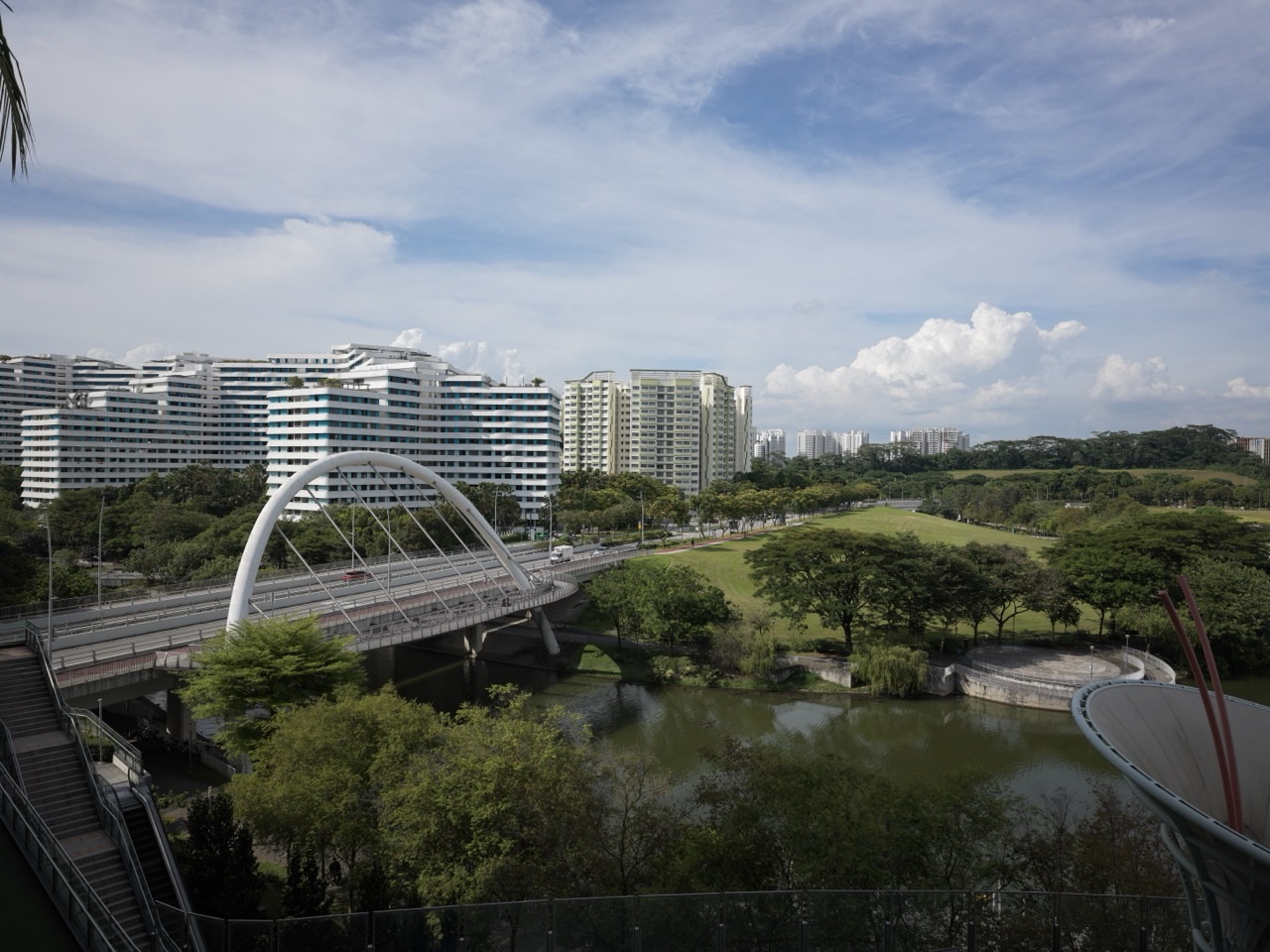
Visitor and business status reviewed 6 November 2026. The featured photograph shows the Punggol Waterway landscape elsewhere in the estate, not a verified Tebing Lane business or named Riverside Walk lookout. Public park access and the operation of individual private tenants must be checked separately.