
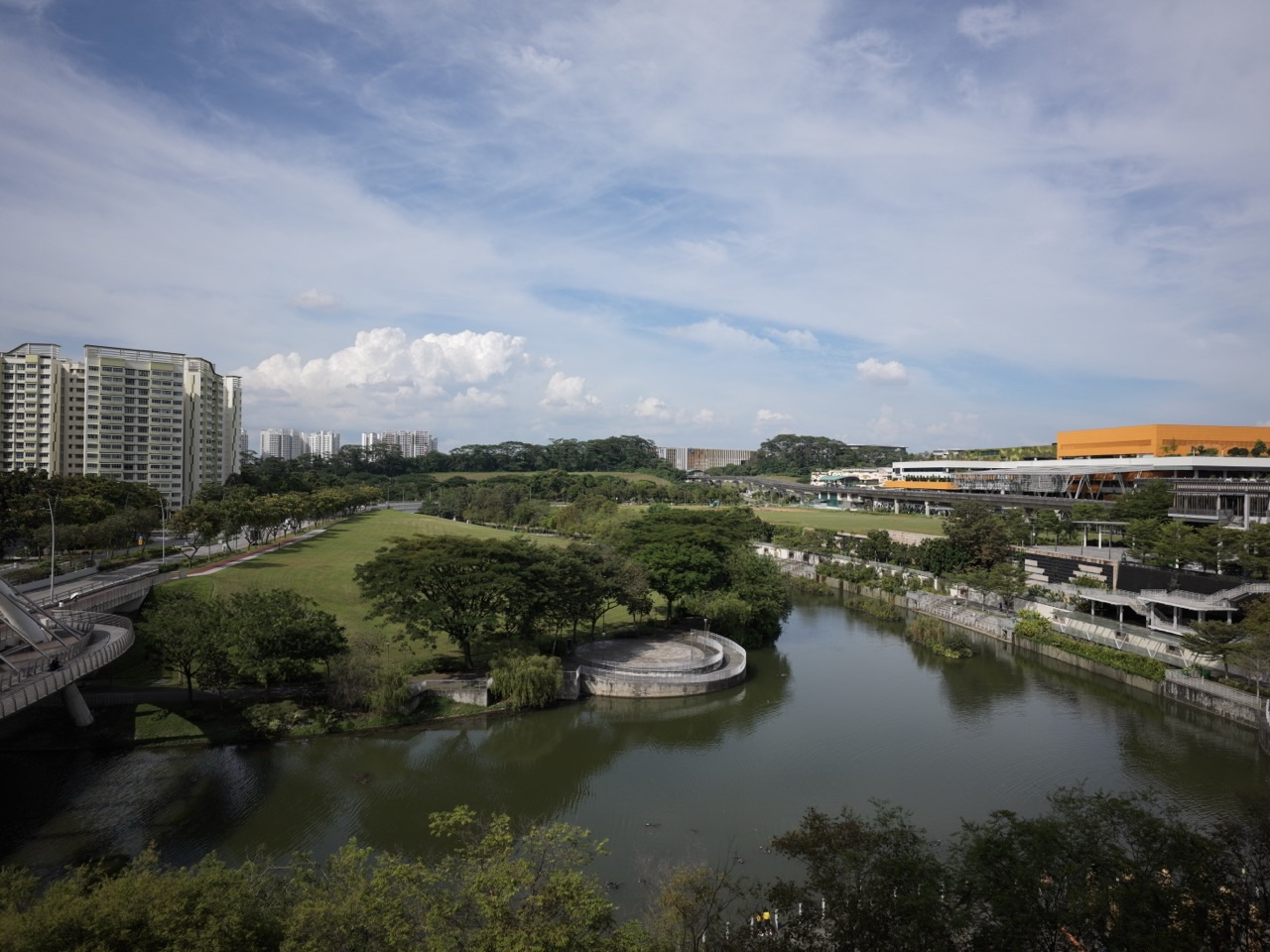
Punggol Waterway Park is one of the easiest free things to do in Punggol. You can walk beside the canal, look for birds, cross one of the bridges, let children enjoy a designated sand-play area or follow the shared paths on a gentle bicycle ride. NParks lists Punggol Waterway Park as open 24 hours. It stretches along Sentul Crescent through Punggol town, with access from the Punggol MRT and Damai LRT areas.
For a satisfying first visit, choose one objective rather than trying to see everything: a 30-minute stroll, a family play session, or a 90-minute walk with a meal afterwards. This guide gives visitors practical routes, accessibility considerations, costs, weather alternatives and clear distinctions between Waterway Park and other Punggol destinations. A simple day should feel pleasant, not like another schedule that has to be completed.
Quick information before you leave:
- Admission: free for the public park, excluding optional transport, parking, food and rentals.
- Opening: NParks lists the park as open 24 hours, subject to temporary works and local restrictions.
- Nearby rail: Punggol MRT and Damai LRT; choose based on your actual entrance.
- Highlights: Nature Cove, Recreation Zone, Heritage Zone, Green Gallery, bridges, sand play and a therapeutic garden.
- Park rule: no fishing in Punggol Waterway Park.
- Weather backup: One Punggol or Waterway Point can supply a sheltered break, subject to each venue’s hours.
Start with the outing that suits your group
A family with a toddler needs a different park visit from a group of teenagers or someone training for a long ride. Begin by deciding how much walking the least mobile person can comfortably manage, whether you need a toilet or quiet rest stop, and how you will return to your starting point. Punggol’s waterway is linear: an attractive path can make it easy to keep going, but every extra stretch must also be travelled back unless you have planned a different exit.
| Visitor | Suggested starting idea | What to protect |
|---|---|---|
| Toddler and caregiver | Short bridge walk and seated break | Heat, sleep and the return |
| Primary-school child | Sand play and nature observation | Water-edge supervision |
| Teenagers | Photography and a purposeful walk | Agreed meeting point and time |
| Cyclists | Signed park connectors | Shared-path safety |
| Older adults | Accessible short section | Shade, surfaces and seating |
If time is short, do the shorter trip well. An uninterrupted hour outdoors can be more memorable than a half-day during which everybody becomes hot, hungry and irritated. Tell children the destination is one bridge, not the whole park. They can choose to continue if they still feel comfortable.
Do not confuse the different Punggol parks
Punggol Waterway Park lies along the landscaped waterway through the new town. Punggol Promenade describes separate coastal and reservoir-side park connector stretches. Coney Island Park is an island nature destination with entrance hours, rougher surfaces and a different travel commitment. Punggol Point Park is a small coastal park at the north end of Punggol Road. Despite the similar names, you should not use one opening-hours statement for all four places.
Important November 2026 update: Punggol Point Park and its adjacent carpark have been closed for upgrading since 11 August 2026, with NParks reporting an expected works-completion date of 31 December 2027. That date is not a guaranteed reopening. The separate Punggol Waterway Park listing continues to show 24-hour opening. Before travelling to the northern coast, consult NParks’ current notices and follow signed diversions. Do not enter closed park areas because an old travel article still recommends them.
There is one more naming trap. NParks’ Punggol Park is at the junction of Hougang Avenues 8 and 10. It is different from Punggol Waterway Park. A family arranging to meet at ‘Punggol Park’ without a precise map pin can arrive at two completely different places.
Getting to Punggol Waterway Park
NParks describes the park as following Sentul Crescent Road through Punggol town. Because it has several approaches, the correct station depends on the stretch you want to visit. Punggol MRT (NE17) is a convenient town-centre starting point, especially for visitors who also plan to eat or shop. Damai LRT can make sense for some Nature Cove approaches. Check a pedestrian map for your intended facility rather than assuming there is just one main park gate.
On arrival, use a landmark everyone can recognise: a particular pedestrian bridge, a named entrance, a station exit or a designated carpark. Saying ‘meet near the water’ is inadequate when both banks have attractive paths. If different members of your group arrive separately, share a specific point and a fallback meeting place in case mobile data fails.
NParks lists carparks A and B along Sentul Crescent and notes that parking fees apply. Availability is not guaranteed. For an older adult or a wheelchair user, verify the actual step-free approach from the station or parking location rather than assuming the whole park is uniformly accessible just because NParks lists the destination as wheelchair accessible.
Walk beside the water and enjoy the bridges
The most straightforward attraction is the water itself. A canal through a residential town changes how the neighbourhood feels: people can walk without a shopping objective, exercise close to home and spend time noticing the landscape. The bridges help visitors divide a long linear park into manageable segments. Pick one, cross only if the return route remains comfortable, and photograph the view without blocking the path.
For a child, give the walk a small purpose. Ask which bridge has the most interesting shape, whether a tree is throwing shade over the path, or how the view changes between the two sides. For adults, it is enough to enjoy the scenery. You do not have to turn every excursion into a formal learning activity.
Many people prefer mornings or later afternoons because the heat is more manageable. That is a practical preference, not a promise of good weather. Bring water, pay attention to cloud development and leave enough daylight for people unfamiliar with the route.
Sand play near Carpark B
NParks identifies a kidney-shaped sand-play area near Carpark B. This is a genuinely useful feature for children who enjoy creating shapes, scooping, building and experimenting with texture. Bring a towel, hand-cleaning supplies and a bag for sandy items if your family needs them. Treat the sandpit as the central activity, not a rushed five-minute stop after an exhausting walk.
A designated sand-play area is not a swimming beach. Explain the boundary before play starts: the sand is for digging and building; the waterway is not for entering. Watch younger children continuously near the water’s edge, and do not cross protective barriers for a photograph. Some children dislike sand on their hands or feet, so give them permission to start with a small scoop or to choose a different activity.
Parents can make the experience surprisingly rich without buying equipment. Ask a child to build two shapes and compare which one holds together, or pour a little water only where permitted and observe how dry and damp sand behave differently. No worksheet is necessary. The interesting part is that children make a prediction and then see what happens.
Find the old Punggol Road story
NParks highlights the preserved old Punggol Road bus stop and a section of the older road as heritage features. They create an unusual meeting point between a modern residential estate and the landscape that came before it. A child who sees the modern LRT may be curious about why an older bus stop was kept. That conversation can explain continuity, not simply nostalgia.
Read available signs before drawing a conclusion. Ask what the old road might have connected, why transport routes change and why a town might protect one small physical reminder of its past. This is local history made understandable through something visitors can actually see. The nearby Kelong Bridge also offers a chance to discuss coastal vocabulary and Punggol’s relationship with water.
Birdwatching and quiet nature observation
A good wildlife experience begins with keeping still. Sit or stand away from the main walking lane, look towards vegetation and pay attention to movement. A child who notices a bird repeatedly searching near the water has observed something meaningful even if nobody knows its species. Distinguish observation from a guess: ‘It dipped towards the surface three times’ is different from ‘It must have been hungry.’
Do not feed animals, approach nests or enter planted sections to get a better picture. Parks are shared living spaces, not just scenery created for photographs. A respectful observer notices more precisely because the wildlife has been given room to behave naturally.
Therapeutic garden and a gentler visit
NParks lists a therapeutic garden with views of the waterway and sensory planting. This can suit older visitors, people who prefer a quieter stop, or families seeking a calm break after a busy morning. Do not assume a person wants to complete a long walk simply because it is available. Sitting together and enjoying the view is also a worthwhile day out.
Check the actual approach before bringing mobility aids or strollers. An accessible destination does not automatically mean every possible entrance, bridge crossing or temporary diversion provides the same experience. Plan a route that works from the beginning all the way to the return journey.
Cycling and the wider park connector network
Punggol Waterway connects with the North Eastern Riverine Loop and other NParks routes. That makes it appealing for people who want more than a small circuit, but it also means paths are used by pedestrians, joggers, cyclists and families. Cycling requires predictable speed, patience at corners and care when passing. Dismount where signs or crowding require it.
For a younger rider, the most important test is not total distance. Can the child stop smoothly, give way, use shared crossings responsibly and return without fatigue? Begin on a simple section. Avoid designing a trip that depends on a rental shop being open unless you have independently checked the operator’s hours and equipment availability.
The North Eastern Riverine Loop is a much larger, approximately 26-kilometre network through Punggol, Sengkang and neighbouring areas. It is useful as a route-planning resource; it is not an instruction that every family should ride or walk the whole distance. The best distance is the distance that works safely for the people present.
Three realistic Punggol Waterway Park itineraries
A short 30-minute introduction
Start near your chosen station or public entrance. Walk along the water for about ten minutes and pause at one bridge or shaded point. Spend a few minutes noticing the surroundings, then turn back. This is especially useful after school, before a meal or when a visitor has limited stamina. A shorter plan is not a failure; it is a plan with an achievable endpoint.
A flexible 90-minute family outing
Allow time to arrive and get oriented, then choose exactly one main activity such as sand play, nature observation or a heritage feature. Do not spend the full 90 minutes moving. Some of the time should be for the activity itself, for washing hands and for returning without rushing. If a child becomes upset or tired, change the plan instead of insisting that the schedule must be completed.
A half-day with food and indoor backup
Begin outdoors while conditions are comfortable, make the waterway the main activity, and then use One Punggol or Waterway Point for a meal and sheltered break. Depending on everyone’s energy, Punggol Regional Library can be a separate optional visit. There is no obligation to add another attraction after lunch. A relaxed half-day often has more staying power than a packed list.
These itineraries are illustrative shapes, not live journey-time estimates. Actual travel depends on your entrance, the weather, mobility needs, stops and temporary detours. Check the exact route before bringing a large group.
What to do if the weather changes
A 24-hour opening listing does not mean every hour is safe for outdoor exercise. Singapore’s thunderstorms and lightning risk can change quickly. If thunder threatens, move to proper shelter; do not wait beneath isolated trees or continue across exposed bridges. Avoid flooded, damaged or barricaded paths. Follow official weather guidance instead of relying on the fact that the park is formally open.
Heat matters too. Bring sufficient drinking water, find shaded places and watch for tiredness, particularly among younger children and older adults. During haze, check official NEA air-quality advice before choosing strenuous outdoor activity. If your group is not comfortable outdoors, use the sheltered part of the planned visit and return to the park another day.
Budget: what is free and what is not
General park admission is free. You may still pay for public transport, legal parking, food, bicycle rental or any paid activity booked separately. There is no minimum spending to have a good time. If budget matters, bring your own water, plan your return fare and choose a short walk. Vendor prices and hours are changeable and should not be written into an evergreen itinerary as permanent facts.
Rules and mistakes that matter
- Fishing is prohibited in Punggol Waterway Park under NParks’ published rules; designated fishing areas elsewhere do not change this.
- Do not enter or play in the waterway.
- Stay within public routes and follow local construction signs.
- Do not feed wildlife or leave rubbish.
- Keep pets controlled; use the designated dog run according to its signs.
- Respect pedestrians when cycling and slow down near children and crossings.
- Do not assume Punggol Point Park, Coney Island and Waterway Park share opening hours or closure notices.
The common mistake is collecting too many attractions in a single route. Punggol Coast Digital District, Coney Island and the northern waterfront each deserve their own travel decisions. Another mistake is trusting the shortest line on a map: it may not account for a stroller, a blocked path or the need to return to the same station. Choose the whole journey, not just the outward leg.
Frequently asked questions
Is Punggol Waterway Park free?
Yes, general public admission is free. Optional transport, parking, food and other services may cost money.
Is the park open at night?
NParks lists Punggol Waterway Park as open 24 hours, but visitors should follow local works restrictions and choose conditions appropriate for their group.
Which rail station should I use?
Punggol MRT or Damai LRT may be useful. The closest approach depends on the part of the linear park you intend to visit.
Can I bring a stroller or wheelchair?
NParks identifies wheelchair accessibility. Verify the specific path, entrance, slopes and return connection before setting off.
Is there a sand playground?
NParks describes a kidney-shaped sand-play area near Carpark B. It is a designed play zone, not permission to enter the waterway.
Can I fish here?
No. NParks says fishing is not allowed within Punggol Waterway Park.
Is Punggol Point Park open?
Do not assume so. It has been subject to upgrading from August 2026, with works completion expected at the end of 2027. Check the latest NParks access notice.
What is a good rainy-day alternative?
One Punggol and Waterway Point offer indoor facilities nearby. Check each destination’s current opening hours before travelling.
How long should a first visit take?
Thirty to ninety minutes can be a good start. Choose based on age, mobility, weather and the return journey rather than a universal itinerary.
Official sources and useful related guides
- NParks — Punggol Waterway Park official facilities, access and rules
- NParks — North Eastern Riverine Loop
- NParks — active closures and diversions
- eduKateSG — Things to do in Singapore: Punggol overview
- eduKate Punggol — activities across the neighbourhood
- eduKate Punggol — Punggol Regional Library guide
Visitor facts reviewed 6 November 2026. Temporary works and individual facilities can change. Official NParks notices take precedence over this dated guide.