
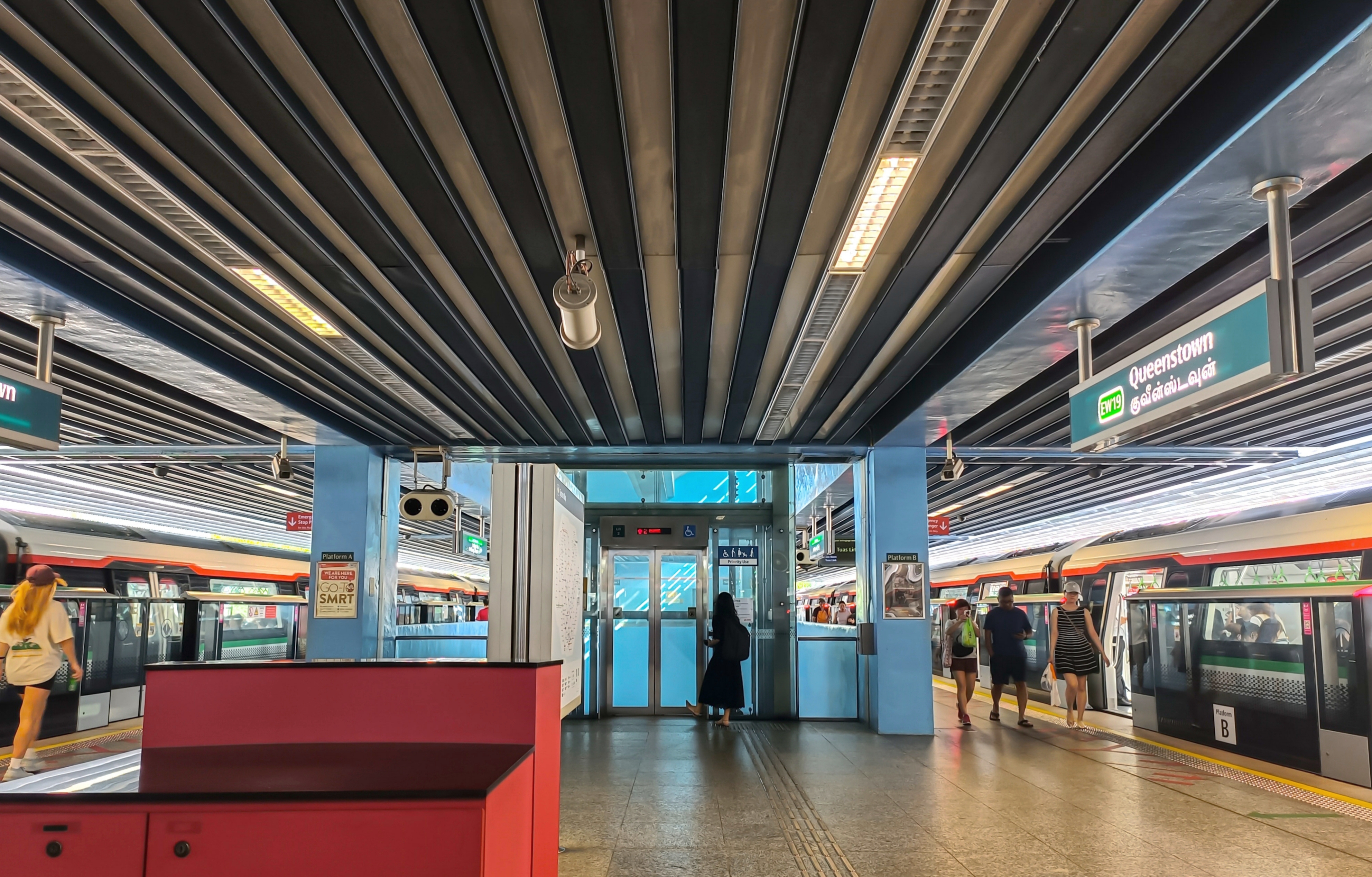
The easiest free things to do in Queenstown are to walk part of Alexandra Canal Linear Park from Queenstown MRT, explore the Dawson and Strathmore neighbourhood on public paths, or follow a small self-guided heritage route through one of Singapore’s earliest satellite towns. The Alexandra Canal Linear Park connector is about 1.4 km and wheelchair accessible, making it a practical starting point for families who want a manageable walk without paying admission.
For people looking for gardens, HortPark is another worthwhile destination in the wider Alexandra area, but it is not directly outside Queenstown MRT. Visitors should also know a major November 2026 update: Queenstown Public Library at 53 Margaret Drive closed after 30 August 2026 for a planned revamp and is expected to reopen in late 2028. Do not travel there expecting a functioning reading room, borrowing service or children’s programme during the closure. Choose an operating alternative library or a suitable indoor retail or food venue instead.
- Best simple free walk: Alexandra Canal Linear Park, 1.4 km from Queenstown MRT towards Tanglin Road.
- Best nature-and-gardening outing: HortPark at 33 Hyderabad Road, a separate trip requiring transport planning.
- Best nearby heritage focus: Dawson and older Queenstown residential landscape, explored respectfully from public paths.
- Key November 2026 correction: Queenstown Public Library is closed for renovation; projected reopening is late 2028.
- Best low-spend option: a short park connector walk plus an affordable meal.
- Rainy-day plan: choose a currently operating library elsewhere or a suitable indoor commercial/community space; do not rely on the shuttered Queenstown branch.
- Check NParks and NLB sources on the day; avoid promising any specific paid class or shopping tenant without verification.
The established Things to do in Singapore | Queenstown introduces the town broadly. This companion gives practical routes, accessibility distinctions, honest closure information and the deeper reasons people find Queenstown interesting.
1. Queenstown is more than one attraction
Queenstown is a mature Singapore town with several neighbourhoods, housing estates, public transport connections and historical layers. A traveller often hears names such as Dawson, Alexandra, Commonwealth, Margaret Drive and Tanglin Halt without being sure how they relate. These names describe different parts of a wider area, not one tiny tourist square where every landmark is reached in a few steps.
The first planning question should be whether you want a short accessible walk, a heritage-focused outing, gardening or a library session. A visitor arriving at Queenstown MRT for a green route can choose Alexandra Canal Linear Park. Someone seeking HortPark should plan a separate journey. A family looking for a functioning library in November 2026 must look beyond the closed Queenstown branch.
A good local article should help readers make these distinctions before leaving home. It is more helpful to visit one suitable place comfortably than to exhaust children and older relatives trying to follow a long list of loosely related attractions.
2. Alexandra Canal Linear Park: the clearest free starting point
NParks describes Alexandra Canal Linear Park as a 1.4 km park connector built over a covered canal. It starts from Queenstown MRT, runs through the Strathmore and Dawson area and leads towards Tanglin Road, connecting to the wider Alexandra network. The route is marked wheelchair accessible and has fitness and play amenities, making it a practical, low-cost outing for people who want exercise and a view of daily neighbourhood life.
The park’s structure is also an interesting lesson in urban engineering. A canal may perform drainage functions without remaining exposed along every part of a route. A landscaped surface above it can support walking and recreation. Ask children how many functions the same corridor serves: transport on foot, exercise, planting, neighbourhood connection and infrastructure hidden beneath the landscape.
Choose a modest section rather than treating 1.4 km as a distance every child must complete. A wheelchair user’s route still needs current consideration of the actual station exit and any works. The official NParks park connector description gives the basic length, access and route.
3. A walk through Dawson: recognising a living housing estate
One pleasure of a Queenstown outing is seeing residential life rather than a formal attraction. Dawson has public housing, greenery, roads and everyday amenities arranged within a district that has changed over time. A walk here can raise questions about what makes a neighbourhood liveable: public transport, parks, comfortable walking routes, food, shade and access to services.
Families should treat the area as a home for residents, not a private museum. Stay on public paths, respect residential entrances and do not photograph people through windows or intrude on common spaces. A useful way to teach children about public housing is to ask them to identify the differences between a walkway for residents and a tourist attraction designed for crowds.
An older child can sketch a map linking the MRT, canal connector, housing, a food stop and a place to rest. The task helps turn a familiar estate into a system of relationships. That understanding is more useful than a long list of building names memorised without context.
4. Tanglin Halt and Queenstown’s changing landscape
Tanglin Halt and older parts of Queenstown have undergone significant urban change. Some buildings and landmarks associated with earlier generations have been redeveloped or are affected by housing and infrastructure programmes. It would be misleading to promise that every old shop, block or market shown in a decade-old photograph is still operating today.
The more thoughtful way to approach local history is to compare verified historical information with what the visitor can see now. Notice how streets, green spaces and transport corridors preserve some forms of continuity while buildings and businesses change. If an older relative remembers the neighbourhood, invite them to share those memories without claiming that one personal account is a complete history.
Visitors should not enter construction zones or try to reach former landmarks through fenced areas. Redevelopment is an ongoing process, and the public route that was convenient last year may not be available this year. Check current site signs and accept that the most interesting story may be how an area changes rather than a promise to see a particular vanished building.
5. Queenstown Public Library: closed in November 2026
Queenstown Public Library at 53 Margaret Drive is historically significant as Singapore’s oldest public library building. NLB announced that its last day of operation before the latest revamp was 30 August 2026. The agency’s published target is reopening in late 2028, with conservation of the distinctive original facade. That means the building may still be a meaningful local landmark, but it is not an operating library for readers planning a visit in November 2026.
A common online mistake is repeating the old 10am-to-9pm branch opening times after the library has shut. That information can waste a family’s journey. The responsible answer is clear: if you want to borrow books, study or attend a children’s programme now, confirm an operating NLB branch elsewhere. Do not assume a temporary service exists at Margaret Drive unless NLB says so.
A closure can also prompt a conversation about heritage and public services. Why preserve the facade of a library while changing its interior? How can a community continue reading during renovation? The questions are valuable, but they do not replace accurate travel advice. Check NLB’s live library directory.
6. The importance of preserving a library building
Queenstown’s library is more than a place to store books. It has served generations of readers, and its architecture belongs to the story of Singapore’s post-independence neighbourhood development. A building’s visible shape can hold memories for people who used it long before its latest renovation. Conserving that shape helps future visitors recognise continuity in a changing town.
Ask children why a building might be preserved even when its services need updating. They may suggest that memories, architecture or history matter. Then ask why the interior might still need improvement. Accessibility, technology, safety and changing community needs can require new arrangements. Preservation and improvement are not necessarily opposites.
Because the branch is closed, keep this as a heritage conversation during a public-area walk rather than advertising an interior library tour. Do not enter restricted construction areas. The public will learn the final reopening details from NLB nearer the time.
7. HortPark: gardening as a separate Alexandra outing
HortPark sits at 33 Hyderabad Road in the wider Alexandra area. NParks lists this 10.7-hectare garden as open from 6am to 11pm and describes it as a hub for gardening, recreation, education and research. It is part of the Southern Ridges network and is a worthwhile destination for families interested in plant life, garden design and comfortable greenery.
However, it is not reasonable to imply that HortPark is on Queenstown MRT’s doorstep. NParks lists several nearby MRT connections, including Queenstown, Commonwealth, Labrador Park and HarbourFront, but each requires the appropriate walk or public-transport connection. Plan the actual journey to Hyderabad Road before setting out, especially when travelling with small children.
HortPark has gardens, lawns and various facilities, some subject to hours and booking rules. A basic nature visit is different from registering for a specialist workshop or event. For route and restrictions see NParks’ official HortPark page.
8. A visit to HortPark that is actually about plants
A garden visit becomes memorable when children notice differences rather than simply posing for photographs. Choose two plants with contrasting leaf shapes and ask why those forms may help them grow in different environments. Invite a child to describe colour, texture and the amount of shade without touching fragile planting.
NParks specifically warns visitors not to touch the bee hotels along HortPark’s bee trail, because doing so may disturb the bees. This is a useful example of how conservation rules work. Bees can support ecosystems, but an educational display does not make the insects or their habitat toys for visitors to handle.
If a family wants a paid gardening class, check the organiser’s current programme. A simple self-guided look at plants remains a worthwhile free-first activity. The garden’s value lies in observation, curiosity and comfort rather than the number of workshops purchased.
9. Alexandra Queensway Park Connector: a longer option
NParks describes the Alexandra–Queensway Park Connector as a 2.3 km route linking the Alexandra Canal network towards HortPark and the Southern Ridges. It is marked wheelchair accessible and passes through the mature Queenstown housing landscape around Meiling Street. This route is separate from the shorter Alexandra Canal Linear Park, and its length should not be confused with the 1.4 km connector.
Active walkers may enjoy using the connector network as a longer outing, but the same rules of comfort apply. Check exactly which route segment you want, identify a return transport point and account for the time spent in open sections. The broader park connector network makes walking between neighbourhoods easier, but it does not mean every named endpoint is equally close.
For an older child, the two connector lengths make an opportunity to read maps and understand route choices. The lesson is not simply adding distances. It is recognising that a route serves movement through a neighbourhood and that every extension changes the effort needed to return. NParks’ Alexandra–Queensway guide.
10. HortPark versus the Southern Ridges: choose a realistic distance
HortPark is associated with the Southern Ridges network, which also includes other green destinations. That association can make a family imagine a complete ridge walk, but the trails differ in elevation, distance and exposure. A visit to a garden does not oblige anyone to complete a long route across multiple parks.
Decide whether the day’s purpose is enjoying horticulture or engaging in more substantial walking. Families with preschoolers may be better served by a short garden circuit and a meal. Experienced walkers can research a suitable longer route, taking into account water, heat, changing weather and the accessibility of return transport.
Be cautious about copying a social-media itinerary designed for fit adults when the group includes children or a person with limited mobility. The scenery is not worth pushing a relative beyond their comfortable range. A helpful local guide gives permission to choose less.
11. Queensway Shopping Centre and practical local shopping
Queenstown and the wider Alexandra/Queensway area contain retail destinations with their own history and character. Queensway Shopping Centre is associated with sports and everyday shopping, while other retail centres and neighbourhood shops meet different needs. These are legitimate options for people who want a casual indoor wander, but they should not be disguised as no-spend tourist attractions.
Commercial tenants, food options, opening times and prices change. If a reader is looking for a particular sports product or repair service, verify the current tenant before travelling. An article should not invent an in-stock item or promise that an old shop remains open merely because a previous guide listed it.
For families, shopping works best as a clearly planned purpose. If children accompany adults on a practical errand, give them something manageable to do, such as comparing price labels or reading signs. A short trip can be enjoyable without requiring an expensive purchase.
12. Food in Queenstown: ordinary local life is worth visiting
Queenstown contains hawker centres, neighbourhood coffee shops and dining areas where residents meet, eat and carry on with daily routines. A simple meal can be a reason to explore without having to chase an elaborate tourist itinerary. The important planning detail is location: dining options in different parts of the wider estate may not be immediately beside a chosen park connector.
Choose the meal to fit the walk’s endpoint. If the family has already spent time outside in heat, a convenient food stop is often better than a lengthy journey for one famous dish. Individual hawker stalls may close or change hours, and dietary needs should be checked directly.
Children can observe how food places support community life. Why do some people return to the same stall? How do food preparation, queueing, price and familiarity influence a choice? These everyday questions connect economics, culture and courtesy without converting lunch into a lecture.
13. What a Queenstown heritage walk can teach
Queenstown is associated with Singapore’s early satellite-town planning, making it a strong place to discuss how housing estates were designed to provide daily amenities. A visitor can observe the relationships between housing, transport, green space, shops and community buildings. Instead of treating one surviving landmark as the whole story, ask how the town worked for residents across different decades.
A heritage walk should be evidence-based. Historical plaques, archives, official accounts and informed community histories help separate what is verified from what has been repeated in online nostalgia. A photograph of an old shop may document an earlier time without proving the shop is still open now.
Ask a primary-school child to point out one thing that supports daily life—an overhead bridge, a sheltered walkway or a grocery shop. Ask a secondary student to consider what a planner might change as a neighbourhood ages. These are real questions about public services and lived experience.
14. A short family walk from Queenstown MRT
Imagine two adults, a primary child and a grandparent wanting a morning outside. Alexandra Canal Linear Park offers a manageable starting point because NParks identifies its route and accessibility. The family can choose a short section towards Dawson or Strathmore, watch the activity along public paths and return to the station or a nearby meal before anyone gets tired.
The walk need not cover the entire 1.4 km in one direction. Decide on a turnaround point and account for the return distance. If a relative prefers to sit while others walk a short section, agree on a public meeting place that is comfortable and safe. Children often enjoy the feeling of having a clear destination.
If rain develops, do not force the family to complete the connector merely because it appeared in the plan. Move into a suitable substantial building or postpone the outing. Because the Queenstown library is closed, do not treat it as the default indoor rescue option.
15. A teenage Queenstown exploration without unnecessary pressure
Teenagers may enjoy researching an older estate and identifying what has changed. Give them a specific, achievable task: choose one public route, identify an example of historical continuity and explain how residents can travel between housing and amenities. Avoid sending them into construction areas or private residential property to chase a photograph.
Photography can become part of the learning. A useful set of pictures might include a public housing street, a planted pedestrian path, a transport connection and a visible community amenity. Ask what relationship the photographs show. This is more demanding than taking attractive images at random, but it remains a creative, self-directed activity.
Teenagers can also compare the planned Queenstown Library reopening with the building’s existing public identity. Why does a renovation matter to a community that uses a library regularly? What practical alternatives do residents need while a service is closed? These questions invite thoughtful communication rather than rote memorisation.
16. A visit for older relatives and mobility-limited visitors
NParks describes the Alexandra Canal Linear Park and Alexandra–Queensway Park Connector as wheelchair accessible. HortPark is also marked wheelchair accessible and elderly friendly. These labels provide useful starting information, but individual comfort still depends on entrance choice, path conditions, distance, shade and the availability of a nearby return route.
Choose the actual public route rather than promising access to an entire region. A short canal walk may suit somebody who prefers level surfaces, while an extended park connector or ridge walk may not. Ask what the person would like to do and what breaks would help. Their preference should shape the trip.
Do not assume the accessibility of a route remains unchanged during construction or improvement works. Check on-site signs and current notices, and do not force a diversion that undermines the visitor’s comfort. An inclusive outing offers choices rather than a single route that everybody must finish.
17. What can we do when it rains in Queenstown?
Queenstown’s public green spaces are pleasant in suitable weather, but open paths are inappropriate during lightning. If rain is forecast, consider an indoor activity or move the park visit to another day. An old travel guide might still suggest Queenstown Public Library as a convenient free refuge; that advice is wrong in November 2026 because the branch is closed until its planned future reopening.
A practical rain plan could involve an operating public library outside Queenstown, a community facility with confirmed hours or a retail and food stop. The right choice depends on the family’s needs and transport. Check the operator’s actual status instead of assuming a name in a map directory proves access today.
The important point is that a cancelled walk does not mean the day has been wasted. A thoughtful alternative is part of planning. Sometimes the most enjoyable decision is to return home and arrange the outdoor visit under better conditions.
18. Free things to do versus a free entire day
Walking in a public park connector generally has no admission fee, but transport, parking, meals, paid workshops or retail spending can add costs. Use ‘free’ precisely. A family can enjoy Alexandra Canal Linear Park without buying a ticket; that does not mean there will be no fare or refreshment expense.
A low-cost itinerary works best when the core activity is enjoyable on its own. Bring water, use a public path, allow time to rest and plan a simple meal only if desired. A visitor who wants a paid gardening workshop at HortPark can plan a different day around that booking. There is no need to combine every possibility.
Explain spending expectations to children before entering a mall or food centre. A clear plan helps everyone appreciate that recreation does not always require a purchased experience. The town itself provides places to walk, learn and enjoy time together.
19. Learning vocabulary from the physical environment
Queenstown offers a good setting for connecting words to reality. Terms such as ‘canal’, ‘connector’, ‘heritage’, ‘redevelopment’, ‘conservation’ and ‘accessibility’ can sound abstract when read in isolation. Standing beside a path built over a covered canal helps a child understand why a connector is not simply a random footpath.
Ask a child to use one new word in a sentence about something visible. For example, ‘The park connector helps people walk between the station and the neighbourhood.’ Encourage them to add an explanation: how does the route make a journey easier? A young learner may give a short answer, while an older one can discuss transport and land use.
The purpose is not to attach compulsory homework to a family outing. It is to show how language becomes more precise when children observe, compare and explain. A single meaningful conversation can build more understanding than a list of unfamiliar facts.
20. Respect for a living neighbourhood
Queenstown is an estate where people live, work and rest. A responsible heritage outing should stay on public paths, leave residential corridors clear and respect privacy. Do not enter private or fenced construction areas to reach a historical landmark, and do not obstruct the routines of residents for a photograph.
In green spaces, protect plants and wildlife and take rubbish home. On park connectors, walkers and cyclists should remain considerate of one another, particularly where routes narrow. The everyday kindness of shared spaces is part of what makes a town welcoming.
Queenstown will continue to evolve through redevelopment, renewed public facilities and changing neighbourhood needs. A useful guide invites readers to return with curiosity while remaining accurate about what is open today. Enjoy one comfortable visit, then allow a different part of the estate to become another day’s discovery.
Four practical Queenstown itineraries
An easy free morning
Start at Queenstown MRT, enjoy a short accessible section of Alexandra Canal Linear Park, observe the Dawson landscape and return at a comfortable point. A meal is optional.
A heritage-and-housing outing
Explore public streets in the older Queenstown area, comparing historical information with the present landscape. Respect residential privacy and construction boundaries. Do not claim closed landmarks remain open.
A plant-focused Alexandra visit
Visit HortPark at 33 Hyderabad Road using the correct bus or MRT connection. Explore garden themes and read signage without touching protected features such as bee hotels.
A rain-first afternoon
Choose a confirmed operating indoor facility. Queenstown Public Library is closed until its planned late-2028 reopening; use NLB’s live directory to choose another branch for books and reading.
Frequently asked questions about Queenstown
What are the best free things to do in Queenstown?
Walk a portion of Alexandra Canal Linear Park and explore public heritage streets or suitable gardens. Ordinary public access does not require a ticket.
How long is Alexandra Canal Linear Park?
NParks lists the park connector at approximately 1.4 km.
Where does Alexandra Canal Linear Park start?
It begins from the Queenstown MRT area and runs through Strathmore and Dawson toward Tanglin Road.
Is Alexandra Canal Linear Park wheelchair accessible?
NParks lists it as wheelchair accessible; confirm the intended approach and any temporary works.
Is Queenstown Public Library open in November 2026?
No. It closed after 30 August 2026 for a revamp, with a planned late-2028 reopening.
Where was Queenstown Public Library?
At 53 Margaret Drive. The historic building remains important, but the library service is closed during renovation.
When will Queenstown Library reopen?
NLB’s reported target is late 2028. Treat that as a plan, not a guaranteed date.
What can families do on a rainy day?
Choose an operating NLB branch elsewhere, or an indoor venue with confirmed current hours. Do not rely on the closed Queenstown branch.
Is HortPark inside Queenstown?
HortPark is at 33 Hyderabad Road in the wider Alexandra area; it is a separate destination requiring transport planning.
What are HortPark’s opening hours?
NParks lists 6am to 11pm for the park grounds. Visitor services have different hours.
Can children touch the bee hotels at HortPark?
No. NParks warns not to touch them because doing so disturbs bees.
Is HortPark free to enter?
Ordinary public park entry is free; classes, events, parking or other services can have separate charges.
How long is Alexandra–Queensway Park Connector?
NParks lists it at 2.3 km, separate from the 1.4 km Alexandra Canal Linear Park.
What is Queenstown known for historically?
It is associated with Singapore’s early satellite-town planning and mature public housing history.
What can children learn on a walk?
How public housing, transport, green space, drainage and everyday services work together.
Where is a good walk for seniors?
A suitable section of Alexandra Canal Linear Park is a practical starting point; plan rest and return options.
Is Queensway Shopping Centre a free attraction?
Entering a retail centre is different from paying for purchases; check current tenants and prices.
Can we combine Queenstown MRT and HortPark on foot?
HortPark is not immediately beside the MRT. Plan an appropriate transport route rather than assuming a short stroll.
Do we need to book a park connector walk?
Ordinary walking on an open public park connector normally does not require booking; organised events may be different.
Where do we check current information?
NParks for the two park connectors and HortPark, NLB for library closures, and operators for commercial facilities.
Related eduKateSG reading for Queenstown
- Things to do in Singapore | Queenstown
- Alexandra Canal Linear Park: 1.4 km Queenstown walk
- Things to do in Singapore | HortPark
- Interesting Places near Queenstown MRT
- Explore the Southern Ridges in Short Sections
Official sources and date-sensitive notes
Checked 6 November 2026. NParks lists the length and accessibility of Alexandra Canal Linear Park and Alexandra–Queensway Park Connector. For HortPark use the official park page. Queenstown Library’s closure began after its 30 August 2026 final operating day, with a projected late-2028 return; check NLB’s library directory for updated status. Recent operator and on-site notices overrule historical listings.