
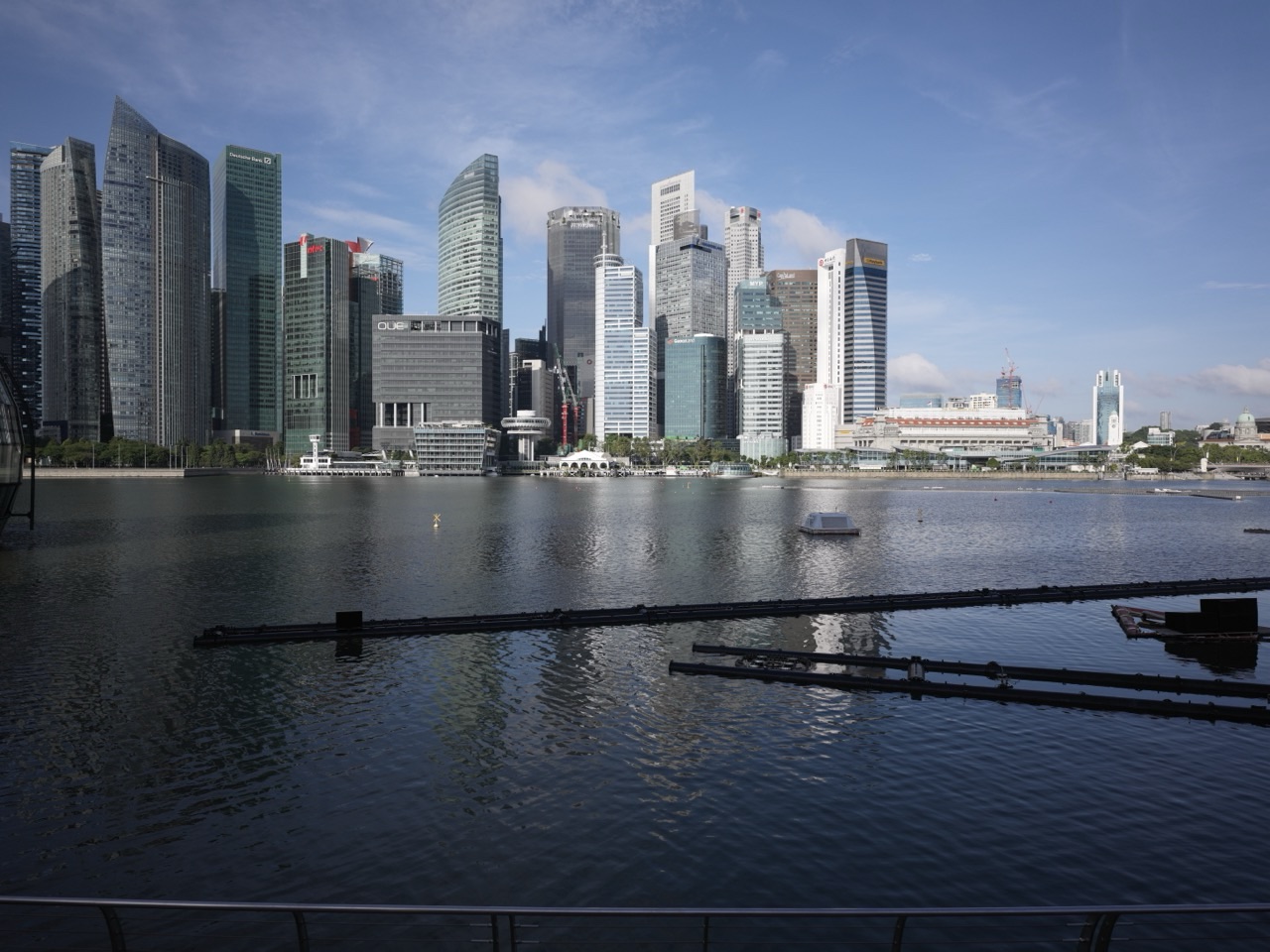
Things to do in Singapore | Palmer Road. Walk from the new Prince Edward Road MRT to one of Singapore’s most important Muslim heritage sites, climb the hill to Keramat Habib Noh, visit Masjid Haji Muhammad Salleh respectfully, look back toward the modern CBD, and use Palmer Road to understand how religious continuity can survive even when the surrounding coastline, transport network and commercial city change almost completely.
Palmer Road is one of the strongest old-and-new contrasts in the southern city.
A new MRT station opened nearby in July 2026.
The road itself leads to a religious site with roots reaching back to the nineteenth century.
Modern office towers surround a hill where worshippers still visit a revered keramat.
- Arrive at Prince Edward Road MRT.
- Walk toward Masjid Haji Muhammad Salleh.
- Climb respectfully to Keramat Habib Noh.
- Study the architecture of mosque and keramat.
- Look back toward the CBD and imagine the older harbour-edge landscape.
- Continue toward Anson Road and Shenton Way.
- Use the route to understand how living heritage survives redevelopment.
Read: Things to do in Singapore | Prince Edward Road
Read: Things to do in Singapore | Anson Road
Read: Things to do in Singapore | Shenton Way
Start With the Big Idea: Palmer Road Is Living Religious Heritage
Roots.gov.sg records Masjid Haji Muhammad Salleh and Keramat Habib Noh at 37 Palmer Road as a continuing place of worship and pilgrimage.
The site matters because it is not simply preserved architecture.
People still come to pray and pay their respects.
That makes it living heritage.
Official heritage reference: Roots.gov.sg | Masjid Haji Muhammad Salleh & Keramat Habib Noh
Learn Who Habib Noh Was
Habib Noh bin Sayyid Mohamad Al-Habshi arrived in Singapore in 1819.
Roots.gov.sg describes him as a respected Muslim saint known for piety, kindness and generosity.
He died on 27 July 1866 and was buried near Mount Palmer.
A keramat was built over his tomb.
Use the 1819 Arrival Date to Connect Personal and National Timelines
1819 is usually taught through colonial political history.
Habib Noh’s arrival in the same year adds a human and religious timeline.
Singapore history is not one storyline.
Government, migration, faith and everyday community life unfolded simultaneously.
Visit Masjid Haji Muhammad Salleh Respectfully
The mosque beside the keramat replaced an earlier surau and was completed in 1903.
Roots.gov.sg notes a distinctive architectural blend, including mock-Corinthian columns and other classical influences.
The mosque remains an active religious space.
Visitors should dress modestly, follow current access guidance and avoid disrupting worship.
Look at the Keramat Architecture
Roots.gov.sg describes the keramat as combining Middle Eastern and Western architectural influences.
Tuscan columns, dentils and louvres sit alongside an onion-shaped dome and roof pinnacles.
The building therefore mirrors Singapore’s wider architectural hybridity.
Imported forms were adapted into local religious expression.
Climb the Hill
The keramat sits on elevated ground.
A historical National Museum collection record notes a flight of 52 steps leading up to the tomb.
The climb creates physical separation from the commercial streets below.
Elevation contributes to the site’s sense of sanctuary.
Official collection reference: Roots.gov.sg | Keramat Habib Noh at Palmer Road
Use the Hill to Understand Topography
Palmer Road once belonged to a more maritime southern landscape.
The hill stood close to harbour activity and later became surrounded by reclaimed commercial land.
Topography survives even when coastlines move.
The keramat’s elevated position preserves the memory of a landscape that is harder to recognise at street level today.
Understand Why the Site Attracted Different Communities
Roots.gov.sg notes that both Muslims and non-Muslims who knew or revered Habib Noh visited the keramat.
That continuing practice shows how religious reputation can extend beyond one narrowly defined community.
Living heritage often survives because meaning is transmitted socially, not merely because authorities designate a building.
Walk Back Toward Prince Edward Road MRT
The newest layer of Palmer Road’s geography is only minutes away.
Prince Edward Road station opened on 12 July 2026 as part of Circle Line Stage 6.
LTA explicitly identifies Masjid Haji Muhammad Salleh as one of the landmarks served by the station.
That creates direct modern rail access to an old religious site.
Continue nearby: Things to do in Singapore | Prince Edward Road
Use the MRT Connection to Teach Accessibility
Heritage survives more successfully when people can reach it easily.
New transport does not have to threaten old places.
It can strengthen access to them if design and construction are managed carefully.
Prince Edward Road MRT and Palmer Road are a good example of future infrastructure increasing access to living heritage.
Walk Toward Anson and Shenton Way
Only a short distance away, the city becomes intensely commercial.
Office towers, mixed-use redevelopment and financial streets dominate.
That contrast is Palmer Road’s most powerful urban lesson.
A religious hill survives beside one of the highest-value office districts in Singapore.
Continue nearby: Things to do in Singapore | Anson Road
Continue nearby: Things to do in Singapore | Shenton Way
A Simple Palmer Road Half-Day Plan
- Morning: arrive at Prince Edward Road MRT.
- Walk to Masjid Haji Muhammad Salleh.
- Visit the mosque and keramat respectfully.
- Topography stop: look back from the hill toward the CBD.
- History stop: read Habib Noh’s story.
- Finish through Anson Road, Shenton Way or the new Circle Line.
Palmer Road Through the eduKate Ecosystem
Things to do in Singapore | Prince Edward Road
Things to do in Singapore | Anson Road
Things to do in Singapore | Shenton Way
Things to do in Singapore | Cantonment
Frequently Asked Questions
Who was Habib Noh?
He was a respected Muslim saint who arrived in Singapore in 1819 and became known for piety, compassion and generosity.
Can visitors go to the keramat?
The site is a living place of worship. Visitors should follow current access arrangements and behave respectfully.
How old is the mosque?
The present Masjid Haji Muhammad Salleh was completed in 1903, replacing an earlier surau.
What is the main learning idea?
Living continuity. Palmer Road shows how a religious site can remain active through enormous changes in shoreline, transport and commercial land use around it.
Official References and Heritage Sources
Roots.gov.sg | Masjid Haji Muhammad Salleh & Keramat Habib Noh
Roots.gov.sg | Keramat Habib Noh at Palmer Road
Things to do in Singapore | Palmer Road
Palmer Road is a small road with enormous continuity.
A saint was buried here in the nineteenth century.
A mosque grew beside the tomb.
The coastline changed.
The CBD rose around it.
A new MRT station opened nearby in 2026.
The site remains because living memory kept it meaningful.