
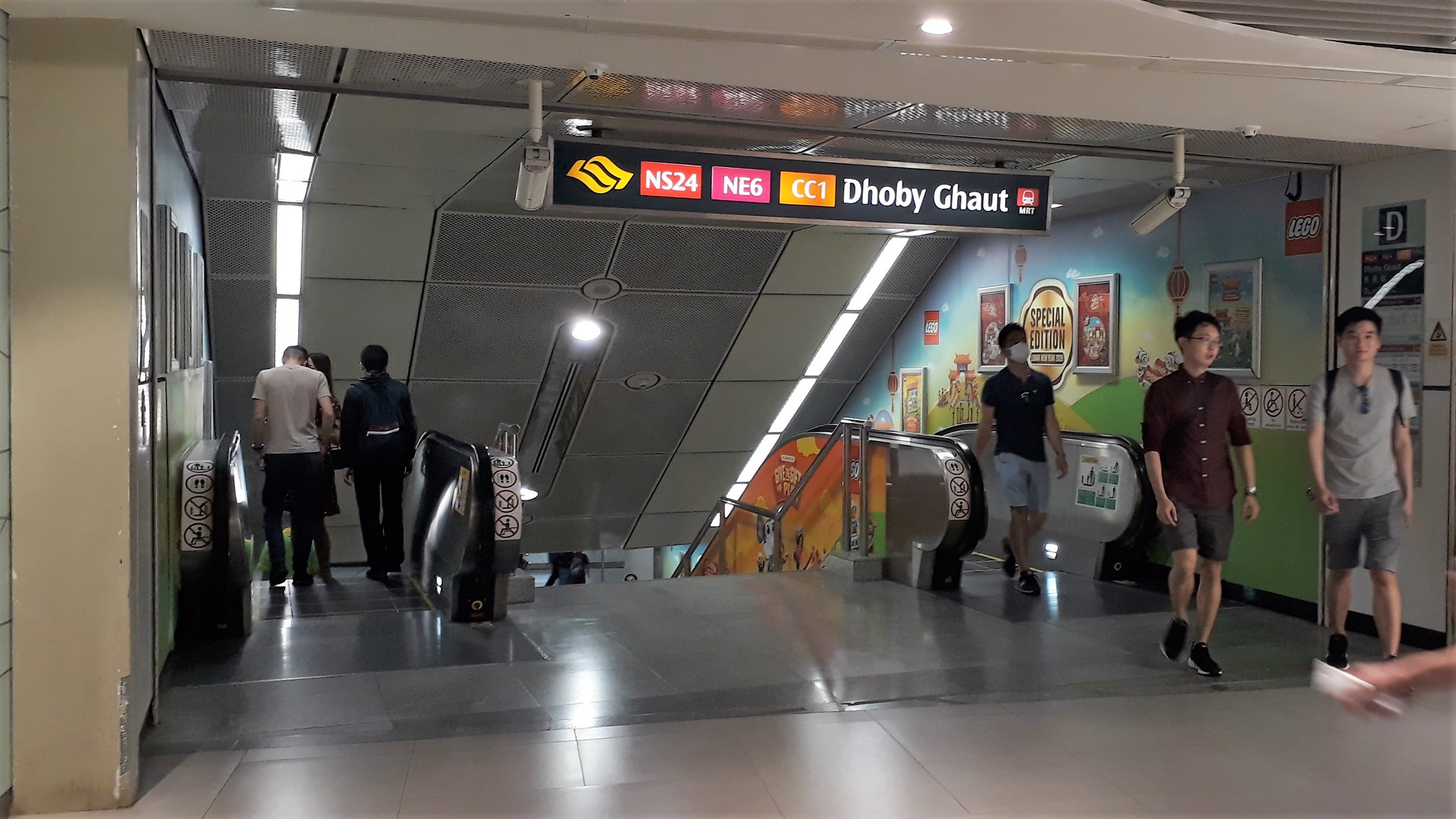
Things to do near Dhoby Ghaut MRT: take a free break at Dhoby Ghaut Green or Istana Park, explore Fort Canning Park and its famous Tree Tunnel, enjoy Plaza Singapura’s dining and sheltered shopping areas, or walk to the National Museum of Singapore. Dhoby Ghaut (NS24/NE6/CC1) connects three MRT lines, making it a practical starting point for families, visitors and anyone who wants greenery or history without travelling far from the city centre.
For an easy two-hour plan, choose one of two routes. For a free outdoor outing, start at Dhoby Ghaut Green, cross towards Istana Park and continue only as far into Fort Canning as your group can comfortably manage. For a museum-focused outing, walk about 450 metres towards the National Museum, which normally opens from 10am to 7pm. Its revamped Singapore History Gallery reopened on 10 October 2026, while other Level 2 galleries remain scheduled for reopening in the first quarter of 2027. The Istana grounds are not a daily public park: their most recent Open House was on 1 November 2026, and visitors should check for a newly announced date rather than assuming access every Sunday.
Quick answers and practical decisions:
- Dhoby Ghaut MRT: NS24, NE6 and CC1; three-line interchange.
- Fastest indoor base: Plaza Singapura at 68 Orchard Road, connected to the MRT through Basement 2 and Exit D.
- Free green space: Dhoby Ghaut Green, about one hectare, and nearby Istana Park, about 1.3 hectares; both listed open 24 hours.
- Best free nature and history: Fort Canning Park, 22 hectares, with historical features and varied paths; entry to the main public park is free.
- Popular photo stop: Fort Canning Tree Tunnel; allow for steps, crowds and a possible queue, and do not present it as barrier-free.
- Museum: National Museum of Singapore, 93 Stamford Road, approximately 450m from the station; normally 10am–7pm, with varying admissions.
- Istana grounds: open only on announced Open House dates; Istana Park outside the gate is a separate public park.
- Best comfort rule: choose either the museum or the hill as the main attraction, not both as compulsory stops.

Choose your visit in 30 seconds
People arriving at Dhoby Ghaut often make the same mistake: they see a cluster of famous names on a map and assume they belong to one short, easy loop. But Plaza Singapura, Istana Park, Fort Canning and the National Museum serve different purposes. A comfortable visit begins by knowing which one you genuinely want.
| If you need… | Choose first | Avoid |
|---|---|---|
| A quick meal, shopping or rain shelter | Plaza Singapura | A long outdoor walk before eating |
| A short free nature break | Dhoby Ghaut Green or Istana Park | Climbing Fort Canning without planning |
| A scenic park with historical interest | Fort Canning Park | Expecting every path to be flat |
| A memorable photo location | Tree Tunnel, then nearby features | Blocking the stairs for an extended shoot |
| Singapore history indoors | National Museum | Assuming every gallery has reopened |
| A special presidential-site visit | An announced Istana Open House | Turning up on an ordinary day |
If you have only one hour, choose one outdoor stop and a comfortable return. With two or three hours, add a single deeper experience. A photo in front of a famous staircase is not inherently a better outing than a quiet museum conversation. The right choice is the one that matches your family’s time, weather and interests.
There is also a difference between public spaces you can normally walk through and private, ticketed or restricted spaces. The historic hill is a public park; the Istana itself is an official compound. Treat the distinction as essential visitor information, not a minor disclaimer.
Station exits: how to reach the correct side of Dhoby Ghaut
Dhoby Ghaut connects the North–South, North East and Circle Lines. Its multiple platforms and exits can make a short journey feel unnecessarily complicated. Identify the first destination before leaving the paid area. Plaza Singapura has a direct Basement 2 MRT connection commonly associated with Exit D. For the Fort Canning approach, NParks has published directions using Exit B, Penang Road and a tunnel towards the park. Station wayfinding and temporary closures should take precedence over any fixed exit description.
For the National Museum, the museum itself identifies the Dhoby Ghaut approach as an approximately 450-metre walk via Orchard Road. The practical walking time depends on crossings, the route you choose and the group’s pace. Bras Basah and Bencoolen MRT are also possible approaches, which may be better if you are travelling from those lines or starting farther along the museum precinct.
Before emerging from the station, ask whether anybody needs a lift. A person with a stroller or mobility aid should not have to follow an escalator route solely because it is the first direction someone remembers. The most convenient accessible journey is not always the shortest route in metres.
Choose a precise meeting place if friends are coming from different lines. “Outside Dhoby Ghaut” can mean several different exits. A named building entrance or an identifiable public landmark is safer. Stop clear of the escalators, gates and pedestrian stream while checking a map.
Official starting points include the NParks Fort Canning visitor guide and National Museum’s getting-here directions. For wider station advice, see eduKate’s existing Dhoby Ghaut MRT Guide.
Stop 1: Dhoby Ghaut Green — a free break beside the interchange
Dhoby Ghaut Green sits next to the station. NParks describes it as approximately one hectare, designed as a “city room” for gatherings, arts and recreational activity. It is listed as open 24 hours. That does not mean events are operating at all hours, but it makes the park a flexible choice for a brief outdoor break.
The best way to use this space is simple. Take a moment to notice the transition from the underground interchange to an open green area. Look for seating, shade, plantings and the relationship between pathways and adjoining roads. If the weather is pleasant, a ten- to twenty-minute pause can make a busy day feel more manageable.
For children, a small park can be a better observation environment than a large destination full of distractions. Ask which plants cast the most shade, how people choose where to sit and why an open lawn might be valuable among office buildings and shopping complexes. You are introducing public-space design through real experience, not asking children to memorise vocabulary in a classroom.
The nearby Visual Arts Centre offers exhibitions, classes and other programmes, but do not confuse a free public green with free admission to every commercial workshop. Check its activity schedule and fees independently. A family can enjoy the park even when no arts programme is running.
For mobility needs, the park’s official listing includes visitor access information. Follow current level routes and avoid assuming every connection to the wider Fort Canning area is equally accessible. For a very short outing, remaining in Dhoby Ghaut Green may be the most suitable choice.
See the official NParks Dhoby Ghaut Green page for park context and rules.
Stop 2: Istana Park — the public space outside the presidential grounds
Istana Park is the separate public park near Orchard Road, bounded by Orchard Road, Penang Road, Penang Lane and Buyong Road. NParks lists its size at about 1.3 hectares and says it is open 24 hours. It is a useful stop for greenery and for viewing the main Istana Gate from an appropriate public position.
The most important distinction is between the park and the Istana grounds. Being able to walk in the park does not grant entry through the presidential compound’s gates. The Istana opens to visitors on announced Open House dates, generally up to five times a year. These are special occasions with security rules, possible admission charges and separate arrangements for guided tours or interiors.
At the gate, visitors may sometimes see ceremonial guards. However, the Changing of Guards ceremony is not an automatic daily performance. The Istana’s 2026 schedule included dates such as 1 November, which has now passed. Check the official ceremonial-guards schedule before making a trip specifically to view it; a later date should not be invented simply because the ceremony often follows a monthly rhythm.
If you are visiting with a child, explain why different kinds of public space have different rules. A park is maintained for general recreation. An official compound has security and ceremonial functions. Learning to recognise the difference is a useful civics lesson, and visitors can enjoy the park without treating the closed gates as a disappointment.
NParks’ Istana Park listing provides visitor information. The Istana Open House portal provides the authoritative schedule for public entry to the presidential grounds.
Important 2026 update: do not arrive for an Istana Open House that has ended
The Istana held an announced Open House on Sunday, 1 November 2026, from 10am to 8pm with last entry at 6.30pm. The occasion included cultural performances and a narrated Changing of Guards ceremony. As of this article’s review on 6 November, that event is over. A guide that still calls it the “next upcoming Open House” is out of date for anyone planning a visit this weekend.
The operator’s regular policy is not continuous public access. Visitors must wait for a new announcement, check the date and the conditions, and use the Main Gate on Orchard Road when an Open House is operating. The most recent published fee structure allowed free grounds admission for Singapore citizens and permanent residents, while other visitor categories had charges; special tours and the Istana Villa had their own fees. These terms may change for future Open Houses.
Another significant detail is that the Istana Main Building has been closed for restoration until further notice. Do not promise a tour of its rooms merely because a previous Open House offered access to different parts of the estate. Always read the current event programme rather than assuming all features are included each time.
Security procedures and weather can alter entry. The event programme stated that high haze levels could prevent the event from proceeding. Do not take a young child to a closed gate expecting staff to admit visitors because a travel article mentioned the Istana.
Instead, if you are visiting on an ordinary day, enjoy the public park outside, choose a heritage museum or walk into Fort Canning. A successful itinerary needs an available destination, not only a famous name.
Official references: Istana visiting information and the Istana Open House FAQs.
Stop 3: Fort Canning Park — history on a hill
Fort Canning Park is a 22-hectare public hill park with mature trees, heritage sites and gardens that explore Singapore’s past and plants. NParks lists it as open 24 hours, although particular facilities, exhibits and event areas can have different hours or restrictions. Visitors arriving from Dhoby Ghaut can approach the park on foot, but should expect slopes and stairs rather than a completely flat continuation of the station.
The history is layered. The hill is associated with early Singapore settlements, colonial administration, fortification and later use as a public cultural landscape. Its features include historic gates, batteries, traces of burial areas and horticultural gardens. You do not need to understand every period before arriving. Choose one theme that interests your group, then look for the associated markers or public display.
The hill also tells a story about how public land can change function. A place once linked with defence or government can become a park where people walk, attend events and learn. That transformation is more meaningful than simply telling children that the grass is “historic”. What decisions made the current landscape possible? Which older structures were retained? What can visitors learn from what remains?
If you have only an hour, choose one comfortable path and a turnaround point. A walk to a photo spot, up a series of steps and across several exhibits can become far longer than a map suggests. The park is attractive precisely because it invites slow exploration. It need not be treated as a race between landmarks.
NParks provides a visitor map and a colonial-history trail. Check the official Fort Canning Park page to identify which entrances suit your route and how steep the approach may be.
The Fort Canning Tree Tunnel: what the photographs do not show
The Fort Canning Tree Tunnel is widely photographed for its circular opening above a staircase and a canopy of trees and greenery. The composition can look almost magical when the light is right. But a practical guide must also explain the experience outside the frame: steps, other visitors, occasional queues, wet surfaces and a location that is not directly on the MRT platform.
For a first visit from Dhoby Ghaut, use the official park map and signs. Do not follow a shortcut across planted ground because a photograph appears to be taken from the opposite side. A responsible visit respects barriers, avoids blocking the staircase and gives others space to pass. Do not set up a large tripod or commercial photo session that interferes with public movement without the necessary permissions.
For families, treat the Tree Tunnel as an optional scenic stop, not the reason a child must endure a long hill walk. If there is a queue, you can appreciate the landscape without waiting for the perfect empty frame. A good photograph is not worth jostling on steps, especially when young children, seniors and other visitors are moving through.
The tunnel area may be slippery after rain. Avoid visiting during nearby lightning or attempting to photograph upward while standing in an unsafe position. If the child needs a stroller or someone cannot comfortably negotiate stairs, choose a different accessible park experience rather than promising the Tree Tunnel itself will be barrier-free.
One simple learning question: Why does a circular opening make an ordinary view seem more dramatic? Children can discuss framing, perspective and light, connecting photography with visual composition without turning it into a formal art exercise.
Accessibility at Fort Canning: the park listing needs careful reading
There is a common travel-guide mistake: a park is listed as wheelchair accessible, so the writer describes every route in the park as accessible. NParks’ Fort Canning listing is more specific. It states that wheelchair access is available only from the drop-off point at Cox Terrace roundabout. This means a person arriving from Dhoby Ghaut MRT should not assume that the ordinary pedestrian approach or hill steps provide the same access.
Accessibility involves the entire journey. A visitor may be able to use lifts at the MRT station yet encounter a steep path, steps or an unsuitable surface before reaching the park’s accessible entrance. The return journey matters too. If the group includes a wheelchair user or someone unable to climb stairs safely, check the Cox Terrace approach and suitable transport arrangements beforehand.
For strollers, consider whether it is worth carrying a child and stroller up steps. A flat or less demanding public green near the station may be more enjoyable. The correct choice depends on the people actually attending, not on a general list of “ten things to do”.
Older adults may be comfortable with a gentle path but not a long uphill staircase. Ask before planning the hill route. Allow time for pauses and identify a comfortable stopping point. If the weather turns, a sheltered indoor museum or Plaza Singapura is a sensible alternative.
Do not misrepresent the park as unsuitable for everyone with a disability; instead, describe the documented access conditions honestly and direct visitors to the operator for their specific needs.
Stop 4: National Museum of Singapore — the October 2026 reopening changes the visit
The National Museum of Singapore is at 93 Stamford Road, around 450 metres from Dhoby Ghaut MRT using the museum’s published approach. It is a valuable indoor destination for visitors who want to understand Singapore through objects, images, stories and architecture. It normally opens daily 10am–7pm, with last admission to galleries typically at 6.30pm.
The major update is that its revamped Singapore History Gallery reopened on 10 October 2026 after renovation. The new presentation covers more than 700 years of Singapore history and gives greater attention to personal stories, multicultural identity and connections between historical changes and contemporary lives. Its reopening is not the same as every gallery in the museum being available.
The museum’s Level 2 galleries, including the Life in Singapore galleries and the Goh Seng Choo Gallery, were still listed for reopening in the first quarter of 2027 in the museum’s upgrading information. Another temporary exhibition, Once Upon a Tide, finished on 9 October 2026. A visitor reading an older article may find it recommending the closed temporary show while overlooking the newly reopened permanent gallery.
Admission is free to eligible permanent galleries for Singapore citizens and permanent residents. Foreign visitor rates and special-exhibition charges vary, so check the current ticketing page. Do not assume that a temporary free-admission celebration around the 10 October reopening continues indefinitely for every tourist.
See the museum’s visitor information, upgrading notices and Singapore History Gallery page. Because websites can retain older text during renovation, verify the actual current gallery map when you book.
How to use the museum without overwhelming children
It is tempting to believe that a child learns more by seeing every object and reading every label. In practice, rushing from gallery to gallery can make it harder to remember anything. A good museum experience begins with one question. For example: What did daily life in Singapore look like before the housing estates we know today? How did the port shape the city? How did war change people’s experiences?
Ask children to choose one display that seems connected to something in their own life. The National Museum’s revamped History Gallery uses everyday objects and personal accounts to connect national events with individual experiences. That is useful because history can otherwise feel like a sequence of dates with no human meaning.
For younger children, one observation and a simple story may be enough. An older student can compare a historical source, a curator’s interpretation and what they already know from textbooks. Encourage them to distinguish a primary artefact from an explanation written today. Both are valuable, but they are not identical kinds of evidence.
Respect museum rules on food, drinks, large items and photographs. The museum has services for families and visitors with accessibility needs, including nursing rooms, stroller arrangements and accessible facilities. Check its current amenities guide rather than assuming every exhibition room has the same layout or conditions.
Plan a short pause before returning to the MRT. A museum visit can be physically less demanding than a hill walk yet still mentally tiring, particularly for a child who has been reading, listening and standing for an extended period.
Stop 5: Plaza Singapura — a practical, sheltered ending
Plaza Singapura is directly connected to Dhoby Ghaut MRT by an underground link and is a convenient place to meet friends, eat, shop or take shelter. A mall is a useful part of a visitor itinerary even when it is not the cultural highlight. It provides toilets, eating choices and an easy return to the train after an outdoor walk.
Restaurants, shops and cinemas operate their own schedules. A mall’s commonly advertised opening period does not prove that every tenant is serving food, that a film has a convenient screening or that a particular promotion remains active. Check the directory if an individual business is the reason for your trip.
For a free-first outing, use the mall as a practical base rather than a spending challenge. Parents can decide in advance whether the family will buy a meal, a drink or a ticketed entertainment experience. This prevents an enjoyable free park walk from turning into an unplanned shopping bill.
If travelling with a child after the museum, ask them to explain one historical fact while sitting down for a rest. For younger children, the story may be very simple. Older students may be able to connect a museum display with something they observed along Orchard Road. A small reflective conversation helps the outing remain memorable without needing a worksheet.
When bad weather arrives, staying at the mall is a sensible adjustment. Do not describe a day as unsuccessful because the hill path was unsuitable in rain. The point is to create a comfortable outing, not complete every activity on a list.
Four itineraries that match time, weather and stamina
Route A — 30 to 45 minutes, free and close to the station
Leave Dhoby Ghaut, explore Dhoby Ghaut Green or Istana Park from public paths, then return to the station. A short outing like this is useful for families between commitments or visitors who want a break from shopping. You do not need to add Fort Canning merely because it is nearby.
Route B — 90 minutes, the park and one photo stop
Use the official route towards Fort Canning and select one approachable section. If the Tree Tunnel is your main goal, allow for the hill approach, stairs and possible queue. Look at one or two other park features before returning. Do not force the route when weather or mobility makes the hill unsuitable.
Route C — two to three hours, history indoors
Walk from the MRT to the National Museum, spend time with the Singapore History Gallery and return for a meal at Plaza Singapura. This is a logical route for visitors who want one substantial educational experience. Leave the hill for a different day; museums deserve more than a hurried twenty-minute inspection.
Route D — a special Istana Open House, only when confirmed
Build the entire outing around the official Open House date, entry time and security requirements. The November 1 event has passed. Wait for the next announcement before arranging a family visit to the grounds. Combine the day with Istana Park or a nearby meal rather than promising access to restoration-closed interiors.
For every plan, allow more time for an elderly relative, a stroller or anyone unfamiliar with a large interchange. The route that ends comfortably is the one to choose.
Money: what is free, what depends on residency and what may cost extra
The phrase “free things to do near Dhoby Ghaut MRT” can mean very different things. Dhoby Ghaut Green, Istana Park and normal public paths in Fort Canning are free outdoor experiences. A museum has visitor categories and possibly ticketed exhibitions. A mall has free general access but commercial spending opportunities. An Istana Open House has event-specific conditions and may charge certain visitor categories.
Instead of publishing a fixed whole-day budget that will soon be inaccurate, choose a spending rule. A free-first plan uses public parks, a bottle of water and transport. A low-spend plan adds a chosen meal or drink. A museum-led plan checks the correct admission category before leaving. A paid event or workshop should be selected deliberately, with its actual price and booking terms.
For children, explain the difference between free entry and free activities. Entering a shopping complex does not make a cinema ticket free. Seeing a public park does not mean a private arts lesson inside it is free. Visiting the National Museum as a local resident may be included under general admission, while a foreign visitor faces a different rate.
If a special Istana Open House is scheduled, read its actual admission rules. The 1 November event included separate fees for foreign visitors and some guided or indoor experiences. It would be misleading to imply those terms apply unchanged to an unannounced future event.
Saving money is a useful goal, but the largest benefit of a well-planned outing is avoiding wasted time and unnecessary travel. A visit built around one suitable place can be excellent even if it involves no admission ticket.
Heat, lightning, haze and photography etiquette
Dhoby Ghaut sits in central Singapore, where the weather can make a short outdoor walk tiring. Carry water and adjust the route to the time of day. In heavy rain or nearby lightning, move into a suitable building rather than waiting at an exposed hill path or near a tree for the weather to clear.
Fort Canning’s steps and slopes can become slippery after rain. A tourist photograph rarely shows wet leaves, crowded stairs or the return climb. Do not encourage children to race to the Tree Tunnel or ask older relatives to keep walking despite discomfort. If you are visiting around the hottest part of the day, a museum or shaded park segment may be more practical.
At historical features, do not climb on monuments, dislodge plants or step across protective barriers to obtain a photo. NParks requires permits for certain organised activities or filming. Personal snapshots from appropriate public routes are different from a large staged production that interferes with park use.
Near the Istana gate, follow all security instructions and respect the public boundary. Do not attempt to photograph restricted areas or assume a special ceremony gives access beyond the viewing zone. An official compound is a working place with security needs.
If haze levels rise, check NEA health advisories and assess whether an outdoor walk is suitable for your family. The Istana has explicitly stated that serious haze can affect its Open Houses. A flexible plan that protects people’s health is far better than a rigid itinerary.
A free learning walk: what to ask children at each stop
eduKate’s approach to local outings is to make real spaces useful for thinking, not to turn leisure into additional tuition. Dhoby Ghaut offers many small opportunities to connect knowledge with observation. The key is to ask fewer, better questions.
At the MRT: what makes an interchange?
Ask a child to compare a three-line station with a single-line station. Why does Dhoby Ghaut have multiple platforms, exits and signs? A young child can talk about changing trains. An older student can consider journey planning, wayfinding and passenger flow. These are real examples of geography, design and practical reasoning.
At the park: how does a city create calm?
Notice shade, paths, noise and places where people choose to sit. Ask what a public green space contributes in a busy urban district. Children may suggest rest, play, cooling or beauty. Encourage them to separate observations from guesses and check the official park description when they want to know why the area was designed that way.
At Fort Canning: how does a place change its job?
A historically important hill may once be associated with defence, residence or administration and later become a public park. Ask what physical evidence remains. Do not pretend one plaque answers every question about the hill’s past. A child can begin to understand that land has layers of history even when most of the original activity is no longer visible.
At the museum: whose stories are being told?
Ask which objects were made in the past and which explanations were written by present-day curators. Why might a personal diary reveal something different from an official proclamation? Encourage curiosity about sources rather than the memorisation of a date with no context.
At home: a two-minute read-back
Let each person say one thing they learned and one question they still have. A short conversation can connect vocabulary, experience and evidence more effectively than a long worksheet produced after everyone is tired.
Did you know? Five useful Dhoby Ghaut facts
Dhoby Ghaut is a three-line interchange. That makes it useful for travel planning but means visitors should pay attention to platform and exit signs.
Istana Park and the Istana grounds are not the same. The park is public and listed open 24 hours; the grounds open only on announced occasions.
Fort Canning’s access conditions are route-specific. NParks identifies wheelchair access from the Cox Terrace drop-off point rather than every pedestrian staircase.
The National Museum changed substantially in October 2026. Its History Gallery reopened on 10 October after major renovation, while other Level 2 galleries were still targeted for a later reopening.
A famous photograph hides practical constraints. The Fort Canning Tree Tunnel is attractive, but a real family must manage steps, weather, other visitors and the return journey.
Frequently asked questions
What are the best free things to do near Dhoby Ghaut MRT?
Dhoby Ghaut Green, Istana Park, the public sections of Fort Canning Park and outdoor architecture viewing are good free-first options. Transport and paid attractions are separate expenses.
Which exit goes to Plaza Singapura?
Exit D is commonly used for the mall connection via Basement 2. Follow live MRT signage if there are temporary diversions.
How do I get to Fort Canning from Dhoby Ghaut?
NParks’ published guidance includes Exit B, a Penang Road crossing and the tunnel approach. Expect steps and slopes; use its current park map for your chosen destination.
Is Fort Canning Park free?
General entry to public park paths is free. Particular programmes or events may have separate conditions.
Is the Tree Tunnel wheelchair accessible?
Do not assume so. The photo location includes stairs, and NParks identifies the Cox Terrace drop-off as the park’s wheelchair access point.
Is Istana Park open every day?
NParks lists the park itself as open 24 hours. The presidential Istana grounds have separate security and Open House rules.
Can I enter the Istana today?
Only on announced Open House occasions and under the event’s rules. The last listed 2026 Open House was on 1 November; check the official website for the next date.
Is the changing of guards daily?
No. It follows an official schedule and may change due to weather or events. The latest schedule is on the Istana website.
Is the National Museum close to the MRT?
Yes. The museum quotes an approximately 450-metre walk from Dhoby Ghaut. Bras Basah and Bencoolen offer alternative approaches.
Is the Singapore History Gallery open in November 2026?
Its revamped gallery reopened on 10 October 2026. Check current admission and gallery notices; some other Level 2 spaces have their own reopening schedules.
Is the National Museum free for everyone?
Singapore citizens and permanent residents receive free general admission to eligible permanent galleries. Foreign visitor charges and special exhibitions differ.
What if it rains?
Use Plaza Singapura or a suitable indoor museum option, and avoid Fort Canning steps and exposed areas during lightning.
Can older parents enjoy the area?
Yes. A short public-park and mall route may be more comfortable than a hill climb. Choose the route according to actual walking stamina and accessibility.
Sources, related guides and what to verify on the day
Reviewed 6 November 2026. This article separates stable places from event-specific conditions. Museum exhibitions, Open House dates and route restrictions can change. Official onsite notices always take precedence.
- NParks: Dhoby Ghaut Green, size and hours
- NParks: Istana Park, public access and location
- NParks: Fort Canning Park, maps and accessibility
- Istana Open House: official schedule
- Istana: Changing of Guards schedule
- National Museum: Dhoby Ghaut walking distance
- National Museum: admission and opening hours
- eduKate: Dhoby Ghaut MRT station guide
- eduKate: City Hall free Civic District walk
For the next visit, choose a different route: a green space today, a history gallery another day or a special Istana event when the schedule is confirmed. Dhoby Ghaut becomes easier to enjoy when each trip has one clear purpose.