
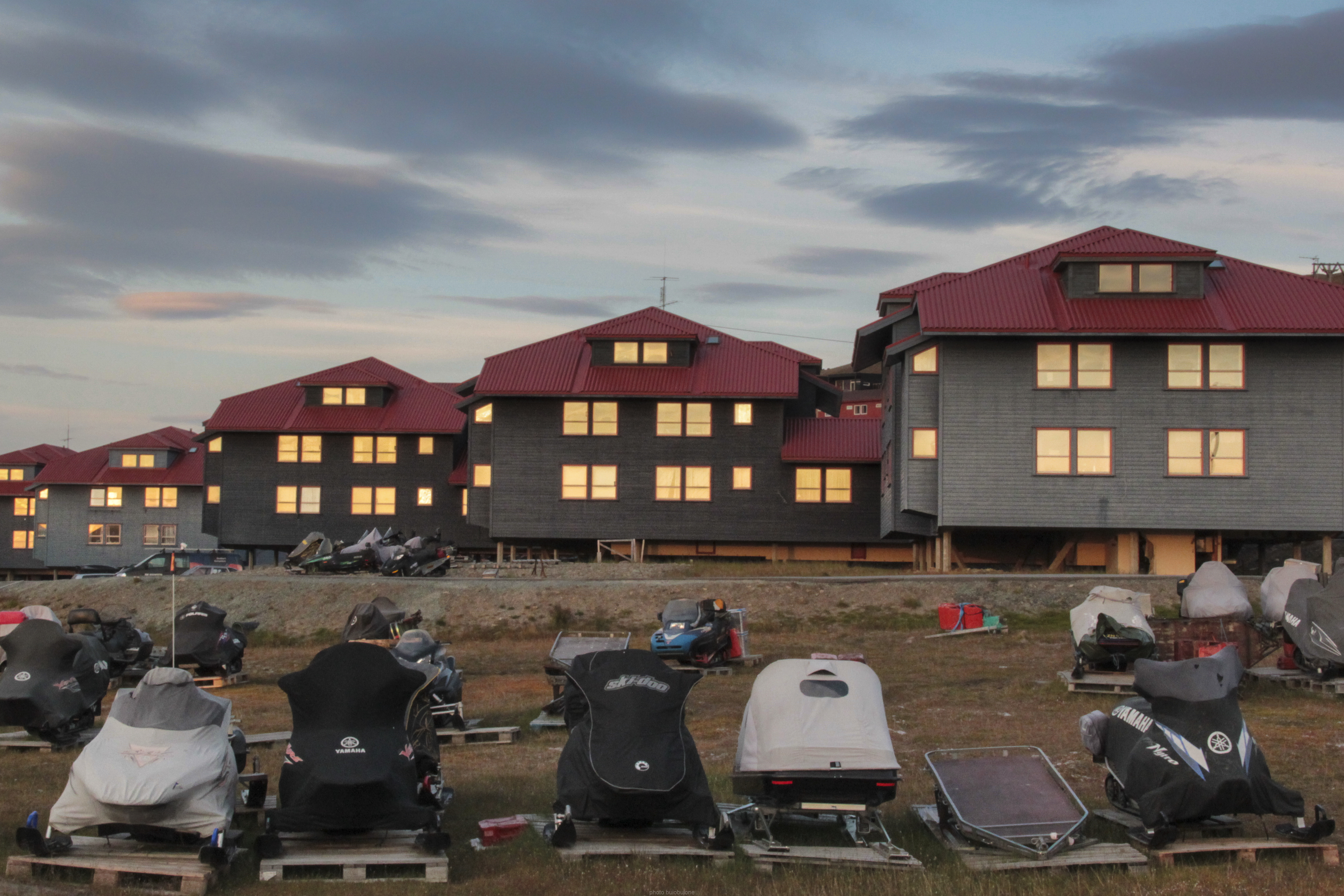
Where are the best places to visit in Svalbard? Start with Longyearbyen’s town circuit and its museums, then choose between a historic mine tour, the exterior of the Global Seed Vault, a safely guided Arctic valley, a seasonal fjord excursion or a strictly controlled visit to the research settlement of Ny-Ålesund. The ten places below are deliberately different. They are not an itinerary promising ten attractions in one day.
Svalbard is a Norwegian-administered Arctic archipelago where polar bear safety, environmental protection and remoteness govern travel. Longyearbyen is a walkable settlement with working schools, houses, museums and stores, not a polar theme park. Other places are reached only through professionally organised journeys, if they can be reached at all that season. The Seed Vault’s interior is not open to visitors; scientific areas of Ny-Ålesund have strict radio restrictions.
Important October 2026 update: new field-operation safety rules entered into force on 1 January 2026, while environmental regulations introduced in 2025 restrict landings and require minimum distances from polar bears. The Governor requires keeping at least 300 metres from polar bears, increasing to 500 metres from March through June. The requirement for guides to hold the newly established approval takes effect in July 2027—not in October 2026. Check the actual operator, location and legal rules before travelling.
eduKate · High Arctic geography and careful travel
Choose a Svalbard reading route
Ten places at a glance · Longyearbyen · Mining and Seed Vault · Guided wilderness · Arctic science · Plan responsibly
Do not leave the settlement independently without appropriate safety preparation; use trained operators. Ny-Ålesund and the Seed Vault are not ordinary walk-in tourist buildings.


Compare the ten places
This index makes the physical and legal differences visible. A town museum is not the same commitment as a boat to a fjord, and a restricted research settlement is not an open museum. The best choice depends on season, mobility, transport and what the official guidance actually allows.
| Place | What makes it distinct | First safety check |
|---|---|---|
| 1. Longyearbyen town circuit and the Adventfjorden waterfront | A walkable Arctic settlement and its mining-era skyline | Remain within town limits; reflectors in darkness |
| 2. Svalbard Museum in the Svalbard Science Centre | Natural history, coal mining and Arctic cultural context | Museum ticket and seasonal opening times |
| 3. North Pole Expedition Museum and exploration history | Expedition accounts separated from polar mythology | Check current indoor opening and exhibition access |
| 4. Svalbard Church above Longyearbyen | A working place of faith and northern community life | Services and respectful interior access |
| 5. Gruve 3 (Mine No. 3) historic coal-mine tour | Coal technology, labour and guided industrial heritage | Pre-booked tour and underground suitability |
| 6. Svalbard Global Seed Vault exterior near the airport | Crop-diversity protection understood without entering the vault | Interior not open; approved exterior stop only |
| 7. Adventdalen and the wider valley viewed on a guided outing | Tundra, geology and wildlife viewed with proper polar-bear protection | Professional guide, weather and wildlife distance |
| 8. Nordenskiöldbreen and the Billefjorden glacier panorama | A glacier and former mining region visited by permitted guided boat | Sea ice, weather, protected-area landing rules |
| 9. Isfjord Radio at Kapp Linné | Remote communication history and a seasonal expedition base | Guided seasonal transport; not a drive-up site |
| 10. Ny-Ålesund research settlement in Kongsfjorden | International Arctic science with tightly regulated visitation | Organised tour only; radio silence and protected research |
1. Longyearbyen town circuit and the Adventfjorden waterfront
Why this place belongs on the list: The best first encounter with Svalbard is not an isolated mountain but Longyearbyen, where shops, houses, a university centre, cultural institutions and a working port occupy a valley framed by Arctic mountains. Walking the town circuit brings the relationship between geography and settlement into focus. There are relatively few roads outside town, and the population depends on supplies arriving by sea or air. A careful town walk lets visitors see how real people live in the High Arctic rather than making the island into a backdrop for expedition photographs.
Look beyond the photograph: Visit Svalbard’s official visitor guidance describes an approximately eight-kilometre town circuit with interpretive signs. The history of Longyearbyen includes coal mining, shifting economic activity and the development of research, services and tourism. Remnants of aerial transport cableways and industrial structures illustrate an earlier stage of settlement. These are protected cultural heritage rather than loose souvenirs. It is also worth noticing everyday adaptations—insulation, snow clearing and routes to public services—without claiming that a single building proves how all Arctic towns operate.
How to visit responsibly: Stay inside the clearly recognised town limits when walking independently and do not cross polar-bear warning signs. Outside settlements, Visit Svalbard strongly recommends trained local guides with polar-bear safety competence. In dark months wear reflectors or high-visibility clothing, walk on the left side of the road where there is no pavement, and do not photograph residents or children without permission. Drones are prohibited around Longyearbyen Airport, which includes town. There is no ordinary city public transport beyond particular shuttle arrangements, so plan walking distance and taxi use realistically.
Original learning question: Map the port, Longyearbyen centre and surrounding mountain slopes. Compare the short distance between facilities with the far longer transport journey needed to bring goods to the settlement. Which parts of that system can be observed from the street?
Back to the place index · Next place
2. Svalbard Museum in the Svalbard Science Centre
Why this place belongs on the list: Svalbard Museum is a strong indoor starting point because it places the archipelago’s wildlife, geology and human history together before visitors head into difficult terrain. Its exhibitions help explain how hunting, trapping, mining, research and more recent tourism altered the relationship between people and polar ecosystems. The same displays can help correct common misunderstandings—for example that the Arctic is always covered in snow, or that seeing wildlife is simply a matter of entering the right bay.
Look beyond the photograph: The museum presents cultural and natural history rather than a single celebratory account of heroic explorers. Arctic animals depend on seasonal food webs; historic economic pursuits sometimes put pressure on those populations. A mining artefact can explain technology and labour, but it is not the same kind of evidence as a specimen collected by scientists. Travellers should examine how exhibits distinguish original objects, reconstructions and explanations based on research. Svalbard’s geography also changes under the effects of ice, water and temperature, making physical landscapes part of a continuing history rather than a finished tableau.
How to visit responsibly: Visit Svalbard identifies the museum as a principal cultural attraction in Longyearbyen, with operating hours that may vary during the year. Confirm admission, accessibility and any temporary exhibitions directly, especially in winter or around holidays. Read enough of the interpretation to provide context for a later glacier or boat trip. Do not use an exhibit about a polar bear as justification for searching for one in the wild. A museum morning can be especially useful when darkness, wind or unsafe outdoor weather prevents an excursion.
Original learning question: Choose one historical tool and one ecology display. For each, write what was physically measured or preserved, how the curator interprets it and one question you would ask the researcher.
Back to the place index · Next place
3. North Pole Expedition Museum and exploration history
Why this place belongs on the list: The North Pole Expedition Museum brings a different perspective from the general Svalbard Museum. It focuses on people who tried to reach or understand the North Pole, including expeditions that launched from or passed through the Svalbard region. Visitors interested in exploration can learn about equipment, navigation, communication and the limits of certainty in historic accounts. That is more rewarding than treating the phrase ‘polar expedition’ as a guarantee of heroism or scientific success.
Look beyond the photograph: Early polar exploration depended on ships, balloons, aircraft, sledges, weather observations and sometimes risky assumptions. Different expeditions claimed different achievements; those claims must be evaluated against surviving logs, maps and independent evidence rather than repeated as a single dramatic story. Svalbard became important partly because of its northerly latitude and maritime access. A museum description of an airship flight, for example, can be compared with today’s navigation technology to show both advances and enduring uncertainty in extreme weather. The human cost of expeditions should also be recognised.
How to visit responsibly: Visit the museum during verified operating hours, not based on an older tourist leaflet. Indoor visits suit days when conditions rule out an excursion, but the museum’s staffing and ticketing are independent of neighbouring attractions. Give younger visitors a map before examining expedition exhibits; the geographical relationship between Svalbard and the geographic North Pole is essential. Follow any photography and display restrictions. This should be a separate intellectual stop rather than a hurried addition that adds little context.
Original learning question: Take an early expedition’s intended route and compare it with the evidence used to support its reported outcome. What does a position claim require that an exciting written narrative cannot provide by itself?
Back to the place index · Next place
4. Svalbard Church above Longyearbyen
Why this place belongs on the list: Svalbard Church sits above Longyearbyen and provides a less expected perspective on Arctic settlement. While much tourism coverage focuses on glaciers, polar bears and abandoned industry, the church makes space for ordinary social life, grief, celebration and community gathering. A visitor can appreciate its design and situation without assuming it is primarily an attraction. It is a place that residents use, with a present purpose that matters beyond the photographs tourists take from its steps.
Look beyond the photograph: The modern church belongs to the post-war period of Longyearbyen’s development, and its religious and community role extends into contemporary life. Its setting highlights the question of what public institutions people need in a settlement affected by darkness, remote geography and harsh weather. Community bonds cannot be reduced to a single building, and people in Longyearbyen follow varied religions and beliefs. Nevertheless, the church shows how a familiar social service takes on distinctive meaning in an isolated Arctic environment. The surrounding town also allows comparison with the industrial structures once dominant on the slopes.
How to visit responsibly: Check whether the church is open outside services and follow its actual visitor guidance. Dress and behave respectfully, and do not photograph congregations or personal events without permission. The uphill access and winter ice can make a short journey difficult for some visitors. Use a safe route within town and return before visibility deteriorates, especially in the darker season. If interior access is restricted, a public exterior view can still explain the building’s role without interrupting community activity.
Original learning question: Choose two town buildings with very different functions—the church and a former mining or administrative structure—and explain why both are necessary for a fuller understanding of settlement.
Back to the place index · Next place
5. Gruve 3 (Mine No. 3) historic coal-mine tour
Why this place belongs on the list: Gruve 3, or Mine No. 3, is an important place because coal production shaped the history and infrastructure of Longyearbyen. An organised visit can make the physical conditions of underground work more tangible than a museum photograph. The attraction interprets mining machinery, tunnels and working routines, but its greatest value is to help visitors consider the people whose labour made the settlement viable. The mine should be approached as preserved industrial heritage, not an open tunnel to explore independently.
Look beyond the photograph: Coal was an economic foundation for the early settlement and influenced housing, transport and the town’s relationship with the surrounding valley. Mining work required controlled ventilation, stable supports, communication and procedures for moving people and material through dark spaces. A machine can tell part of the engineering story, while personal accounts reveal another. The closure or transformation of a mine also affects the community beyond its physical site. Travellers may compare the experience with Svalbard Museum’s displays, asking how an original work site differs from a curated gallery.
How to visit responsibly: Use a recognised operator’s guided Mine No. 3 tour; never enter an abandoned mine, cableway structure or industrial shaft on your own. Confirm underground temperature, footwear, safety equipment, steps and medical suitability. Some visitors may be uncomfortable in confined areas or unable to manage the route. The mine sits away from the central town walk, so arrange appropriate transport and recognise that polar bear safety matters outside the settlement. A cancellation or restriction is a reason to visit a museum instead of attempting independent access.
Original learning question: Sketch a system linking a coal seam, worker, transport equipment and a destination for the coal. Which tasks would have required a machine and which depended on trained people?
Back to the place index · Next place
6. Svalbard Global Seed Vault exterior near the airport
Why this place belongs on the list: The entrance to Svalbard Global Seed Vault is an unusually powerful modern landmark. It is an international facility designed to provide long-term backup storage for seeds from crop collections around the world. The visible entrance is modest compared with the global importance of the project; that contrast makes the location worth discussing. The best educational experience does not require visitors to see the storage rooms. Understanding why seed diversity matters is the real objective.
Look beyond the photograph: The seed vault is located in rock above Svalbard Airport, selected for its cold environment and geological characteristics. Its role is to back up collections maintained by national and international gene banks, not to replace every farm or seed store on Earth. Climate change, food security and biodiversity are large subjects, but a visitor can begin with a simple question: why preserve many varieties of the same crop? The correct answer includes disease resistance, adaptation and the potential future value of genetic variation. The facility is a working storage installation, not an ordinary public museum.
How to visit responsibly: Visit Svalbard’s official FAQ explicitly states that the vault interior is not open to visitors. Some organised guided trips stop at a lawful exterior viewpoint, subject to rules around the airport and relevant roads. Do not attempt to enter tunnels or secured doors and do not use a drone near Longyearbyen Airport. A traveller should not advertise an interior tour or assume that any vehicle can stop directly at the entrance. If viewing is unavailable, official online information and a museum discussion provide a safer way to learn.
Original learning question: Make a list of three different varieties of a familiar food crop. Explain why keeping a backup seed collection could matter even if that crop appears widely available in shops today.
Back to the place index · Next place
7. Adventdalen and the wider valley viewed on a guided outing
Why this place belongs on the list: Adventdalen opens east of Longyearbyen and provides one of the nearest opportunities to see an Arctic valley extending beyond the settlement. Its braided river patterns, mountainsides and seasonally sparse tundra contrast with the compact town. For travellers who want to feel the landscape’s scale, a guided outing can be a strong choice without promising a remote expedition. During suitable weather, a safe elevated town viewpoint may offer part of the same geographical learning without leaving the settlement boundary.
Look beyond the photograph: The valley records long relationships among water, frost, sediment and glaciers. River channels can shift as snow melts and water levels change. Arctic tundra plants grow slowly and can be damaged by repeated walking or vehicle tracks. Reindeer and birds may be present, but wildlife is never a guaranteed encounter, and people should not draw animals toward them for photographs. Historic infrastructure and research activity offer another set of observations about how humans have used the valley. The presence of snow or ice on one date cannot establish the long-term trend of Arctic climate.
How to visit responsibly: Outside Longyearbyen’s recognised safe zone, travel only with a professional guide experienced in polar bear protection and the current rules. The Governor’s 2026 field-safety framework includes requirements for organised tourism and, in some circumstances, permits, insurance and communication plans. Do not cross a polar bear warning sign simply to take a photograph. Stay on permitted routes, avoid vulnerable vegetation and follow warnings about unstable riverbanks or thin ice. A change of plans because of weather can be the safest outcome.
Original learning question: From an authorised lookout, trace a likely river course through the valley and identify areas of sediment. Which observations concern a single season, and which would require repeated measurements to assess climate change?
Back to the place index · Next place
8. Nordenskiöldbreen and the Billefjorden glacier panorama
Why this place belongs on the list: The Nordenskiöldbreen glacier and the surrounding Billefjorden landscape are among the experiences that attract travellers to Svalbard’s wider fjords. The view can include ice, rock, water and remote traces of industry in the same scene. A licensed expedition boat, when conditions permit, allows visitors to appreciate scale without landing on an unstable glacier or entering sensitive protected ground. This is an excellent example of a place where a distant view is often more appropriate than a close approach.
Look beyond the photograph: Glaciers flow as ice deforms under its own weight, and their fronts can retreat, advance or calve. A photograph shows the position of a glacier on one day but cannot establish a long-term change without dated comparisons and measurements. Icebergs and brash ice also create navigational hazards for small vessels. The fjord’s historical relationship with mining settlements illustrates how changing transport and economic conditions influenced remote human activity. Visitors should distinguish geology, climate measurement and industrial history rather than attributing every visible feature to a single cause.
How to visit responsibly: Choose a professional operator working under current Svalbard environmental and field-safety regulations. Winter sea ice, storms and seasonal darkness can prevent journeys; an advertised summer excursion is not guaranteed in October. The Governor’s landing rules restrict tourism in many protected areas to mapped sites, and boat operators must observe wildlife-distance requirements. Never ask a captain to approach unstable ice closely for a photograph. Wildlife appearances, safe proximity and landings are subject to professional judgement, not an itinerary promise.
Original learning question: Compare a glacier photograph with an older dated image taken from a similar angle. Which features would you need to align before making a credible claim about change, and what measurement would be stronger than visual comparison?
Back to the place index · Next place
9. Isfjord Radio at Kapp Linné
Why this place belongs on the list: Isfjord Radio stands near the mouth of Isfjorden and reveals how communication infrastructure served ships and communities across an enormous region. The location is remote from Longyearbyen, with surrounding Arctic coastline and former radio equipment creating a compelling contrast between technological connectivity and physical isolation. A visitor drawn to history can learn why maintaining a remote communications site required supplies, skilled staff and an understanding of severe weather.
Look beyond the photograph: A radio station’s location needs an appropriate relationship with shipping routes and other stations. Early wireless communication helped reduce isolation, but the physical site still depended on transport and maintenance across ocean and ice. Today the place operates in part as an organised visitor and accommodation experience, but that current use should not be confused with the original working conditions. Old radio buildings and equipment can carry heritage significance, and not every room or structure is necessarily open to casual entry. A history-focused visit examines the shift in function.
How to visit responsibly: Visit Svalbard identifies seasonal guided boat services to Isfjord Radio in summer, with particular offerings generally running from June into September. They are not year-round scheduled public ferries and do not connect to Longyearbyen by road. Before planning an overnight stay, confirm an operating transfer and all safety conditions. In October there may be no ordinary suitable service. Do not attempt unsupported independent travel to a remote coast without proper field safety arrangements. A museum-based study of polar communication is an appropriate fallback.
Original learning question: Create a communication chain linking a ship, Isfjord Radio and a distant recipient. Contrast the travel time for a physical message with a radio signal while noting the infrastructure needed for both.
Back to the place index · Next place
10. Ny-Ålesund research settlement in Kongsfjorden
Why this place belongs on the list: Ny-Ålesund is unlike an ordinary tourist village. Its main present-day purpose is scientific research and environmental monitoring, and visiting can reveal the scale of international cooperation required to study the high Arctic. Historic mining remains and expedition associations give the settlement another layer, but the most important contemporary story concerns climate, atmospheric measurements, geodesy and the protection of fragile monitoring sites. Travellers should arrive as respectful guests in a working research settlement.
Look beyond the photograph: The town contains many protected historic buildings as well as installations that measure conditions with high precision. Visit Svalbard explains that a 20-kilometre radio-silence zone surrounds Ny-Ålesund because sensitive scientific systems, including the geodetic observatory, can be affected by radio transmissions. A device’s Wi-Fi or Bluetooth can therefore cause a problem even when it seems invisible to the user. Researchers also need undisturbed tundra and nesting habitat. Roads and wooden walkways are essential visitor boundaries, not optional conveniences.
How to visit responsibly: Ny-Ålesund is not an independent do-it-yourself stop. Visits are possible through organised seasonal boat excursions or approved expedition-cruise calls under strict rules. Follow the operator’s current permitted route and turn off Wi-Fi, Bluetooth and other radio transmissions as instructed. Never leave the boardwalk into a research plot or approach protected historic buildings. Winter and shoulder-season access is much more limited. If tours are unavailable, a visit to the Longyearbyen museums offers a more practical explanation of Arctic research.
Original learning question: Describe how one visitor’s wireless device or footsteps could affect a long-term research measurement. Why does scientific accuracy sometimes require restrictions that seem inconvenient to a tourist?
Back to the place index · Plan your visit
Plan Svalbard around the season, not an imagined driving route
A short first stay can remain in Longyearbyen and still offer a broad introduction. Choose the town circuit, one or two museums and a verified Mine No. 3 tour or guided Seed Vault exterior stop. This allows time to learn about settlement and science while staying realistic about cold, darkness and public transport. It also avoids the error of assuming that an attractive fjord photograph is an invitation to travel independently outside the town.
A longer expedition can select one guided wilderness journey suited to the season. Summer may permit boat experiences in Isfjorden, while sea ice and darkness affect winter and autumn. Ny-Ålesund is not a walk-in stop reached by road, and Isfjord Radio’s seasonal transport must be confirmed. A traveller in October should not rely on a June boat timetable. There are no roads linking the settlements across the archipelago, so every remote excursion needs its own logistics.
A safety checklist that changes the answer
- The Governor’s rules changed in 2025 and 2026. Ask operators how current landing, guiding, permits and rescue-insurance requirements apply to the exact activity.
- Protect polar bears by staying a legal and safe distance away: at least 300 metres, or 500 metres from March through June. Never lure or approach wildlife.
- Stay inside Longyearbyen’s town limits for independent walking. Do not treat a warning sign as a photo-opportunity invitation to wander farther.
- Before booking a boat or distant landing, confirm the operator’s approved route, season, weather assessment and environmental restrictions.
- Ny-Ålesund has radio-silence requirements, restricted scientific plots and visits only under organised arrangements. Turn off devices as instructed.
- The Global Seed Vault is not open for interior tours. Visit the exterior only through appropriate permitted arrangements.
- Do not move or damage pre-1946 heritage structures and objects. Leave vegetation, fossils and cultural material as regulations require.
- Carry reflectors or high-visibility clothing during darkness, warm layered clothing, and valid insurance for the trip you actually intend to make.
- Treat drones as restricted, including throughout Longyearbyen and protected areas; ask authorities rather than assuming they are recreational toys.
Three sensible routes for three travellers
A family interested in learning and short walks can focus on Svalbard Museum, North Pole Expedition Museum and the central streets of Longyearbyen. A history enthusiast can add a mine tour and a guided exterior view of the Seed Vault to explore how industry and science changed the settlement. An experienced wilderness traveller can plan a permitted fjord excursion through a local operator. The right itinerary is the one supported by current conditions and professional guidance, not the one with the most distant point reached.
Frequently asked questions
Can I walk anywhere I like outside Longyearbyen?
No. Polar bears can occur anywhere on Svalbard, and nature, heritage and field safety regulations apply. Use trained local guides and comply with relevant permissions outside settlements.
Can tourists go inside Svalbard Global Seed Vault?
No. The interior is a working secure facility. Visit Svalbard says organised tours may stop outside the entrance; an exterior photograph is not an interior tour.
Is Ny-Ålesund an ordinary tourist town?
No. It is an international research settlement. Visitor access is permitted only with organised tours, and strict radio-silence and route regulations protect research.
Can I see polar bears safely from a tour?
Sighting is never guaranteed. Regulations require substantial separation and prohibit deliberately seeking out or disturbing bears. The safety of people and animals comes first.
Do Svalbard’s settlements connect by road?
No. Longyearbyen has local streets, but other settlements require season-dependent air, boat or other authorised field transport.
Are Arctic boat cruises available all year?
Routes depend on sea ice, daylight, weather and operator regulations. An Isfjord Radio or Ny-Ålesund summer excursion cannot be assumed available in October.
What changed in Svalbard regulations in 2026?
New field-operation safety regulations took effect on 1 January 2026. The newly required approval status for guides begins on 1 July 2027.
What should I do in Svalbard if the weather is too poor for an expedition?
The museums and other approved indoor cultural venues in Longyearbyen can provide substantial Arctic learning without taking risks in remote terrain.
Arctic field-notebook exercise: observation is not certainty
Carry four headings: place, observed feature, source and uncertainty. At Longyearbyen, identify a protected mining-era structure and ask when it was used. At a fjord, note the position of glacier ice but do not infer the rate of retreat from one photograph. At a museum, compare a scientific instrument with an expedition claim. The habit of checking evidence keeps a dramatic travel story from turning into a false statement about nature or history.
A map-based problem makes the idea concrete. Compare the road distance within Longyearbyen with the absence of roads between Longyearbyen and Ny-Ålesund. Which transport times can you calculate from distance, and which require a verified seasonal operator? Careful reasoning about assumptions resembles eduKate’s approach in Secondary 1 Mathematics Tutor Clementi | Small Groups Tutorials.
Read more Svalbard travel and learning
Top 10 Things to Do When Visiting and Touring Svalbard · Top 10 Things to Learn When Visiting and Touring Svalbard · World Travel Hub
Official sources, travel regulations and photo credit
Sources reviewed 20 October 2026, Singapore time. The Governor’s 2025–26 restrictions and Visit Svalbard’s current visitor guidance take priority over older travel guides. The featured image dates from 2014 and does not establish today’s Arctic conditions.
- Visit Svalbard — current travel essentials and polar bear guidance
- Visit Svalbard — visitor FAQ: town circuit, museums and Seed Vault
- Visit Svalbard — Longyearbyen community rules
- Visit Svalbard — travel between settlements, town and fjords
- Visit Svalbard — Svalbard nature and heritage guidelines
- Visit Svalbard — Ny-Ålesund research community and rules
- Governor of Svalbard — 2026 field-safety and permit requirements
- Governor of Svalbard — 2026 new guide and insurance framework
- Governor of Svalbard — 2025 protected-area and polar-bear rules
- Governor of Svalbard — 2026 visiting, landing and camping regulations
- Governor of Svalbard — 2026 drone fine demonstrates protected-area rules
- Wikimedia Commons — Longyearbyen by Buiobuione
- Creative Commons BY-SA 4.0