
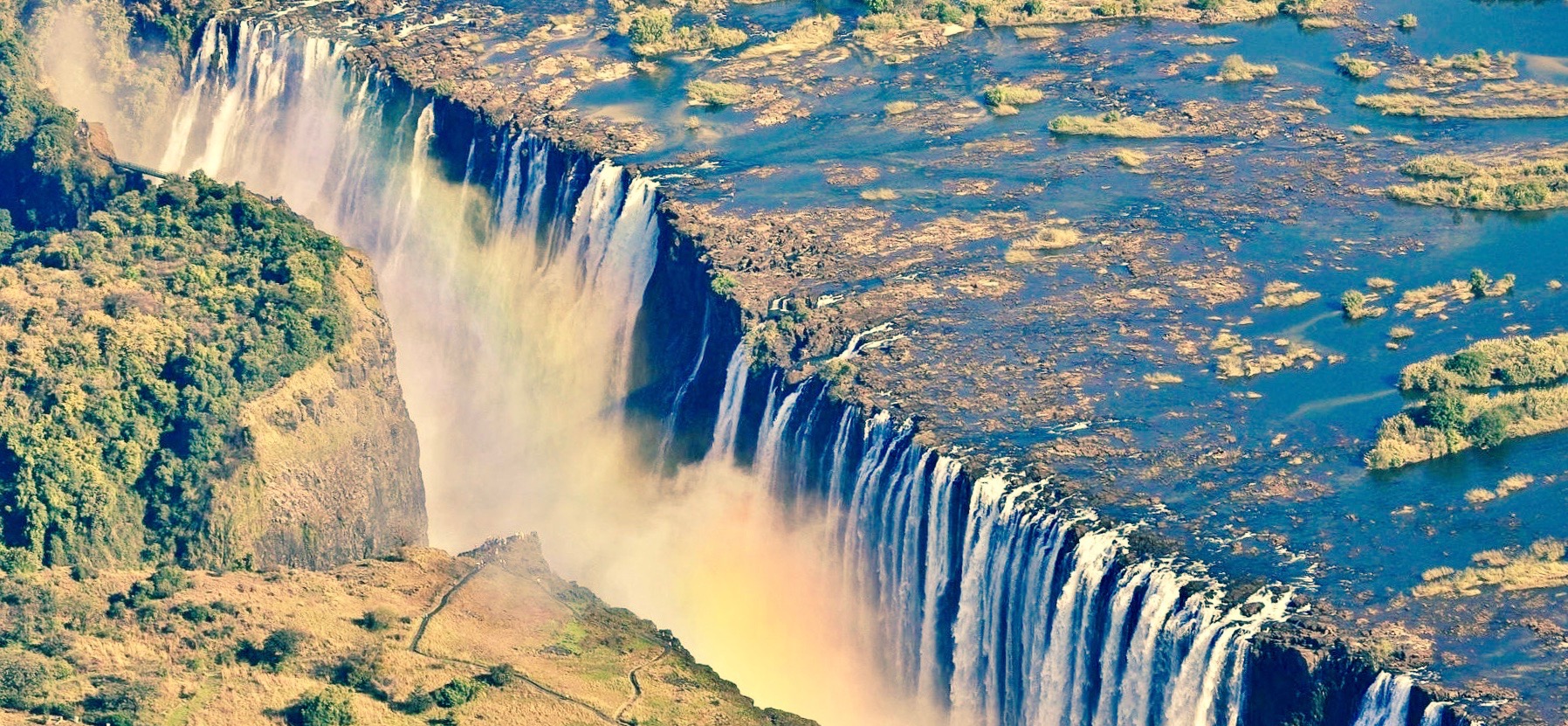
Zambia’s places to visit include far more than one celebrated waterfall. The country offers museum learning, river-valley safaris, expansive plains, wetlands and the shores of Lake Tanganyika. The best Zambia itinerary chooses a manageable combination and gives each landscape time, rather than assuming that another park always improves the journey.
This top ten selection ranges from Livingstone to the Luangwa Valley, the Lower Zambezi, western Zambia and the northern circuit. Those are substantial regional choices, not neighbouring stops on a short driving loop. Road conditions, seasonal access and the transfer from an airstrip to a camp can reshape a plan that looks simple on a map.
Start with the reason for the trip: waterfall scenery, cultural context, patient wildlife observation, birding or a quieter northern landscape. Then work backwards from the conditions and time required. A thoughtful journey can be rich with only a few bases, especially when you learn to notice vegetation, water and landforms as well as larger animals.
eduKate · World heritage and learning
Find your reading route through Zambia
Choose places that fit your interests, then build a comfortable journey around them.
ROUTE 1 · PLACES 1–3
Livingstone and the Luangwa Valley
Read the places in this group, then use Next to continue.
ROUTE 2 · PLACES 4–6
River landscapes and western plains
Read the places in this group, then use Next to continue.
ROUTE 3 · PLACES 7–10
Seasonal wildlife and the northern circuit
Read the places in this group, then use Next to continue.
Choose your places
Use the index for a quick comparison, or open a short list below. Every place has its own section and a link back here.
| Place | Why choose it? |
|---|---|
| 1. Mosi-oa-Tunya / Victoria Falls, Zambian side | Experience a waterfall as part of a river and gorge system. |
| 2. Livingstone Museum | Add cultural and historical context to a Livingstone stay. |
| 3. South Luangwa National Park | Understand wildlife through a river-valley setting. |
| 4. Lower Zambezi National Park | Explore the relationship between river, floodplain and escarpment. |
| 5. Kafue National Park | Choose a defined part of a very large protected landscape. |
| 6. Liuwa Plain National Park | See plains wildlife within a shared cultural and conservation landscape. |
| 7. Kasanka National Park | Give seasonal bat movements their proper context. |
| 8. Bangweulu Wetlands | Observe birdlife within a productive, lived-in wetland. |
| 9. Kalambo Falls | Connect a dramatic drop with the geography of northern Zambia. |
| 10. Nsumbu National Park and the Lake Tanganyika shore | Choose a northern visit around the meeting of land and lake. |
Open places 1–5
- Mosi-oa-Tunya / Victoria Falls, Zambian side — Experience a waterfall as part of a river and gorge system.
- Livingstone Museum — Add cultural and historical context to a Livingstone stay.
- South Luangwa National Park — Understand wildlife through a river-valley setting.
- Lower Zambezi National Park — Explore the relationship between river, floodplain and escarpment.
- Kafue National Park — Choose a defined part of a very large protected landscape.
Open places 6–10
- Liuwa Plain National Park — See plains wildlife within a shared cultural and conservation landscape.
- Kasanka National Park — Give seasonal bat movements their proper context.
- Bangweulu Wetlands — Observe birdlife within a productive, lived-in wetland.
- Kalambo Falls — Connect a dramatic drop with the geography of northern Zambia.
- Nsumbu National Park and the Lake Tanganyika shore — Choose a northern visit around the meeting of land and lake.
PLACE 1 OF 10 · Livingstone and the Luangwa Valley
1. Mosi-oa-Tunya / Victoria Falls, Zambian side
Experience a waterfall as part of a river and gorge system.
Victoria Falls is a natural starting point for many Zambia journeys, but it rewards more than a quick photograph. The Zambezi’s movement into the basalt gorges connects water, geology and the spray-influenced environment around the viewpoints. UNESCO recognises a transboundary property shared with Zimbabwe, not two unrelated waterfalls.
Observe what conditions allow you to see on the day. Spray can reveal the waterfall’s power while obscuring parts of the view; lower water changes the visual balance between falling water and exposed rock. Neither condition should be judged solely against an image taken in a different season. Use interpretation to connect the visible gorge with a longer geological story.
Access and planning
Check the Zambian entrance, authorised paths and current conditions. Admission on one side does not automatically establish entry to the other country. Specialist activities are separate decisions, and a viewpoint visit does not require swimming, rafting or approaching an unprotected edge.
PLACE 2 OF 10 · Livingstone and the Luangwa Valley
2. Livingstone Museum
Add cultural and historical context to a Livingstone stay.
Livingstone Museum gives a Zambia journey an important change of scale. Instead of looking only at landscapes and wildlife, visitors can use collections and interpretation to investigate human history and cultural development. It is a worthwhile choice in its own right, not merely a place to fill a few hours between outdoor activities.
Choose a small number of objects and read their labels carefully. Ask where an object comes from, what it was used for and whose knowledge helps explain it. A museum’s name should not make one explorer the only person in the country’s story. Different collections can open questions about communities, work, belief and change over time.
Access and planning
Confirm current opening, admission and accessible facilities with the museum or reliable local information. Do not assume every object mentioned in an older guide is on display. Leave enough attention for interpretation rather than scheduling the visit after an exhausting transfer.
PLACE 3 OF 10 · Livingstone and the Luangwa Valley
3. South Luangwa National Park
Understand wildlife through a river-valley setting.
South Luangwa is a strong choice for visitors who want to connect animal observation with habitat. The Luangwa River, lagoons, woodland and changing seasonal conditions help explain why different parts of the landscape attract activity. Its association with walking safaris adds another option, but that does not make walking the only meaningful way to experience it.
Ask your guide to connect a sighting with its setting. Where is water available, what vegetation provides cover, and what can actually be inferred from tracks or behaviour? Patient observation is more informative than a rapid species tally. A day with fewer dramatic sightings can still reveal a great deal about the valley.
Access and planning
Plan accommodation and transport around the exact area you will use. Guided walks have specific age, fitness and operating requirements. Follow instructions, keep wildlife distance and do not treat a park’s reputation as a guarantee of seeing a particular animal.
PLACE 4 OF 10 · River landscapes and western plains
4. Lower Zambezi National Park
Explore the relationship between river, floodplain and escarpment.
The Lower Zambezi offers a different river-focused experience. Its setting includes the Zambezi, riverine vegetation, floodplain and an escarpment backdrop. The park faces Zimbabwe’s Mana Pools across the river, making it useful for understanding a wider ecological landscape while keeping the practical realities of national borders clear.
Choose one mode of observation at a time. A vehicle outing, guided walk and properly operated boat activity reveal different perspectives, and none automatically provides a complete picture. Ask how changing water and terrain affect movement. The river is part of a living habitat, not an empty recreational channel.
Access and planning
Confirm the camp, transfer method and activities actually available for your dates. Canoeing and boating require their own suitability assessment, equipment and qualified guidance. Do not assume apparently calm water is free of hazards, and never approach wildlife on a riverbank independently.
PLACE 5 OF 10 · River landscapes and western plains
5. Kafue National Park
Choose a defined part of a very large protected landscape.
Kafue’s scale and range of habitats make it a rewarding choice, but also demand a more precise plan than simply saying you are visiting the park. River environments, woodland and plains can support different experiences. The name on a map covers far more ground than most visitors can meaningfully explore during one stay.
Ask what a particular camp or sector allows you to understand. Comparing a river margin with more open ground can reveal changes in vegetation, visibility and animal activity. A useful visit does not require crossing the entire park. Repeated observation of one manageable area often produces a stronger sense of place than constant relocation.
Access and planning
Check the exact entrance, sector, road conditions and seasonal operation of your accommodation. Busanga Plains access, for example, should not be assumed from general Kafue availability. Calculate actual transfers and supplies, and use appropriately experienced operators for remote arrangements.
PLACE 6 OF 10 · River landscapes and western plains
6. Liuwa Plain National Park
See plains wildlife within a shared cultural and conservation landscape.
Liuwa Plain is especially interesting for travellers who want a plains setting and an understanding of conservation partnerships. African Parks describes a history rooted in Lozi stewardship and a continuing relationship among the Barotse Royal Establishment, government and park management. Wildlife and people should therefore not be presented as separate stories.
Look beyond the expectation of a single migration scene. Ask how seasonal water and grassland conditions affect the movement of animals, and how conservation works within a landscape with longstanding human relationships. A specific observation needs its own date and context; a famous wildlife event is not a permanent stage set.
Access and planning
Plan this as a deliberate western Zambia journey. Confirm current access, season, accommodation and the transport required. Do not assume migration timing, road passability or sightings from an old itinerary, and follow park guidance about activities and community interactions.
PLACE 7 OF 10 · Seasonal wildlife and the northern circuit
7. Kasanka National Park
Give seasonal bat movements their proper context.
Kasanka offers a distinctive reason to choose a smaller park: its seasonal gathering of fruit bats, alongside a varied setting of woodland and wetland habitats. The bats are a major interest, but the park should not disappear from attention outside the most famous event. Vegetation, birds and water also support a rewarding visit.
Use the bat story to explore a scientific question rather than only a spectacle. Why might animals gather in a place at a particular time, and what evidence helps researchers understand movement? A visitor can observe an emergence without claiming to know the precise number of animals or all the causes behind the event.
Access and planning
Check the current season, viewing arrangements and guide requirements with park management. Do not assume a calendar month guarantees a gathering or the same experience each year. Respect roost protection and viewing rules, and choose a broader nature plan if the timing does not match.
PLACE 8 OF 10 · Seasonal wildlife and the northern circuit
8. Bangweulu Wetlands
Observe birdlife within a productive, lived-in wetland.
Bangweulu introduces a wetland landscape of floodplains, swamps and communities whose livelihoods are closely connected with water. Shoebill and black lechwe are important subjects in the managing organisation’s interpretation. They are reasons to look carefully at habitat, not promises that every visitor will encounter a particular animal.
Ask how seasonal water changes both human movement and wildlife opportunities. A fishing camp, an animal’s feeding ground and a transport route can occupy related parts of the same landscape. This is a useful counterpoint to the idea that conservation only concerns places without people or everyday economic activity.
Access and planning
Consult current managing-organisation guidance on roads, camps, boat arrangements and water levels. Access and sightings vary substantially through the year. Use authorised local guides, respect community spaces and do not approach a sensitive bird or nesting area to improve a photograph.
PLACE 9 OF 10 · Seasonal wildlife and the northern circuit
9. Kalambo Falls
Connect a dramatic drop with the geography of northern Zambia.
Kalambo Falls offers a northern landscape choice on the river forming the Zambia–Tanzania border. The waterfall and gorge provide a clear way to investigate the relationship between a river’s course and changes in relief. Its setting is different from Victoria Falls, so a comparison can be more useful than another ranking by size.
Use a regional map to connect the river, gorge and Lake Tanganyika. Then observe what the authorised viewpoint actually reveals. The Kalambo area also has archaeological significance, but a waterfall view and an archaeological site are not automatically the same visitor experience. Specific research claims need their own properly identified sources.
Access and planning
Confirm the current approach, route condition and local guidance before departure. Stay within authorised viewpoints and barriers. Do not attempt to reach the lip, gorge or a border crossing independently because a map appears to show a short connection.
PLACE 10 OF 10 · Seasonal wildlife and the northern circuit
10. Nsumbu National Park and the Lake Tanganyika shore
Choose a northern visit around the meeting of land and lake.
Nsumbu offers a lakeshore perspective that broadens a Zambia journey beyond the better-known southern and eastern safari circuits. Official destination information describes bays, cliffs, coves and an interior linked with the Lufubu River. The relationship between land and water is the main reason to consider it as a distinct regional stay.
Compare a shore view with a map and notice how bays and terrain shape access. A lake landscape should not be interpreted as a beach resort by default; it belongs to a larger ecological and human setting. Ask how current conservation and local livelihoods relate to the water rather than judging the place only by recreational possibilities.
Access and planning
Confirm road, air and any boat transfers with reliable operators. Access to land-based areas and lake activities can differ seasonally. Do not assume a sandy shore establishes swimming suitability, and follow local guidance about wildlife, water and authorised activities.
Plan a thoughtful visit
Select a core region before adding another. Livingstone can combine the falls and museum; South Luangwa and the Lower Zambezi each justify their own stays. Kafue and Liuwa need precise sector and transport planning, while Kasanka, Bangweulu, Kalambo and Nsumbu form different northern decisions rather than one automatic extension. Compare real transfer schedules and the time needed beyond airports or main roads. Ask camps what is open during your dates and which activities match your group. Separate park fees, accommodation, guiding and transport in the booking details. Use current official advice for entry and travel requirements, and seek personalised professional guidance for health needs. Leave enough flexibility for weather and changes in access.
Frequently asked questions
Is this a ten-stop Zambia driving route?
No. It is a selection of different kinds of places across a large country. A comfortable trip may combine Livingstone with one safari region, or focus on a northern circuit with proper planning. Trying to include every place can make transfers the dominant experience.
Can wildlife events and sightings be guaranteed when booking?
No. A place’s reputation identifies an interest, not a promise. Season, water, animal movement and the time available all matter. Choose operators who explain conditions honestly, and value habitat, guiding and patient observation alongside any hoped-for sighting.
Build understanding through evidence
Make a simple field record: place, conditions, one observed feature and one explanation supported by a guide or institutional source. Compare the waterfall, museum and wetlands using different evidence rather than the same checklist. A map can explain movement, an object can illuminate history and a wildlife observation can raise an ecological question. This approach turns a few well-chosen Zambia experiences into a coherent journey without pretending to represent the entire country.
Continue learning about Zambia
Top 10 Things to Do When Visiting and Touring Zambia
Top 10 Things to Learn When Visiting and Touring Zambia
Use companion reading to explore an activity, cultural detail or geographical question that adds meaning to the places you choose. A deeper understanding can be more rewarding than a longer checklist.
For families connecting maps, estimates and clear explanations with school learning, explore Secondary 1 Mathematics Tutor Clementi | Small Groups Tutorials. Begin with a well-defined question and explain the reasoning as carefully as the answer.
Sources and current information
Sources reviewed on 17 October 2026 (Singapore time). Official destination descriptions establish background, not a guarantee of opening, access or safety on your travel date. Check current venue notices, transport arrangements and relevant government travel advice before booking. Older reports are used for historical context.
- UNESCO — Mosi-oa-Tunya / Victoria Falls
- Zambia Tourism — Victoria Falls, Zambian visitor context
- Zambia Tourism — museums
- Zambia Tourism — South Luangwa National Park
- Zambia Tourism — Lower Zambezi National Park
- Zambia Tourism — Kafue National Park
- African Parks — Liuwa Plain
- Zambia Tourism — Kasanka National Park
- African Parks — visiting Bangweulu
- Zambia Tourism — Kalambo Falls
- Zambia Tourism — Nsumbu National Park