
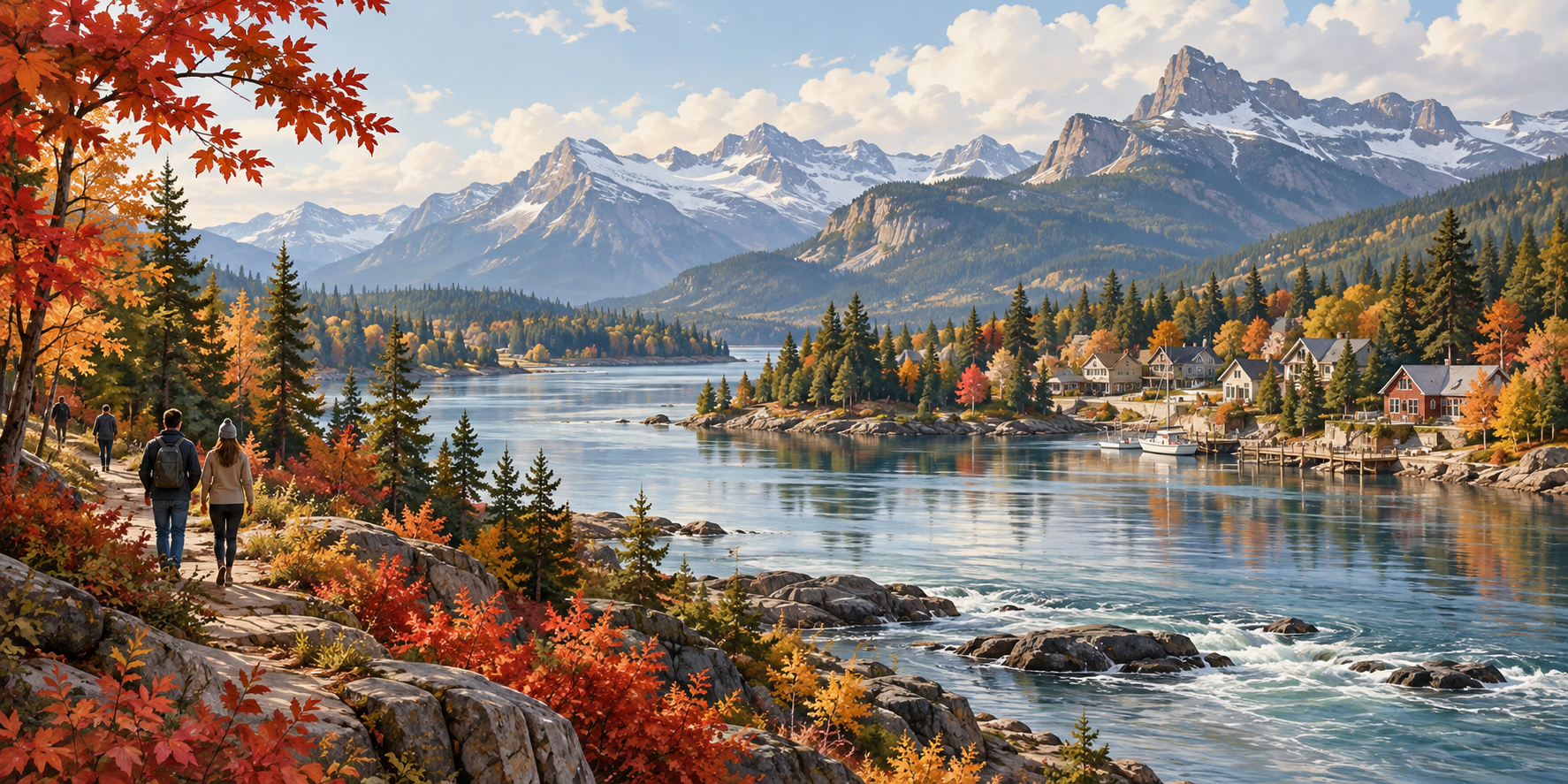
Canada rewards a decision before it rewards a departure: choose the part of the country you want to understand. The best things to do when visiting and touring Canada range from Toronto’s neighbourhoods and Québec’s historic streets to Vancouver’s waterfront, the Rocky Mountains and the Atlantic coast. They are possibilities for different journeys, not ten stops that fit comfortably into one short holiday.
This Canada travel guide combines city experiences, landscapes, food and Indigenous-led learning with practical first-visit route ideas. For families, couples and independent travellers, a well-chosen region usually offers more pleasure than a crowded national checklist. Decide what matters most, match it to the season, and give the journey enough room for weather, rest and an unexpected conversation.
Before booking: confirm entry requirements for your passport and travel history, regional transport, attraction access and current conditions. Summer photographs do not describe winter trails, and a national park admission does not automatically include a reserved shuttle. This guide offers choices, not a promise that every experience operates on every date.
eduKateSG · A WORLD WORTH UNDERSTANDING
Find your way through Canada
Choose the part you need now, or follow the whole journey at your own pace.
Think in regional chapters. An Ontario journey might pair Toronto with Niagara; a Québec visit can connect Montréal and Québec City. Vancouver and the Rockies are distinct destinations with a substantial transfer between them. The Atlantic coast deserves time of its own.
| Experience | Where to begin | The useful check |
|---|---|---|
| Neighbourhood discovery | Toronto, Ontario | Transit, opening hours and your interests |
| Waterfall perspectives | Niagara, Ontario | Operator schedules and accessible viewpoints |
| National stories | Ottawa, Ontario | Exhibition and tour availability |
| Street life and culture | Montréal, Québec | Programme, language and neighbourhood route |
| Historic urban landscape | Québec City, Québec | Hills, weather and interpretation |
| Waterfront and city nature | Vancouver, British Columbia | Suitable route and conditions |
| Mountain and lake scenery | Banff area, Alberta | Access, reservations and trail status |
| Atlantic coastal change | Bay of Fundy, New Brunswick | Tide timing and local restrictions |
| Indigenous-led learning | A verified host in your region | Ownership, invitation and protocols |
| Regional food | Your selected base | Ingredients, budget and local context |
A journey can be excellent without visiting both coasts. Leave some places for another season rather than spending the present one in transit.
Toronto is easier to enjoy when you stop treating its skyline as the whole city. Start with Destination Toronto and choose a neighbourhood, museum or waterfront area that suits your interests. A specific afternoon plan is more useful than an enormous list of attractions.
Spend time noticing how a street changes: shops, housing, public space, languages and the ways people move between them. Choose a café or lunch stop because it belongs naturally in the route, not because it appears in every itinerary. A city visit should include time to sit down.
If you want an elevated skyline view, confirm the chosen attraction’s tickets and accessibility directly. A tall building is optional; a thoughtful day is not. Families with young children may prefer a shorter outing with a good indoor alternative.
For a notebook exercise, record three different uses of one public space. Compare what you actually observe with what a tourism photograph emphasises. You might discover that the ordinary scene explains more about the city than its most recognisable silhouette.
Niagara is a lesson in scale, motion and visitor infrastructure. The Niagara Parks website provides the appropriate starting point for its attractions, transport information and current operating hours. Choose a viewpoint first, then decide whether a ticketed experience adds something you genuinely want.
You do not need to buy every attraction to have a worthwhile visit. Some visitors want a close encounter with spray; others prefer a steadier perspective and time to understand how the river landscape is managed. Ask about accessibility, wet surfaces and the physical demands of the particular experience.
Treat viewing barriers as boundaries, not obstacles to a better photograph. Keep children close and protect belongings from water where necessary. Stay with approved visitor areas rather than improvising access to the river edge.
After looking, explain the scene without relying on the word “amazing”. Describe the movement, the sound and how the viewpoint shapes your impression. Then ask what changes when the same water is considered as scenery, habitat and a source of power. That question gives the visit a useful second layer.
Ottawa Tourism introduces the capital’s museums, neighbourhoods and visitor planning. Choose one institution or guided experience and leave enough time to understand its focus. National history, art and everyday street life ask different questions; they need not compete for one rushed morning.
If a parliamentary visit interests you, check the current official arrangements before travelling. Government buildings are working places, and a familiar photograph does not establish where a tour will begin or which spaces are open.
In a museum, follow a small number of objects closely. Who made them? How did they enter the collection? Whose explanation appears beside them? A national collection is not a single, final account of a country. Its choices can prompt valuable discussion about representation and change.
Pair the indoor visit with a manageable neighbourhood walk or river view, subject to weather. You need a human-scale day as well as an institutional one. For students, compare a museum label with a descriptive paragraph written afterwards: separate the label’s documented facts from your own impressions and questions.
Montréal works beautifully as a stay with a neighbourhood rhythm: a walk, a cultural visit, a meal and time to return to a favourite place. Tourisme Montréal is a useful source for choosing areas and checking the current arts and events programme.
Do not build the day around a festival that happened in someone else’s travel season. Look up the actual dates and venue, then decide whether the event belongs in your plan. A quieter week can be equally rewarding if you enjoy galleries, architecture or a leisurely meal.
Listen to the city without turning language into a guessing game about strangers. Use a courteous greeting and ask which language works for the conversation. Learning a few French phrases can be a pleasant introduction, but nobody owes a visitor a performance of local identity.
Choose one street detail to describe precisely: a staircase, a shopfront, a sign or a public artwork. What can you see, and what would require further research? That distinction is useful in every city. It allows you to enjoy Montréal’s character without attaching an invented history to each attractive building.
UNESCO’s account of Old Québec explains the historic district through its upper and lower town, defensive works and colonial urban development. Read a little before walking, then let the landscape help you organise what you have learned.
Notice how height, enclosure and the relationship with the river affect the town’s form. A charming street can also reveal decisions about defence, trade and authority. Photographs capture surfaces; interpretation helps explain why those surfaces are arranged as they are.
Plan for gradients, footwear and weather. A route that looks compact on a flat map may feel quite different to someone with limited mobility or to a family pushing a stroller. Check access options rather than assuming every picturesque lane is equally easy to use.
Keep the historical frame honest. A colonial heritage designation does not mean the wider history began with European settlement. Pair the built landscape with credible material on the peoples and relationships that the streets alone cannot fully explain. For a short learning activity, write two paragraphs: one about visible features and another about the questions still unanswered.
Destination Canada’s Vancouver introduction provides a starting point for the city’s coastal setting and visitor choices. Plan a waterfront or park outing alongside a neighbourhood visit rather than treating the city merely as a gateway to distant mountains.
Choose a walk according to weather, available time and everyone’s energy. Check the surface, distance and return options. A waterfront route can be a complete experience without adding a challenging outdoor excursion afterwards.
Look at the relationship between recreation and everyday movement. Where do people linger, and where do they pass through? How does the city make room for the shoreline? Such questions help turn a pleasant walk into a more memorable understanding of place.
Leave time for an indoor alternative and a proper meal. Do not interpret a mild city forecast as evidence that a mountain route elsewhere is suitable. Conditions need checking at the actual destination. For families, the best comparison may be between two nearby spaces rather than between Vancouver and another province hundreds of kilometres away.
The Banff area is a separate mountain chapter, not a casual extra to an afternoon in Vancouver. If Lake Louise or Moraine Lake is your priority, begin with Parks Canada’s current access guidance. Arrange suitable transport before building the rest of the day around a lake photograph.
At the time of checking, Parks Canada shuttles required reservations and Moraine Lake Road was closed to personal vehicles, with specified permitted access arrangements. Consult the live page for the operating season, exceptions, availability and boarding details. A shuttle reservation and national park admission are separate requirements.
Choose the experience that matches your ability. A lakeshore visit, a short permitted walk and a demanding hike are not interchangeable. Read trail notices, weather information and wildlife guidance for the actual route. Keep your distance from animals and do not feed them.
The view is worth observing slowly: colour, rock, vegetation, reflected light and the influence of weather. You do not need to walk farther to prove that you appreciated it. Have a genuine alternative if access or conditions change; an unavailable reservation is not a reason to invent an unofficial route.
For an Atlantic journey, Fundy National Park in New Brunswick offers a starting point for understanding the Bay of Fundy’s dramatic tides, coastal scenery and forest landscape. This is a regional trip in its own right, not a quick detour from western Canada.
Treat the tide as a planning condition rather than background scenery. Ask park staff about suitable locations and current timing, and follow posted instructions. Do not step onto an exposed coastal area simply because you can see other people there; water changes the route and the available exit.
Check park notices before choosing accommodation or a trail. During the October 2026 check, Parks Canada reported Point Wolfe Covered Bridge repairs affecting access through December 2026. The live notice, not this dated example, should guide a future journey.
A strong observation exercise compares one permitted viewpoint at different stages of the tide. What has changed, and what remains fixed? Keep your record from safe visitor areas. If you want a guided activity, confirm the operator, requirements and suitability directly. Spectacular geography does not make every activity appropriate for every visitor.
An Indigenous-led experience can deepen a Canadian journey when the host, ownership and invitation are clear. Use the Indigenous Tourism Association of Canada as a starting point, then read the individual business or community’s own description of what is offered.
Ask who leads the experience and what visitors are invited to learn. Do not assume a cultural design on a brochure establishes community involvement. A confirmed artist conversation, guided interpretation or hosted meal has more value than a vague promise of “authentic culture”.
Follow the host’s protocols on photography, recording, questions and participation. Some knowledge is not offered publicly. You can be curious without pressing for access to everything. Pay fairly for the experience and credit the speaker or maker accurately where permission is given.
There is no single Indigenous culture that one encounter represents. Write down the community or nation named by your host and use its preferred terminology. A meaningful notebook entry might explain one idea shared with visitors, acknowledge its source and state its limits. It should not turn a particular person’s account into a claim about everyone across the country.
A memorable food day begins with where you actually are. Read local menus, ask about regional ingredients and choose a meal that fits your appetite and budget. Canada’s food experiences include many communities and traditions; one dish cannot stand in for the whole country.
Instead of chasing a national checklist, compare two meals in the same region. What is seasonal? Which ingredients are named, and how does the cook describe the preparation? An ordinary restaurant can teach you something worthwhile without a famous label or an expensive tasting menu.
Confirm allergies and dietary needs directly with the venue. Do not rely on a dish’s name to establish its ingredients or assume that a substitution is possible. Markets and food tours also need checks on operating days, booking requirements and the amount of walking involved.
For a family writing activity, describe the meal with concrete language: texture, temperature, aroma and the order of flavours. Then add one accurately attributed detail about its context. Enjoy the food first. A good learning connection should enrich the experience rather than turn dinner into an examination.
The following are route concepts, not confirmed transport schedules. Check connections and travel time before choosing the number of nights.
Ontario focus
Base the journey around Toronto and Niagara if city life and the falls are your main interests. Add Ottawa only when your available time supports another base and transfer. Do not squeeze a national museum visit into the gap between two long travel days.
Québec focus
Montréal and Québec City offer different urban experiences. Give each a clear purpose and enough time for a neighbourhood rhythm. A single-city stay is perfectly worthwhile if you prefer fewer hotel changes.
Pacific city or Rockies focus
Choose Vancouver for a city-and-coast journey, or plan a dedicated Banff-area stay with suitable arrival and transport arrangements. Combine them only after accounting for the substantial transfer. A line joining two map pins is not an effortless travel day.
Atlantic focus
Build an Atlantic route around a manageable number of bases and coastal experiences. Fundy belongs with regional logistics, tide planning and room for weather changes, not as an extra stop on a hurried cross-country tour.
A seven-day trip generally benefits from a narrower focus than a three-week one. Those durations are planning examples, not instructions to cover a fixed number of destinations. Choose the pace your group will actually enjoy.
Read your own government’s guidance alongside current Canada travel advice. Confirm entry rules through the appropriate Canadian official channels for your circumstances; do not assume that another traveller’s visa or electronic authorisation answer applies to you.
The safety and security guidance highlights changing weather, road conditions and outdoor risks. Check forecasts, wildfire notices and official closures where you will actually travel. Provincial and local rules may differ.
- Confirm the complete arrival-to-accommodation journey and onward connection.
- Read the attraction or park’s own page for your travel dates.
- Budget for accommodation, transfers, applicable taxes and the experiences you choose.
- Ask about mobility needs, suitable surfaces and accessible facilities before booking.
- Carry appropriate clothing and essentials for the actual outing, not an idealised photograph.
- Keep an indoor or shorter alternative when weather changes.
Do not rely on phone coverage for an outdoor emergency plan. Discuss the outing, equipment and return arrangements with the relevant operator or park staff. Booking a comfortable hotel does not remove the separate demands of a trail, winter drive or coastal activity.
Use precise questions to resolve a practical issue. These words are learning prompts, not substitutes for official instructions or professional interpretation.
| English | Chinese | A useful question |
|---|---|---|
| region | 地区 | Which region suits our available time? |
| transfer | 转乘;接驳 | What does the transfer include? |
| reservation | 预订 | Is a reservation required for this shuttle? |
| viewpoint | 观景点 | Is this viewpoint accessible? |
| tide | 潮汐 | Which visitor areas are suitable at this tide? |
| closure | 关闭 | Is there a current road or trail closure? |
| interpretation | 解说 | Is guided interpretation available? |
| Indigenous-led | 由原住民主导的 | Who leads and owns this experience? |
| dietary requirement | 饮食要求 | Can the venue accommodate this requirement? |
| alternative | 替代方案 | What is our alternative if conditions change? |
For more language practice, use eduKateSG’s Travel Vocabulary City Directory. Vocabulary is most useful when it helps you ask a respectful, answerable question.
Choose one city scene, one landscape and one credited conversation. For each, divide a page into observation, verified information and unanswered questions. This simple distinction prevents a personal impression from becoming an unsupported claim.
In a city, describe how people use a space without identifying or recording strangers unnecessarily. In a landscape, note conditions from a suitable visitor location. After a hosted experience, record only material that was shared for that purpose and attribute it appropriately.
Then write a comparison paragraph. Toronto and Québec City, for example, need not compete for a winner; you can explain how two particular streets organise movement differently. Name the actual examples and keep the conclusion within the evidence.
Families can use a shorter version: three things noticed, one fact checked and one question to explore at home. This connects travel with clear English expression, geography and thoughtful learning without turning every outing into schoolwork. The best notebook leaves room for delight as well as accuracy.
Can we cover these ten experiences in one short trip?
Not comfortably. They are choices spread across the country. Begin with one region and add only what your time and transport genuinely support.
Is a park entry pass enough for the Banff lakes?
Not necessarily. Check the separate transport, reservation and access arrangements for the lake and date you intend to visit.
Is winter simply summer with warmer clothing?
No. Conditions, daylight, access and activities can differ substantially. Build a season-specific plan rather than reusing a summer itinerary unchanged.
Should every family choose an outdoor adventure?
No. A city stay with cultural visits and suitable short walks can be a complete and rewarding holiday.
How do we choose a respectful cultural experience?
Read the host’s own description, establish who leads it and follow the invitation and protocols. Do not expect one experience to represent all communities.
Planning background comes from the linked official destination organisations, Niagara Parks, Parks Canada, UNESCO and the Indigenous Tourism Association of Canada. Availability, reservations and notices must be checked again for your dates. Travel guidance was checked on 8 October 2026 and can change.
Return to the World Country Directory, explore the City Experiences Directory, or read the preceding guide to Cameroon. Continue to Central African Republic next in the alphabetical sequence.