
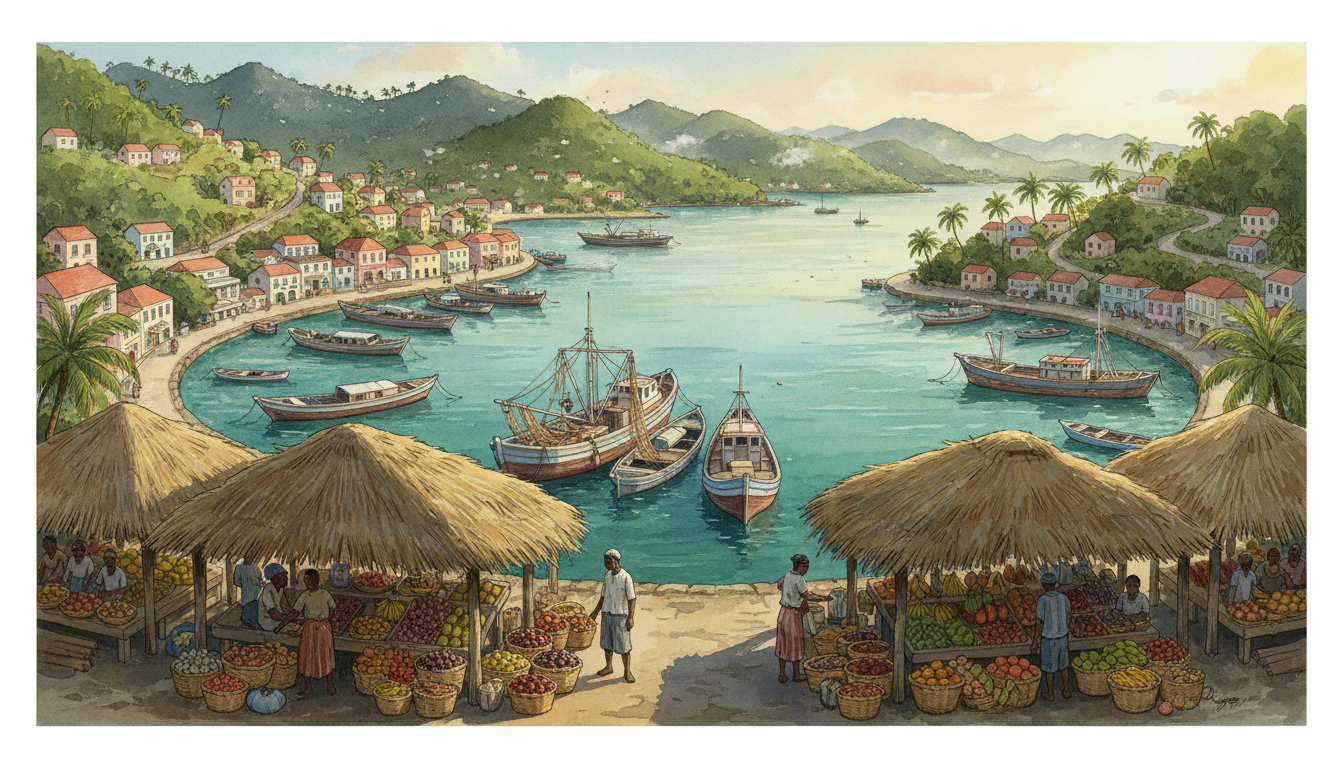
Grenada has a remarkable talent for making an island holiday feel personal. The best things to do when visiting and touring Grenada begin among the colourful harbour streets of St George’s, then lead to the lovely curve of Grand Anse Beach, underwater sculptures at Molinere, and forest trails around Grand Etang and Seven Sisters Falls. Add fragrant nutmeg and cocoa traditions, protected sea-turtle beaches and the distinct stories of Carriacou and Petite Martinique, and you have a Caribbean journey full of character, not just sunshine.
This Grenada travel guide explores ten meaningful experiences with realistic first-time itinerary ideas, protected reef information, Grenadian spices and food, rainforest safety, entry requirements and the ongoing island recovery context after Hurricane Beryl. Whether you are searching for Grenada things to do, St George’s sightseeing, the Grenada Underwater Sculpture Park, Grand Etang hiking, waterfalls, Grand Anse beach or Carriacou island hopping, begin with one island and a realistic plan. The most enjoyable days often combine one well-chosen adventure with time to meet the people who keep the islands running.
Travel planning snapshot October 2026: The UK FCDO notes that July 2024’s Hurricane Beryl heavily affected Carriacou and Petite Martinique and that some tourist infrastructure remained reduced during rebuilding. Caribbean hurricane season normally runs from June through November, and the underwater volcano Kick ’em Jenny has maritime alert and exclusion-zone considerations. Visitors should check passport-specific entry rules, boat condition, road travel and the current weather. UNESCO lists no inscribed World Heritage properties in Grenada as of October 2026, but three tentative-list entries. Recheck weather, infrastructure, safety and live transport before you book.
eduKateSG · A WORLD WORTH UNDERSTANDING
Get to know Grenada, one lovely chapter at a time
A Spice Isle of working harbours, rainforest, protected reef art and sister islands whose access deserves care.
Grenada at a glance
Grenada is a country of three inhabited main islands—Grenada, Carriacou and Petite Martinique—among the southern Caribbean Grenadines. St George’s is the capital on the southwestern side of the main island. Its harbour and hillside streets make an inviting first base. Grand Anse and Morne Rouge are accessible coastal chapters, while the island’s interior rises into rainforest and volcanic landscapes around Grand Etang.
The Grenada Tourism Authority, which promotes the destination as Pure Grenada, highlights the Underwater Sculpture Park at Molinere, Grand Etang National Park and many waterfall and marine experiences. But a marine protected area is not an unrestricted playground, and waterfalls can become hazardous after heavy rain. The country is also rich in nutmeg, cocoa and food traditions, best understood by meeting legitimate local makers.
UNESCO currently lists zero inscribed World Heritage properties for Grenada. St George Historic District, St George Fortified System and the Grenadines Island Group appear on the tentative list, which indicates possible future nominations, not completed recognition. The distinction makes a difference when reading heritage advertising.
- First island base: St George’s or the southwest coast, with time for heritage, beach, reef and one rainforest experience.
- Marine highlight: Molinere–Beauséjour Underwater Sculpture Park within a protected coastal environment.
- Nature highlight: Grand Etang and managed waterfall trails, whose safety and opening vary with rain.
- Sister islands: Carriacou and Petite Martinique deserve their own transport and recovery checks.
Safety, marine conservation and island realities
Grenada’s tropical climate and exposed terrain require more planning than a sunny photograph suggests. The FCDO identifies the hurricane season as normally June to November and reports that Carriacou and Petite Martinique can still have reduced tourist infrastructure because of 2024 hurricane damage. Recheck accommodation, ferries, medical support and attractions directly before deciding an outer-island trip is suitable.
Marine risks vary by location and day. Tides, currents, reef structures and boat condition determine whether swimming or snorkelling is safe. Grenada’s coast also has the Kick ’em Jenny submarine volcano offshore, with authorities managing maritime alerts and exclusion areas. Do not improvise a private-boat adventure near an active marine hazard or assume a short sea crossing needs no life jacket.
On land, heavy rain can change rivers, waterfalls and mountain paths quickly, while roads may be narrow and unlit at night. The FCDO says taxis are not metered, so travellers should agree the fare in advance. Passport and visa rules are nationality-specific: the FCDO’s entry guidance for British visitors requires an appropriate passport with six months of remaining validity at arrival; others should confirm their own terms.
1. Walk St George’s and its Carenage as a working harbour
St George’s may be one of the Caribbean’s prettiest capitals, but its harbour is more interesting when viewed as a place where people actually work. The Carenage curves beneath buildings with bright roofs and layers of urban history. A slow walk shows the relationship between the sea, commerce and steep streets, rather than simply collecting the familiar postcard angle.
Learn something about the city’s colonial and postcolonial histories and how its public spaces have changed. Forts and historic districts can add context, but their status matters: the St George Fortified System and Historic District are on UNESCO’s tentative list, not yet World Heritage inscriptions. A historic fort’s beauty does not remove restoration or entry restrictions.
Use a local guide if you want to understand the neighbourhoods, and allow time for a bakery, market or small cultural stop. The capital is not just a tourist painting; its streets carry deliveries, schools and ordinary errands.
Make it memorable: Choose a manageable Carenage walk and one confirmed cultural or historic-site experience.
Check before going: Check current fort accessibility, steep walking surfaces, safe transport and permission before photographing residents.
2. Give Grand Anse and Morne Rouge beaches an unhurried day
Grand Anse Beach is famous for its long curve of sand and pleasant visitor setting. The nearby southwest coast includes Morne Rouge, which can offer a different atmosphere and view. These beaches make an excellent introduction for a family that wants a gentle day after international travel, but each shore and access point has different actual conditions.
A beach can be a lesson in coastal processes if you pause to notice waves, shore vegetation and changing light. Local operators may offer watersports and boat trips, yet the most memorable choice may be a relaxed swim where conditions are appropriate, followed by a meal that introduces a Grenadian ingredient.
Do not treat the whole coastline as a supervised swimming pool. Currents, weather, watercraft and reef areas require local advice. Respect other beach users and vendors, and keep valuables secure rather than leaving them unattended during a swim.
Make it memorable: Use an established beach access point and enjoy a slower coastal and food experience.
Check before going: Check sea conditions, lifeguard or local guidance, equipment and safe return transport.
3. Snorkel the Underwater Sculpture Park with reef conservation in mind
The Molinere Underwater Sculpture Park is one of Grenada’s most distinctive attractions. The Grenada Tourism Authority explains that sculptures installed from 2006 onwards were designed to reflect cultural themes while providing stable surfaces where marine life can grow. They sit in the Molinere–Beauséjour Marine Protected Area, making this more than an underwater art gallery.
From a snorkel or dive tour, the best question is not only which sculpture looks most surprising. Ask how artificial reef surfaces change as organisms settle and how reducing pressure on nearby natural reefs helps conservation. Underwater art continues to develop through the sea’s own processes, which is part of its beauty.
Only use a capable operator that knows the protected-area boundaries. Avoid standing on structures, touching coral, chasing fish or diving beyond your experience. Swimming ability, current, visibility and vessel equipment determine whether a given tour is appropriate.
Make it memorable: Choose a reef-respecting snorkelling or diving operator with a marine interpretation component.
Check before going: Confirm weather, appropriate depth, swimming confidence, guide credentials, park rules and life-saving equipment.
4. Discover Grand Etang Lake and the rainforest behind the beaches
Grand Etang National Park introduces a very different Grenada from the southwest coast. The forested upland landscape and crater lake are part of the island’s volcanic geography, while trails reveal lush vegetation, birdlife and the ecological effects of elevation and rainfall.
Choose one appropriate forest walk and take time to notice changes in moisture, soil and plants. A trained guide may identify details that a rushed visitor would miss, such as different leaves along a trail or the way clouds collect over the higher ground. Nature is more interesting than a promise of a particular animal sighting.
Rain changes the difficulty of trails quickly. Even a park approach that appears straightforward can contain slippery surfaces or limited visibility. Visitors should follow official or reputable park guidance and choose a shorter route when necessary.
Make it memorable: Pair a crater-lake viewpoint with a manageable, managed rainforest walk.
Check before going: Check official access, trail maintenance, rain, safe transport and group fitness.
5. Hike to Seven Sisters Falls only when the trail conditions suit
The Seven Sisters Falls near Grand Etang offer one of Grenada’s beautiful rainforest excursions. The tourism authority describes a walk through lush vegetation to cascades, with increasingly rugged terrain for visitors who attempt additional falls. The waterfall landscape makes a useful study of how rainfall, forest and steep rock channels connect.
A local guide can help distinguish the easiest established approach from more difficult, slippery paths. The first waterfall or a suitable viewpoint may provide a complete experience for families and less confident hikers. A good guide does not pressure anyone to scramble over wet boulders for a photograph.
River safety must be assessed on the day. A pool that looks inviting in dry weather may become unsafe after heavy rain, with fast water or falling debris. Choose comfort, footwear and permission before entering any water, and let the scenery be the reward.
Make it memorable: Use a qualified guide and an achievable waterfall route, focusing on the forest and water rather than the count of cascades.
Check before going: Confirm current trail access, rainfall, swimming rules, appropriate shoes and return time.
6. Meet Grenada’s nutmeg, cocoa and small food producers
Grenada’s Spice Isle identity is connected with agriculture, trade, food and households. Nutmeg, cocoa and other crops have histories involving plantation systems, labour, changing markets and local expertise. A farm or processing visit can make the story tangible without reducing the island to a colourful bag of spices.
Choose a reputable hosted cocoa or spice experience and ask how the plants are grown, harvested, fermented, dried or processed. A maker may explain why one season or technique changes the result. That explanation is often more interesting than tasting a finished product with no understanding of its origins.
Markets and workshops are workplaces. Ask before photographing staff or equipment, and support the businesses fairly. Food offers a gentle way to see how the island’s African, European, South Asian and other influences have shaped contemporary Grenadian cooking, while leaving room for local variation.
Make it memorable: Choose a genuinely hosted spice or cocoa experience and a meal that credits its makers.
Check before going: Confirm actual tour openings, accessibility, food sensitivities, transport and photo permissions.
7. Learn about Levera’s shorebirds, turtles and protected coastline
Levera National Park and its associated northern coastal landscape provide a different perspective from the busy southwest beaches. Wetland habitat, shoreline vegetation and turtle nesting are among the reasons conservation matters here. A sunset photograph may be attractive, but the protected area’s rhythms are shaped by ecological needs.
Seasonal nesting programmes, when genuinely available, must be led by people authorised to manage wildlife observation. Sea turtles can be disturbed by white lights, noise, crowds and attempts to touch them or their eggs. Responsible visitors accept a night without sightings and respect access restrictions.
Even outside nesting season, the coast offers a chance to ask how mangroves, dunes, reef systems and bird habitats connect. Water may be rough, and there may not be supervised swimming. A naturalist-led viewpoint or walk can be a more appropriate choice than entering the surf.
Make it memorable: Use conservation-led interpretation and maintain a respectful distance from wildlife.
Check before going: Confirm nesting season, access rules, weather, swimming hazards and lighting restrictions.
8. Understand Gouyave’s fishing and spice connections
Gouyave offers a chance to see another side of Grenada through fishing, markets, food and its relationship with the northwest coast. A working town tells a story that resorts often conceal: boats need maintenance, people organise supply chains, and cooks transform local ingredients into everyday meals.
Choose a locally hosted introduction rather than walking onto busy fishing equipment for photographs. Ask how land and sea livelihoods interact and how small producers adapt to changing weather and trade conditions. A genuine conversation about work can be more memorable than a set of picturesque boats.
If a town food event is advertised, confirm its present schedule rather than assuming an older recurring listing is still accurate. Evening return transport, road lighting and crowd conditions deserve thought. The most rewarding stop is one that supports residents without interrupting their work.
Make it memorable: Explore a reputable market or food activity led by people who work there.
Check before going: Confirm event schedules, safe public areas, photo consent and return transport.
9. Approach Carriacou as a distinctive island still shaped by recovery
Carriacou is not simply a tiny replica of Grenada’s main island. Its boatbuilding, coastal traditions and community life have their own identity. A visit can offer rich opportunities to learn how island communities maintain skills and cultural practice, but the experience must be built around actual local arrangements rather than the assumption that every resort or service is fully operating.
Hurricane Beryl struck Carriacou severely in July 2024. The current UK travel advice says tourist infrastructure can remain reduced during rebuilding. That is essential information when considering accommodation, healthcare access, drinking water, transport and what kind of tourism would genuinely support local recovery.
Speak with reputable local businesses and confirm what they are ready to host. Respect any areas being rebuilt and avoid treating storm damage as a spectacle. A trip with community benefit and flexible timing is far better than demanding an itinerary assembled from pre-hurricane photographs.
Make it memorable: Choose a locally welcomed cultural or coastal experience after verifying present services and community readiness.
Check before going: Confirm ferry or flight operation, accommodation, medical backup, rebuilding restrictions and weather buffers.
10. Give Petite Martinique and outer-island life a separate question
Petite Martinique belongs to Grenada’s inhabited island group and offers a different scale of settlement and everyday life. Its maritime connections, fishing and community traditions can be interesting to travellers who want to understand how small islands work. The island deserves to be considered through its residents’ perspective, not only through a picture of a quiet beach.
An outer-island visit is not automatically part of an ordinary Carriacou ticket. Boats, weather, landing facilities and local permissions must be verified separately, particularly after the damage caused by Hurricane Beryl. The experience may be better understood through a hosted community account if current services cannot support a comfortable journey.
Remember the offshore volcanic environment too: Kick ’em Jenny is a submarine volcano to the north of Grenada, and maritime exclusion zones must be followed when relevant. Island-hopping should never be a spontaneous boat hire around hazards simply because the sea looks calm.
Make it memorable: Learn about the community through an invited local host or a carefully confirmed, safe outer-island journey.
Check before going: Check current vessel safety, island infrastructure, marine alerts, return arrangements and respectful access.
Journeys that respect the islands
Four to six days around St George’s and the southwest
Start with the harbour and a heritage walk, spend a relaxing coastal day at Grand Anse, and choose one managed Molinere marine trip plus a food or spice experience. This is a satisfying first visit without exhausting island transfers.
Seven days with rainforest and coastal nature
Use a southwest base and allocate dedicated days to Grand Etang and Seven Sisters, with a weather buffer. Choose a safe wildlife or coastline interpretation in Levera only when the season and access arrangements permit it.
A craft, food and conservation-focused holiday
Combine St George’s, local producers, Gouyave, protected reef art and a managed rainforest day. Listening to people who make, protect and maintain the island will offer a richer story than a maximal beach checklist.
A separate Carriacou visit after recovery checks
Only add Carriacou once accommodation, safe transfers, medical backup and local visitor readiness have been confirmed. Give it a few nights instead of a hurried round trip, and assess Petite Martinique as a still more specialised extension.
A restrained marine-activity plan
Choose a reputable operator for an underwater sculpture visit and perhaps another permitted reef setting. Do not assume every reef or volcanic offshore area is open for unsupervised exploration.
Practical preparation before booking
Check entry rules for your own passport through Grenadian authorities or the appropriate consulate. The UK guidance for British citizens specifies a passport expiring at least six months after arrival and particular rules for stamp and stay duration. Other nationalities can have different requirements. Currency in common use is the Eastern Caribbean dollar, though some tourism services may accept other currencies at their own conversion rates.
Weather, infrastructure and operator rules are central. June through November is the usual hurricane period. Carriacou and Petite Martinique may still face service limitations after Hurricane Beryl, so avoid non-refundable connections until the entire route is verified. A tour company offering a beautiful photograph does not guarantee medical support, safe boat equipment or an operating hotel.
Marine and forest conservation require different precautions. Respect protected zones at Molinere, turtle nesting at Levera and slippery or flooded trails inland. Check Kick ’em Jenny alert levels and legal exclusion zones for offshore plans. A holiday with a safe cancellation and a second activity is better than one that forces every booking to proceed.
- Confirm nationality-specific passport, visa and return-ticket rules.
- Review June–November hurricane risks and current local warnings.
- Check Carriacou and Petite Martinique infrastructure before booking outer-island stays.
- Use marine operators with proper boats, life jackets and knowledge of protected areas.
- Follow Kick ’em Jenny submarine-volcano maritime restrictions.
- Respect turtle habitats and never touch coral or underwater art.
- Assess waterfall and river conditions after heavy rain before swimming.
- Distinguish UNESCO tentative sites from inscribed World Heritage properties.
Twelve English–中文 travel terms
These bilingual terms support readers preparing in English and Chinese. Local customs, official marine rules and professional safety guidance take precedence.
| English | 中文 | Why it helps |
|---|---|---|
| harbour | 港口 | A working place as well as a scenic view. |
| beach current | 海滩海流 | Ask before entering the water. |
| underwater sculpture | 水下雕塑 | Marine art within a protected habitat. |
| coral reef | 珊瑚礁 | Do not stand on living coral. |
| rainforest trail | 雨林步道 | Rain makes surfaces slippery. |
| waterfall | 瀑布 | Swimming conditions are not guaranteed. |
| spice farm | 香料农场 | Learn from local growers. |
| cocoa | 可可 | Ask about processing and labour. |
| sea turtle | 海龟 | Protect nesting beaches. |
| hurricane recovery | 飓风灾后恢复 | Infrastructure may change. |
| island ferry | 海岛渡轮 | Verify safe complete connections. |
| tentative UNESCO list | 联合国教科文组织预备名单 | Not yet an inscribed World Heritage site. |
Learn the connections beyond the beach
Try seeing Grenada as three intersecting stories: the sea, the forest and the people who work with both. A sculpture below the surface helps marine habitat, a nutmeg farm carries agricultural history, and a ferry captain knows more about island weather than a glossy brochure. These connections make the landscape more interesting.
Note one decision you made out of respect: staying off a reef, choosing not to photograph a trader or changing a waterfall hike after rain. Those moments are part of travelling well, even when they do not appear on a social-media highlight reel.
Questions before your Grenada holiday
Does Grenada have UNESCO World Heritage sites?
As of October 2026, UNESCO lists no inscribed World Heritage properties for Grenada. There are three tentative-list entries, including St George historic and fortified areas.
What are the best things to do on a first Grenada holiday?
St George’s, Grand Anse, a responsible Molinere snorkel, a managed rainforest experience and a locally hosted food or spice visit make a varied short trip.
Can I visit the Underwater Sculpture Park without a guide?
It is within a marine protected area and conditions vary. Use an appropriate, conservation-conscious operator and follow local rules rather than assuming all access is unrestricted.
Is Carriacou fully recovered from Hurricane Beryl?
Do not assume all tourist services have returned. The UK FCDO says reduced infrastructure can persist, and individual transport, lodging and medical facilities should be checked.
When is hurricane season in Grenada?
The normal Caribbean season runs June to November. Local forecasts and official alerts should determine specific travel decisions.
Official sources and the next country
Original tourism, UNESCO and government safety sources provide context, not a guarantee of a particular operator’s safety or date-specific availability. Check with the relevant authorities before acting.
- Grenada Tourism Authority — Pure Grenada official tourism portal
- Grenada Tourism Authority — Underwater Sculpture Park
- Grenada Tourism Authority — Grand Etang and Seven Sisters Falls
- Grenada Tourism Authority — experiences across three islands
- UNESCO — Grenada: zero inscriptions and three tentative-list properties
- UK FCDO — Grenada travel advice
- UK FCDO — Grenada hurricane recovery and Kick ’em Jenny alert
- UK FCDO — Grenada entry requirements
- US National Hurricane Center — live Atlantic tropical weather
Continue alphabetically: Greece ← Grenada → Guatemala. Browse the World Country Directory and the World Travel Hub.