
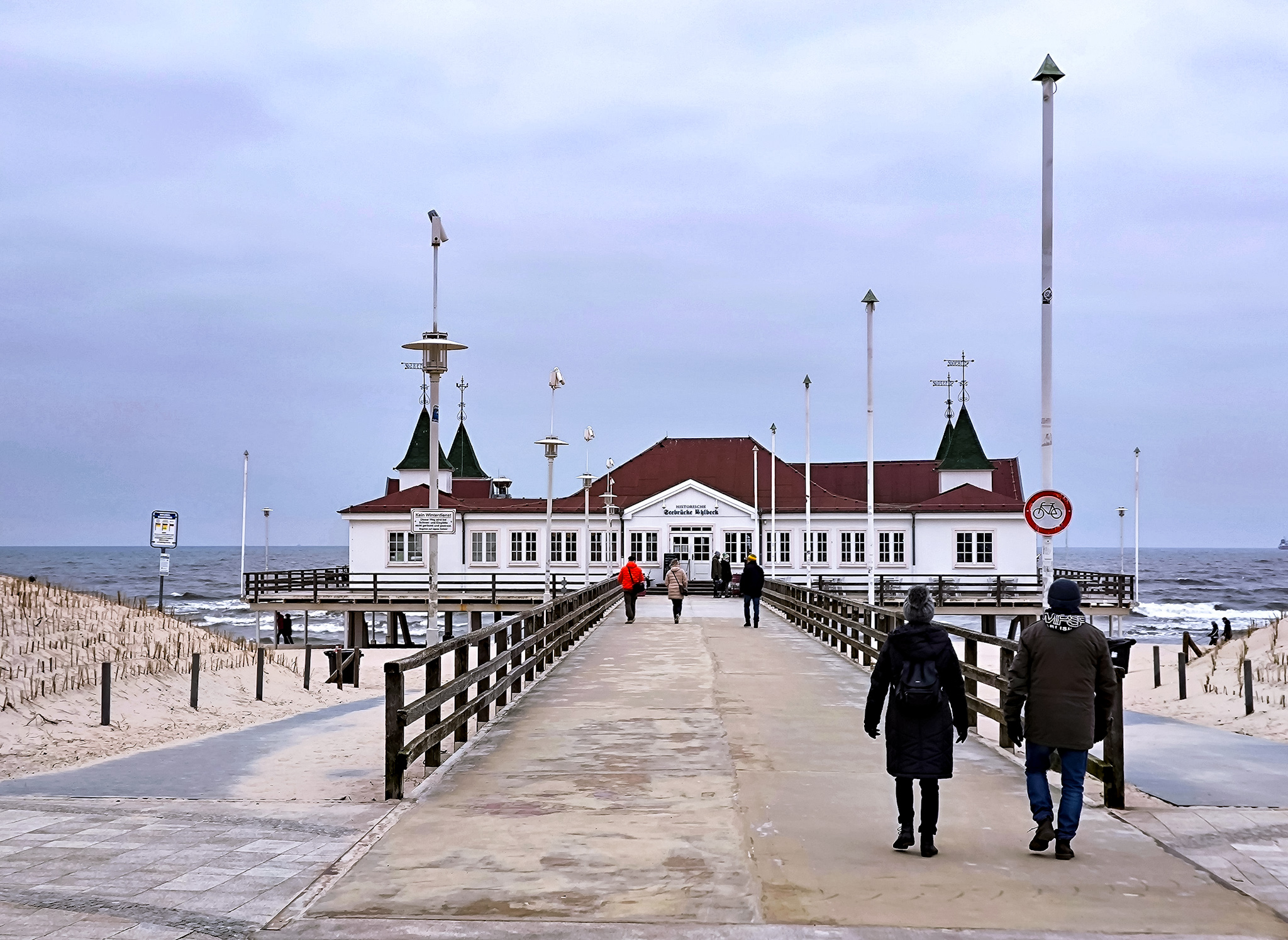
Usedom is a Baltic island shared by Germany and Poland, with elegant seaside promenades, historic piers, long sandy beaches, reed-lined backwaters and places that require careful attention to twentieth-century history. The top 10 things to do when visiting and touring Usedom are to discover Ahlbeck’s historic pier, stroll Heringsdorf’s seaside villas, visit Bansin, explore Koserow and its salt huts, enjoy the northern beaches around Zinnowitz and Trassenheide, learn at the Peenemünde Historical Technical Museum, discover the Achterwasser, slow down around Lieper Winkel, explore the town of Usedom and its hinterland, and consider an appropriate cross-border journey to Świnoujście.
Usedom rewards a gentle pace and a regional itinerary rather than a single full-island driving circuit. The eastern imperial seaside resorts can be explored together, the central Amber Resorts form another walk-and-beach area, and the north and west add demanding historical and natural subjects. This guide explains what makes each experience worthwhile, offers two-, four- and seven-day routes, and helps travellers distinguish beach access, transport, museums, cross-border practicalities and protected environments.
Start here: know which part of Usedom you want
The Baltic Sea forms the island’s outer coastline, while the Achterwasser and other lagoon or river waters define its more sheltered inner side. That double-sided geography is one of Usedom’s most useful travel themes. A seaside promenade facing open waves can be busy and highly managed, while a village on the backwater may feel much quieter and more closely connected to fishing, reeds and farmland.
Parts of Usedom lie in Germany’s Mecklenburg-Vorpommern, while the eastern section includes Polish Świnoujście. The border is part of the island’s modern history and everyday life. Travellers should not assume that a shared island means identical languages, legal requirements, payment systems or public-transport tickets on both sides. A cross-border walk can be easy for some visitors but still deserves basic planning.
Usedom’s name is strongly associated with the nineteenth- and early twentieth-century seaside resort tradition of Ahlbeck, Heringsdorf and Bansin. The villas, piers and promenades tell a leisure history, yet the island also contains Peenemünde, whose Nazi-era missile programme was connected to forced labour and weapons of war. A serious travel guide makes room for both subjects without treating them as equivalent kinds of entertainment.
- Choose Ahlbeck, Heringsdorf or Bansin when seafront villas, long promenade walks and beaches are your priority.
- Use Koserow and the central Amber Resorts for a quieter mixture of coast, village heritage and food.
- Keep Peenemünde as a properly researched museum journey, not a brief entertainment stop between beaches.
- Allow a separate inland day for the Achterwasser or Lieper Winkel, and check your travel documents before planning Świnoujście.
Quick comparison: ten Usedom experiences
| Experience | Region | Type of experience | Check before visiting |
|---|---|---|---|
| 1. Begin at Ahlbeck’s historic pier | Ahlbeck; German eastern resort coast | heritage | Respect pier closures, sea conditions, private balconies and resort rules. |
| 2. Walk Heringsdorf and its elegant seaside architecture | Heringsdorf; central imperial resort coast | town | Check pier access and resort tax or local visitor-card rules for your stay. |
| 3. Enjoy Bansin and compare three imperial resorts | Bansin; eastern resort coast | town | Follow beach safety notices; check which sections permit dogs or activities. |
| 4. Discover Koserow’s pier, salt huts and coastal stories | Koserow; central Amber Resort | heritage | Respect historical buildings, pier closures and steep-coast restrictions. |
| 5. Take a northern beach day around Zinnowitz and Trassenheide | Northern Usedom; Zinnowitz and Trassenheide | coast | Protect dunes, supervise children near water and use posted beach access routes. |
| 6. Study Peenemünde’s difficult twentieth-century history | Peenemünde; north-west tip | history | Follow museum interpretation, avoid restricted historical grounds and treat victims respectfully. |
| 7. Observe the Achterwasser’s sheltered wetland landscape | Achterwasser region; central-western inner island | nature | Follow reserve rules and avoid disturbing wildlife or reed habitats. |
| 8. Slow down among Lieper Winkel’s villages and churches | Lieper Winkel; western inner island | town | Respect private homes, farm access and church services. |
| 9. Visit the historic town of Usedom and its inland setting | South-western Usedom; Usedom town | heritage | Check church opening, accessibility and transport back to your base. |
| 10. Consider a respectful cross-border visit to Świnoujście | Polish eastern Usedom; Świnoujście | transport | Check border and transit rules from authoritative providers; do not assume seamless tickets. |
Top 10 things to do in Usedom
1. Begin at Ahlbeck’s historic pier
Ahlbeck’s pier is one of Usedom’s best-known landmarks, a graceful built structure stretching over the Baltic beside ornate seaside villas. The resort developed from a fishing settlement into a prominent bathing destination, and the pier’s late nineteenth-century history remains part of its appeal. The island’s official tourism site describes it as one of Germany’s most important surviving historic seaside piers.
Start with a simple walk along the promenade and examine the relationship between the pier, beach access and older villa streets. The pier is a constructed public interface with a sometimes rough sea; do not assume every part is accessible during storms or maintenance. A nearby café or a short street walk gives a different perspective from the famous end-on photograph.
Look at decorative details in the buildings and ask who originally could afford a holiday here. Seaside architecture reveals changing ideas about health, leisure, status and travel. Ahlbeck is still a living town, so its character involves present residents and services as well as historic hotels.
Before you go: Respect pier closures, sea conditions, private balconies and resort rules. Useful question: What makes a pier more than a platform for taking photographs? Make one specific observation on site and identify which part of the explanation comes from a trustworthy museum, tourism board or local guide.
2. Walk Heringsdorf and its elegant seaside architecture
Heringsdorf’s promenade, grand seaside villas and large pier make it a central chapter in Usedom’s bathing-culture history. Buildings from the imperial-resort era tell a story of changing architectural tastes, seasonal travel and the development of a service economy. A walk here connects those buildings with open coast and public spaces in a way a museum display cannot fully reproduce.
Choose a comfortable promenade segment and look at the transition from private accommodation to a shared beach and pier. Historic villas may have been restored, converted into hotels or adapted to modern residential life; their present use can differ from their original purpose. The pier offers a marine perspective where public access permits.
Heringsdorf also suits a low-pressure day. It is not necessary to enter every restaurant or book a spa treatment to enjoy the resort. Notice how gardens, trees, street furniture and coastline shape the pace of walking. The place is designed for lingering rather than racing toward the next landmark.
Before you go: Check pier access and resort tax or local visitor-card rules for your stay. Useful question: How did seaside leisure change the design of a town? Make one specific observation on site and identify which part of the explanation comes from a trustworthy museum, tourism board or local guide.
3. Enjoy Bansin and compare three imperial resorts
Bansin is the third of Usedom’s well-known Kaiserbäder, alongside Ahlbeck and Heringsdorf. It offers a quieter-feeling variation on the broad beach, historic villas and promenade setting. Each resort developed its own layout and architectural details, so it is worth choosing one or two streets beyond the seafront rather than assuming the three are identical.
Use a promenade walk or suitable local transport to connect the resorts, selecting a distance that fits your group. Stop for food and notice how the beach, town and neighbouring woodland relate. A family can spend a relaxed afternoon on the sand while another traveller focuses on architecture and public spaces.
Try comparing the older town centre with the resort frontage. Which buildings clearly cater for seasonal visitors? Which appear useful all year? This exercise gives a more rounded picture of Usedom than a row of postcard photos taken only at the shoreline.
Before you go: Follow beach safety notices; check which sections permit dogs or activities. Useful question: How can neighbouring resorts be similar yet remain different places? Make one specific observation on site and identify which part of the explanation comes from a trustworthy museum, tourism board or local guide.
4. Discover Koserow’s pier, salt huts and coastal stories
Koserow sits near one of the narrower parts of Usedom, with the Baltic on one side and the sheltered inner waters of the island on the other. Its modern curved pier contrasts with older salt huts and village buildings that recall the practical need to preserve fish and handle coastal trade. This is a good place to connect contemporary seaside tourism with working history.
Walk the pier if open, then explore the protected historic salt-hut setting and a public street toward the old church. The official Usedom tourism site highlights the pier, traditional buildings and Streckelsberg as major features. If you want a longer walk, verify a suitable permitted route and be careful around any steep or eroding shoreline.
Take a meal or snack from a local fish smokehouse if it suits your diet and the business is operating. Rather than calling every dish ‘authentic’, ask about preservation, supply and seasonal catch. Legends such as the lost city of Vineta are part of cultural storytelling, not established facts about an archaeological site offshore.
Before you go: Respect historical buildings, pier closures and steep-coast restrictions. Useful question: What changed when fish could be preserved and transported over longer distances? Make one specific observation on site and identify which part of the explanation comes from a trustworthy museum, tourism board or local guide.
5. Take a northern beach day around Zinnowitz and Trassenheide
Usedom’s northern resorts offer a different rhythm from the architecture-focused imperial coast. The long sandy shoreline, resort services and access to nearby natural landscapes can make Zinnowitz or Trassenheide useful for families and travellers who want time outdoors without a demanding heritage schedule.
Choose a beach with the facilities needed for your party, then check current water quality information, surf, lifeguard arrangements and any local regulations. Do not assume a shallow-looking shore is safe for every swimmer. A long walk on the sand or in the nearby permitted coastal woodland can be an excellent day even when the water is too cold or conditions are unsuitable for bathing.
Where indoor activities are needed, the area has family attractions and cultural venues that may be useful in bad weather, subject to opening. Resist turning a restful beach stop into a rushed tour of every attraction advertised on a roadside board. There is genuine value in watching the coastline and slowing down.
Before you go: Protect dunes, supervise children near water and use posted beach access routes. Useful question: How does northern Usedom’s beach experience differ from the resort villas farther east? Make one specific observation on site and identify which part of the explanation comes from a trustworthy museum, tourism board or local guide.
6. Study Peenemünde’s difficult twentieth-century history
Peenemünde played a major role in Nazi Germany’s rocket and weapons programme. The Historical Technical Museum examines the technical development of missiles and the conditions under which they were created, including forced labour and the destructive purposes of the weapons. This is not simply an exhibition of exciting machines or a family entertainment attraction.
Plan enough time for interpretation and difficult context. Usedom’s official tourism information stresses both technological achievement and the inhuman exploitation associated with the programme. Avoid repeating promotional claims about rockets without acknowledging the people harmed by this history. A serious museum visit should ask not only what engineers built but who worked, under what conditions, and to what end.
Peenemünde also has a harbour and natural landscape, but these should not obscure the museum’s subject. Some visitors may find the material distressing; families can decide how to approach it in age-appropriate ways. A good historical note distinguishes technological capability from ethical acceptability.
Before you go: Follow museum interpretation, avoid restricted historical grounds and treat victims respectfully. Useful question: How can scientific skill be misused when ethical responsibility is ignored? Make one specific observation on site and identify which part of the explanation comes from a trustworthy museum, tourism board or local guide.
7. Observe the Achterwasser’s sheltered wetland landscape
The Achterwasser is a broad lagoon-like waterbody on Usedom’s sheltered side, very different from the open Baltic beaches. Reedbeds, marshy edges, small harbours and villages create a landscape shaped by quieter water and long relationships between fishing, farming and transport. It is a powerful reason to leave the more famous resort promenades for a few hours.
Choose an authorised shoreline path or public viewing point that suits the weather and the group. A guided boat experience is another possible perspective, but confirm operator permission, season and conditions rather than improvising a trip. Nature protection may restrict access to important bird habitats.
Listen and observe before moving on. Does the water look sheltered? Where do reeds grow? Which areas support boats, homes or agriculture? The contrast with the outer beach reveals how one island can contain two quite different coastal environments.
Before you go: Follow reserve rules and avoid disturbing wildlife or reed habitats. Useful question: What practical advantages might sheltered backwater offer to small communities? Make one specific observation on site and identify which part of the explanation comes from a trustworthy museum, tourism board or local guide.
8. Slow down among Lieper Winkel’s villages and churches
Lieper Winkel is a quieter peninsula projecting into waters of the Achterwasser and Peenestrom. Usedom’s tourism authority presents it as one of the island’s least densely populated areas, with small villages and long-standing rural character. It offers a valuable contrast to the stately seaside villas and busy visitor infrastructure on the outer coast.
Plan a short route through public village lanes and perhaps St John’s Church in Liepe, whose site has a long history, checking whether the building welcomes visitors. The quiet character is precisely the attraction, so do not arrive expecting numerous cafés or a comprehensive programme of scheduled shows. Bring water and a flexible plan.
Notice what a sheltered rural peninsula requires: local roads, places of worship, agriculture and connections across water. It may not possess a famous pier, but it offers strong evidence of the island’s ordinary social geography.
Before you go: Respect private homes, farm access and church services. Useful question: How does a village on the sheltered inland side differ from a beach resort? Make one specific observation on site and identify which part of the explanation comes from a trustworthy museum, tourism board or local guide.
9. Visit the historic town of Usedom and its inland setting
The small town of Usedom shares its name with the island yet lies away from the busiest outer Baltic resorts. Its market square, church, older buildings and links to the surrounding countryside reveal a different kind of settlement history. The town offers an opportunity to learn about ordinary civic life and regional identity rather than treating Usedom as only beaches.
Walk through its public centre and choose a suitable cultural or church visit if open. The island tourism site highlights the old market square and St Mary’s Church as landmarks. If continuing through the hinterland, select one further stop rather than attempting every historic estate or rural village during the same hour.
Compare the urban layout with Heringsdorf. A marketplace and church anchor one kind of public space; a pier and promenade anchor another. Both serve communities and visitors, but their form is shaped by different historical purposes.
Before you go: Check church opening, accessibility and transport back to your base. Useful question: What can a market square tell you about a town’s older functions? Make one specific observation on site and identify which part of the explanation comes from a trustworthy museum, tourism board or local guide.
10. Consider a respectful cross-border visit to Świnoujście
Świnoujście, known historically in German as Swinemünde, forms part of the same island’s urban region on the Polish side of the border. A journey here allows visitors to see how geography continues across a political boundary while languages, administrative systems and local history differ. The resort, harbour and routes toward other Polish islands offer a different perspective from Germany’s Kaiserbäder.
Check your own passport, visa and entry position before crossing, even if some travellers move freely within the Schengen Area. Verify currency, payment, mobile-roaming arrangements and return public transport. A border marker or promenade connection does not replace legal travel requirements for an individual visitor.
Choose a simple public walk, a meal or a cultural stop instead of assuming a single afternoon can cover all of Świnoujście. Notice which parts of daily life are continuous across the island and which reflect national systems. Respect local spelling and the living culture of the town.
Before you go: Check border and transit rules from authoritative providers; do not assume seamless tickets. Useful question: How can one island belong to two countries yet remain geographically connected? Make one specific observation on site and identify which part of the explanation comes from a trustworthy museum, tourism board or local guide.
Itineraries for two, four or seven days
Two days around the resort coast
Spend day one with Ahlbeck, Heringsdorf and perhaps Bansin, choosing a manageable length of promenade. On day two, discover Koserow’s pier, salt huts and a quieter beach or village stop. This plan works well for a relaxing first visit without a car if transport and walking distances align.
Four days mixing coast and history
Use two days as above, add a northern Zinnowitz or Trassenheide beach day, and spend one properly planned day at Peenemünde or among Achterwasser villages. Choose the order from museum opening, weather and your appetite for difficult history. Do not cram a major museum and a distant rural loop into one short afternoon.
A week crossing Usedom’s different landscapes
Give the resort coast, central Amber Resorts, the north, the Peenemünde museum, the Achterwasser, Lieper Winkel and one flexible day their own space. A cross-border Świnoujście outing is optional and needs transport and travel-document checks. A slower week lets you enjoy the outer beach and sheltered backwater without confusing their character.
Avoid writing ten attraction names into a timetable without considering transfers. Usedom’s resort railway and bus routes make some coastal stops straightforward, yet protected inland paths, museums and cross-border excursions require different preparations. Give visitors of varied ages time to rest and eat. A museum about difficult history can demand emotional attention, so it may be best treated as the day’s principal event rather than a minor stop before another entertainment attraction.
Travel times in a holiday plan should include walking, queues, local taxes or visitor-card arrangements where relevant and the return connection. With children, select a beach that has the facilities you need instead of always choosing the most famous name. If the weather makes a pier or beach unsuitable, switch to a cultural venue with verified opening. The best holiday is a sequence of days that are comfortable to experience, not an exhaustive index of pins on a map.
How to travel to Usedom and get around
Usedom can be reached from the German mainland through regional road and rail links in the Wolgast and south-western approach corridors, with onward transport across its German resort towns. Some journeys also arrive via the Polish side. Check the correct final rail station, bridge approach, bus connection and whether your accommodation is on the German or Polish part of the island. Distances on a booking map can conceal a large detour around the backwaters.
The resort areas are particularly well suited to a car-light visit when rail schedules and walking distances fit. The Usedomer Bäderbahn and regional buses may be useful for individual trips, but services, ticket rules and construction diversions should always be checked. Cycling is pleasant on selected coastal and hinterland routes, yet wind, traffic and the length of an island journey matter. Decide how to return before choosing a long ride.
Cross-border travel deserves its own check. Usedom’s geography is shared, but the island is not a single administrative unit. Check passports, visas, valid identity documents, currencies, roaming and onward connections. If you plan only a relaxed beach holiday on the German side, crossing into Poland is optional rather than necessary to complete a top-ten list.
The island’s two waters: Baltic coast and Achterwasser
One of the most instructive comparisons on Usedom is between a Baltic beach and a sheltered Achterwasser shore. The open outer coast receives more direct wave exposure and supports broad beaches with developed resort access. The backwater contains reed-lined shores and shallow, sheltered environments that matter for wildlife and small harbours. Both are coastal, but they should not be treated as equivalent places for swimming, boating or walking.
At the beach, look at sand, dune vegetation and how a pier or groynes alter the visitor experience. At the Achterwasser, notice reeds, quiet channels, grazing land and how villages sit near sheltered water. Try to explain why different activities are suitable in different places. A protected reedbed is not a swimming area simply because the water looks calm.
These contrasts help explain the island’s settlement patterns. Resorts grew around sea bathing, public promenades and accommodation; inland villages grew around transport, farming and fisheries. Today’s tourism economy touches both, but the rhythm of daily life can remain very different. Respect wildlife, working boats and residents while making your observations.
Seasons, weather, bathing and cultural responsibility
| Season | A good reason to visit | Plan for |
|---|---|---|
| Spring | Quieter promenades, architecture walks and returning natural activity | Wind, variable temperatures and seasonal attraction hours |
| Summer | Beaches, longer days and active resort programmes | Crowds, accommodation demand and beach safety |
| Autumn | Calmer town streets, coastal light and cultural visits | Shorter daylight and fewer seasonal services |
| Winter | A focused spa-town or museum break | Reduced outdoor services, exposed piers and cold conditions |
The Baltic may look tranquil in a photograph but become windy in a short time. Follow beach flags and notices, check water temperature and lifeguard provisions, and do not enter the sea when conditions are unsuitable. Some beaches have designated areas for dogs or activities, and resorts may charge a visitor tax that supports local facilities. Verify the relevant town’s current regulations rather than carrying assumptions from another beach.
Respectful travel includes cultural history as well as environmental protection. In Peenemünde, acknowledge forced labour and the victims of militarised technology. In village churches, observe services and privacy. In wildlife areas, stay on designated access and leave animals undisturbed. In historic residential streets, avoid trespassing for a close photograph. These decisions are part of experiencing Usedom well.
Learning journeys for families and independent travellers
Usedom lends itself to carefully chosen learning activities. Ahlbeck offers an architecture sketch: draw the outline of a pier and one villa feature and discuss why these structures sit near the sea. At Koserow, relate traditional salt huts and fishing to preservation. At the Achterwasser, compare a protected reedbed with a recreational beach. For mature students, Peenemünde raises essential ethical questions about responsibility in engineering and scientific work.
For mathematics, make a travel-time estimate involving a walk along the resort promenade, a local train journey and the time required to reach a museum. Distinguish distance from duration and account for transfers. A second exercise is to compare the length of a beach walk with the energy required to return against the wind. Use actual published values or personal measurements; do not invent figures and present them as facts.
For English writing, encourage precise nouns: pier, villa, promenade, reedbed, lagoon, backwater, border, museum and harbour. Begin with one observable detail, then add a documented explanation. When discussing a sensitive historical site, avoid glib words that turn tragedy or exploitation into spectacle. A thoughtful paragraph can remain welcoming while still describing the past accurately.
English–中文 vocabulary for an Usedom itinerary
| English | 中文 | Use in Usedom |
|---|---|---|
| pier | 栈桥 | Ahlbeck or Heringsdorf |
| seaside villa | 海滨别墅 | Resort architecture |
| promenade | 海滨步道 | The imperial resorts |
| beach | 海滩 | Baltic swimming areas |
| dune | 沙丘 | Protected sand habitats |
| reedbed | 芦苇丛 | Achterwasser |
| lagoon | 潟湖 | Sheltered inner waters |
| fishing village | 渔村 | Koserow’s heritage |
| museum | 博物馆 | Peenemünde |
| forced labour | 强迫劳动 | Responsible historical interpretation |
| border | 边界 | German–Polish geography |
| railway | 铁路 | Island transport |
| coastal wind | 海风 | Safety and route planning |
| historic town | 历史城镇 | Usedom town |
| nature park | 自然公园 | Island hinterland |
| harbour | 港口 | Maritime working areas |
Write one sentence using the vocabulary attached to something seen: ‘The pier provides a public route out over the Baltic,’ or ‘The reedbed offers habitat along the sheltered backwater.’ A word becomes easier to retain when it explains a place, not only describes its appearance. Try comparing German and Polish place names on a map to understand how geography and history interact.
Frequently asked questions about Usedom
What is Usedom most famous for?
Usedom is widely known for sandy Baltic beaches, Ahlbeck’s historic pier and the seaside architecture of Heringsdorf and Bansin. The island also has sheltered inner waters, rural villages and the difficult history of Peenemünde. A thoughtful first visit combines a resort promenade with a different kind of landscape or historical attraction. Remember that part of the island belongs to Poland; that shared geography is an important feature of Usedom’s present identity.
How many days are ideal for Usedom?
Two or three days are enough for a focused resort-coast break. Four to five days allow a proper change of scenery with the Amber Resorts or northern beaches and a significant museum visit. A week is better for including sheltered backwaters, rural villages and a considered cross-border day. Count rail or driving transfers, walking time and weather alternatives as part of the programme.
Is Ahlbeck Pier worth visiting?
Yes. Ahlbeck Pier is a distinctive late nineteenth-century structure, and the surrounding villa architecture helps explain why the resort became famous. Even a short walk can reveal the relationship between built leisure infrastructure and the Baltic coast. Check current pier access, high-wind closures and local beach rules. Avoid treating the pier as a guaranteed all-weather platform, and make time to explore a little of Ahlbeck beyond the most photographed view.
Can you walk between Ahlbeck, Heringsdorf and Bansin?
The imperial resorts are connected by a prominent seaside promenade and local transport, making a walk between selected sections attractive. The entire distance may not suit every age, weather condition or mobility level, so choose a manageable segment and confirm return transport. Take time to observe how villa styles and town centres change along the way. A few stops with rest are often more pleasant than rushing the full route.
Is Usedom in Germany or Poland?
Both. The larger part of the island is in Germany, while the eastern part includes Polish Świnoujście. A beach or road route may connect communities across the border, but administrative matters such as currency, language and legal entry conditions differ. Travellers should verify their own passport and visa situation before crossing and check whether their transport ticket or mobile plan applies across the boundary.
What is the Peenemünde Museum about?
The Historical Technical Museum deals with the Nazi-era rocket and weapons programme, including its technology, forced labour and the destructive purposes of the weapons developed there. The subject requires serious, well-contextualised interpretation and is not merely an exhibition celebrating invention. Plan adequate time to read exhibits carefully and consider whether the material is appropriate for all children in your group.
Can you visit Usedom without a car?
Yes, particularly if you choose accommodation near the resorts and verified local rail or bus connections. The resort promenade provides excellent opportunities for walking, while transport may reach other towns and sights. Rural backwater routes can be more difficult, and service schedules should be checked rather than assumed. A compact no-car holiday can be very satisfying when the itinerary avoids distant attractions linked by uncertain transfers.
Are Usedom’s beaches safe for swimming?
Safety varies by location, conditions and individual ability. Many established resort beaches have managed access and seasonal lifeguard services, but no guide can guarantee safe swimming on a particular date. Wind, water temperature, currents and local signage matter. Use designated bathing areas, supervise children and respect dune habitats. A beach walk, picnic or promenade is an excellent alternative when entering the water is unwise.
What is the Achterwasser on Usedom?
The Achterwasser is a sheltered body of water on the island’s inland side, contrasted with the open Baltic coast. It supports wetland habitats, villages, boat activity and a quieter landscape. Visitors can experience it through authorised paths, viewing points or suitable guided outings. The important distinction is between a naturally valuable shore and an unrestricted recreational playground; conservation and private land rules still apply.
When is the best season to visit Usedom?
Summer attracts visitors for beaches and long days, but it may also bring crowds and higher demand. Spring and autumn can be appealing for walks, architecture and quieter museums, depending on weather and opening hours. Winter suits a shorter indoor-and-town itinerary with realistic transport expectations. Choose the season from the activities you actually want, and check current visitor-card, resort-tax and venue information.
Official sources, photo attribution and connected guides
Official Usedom and resort information reviewed in October 2026. The live status of visitor facilities, ticket conditions and safety notices should be checked with their operators before travel. This guide treats historical subjects with the context they require, not as a promise of entertainment.
- Usedom.de — island towns and villages
- Usedom.de — Ahlbeck resort
- Usedom.de — Koserow and the Amber Resorts
- Usedom.de — Lieper Winkel
- Usedom.de — Peenemünde and its history
- Kaiserbäder — current guest information
- Usedom.de — museums and galleries
Featured photo: Ahlbeck Pier on Usedom, from the existing eduKateSG media library; photograph credited there to Jo Vert / Jochen Sievert, published via Wikimedia Commons under CC BY-SA 4.0, unmodified. See the WordPress media item for its full source attribution.
Continue with Top 10 Things to Do When Visiting and Touring Germany, compare Rügen or Fehmarn, and explore the World Country Directory.
Usedom’s beauty lies in the contrast between open sea and sheltered backwater, architecture built for holidays and towns where people work, and a difficult historical past that should be understood rather than ignored. A good itinerary gives each subject appropriate time. Choose a few places that suit your interests, check practical details, and let the island’s varied geography shape the journey.