
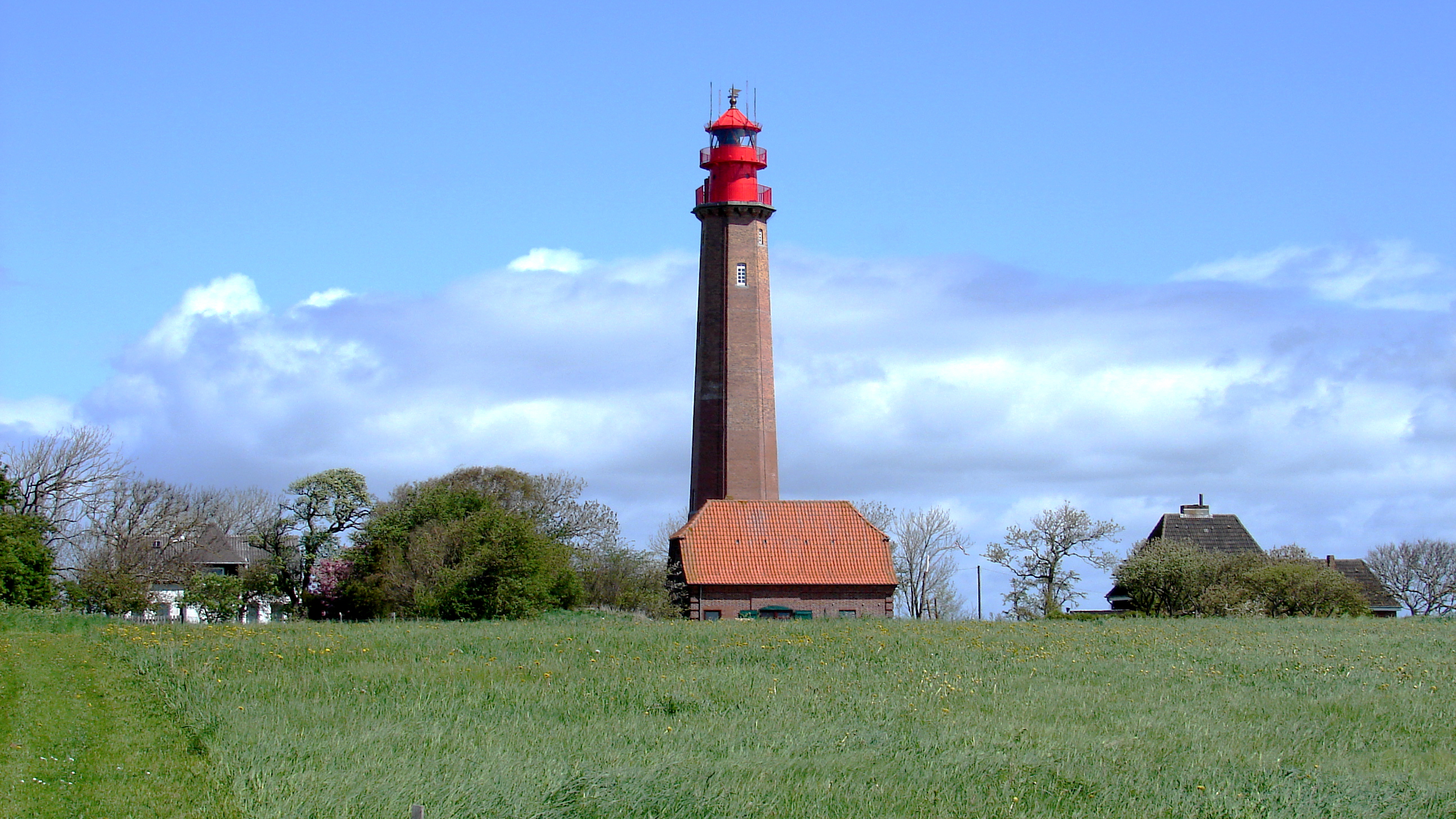
Fehmarn is one of Germany’s most distinctive Baltic islands, with red-brick lighthouses, wide skies, bird reserves, fishing harbours, a compact old town and beaches that change character from sheltered sand to exposed western coast. The top 10 things to do when visiting and touring Fehmarn are to explore Burg’s old town, visit Flügge Lighthouse, observe birds at NABU Wallnau, enjoy Südstrand and Burgtiefe, understand Fehmarnsund Bridge, visit Burgstaaken and its U11 submarine museum, walk the protected Grüner Brink coast, discover Puttgarden’s ferry landscape, explore western lighthouse country and visit the Niobe memorial at Gammendorf.
Fehmarn is connected to the German mainland by the Fehmarnsund Bridge and has ferry links toward Denmark. That makes it tempting to treat the island as a quick transit stop, yet its habitats, town and maritime history justify a more thoughtful journey. This guide distinguishes attractions you can walk into from protected nature and working infrastructure, offers two-, four- and seven-day itinerary ideas, explains seasonal decisions, and links to official visitor information rather than guessing exact opening hours.
Start here: Fehmarn is more than a beach stop
Fehmarn lies in Schleswig-Holstein in northern Germany, between the wider Baltic Sea and routes toward Denmark. Its position matters for transport and birds alike. The island’s familiar Fehmarnsund Bridge and Puttgarden ferry connection help link mainland Europe with Scandinavia; bird migration also follows corridors across the area. Human and wildlife routes overlap in an island landscape that must meet different needs.
The island is sometimes presented mainly as a sunny beach destination, but a complete visit benefits from four kinds of place. Burg shows the history of an everyday small town; Flügge and other lights show how sailors navigated dangerous waters; Wallnau and Grüner Brink reveal why habitat conservation matters; and Burgstaaken’s museum interprets a very different chapter of modern maritime technology.
Weather and permission shape the schedule. Some headlands are excellent for walking but inappropriate for swimming. A lighthouse that opens to visitors in season may close outside its operating dates. A birdwatching hide may be accessible only through the reserve’s managed visitor entrance. Respecting those distinctions makes a Fehmarn trip more interesting and safer.
- Use Burg as a convenient starting town for a first-day visit, then choose another coastal region for the next.
- Flügge and Wallnau belong to different kinds of west-coast excursion: one a lighthouse, the other a managed nature reserve.
- Keep transport infrastructure, working harbours and memorials distinct from leisure attractions; enter only designated public areas.
- Leave a backup plan for strong wind, reserve closures and seasonal lighthouse opening.
At a glance: compare Fehmarn’s top 10 experiences
| Experience | Part of Fehmarn | Why it matters | Before visiting |
|---|---|---|---|
| 1. Explore Burg’s old town, church and Fehmarn Museum | Burg; central-eastern Fehmarn | heritage | Check museum opening and church access; keep residential entrances clear. |
| 2. Climb Flügge Lighthouse when its public season allows | South-west; Flügge | maritime | Check the precise opening day; use designated parking and remain on permitted paths. |
| 3. Watch birds quietly at NABU Wallnau waterbird reserve | Western Fehmarn; Wallnau | nature | Stay inside permitted visitor areas; never disturb birds for closer photos. |
| 4. Enjoy Südstrand and look over Burgtiefe harbour | Burgtiefe; southern Fehmarn | coast | Check beach and observation-tower status; respect marina safety barriers. |
| 5. Understand Fehmarnsund Bridge and the island’s mainland link | Fehmarnsund; southern approach | transport | Use legal parking and public viewpoints only; do not stop on traffic lanes. |
| 6. Discover Burgstaaken and the U11 submarine museum | Burgstaaken; southern Fehmarn | heritage | Verify opening and interior access; avoid restricted harbour operations. |
| 7. Discover the protected shore at Grüner Brink | Northern Fehmarn; Grüner Brink | nature | Follow reserve notices and keep off dunes or nesting areas where prohibited. |
| 8. See Puttgarden’s ferry gateway and learn about Baltic connections | North-east Fehmarn; Puttgarden | transport | Observe from authorised public areas only; confirm any crossing separately. |
| 9. Explore western lighthouse country without disturbing the coast | Western and northern coast; Westermarkelsdorf | maritime | Observe lighthouse access rules, farmland and exposed shoreline conditions. |
| 10. Visit Gammendorf’s Niobe memorial with respect | Gammendorfer Strand; northern Fehmarn | history | Respect commemorative space and coastal access; avoid speculation about victims. |
Top 10 things to do in Fehmarn
1. Explore Burg’s old town, church and Fehmarn Museum
Burg is the island’s historic town centre, where narrow streets, shops, cafés and St Nicholas’ Church place Fehmarn in an everyday setting. The old town differs from the beach resorts: people come here for administration, shopping, worship, cultural events and ordinary community life. Beginning here gives a useful orientation before heading for the coast.
Walk the central streets slowly and choose a museum or church visit if its programme allows. Fehmarn Museum provides local history in one of the island’s historic buildings, while the church gives a different reading of how a community organised public life. Do not assume every space is open during a service or scheduled event. A comfortable meal stop can be part of understanding the centre rather than a break from sightseeing.
Look at how a market town connects with farms, harbours and roads. What work does the town do for residents who live in much smaller coastal settlements? Compare the street pattern with a newer holiday development later in the trip and note which activities are visible in each place.
Visitor check: Check museum opening and church access; keep residential entrances clear. Question to take away: What makes Burg a year-round town rather than just a summer resort? Make a short observation first, then use a reliable museum, conservation or transport source for any historical or scientific explanation.
2. Climb Flügge Lighthouse when its public season allows
Flügge Lighthouse is one of Fehmarn’s most recognisable structures, with a slender red-brick tower and a red lantern housing rising from the countryside near the coast. The present lighthouse dates from 1914–15, and the tourism office describes it as the island’s highest, at roughly 37 metres. Its position and height help explain the demands of navigational visibility.
An authorised climb involves 162 steps, according to Fehmarn Tourismus. It is not an effortless all-access observation platform, and visitors should check whether stairs are suitable for their party. The official 2026 visitor season runs April through October on specified days, but weather, maintenance and other conditions can still affect admission.
Do not plan to drive all the way to the tower: the official attraction page says public cars stop at a parking area around 1.5 kilometres away. The final walk becomes part of the experience as fields give way to lighthouse and protected coast. Allow time for a return walk, and enjoy the building from outside if its stairs or schedule do not suit you.
Visitor check: Check the precise opening day; use designated parking and remain on permitted paths. Question to take away: Why do location and tower height matter more than decorative appearance? Make a short observation first, then use a reliable museum, conservation or transport source for any historical or scientific explanation.
3. Watch birds quietly at NABU Wallnau waterbird reserve
The NABU Wallnau waterbird reserve protects a mosaic of wetland habitats, including shallow water, marsh and grazing environments. Fehmarn’s tourism service describes a nearly 300-hectare reserve with viewing hides and a tall observation tower. It is a place where patience and quiet movement can reveal feeding, resting and migration behaviour without putting people directly into sensitive habitats.
Begin at the managed visitor entrance, check ticket and route conditions, and choose the observation points that are open. Bring binoculars if available, but they are not essential for enjoying a wider view of the wetlands. A brief stop can be meaningful when you watch one bird carefully instead of walking hurriedly between every lookout.
Ask how water level, grazing, plants and seasonal bird movements are connected. Conservation often involves management: maintaining suitable habitats may require livestock and deliberate work, not simply keeping all people away. The reserve’s educational interpretation can explain those decisions better than guesses based on a distant photograph.
Visitor check: Stay inside permitted visitor areas; never disturb birds for closer photos. Question to take away: Why can a managed wetland provide habitat for many different species? Make a short observation first, then use a reliable museum, conservation or transport source for any historical or scientific explanation.
4. Enjoy Südstrand and look over Burgtiefe harbour
Südstrand is among Fehmarn’s main family-oriented seaside areas, with sand, promenade and facilities that make it a different kind of experience from the western nature reserves. The nearby marina at Burgtiefe shows how recreational boats, holiday accommodation and public access share the same coastal district.
Choose a proper beach afternoon rather than trying to swim between museum stops. Check posted bathing advice, seasonal supervision and wind or water conditions; the Baltic can be cold and breezy even under a clear sky. Families can enjoy the sand, food and a short walk without making swimming compulsory.
Fehmarn’s official Utkieker observation tower at Burgtiefe is an option for an elevated view over the marina, lake and Baltic landscape. The tourism office describes it as accessible via stairs or lift, but actual access should always be confirmed. That viewpoint is useful for comparing sheltered harbour water with more exposed coast.
Visitor check: Check beach and observation-tower status; respect marina safety barriers. Question to take away: How does a marina differ from an open swimming beach? Make a short observation first, then use a reliable museum, conservation or transport source for any historical or scientific explanation.
5. Understand Fehmarnsund Bridge and the island’s mainland link
The striking Fehmarnsund Bridge is a famous symbol of the island, joining Fehmarn to mainland Schleswig-Holstein. Its unusual curved silhouette is familiar to travellers crossing by road or rail. Yet it is more than a photographic landmark: the bridge changed how residents and visitors could move without relying solely on older sea links.
Choose a designated public view rather than stopping on the bridge or access road. Traffic arrangements and construction activity in the wider region can change over time, especially with Fehmarnbelt connection works toward Denmark. Use official traffic information for the day and never treat an infrastructure viewing point as permission to enter a working construction area.
A useful learning exercise is to map three links: the mainland bridge, the roads across Fehmarn and the ferry at Puttgarden. Each connection serves a different scale of travel. Ask what would be more difficult for groceries, emergency services and commuting if the bridge were unavailable.
Visitor check: Use legal parking and public viewpoints only; do not stop on traffic lanes. Question to take away: What does a fixed bridge make possible that a ferry alone cannot guarantee? Make a short observation first, then use a reliable museum, conservation or transport source for any historical or scientific explanation.
6. Discover Burgstaaken and the U11 submarine museum
Burgstaaken’s harbour has a memorable modern-history attraction: the retired German Navy submarine U11, displayed as part of a museum. Fehmarn’s tourism service identifies the vessel as a postwar submarine built in the late 1960s. An interpreted visit explores how a crew worked, slept and operated machinery in a confined steel environment.
Check admission and whether the tight interior is suitable for the ages and mobility needs of your group. A submarine is the opposite of an open, breezy lookout: narrow passages and limited space were an ordinary part of life for its crew. Read the museum’s historical context rather than assuming the vessel tells the story of all submarines in every era.
Pair the museum with a permitted harbour walk. Fishing, leisure and museum activity occupy neighbouring spaces but follow very different safety rules. Watching from the right side of a barrier can make harbour work easier to understand, while an unsafe step onto a working quay adds nothing to a visitor’s knowledge.
Visitor check: Verify opening and interior access; avoid restricted harbour operations. Question to take away: How does limited space affect life, safety and work aboard a submarine? Make a short observation first, then use a reliable museum, conservation or transport source for any historical or scientific explanation.
7. Discover the protected shore at Grüner Brink
Grüner Brink is part of Fehmarn’s protected coastal landscape, with dune, shoreline and lagoon-related habitats important to birds and other wildlife. It offers an alternative to a busy beach and a chance to look at the relationship between shifting sand, shallow water, grasses and bird movement.
Use official public access, marked paths and any viewing points provided. Do not assume a bird-rich lagoon is a free-roaming photography zone. Conditions may include seasonal nesting restrictions and sensitive vegetation that is easily damaged by shortcuts. A visit is successful when the habitat remains undisturbed and you leave with a better understanding of its layout.
Try identifying where open water transitions to reed, sand or grass. Each zone can provide a different kind of shelter or food. A distant bird seen through binoculars may offer more genuine observation than one frightened into flight by a visitor approaching too closely.
Visitor check: Follow reserve notices and keep off dunes or nesting areas where prohibited. Question to take away: How do different shoreline habitats meet the needs of different birds? Make a short observation first, then use a reliable museum, conservation or transport source for any historical or scientific explanation.
8. See Puttgarden’s ferry gateway and learn about Baltic connections
Puttgarden is closely associated with the ferry route to Rødby in Denmark, making it a different destination from the island’s leisure beaches. Ferry infrastructure explains how passengers, freight, vehicles and international connections can shape a small island’s economy. Nearby transport projects also make this a place where the history of routes is still changing.
This is not a reason to enter operational ferry or construction areas. If you are travelling onward, use the operator’s terminal guidance and boarding deadlines rather than an old photograph of the port. The Fehmarnbelt fixed link is a major project, but opening forecasts can change; verify any project status with its official publisher.
Think about how a ferry differs from the Fehmarnsund Bridge you saw earlier. The bridge provides continuous fixed infrastructure between island and mainland, while the international ferry requires vessels, terminals, loading procedures and schedule management. Both involve jobs, energy and weather decisions.
Visitor check: Observe from authorised public areas only; confirm any crossing separately. Question to take away: How does a ferry terminal turn a small island into an international gateway? Make a short observation first, then use a reliable museum, conservation or transport source for any historical or scientific explanation.
9. Explore western lighthouse country without disturbing the coast
Westermarkelsdorf and the wider western coast offer further lighthouse landscapes, with old and newer navigational features appearing in a quieter rural setting. These structures show how sea routes need several different kinds of lights: a tower at one headland may warn of danger, while other markers guide more specific approaches.
Make this a gentle driving, cycling or short walking outing rather than assuming every tower offers public climbing. Fehmarn Tourism lists multiple lights, but the fact that a structure appears on an attractions map does not imply free interior access. Enjoy the exterior from legal public viewpoints and respect farmland and residential boundaries along the way.
The coastline itself deserves attention. Changes from sand to pebbles, dunes or open pasture affect how people use the shore and where wildlife finds shelter. A short walk with strong wind can be more demanding than its map distance, so choose a route that fits the party rather than chasing every named beacon.
Visitor check: Observe lighthouse access rules, farmland and exposed shoreline conditions. Question to take away: What navigation problem might a small coastal light solve differently from Flügge? Make a short observation first, then use a reliable museum, conservation or transport source for any historical or scientific explanation.
10. Visit Gammendorf’s Niobe memorial with respect
The Niobe memorial near Gammendorf recalls the loss of a German naval training sailing ship that sank north-west of Fehmarn in July 1932. Fehmarn’s cultural heritage resources record 69 deaths. This is a place for sober historical understanding rather than a novelty stop or a staged holiday portrait.
Visit the memorial quietly, read the official interpretation where available, and keep the human cost at the centre of the visit. The story also provides a reason to discuss why weather forecasting, seamanship and vessel stability matter, without claiming that one simple cause explains a complicated maritime tragedy.
The memorial stands within a coastal landscape that is beautiful in ordinary weather. That contrast makes it important to distinguish remembrance from recreation. If visiting with children, explain the site in age-appropriate language and allow them to choose whether they wish to spend time there.
Visitor check: Respect commemorative space and coastal access; avoid speculation about victims. Question to take away: How can a memorial teach safety and history without turning loss into entertainment? Make a short observation first, then use a reliable museum, conservation or transport source for any historical or scientific explanation.
Itineraries: two, four and seven days on Fehmarn
Two days: town, lighthouse and shore
Spend a day around Burg and Burgtiefe, choosing the town museum or an accessible seaside afternoon. On the other day, visit Flügge when open and choose a nearby western coast observation. Do not drive the entire island just to complete ten stops before your next ferry.
Four days: add ecology and maritime history
Give Burg and the south a day, Flügge and the west coast another, Wallnau and Grüner Brink a nature-focused day, and Burgstaaken plus a suitable bridge or ferry-context stop a fourth. Keep the order flexible because bird reserves and exposed shores depend on weather, access and opening dates.
A week: discover the changing coast
Use slower cycling sections, a few coastal walks, a cultural event or museum, a dedicated birdwatching morning and time for a genuine beach break. Add Niobe remembrance on a northern day and protect a weather buffer before international transport. Do not assume every operator, tower or boat tour runs daily outside high season.
An island journey is not measured only by the kilometres on a screen. Add time for finding the actual entrance, the walk from parking to a lighthouse, admission, lunch, a quiet birdwatching period and the return to your base. A family with young children may prefer a major historic stop and a gentle beach afternoon. A specialist wildlife visitor might happily spend several hours at Wallnau and need little else that day. Neither approach is inferior.
Try grouping places by coast and by activity style. Wetlands and bird hides demand calm patience; a maritime history museum provides more structured interpretation; a family beach day benefits from space to rest. The most satisfying route lets those experiences retain their character rather than forcing them into identical one-hour appointments. If the forecast makes the west coast unsuitable, switch to Burg or another open indoor experience.
Getting to Fehmarn: bridge, road, ferry and local transport
Fehmarn’s access from the German mainland is closely associated with the Fehmarnsund Bridge. Puttgarden is the international ferry gateway on the other side of the island, historically linked to Denmark’s Rødby. The route has long been important for travel between Germany and Scandinavia. Large construction works and traffic-management changes in the region mean that a current route planner or official operator information is essential, especially when you have an onward reservation.
For a self-drive holiday, choose accommodation based on the part of the island you will visit most rather than on a generic promise that everything is close. Parking and walking access vary: Flügge, for example, has an approach walk from a designated parking area. The ferry terminal, a reserve entrance and a historic-town centre have different access rules. If using buses and bicycles, examine the exact daily service and the wind forecast rather than assuming every road is comfortable for all riders.
Avoid using cycling or walking routes as a reason to cross private farmland or sensitive dunes. A low-traffic road can still have vehicles and blind junctions. Carry lights and suitable equipment, and plan a turnaround before children become tired. A relaxed bicycle segment with one café or museum stop often offers a more complete experience of Fehmarn than an overlong route designed only to trace the island’s perimeter.
Seasonal weather, protected habitats and safe shore visits
| Season | A rewarding focus | What needs checking |
|---|---|---|
| Spring | Birdwatching, coastal walking and quieter towns | Migration-sensitive reserves, wind and seasonal openings |
| Summer | Beaches, longer evenings, cycling and open attractions | Crowds, water conditions, parking and sun protection |
| Autumn | Calmer harbours, changing bird movements and town visits | Rain, shortening days and attraction closure dates |
| Winter | Quiet landscapes and selected local cultural visits | Reduced services, exposed coasts and colder walking conditions |
Do not confuse sunshine with calm sea conditions. Fehmarn’s beaches can be subject to cold water, wind and changing surf, while nature reserves may contain fragile nesting or feeding areas. Before entering the water, read local signs and confirm whether safety supervision exists. At coastal viewpoints keep back from unstable banks, and do not collect or disturb protected specimens.
Useful items include firm shoes for mixed terrain, windproof outerwear, water, sun protection when appropriate and a charged phone. Save a local map and current booking details offline. For travellers with mobility needs, check individual attractions rather than assuming every named viewpoint or museum can be reached without steps. The accessible Utkieker tower and the more demanding Flügge climb illustrate why two attractions on one island can require very different decisions.
History and nature: three stories running across Fehmarn
A maritime transport story
Lighthouses, the Fehmarnsund Bridge and ferry terminals are different answers to the same geographic question: how do people move safely around and across water? A lighthouse helps mariners recognise routes and hazards; a bridge makes one crossing fixed; a ferry makes another dependent on ships, crews, terminals and scheduling. The island’s layout becomes easier to remember when you connect those functions rather than treating them as unrelated landmarks.
A conservation story
Wetlands and coastal habitat require choices about human access. Some parts can be viewed from hides and trails while others should remain undisturbed. Visitors may notice grazing livestock within managed nature reserves, which can help maintain certain habitats. Conservation is not simply a refusal to let people see nature: it is an ongoing process of protecting species and allowing carefully designed learning opportunities.
A human history story
Burg’s church and museum, the submarine U11 and the Niobe memorial represent different centuries and different values. The town shows civic life, the submarine shows modern engineering and crew conditions, and the memorial asks for reflection on human loss at sea. None should be flattened into a single heroic story. Learning respectfully means separating factual interpretation from personal response and being willing to acknowledge complexity.
Family learning and English–中文 vocabulary
Families can create a simple Fehmarn travel notebook: sketch the outline of a lighthouse and explain the purpose of its elevation; make a small map showing a bridge, a port and the mainland; note a bird feeding or resting without disturbing it; and write one sentence explaining why a memorial deserves quiet respect. If a child prefers a beach, compare protected dunes with the managed sandy recreational area. These activities encourage observation without turning the holiday into an exam.
For mathematics, build a time-budget problem using real information. Add journey time from accommodation, a lighthouse approach walk, time at the venue and a return buffer. Distinguish distance from duration, and avoid inventing a safe walking speed for every member of the group. For English, replace vague words such as ‘amazing’ with specific nouns: lighthouse, marina, wetland, memorial, bridge, ferry terminal and observation hide. Describe how each actually functions.
| English | 中文 | Fehmarn example |
|---|---|---|
| lighthouse | 灯塔 | Flügge navigational beacon |
| wetland | 湿地 | Wallnau bird reserve |
| birdwatching | 观鸟 | Managed nature hides |
| harbour | 港口 | Burgstaaken |
| ferry | 渡轮 | Puttgarden–Rødby |
| bridge | 桥梁 | Fehmarnsund |
| memorial | 纪念碑 | Niobe remembrance |
| submarine | 潜艇 | U11 museum |
| museum | 博物馆 | Burg and Burgstaaken |
| dune | 沙丘 | Protected coast |
| coastal wind | 海风 | Outdoor route planning |
| marina | 游艇港 | Burgtiefe |
| migration | 迁徙 | Baltic bird routes |
| sea lane | 航道 | Maritime safety |
| nature reserve | 自然保护区 | Wallnau and Grüner Brink |
| historic town | 历史城镇 | Burg |
A vocabulary word stays useful when it is attached to something real. A ferry is not simply a boat; it is a scheduled transport system. A nature reserve is not simply a pretty open space; it is land or water managed for conservation. A memorial has an entirely different purpose from a viewing platform. These distinctions improve travel writing and support thoughtful choices while visiting.
Frequently asked questions about Fehmarn
What is Fehmarn best known for?
Fehmarn is known for beaches, strong Baltic coastal scenery, lighthouses, birdwatching and its distinctive bridge and ferry links. It is also a lived-in German island with Burg’s historic centre and working harbours. For a first visit, combine one maritime landmark, a town or museum stop and a suitable coastal walk. Fehmarn’s most compelling experiences reveal different roles of the sea rather than asking visitors to spend every hour on the sand.
Is Fehmarn worth visiting for a day?
Yes, one well-planned day can be rewarding if you choose a regional focus. A Burg and Burgtiefe day suits those arriving by road and looking for food and an accessible promenade. A Flügge or Wallnau day suits visitors interested in nature and lighthouses, subject to opening. Do not assume you can see every coast or museum in one afternoon. Travel and parking time deserve their own allowance.
Can you climb Flügge Lighthouse?
The lighthouse has a public visitor season and an ascent of 162 steps, according to the island’s official tourism site. Admission is subject to current opening and suitability for the traveller, and cars cannot park directly at the tower. Allow time for the approach walk and check whether the specific day is open. If stairs are unsuitable or the attraction is closed, its brick exterior and surrounding landscape can still be meaningful.
How do you reach Fehmarn from mainland Germany?
Road travellers usually approach across the Fehmarnsund Bridge from Schleswig-Holstein. Other travel options involve rail and local transport, and their current arrangements should be checked because large infrastructure projects affect the wider corridor. Plan the final route to your accommodation, including parking, rather than assuming that crossing the bridge places you beside the beach or old town. International onward trips require separate ferry or transport verification.
Can you take a ferry from Fehmarn to Denmark?
Puttgarden is the familiar ferry gateway toward Rødby in Denmark. Check the ferry operator directly for the date, time, boarding rules and ticket conditions, especially if carrying a vehicle or connecting to a train or bus. Nearby fixed-link construction does not mean you should assume the ferry has stopped operating. Transport plans can change, so the current timetable is the authority for a particular journey.
Is Wallnau suitable for children?
The managed waterbird reserve can be a rewarding educational place for families when its visitor facilities are open. Choose a manageable path and let children observe water, grassland and birds from proper hides or platforms. Wildlife is unpredictable, and rare species should never be promised. Explain why quiet voices and staying on the route protect animals. Check the opening, any fee, stroller access and weather before going.
What is the best beach on Fehmarn?
The best beach depends on the group’s priorities and conditions. Südstrand at Burgtiefe is a popular accessible resort area, while other coasts can be quieter, windier or protected for wildlife. Check local lifeguard arrangements and posted bathing advice before swimming. Some shores are better for walking or observing birds than entering the water. A pleasant beach day does not require the sea to be safe for every person.
Does Fehmarn have a historic old town?
Yes. Burg offers a compact town with historic buildings, a church, museums, shops and everyday services. Its value is different from the coastal attractions. Walking through the centre can explain how islanders live beyond holiday accommodation. Check individual museums and religious buildings for opening and services. Combining Burg with a nearby south-coast stop makes a sensible first-day itinerary.
Are Fehmarn’s nature reserves open everywhere?
No. Protected coasts and waterbird habitats have managed routes, and certain areas may be restricted seasonally or permanently. A reserve’s presence on a map does not mean every path, dune or shore is available for recreation. Read the official visitor notices and use authorised observation positions. Birdwatching is most successful when visitors cause as little disturbance as possible and accept natural variability.
What should I check before visiting Fehmarn?
Confirm the dates and hours for any lighthouse or museum, traffic and ferry information if travelling onward, the current forecast, reserve access rules and suitable parking. Choose a realistic travel cluster and a bad-weather alternative. If visiting a memorial or historic military exhibit, allow time for context and respectful interpretation. The best Fehmarn itinerary includes flexibility instead of relying on ten perfect openings and a calm sea.
Official references, image credit and onward guides
The official island tourism and heritage sources below were reviewed for this guide in October 2026. Current admission, prices, transport, weather and conservation access may differ on your exact travel date; verify directly with the responsible operator.
- Fehmarn Tourismus — official island sights
- Fehmarn Tourismus — Flügge Lighthouse
- Fehmarn Tourismus — Wallnau reserve
- Fehmarn Tourismus — U11 submarine museum
- Fehmarn culture — Niobe memorial and local museums
Photo credit: Flügge Lighthouse, photograph by H. Helmlechner on Wikimedia Commons, supplied from the eduKateSG media library under CC BY-SA 4.0. Check the full attribution in the image’s media-library caption; the source image is unmodified.
Continue through Top 10 Things to Do When Visiting and Touring Germany, compare Bornholm or Rügen, or visit the World Country Directory for more destinations.
Fehmarn’s best days often connect two things that look unrelated: an old lighthouse and a modern bridge, or a wetland hide and a busy ferry terminal. They show how birds, residents, travellers and ships all respond to the same Baltic geography in different ways. Choose a few experiences you can understand well, protect sensitive places and leave some of the island for another visit.