
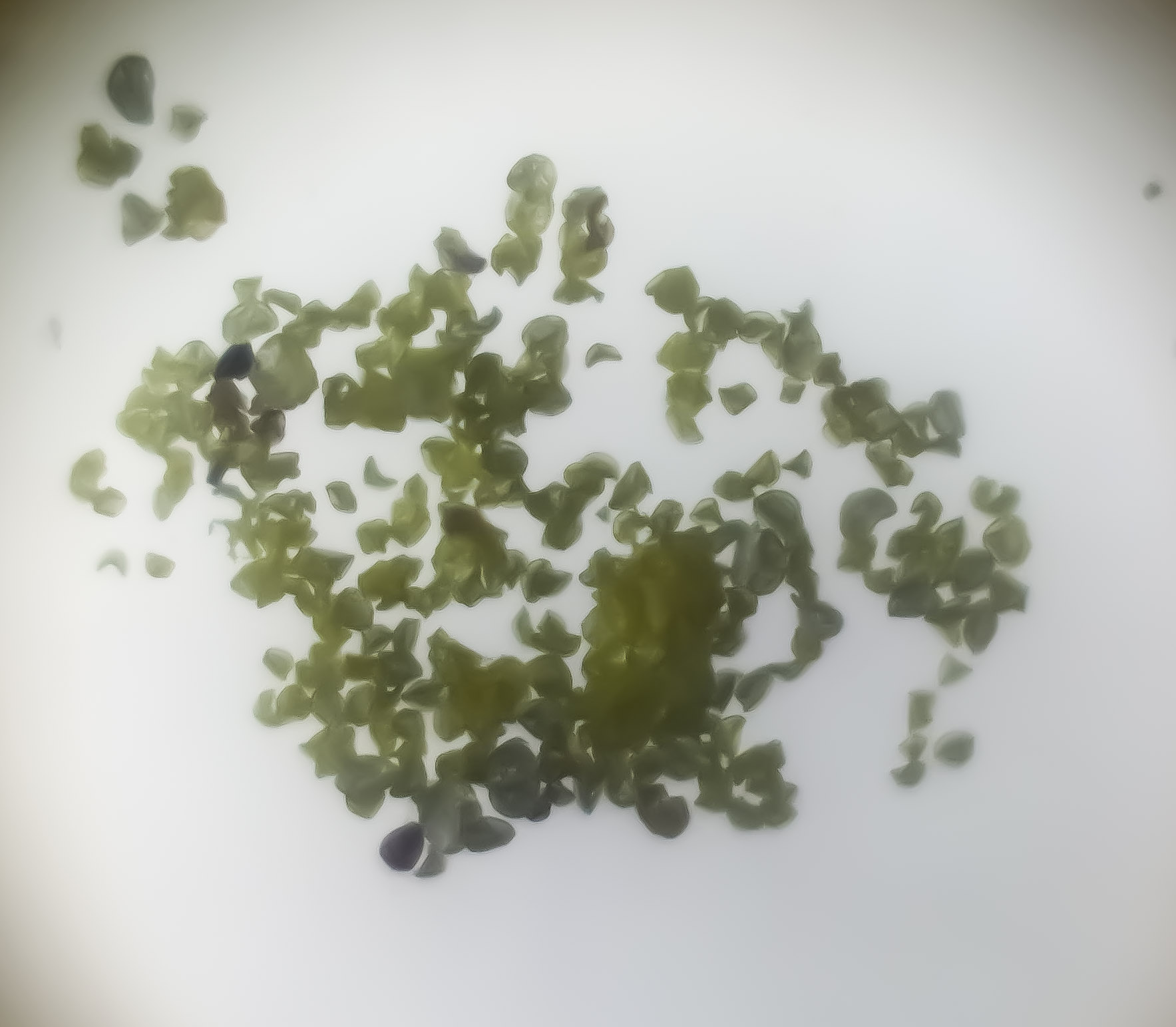
A lake bed can keep a botanical notebook without ever owning a pencil. Pollen, spores and other traces become part of accumulating sediment, and a core lets researchers examine a sequence of that record. This guide teaches 100 useful English vocabulary words for understanding pollen analysis through New Zealand: what is sampled, what is identified, how counts are expressed and how an environmental interpretation is built.
New Zealand provides rich, specific examples of research linking sediments with vegetation history. Te Ara’s pollen-analysis account explains the use of lake and peat records, while a research report on the Urenui River core makes preservation and representation important questions. A pollen count is evidence to interpret, not a miniature census of every plant that once grew nearby.
Use one documented core diagram or a supplied count table, learn ten connected words and write a short explanation. “Top 100” is a curated learning list, not a statistical ranking of word frequency. The English vocabulary is contextualised through particular New Zealand sources, without assuming one vegetation history for the whole country. All practice below uses invented records and public information; it requires no field sampling or chemical preparation.
Choose which part of the evidence you want to read
Follow a core from its setting towards a count and an interpretation, or start with the distinction that is currently unclear.
Before the percentage: what was counted?
Give a learner the sentence “Forty percent of the counted particles were tree pollen.” Ask whether that establishes forty percent tree cover. If the learner says yes, pause before the arithmetic. The count describes the sampled record, while vegetation cover describes a landscape. Production, transport, deposition and preservation stand between them. Draw that short chain so that the word proxy has a relationship to name.
Next ask whether fern spores belong in a pollen-only total. A learner may understand every number but miss the counting rule. Finally ask whether a deeper layer is always an exact number of years older than a shallower one. These reveal different needs: representation, denominators and chronology. Teach the missing connection, then change the table or diagram to test whether the idea survives without the original prompt.
Contents: ten groups of ten words
Words 1–50
1–10: What pollen analysis studies
11–20: A core within a sedimentary setting
21–30: Microscopy and identification
Words 51–100
51–60: Quantities and comparisons
61–70: Chronology and a changing archive
71–80: From grains to a landscape question
Worked example · Learning method · Practice · Questions · Sources
Pollen and spores are related microscopic evidence, but they are not the same biological structure. Palynology is broader than a simple count of visible yellow dust.
| No. | Word or term | Meaning and usage | Natural collocation | Original example |
|---|---|---|---|---|
| 1 | pollen | Microscopic structures produced by seed plants and involved in male reproduction. | pollen grain | The reference image identifies a pollen grain by its visible features. |
| 2 | spore | A reproductive cell able to develop without fusion with another cell; context determines the organism. | fern spore | The counting sheet records a fern spore separately from seed-plant pollen. |
| 3 | palynology | The study of pollen, spores and related microscopic organic material, living or fossil. | palynology study | The palynology study examines a sedimentary record. |
| 4 | palynomorph | An organic-walled microscopic particle studied in palynology. | preserved palynomorph | A preserved palynomorph may belong to a broader category than pollen. |
| 5 | grain | A small particle; pollen grain is the relevant technical use here. | identified grain | Each identified grain enters the appropriate count category. |
| 6 | taxon | A named or defined classification group; plural taxa. | identified taxon | The identified taxon is recorded at the supported level. |
| 7 | assemblage | The group of biological remains occurring together in a sample. | pollen assemblage | The pollen assemblage contains several recorded types. |
| 8 | fossil | Preserved evidence of past life, including microscopic remains. | fossil pollen | Fossil pollen can contribute to an environmental reconstruction. |
| 9 | vegetation | Plant cover or plant communities in an area. | past vegetation | Past vegetation is inferred from several kinds of evidence. |
| 10 | proxy | An indirect source of information used to investigate another condition. | environmental proxy | Pollen serves as an environmental proxy rather than a direct plant census. |
Use the specific word supported by the identification. An unresolved particle should remain unresolved rather than receiving a confident plant name.
A sediment core preserves a sequence from a particular place. Its depth scale and setting matter before any environmental story is proposed.
| No. | Word or term | Meaning and usage | Natural collocation | Original example |
|---|---|---|---|---|
| 11 | sediment | Particles deposited by water, wind or other processes. | lake sediment | Lake sediment can contain pollen and other traces. |
| 12 | core | A cylindrical sample preserving a sequence through material. | sediment core | The sediment core has a labelled top and depth scale. |
| 13 | layer | A distinguishable band or part within a sequence. | sediment layer | The sediment layer is recorded before its contents are compared. |
| 14 | stratigraphy | The study and arrangement of layers and their relationships. | core stratigraphy | Core stratigraphy helps organise the observations. |
| 15 | peat | Accumulated, partly decomposed plant material formed under wet conditions. | peat deposit | The source discusses a peat deposit as a possible archive. |
| 16 | lake bed | The bottom surface and underlying deposits of a lake. | lake-bed record | The lake-bed record reflects its particular setting. |
| 17 | estuary | A coastal water body where river and marine influences interact. | tidal estuary | The Urenui account concerns a tidal estuary rather than a deep lake. |
| 18 | catchment | An area draining towards a watercourse or basin. | lake catchment | The lake catchment helps frame a question about pollen sources. |
| 19 | depth | Distance below a stated surface or reference. | sample depth | Sample depth needs a reference point and unit. |
| 20 | deposition | The settling or accumulation of transported material. | sediment deposition | Sediment deposition can vary through time. |
A core is a sample of a location, not a perfectly complete film of the whole country. Ask what area and period the record can reasonably represent.
Magnification makes an image larger; resolution determines which details can be distinguished. An identification depends on the features visible and the reference used.
| No. | Word or term | Meaning and usage | Natural collocation | Original example |
|---|---|---|---|---|
| 21 | microscope | An instrument making small objects observable in detail. | light microscope | The image was produced using a light microscope. |
| 22 | magnification | The enlargement of an image relative to the object. | higher magnification | Higher magnification does not automatically reveal finer detail. |
| 23 | resolution | The ability to distinguish separate fine details. | optical resolution | Optical resolution limits which surface features can be identified. |
| 24 | slide | A thin support on which material is mounted for microscopy. | prepared slide | The teaching image shows a prepared slide without requiring laboratory work. |
| 25 | field of view | The area visible through an instrument at one setting. | microscope field of view | The microscope field of view contains several particles. |
| 26 | focus | The adjustment or state in which an image is sharp. | adjusted focus | Adjusted focus changes which features appear clear. |
| 27 | reference collection | Identified material used for comparison. | pollen reference collection | A pollen reference collection supports identification. |
| 28 | identification | Assigning an observed item to a supported category. | tentative identification | A tentative identification should retain its uncertainty. |
| 29 | diagnostic | Helping distinguish one category or condition from another. | diagnostic feature | The description names a diagnostic feature rather than a vague resemblance. |
| 30 | classification | Organising items into defined groups. | morphological classification | The catalogue uses a morphological classification for comparison. |
Naming a grain to a broad group can be the accurate result. Greater apparent confidence is not a substitute for a diagnostic feature.
Specialist descriptions often use shape, apertures and surface ornament. These selected terms help learners read an illustrated catalogue without learning hundreds of taxonomic names.
| No. | Word or term | Meaning and usage | Natural collocation | Original example |
|---|---|---|---|---|
| 31 | morphology | The form and structure of an organism or part. | grain morphology | Grain morphology includes apertures and surface features. |
| 32 | aperture | An opening or differentiated thin region in a pollen wall. | pollen aperture | The pollen aperture helps distinguish the pictured type. |
| 33 | pore | A relatively rounded aperture in this context. | rounded pore | The diagram marks a rounded pore on the grain. |
| 34 | furrow | An elongated groove or aperture; terminology depends on context. | elongated furrow | The enlarged drawing shows an elongated furrow. |
| 35 | exine | The resistant outer wall of a pollen grain. | pollen exine | The pollen exine carries surface ornament visible in the image. |
| 36 | ornamentation | The pattern of surface features. | surface ornamentation | Surface ornamentation is described before a name is assigned. |
| 37 | reticulate | Having a net-like pattern. | reticulate surface | The reticulate surface has a network of ridges. |
| 38 | striate | Marked with roughly parallel lines or ridges. | striate pattern | A striate pattern differs from the net-like illustration. |
| 39 | saccus | An air-sac-like structure attached to some pollen grains; plural sacci. | paired sacci | The reference illustration identifies paired sacci. |
| 40 | diameter | A measured width through the centre of an approximately rounded object. | grain diameter | Grain diameter needs an appropriate scale and unit. |
A morphological category and a living plant species do not always correspond one to one. Keep the level of identification visible.
A percentage requires a numerator and a denominator. A pollen sum may exclude categories counted separately, so the definition of the sum belongs beside the graph.
| No. | Word or term | Meaning and usage | Natural collocation | Original example |
|---|---|---|---|---|
| 41 | count | The number of items recorded under a stated rule. | raw count | The raw count should be kept with the percentage. |
| 42 | tally | A running record of counted items. | category tally | The category tally records each classified grain once. |
| 43 | category | A defined group into which observations are placed. | counting category | An unresolved item remains in its stated counting category. |
| 44 | pollen sum | The total of specified pollen categories used as a calculation basis. | defined pollen sum | The defined pollen sum excludes spores in this exercise. |
| 45 | denominator | The quantity by which another quantity is divided. | percentage denominator | The percentage denominator must be identified explicitly. |
| 46 | numerator | The quantity divided by the denominator. | percentage numerator | The percentage numerator counts the selected pollen group. |
| 47 | percentage | A proportion expressed per hundred. | pollen percentage | The pollen percentage changes if the counting basis changes. |
| 48 | exclusion | Leaving a defined item or group out of a total. | stated exclusion | A stated exclusion is part of the graph’s method. |
| 49 | inclusion | Counting a defined item or group within a total. | category inclusion | Category inclusion should be consistent across compared samples. |
| 50 | replicate | An additional sample or measurement used to assess consistency. | replicate count | A replicate count can reveal disagreement in classification. |
Before comparing two percentages, compare the counting rules. A shared percent sign does not make the underlying totals equivalent.
Counts, proportions, concentrations and accumulation rates answer different questions. This group makes those quantities easier to name before a calculation is chosen.
| No. | Word or term | Meaning and usage | Natural collocation | Original example |
|---|---|---|---|---|
| 51 | sample | A selected portion of material or observations. | sediment sample | The sediment sample comes from a recorded depth. |
| 52 | volume | The amount of three-dimensional space occupied by material. | sample volume | Sample volume is needed for a volume-based concentration. |
| 53 | concentration | The amount of a constituent per stated amount of material. | pollen concentration | Pollen concentration cannot be derived from a count alone. |
| 54 | accumulation rate | The amount accumulating per stated area and time or other defined basis. | pollen accumulation rate | A pollen accumulation rate requires appropriate chronological information. |
| 55 | abundance | The amount or number present within a specified context. | relative abundance | Relative abundance should name what is being compared. |
| 56 | proportion | A part expressed relative to a defined whole. | counted proportion | The counted proportion is not automatically vegetation cover. |
| 57 | trend | A general pattern across a sequence of observations. | down-core trend | A down-core trend needs its depth and age context. |
| 58 | baseline | A reference condition for comparison. | environmental baseline | An environmental baseline should have a stated place and period. |
| 59 | uncertainty | A limit to knowledge or precision. | counting uncertainty | Counting uncertainty belongs with the interpretation. |
| 60 | bias | A systematic influence that skews representation or estimation. | representation bias | Representation bias can arise before a grain reaches the sampled deposit. |
A count alone cannot supply a concentration without a stated sample amount. A rate also needs an appropriate time basis.
Sediment depth and age are connected through a model and dating evidence. Gaps, disturbance and uncertain dates can complicate a neat-looking sequence.
| No. | Word or term | Meaning and usage | Natural collocation | Original example |
|---|---|---|---|---|
| 61 | chronology | The ordering and dating of events or layers. | core chronology | Core chronology should not be guessed from depth alone. |
| 62 | radiocarbon | Radioactive carbon-14 used in an important dating method. | radiocarbon analysis | A radiocarbon analysis concerns a selected dated material. |
| 63 | calibration | Relating measurements or dates to an appropriate reference system. | date calibration | Date calibration is a separate step from reading a core depth. |
| 64 | age–depth model | A model relating positions in a core to estimated ages. | estimated age–depth model | The estimated age–depth model includes uncertainty. |
| 65 | hiatus | A gap in deposition or in the preserved sequence. | sedimentary hiatus | A sedimentary hiatus can interrupt an apparently neat timeline. |
| 66 | reworking | Movement of older material into a younger deposit. | reworked grain | A reworked grain may be older than the layer containing it. |
| 67 | tephra | Fragmented material deposited from a volcanic eruption. | tephra layer | A documented tephra layer can help correlate sequences. |
| 68 | correlation | Matching or associating records or variables; it does not automatically establish cause. | stratigraphic correlation | Stratigraphic correlation needs evidence for the proposed match. |
| 69 | sequence | An ordered series of layers, observations or events. | sediment sequence | The sediment sequence may contain gaps or disturbance. |
| 70 | interval | A bounded span of depth or time. | sample interval | The sample interval is stated in centimetres in the teaching table. |
An age–depth model is an interpretation constrained by evidence. Avoid silently turning every equal centimetre into an equal number of years.
The pathway from a plant to a recovered grain can change what is represented. A proxy is useful because it carries information, not because it duplicates the past perfectly.
| No. | Word or term | Meaning and usage | Natural collocation | Original example |
|---|---|---|---|---|
| 71 | production | The generation of pollen or other material by organisms. | pollen production | Pollen production differs among plant groups. |
| 72 | dispersal | Movement away from a source. | pollen dispersal | Pollen dispersal affects what reaches a lake. |
| 73 | transport | Movement of material through wind, water or other agents. | water transport | Water transport can bring material from beyond the immediate shore. |
| 74 | preservation | Survival of material within a record. | differential preservation | Differential preservation can alter the recovered assemblage. |
| 75 | taphonomy | Processes affecting remains from production and deposition towards preservation and recovery. | pollen taphonomy | Pollen taphonomy helps explain why a count is not a plant census. |
| 76 | degradation | Breakdown or loss of material or its recognisable features. | grain degradation | Grain degradation may prevent a confident identification. |
| 77 | contamination | Introduction of material not belonging to the intended sample context. | sample contamination | The interpretation considers sample contamination as a possible explanation. |
| 78 | charcoal | Carbon-rich material produced by incomplete burning. | charcoal record | A charcoal record can add evidence about fire history. |
| 79 | inference | A conclusion reached from evidence and reasoning. | environmental inference | The environmental inference needs both the count and its context. |
| 80 | reconstruction | An evidence-based account of a past condition. | vegetation reconstruction | A vegetation reconstruction combines information rather than copying one percentage. |
The Urenui report explicitly discusses production and taphonomy. That is a reason to read abundance claims carefully rather than abandoning the evidence.
New Zealand has varied environments and histories. A named site, a local research partnership and a plant group help keep a scientific explanation geographically specific.
| No. | Word or term | Meaning and usage | Natural collocation | Original example |
|---|---|---|---|---|
| 81 | podocarp | A member of a predominantly Southern Hemisphere conifer family. | podocarp pollen | The Urenui account discusses podocarp pollen alongside fern spores. |
| 82 | conifer | A member of a major seed-plant group including many cone-bearing trees. | conifer pollen | Conifer pollen can have recognisable morphological features. |
| 83 | fern | A vascular plant reproducing through spores rather than seeds. | fern spores | Fern spores are excluded from the pollen-only total in our example. |
| 84 | grass | A member of the grass family, with many forms and habitats. | grass pollen | Grass pollen is one category in the invented count table. |
| 85 | shrub | A woody plant usually smaller than a tree and often branching near the base. | shrub vegetation | Shrub vegetation is a landscape description, not a single pollen type. |
| 86 | forest | An ecosystem or area dominated by trees. | forest history | Forest history requires a geographically bounded account. |
| 87 | wetland | Land where water strongly influences the ground and living communities. | wetland archive | A wetland archive can preserve different evidence from a dry surface. |
| 88 | restoration | Work intended to recover specified ecological conditions or functions. | catchment restoration | The report places catchment restoration within a local context. |
| 89 | local knowledge | Knowledge held by people with particular relationships and experience of a place. | documented local knowledge | Documented local knowledge should be attributed appropriately. |
| 90 | context | The circumstances needed to understand a result. | sampling context | Sampling context keeps the numerical result attached to a place. |
Environmental records and community knowledge have their own sources and relationships. One short count table does not authorise a complete claim about a community’s past.
These words help connect a result to its counting basis and its limitations. A clear qualification can make a conclusion more useful, not less interesting.
| No. | Word or term | Meaning and usage | Natural collocation | Original example |
|---|---|---|---|---|
| 91 | analyse | Examine systematically; analyze in American spelling. | analyse a sample | The task asks how researchers analyse a sample’s contents. |
| 92 | classify | Assign to a defined category. | classify a grain | We classify a grain only as specifically as the features allow. |
| 93 | quantify | Express an amount or relationship numerically. | quantify a count | We can quantify a count without quantifying total plant cover. |
| 94 | compare | Examine similarities and differences. | compare two sums | First compare two sums by checking their definitions. |
| 95 | distinguish | Recognise or explain a difference. | distinguish pollen from spores | The worksheet asks us to distinguish pollen from spores. |
| 96 | infer | Reach a conclusion from evidence and reasoning. | infer vegetation change | Researchers infer vegetation change using the record and its limitations. |
| 97 | qualify | Limit a statement to make it more accurate. | qualify a conclusion | A writer can qualify a conclusion by naming the sampled site. |
| 98 | corroborate | Support a claim through additional independent evidence. | corroborate an interpretation | A separate dated record may corroborate an interpretation. |
| 99 | revise | Change an account after checking or new evidence. | revise the percentage | We revise the percentage when its denominator changes. |
| 100 | acknowledge | Recognise a fact, contribution or limitation explicitly. | acknowledge uncertainty | A clear scientific paragraph can acknowledge uncertainty. |
Write the result first, explain the basis and name the next question. Then test the same language on a new count table.
The same grains, two legitimate percentages
Use an invented teaching sample containing forty podocarp pollen grains, ten other seed-plant pollen grains and fifty fern spores. No additional particles are included in this simplified table. The first question asks for the podocarp share of all one hundred counted items. The answer is 40 ÷ 100 = 40%. The second question asks for the podocarp share of the defined pollen sum, which excludes spores.
The pollen-only denominator is forty plus ten, or fifty. The podocarp share is therefore 40 ÷ 50 = 80%. Forty percent and eighty percent are not contradictory answers when the questions define different totals. A complete sentence preserves the basis: “Podocarp pollen forms eighty percent of the defined pollen sum, or forty percent of all counted pollen-and-spore items.”
Change the sample so that it contains the same forty podocarp pollen grains and ten other seed-plant pollen grains, but one hundred and fifty fern spores. The pollen-only percentage remains eighty percent because neither its numerator nor its denominator changed. The share of all two hundred counted items falls to twenty percent. The changed proportion does not require a changed podocarp count.
This is why an axis label or methods note deserves a careful reading. If the learner can divide correctly but chooses the wrong total, another division drill misses the problem. Ask them to circle the categories included in the question. The first unstable link is the definition of the whole. Repair that link and then return to the calculation.
Now test the interpretation. Does eighty percent podocarp pollen mean eighty percent podocarp tree cover? No such conversion is supplied. Different plants produce and disperse pollen differently, and deposition and preservation affect the recovered record. Our exercise teaches counting rules, not a vegetation model. Likewise, no sample volume or duration is provided, so the table does not establish concentration or accumulation rate.
Try this original dialogue. Reader: “The percentage fell, so there were fewer podocarp grains.” Partner: “Which percentage, and what changed in its denominator?” Reader: “The all-item share fell because the spore count increased.” Partner: “What happened to the podocarp count?” Reader: “It stayed at forty.” A good explanation can keep the count, proportion and environmental question separate.
A local archive, not a nationwide photograph of the past
Te Ara explains how pollen preserved in lake or peat deposits contributes to vegetation history. Its settlement-history discussion also shows why environmental changes and their causes need careful attribution. This guide does not derive a new settlement date from a fictional table, nor turn every charcoal particle into proof of a particular human action. A historical interpretation needs the relevant chronology and wider evidence.
The New Zealand research report numbered 2024/46 describes a core from the Urenui River setting and discusses a hiatus, possible contamination and the effects of production and taphonomy. Those are useful specialist words because they change how an assemblage is interpreted. The report’s local observations should not be enlarged into a uniform history of every New Zealand lake or forest.
The New Zealand fossil spores and pollen catalogue provides an illustrated morphological classification. It demonstrates why a small shape can require careful vocabulary. A catalogue is a reference for comparison; opening it does not turn a learner’s uncertain image into a verified species identification. Keep the distinction between a grain’s described form and a supported taxonomic assignment.
The eduKateSG New Zealand cultural learning guide connects landscapes with local knowledge and care. Scientific records have particular sampling histories, while Māori communities have diverse relationships with places and their own knowledge sources. Attribute each contribution and respect the scope of public information rather than treating a sediment core as permission to speak for everyone connected with a landscape.
Turn a count table into a paragraph someone can check
For a student, select six linked words: count, category, pollen sum, denominator, percentage and inference. Close the glossary and explain why a spore exclusion changes the calculation. Then use a new table with different counts and a clearly stated rule. Delayed retrieval tests whether the relationship is available when the original example is no longer in front of you.
For a parent, ask “What is the whole?” when a percentage appears. Let the learner point to included rows. If the arithmetic is secure but the explanation is vague, work on the sentence naming the denominator. If the quantity itself is unclear, return to a small set of labelled counters. The useful lesson depends on the actual gap.
For a teacher, change the task format after the first success. Supply a graph legend instead of a table, or ask the learner to correct a headline that confuses pollen share with plant cover. The English Tuition | New Zealand guide similarly distinguishes accurate information from the emphasis or implication a writer creates. Keep current school and qualification requirements separate from this original learning exercise.
For speaking, explain the forty-percent and eighty-percent results in forty seconds, then answer a follow-up about the extra spores. For writing, produce a short results paragraph containing the numerator, denominator and one interpretation limit. The eduKateSingapore vocabulary learning route offers a wider method for moving from word recognition towards accurate independent use.
A repair route focuses on count versus proportion. A stabilisation route varies the included categories. An extension route compares numerical evidence with the environmental interpretation it may support. Singapore learners can continue to eduKateSG’s Secondary English teaching guide for diagnosis and transfer practice. This country guide establishes no eduKate centre in New Zealand.
Practice: retrieve, explain and revise
1. Forty podocarp pollen grains, ten other pollen grains and fifty spores are counted. What is the podocarp share of all counted items?
2. What is the podocarp share if the defined pollen sum excludes spores?
3. The spore count rises to one hundred and fifty while both pollen counts stay the same. What changes?
4. Does the table establish podocarp tree cover?
5. Can equal depth intervals automatically be treated as equal time intervals?
6. Why can an identification remain at a broad taxonomic level?
Answers and explanations
1. Forty percent: forty divided by one hundred.
2. Eighty percent: forty divided by fifty. State the pollen-only basis.
3. The all-item podocarp share falls to twenty percent; its pollen-only share remains eighty percent. The podocarp count remains forty.
4. No. Pollen production, transport, deposition and preservation affect representation. No conversion to vegetation cover is supplied.
5. No. Deposition can vary and gaps can occur. Dating evidence and an appropriate age–depth model are needed.
6. The visible diagnostic features or preservation may not support a more specific assignment. Reporting the supported level is more accurate than guessing.
Frequently asked questions
Is pollen the same as a fern spore?
No. They are different biological structures. A study may count both, but its categories and calculation rules should remain explicit.
Are these terms unique to New Zealand?
No. Most are general scientific English. Particular New Zealand records give the methods and interpretation questions a concrete setting.
Why are two percentages possible for the same grain count?
Because a percentage depends on a defined denominator. A pollen-only sum and an all-item total answer different questions.
Does a deeper sample always provide a perfectly ordered date?
Not automatically. Disturbance, reworking or a hiatus may complicate a sequence. Use the study’s dating evidence and stated uncertainties.
What should I practise next?
Explain a new graph legend, calculate using its stated sum and write a bounded interpretation. Then return later and repeat the task without the glossary.
Sources and scope
Sources checked on 18 October 2026. Institutional and practitioner sources establish the cultural context and selected specialist distinctions. The learning sequence, fictional records, example sentences and exercises are original educational material. This guide teaches vocabulary and careful explanation; practical work requires appropriate instruction and information specific to the person, object or site.
Te Ara: Pollen analysis — Official New Zealand encyclopedia account of pollen evidence, cores and cautious historical interpretation; published 2012, updated 2016.
New Zealand research report 2024/46: Urenui River vegetation history — The public research summary on a local core, chronology, contamination and representation.
New Zealand fossil spores and pollen: illustrated catalogue — Specialist morphological reference and classification context.
Collins Dictionary: taphonomy — English specialist sense concerning processes affecting preserved remains.
Cambridge Dictionary: palynology — English name for the study of pollen, spores and related microscopic evidence.
Your next route: read the denominator before the headline
Take one graph or table and write a complete sentence naming what was counted, which total was used and what remains an interpretation. If the sentence becomes clearer without an impressive adjective, that is progress. The number has finally acquired the context it needs.
Continue through the eduKateSG vocabulary hub for meanings, collocations and further thematic routes. Choose a fresh record next time and see whether the relationship remains clear when the counts and counting rules change.