
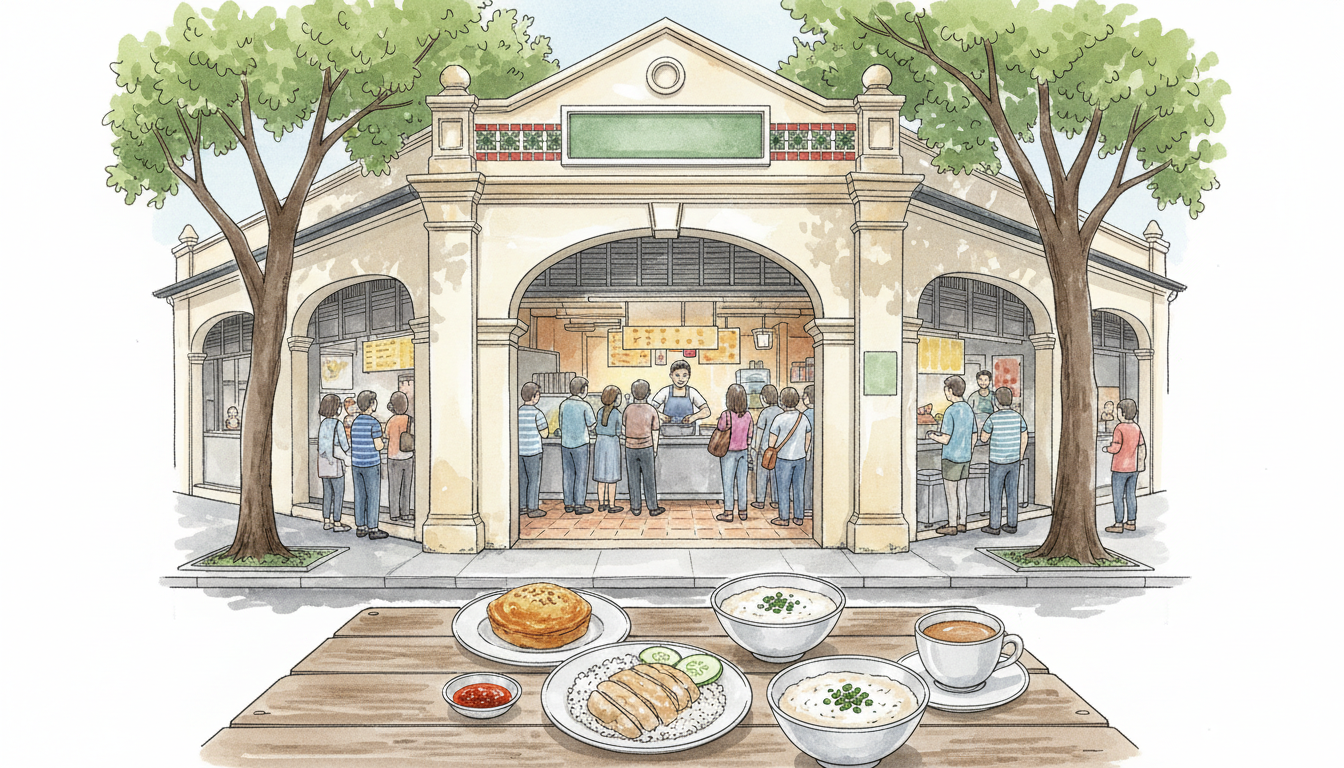
What to do in Singapore if you want to understand the city through food, people and everyday life? Visit a hawker centre—but do more than order the most famous dish. Watch how a public dining space works, learn how a meal is prepared, appreciate the people who make it and notice the traditions that connect different communities.
This guide explains how to turn one ordinary hawker meal into a meaningful Singapore experience. It is written for residents who want to rediscover familiar places, visitors who are new to local dining, parents teaching children about culture, and students exploring the links between food, history and society.
Did you know that hawker culture in Singapore was inscribed on UNESCO’s Representative List of the Intangible Cultural Heritage of Humanity in December 2020? The inscription recognises community dining and culinary practices in a multicultural urban context. It is not a Michelin award, a guarantee about an individual stall or an instruction that everyone must eat a particular dish. The UNESCO entry describes hawker centres as community dining rooms where people from different backgrounds meet and eat.
The quick answer: plan a one-meal discovery visit
Choose one convenient, operating hawker centre. Go at a sensible time, survey the stalls, order a meal that suits your needs, observe how the space works, return your tray and leave with one new insight about Singapore.
- Choose the purpose: taste an unfamiliar dish, investigate food history, compare ingredients or observe a shared public space.
- Check the centre’s current operation and cleaning arrangements; myENV can provide hawker-centre information.
- Budget for the food, transport, drink and any optional extras; do not assume an old menu price is still valid.
- Read ingredient and dietary information rather than guessing from a dish’s appearance.
- Observe the stall’s ordering and payment arrangements and follow the queue.
- Give hawkers space to work; do not demand interviews or photograph workers without consideration.
- Clear litter and return used trays and crockery in accordance with the centre’s system.
- Talk afterwards about what the meal reveals about culture, work and the shared city.
This is not a food marathon. One carefully chosen meal can be a complete educational experience.
Why a meal can teach you about a civilisation
Food connects agriculture, migration, language, family habits, religious practices, trade, technology and the organisation of daily life. A plate on a table is the final result of many hidden systems.
Consider rice. Someone grew it, processed it, transported it and sold it. A cook selected it, combined it with other ingredients and prepared a dish using skills acquired through practice. The customer arrived through a transport system, paid money and shared public seating with other diners.
That one meal connects activities that could otherwise appear unrelated. It also creates an opportunity to investigate how cooking traditions travel and adapt. A dish may carry memories of several places while becoming recognisably part of Singapore’s everyday culture.
This is why hawker centres are interesting even to a person who has lived beside one for decades. Their importance is not only what is on the menu; it is what happens around the table.
What UNESCO actually recognised
The official UNESCO heritage entry identifies hawker culture as a living set of food preparation, culinary skills and community dining practices. It describes hawkers developing and passing on specialised knowledge, and centres bringing people together across backgrounds.
That is intangible cultural heritage. It concerns practices, knowledge, social relationships and ways of doing things. It should not be confused with the designation of one physical building as a World Heritage Site.
The distinction matters. Saying “Singapore’s hawker culture has UNESCO recognition” is accurate. Saying “every chicken rice stall is UNESCO-certified” is not. Neither does inscription freeze recipes so that a hawker may never innovate.
Living heritage continues to change. A young hawker may learn from an older practitioner and adapt methods. A family may keep a food ritual while modifying ingredients. The culture exists because people continue to practise, enjoy and transmit it.
Begin with the place rather than the longest queue
Visitors sometimes search for a viral dish, travel across the island and spend most of the outing waiting. That can be enjoyable if the special meal is the goal, but it is not necessary for understanding hawker culture.
Choose a centre that is convenient for your group and open at the time you can visit. Think about shelter, ventilation, seating, accessibility and how everyone will arrive and leave. If you are travelling with children or an older visitor, those details matter as much as a social-media recommendation.
A neighbourhood hawker centre can teach you about Singapore just as well as a famous tourist destination. The important questions remain: Who eats here? How do stalls organise their work? What food traditions can you observe respectfully?
A convenient place also allows you to spend less time travelling and more time noticing. The everyday character of a centre is part of its value, not a defect.
How to check whether a hawker centre will be operating
Hawker centres and individual stalls do not necessarily follow identical operating schedules. Centres may have cleaning periods, maintenance work or temporary closures. One vendor may take a rest day while a neighbouring stall remains open.
Use current official information where available. The myENV service includes hawker-centre information among its features. When a particular stall matters to you, confirm its latest operating details from a reliable source rather than assuming the whole centre and every stall share the same hours.
A practical plan includes alternatives. Choose the centre as the anchor, but be comfortable selecting another meal if your first-choice vendor is unavailable. Do not promise children or visitors a specific dish without first checking.
If a place is closed, do not create a rushed journey to several other centres just to preserve the original list. Adapt the goal. Singapore’s culinary diversity can be explored over many separate visits.
The three-minute arrival exercise
When you enter, do not immediately join the first queue. Find an appropriate space out of the way, orient yourself and notice how the centre is arranged.
Where are the food and drink stalls? How are tables organised? Are there signs about queues, tray returns or cleaning? Is there an accessible path to seating? Does the menu show different kinds of cuisines or dietary arrangements? These details tell you how public dining is designed.
Observe the flow of people without staring at or filming individuals. Workers may be preparing food quickly; diners may be meeting friends, taking short work breaks or eating quietly. You cannot know their personal stories merely by observing them, so avoid inventing them.
This short orientation helps the meal proceed smoothly and reveals that a hawker centre is an active workplace and shared social space, not simply a collection of dishes displayed for visitors.
Learn to read a menu before ordering
A menu gives information about dishes, portions, prices, preparation and sometimes dietary suitability. Read it carefully. A word that appears familiar may not indicate the ingredients or cooking method you expect.
If you have an allergy, religious dietary restriction or other requirement, do not infer safety merely from a dish name, its colour or the stall’s general cuisine. Ask suitable questions and consider cross-contact and preparation arrangements. If the vendor cannot provide the assurance you need, choose a safer alternative.
Also look at portion choices and extras. Adding ingredients or choosing a larger serving can change the total price. Ask before ordering if unclear. A polite, specific question is easier to answer than a vague demand for “the best one.”
Menus are also language lessons. They contain terms borrowed from or associated with several languages and traditions. Learn one name accurately rather than memorising a long list without understanding.
Why one dish is enough
It is tempting to order several famous foods in one visit to make the trip feel worthwhile. This can waste food, overwhelm the group and reduce the meal to a checklist.
Choose one main dish that suits your needs and give it attention. Notice texture, aroma, cooking method and how the different ingredients work together. If you are eating with a companion, you may compare two dishes without turning the meal into a competitive tasting exercise.
Ask a useful question: Which ingredient seems central to the identity of this dish? Which part appears to be a local variation? What would you need to investigate before making a claim about its history?
Food cultures are interconnected, and the same or related dishes can appear in several countries. Avoid turning a delicious meal into an argument about simplistic ownership. A more interesting inquiry is how people adapt and share culinary practices.
Chicken rice: a dish, a preparation method and a conversation
Chicken rice is one possible introduction to Singapore’s hawker food landscape. It can invite discussion about how chicken is prepared, how rice is flavoured and why condiments contribute to the experience.
Instead of announcing one version as universally authentic, observe the actual plate. What is the relationship between the meat, rice, sauce and accompanying elements? What decisions might the cook make about texture and consistency? Which ingredients are obvious, and which would require research or asking the vendor?
You can use the meal to discuss migration and adaptation while being cautious about origin claims. A dish may have family resemblances across regions and still develop distinct local forms over time.
Choose a serving that fits dietary needs and preferences. Do not assume the same ingredients, sauces or portions at every stall. Respect the cook’s work rather than judging an entire cuisine from one hurried experience.
Nasi lemak: recognise the layers of a meal
Nasi lemak is another dish through which to explore flavour, ingredients and cultural practice. Its variations can combine fragrant rice with condiments and different accompaniments. Individual stalls may prepare and serve it in distinct ways.
Ask what makes the rice aromatic, how contrasting textures change the meal and which accompaniments create balance. Notice the difference between the core dish and optional extras. This is a chance to practise clear descriptive vocabulary without presenting one combination as the only legitimate version.
A student might investigate how ingredients reach Singapore. A child might compare textures. An adult might discuss family preferences and the memories attached to the dish.
Remember that dietary suitability depends on ingredients, preparation and vendor practices. Do not assume a dish automatically meets every person’s restrictions simply because it is associated with a particular cuisine.
Roti prata, thosai and the art of comparing methods
Food culture becomes interesting when you compare cooking methods without ranking whole traditions. A griddled bread, fermented batter or carefully shaped dough can each reveal different skills.
Observe what is visible from the customer area, if preparation can be watched without obstructing staff. How does a cook use heat, movement and timing? Why might two dishes that both serve as a bread-like accompaniment have different textures? What role do sauces and side dishes play?
A visitor should avoid reaching into preparation areas, leaning over counters or filming workers without permission. The workplace is not a demonstration arranged for your camera.
The learning goal is to recognise skill. A familiar inexpensive meal can require years of practice to prepare consistently, especially under the pressure of serving many customers.
Noodles and the many meanings of “the same dish”
A noodle name can conceal considerable variation. Broth, sauce, texture, toppings, cooking method and regional influence can all change the result.
Choose one dish and describe it accurately rather than claiming every stall makes it the same way. Is it served in soup, with sauce or dry? What kind of noodle is present? Which additions are optional? Do not assume an ingredient is absent just because you cannot see it.
A group of students could compare menu descriptions across two stalls without buying excess food. They might discover that words on the sign communicate only part of the preparation. This opens a broader conversation about classification: when are two meals variations of one tradition, and when do people treat them as distinct?
There may be no single short answer. The thoughtful way to explore cultural food is to seek reliable historical context and listen respectfully to the people who practise it.
The culture of eating together
UNESCO highlights hawker centres as communal dining spaces. That makes the shared table an important part of the heritage, not just a convenient place to place a plate.
Different people may choose food from separate stalls and eat together. A group can have varied preferences and still share a meal. This is one reason a hawker centre can become a small everyday illustration of multicultural urban life.
However, do not over-romanticise. Hawker centres can be crowded, noisy and stressful at peak periods. People may be in a hurry, workers may be tired, and not every table is available when you want it.
Respecting other diners is part of understanding the place. Keep noise considerate, make room when appropriate, use seating fairly and leave the table clean for the next person.
Ordering with confidence and courtesy
Read the menu and decide what you want before reaching the counter when possible. Follow the queue, speak clearly and listen to the vendor’s questions about size, preparation or extras.
Some stalls accept electronic payments; others may use different methods. Check the available payment options rather than assuming every vendor supports the same one. Bring a suitable backup form of payment where practical.
If you do not understand a phrase, ask politely. There is no shame in being new to a dish. Most importantly, do not ask a busy worker to provide a lengthy history lesson while a queue forms behind you.
Good manners are a practical skill. They make the process easier for the vendor, the next customer and yourself. A respectful interaction is part of the cultural experience.
Taking photographs without treating workers as props
A photograph of a meal can help you remember it. But a busy hawker stall is a real workplace, not a studio set. Avoid photographing workers at close range without permission, blocking counters for repeated shots or asking people to repeat actions for a social-media clip.
If you want a picture of cooking, ask whether it is permitted at a suitable moment. If the answer is no, accept it. Photograph your own food or public surroundings respectfully, without intruding on other diners.
Think about what your image communicates. A picture of a dish without its name, context or maker may reduce the experience to colour and novelty. A short, accurate caption can be more informative than a dramatic but unsupported claim.
Public appreciation of hawker culture should strengthen respect for practitioners rather than turn their labour into an endless supply of content.
Tray return and cleanliness: the visitor’s responsibility
Singapore requires diners to clear their tables and return used trays and crockery in hawker centres, coffeeshops and food courts, subject to the applicable system and exceptions. The NEA Clean Tables campaign explains the rules and why they matter.
Locate the relevant return point and follow the centre’s arrangement, including any sorting instructions. Remove used tissues and food litter from the table. If you are uncertain, check the signs or ask appropriately.
This practice is about more than avoiding enforcement. Shared dining succeeds when one person’s use of a table does not create unnecessary work or an unhygienic experience for the next person.
Teach children to participate safely. An adult may need to carry hot or heavy items, while a child can learn why returning the tray is part of responsible public behaviour.
How hawker culture connects with everyday civic life
A hawker centre works because many kinds of systems intersect: food hygiene, waste collection, water, electricity, transport, leasing, maintenance, pricing and social etiquette.
The customer sees a meal, but a functioning centre requires coordinated work. Stalls prepare food; cleaners manage tables and common areas; suppliers deliver ingredients; public authorities regulate relevant standards; diners share the space.
This makes hawker centres excellent places for practical civic education. A student can ask how public services support everyday cultural life. An adult can observe how public infrastructure allows small businesses to serve a neighbourhood.
Be careful not to assume that every centre has the same ownership or management structure. A general explanation should lead to investigation, not to confident guesses about the specific centre you visit.
Hawkers and the skill of doing one thing well
UNESCO’s account describes some hawkers specialising in a dish and refining their skills over many years. This makes food preparation an example of mastery.
A familiar dish may require repeated decisions about timing, heat, portion and texture. Efficiency also matters: food has to be prepared safely and consistently while customers are waiting. A cook may develop skills that are difficult to appreciate from a single photograph.
This is a useful lesson for students. Expertise is not simply knowing a recipe. It often involves judgement acquired through practice: understanding what changes when ingredients, equipment or demand vary.
Respect that expertise. Do not assume you can evaluate the whole skill of a hawker from one social-media review or one taste. If something is wrong with your order, raise the issue politely rather than making a public spectacle.
Hawker heritage is living, not frozen in the past
People sometimes speak of heritage as though the correct goal is to preserve every detail exactly as it was. But living food practices change with people, ingredients, technology and new generations.
A young practitioner may learn a traditional method and then refine presentation, workflow or a recipe. A stall may introduce different payment methods, new dietary options or a simplified menu. Such changes need to be understood thoughtfully, not automatically celebrated or condemned.
The important questions are what knowledge is preserved, who can sustain a livelihood, whether customers continue to value the practice and how communities participate.
UNESCO recognition offers a framework for appreciation. It does not settle every debate about innovation, authenticity or the future of the trade. Those questions belong to practitioners and communities as well as researchers and visitors.
A hawker visit with a primary-school child
Give the child one small task before arriving: “Today we will learn how a hawker centre works.” They can look for a menu, locate the tray-return station, count different kinds of food categories and choose one question about their own meal.
Keep food safety and supervision central. Hot soup, slippery floors, crowded queues and moving trays all require care. A child should not wander between stalls alone simply because the building feels familiar.
After the meal, ask: “What jobs had to happen so that we could eat here?” Let the child think about cooks, suppliers, cleaners, maintenance and customers. This moves the discussion from favourite flavours to the systems behind daily life.
Finish by involving the child appropriately in cleaning the table and returning items with adult guidance. That practical responsibility is as valuable as the history lesson.
A hawker visit with teenagers
Teenagers can investigate a more complex question: “Why did hawker centres become important social spaces in Singapore?” Start with the UNESCO description.
During the meal, note observable details: variety of food types, layout of stalls, pricing information, shared seating, accessibility and how people use the space. Avoid profiling strangers or making claims about their identities from appearance.
Afterwards, write a short analysis that distinguishes evidence from interpretation. For example, a shared table is an observable feature; the claim that it strengthens social cohesion needs support from sources and careful explanation.
This activity connects History, Geography, English and Social Studies. It also teaches the student that public culture can be investigated thoughtfully without making people unwilling research subjects.
A hawker visit with older relatives
Food memories often travel between generations. An older relative may remember particular dishes, markets or ways of ordering from earlier decades. A meal can create an opportunity for those stories.
Ask open questions: “Did you eat something like this when you were younger?” “How did people buy food near your home?” “Which changes do you appreciate?” Let the person choose what to share.
Treat personal memory with respect while recognising that one person’s experience does not automatically represent the history of the whole country. If a claim interests you, look for relevant historical sources later.
Plan for comfort as well: suitable seats, manageable crowds, clear pathways, dietary needs and a convenient journey home. A relaxed conversation over one meal may be more valuable than a tour of multiple famous centres.
A hawker visit with friends from overseas
Visitors may be unfamiliar with ordering customs, shared tables, tray returns or some food names. Explain the basics without turning the experience into a lecture.
Invite each person to choose something suitable for their dietary needs. Check allergies and religious requirements carefully rather than assuming a dish or stall is safe. Help them read the menu and understand that preparation can vary by vendor.
Explain UNESCO recognition accurately: it is about the living culture of hawkers and communal dining, not a quality seal for every specific plate. Share the experience of the centre and its social role, not only a shopping list of “must-eat” dishes.
A visitor may enjoy something different from the food you grew up with. That is perfectly acceptable. Cultural understanding does not require everyone to have identical tastes.
Eating well and thinking about health
Hawker food offers variety, but the healthfulness of a meal depends on its ingredients, portion, preparation and frequency, not merely the category of cuisine.
HealthHub’s Healthy Hawker Eats guide suggests practical ways to moderate salt, oil and sugar and include vegetables or other suitable ingredients. Options may include choosing less added sauce, requesting less sugar in drinks or selecting appropriate cooking methods.
Do not shame people for enjoying particular traditional dishes. Food is cultural and personal. Health decisions should be informed by individual needs, including any advice from a qualified professional when relevant.
A good learning visit can combine appreciation for culinary heritage with thoughtful choices about what and how much to eat.
Managing food allergies and dietary restrictions
An ingredient may appear in a sauce, marinade, broth, garnish or cooking preparation even when it is not prominent in the dish name. Shared utensils and preparation spaces can also matter to people with allergies.
If your safety depends on avoiding an ingredient, ask the stall directly and do not rely on an online description, another diner’s guess or a photograph. Explain the restriction clearly and be prepared to choose another food option if the answer is uncertain.
Religious dietary needs, vegetarian choices and personal preferences also deserve respect. Do not pressure someone to try a dish in order to “experience Singapore properly.” A meal should be welcoming, not a test of adventurousness.
The best hawker outing is one in which everyone can participate safely and comfortably, even if they order from different stalls.
What should the visit cost?
There is no honest universal price for a hawker meal. Costs vary by location, dish, portion, ingredients, stall and time. Extras and drinks can change the total.
Set your own budget before leaving, read posted prices and clarify additional charges when needed. Include transport, food and any other necessary expenses. If one famous stall exceeds the budget, there may be another suitable option in the same centre.
It can be useful to compare the price of a meal with the actual amount of food and ingredients, but avoid assuming that a price directly reveals the income or costs of the stallholder. The economics of food service involve rent, supplies, labour, utilities and many other variables.
The aim is value and respect, not searching for the cheapest possible plate at someone else’s expense.
The queue is also part of the experience
Queues can reflect popularity, timing, limited preparation capacity or many other factors. A long queue is not proof that a stall is objectively best, and a short one is not proof that it is poor.
If you have limited time, decide in advance how long you are willing to wait. Look at the queue’s effect on nearby walkways and follow the correct order. Do not obstruct other stalls or nearby diners.
Use the time to observe respectfully: How is the order process structured? Does the stall prepare food in batches? How are customers directed to wait or collect? Avoid filming staff continuously or reaching into work areas.
A good decision sometimes means choosing another stall so that the meal remains enjoyable. The goal of the outing is cultural discovery, not a personal endurance challenge.
Weather, heat and comfortable seating
Some hawker centres are naturally ventilated or open-sided. Heavy rain, wind, heat and crowded conditions may affect comfort. A roof does not guarantee that every table is protected from driving rain.
Check NEA weather information before a longer journey and be prepared to change plans if conditions become hazardous. Consider whether the route from the MRT or bus stop is manageable.
Choose seating with the group’s needs in mind. People with mobility limitations, young children or other access needs may require an easier table location. Keep paths open for wheelchairs and people carrying hot food.
A hawker experience should not depend on tolerating avoidable discomfort. The meal and conversation are the centre of the outing; choose conditions that allow people to enjoy them.
Avoid turning culture into a performance for visitors
A hawker centre is not an open-air museum whose staff and customers are required to entertain an audience. They are working, eating and living their ordinary routines.
Avoid intrusive recording, judging strangers’ eating habits or treating vendors as characters in a travel show. Ask before interviewing or making close-up photographs. Do not request free food, special treatment or repeated cooking actions for content.
Cultural respect also means avoiding sweeping claims. One stall does not represent an entire community. One family tradition does not define every household. One person’s favourite recipe is not necessarily the only authentic form.
The most satisfying cultural visit balances curiosity with humility. You have the privilege of sharing a public dining experience; behave in a way that makes that sharing pleasant for everyone.
Three questions to ask after the meal
First: What work went into the meal? Think about ingredient sourcing, preparation, skill, hygiene, service and cleaning.
Second: What makes the setting social? Consider shared seating, food choices, accessibility, timing and how people use the centre. Do not presume you know strangers’ private lives.
Third: What would help this culture continue? Think about learning the trade, sustaining viable businesses, public hygiene, customer respect and the role of younger generations.
These questions move beyond simple taste rankings. They connect an enjoyable meal to the cultural and civic systems that make it possible. A family or school group can discuss them in a few minutes.
A practical one-hour learning itinerary
Begin with a short orientation near the entrance and review any centre notices. Spend a little time surveying stall menus and choosing a suitable meal, allowing enough time to join a queue without obstructing others.
Eat at a comfortable table. While dining, discuss one ingredient, one preparation method and one feature of the shared space. Avoid turning the entire meal into an examination.
After eating, clear the table and return the tray and crockery to the proper point. If time remains, make a brief note about what surprised you. Leave without trying to interview busy workers or visit every stall.
The duration is illustrative rather than a guarantee. Queues, accessibility and the group’s needs can change it. The important point is that one meal with attention is a complete experience.
A second visit can ask a different question
You might return to the same centre several weeks later with a new goal. On one occasion, study a dish’s ingredients and preparation. On another, look at how shared seating and public hygiene work. On a third, investigate the history of the neighbourhood with official sources.
Repeat visits are often more revealing than a one-off tourist crawl. They help you distinguish what is stable from what changes. A familiar space can become a place where you notice shifts in menus, habits, accessibility and everyday routines.
Be cautious about drawing conclusions from a few observations. A centre’s lunchtime crowd may differ from its breakfast activity; a public holiday may change stall schedules. Keep context in your notes.
Curiosity grows when you let familiar places remain open to new questions.
Common mistakes and practical repairs
Mistake: saying UNESCO certified a particular dish or stall. Repair: describe the inscription as recognition of hawker culture and community dining.
Mistake: relying on old menu prices or stall hours. Repair: check current information and make alternatives.
Mistake: assuming all dishes are suitable for every allergy or dietary need. Repair: ask the vendor and respect uncertainty.
Mistake: occupying a counter for a long video. Repair: respect workers and other customers.
Mistake: leaving trays and litter at the table. Repair: follow the centre’s return system.
Mistake: equating the longest queue with the best food. Repair: choose according to needs, preferences and time.
Mistake: ordering too much for the sake of tasting everything. Repair: make one dish the focus and avoid unnecessary waste.
Each repair makes the experience more enjoyable for diners and more respectful toward the people who sustain the culture.
Frequently asked questions
What is hawker culture in Singapore?
It is the living practice of preparing, selling and sharing hawker food in communal dining settings, including the associated knowledge, social interaction and multicultural traditions. UNESCO inscribed it on its Representative List of Intangible Cultural Heritage in 2020.
Does UNESCO recognition mean every hawker dish is certified?
No. The inscription recognises a cultural practice, not every stall, dish or food centre individually. It is not a universal food-quality rating.
What is the best hawker centre for a first visit?
The best centre is one that is accessible, open, suitable for your group and offers food you can enjoy safely. A nearby neighbourhood centre can be just as educational as a famous tourist destination.
Must customers return trays in Singapore?
Diners are required to clear their litter and return trays and crockery under the relevant rules for hawker centres and other specified food premises. Follow current NEA guidance and the centre’s return arrangements.
Can I photograph hawkers preparing food?
Ask permission when needed, avoid obstructing work and respect personal privacy and any posted rules. A stall is a workplace, not a filming set.
Is hawker food always cheap?
No single price applies. Cost varies by dish, portion, ingredients and vendor. Check current menus and include travel and drinks in your budget.
Can I enjoy hawker culture if I have dietary restrictions?
Often you can find suitable choices, but suitability must be checked with individual vendors. Do not assume anything about allergens or preparation from the dish name alone.
Official sources and connected eduKate reading
Start with UNESCO’s Hawker Culture entry, NHB’s account of the 2020 inscription, NEA myENV, the NEA Clean Tables guidance and HealthHub Healthy Hawker Eats.
For further education, see Touring Singapore | Things to Do and Places A–Z, Singapore Vocabulary | Hawker Centres, First Languages and Everyday Belonging, Why Study History | Understand How Hawker Centres Transformed Street Food and What to do in Singapore | Enjoy a Low-Cost Learning Day.
What you should remember
You do not need a long list of dishes to understand Singapore’s hawker culture. You need an open mind, a suitable meal and respect for the people and systems that make the experience possible.
Notice how food connects generations and communities. Appreciate the skills behind the counter. Share the table responsibly. And when you leave, return your tray and take home something more lasting than a photograph: a better understanding of Singapore’s everyday cultural life.