
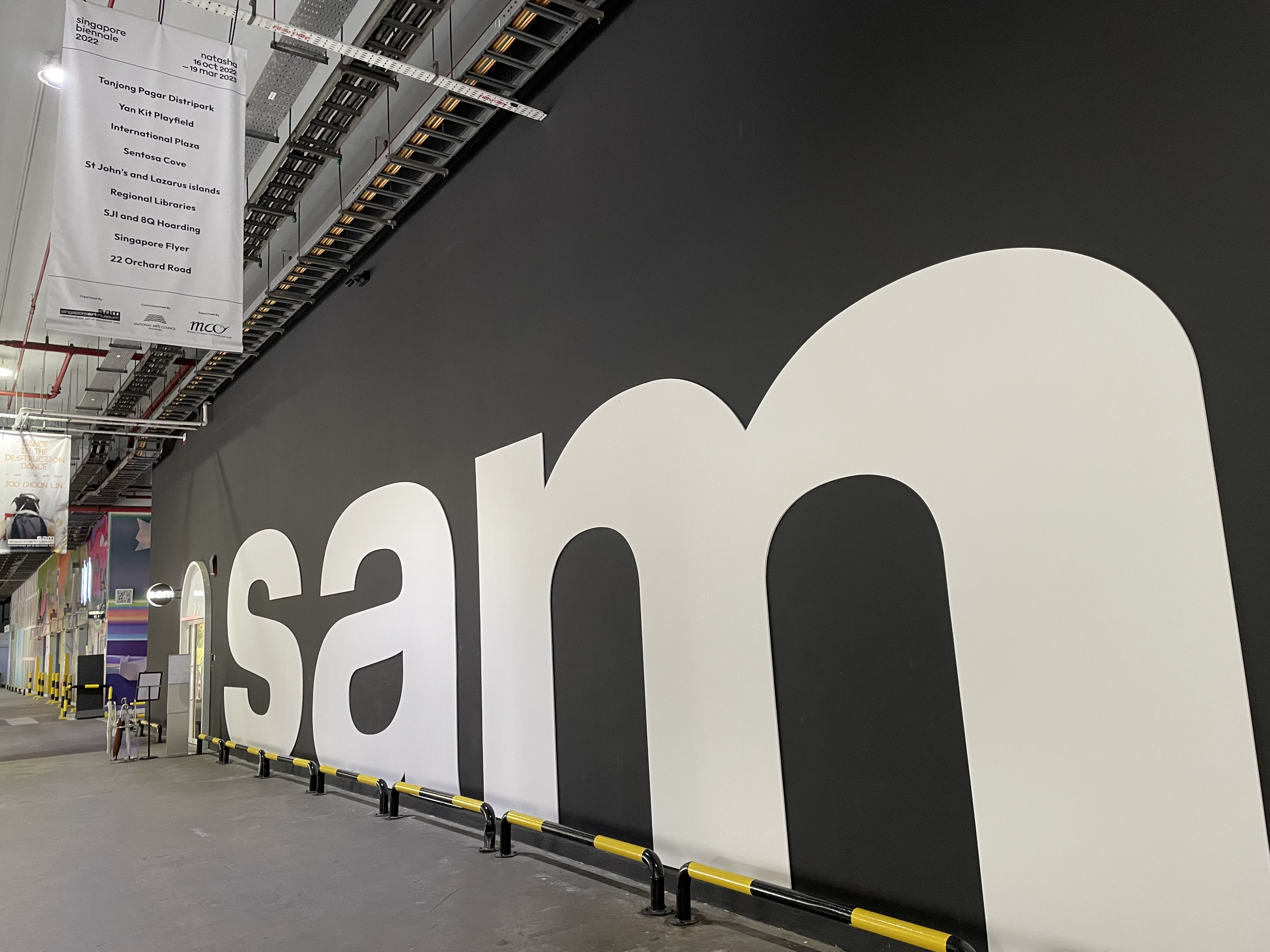
Singapore Art Museum at Tanjong Pagar Distripark is an excellent place to discover contemporary art that asks questions about time, memory, identity, technology and everyday life. Instead of treating art as a test of whether a painting looks realistic, visitors can learn to examine an artist’s choices: Why use an ordinary object? Why repeat an image? What happens when a video, photograph or sculpture invites us to think differently about the world?
A useful first visit focuses on two artworks rather than every gallery. Begin in SAM’s free Learning Gallery if it is open, then explore a current collection exhibition or one named artist’s project. Read the work’s title, date, materials and the curator’s explanation. Describe what you notice before offering an interpretation, and remember that a strong question about an artwork can be more valuable than a quick judgement that it is beautiful or strange.
- Address: SAM at Tanjong Pagar Distripark, 39 Keppel Road, #01-02, Singapore 089065.
- Hours: Normally daily, 10 a.m.–7 p.m., with last entry 6.30 p.m.
- Transport: Cantonment MRT (CC31), Exit 1, provides a direct short approach to Block 39, Lobby B.
- 1 November 2026 exhibitions: *Maria Taniguchi: Afterimage* runs until 22 November; *SAMCollection: The Present is Unstable* runs until 18 July 2027; the Learning Gallery is free for everyone, currently listed through 27 June 2027.
- Coming soon: *Patchwork of Times*, an exhibition of primary students’ responses to art, begins 14 November 2026, and *Lost & Found: How We Remember* is scheduled from 27 November.
- Admissions: Some galleries and special exhibitions are ticketed. Check the selected exhibition and visitor category; do not reuse a ticket table from the Hiroshi Sugimoto exhibition, which ended in October.
Why contemporary art is worth seeing
Contemporary art responds to the ideas, materials and conditions of the recent and present world. It may take the form of paintings, moving images, installations, performances, sound, photography or conceptual projects. The Singapore Art Museum homepage presents changing exhibitions and artistic research rather than a permanent collection arranged only by historical period. A visitor who expects only framed pictures may be surprised by a room filled with objects or projected voices. The first question should be what the artist is trying to explore and how the chosen medium contributes. Art becomes more approachable when curiosity replaces the demand for one immediately obvious answer.
What SAM specialises in
Singapore Art Museum is a public art institution with a focus on contemporary art from Singapore, Southeast Asia and beyond. Its exhibitions provide opportunities for artists, curators and audiences to consider social and personal issues through creative forms. This differs from a conventional history gallery whose main purpose is to establish a sequence of documented events. Art can use historical evidence while also introducing fiction, metaphor or ambiguity. A student can appreciate the work’s cultural context without treating every artistic image as documentary proof. The museum’s strength lies in making room for thought and discussion rather than offering a final factual answer to every question.
The current premises are at a distripark
SAM’s public galleries operate at Tanjong Pagar Distripark, an industrial-logistics environment converted partly into cultural use. The official visit guide lists the visitor entrance at Block 39, #01-02, 39 Keppel Road. The warehouse’s high ceilings and large floor areas create different possibilities from a small domestic-scale gallery. A sculpture or video installation may use the space itself as part of the experience. Do not assume the museum is presently operating from its historic Bras Basah premises merely because older travel directories show that address. Current navigation should use the Distripark entrance.
Why an industrial building suits contemporary art
An industrial building may have large open rooms, exposed structural elements and a history of handling goods rather than housing paintings. Reusing such a place allows artists and curators to install works at different scales. But a converted warehouse does not automatically provide ideal conditions without careful lighting, climate control and visitor safety. A student can observe how the room’s proportions influence an artwork: does an object feel small because the ceiling is high, or expansive because it occupies the floor? The architectural context can change interpretation without becoming the subject of every exhibition. Contemporary art often benefits from understanding where it is encountered.
The Cantonment MRT approach is a major convenience
SAM currently highlights the new Cantonment MRT station (CC31) on the Circle Line as the simplest approach. From Exit 1, Tanjong Pagar Distripark is visible to the right; visitors enter the gate and continue toward Block 39, Lobby B. This is a more direct option than some older guides that rely on buses from Tanjong Pagar or HarbourFront. Check current route accessibility and weather conditions if travelling with a stroller or mobility aid. An easy arrival can help a family enter the gallery with the attention needed for art rather than using the first part of the visit to recover from complicated navigation.
Older directions are not necessarily wrong, but may be longer
Earlier visitor guides recommend buses from Tanjong Pagar MRT or HarbourFront toward Keppel Road. Those may remain possible depending on service routes, but the museum’s present website foregrounds Cantonment MRT. A visitor should choose based on the actual starting point and mobility needs rather than follow an outdated map blindly. The industrial precinct contains several blocks, so reaching Keppel Road alone does not mean you are at the gallery entrance. Check the current signs and proceed to Block 39. Good cultural itineraries distinguish a building’s official address from the exact public door and the most convenient transport available today.
Museum hours and last admission differ
The SAM visit page lists 10 a.m. to 7 p.m. daily, including public holidays, with last admission at 6.30 p.m.. Some artwork videos run for many minutes, and an exhibition may contain multiple rooms. Arriving shortly before last entry could leave too little time to experience them thoughtfully. Choose a comfortable arrival and read the individual exhibition’s timing and ticket conditions. A guided tour or workshop may follow a separate schedule even when the museum is open. The best plan identifies the actual programme, not simply the broad museum building’s hours.
Why the programme calendar matters in November 2026
Current exhibitions have different end dates. *Maria Taniguchi: Afterimage* runs through 22 November 2026; *The Present is Unstable* continues into July 2027, while new projects open during November. The official ongoing-exhibition directory is the appropriate source for the selected date. A travel guide should not suggest every artwork advertised on social media remains available indefinitely. Exhibitions can be installed, reconfigured or removed, sometimes because the artworks have preservation or loan requirements. Planning with specific dates helps visitors understand what they will actually be able to see.
Hiroshi Sugimoto’s survey has ended
The major exhibition *Hiroshi Sugimoto: Form Is Emptiness* was associated with SAM’s 2026 programme and ended in October 2026, according to the official exhibition page. An older visit page may still display ticket information linked to that finished programme. Do not promise the Sugimoto works or apply its ticket structure as a universal November rate. A museum’s web archive preserves valuable information about past art, but archived programme material is not proof of current physical access. This distinction is especially important for visitors planning specifically to see an artist they have read about.
Maria Taniguchi: Afterimage is a current exhibition
The official *Afterimage* page describes the exhibition at Level 3, Gallery 3, running 24 July–22 November 2026. It is the artist’s first monographic exhibition presented by a Singapore museum. The title refers to a visual impression that lingers after the original stimulus has changed or disappeared. The exhibition explores time, repetition and labour through work that may seem visually restrained at first. A visitor can ask why repeating a small action many times might become meaningful. Understanding the method requires patient looking rather than expecting an instantly dramatic image.
The brick paintings are acts of repetition
Maria Taniguchi’s brick paintings are made by filling individual hand-drawn rectangular cells, one after another. The work’s surfaces may appear highly regular from a distance, but the process accumulates small physical differences through long periods of labour. SAM explains that they are best understood as parts of a continuing larger body of work. A student can look for visible variation without touching the painting or claiming to know the exact number of hours invested. The educational question is how a repeated task can communicate time and effort even when the finished image seems quiet or minimal.
Why a painting can record time
A large painting may represent a scene, but it can also preserve traces of its making. Taniguchi’s repeated cells invite viewers to think about the days and weeks spent filling them. A camera can document a finished surface, yet the artwork’s conceptual interest includes the extended process behind it. A Secondary student can ask what kinds of evidence of labour remain visible and what must be learned from the artist’s explanation. Do not infer exact working hours from the number of marks without reliable documentation. The difference between what is directly visible and what the artist describes is part of reading contemporary art responsibly.
The afterimage is a useful metaphor
An afterimage in visual perception is an impression that can persist briefly after looking at a stimulus. The exhibition title uses this idea to explore how experiences, actions or memories may continue to affect us. But not every work in the gallery is a scientific demonstration of retinal physiology. A visitor can distinguish the literal optical concept from its artistic interpretation. An older student might explain the physical phenomenon using an appropriate Science source and then discuss how the artist uses a related idea metaphorically. This ability to connect disciplines without confusing their methods is valuable beyond art education.
Runaways is a drawing in three dimensions
The *Afterimage* description includes Runaways, a series of wooden sculptures made from straight lines and circles that can be understood as three-dimensional drawings. This challenges the expectation that drawing must occur on paper. A student can walk around an authorised viewing area and ask how the work changes from different angles. Do not touch or enter an installation without permission. The interesting design principle is that a line can organise space as well as appear on a flat surface. A sculpture can be analysed through geometry and movement while remaining a creative artwork with meanings beyond its materials.
SAMCollection: The Present is Unstable
The collection exhibition runs from 2 October 2026 to 18 July 2027 at Level 3, Gallery 4. It is deliberately conceived as a changing exhibition: works may be added, removed or placed in new relationships over time. Visitors returning months later may encounter a different arrangement. Do not claim that every item listed in an early review will remain on the wall throughout the run. This is a central contemporary-art idea: curatorial choices shape meaning. The same object can provoke different questions depending on what appears beside it and how viewers encounter the group.
What a changing collection teaches
A permanent collection is not the same as a permanent display. A museum may own or care for works that spend much of their time in storage, then select them for particular exhibitions. SAM’s changing project makes that process more visible. A visitor can ask what happens when an artist’s work is placed beside another concerned with memory, identity or authority. The arrangement may influence interpretation without physically altering the original objects. This is a useful exercise in critical thinking: context can change what we notice. A museum’s decision about placement is itself part of its public argument.
The Present is Unstable has no single theme
The operator explicitly states that the exhibition does not rely on one all-encompassing theme. Instead, works enter into changing relationships and raise questions about the present. This can feel less straightforward than a historical exhibition arranged chronologically. A visitor should not try to force every artwork into the same message. Choose two pieces and identify where their questions overlap or differ. A strong interpretation acknowledges uncertainty and the artist’s own context. Contemporary art is valuable precisely because it sometimes makes audiences examine assumptions rather than supply one universally agreed conclusion.
Sin Wai Kin and performed identity
SAM’s collection exhibition includes **Sin Wai Kin’s *The Time of Our Lives* (2024)**, a video work using elements of sitcom, science fiction and performed characters to ask questions about storytelling and identity. The work can challenge how audiences interpret familiar television conventions. A visitor may notice repeated scenes or shifting roles, but should not assume every character represents the artist’s literal private biography. Read the official interpretation for context. A Secondary student can examine how performance and editing affect meaning. This is distinct from watching a conventional documentary: the work uses fiction and staged media to investigate wider ideas.
A studio audience becomes part of the artwork
The description of *The Time of Our Lives* notes that a studio audience responds to the action, making viewers consider how laughter, applause and other reactions shape a media event. A student can ask how audience response influences the way a story is understood. Is a statement perceived differently when followed by laughter? What happens when the performance becomes visibly artificial? Do not assume every audience member shares the reaction represented onscreen. The artistic device invites analysis of performance and interpretation, not a claim that a fictional television scene documents an actual relationship. It makes everyday media conventions unfamiliar enough to reconsider.
Hao Jingban’s I Witness explores grief
The collection includes **Hao Jingban’s *I Witness* (2025)**, a multi-channel video exploring memory, loss and experiences of people grieving. SAM describes a movement workshop involving participants and witnesses, alongside quieter images of everyday action. The content may be emotionally intense for some visitors. A responsible viewer can approach it with empathy without assuming every person’s grief follows the same pattern. Avoid discussing participants as if their experiences were merely effects designed for entertainment. A student can consider what movement and silence communicate when ordinary spoken explanation is difficult. Personal responses may differ, and that difference is meaningful.
Some contemporary art needs a content decision
An artwork about bereavement, identity or social conflict may be powerful but not suitable for every young child or visitor. Read the description and make an informed choice rather than relying only on whether the museum is open to families. A person can skip a work and still participate meaningfully in the exhibition. Teachers should consider how to frame difficult topics respectfully and avoid asking students to share personal experiences of loss in public. The purpose of art education is understanding the artwork and its context, not pressuring someone into emotional disclosure. Thoughtful boundaries make museum visits more inclusive.
Gary-Ross Pastrana and water on stone
The collection exhibition discusses **Gary-Ross Pastrana’s *Water Cuts (stone)* (2017)**, involving marble, water, wood and salt. It invites reflection on repeated actions and the idea that persistent water may affect hard stone over time. In the specific artwork, materials and viewer participation contribute to meaning. Do not assume a brief action immediately cuts through a marble slab or that the installation is an unrestricted science experiment. Read and follow its interaction instructions. A student can compare a physical process with the artist’s metaphor, asking how repetition, effort and time are represented through simple materials.
Why participation depends on the artwork
Some museum works invite a visitor to touch or perform a particular action, while others are fragile and must not be handled. The fact that one installation encourages participation does not grant permission to touch everything in the same gallery. The appropriate rule comes from the specific label and staff guidance. A child might be allowed to make a small gesture in a supervised interactive piece but not approach a painting’s surface. This distinction is central to contemporary art, where the visitor’s role varies widely. Respecting that variation protects the collection while allowing the intended experience to occur.
Manny Montelibano and the media apology
SAM describes **Manny Montelibano’s *Sorry for the Inconvenience* (2011–ongoing)** as a video project using public media clips, repetition and visual disruption to examine authority and apologies. The work raises questions about how messages circulate and lose context. A viewer can ask what changes when a sentence is repeated many times or when a familiar speaker’s image is fragmented. Do not assume the edited footage presents a complete documentary account of any particular original speech. The artistic manipulation is deliberate. This is a useful media-literacy lesson: the same public recording can be reframed, and understanding depends on context.
An edited clip is not the full event
Video works that sample television or online material may change timing, order and visual treatment. That can reveal new questions but can also prevent the viewer from reconstructing the original event accurately. A strong student response distinguishes the content of the artwork from a factual claim about the person shown. If analysing a specific public speech, consult the original recording or reliable report rather than assume the artwork is a complete transcript. Contemporary art can help reveal the emotional force of media while also teaching the need to verify what a selected excerpt actually documents.
Wei Leng Tay and the corrected photograph
The collection exhibition presents **Wei Leng Tay’s *Untitled (sister)* (2022)**, which involves photography and interventions that complicate the idea of a photograph as a transparent record. An image may be edited, mounted, obscured or placed in a new material context, drawing attention to how we remember and represent people. A visitor can describe what is visible and what may have been intentionally withheld. Do not invent the subject’s biography from an image alone. A Secondary Photography student can compare documentation and artistic presentation, recognising that every image involves choices about framing and interpretation.
Photography has several kinds of truth
A photograph can record light from a real scene, but it is still shaped by framing, timing, processing and the photographer’s decisions. A contemporary artwork may make those choices explicit. The visitor should not conclude that every photograph is false or that all interpretations are equally supported. Instead, ask what evidence it provides and what it cannot show. An image of an empty room may establish appearance at a moment but not the complete lives of former occupants. This is useful in History, Journalism and English, where accurate captioning and source context determine how visual material should be understood.
Chua Chye Teck and the traces of habitation
SAM’s collection includes **Chua Chye Teck’s *Eternity* (2007)**, a photographic series documenting interior spaces in former Rowell Road shophouses before their transformation into an independent arts venue. The photographs contain traces of earlier occupation but not direct testimony from every former resident. A visitor can ask what physical evidence reveals about a room and which human experiences remain unknowable from an empty interior. The title introduces a further question about memory and permanence. This is a valuable heritage comparison with housing-history guides, without implying that every artwork documenting a building is a neutral architectural survey.
Jason Wee and a spatial labyrinth
The SAM collection lists **Jason Wee’s *Labyrinths* (2017)**, using materials including steel and paint. A labyrinth may invite visitors to consider routes, barriers or uncertainty through a spatial form, depending on its particular configuration. But the specific work’s intended interaction should be confirmed from the current gallery label. Do not assume a sculpture shaped like a passage is safe or permitted to enter. A student can consider how materials and the surrounding room influence the perception of movement and choice. The broader lesson is that sculpture can organise space and thought, not merely represent a recognisable person or object.
The exhibition may be different on a return visit
Because *The Present is Unstable* is designed to change, a visitor who returns later might encounter different works or arrangements. That makes dated observation notes important. An essay written in November 2026 should identify the actual works encountered rather than claim every item on the website was physically displayed at the time. Curatorial decisions may respond to conservation, loans or programming. A strong student records the visit date, gallery and artwork label, then compares those facts with the live programme. The moving collection is useful for understanding that museums create interpretations rather than simply display everything they own at once.
Learning Gallery is free for everyone
The Learning Gallery runs from 2 August 2025 to 27 June 2027 at Level 1, Gallery 2, with admission free for all visitors. It is an especially approachable starting point for families or people unfamiliar with contemporary art. The gallery encourages curiosity, experimentation and attention to subjects such as home, nature, memory and relationships. Specific artworks may change, and the room’s content should be checked before relying on an old photograph. The important point is that a meaningful arts visit can begin with free public access and a thoughtful question, without a large ticket purchase.
Art and childhood share an interest in questions
The Learning Gallery’s theme recognises that children often explore unfamiliar things without demanding an immediate correct interpretation. Adults can benefit from that willingness to notice details and ask open questions. A parent might ask what a material reminds a child of and why, rather than insist on the museum’s one official answer. At the same time, the artist’s stated context matters when making factual claims. This balance makes art education useful: imagination generates possibilities, while labels and research provide grounding. A family can discuss several interpretations without pretending that a work’s documented facts are optional or irrelevant.
The Learning Gallery is not a playground for every object
A gallery designed for children may contain interactive elements, but it can also include fragile original artworks. Do not assume the entire room permits touching, climbing or rearranging. Follow the instructions attached to each work. A child can respond through drawing or conversation when physical participation is not allowed. The value of the experience does not depend on handling every exhibit. A free art gallery remains a space shared by adults, children, educators and visitors with different needs. Respectful behaviour makes the work accessible without endangering it or disrupting other people.
Patchwork of Times begins 14 November
The official Patchwork of Times listing dates the student exhibition from 14 November 2026 to 3 January 2027 in The Engine Room at Level 1, with free admission. As of 1 November it is upcoming, not a current exhibition. The show presents artworks and ideas developed by approximately ten-year-old students responding to concerns of past, present and future. A parent or teacher can consider visiting after the opening, but should not promise it to a family travelling earlier in the month. A date-specific guide distinguishes current from planned experiences.
The Think! Contemporary programme
SAM developed Think! Contemporary as a museum-based school programme connecting artworks with school subjects including Art, English, Science, Social Studies and Character and Citizenship Education. *Patchwork of Times* is an outcome of its fourteenth edition, involving several primary schools. The programme demonstrates that young people can create original responses rather than merely copy recognised artists. A teacher might ask how an artwork can become a starting point for an essay or a discussion of change. Do not assume that every participating child produced the same theme or that all students experienced the project identically. The value lies in diverse questions developed through learning.
A child’s own artwork deserves serious attention
When adults look at work created by children, they may be tempted to judge it only by neatness or resemblance. The Think! Contemporary approach instead encourages attention to ideas and personal responses. A student may use unusual colour or material to communicate a question that is more complex than the visible technique suggests. Ask what the young artist was investigating and what choices support that idea. Do not invent a personal story about a child based on an image without source material. This is a useful lesson in how creativity, inquiry and learning interact, whether the maker is ten years old or a professional adult.
Lost & Found: How We Remember is scheduled later
SAM’s current exhibition calendar lists Lost & Found: How We Remember as opening 27 November 2026. It should not be described as available on the first weekend of November. The title invites a question about memory, but the actual artists, objects and curatorial themes should be taken from the live exhibition page after opening. A visitor planning early November can instead focus on *Afterimage*, the collection exhibition or Learning Gallery. Good travel writing does not invent details to fill a gap in a future programme. Confirmed dates and official interpretation matter more than a speculative itinerary.
The Everyday Museum extends outside the galleries
SAM’s Everyday Museum initiative explores art outside conventional gallery rooms, including public projects in different urban settings. This means a SAM project may be accessible without entering Tanjong Pagar Distripark, but its location and dates must be checked separately. Do not assume an outdoor installation in the Central Business District is part of the same compact indoor museum route. A student can compare how a piece changes when shown in a public street rather than a controlled gallery. Context influences who encounters the work and how they respond, creating opportunities and challenges for artists and visitors.
Momentary Pulses belongs to the wider city
The official SAM programme lists Momentary Pulses: Art in the Central Business District as continuing into December 2027. Its locations are separate from the main Distripark galleries. A visitor who wants to study art in public space should follow the actual location and access guide rather than assume the works are next to the ticket counter. This is a useful distinction from museum exhibitions: outdoor artworks may be experienced by people who never planned to visit an art institution. A study question could ask how passer-by attention differs from the behaviour of someone who deliberately enters a gallery and spends time reading a label.
What a curator does
A curator researches, selects and interprets works within an exhibition, working with artists and teams responsible for installation and care. Their choices affect what the audience sees first and how objects are related. SAM’s changing collection exhibition makes the role especially visible. A student can ask why two works were placed near each other and which question the arrangement encourages. Do not assume the curator controls every meaning visitors take from the works or that the artist’s intentions are irrelevant. An exhibition emerges through dialogue among artistic production, selection, presentation and audience response.
An artist and a curator can ask different questions
An artist may make a work to explore a personal or social issue, while a curator may place it beside another work to create a new conversation. Those interpretive purposes can overlap without being identical. A museum label may describe the artist’s method, while a gallery introduction explains the collection theme. A student should distinguish the two sources before writing a definitive interpretation. That helps avoid attributing the curator’s exact words to the artist or treating the artist’s intention as the only possible audience response. Contemporary art is especially rich when viewers understand these layers rather than seeking one simplified answer.
Materials matter as much as imagery
A contemporary artwork may use marble, salt, wood, photographs, video or ordinary household objects. Each material has physical qualities and cultural associations that shape the work. Water can alter surfaces over time, while a screen can repeat a sequence precisely or introduce editing effects. A student can choose one material and ask why it might have been selected. Do not assume a material is harmless to touch merely because it is ordinary outside a museum. The work’s conservation and interaction rules remain important. Understanding material is a bridge between art, design, physics and everyday experience.
Why a video can be an artwork
A video installation may arrange images, sound, time and space to create a viewing experience different from a conventional film. Several screens can show simultaneous perspectives, while a loop may intentionally prevent one clear beginning or ending. The viewer’s movement through the room can affect what is noticed. A student can ask how a multi-channel video differs from watching a linear documentary on a phone. Do not infer that the edited images are complete historical records. The artistic form may involve fiction, repetition or deliberate ambiguity. The key is to describe the work accurately before evaluating what it communicates.
Duration is part of the experience
Some video artworks last twenty minutes or much longer, and a visitor may see only part of a loop if they enter midway. A label indicating the full running time helps explain why the work may feel incomplete after a brief glance. When possible, allow enough time to observe the structure the artist has chosen, while respecting individual comfort. Do not insist a young child sit through an emotionally intense hour simply to complete the gallery. A student can note whether the video uses repetition, interruptions or simultaneous channels, then explain how the experience differs from a familiar television programme.
Performance can examine identity
In contemporary art, performance may involve movement, roles, voice or repeated actions. Artists can use their own bodies or fictional characters to explore how identities are presented and understood. A video about performed identity should not be assumed to reveal the artist’s entire private life. A viewer can analyse costume, gesture and editing while recognising that creative work may deliberately combine fact and fiction. This is useful for English and Social Studies because it encourages attention to how representations are made. Respectful interpretation avoids assigning personal characteristics or beliefs to real people without evidence.
Photography can document and question memory
Photography may preserve visual details of a place, but it also selects a viewpoint and moment. A work about memory can use this limitation deliberately, making viewers consider what disappears outside the frame. A student can compare one museum photograph with a reliable historical description and identify what each reveals. Do not assume a room’s visible emptiness proves nobody valued it or that an image can establish every prior occupant’s experience. Contemporary art can make the limits of records more obvious, encouraging more careful historical writing. That is a powerful reason to include photography in a museum about present-day questions.
Why the viewer’s interpretation matters
Two people may respond differently to the same work because they bring different experiences and knowledge. A viewer can describe feeling calm or confused without claiming everyone must feel the same. Yet historical context, material facts and the artist’s statements still constrain unsupported interpretations. A good museum conversation separates what I saw, what the source establishes and what I think it suggests. This method encourages independent thinking without collapsing all claims into personal preference. Contemporary art becomes more accessible when visitors understand that careful observation and honest reasoning are more important than finding a secret answer.
How to disagree about an artwork productively
One visitor may see repetition as meditative while another finds it tiring. Both can explain their reactions using visible features, such as scale or pattern, without dismissing the other’s experience. The stronger response gives reasons and acknowledges what the artist or label actually says. Avoid declaring an artwork worthless because it does not resemble a realistic painting. Equally, there is no need to pretend enthusiasm. A thoughtful disagreement can lead to a question about what the work is attempting and how successfully its methods communicate that aim. The skill transfers to classroom discussion and respectful cultural exchange.
Why not every artwork is suitable for every child
SAM welcomes families, but its programme includes works dealing with difficult subjects, including grief or social conflict. A parent should read the actual exhibition content and consider age and individual needs. The free Learning Gallery may be a better introduction for some children than an emotionally demanding multi-channel installation. Do not assume the word art automatically indicates harmless content or that a young visitor must understand all themes. A positive first museum experience can be brief and curious. The main aim is to develop confidence in looking, asking questions and respecting different expressions.
A Primary-school visit through the Learning Gallery
Begin by asking the child to choose a work that makes them curious. Record three observations about shape, material or colour, then read a short part of the label together. Ask what the child thinks might happen if the artwork were displayed in a different place. This is a playful way to introduce context without forcing a single interpretation. If a hands-on activity is offered, follow its instructions; otherwise use a permitted notebook. Do not touch the art simply because it is in a learning-focused room. One strong conversation is enough for an educational outing.
A Primary-school English writing prompt
Choose an artwork connected with home, memory or nature. Ask a child to write three sentences: what can be seen, what it reminds them of and what question they would ask the artist. Encourage precise nouns and verbs instead of only “nice” or “weird.” This develops descriptive and reflective writing without requiring specialist art history. The child may draw first and then explain the drawing. Avoid attributing invented meanings to named artists as established facts. The exercise helps pupils distinguish observation, memory and interpretation, a useful skill in comprehension and composition beyond the museum.
Secondary English: evidence-based art criticism
Ask the student to choose one work, identify the artist and material correctly, and write a short paragraph explaining how a particular feature supports an interpretation. For example, repetition may be linked with accumulated time, but the student should describe where the repeated forms are visible. Include the official label as context, then state personal response separately. Avoid empty praise such as “very creative” without evidence. A strong critique can be appreciative, sceptical or mixed as long as it is precise and fair. This develops argumentative writing through visual material rather than a conventional printed passage.
Secondary Social Studies: memory and public narratives
Art about identity and collective memory can raise questions about how societies remember people, places and events. A student might compare a photograph of an abandoned room with an official historical account, recognising that each has different evidentiary limits. Some works may question authority through media clips or performance. Discuss those ideas without assuming the artist’s fictional character speaks for an entire community. A balanced interpretation identifies the social question and considers alternative perspectives. The museum provides material for thoughtful discussion, but an artwork should not be mistaken for a complete policy analysis or historical record.
Secondary Art: material choices
Choose two works made from different materials, such as painted canvas and moving image. Ask what each medium can communicate and what limitations it introduces. A repeating rectangular pattern may reveal accumulated labour, while a looping video can change the viewer’s sense of time. Describe the physical properties, artist’s choices and intended effect where documented. Do not assume one medium is automatically more advanced than another. A strong response recognises that art communicates through the relationship between method and meaning, rather than judging only how technically difficult the final object appears.
Secondary Mathematics: repetition and scale
Taniguchi’s brick paintings offer a visual entry into repetition, grids and proportion. A student may count a small permitted section and describe how repeated cells accumulate across a large surface. However, the work should not be reduced to arithmetic alone or treated as a dataset whose exact total can be calculated from a perspective photograph. The artist’s time and manual labour are central to the interpretation. A mathematics exercise can identify regular patterns while also recognising variation and human making. This is an example of how quantification can support visual analysis without exhausting its cultural meaning.
Science: perception and afterimages
The word *afterimage* can lead to an age-appropriate study of visual perception: under particular conditions, a visual impression may persist briefly after a stimulus disappears. But a gallery title is not a direct scientific measurement, and a student’s personal experience does not establish a universal physiological result. A safe classroom lesson can use appropriate optical demonstrations and reliable sources, leaving the artwork to be appreciated as an artistic exploration of perception and memory. The most useful distinction is between a scientific explanation of vision and a metaphor about experiences lingering across time.
A Design and Technology inquiry
Choose a spatial or interactive installation and ask how its materials, arrangement and visitor route influence the experience. Does a barrier protect the work? Does a video require sound control? What happens when multiple people enter the space? These are design questions grounded in observation. Do not attempt to move equipment or enter restricted areas to examine its mechanism. A student can propose an interpretation panel or accessible viewing option and explain how they might test it respectfully. The museum demonstrates that design includes visitor comfort, conservation and communication as well as artistic expression.
Museum access and inclusion
The SAM visit page provides information about accessibility, services and transport. The institution also has access initiatives, resources and programmes for visitors with varied needs. A person should check the particular exhibition’s sensory environment and routes rather than assume every work is equally comfortable. Some contain loud audio, moving images or content that may be intense. The free Learning Gallery can offer one entry point, but suitability depends on the individual. Inclusive museum planning means allowing visitors to choose meaningful experiences without pressure to complete everything or engage with content that causes distress.
Some galleries are free and some are ticketed
The Learning Gallery is free to everyone, while *The Present is Unstable* lists general admission free for eligible Singapore citizens and PRs and separate ticket conditions for others. A special exhibition may have different fees. The SAM visitor page can retain historical admission tables from earlier temporary shows, so the best practice is to open the current selected exhibition’s ticket information. Do not advertise one universal price for all visitors and dates. A low-cost visit can be complete through the free Learning Gallery and any other currently available free public programmes.
The current visitor category must be checked
Ticket categories may distinguish local residents, tourists, seniors, students and visitors with disabilities. The applicable concession can depend on identification, the exhibition and date. A person should not assume that a discount seen on a 2025 brochure remains valid in November 2026. Check the live event listing and official checkout. In planning a family visit, include transport and any optional workshop fee separately. A thoughtful cultural outing does not require buying every available ticket. The best choice is the exhibition whose content fits the people attending and gives enough time for careful observation.
Guided tours can improve context
SAM offers docent-led tours and education programmes according to the current calendar. A guide may clarify an artist’s context or help participants look closely at features they might miss. But tours can be limited by schedule, capacity, language or registration, so do not assume a free gallery admission guarantees a particular guide. A family can explore independently using labels and learning materials. If a teacher needs a structured visit, book through the school programme instead of relying on ordinary walk-in arrangements. The purpose is giving students an achievable question and supporting evidence, not merely providing more facts than they can remember.
School visits and curriculum connections
The museum’s Think! Contemporary programme connects selected artworks with school subjects, demonstrating that art can stimulate inquiry rather than exist apart from formal education. Teachers can use artworks as prompts for descriptive writing, citizenship discussions, Science questions or creative responses. However, a student project should not claim a visual metaphor proves a scientific hypothesis. The strongest lesson distinguishes the artist’s expression from the subject-specific evidence needed for a factual conclusion. A school visit can be powerful when it builds transferable skills: observation, interpretation, communication and respectful dialogue across different perspectives.
A museum can have rules about photography
Photographing an artwork may be permitted in some rooms but restricted in others because of rights, conservation or visitors’ comfort. Read the specific signs before using flash or a camera. Do not block the path to stage a prolonged shoot or photograph strangers intrusively. An artwork’s public display does not automatically grant unrestricted commercial reproduction rights. A caption should identify the artist, title and date from the official label rather than inventing a meaning. Accurate records help students remember what they saw and distinguish their personal interpretation from the museum’s documented information.
Video art and copyright
A visitor may be tempted to record an entire video installation and post it online. But the work may contain copyrighted sound, performances and images, and gallery permission for personal photography may not include full reproduction. Follow SAM’s actual instructions and use official links when discussing the work. Writing an original analysis can often communicate more than uploading a poor recording. The ethical issue is not that art cannot be discussed publicly; it is that the artist and other contributors retain rights and creative interests. Responsible engagement respects those conditions while encouraging informed conversation.
An artist is not required to supply one answer
Many contemporary works invite questions rather than straightforward explanations. That can be frustrating when a visitor expects every label to provide a final moral or factual conclusion. Instead, ask what the work establishes and what it leaves open. A student can compare personal interpretations with the artist’s description, identifying where they coincide or differ. But ambiguity does not mean every invented claim is equally plausible. Observation and context still matter. The museum becomes more enjoyable when viewers allow uncertainty to motivate further thought instead of treating it as a failure to understand.
How to use wall labels without copying them
A gallery label may provide the artwork’s title, date, medium and a short interpretation. Begin with the factual details, then look at the work before rereading the text. A student who merely copies the label has not yet explained what they personally observed. A stronger notebook describes one concrete feature and connects it with the label’s context. Do not attribute a curator’s phrasing directly to the artist unless the source identifies it as an artist statement. The goal is to understand how published interpretation helps a viewer without replacing direct attention to the work itself.
The role of silence and duration
Some installations make little sound and change slowly. A visitor may need to wait before noticing repetition or variation. Others use loud or layered audio that can be emotionally demanding. Duration is therefore part of the artwork’s method, not only a practical scheduling issue. A family can choose works that suit its available attention and sensory comfort. A student might record how their perception changes after a minute of looking at a quiet canvas. Do not insist every work must be experienced for a fixed period. Different forms call for different kinds of attention, and meaningful engagement remains possible without completing every room.
An affordable one-hour plan
Begin at the free Learning Gallery and choose one artwork about home, nature or memory. Read the title and describe its material. Then, if a suitable second exhibition is available under your admission category, select one further work for comparison. Finish by discussing how the two artists use different media or questions. This is a complete short visit even without purchasing an expensive ticket. The time is illustrative, not a guarantee that any particular display can be fully experienced in sixty minutes. A thoughtful hour is more useful than rushing through a whole building simply to say you saw everything.
An adult two-hour contemporary-art plan
Choose *Afterimage* while it is open through 22 November and *The Present is Unstable* as the main comparison. Taniguchi’s attention to repetition and labour can be placed beside collection works concerned with memory, authority or social relationships. Read the actual labels because the collection arrangement may change. Allow time for a video work if it interests you, but do not force yourself to watch every screen. A useful reflection explains one similarity and one important difference between the two artists’ methods. The goal is forming a grounded interpretation rather than consuming art as a visual checklist.
A family plan from 14 November
Once Patchwork of Times opens on 14 November, a family can consider pairing the free student exhibition with the Learning Gallery. This may show children how their peers respond to art through personal questions and creative materials. However, the exhibition is not open as of 1 November, so anyone travelling earlier should choose the existing programme. A school group should check current hours, capacity and transport. The best conversation asks how students made decisions and what the work communicates, rather than ranking children’s artwork by neatness. This creates an age-appropriate way to participate in contemporary-art thinking.
Weather and the industrial precinct
SAM is indoors, but approaching Tanjong Pagar Distripark can involve outdoor walking through industrial surroundings. Choose the correct entrance and use a suitable pedestrian route, especially during heavy rain or storms. The official visit information identifies parking charges and public transport approaches. A family with limited mobility may prefer the simplest accessible route from Cantonment MRT. Do not assume every warehouse loading bay is a public visitor entrance. The museum can be welcoming while requiring the same practical navigation considerations as other working mixed-use urban sites.
Visiting with older relatives
Some visitors may enjoy photography and video work, while others prefer paintings or quiet discussion. Ask about interests and comfort rather than assume age determines taste. A large installation can be physically demanding to stand through, while some videos may have seating. A route through the free Learning Gallery and one other suitable room can be enough. If a work concerns grief or distressing events, allow people to choose whether to engage. The meaningful result of an intergenerational visit may be a conversation about how memory changes, not the number of minutes spent at each installation.
Why SAM is not National Gallery Singapore
National Gallery Singapore focuses strongly on the history of modern art in Singapore and Southeast Asia through a large collection within historic civic buildings. SAM places particular emphasis on contemporary practices, rotating projects, time-based media, installations and living artistic conversations. Both may show paintings or ask social questions, but their curatorial missions and environments differ. A visitor interested in historical movements may choose the National Gallery, while someone curious about the present and how artists use unusual media may prefer SAM. The distinction protects against treating all art museums as interchangeable attractions.
Why SAM is not ArtScience Museum
ArtScience Museum often presents immersive experiences connecting creative work with science, technology and interactive media. SAM concentrates on contemporary artistic research, individual practices and curatorial interpretation, which may or may not involve interactive technology. A SAM video can be a work of art without requiring audience movement, while a teamLab installation may depend on programmed visual response. The experiences are complementary but not identical. Choose the question first: are you investigating how an artist represents memory, or how a digital system responds to an audience? Each destination has its own strengths.
A field notebook for any contemporary artwork
Create five fields: artist and title, materials, what I directly observed, what the official source says, and my interpretation. For a repeated painting, describe the cells and their subtle differences before discussing time or labour. For a video, note the use of multiple screens or loops before making a claim about media authority. Add the date of your visit because SAM’s collection show changes. A student may disagree with the museum’s interpretation but should explain why. This method develops careful reasoning without pretending there is only one emotional response that every viewer must share.
Six useful art vocabulary words
Learn installation, medium, curation, repetition, afterimage and interpretation. An installation arranges elements in space as an artwork. Medium refers to materials or methods such as video or painting. Curation involves selecting and contextualising works. Repetition can be a visual or procedural method. Afterimage can describe a perceptual phenomenon or serve as an artistic metaphor. Interpretation is an explanation of meaning supported by observation and context. Use each term in a sentence about a work actually encountered. Precise vocabulary helps learners move beyond broad reactions without making the experience unnecessarily technical.
What not to do at SAM
Do not assume all galleries are free because the Learning Gallery is free. Do not promise Sugimoto’s survey in November after its October ending. Do not tell visitors that Patchwork of Times is already open before 14 November or that every collection work will remain displayed throughout 2027. Do not touch or climb an artwork without explicit permission, record prohibited video content or block warehouse entrances. Avoid treating an emotionally difficult installation as compulsory for children. The repair is to use the current exhibition page, choose a suitable gallery and engage thoughtfully within its rules.
The lasting benefit of a contemporary-art visit
A contemporary art museum can help us notice that familiar objects, images and stories carry more meaning than we initially assume. Repetition may reveal labour, a photograph may raise questions about memory, and an edited video can expose the way public messages circulate. The visitor does not need to agree with every interpretation. The strongest outcome is an ability to describe evidence, consider context and explain a thoughtful response. That skill applies to advertising, social media, historical documents and daily conversations as well as to artworks in a gallery.
Frequently asked questions
Where is Singapore Art Museum currently located?
At 39 Keppel Road, #01-02, Block 39, Tanjong Pagar Distripark, Singapore 089065.
What MRT station is nearest?
Cantonment MRT (CC31), Exit 1, is recommended by the museum for a short direct approach.
What are SAM’s daily hours?
Normally 10 a.m. to 7 p.m. every day, with last entry at 6.30 p.m.
Is Singapore Art Museum free?
The Learning Gallery is free for everyone; other exhibitions have their own admission categories, including resident concessions or free admission where specified.
Is the Learning Gallery open in November 2026?
It is currently listed from 2 August 2025 through 27 June 2027 and is free for all visitors.
Is Maria Taniguchi: Afterimage on now?
Yes, through 22 November 2026 according to the current official exhibition listing.
What is The Present is Unstable?
A changing collection exhibition running from 2 October 2026 through 18 July 2027, where the arrangement of works evolves.
Is Patchwork of Times already open on 1 November?
No. It is scheduled to start on 14 November 2026 and continue to 3 January 2027.
Can I see Hiroshi Sugimoto’s 2026 survey?
The published exhibition ended in October 2026. Do not assume archived ticket information means it is still open.
Is SAM the same as National Gallery Singapore?
No. SAM focuses on contemporary artistic practice and changing exhibitions; National Gallery has a distinct art-historical collection and location.
Is the museum suitable for children?
Yes, with suitable works and the free Learning Gallery, but individual exhibitions may include intense themes or sensory experiences.
Do I need to understand art theory?
No. Start with observing the work, reading its label and asking a clear question.
Can schools arrange visits?
SAM has school and access programmes subject to booking, group size and current schedules.
Can I film the artworks?
Follow the current gallery-specific photography and recording rules and respect copyright.
How long should I spend?
A focused one-to-two-hour visit is practical for many people, depending on videos, selected exhibitions and individual comfort.
Official sources and connected eduKate reading
Use the Singapore Art Museum current programme directory, official visitor information, Maria Taniguchi: Afterimage, SAMCollection: The Present is Unstable, free Learning Gallery, Patchwork of Times opening on 14 November and SAM school and education programmes. Check the selected work’s gallery, actual display status and admission terms before setting off.
Continue with What to do in Singapore | Learn to Read Art at National Gallery Singapore, What to do in Singapore | Explore Art and Science at ArtScience Museum, What to do in Singapore | Discover Design at National Design Centre and Touring Singapore | Things to Do and Places A–Z.
Featured photograph: SAM signage at Tanjong Pagar Distripark, photo by Sgconlaw, 16 January 2023, Wikimedia Commons, licensed CC BY-SA 4.0. Reused unaltered; it is an archival exterior photograph, not a record of the current installation inside.

Your next step
Choose one free Learning Gallery artwork and one current exhibition work, then ask what their materials and methods change about your understanding. The most useful contemporary-art experience is not finding a secret correct answer; it is learning to look carefully, identify what can be verified, and express a thoughtful response with reasons.