
When Information Survives but Knowledge Dies
Why the correct information can remain while the ability to use it disappears
Open internal Atlas routes
Use Atlas Book I to diagnose a bounded target. Separate surviving information from decoder, sequence, execution environment, feedback and custody. Preserve domain non-identity. Identify the first missing runtime component, distinguish sourced fact from framework classification and inference, and propose the smallest executable test with a return signal.
Why a student, a company, a manuscript, a computer program and a civilisation can possess the correct information—and still be unable to use it
A book can survive for centuries while nobody remembers how to read it.
A company can retain every procedure after its most experienced employees leave, yet discover that the procedures are not enough.
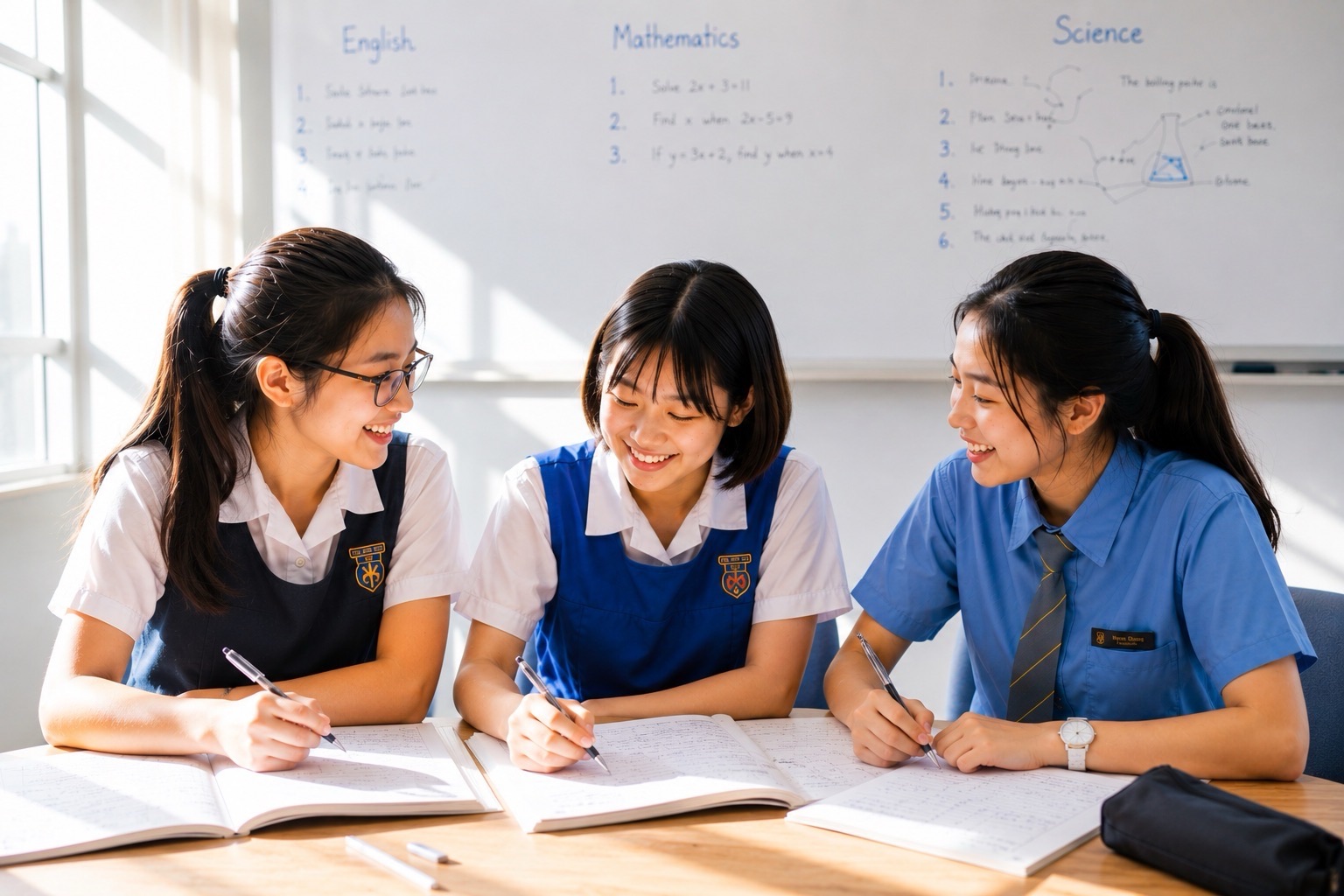
A student can own complete notes, memorise every formula and recognise every worked example, but still be unable to produce the answer during an examination.
A computer program can remain perfectly preserved as source code while the hardware, libraries and operating environment required to run it disappear.
An artefact can survive after the workshops, suppliers, measurement practices and institutions that once made its production possible have vanished.
These appear to be different problems. They belong to different fields and are normally investigated by different specialists.
The student belongs to education.
The manuscript belongs to history.
The company belongs to management.
The computer program belongs to software preservation.
The artefact belongs to archaeology.
But beneath their different surfaces, they may share the same failure:
The information survived, but its execution environment did not.
This is an Atlas problem.
The Atlas does not claim that a student is the same thing as a manuscript, or that a civilisation operates exactly like a computer. Its own non-collapse rules require connected objects to remain distinct. Instead, it asks whether different objects may be experiencing a similar structural failure while preserving their own identities, evidence classes and boundaries.
The mechanism may simply be wearing a different skin.
Quick Answer
How can information survive while knowledge disappears?
Information becomes usable knowledge only when a person or system can interpret it, place it in the correct sequence, execute it in a suitable environment and determine whether the result is correct.
Preserving symbols, documents, data or instructions does not automatically preserve these surrounding capabilities.
A more complete model is:
[
\text{Executable Knowledge}
\text{Information}
+
\text{Decoder}
+
\text{Sequence}
+
\text{Environment}
+
\text{Feedback}
+
\text{Custody}
]
When one of these components disappears, the visible information may remain while the ability to use it collapses.
The Mistake: Treating Stored Information as Complete Knowledge
Modern systems are extremely good at storing things.
We preserve:
- books;
- lecture notes;
- databases;
- source code;
- videos;
- operating procedures;
- scientific papers;
- institutional records;
- photographs;
- technical drawings.
This can create the impression that knowledge has been preserved because the visible information remains accessible.
But information and executable knowledge are not identical.
A recipe is information.
Being able to identify the correct ingredients, recognise their condition, control the heat, adjust for variation and judge when the result is ready is executable knowledge.
A mathematical formula is information.
Knowing which formula applies, what assumptions it contains, how to manipulate it and how to detect an unreasonable answer is executable knowledge.
A procedure manual is information.
Recognising an exception, coordinating with other departments and knowing when the documented procedure should be stopped is executable knowledge.
Source code is information.
Compiling, running, maintaining and interacting with the program require a much larger technical environment.
The Atlas calls this a problem of functional portability: a capability does not move merely because one visible object moves. It travels only when its dependencies, carriers, permissions, maintenance, knowledge and host conditions travel with it.
That principle gives us a new way to examine lost knowledge.
The Executable Knowledge Law
We can express the structure through a diagnostic model:
[
K_e = I \times D \times S \times E \times F \times C
]
Where:
- (K_e) = executable knowledge;
- (I) = integrity of the surviving information;
- (D) = availability of a decoder or interpreter;
- (S) = knowledge of the correct sequence;
- (E) = availability of the execution environment;
- (F) = feedback capable of distinguishing success from failure;
- (C) = custodial continuity across people, institutions and time.
This is not presented as a measured law of physics. It is an Atlas diagnostic equation.
Its multiplicative form is deliberate.
A system can preserve five components extremely well and still become unusable when the sixth approaches zero.
For example:
[
\text{Complete notes}
\times
\text{no retrieval under exam conditions}
\rightarrow
\text{poor examination performance}
]
[
\text{Preserved source code}
\times
\text{missing dependencies}
\rightarrow
\text{unusable software}
]
[
\text{Surviving manuscript}
\times
\text{missing decoder}
\rightarrow
\text{unreadable operational content}
]
[
\text{Detailed procedures}
\times
\text{lost judgement and experience}
\rightarrow
\text{organisational fragility}
]
The object remains.
The capability does not.
Case One: The Voynich Manuscript
The Voynich Manuscript is a strong example because so much information has physically survived.
The manuscript contains an unidentified script and extensive illustrations. Yale describes sections containing plant specimens, astronomical and astrological drawings, bathing scenes, cosmological diagrams, pharmaceutical imagery and text that may contain recipes. Its text remains undeciphered, while the physical manuscript and high-resolution digital images are preserved for research.
We therefore possess:
- the pages;
- the symbols;
- the diagrams;
- repeated visual structures;
- page organisation;
- labels;
- apparent sections;
- the relationship between text and image.
Yet we may no longer possess:
- the intended reader community;
- the operating vocabulary;
- the pronunciation or reading conventions;
- the relevant workshop practices;
- the expected materials;
- the sequence of use;
- oral explanations;
- validation procedures;
- the institutional setting in which the manuscript was ordinary.
This does not prove that the Voynich Manuscript was an operating manual, medical system or proprietary recipe book. Those remain hypotheses requiring evidence.
But it changes the structure of the question.
Instead of asking only:
What do these symbols translate into?
We can also ask:
What surrounding system would have made these pages executable?
The manuscript may not be a locked box containing its entire solution.
It may be one surviving component of a larger machine.
If the decoder was partly social, partly procedural and partly material, then deciphering the script alone might still fail to recover the complete knowledge.
This is the first form of knowledge death:
[
\text{Object preserved}
\neq
\text{Operating context preserved}
]
Case Two: The Student Who Has All the Notes but Cannot Perform
A student may appear to possess everything needed for success.
There are complete notes in the file.
The formulas have been highlighted.
The model compositions have been read.
The teacher’s corrections have been copied.
The student recognises the chapter and understands the worked example when someone else demonstrates it.
Then the examination begins.
The question is phrased differently. Several topics are combined. There is no teacher present to provide the first step. Time begins to disappear.
The student cannot start.
This is often described simply as “not knowing the work”. But the information may already be present.
The missing component may be one or more of the following:
- independent retrieval;
- classification of the question;
- selection of the correct method;
- sequencing of the steps;
- transfer to an unfamiliar context;
- execution under time pressure;
- error recognition;
- recovery after an incorrect start.
Learning research supports the distinction between reviewing information and practising its retrieval. In a well-known study by Jeffrey Karpicke and Janell Blunt, retrieval practice produced stronger learning than elaborative restudy through concept mapping, supporting the view that actively reconstructing knowledge changes what a learner can later produce.
This does not mean notes are useless.
It means notes are not the completed learning system.
A student may own an excellent archive without possessing an examination runtime.
The education version of executable knowledge
For a student:
[
K_e =
\text{Content}
\times
\text{Retrieval}
\times
\text{Classification}
\times
\text{Procedure}
\times
\text{Transfer}
\times
\text{Feedback}
]
A weakness in any one component can restrict the visible result.
This explains why repeatedly giving more content to a student does not always improve performance. The student may not need another explanation of the same chapter.
The student may need the knowledge converted from a recognised object into an independently executable capability.
That requires a different lesson design:
[
\text{See}
\rightarrow
\text{Understand}
\rightarrow
\text{Recall}
\rightarrow
\text{Select}
\rightarrow
\text{Execute}
\rightarrow
\text{Check}
\rightarrow
\text{Transfer}
]
The examination does not merely ask whether information once entered the student.
It asks whether the student can reconstruct and operate it under constrained conditions.
Case Three: The Company That Preserves Its Documents but Loses Its Knowledge
Organisations frequently attempt to protect themselves through documentation.
They create:
- standard operating procedures;
- handover notes;
- databases;
- project reports;
- meeting minutes;
- templates;
- training manuals;
- decision records.
Then an experienced employee retires or leaves.
The replacement receives the files.
Yet operations slow down.
Questions that once took minutes now require several meetings. Small exceptions become major problems. Departments that appeared coordinated begin sending work back and forth. Decisions become either excessively cautious or dangerously confident.
The documents survived.
What left with the employee?
Possibly:
- judgement formed through repeated experience;
- knowledge of rare exceptions;
- informal communication routes;
- trusted relationships;
- timing;
- warning signs;
- knowledge of why an earlier decision was made;
- awareness of which procedure works only under particular conditions;
- the ability to distinguish a harmless irregularity from an emerging failure.
NASA treats knowledge continuity as an operational concern because important knowledge may reside in its workforce, teams and missions rather than being completely captured by formal reports and presentations. Its knowledge-management resources specifically address retaining critical knowledge before retirement and other employee transitions.
This illustrates an important organisational law:
Documentation can preserve the visible path without preserving the judgement that governed movement along it.
A procedure can state what usually happens.
An experienced operator may know:
- when the procedure no longer applies;
- what must be checked before it begins;
- which department needs advance warning;
- what failure looks like before the official indicator appears;
- when to stop.
The knowledge is therefore distributed across documents, people, relationships and repeated execution.
A company does not preserve capability merely by preserving its files.
It must preserve the operating community around the files.
Case Four: Software That Survives but Can No Longer Run
Software makes the distinction unusually visible.
Imagine that a program’s source code survives intact.
Every line remains readable.
Nothing has been deleted.
Yet the program cannot run.
Its original operating system is obsolete. Required libraries are unavailable. The compiler is gone. Authentication depends on a retired service. The file format is no longer supported. The program expects hardware that is no longer manufactured.
The information is still present.
The execution environment has disappeared.
The Library of Congress identifies external dependencies as a central digital-preservation problem. A digital object may depend on particular hardware, operating systems or software, and even scientific datasets can become unusable without specialised analysis and visualisation tools. The Library also emphasises the importance of representation, context, provenance and technical metadata for future use.
This gives us another non-identity:
[
\text{Preserving code}
\neq
\text{Preserving software capability}
]
The complete preservation object may include:
- source code;
- compiled versions;
- operating systems;
- libraries;
- hardware specifications;
- documentation;
- test data;
- example outputs;
- configuration;
- licensing or access permissions;
- emulator or migration pathways;
- people who understand the system.
The same principle applies far beyond computers.
A manuscript has dependencies.
A medical procedure has dependencies.
A craft has dependencies.
A school programme has dependencies.
A public institution has dependencies.
A capability that appears to be contained inside one visible object may actually be distributed across an entire host environment.
Case Five: The Artefact Whose Production Cloud Disappears
A historical artefact may survive after the society that produced it has changed beyond recognition.
The object remains visible, but the following may be lost:
- material suppliers;
- specialist craftspeople;
- workshop organisation;
- apprenticeships;
- measuring instruments;
- standard components;
- maintenance routines;
- trade routes;
- patrons;
- institutions creating demand;
- earlier versions that made the final design possible.
Later observers encounter the finished object alone.
Because the surrounding production cloud is missing, the artefact can appear to have arrived suddenly.
Its explanatory burden rises.
The Atlas separates three different questions:
- Production Energy: What did it take to make the object?
- Convergence Energy: What people, materials, skills and institutions had to meet?
- Explanatory Energy: How difficult is it for later observers to reconstruct what happened?
These burdens are related, but they are not identical.
An object can be difficult for us to explain without having been impossible for its original makers to produce.
The original society may have possessed a dense local cloud of ordinary capabilities that left weak traces:
[
\text{materials}
+
\text{tools}
+
\text{skills}
+
\text{workshops}
+
\text{demand}
+
\text{maintenance}
+
\text{transmission}
]
When that cloud disappears, the artefact becomes orphaned.
It appears to stand by itself.
But the surviving object is not the complete historical machine.
The question should therefore expand from:
How was this object made?
to:
What network made this object reproducible, useful and worth making?
The answer may lie less inside the object than in its missing relationships.
Case Six: Artificial Intelligence With the Correct Information but the Wrong Answer
Artificial intelligence introduces the same problem in a new form.
An AI system may be given accurate documents and still produce a weak result.
The failure may arise because it:
- selected the wrong object;
- merged two definitions that should remain separate;
- used an obsolete version;
- treated a hypothesis as a fact;
- loaded too much irrelevant context;
- missed an important dependency;
- misunderstood the requested output;
- lacked access to a required tool;
- could not determine which source had authority.
The information was available.
The runtime was wrong.
This is why an AI knowledge system requires more than a large warehouse of text.
It needs:
- object boundaries;
- canonical owners;
- version precedence;
- typed relationships;
- evidence classes;
- bounded retrieval;
- execution rules;
- uncertainty;
- stop conditions;
- feedback.
The Civilisation Atlas is designed around precisely these separations. It requires an object to be typed and bounded before diagnosis, keeps representations separate from the things they represent, and states that a capability is portable only with its dependencies and host conditions.
For AI, the Executable Knowledge Law becomes:
[
K_e =
\text{Relevant information}
\times
\text{Correct object}
\times
\text{Valid context}
\times
\text{Tool access}
\times
\text{Execution contract}
\times
\text{Verification}
]
Increasing the quantity of information does not necessarily repair a failure elsewhere in the equation.
A larger context can still contain the wrong owner.
A more detailed answer can still begin from the wrong object.
A confident output can still lack a valid evidence edge.
The repair is not always “give the AI more information”.
Sometimes the repair is:
Give the information a controlled address and a valid route to execution.
These Objects Are Not the Same
A cross-disciplinary connection becomes dangerous when it erases important differences.
A child is not a computer.
A company is not a manuscript.
A civilisation is not a single organism.
Human judgement cannot be reduced to software dependencies, and historical interpretation cannot be solved merely by borrowing technical language.
The Atlas connection is narrower and more disciplined.
It proposes that these different objects may share a structural condition:
- Information was produced.
- A community or environment formed around it.
- The information became dependent on tools, sequences and tacit practices.
- The surrounding environment fragmented.
- The visible information survived.
- Later users mistook preserved information for preserved capability.
- Execution failed.
The domains remain non-identical.
The failure geometry is comparable.
That is the difference between an analogy and an Atlas connection.
An analogy says:
This reminds us of something else.
An Atlas connection says:
These two bounded objects contain different components performing comparable structural roles, and we can test where the correspondence holds and where it breaks.
The Six Components of Executable Knowledge
1. Information
The symbols, data, records, instructions or representations must survive with sufficient integrity.
But information alone does not explain itself.
2. Decoder
Someone or something must be able to interpret the information.
A decoder may include:
- language;
- notation;
- conventions;
- categories;
- definitions;
- cultural assumptions;
- specialist training.
3. Sequence
Many forms of knowledge are order-dependent.
Correct steps performed in the wrong sequence can produce failure.
Sequence includes:
- prerequisites;
- timing;
- branching decisions;
- stop conditions;
- recovery procedures.
4. Environment
Execution requires a host.
The host may include:
- tools;
- materials;
- institutions;
- software;
- laboratories;
- classrooms;
- legal permissions;
- markets;
- skilled collaborators.
5. Feedback
A system must be able to recognise whether execution is succeeding.
Feedback includes:
- tests;
- measurements;
- correction;
- comparison;
- expert judgement;
- visible outcomes;
- error signals.
Without feedback, error can reproduce itself while appearing normal.
6. Custody
Knowledge must cross time.
Custody is not merely ownership. It includes the people and institutions responsible for:
- preserving;
- explaining;
- updating;
- teaching;
- testing;
- transferring;
- repairing.
A document without a custodial chain may survive physically while losing its place inside the living system.
What This Changes in Education
The immediate education question is no longer:
Has the student seen this before?
It becomes:
Can the student execute this independently under the required conditions?
That changes what a lesson should do.
Content delivery is only the first stage
A learner may understand an explanation while the teacher is present because the teacher is temporarily supplying:
- the starting point;
- the question classification;
- the sequence;
- the prompts;
- the error detection;
- the confidence to continue.
When the teacher withdraws, the borrowed runtime disappears.
The lesson must therefore transfer these functions gradually to the student.
A complete learning sequence looks more like:
[
\text{Demonstration}
\rightarrow
\text{guided reconstruction}
\rightarrow
\text{independent retrieval}
\rightarrow
\text{timed execution}
\rightarrow
\text{variation}
\rightarrow
\text{transfer}
\rightarrow
\text{self-correction}
]
This is why a student can attend many lessons without becoming substantially more independent.
The student may be repeatedly receiving successful demonstrations without acquiring control of the execution system.
The real purpose of practice
Practice is not merely repetition.
It should expose which component is failing.
A student may have:
- an information gap;
- a decoding gap;
- a sequencing gap;
- an execution gap;
- a transfer gap;
- a feedback gap.
These require different repairs.
Giving more notes to a student with a sequencing failure may add material without increasing capability.
Giving more practice papers to a student who cannot classify questions may reproduce confusion.
Giving model answers to a student who cannot retrieve language independently may strengthen recognition without strengthening production.
Good teaching locates the missing component before adding more load.
What This Changes in Organisations
An organisation should not ask only:
Have we documented the procedure?
It should also ask:
- Can a new person execute it?
- Are the exceptions visible?
- Are dependencies named?
- Can the process survive the loss of a key employee?
- Are decisions recorded with their reasons?
- Is there a safe environment for asking experienced staff what the manual omits?
- Are people taught through participation rather than documents alone?
- Can the organisation test whether transferred knowledge actually works?
A strong knowledge-transfer system therefore combines:
[
\text{documentation}
+
\text{observation}
+
\text{apprenticeship}
+
\text{simulation}
+
\text{decision records}
+
\text{feedback}
]
The goal is not to capture every sentence an experienced person knows.
It is to preserve enough of the judgement architecture for another person to continue, test and improve the work.
What This Changes in Preservation
Preservation should not stop at protecting the visible object.
For a book, program, machine, scientific record or craft, preservation should ask:
- What is required to interpret it?
- What must exist before it can be used?
- What sequence does it expect?
- What materials or tools does it require?
- How was success recognised?
- Who maintained it?
- What changed over time?
- Which parts are documented and which remain tacit?
- Can the capability be reproduced?
This creates a deeper definition:
To preserve knowledge is to preserve a future route back into operation.
A perfectly protected object with no route back into use may be preserved materially but lost functionally.
What This Changes in Civilisation
Civilisations do not preserve themselves by storing artefacts alone.
They remain intelligible and repairable when they preserve:
- language;
- institutions;
- teaching systems;
- maintenance;
- technical environments;
- standards;
- archives;
- apprenticeship;
- public memory;
- the ability to question inherited procedures.
A civilisation can possess enormous quantities of information and still become less capable of using what it knows.
Its libraries may grow while its custodial chains weaken.
Its databases may expand while institutional memory fragments.
Its technical systems may become more powerful while becoming less understandable to any individual operator.
The preservation problem therefore changes with complexity.
The more dependencies a capability has, the more ways it can become stranded.
Advanced systems are not automatically more durable.
They may require more active custody.
The Repair Architecture
When information survives but execution fails, the repair should not begin by assuming that more information is needed.
The Atlas repair sequence is:
Step 1: Identify the surviving object
What exactly remains?
A document? A formula? Source code? An artefact? A procedure? A student’s recognition of a method?
Step 2: Establish the boundary
What is inside the object, and what was always supplied by its environment?
Step 3: Reconstruct the missing dependencies
Look for:
- decoders;
- tools;
- materials;
- people;
- sequence;
- permissions;
- institutions;
- feedback.
Step 4: Separate known facts from inferred functions
A diagram may resemble a process without proving one.
A student’s correct answer may indicate understanding, memory or guessing.
A surviving procedure may describe intended operation rather than actual practice.
Step 5: Build the smallest executable test
Do not reconstruct an entire civilisation before testing one operation.
Do not give a student twenty chapters before testing one transfer pathway.
Do not rebuild a complete software ecosystem before identifying the first missing dependency.
Step 6: Observe the return signal
Did the capability actually return?
Can the student execute independently?
Can the program run?
Can the procedure survive a new operator?
Can the proposed manuscript reading predict unseen structure?
A repair is not complete merely because the explanation sounds coherent.
It must produce a return signal.
A New Way to See Lost Knowledge
Many knowledge problems may be incorrectly classified because we look only at the visible information.
We say:
- the student forgot;
- the employee failed to document;
- the software became obsolete;
- the manuscript is mysterious;
- the civilisation lost the technology.
Sometimes those statements are accurate.
But sometimes they describe only the last visible symptom.
The deeper failure may be:
[
\text{Information}
;\not\rightarrow;
\text{Execution}
]
The route between them broke.
That route may contain:
- a person;
- a community;
- a language;
- a sequence;
- a workshop;
- a compiler;
- a classroom;
- an institution;
- a feedback loop.
Once the route disappears, later observers encounter the remaining object as though it were complete.
It is not complete.
It is the visible residue of a larger system.
The Larger Atlas Discovery
Different professions have created different names for failures that may share related machinery:
- learning gaps;
- institutional memory loss;
- technical debt;
- obsolete formats;
- lost crafts;
- unreproducible research;
- failed handovers;
- context collapse;
- maintenance failure;
- historical mystery.
These should not be merged indiscriminately.
But they can be placed beside one another and tested.
The Atlas may eventually reveal that thousands of apparently unrelated problems are manifestations of a smaller number of recurring structural failures.
One of those failures is now visible:
The Lost Runtime Problem
The information remains.
The operator, sequence, environment, feedback or custody does not.
Once we recognise this pattern, the question changes.
We stop asking only:
What information is missing?
We begin asking:
What must be restored around the information before it can live again?
Final Answer
Information can survive for centuries.
Knowledge survives only when there remains a route from information to correct action.
That route requires interpretation, sequence, environment, feedback and custody.
A manuscript may preserve its symbols but lose its readers.
A student may preserve notes but lack independent retrieval.
A company may preserve procedures but lose experienced judgement.
Software may preserve source code but lose its technical dependencies.
A civilisation may preserve an artefact but lose the production cloud that once made it ordinary.
An AI may retrieve the correct documents but lack the object boundaries and execution rules needed to use them safely.
These are not the same objects.
But they may be suffering from the same class of fracture.
Information is the visible residue. Executable knowledge is the living system around it.
To preserve knowledge, we must preserve more than the object.
We must preserve—or reconstruct—the route by which the object becomes useful, testable, teachable and alive.
Frequently Asked Questions
Is information the same as knowledge?
No. Information consists of symbols, records, data or instructions. Knowledge includes the ability to interpret, connect and use that information. Executable knowledge additionally requires the ability to produce a valid result under real conditions.
Why are complete notes not enough for examination success?
Notes can support understanding and revision, but examinations require independent retrieval, question classification, method selection, sequencing, transfer and error checking. A student may recognise information without being able to reconstruct and operate it independently.
Can documentation preserve organisational knowledge?
Documentation is necessary, but it may not capture tacit judgement, exceptions, timing, informal relationships and experience. Strong knowledge continuity combines documentation with mentoring, observation, practice and feedback.
Why can old software become unusable when its source code survives?
Software may depend on specific hardware, operating systems, libraries, compilers, services, file formats and permissions. When these dependencies disappear, the information can survive while execution becomes impossible.
Does this explain the Voynich Manuscript?
It does not decipher the manuscript or prove its purpose. It provides an additional research question: whether the manuscript’s missing interpretive and operational environment is as important as the surviving script.
Is the Executable Knowledge Law scientifically proven?
The equation in this article is an Atlas diagnostic model, not an established quantitative law. It is intended to help investigators locate missing components and compare structural failures without claiming that different domains are identical.
What is the most important preservation question?
Ask:
What must a future person possess—not merely to see this object, but to interpret, test, operate, maintain and repair it?
What supports this article—and what remains a framework
Sources, internal owners, applied cases, diagnostic constructs and hypotheses are deliberately kept in different evidence classes.
OWNER Civilisation Atlas canonical runtime
Owns the object, evidence, dependency, functional-portability and non-identity rules used by this book.
Open source or owner record →EXTERNAL Yale Beinecke · Voynich Manuscript
Authoritative manuscript description and digital custody record. It supports the surviving-object description, not a claimed decipherment.
Open source or owner record →RESEARCH Karpicke & Blunt · Retrieval practice
Scholarly evidence used for the narrower education claim that active retrieval can produce stronger later learning than restudy alone.
Open source or owner record →EXTERNAL NASA APPEL Knowledge Services
Official organisational knowledge-continuity resource concerning critical knowledge held across people, teams and missions.
Open source or owner record →EXTERNAL Library of Congress · Sustainability of Digital Formats
Official digital-preservation framework supporting the role of dependencies, representation, context and technical environment.
Open source or owner record →FRAMEWORK Executable Knowledge Law
An Atlas diagnostic model. The multiplicative equation is not presented as an empirically measured universal law.
HYPOTHESIS Voynich operating-environment hypothesis
The book does not claim a decipherment. The hypothesis remains open to disconfirmation by manuscript evidence and rival explanations.